
Williams FW22(1:18, Hot Wheels)
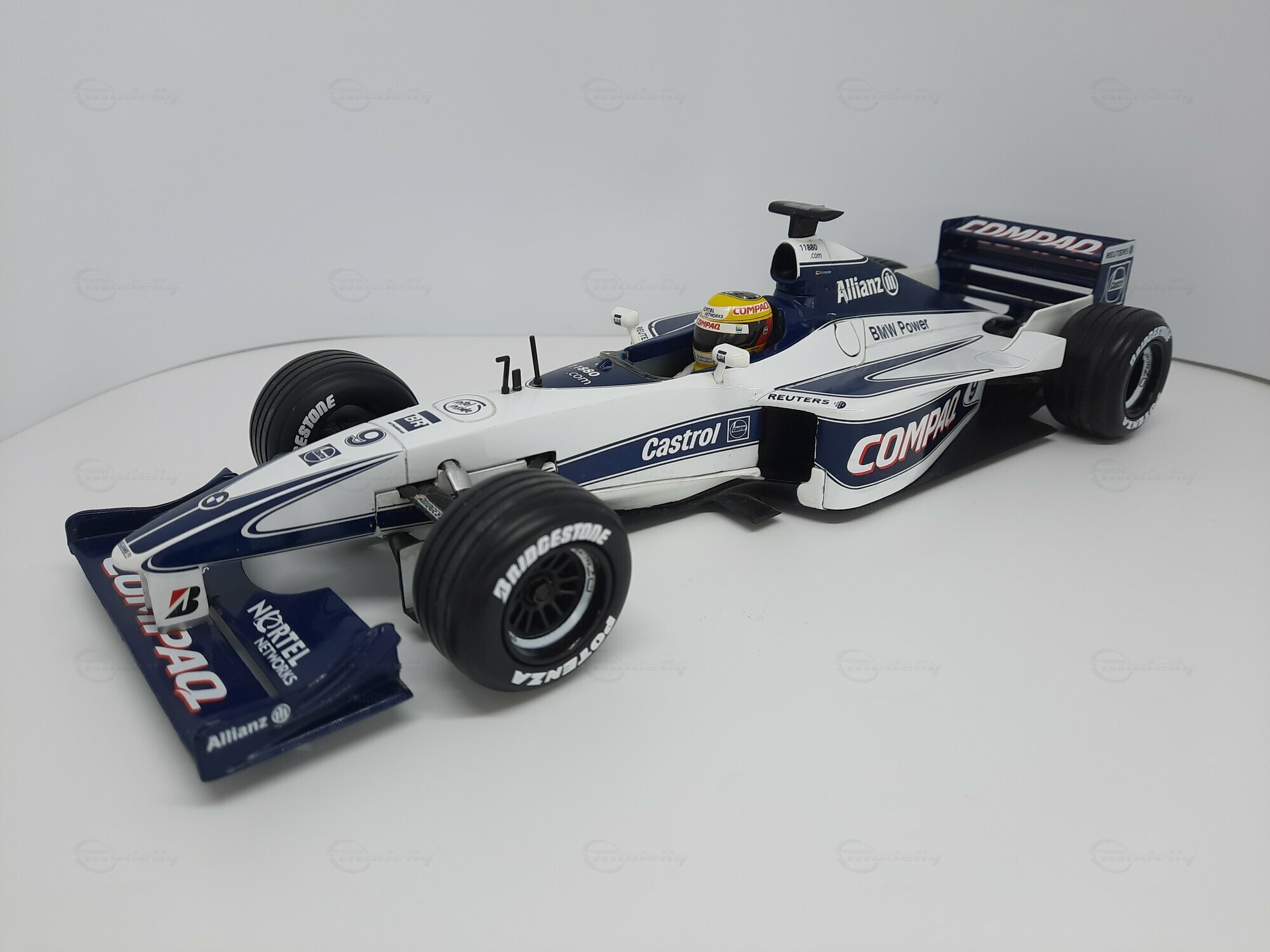
- Williams FW22 (from 2000)
- Hot Wheels
- 1:18
- Showcase model / No engine
- resin
- racing / multicolored
- FW22
- locale dealer
- 60,00 EUR
- Slight shortcomings / damage
- Original packaging does not exist
- Not for sale
History and context of the original
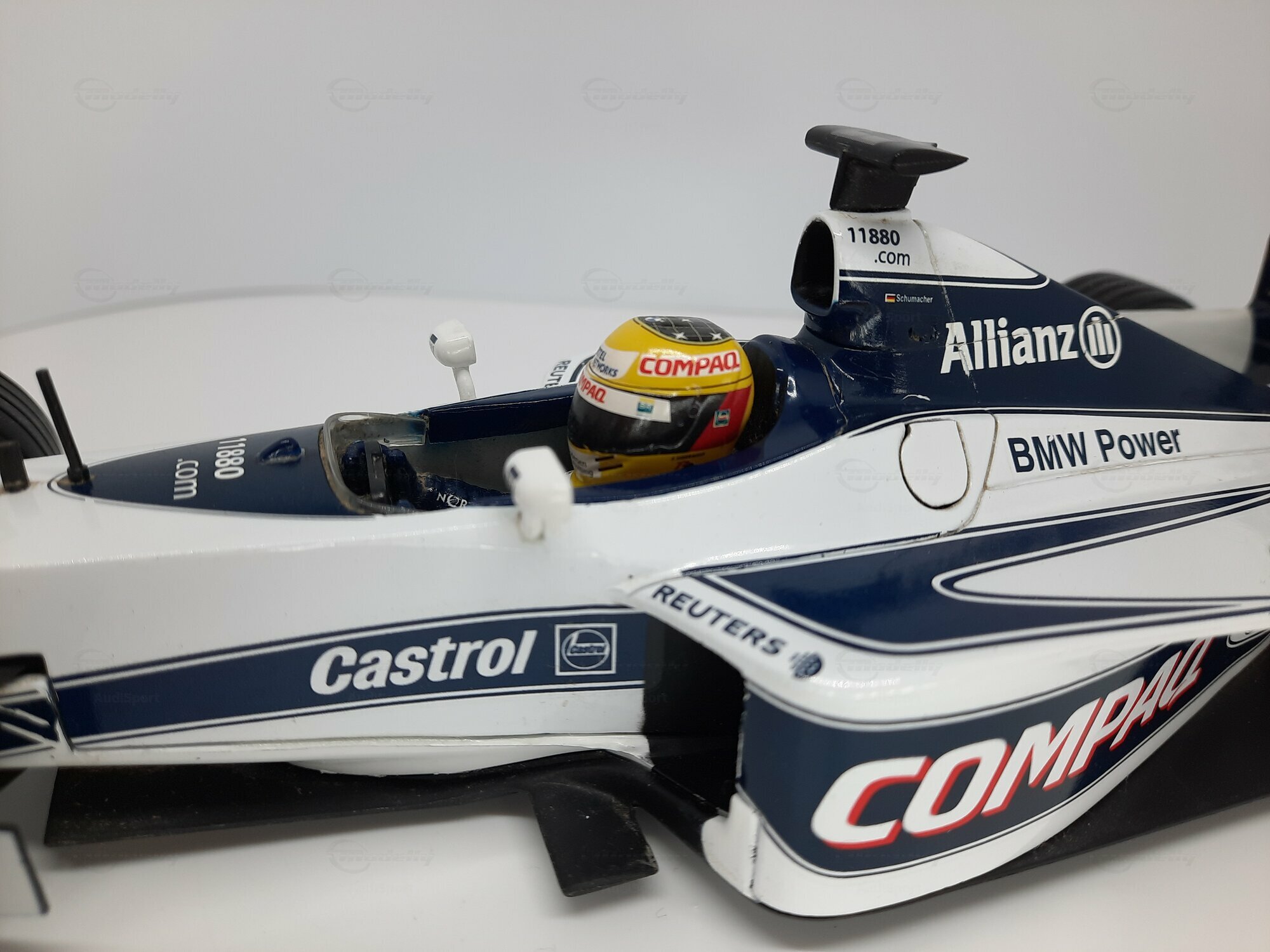
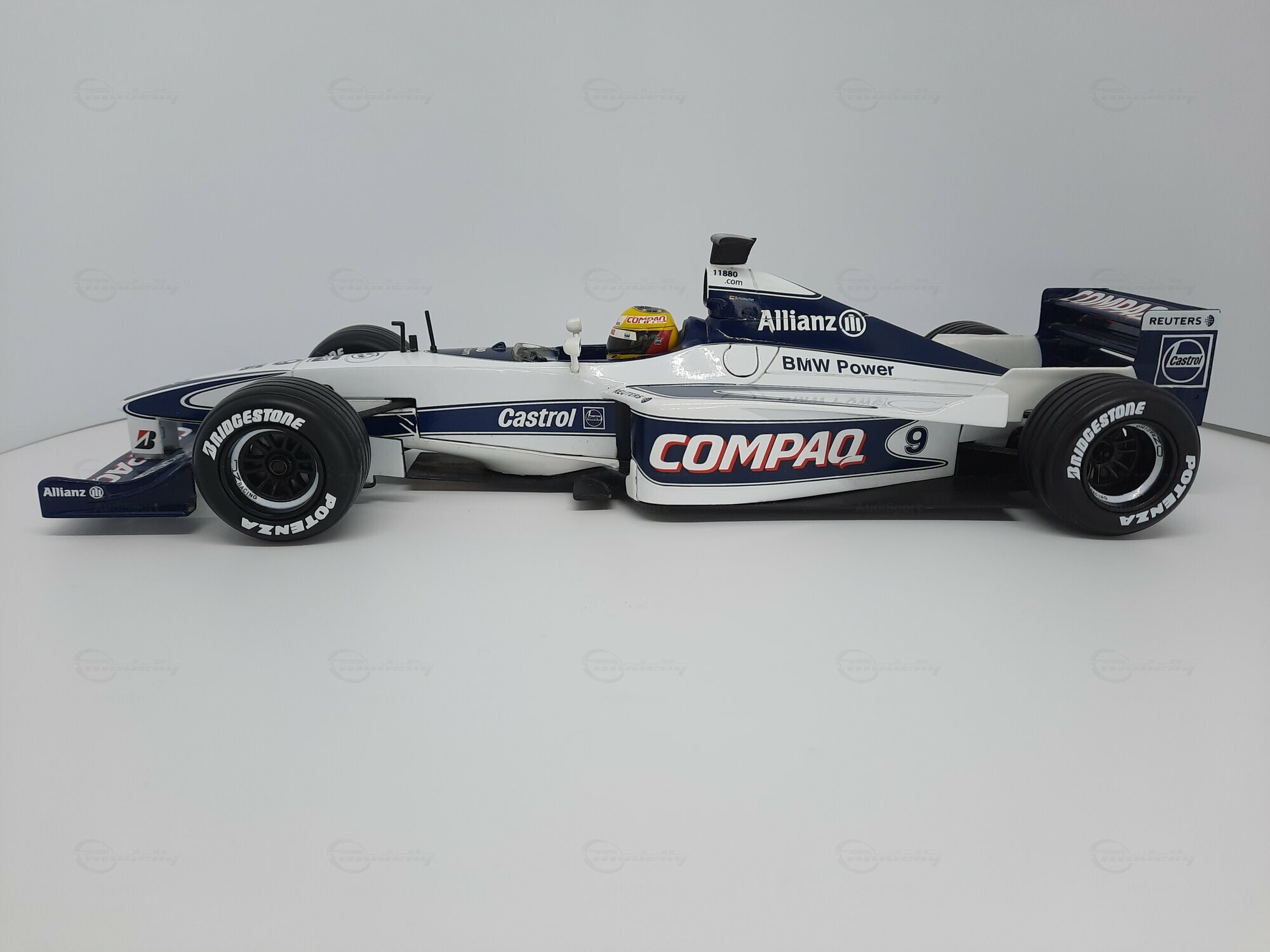
This model refers to the Williams FW22, the Formula 1 car from the 2000 season. In the team’s internal naming it’s the FW22, the successor to the FW21 from 1999. It was developed after Williams renewed the tech partnership with BMW, marking BMW’s modern return as an engine supplier. The car concept was led by Williams engineers Gavin Fisher and Geoff Willis, coordinated by technical chief Patrick Head. The FW22 used a carbon-fiber monocoque, a relatively high cockpit layout with a distinctive shark‑fin on the airbox, and an aero package tuned to the 2000 rules and grooved tires. For collectors: the shown diecast is a 1/18 scale model made by Hot Wheels, closely capturing the lines, proportions and sponsor placement of that generation and is part of Modelly member "AudiSport"'s collection.
Technology and design of the Williams FW22
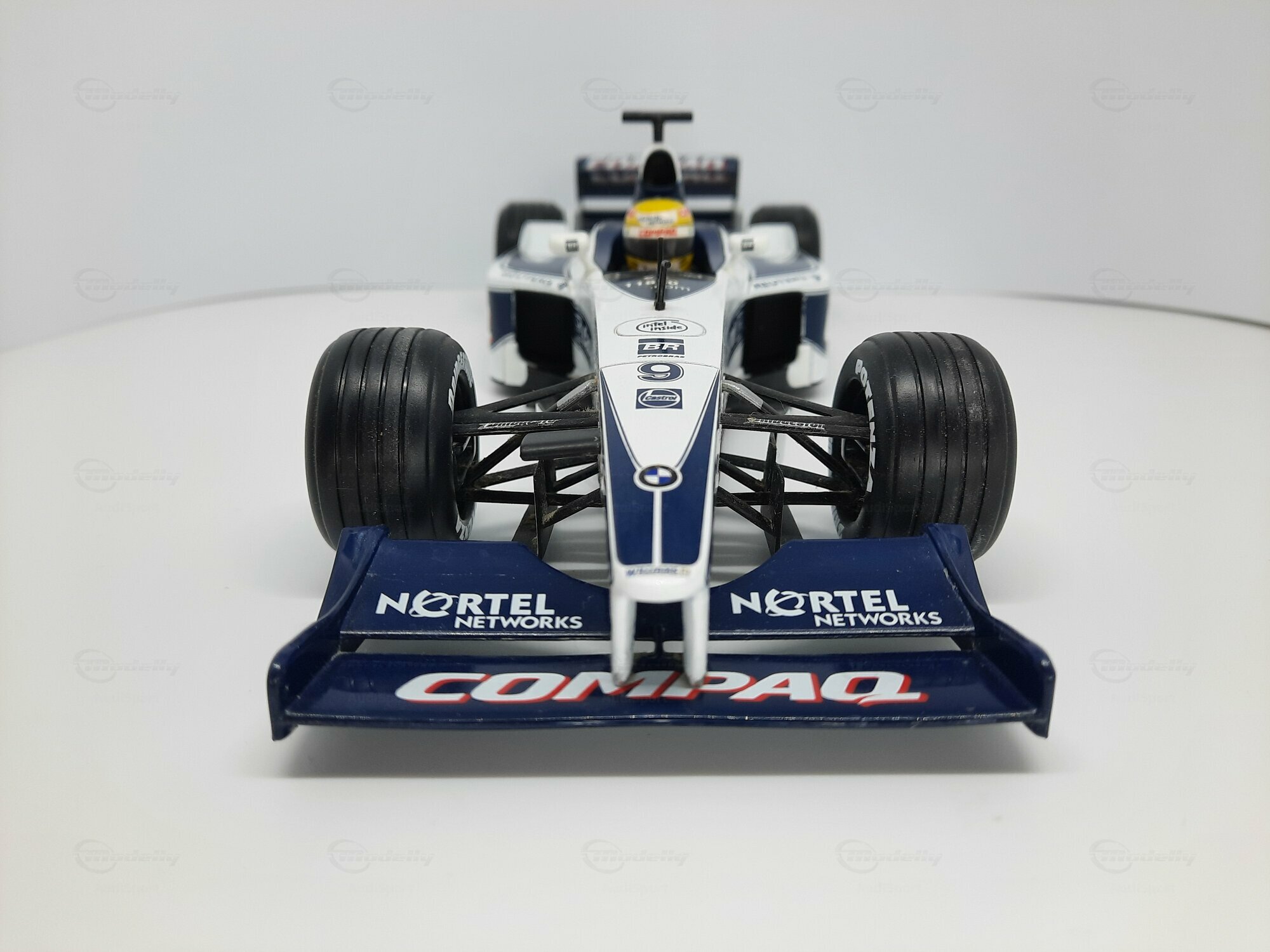
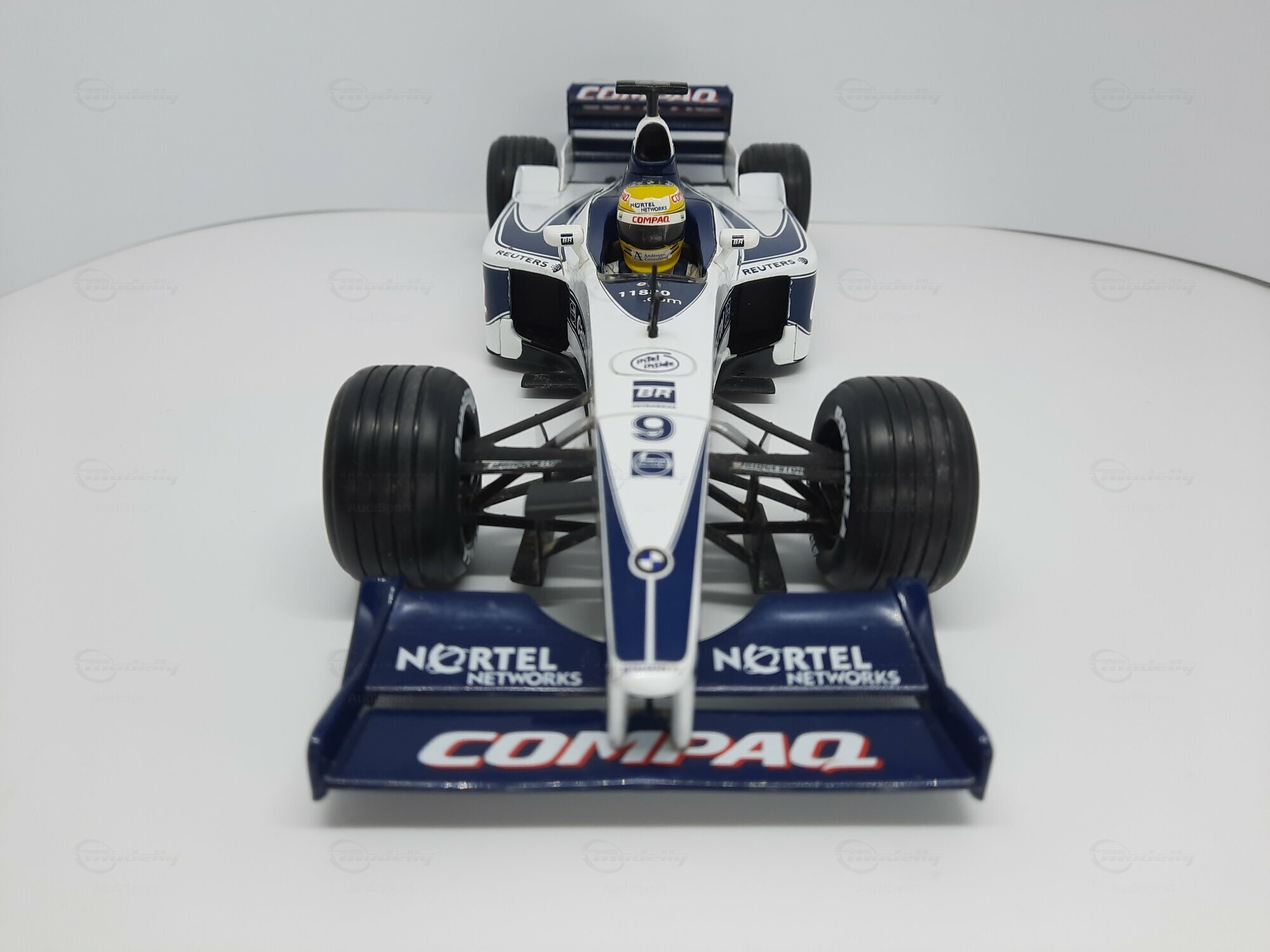
In the rear the Williams FW22 ran the BMW E41/4, a 3.0‑liter (0.79 US gallon) V10 with pneumatic valve control. Power was in the rough area of 770–800 PS (about 760–789 bhp), with peak revs well above 16,000 rpm. Power was sent to the rear via a longitudinal sequential gearbox developed by Williams. Front and rear used double wishbones with pushrod actuation, designed to cleanly feed air to the aero surfaces. Distinctive features included pronounced bargeboards ahead of the sidepods and narrow, high sidepods to give the diffuser clean flow. Brakes were carbon‑fibre discs with lightweight calipers; tyre and development partner was Bridgestone. The Williams FW22 is a typical early‑2000s car: not an extreme radical concept but a solid, efficient platform that gave the freshly formed BMW partnership a reliable base.
Livery, sponsors and the model in the "AudiSport" collection
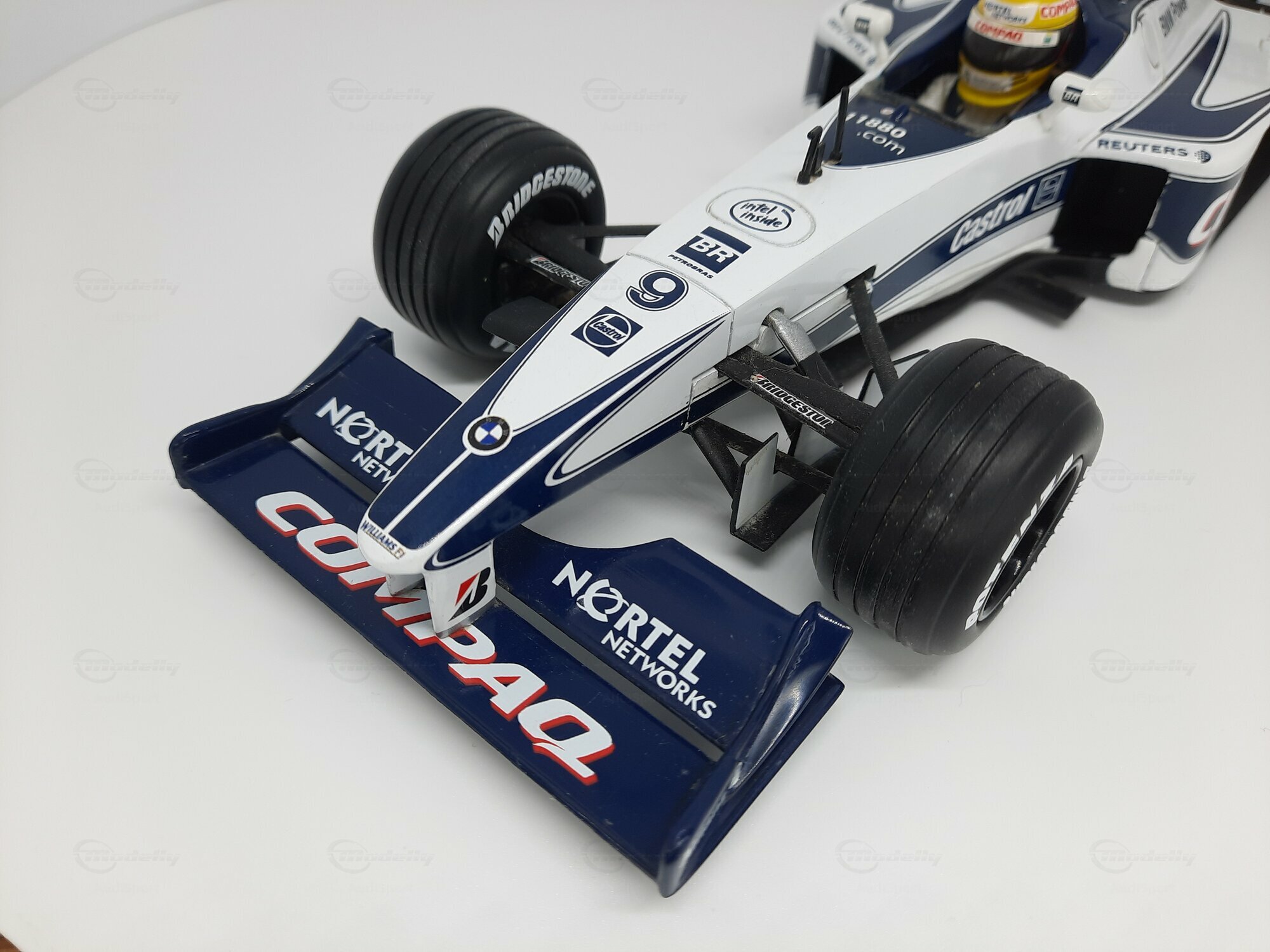
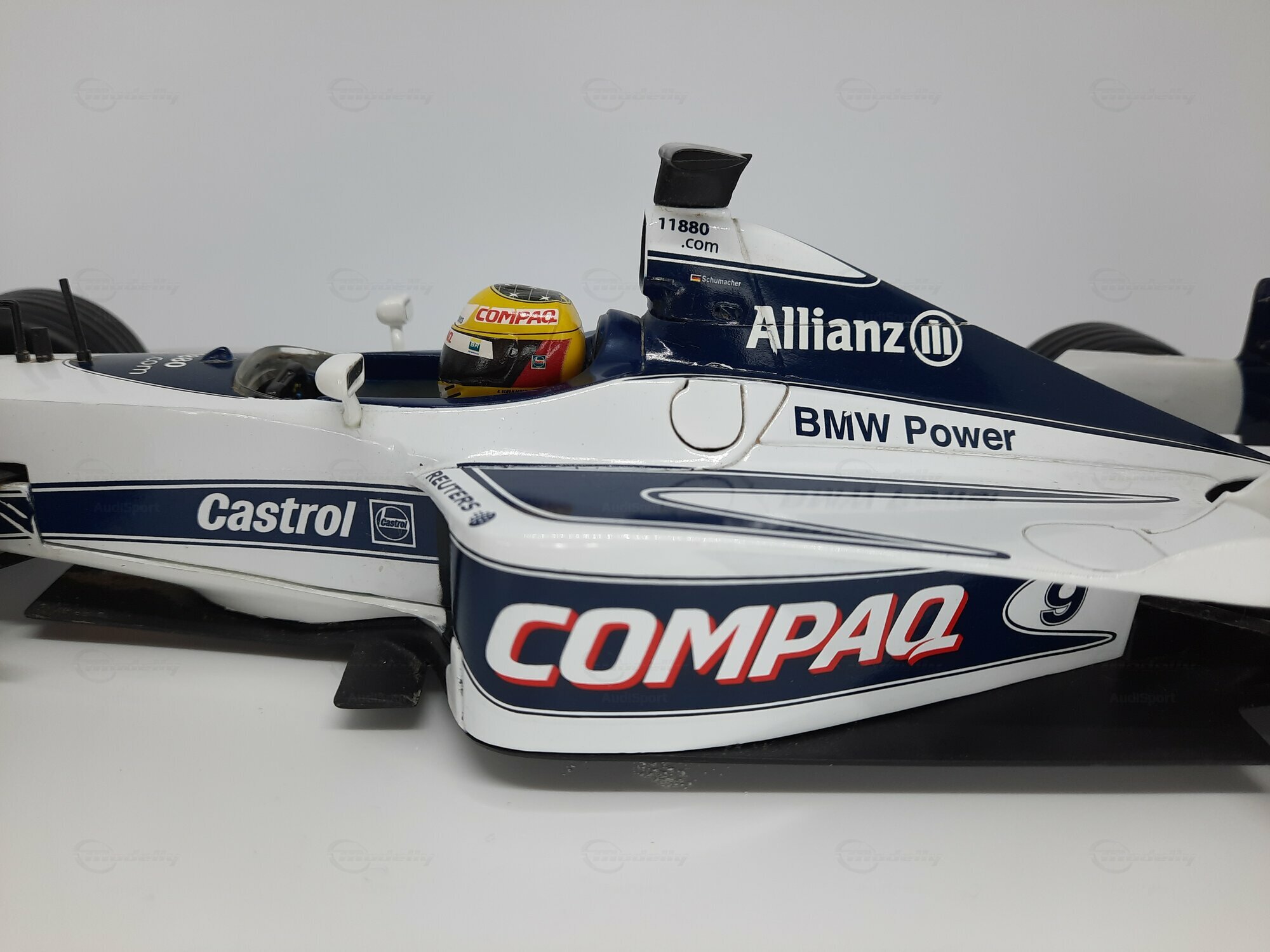
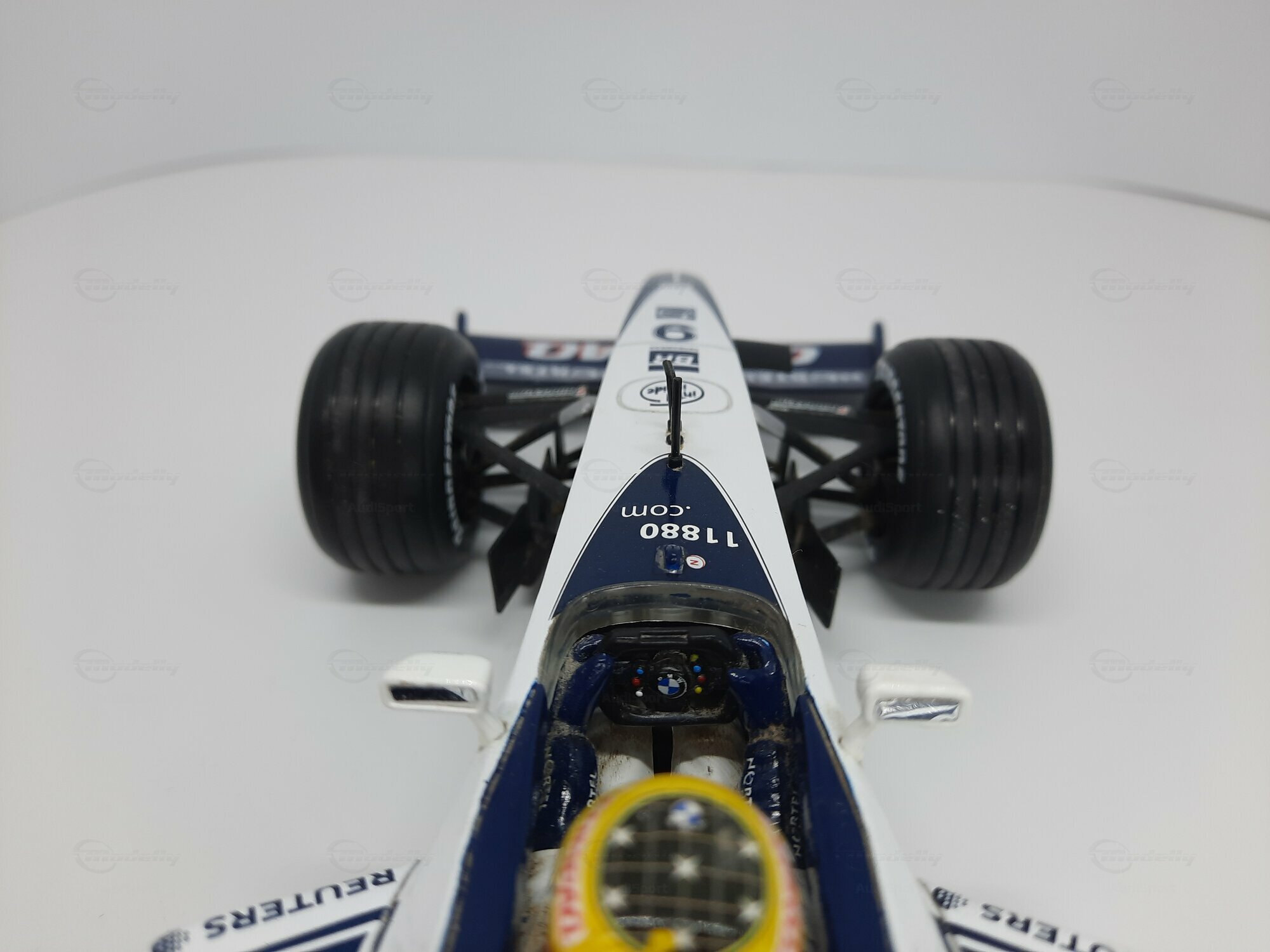
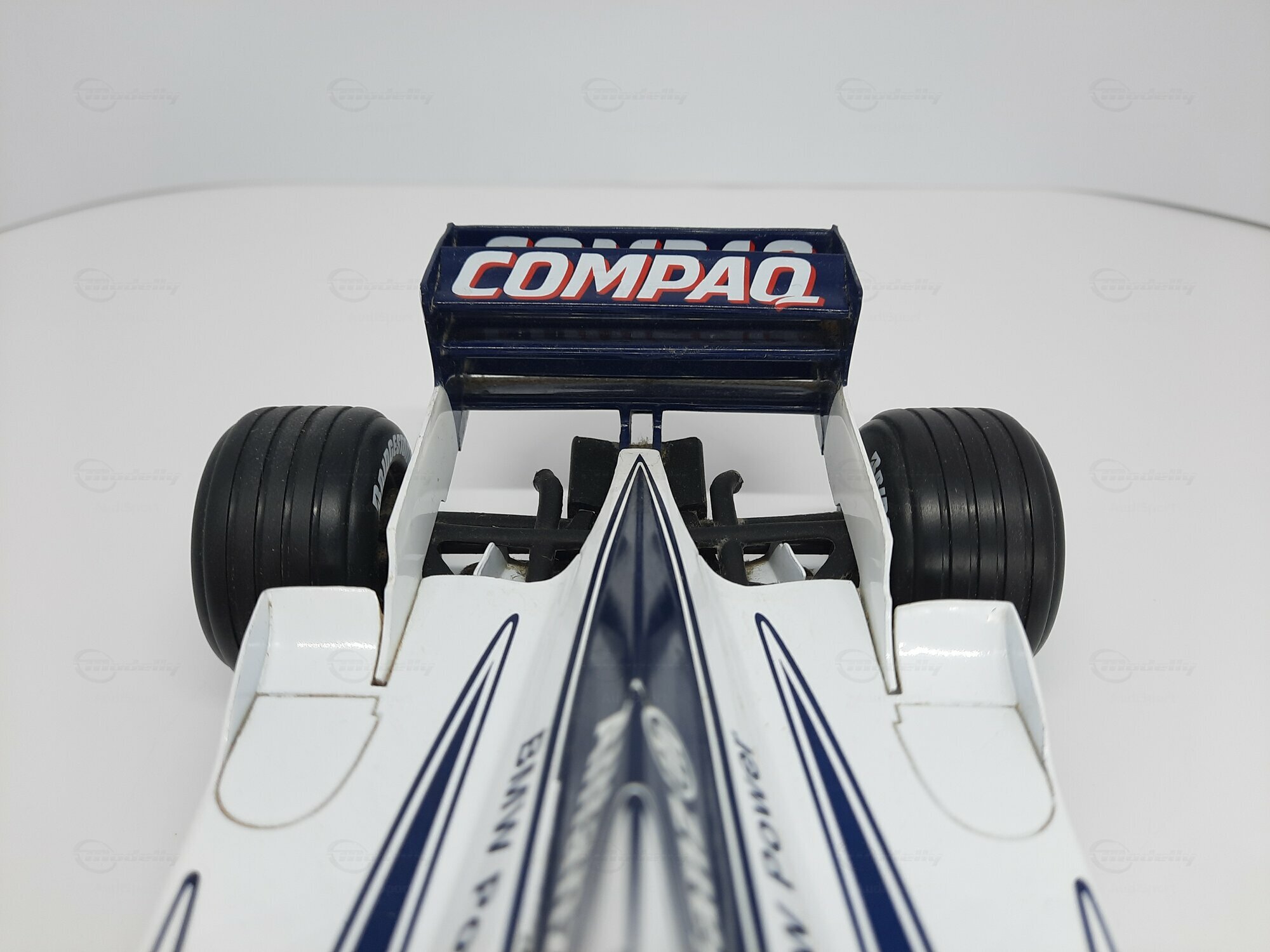
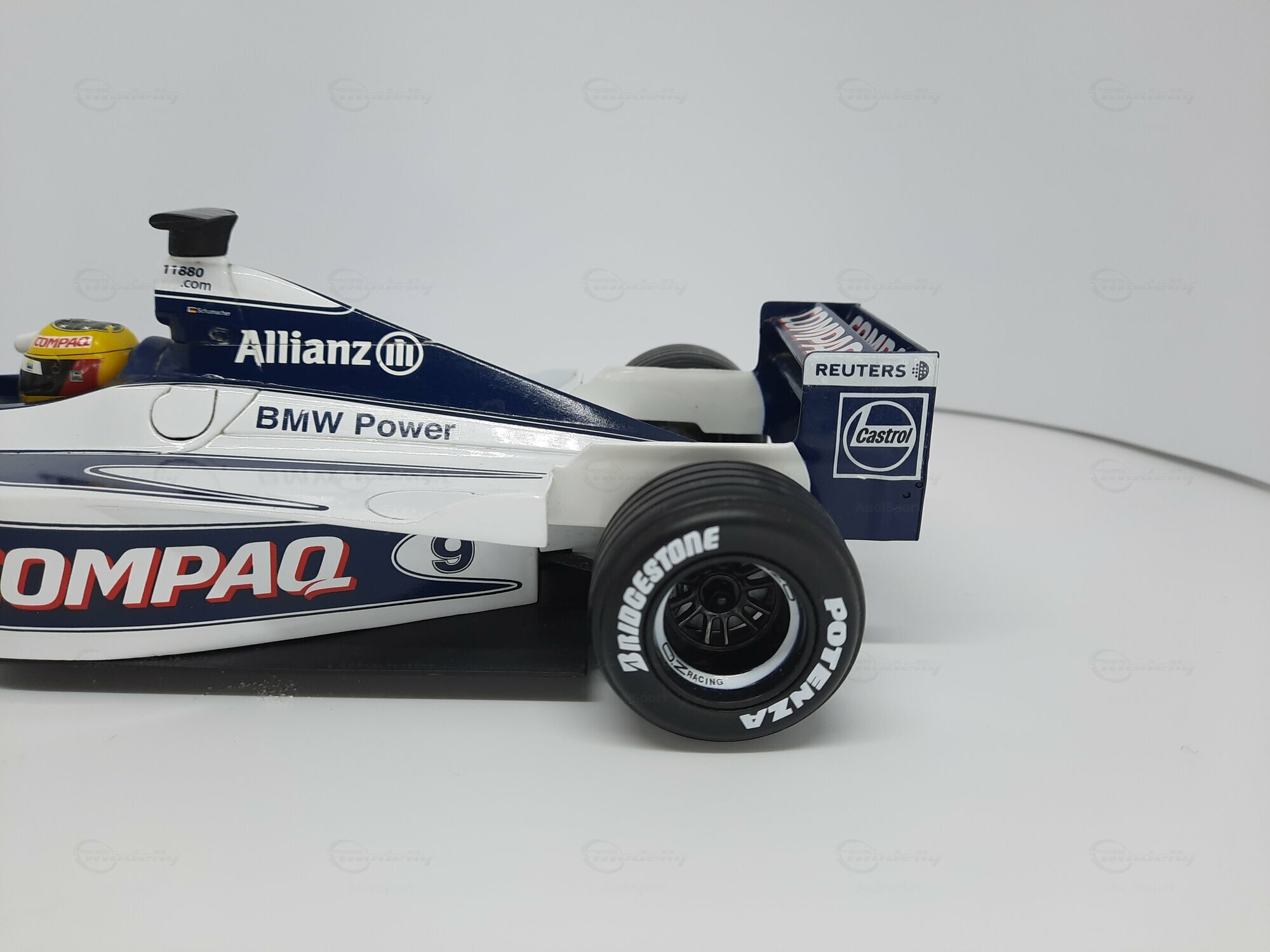
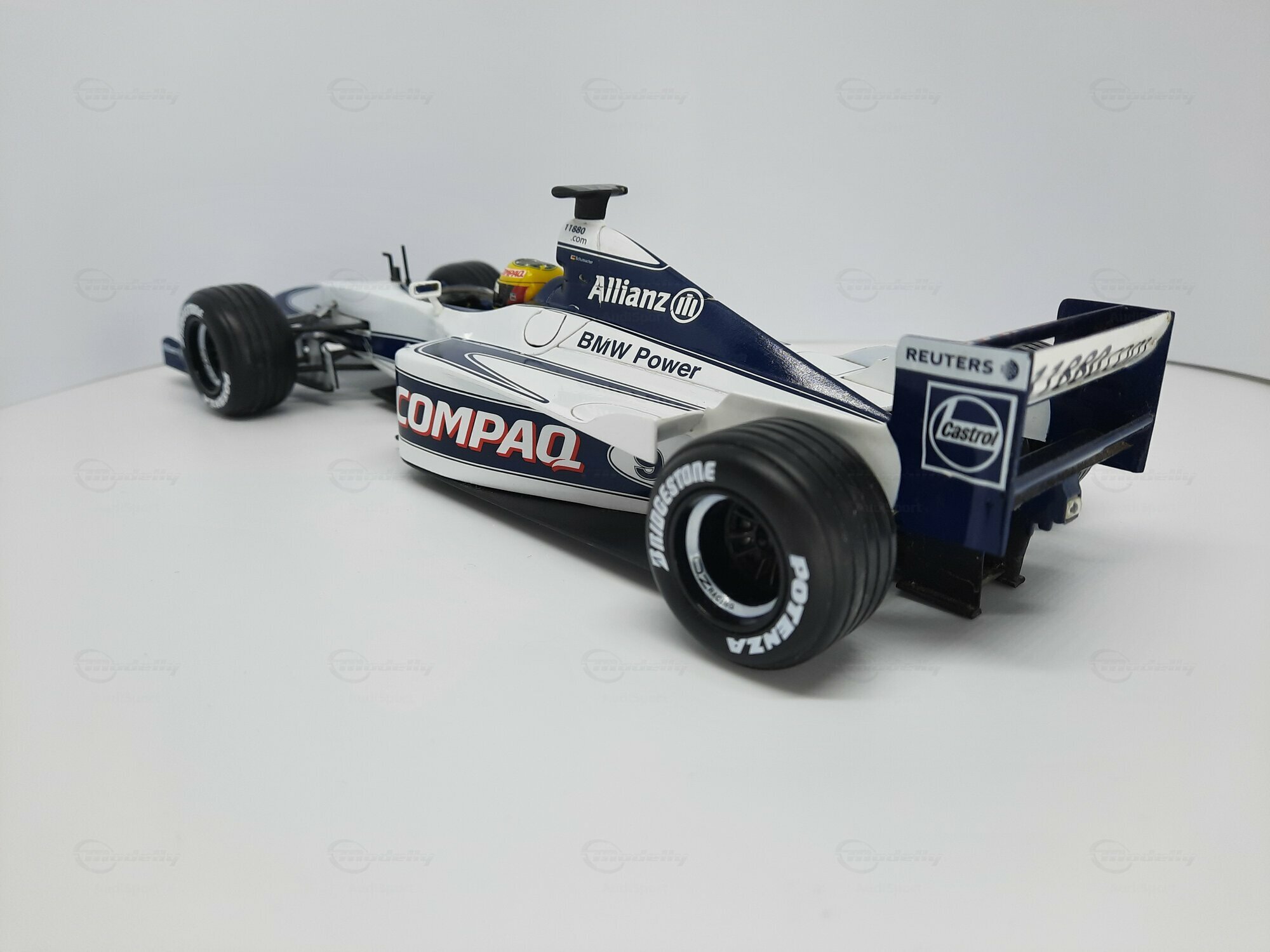
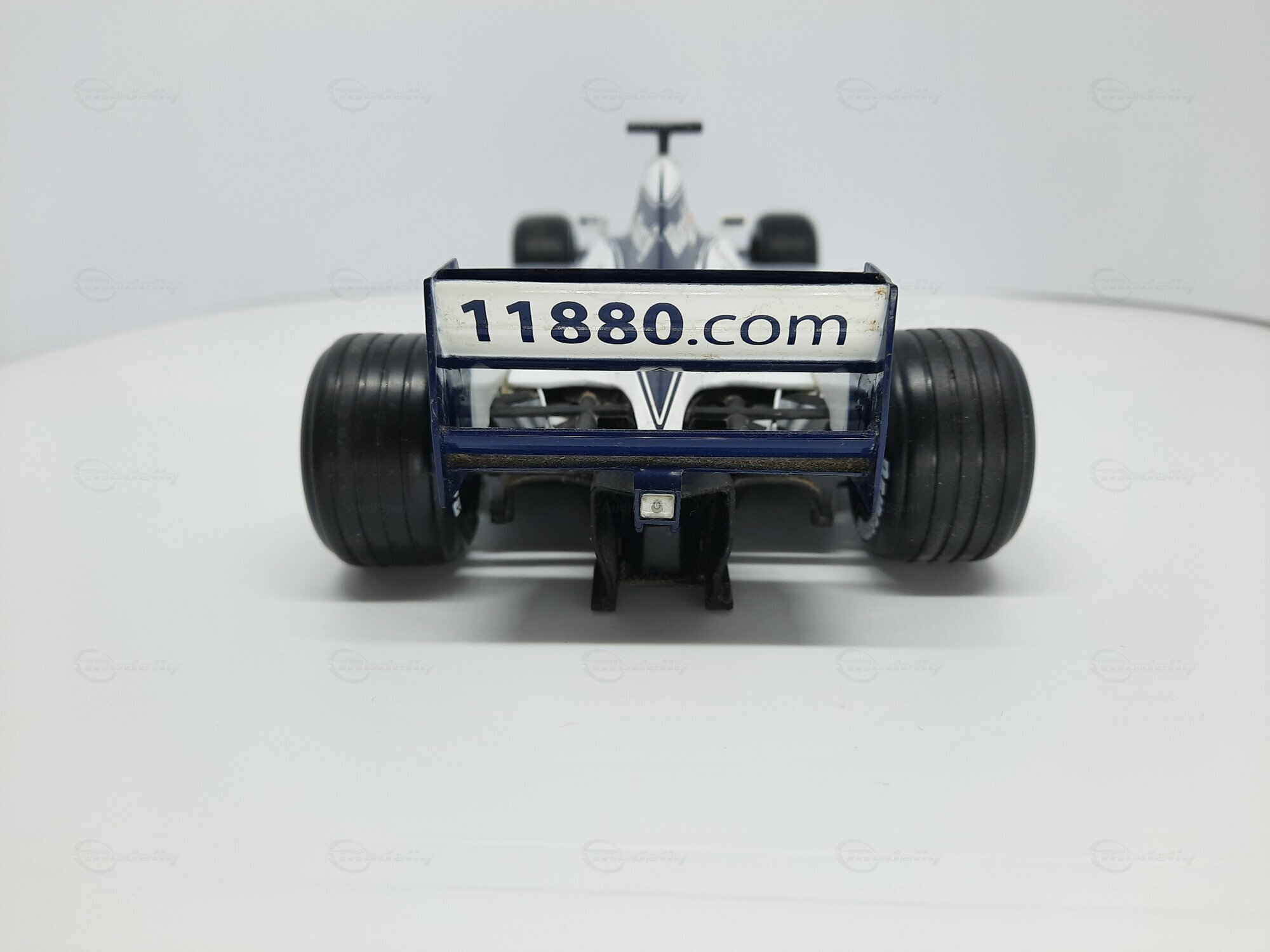
The Williams FW22 livery followed BMW corporate colors: a mix of white and dark blue with swept lines along the nose and sidepods. The model photos clearly show the main sponsors: the title sponsor Compaq sits big on the front wing and engine cover, while Castrol, Nortel Networks, Allianz and Reuters decorate the flanks and nose; tyre and wheel decals show Bridgestone. The nose is narrow and slightly drooped with a multi‑element front wing; the suspension shows up as a fine network of wishbones. The driver sits in a cockpit with a helmet paint scheme matching the team look. This 1/18 Hot Wheels model in the display has clean decals and accurate proportions; front wing, bargeboards and the tall rear wing match the 2000 spec. The mini is resin cast, which helps keep the sharp edges on the intakes and the thin wing profiles. The piece belongs to Modelly member "AudiSport" and the photos show neat part fits, including visible fasteners on the undertray and the T‑wing support at the rear.
Racing history: season and results of the Williams FW22
The Williams FW22 raced in 2000 during a transitional phase: a brand‑new engine package on a chassis prioritizing drivability and reliability. Williams finished third in the Constructors’ Championship behind Ferrari and McLaren, laying the groundwork for the team’s comeback. The car performed well on high‑speed tracks and circuits with long full‑throttle sections, helped by the revvy BMW V10 and a relatively slim aero package. Early in the season the team lacked some running‑in between engine, cooling and gearbox; during the year they updated the cooling ducts and exhaust packaging, which improved durability. The FW22 scored several podiums and regular points, showing off the chassis’ consistency.
Drivers, entries and why it mattered for the team
Drivers for the Williams FW22 were Ralf Schumacher and Jenson Button. Schumacher brought experience and steady scoring, while Button stood out as a rookie with several top‑6 finishes. Both made good use of the car’s traction out of slow corners and its stable braking balance—important in the era before driver aids. Test and reserve drivers like Bruno Junqueira helped with development in the wind tunnel and engine set‑up. The Williams FW22 paved the way for race wins with its successor, the FW23. For collectors the shown model is interesting because it documents the Compaq sponsorship era, the BMW partnership and the 2000 season layout. The 1/18 Hot Wheels example shows grooved tyres, the tall nose, the delicate rear wing struts and the typical sideblade profiles; the resin build gives crisp contours on nose, sidepods and airbox. In a display the piece looks tidy thanks to the well‑applied decals on the front wing and sidepods and fits nicely into a Formula 1 lineup—exactly the kind of set collectors of "AudiSport" on Modelly like to show off.
- Write a first comment about this model now!Any comment can be discussed by all members. It's like a chat.Mention other Modelly members by using @ in your message. They will then be informed automatically.
- Write a first comment about this model now!Any comment can be discussed by all members. It's like a chat.Mention other Modelly members by using @ in your message. They will then be informed automatically.