
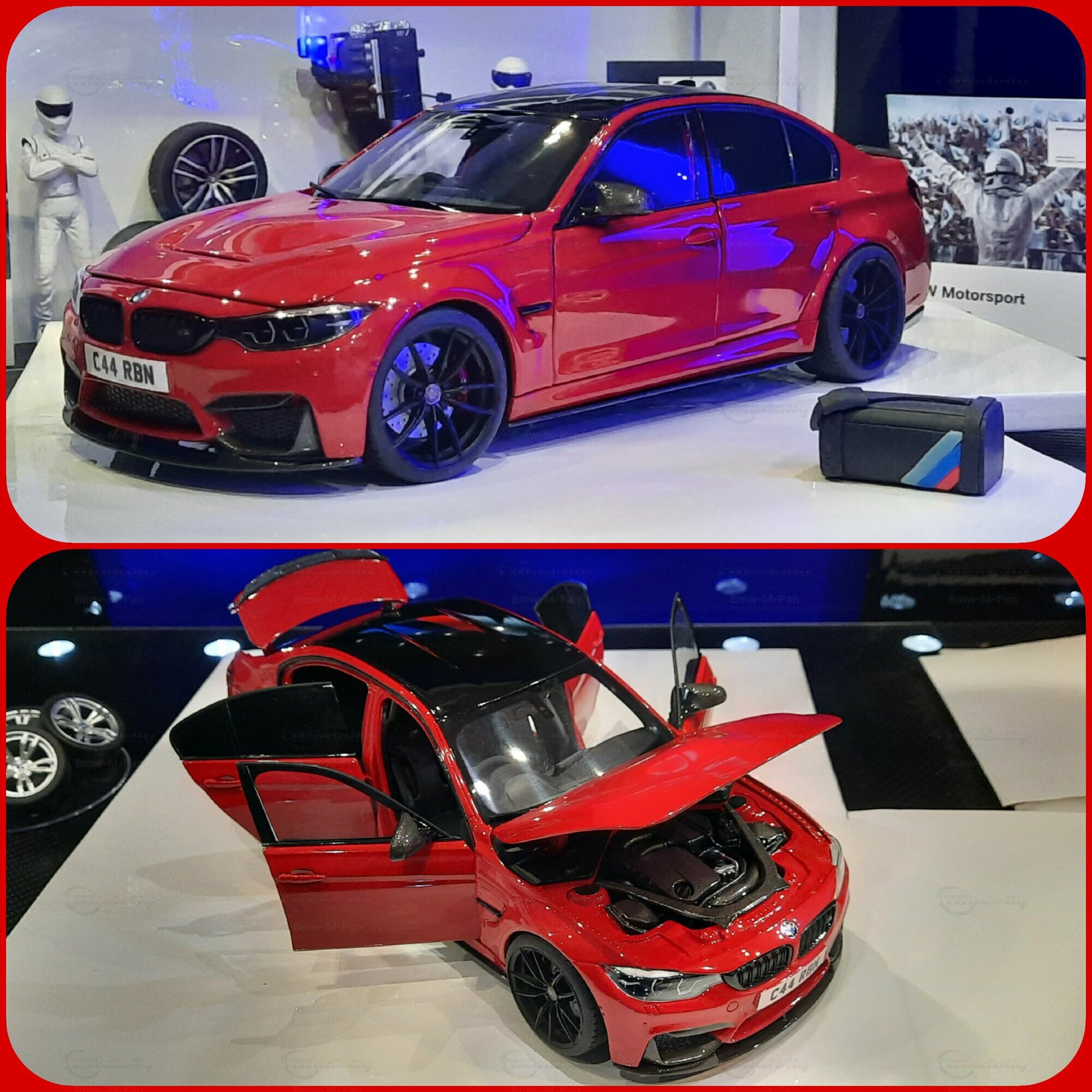
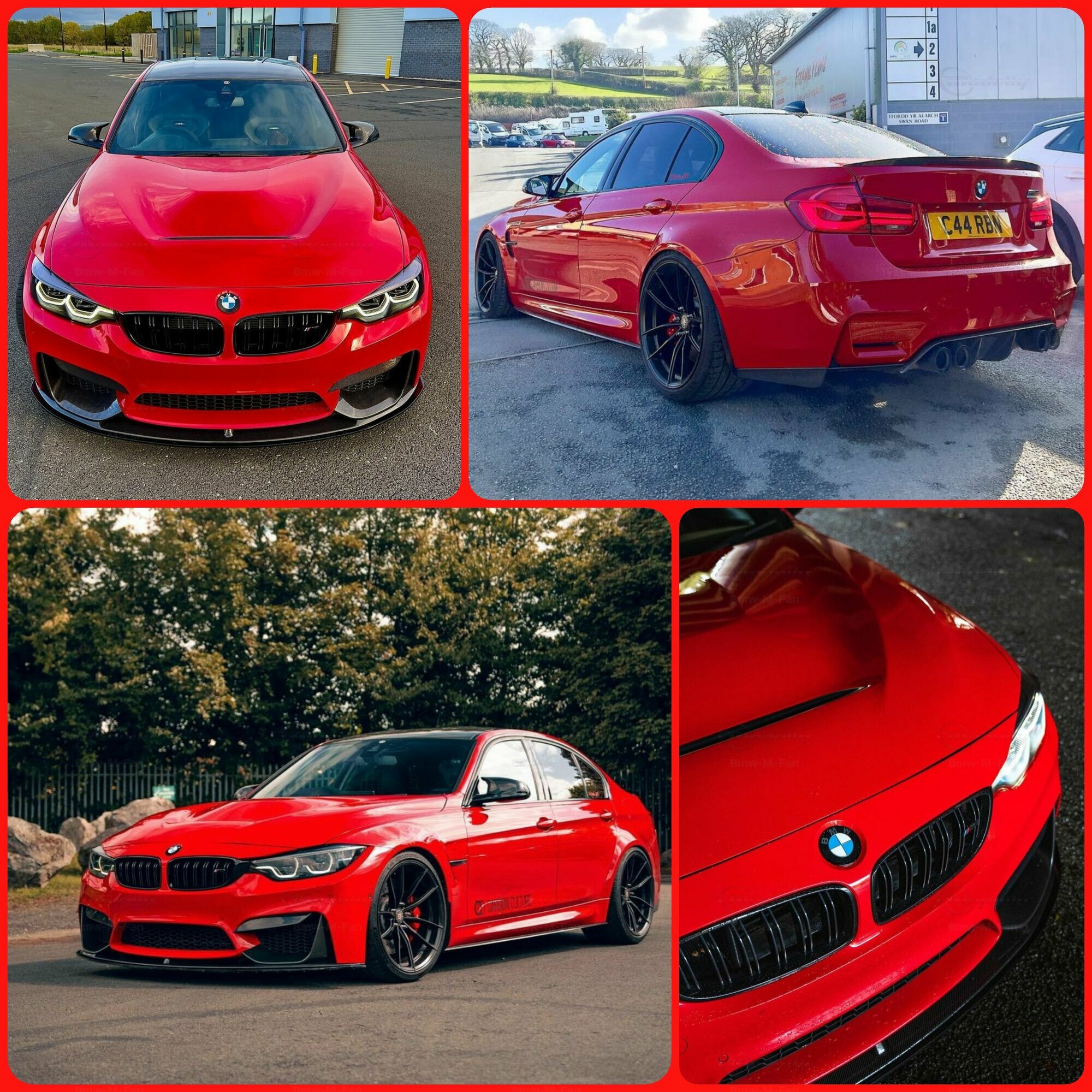
BMW F82 M4 "Carbon Culture Uk"(diecast 1:18, Customized)
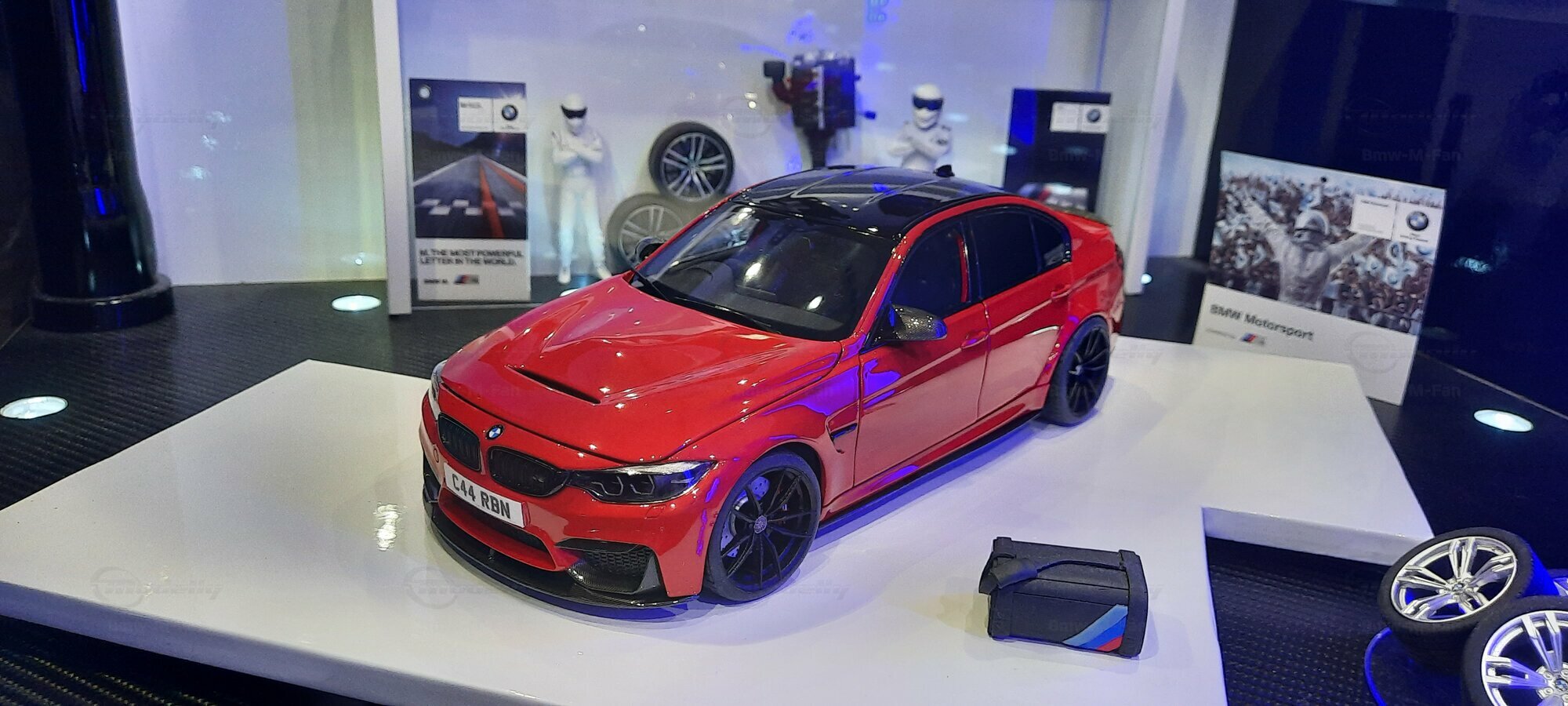
- BMW F82 M4 "Carbon Culture Uk" (from 2017)
NorevUmgebautes Modell- 1:18
- Showcase model / No engine
- diecast
- red
- In near mint condition
- Original packaging exists
- Not for sale
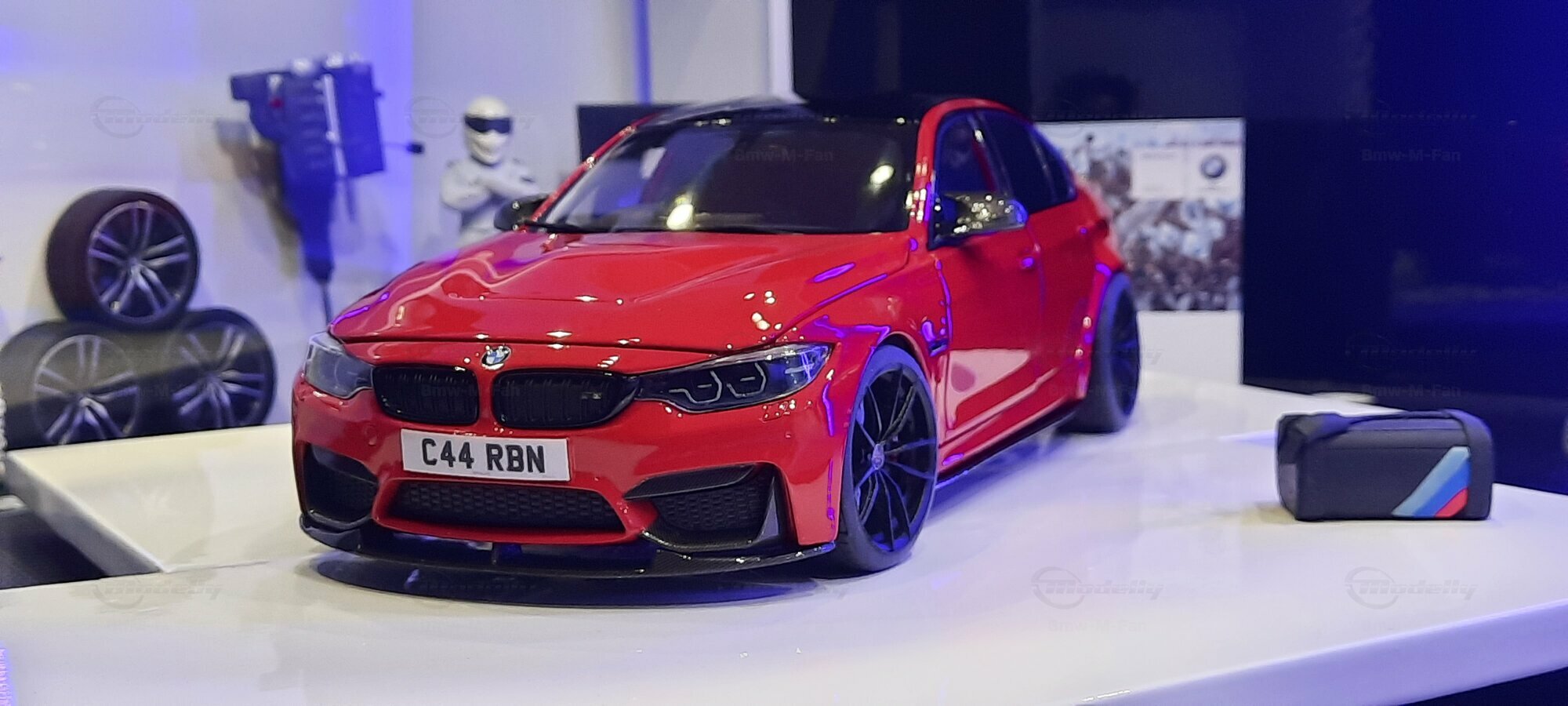
Reference car: key facts and where the BMW M4 F82 fits in
As the technical reference for the miniature shown here, the BMW M4 F82 serves as the coupé version of the M range based on the 4 Series. The generation F82 was built from 2014 to 2020 and replaced the previous M3 coupé (E92). At its heart is the straight-six S55 engine with 2,979 cm³ (2.979 L / 181.7 cubic inches) displacement and twin turbochargers. In standard tune the engine produces 317 kW (431 PS / ~425 hp) and delivers 550 Nm (405.6 lb-ft) of torque; later BMW offered variants like Competition (450 PS / ~331.0 kW / ~444 hp), CS (460 PS / ~338.3 kW / ~454 hp) and the GTS with 500 PS (~367.7 kW / ~493 hp). Depending on the setup it sprints roughly 0–100 km/h (0–62 mph) in about 4.1 s (with the 7-speed M DCT) or just under 5 s with the 6-speed manual. The engine is paired with an active M differential; adaptive M suspension and carbon-ceramic brakes were available as options. Important lightweight parts include the CFK (carbon-fiber) roof, aluminum structural components and a carbon driveshaft. The aerodynamic package—with characteristic gills behind the front wheels, large air intakes and a subtle rear spoiler lip—is aimed at high cooling capacity and added downforce while staying road-friendly. Key people involved included Albert Biermann (until 2014 head of BMW M development) and design leadership around Karim Habib; the 4 Series exterior was heavily influenced by Nader Faghihzadeh. The BMW M4 F82 is often compared to the simultaneously introduced M3 (F80), which shares the drivetrain but is a sedan, while the coupé got the M4 name.
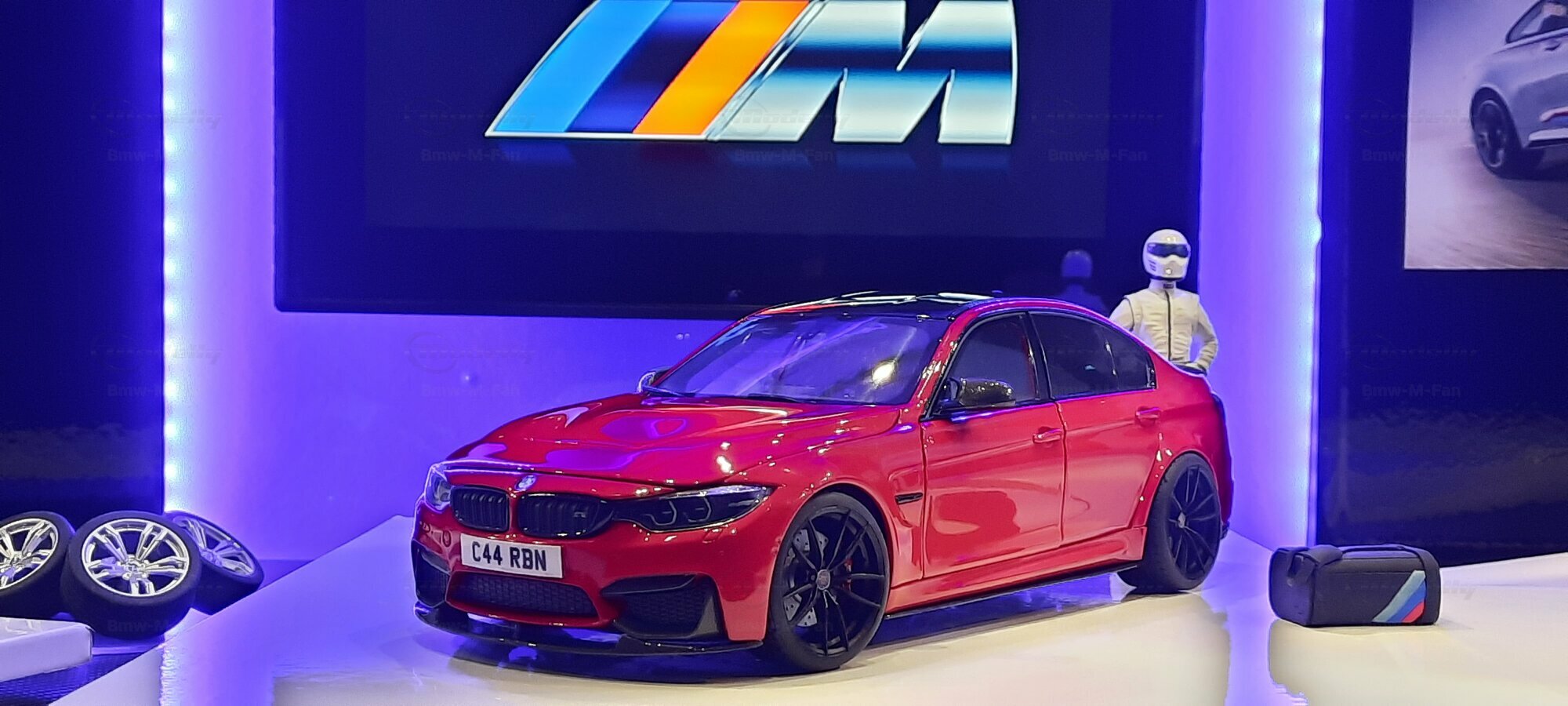
Tech, design cues and the M-family context
Compared to the predecessor E92 with a naturally aspirated V8, the BMW M4 F82 switches to turbochargers and a much broader usable torque band. The exhaust has electrically controlled flaps; the charge-air cooling is handled by a central intercooler plus additional side coolers. The chassis uses a double-joint front axle and a five-link rear axle, each with M-specific kinematics and lightweight mountings. Standard is an electromechanical power steering with variable gearing and selectable steering maps. For track use, the car’s menu lets you mix and match modes for powertrain, damping, steering and gearbox behavior. Visually the BMW M4 F82 is defined by a flat roofline, dark double kidney grille, side vents and an LED signature with distinctive light guides. The limited GTS version introduced water injection to lower intake temperatures and raise the knock threshold—something you rarely saw in this segment. Historically the BMW M4 F82 marks the split of names (M4 for coupé, M3 for sedan) and the move from a V8 NA era to turbocharged straight-six units. Independent workshops and tuners often use this platform; popular mods include wider fenders, visible carbon add-ons and lowered suspension. Some online references point to tuner projects under names like “Carbon Culture UK”; whether the miniature shown here exactly copies one of those builds can’t be confirmed from the photos.
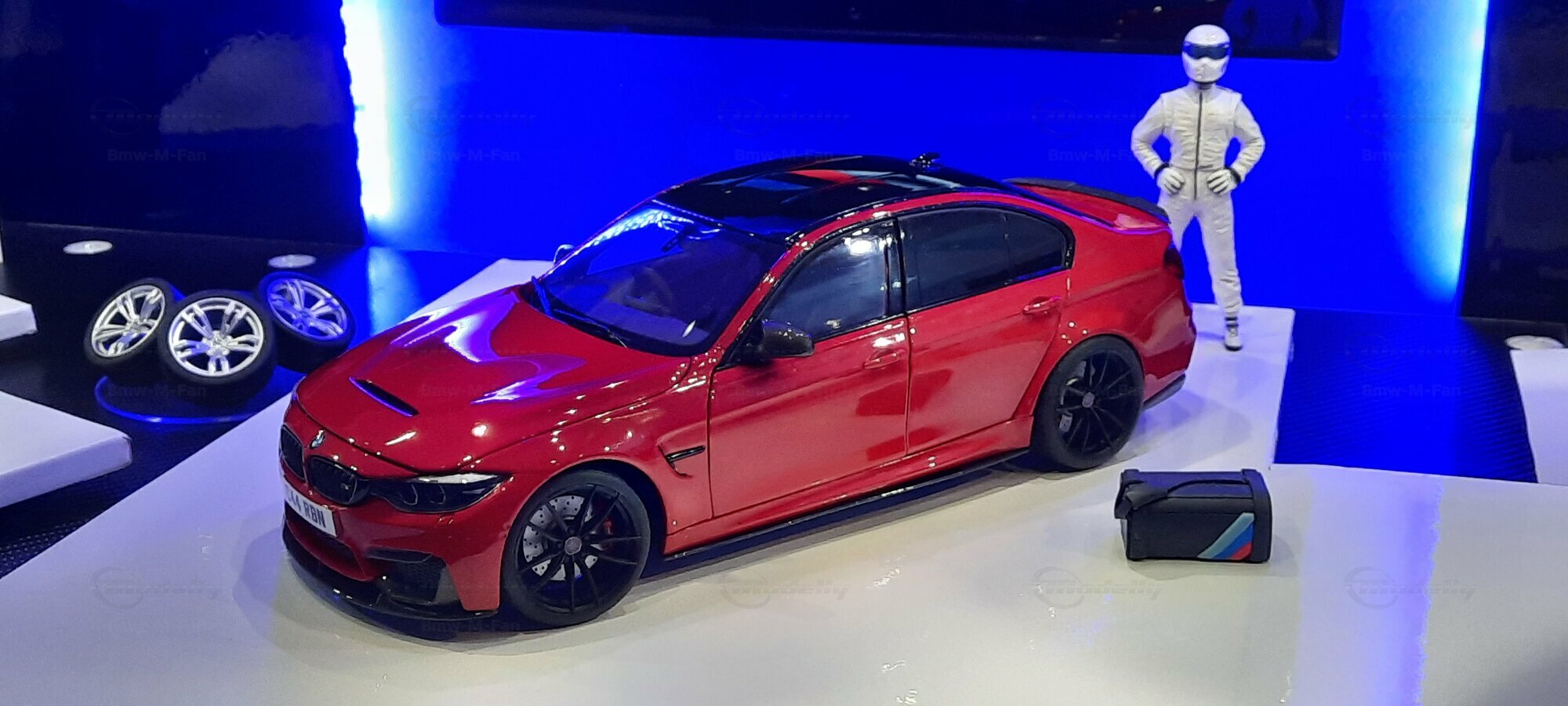
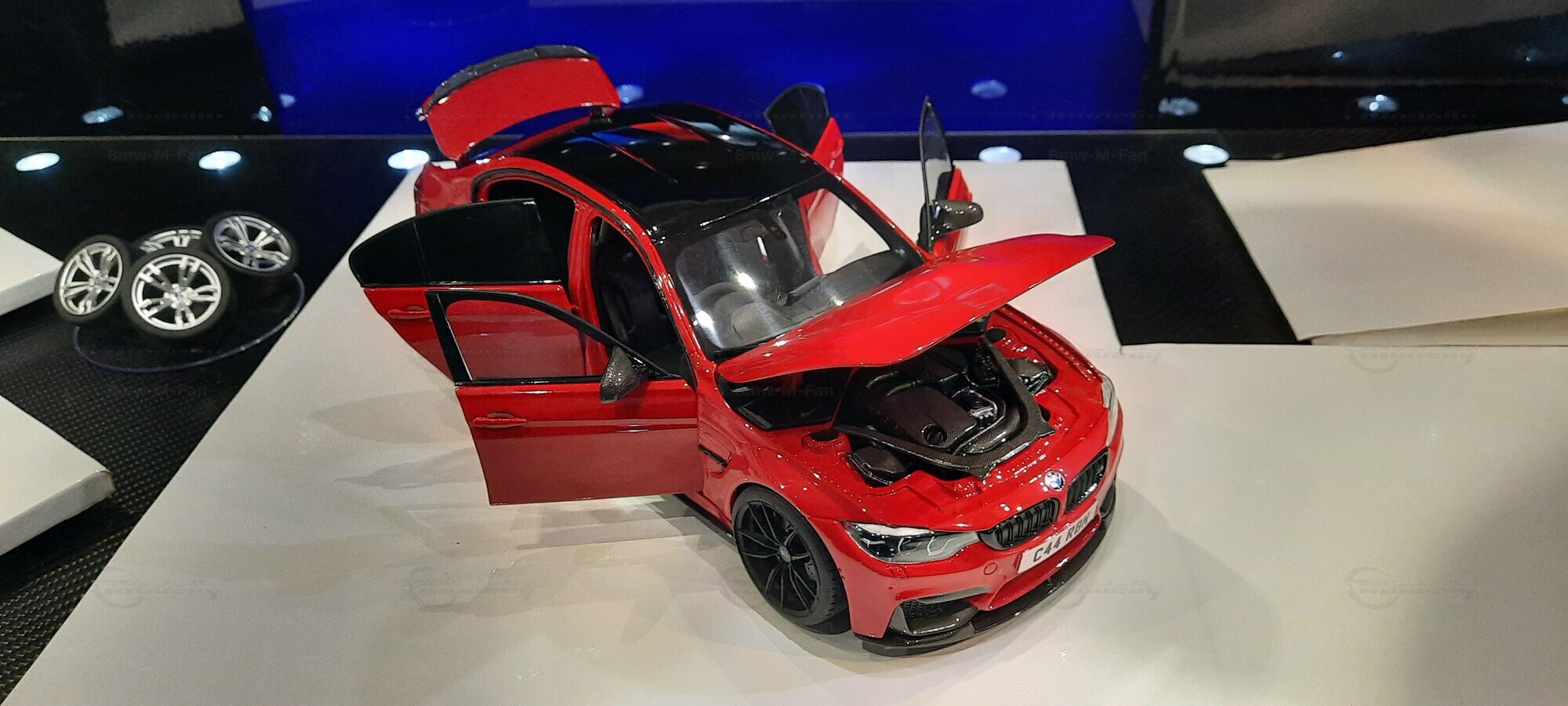
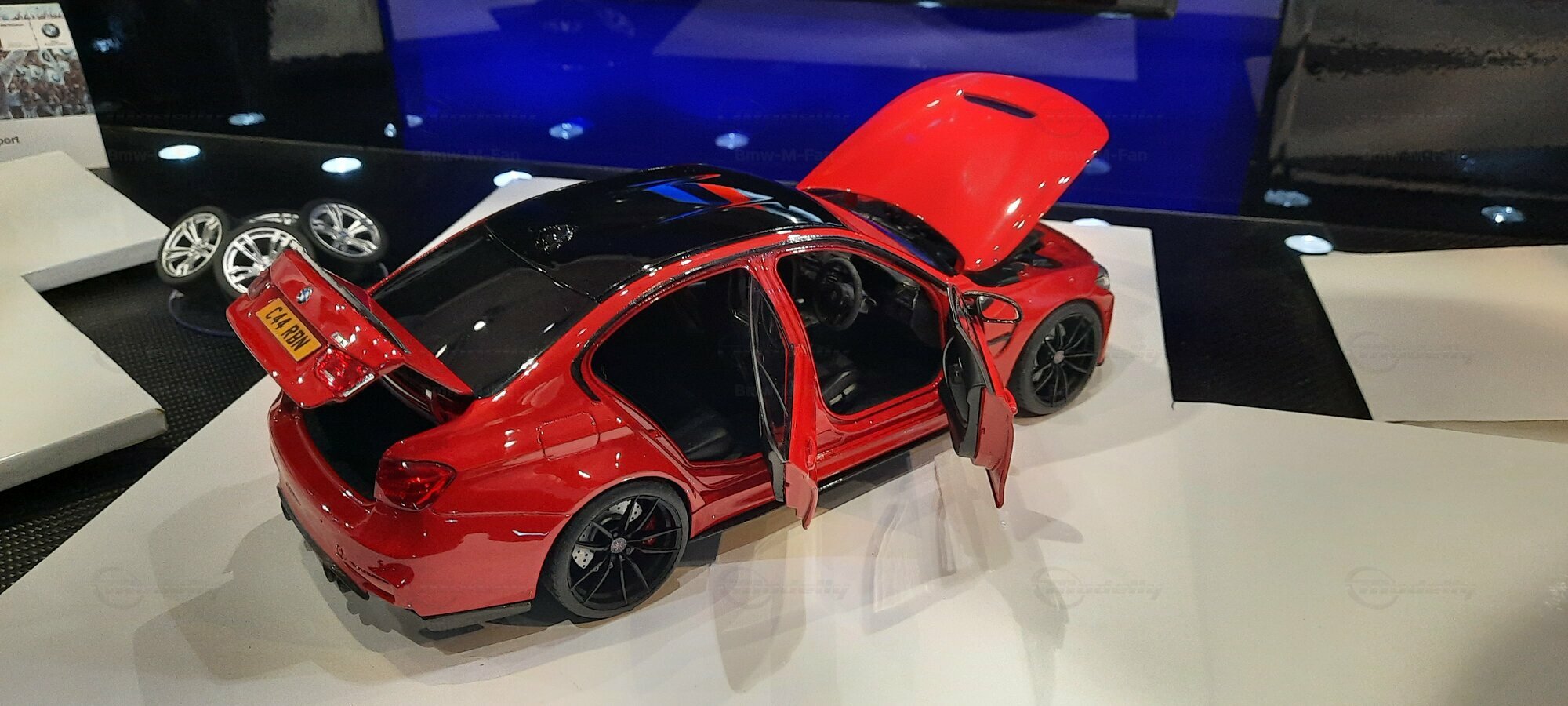
Model info: Norev diecast in 1/18 — heavily custom
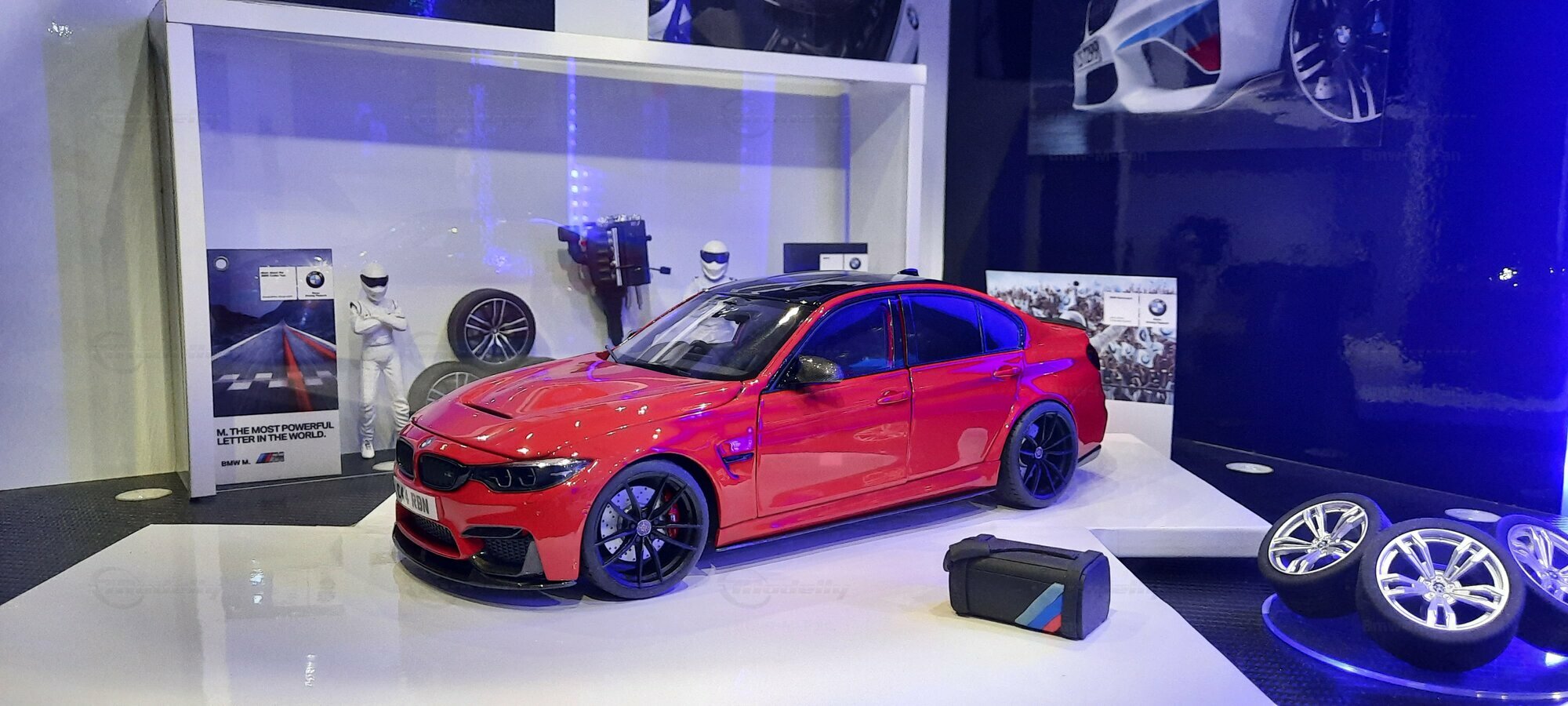
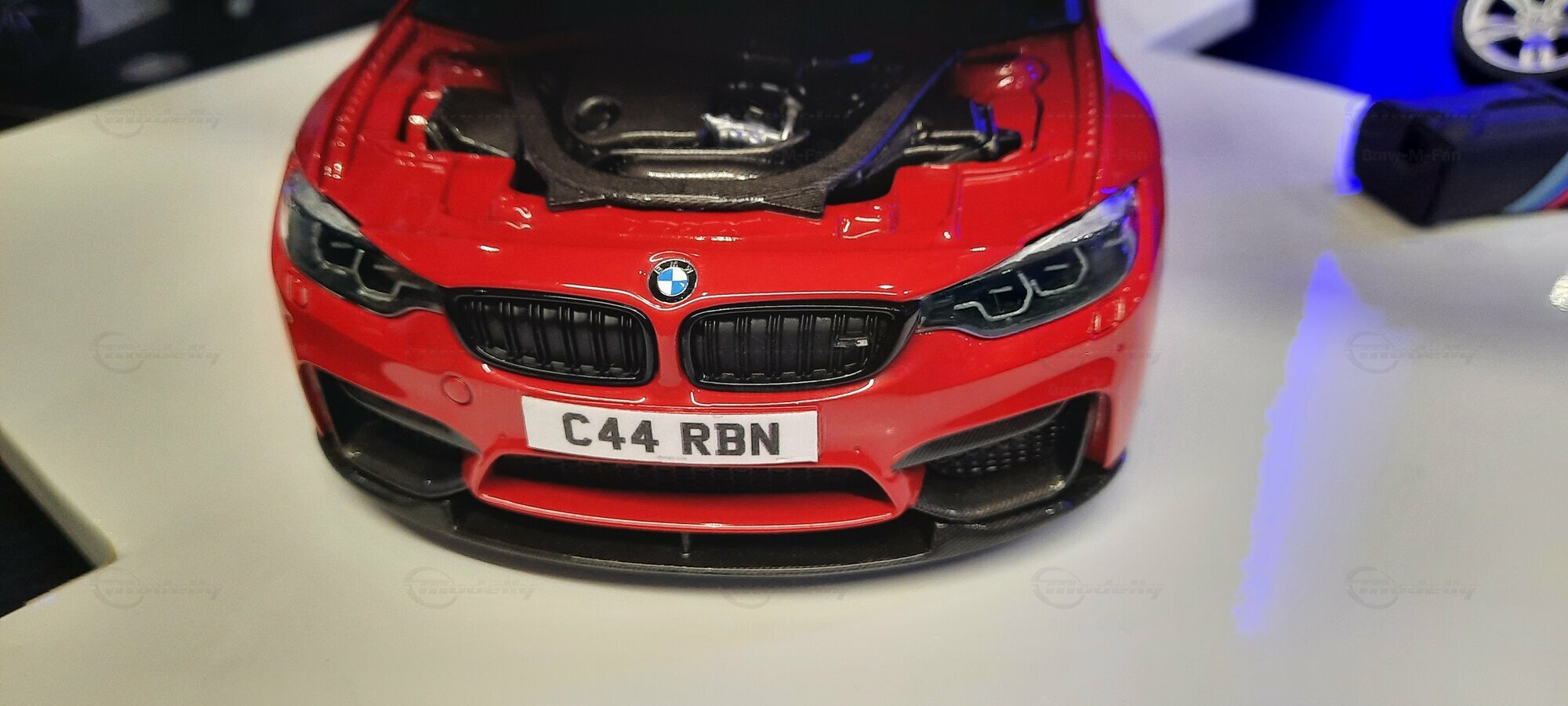
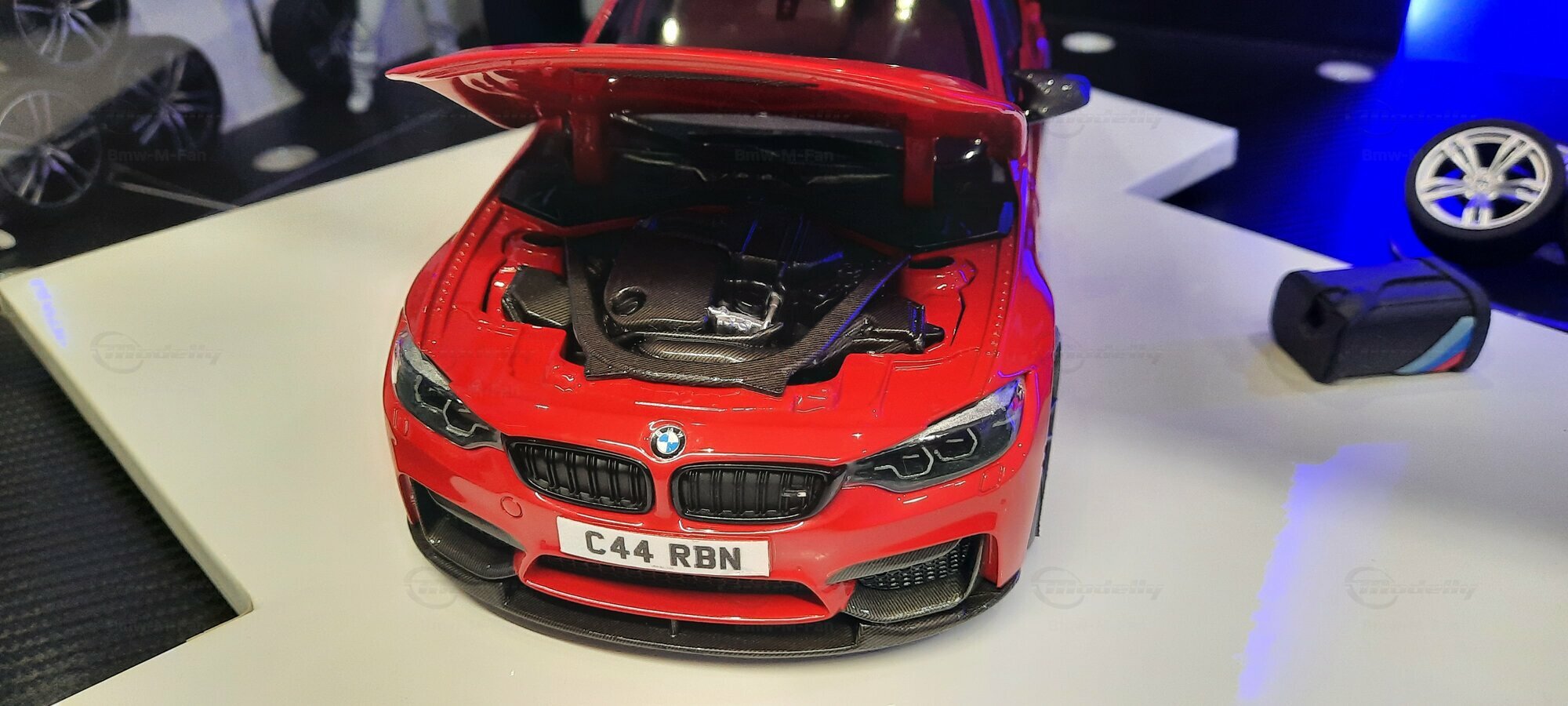
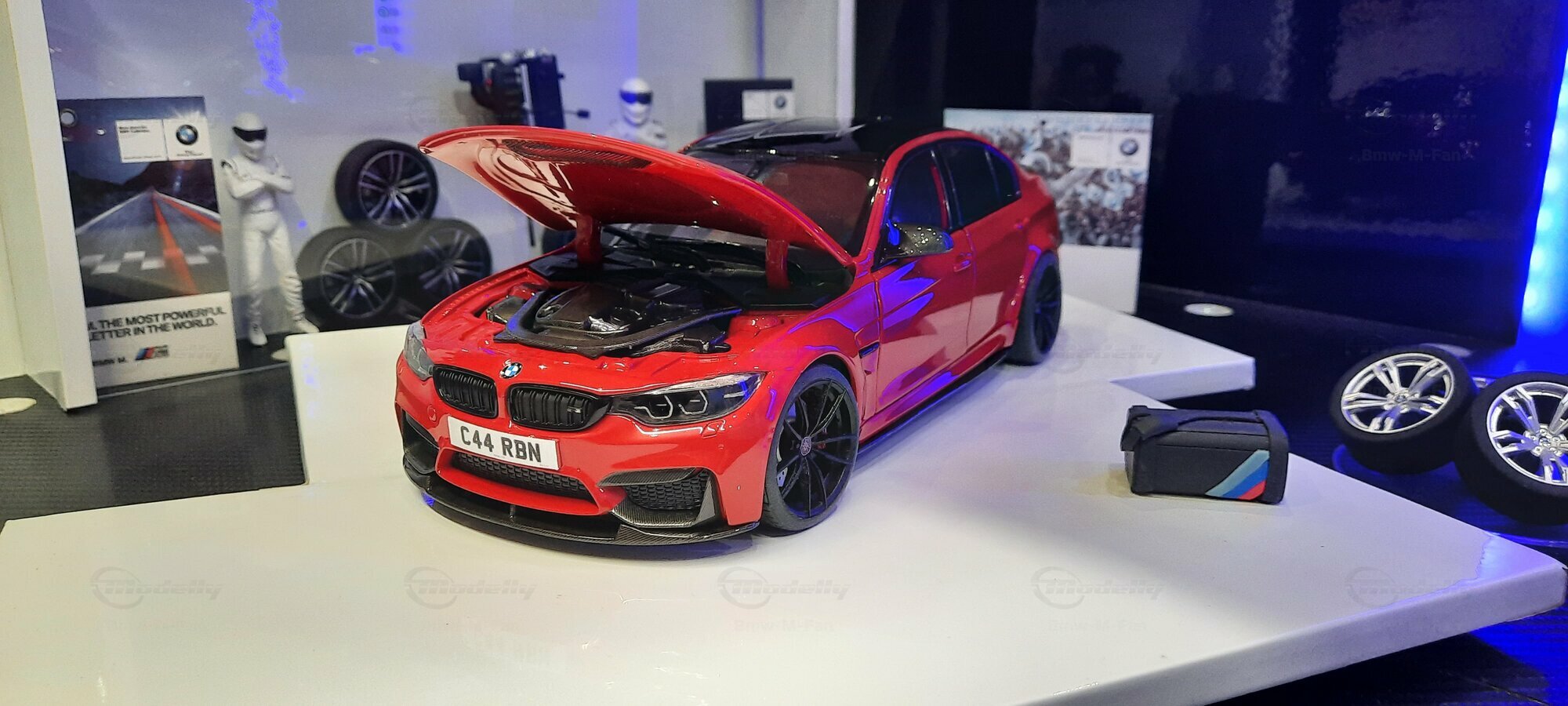
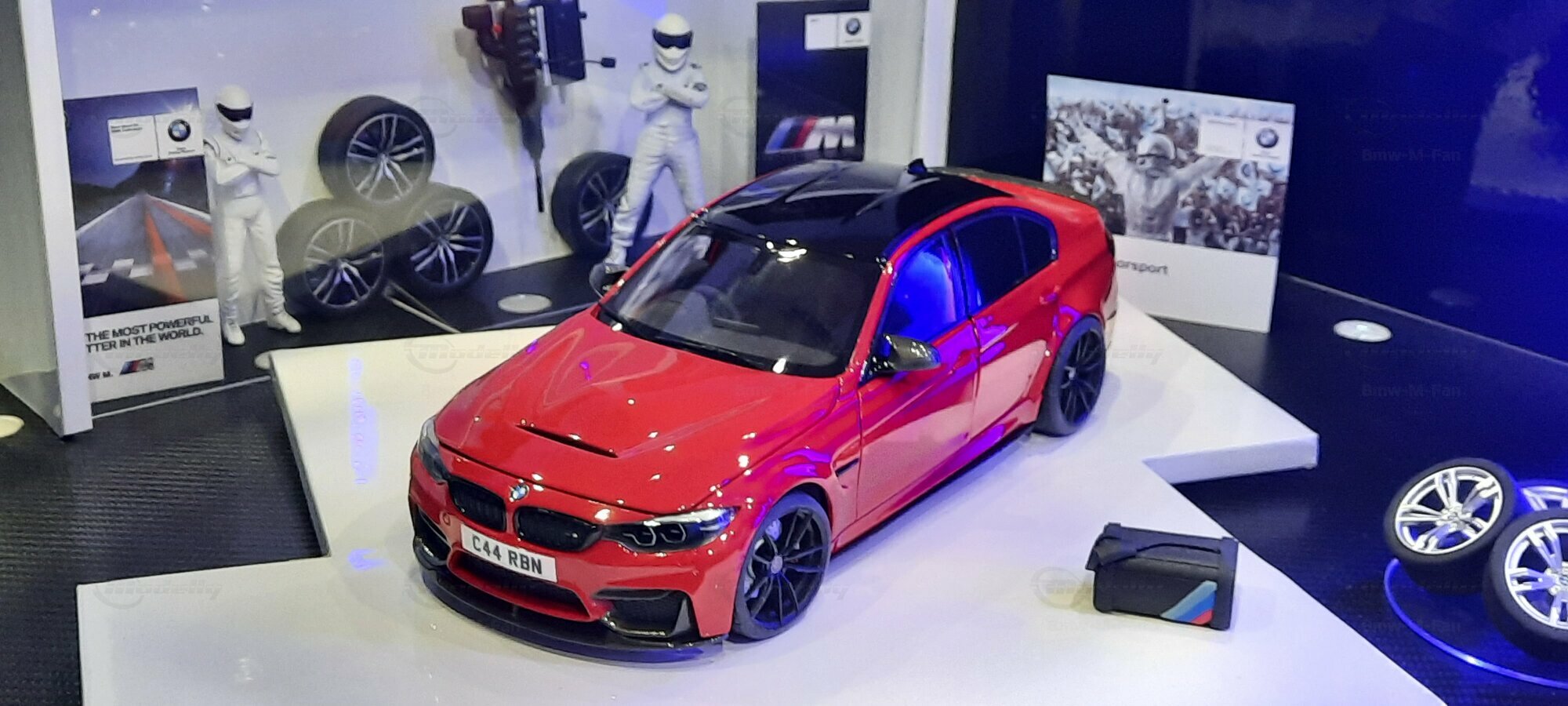
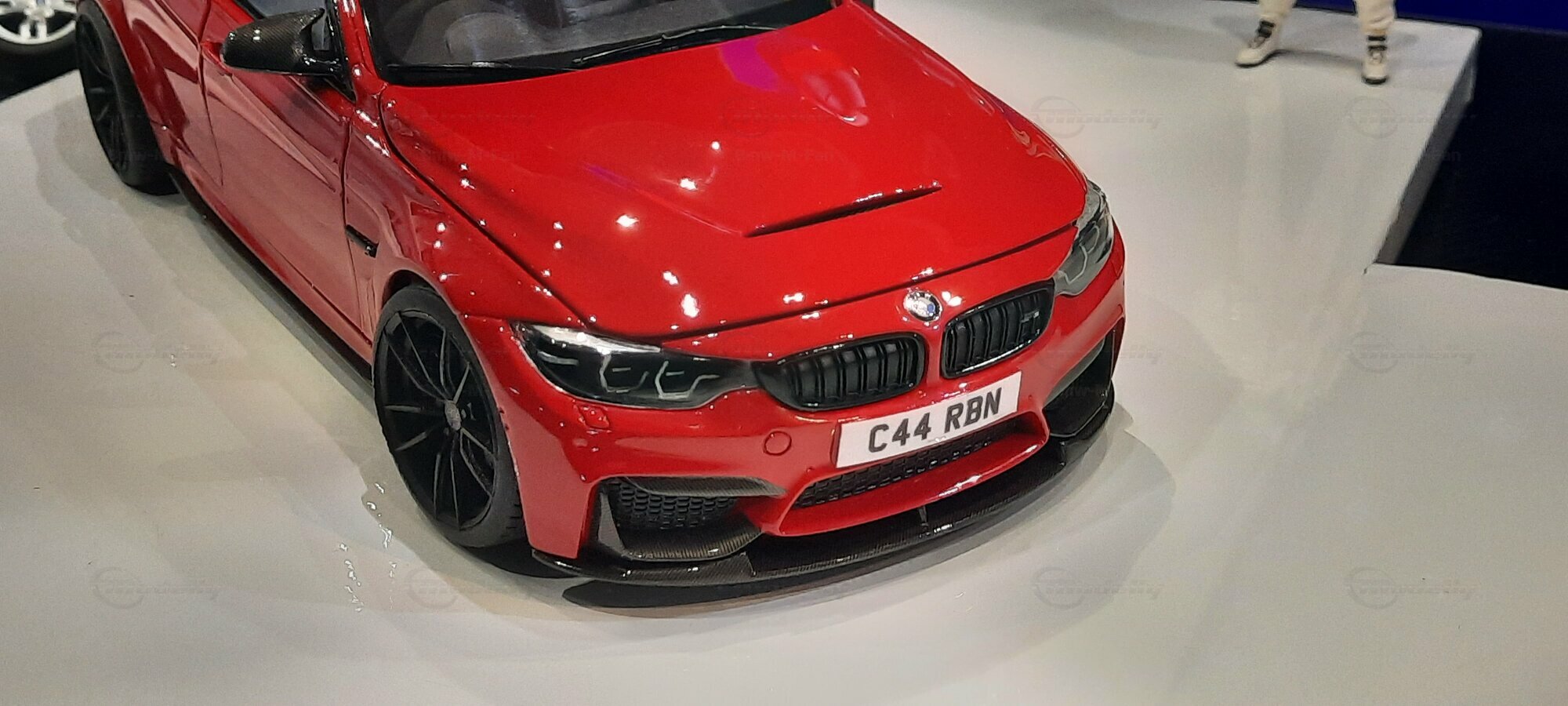
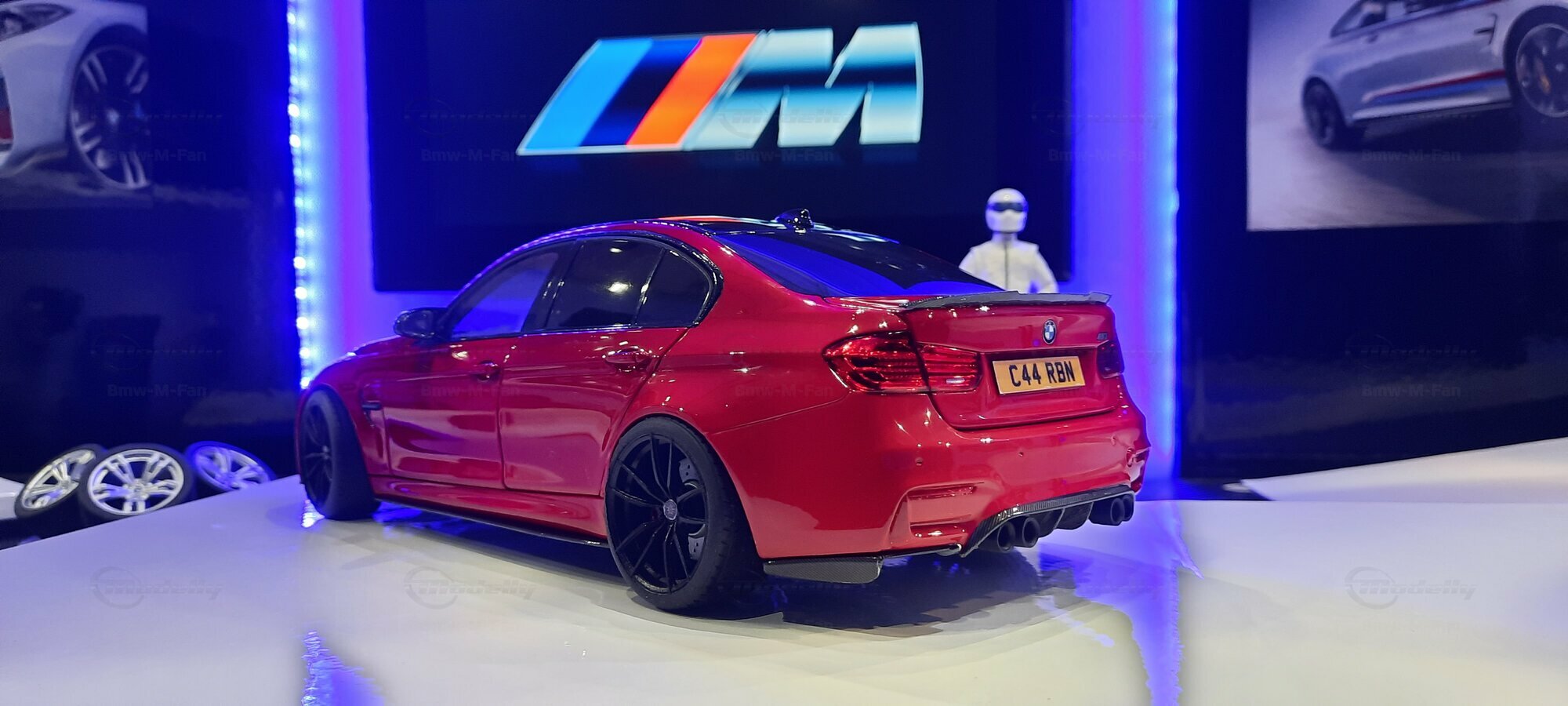
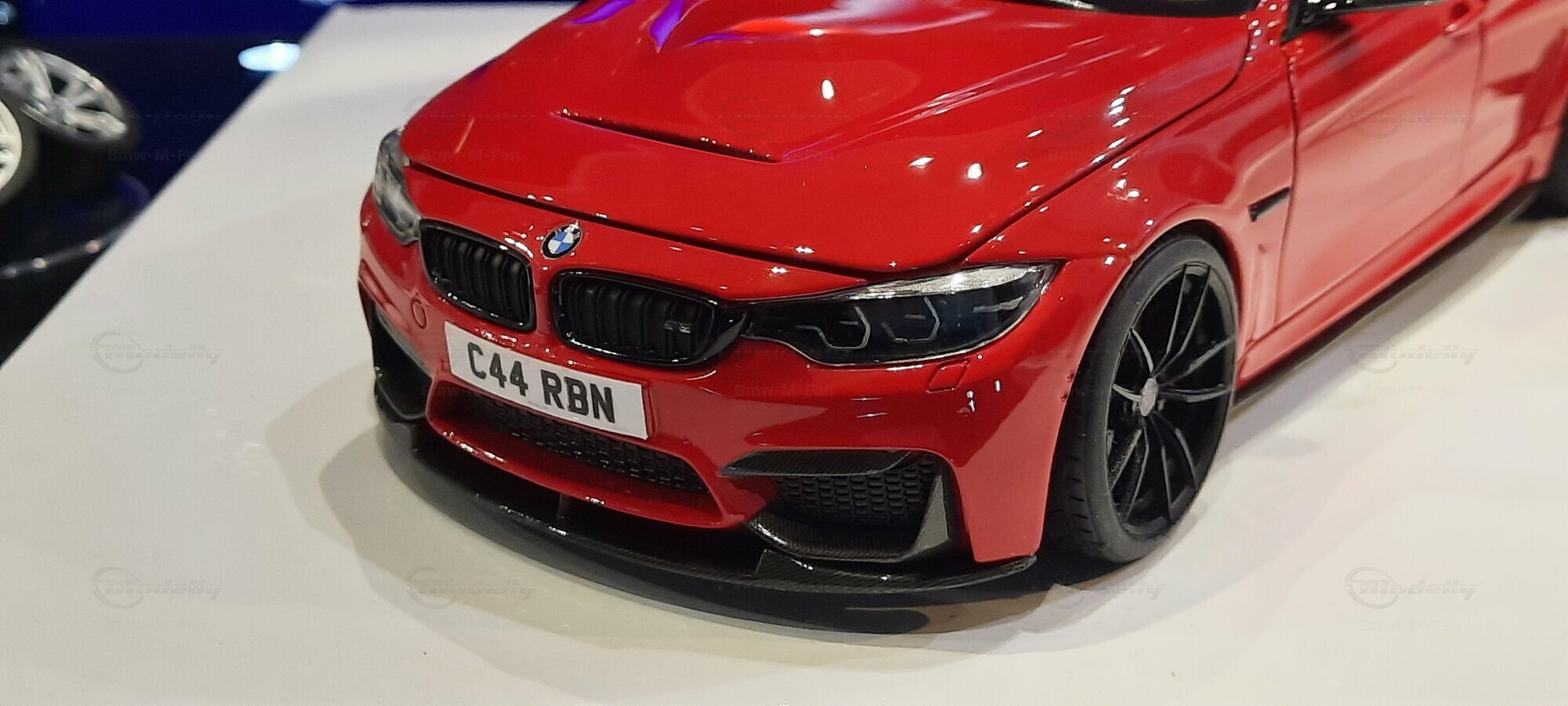
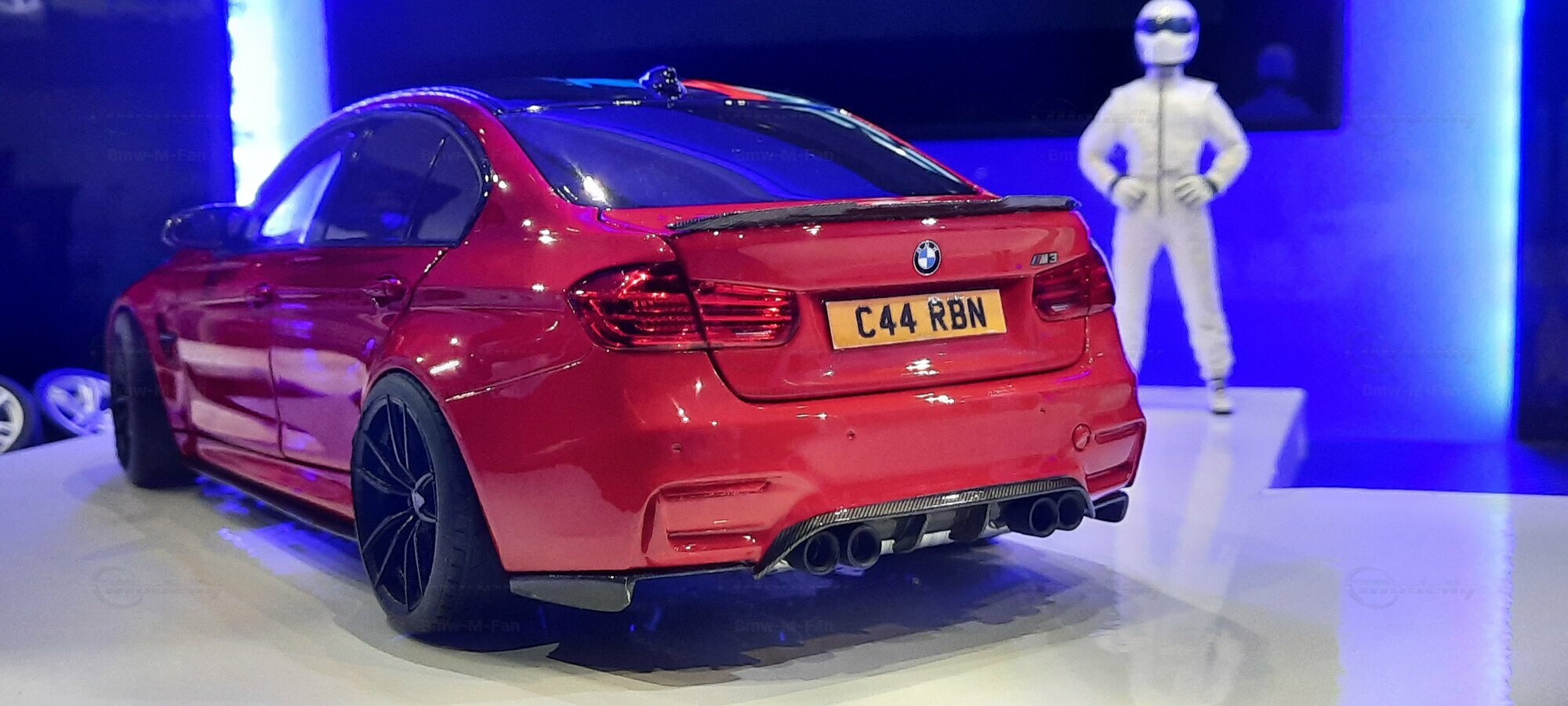
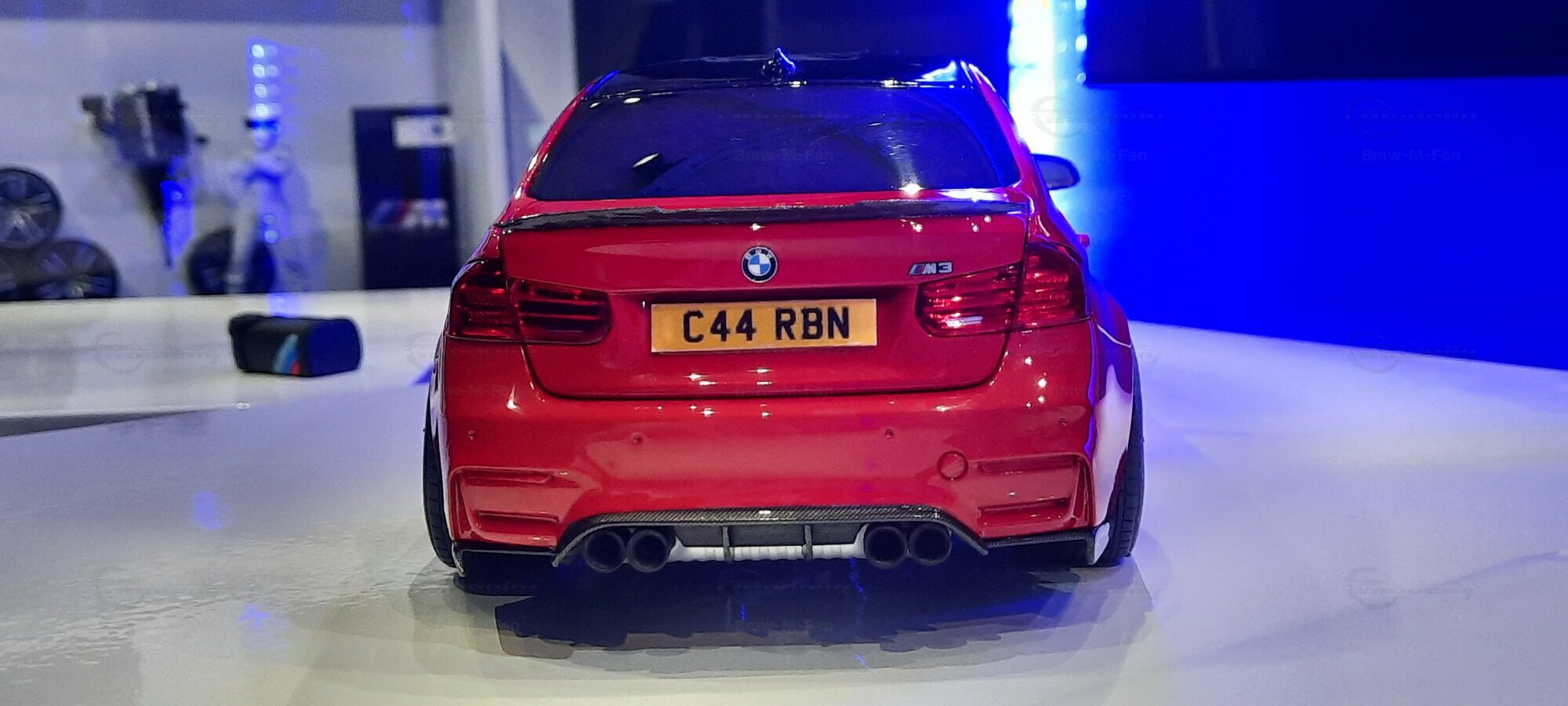
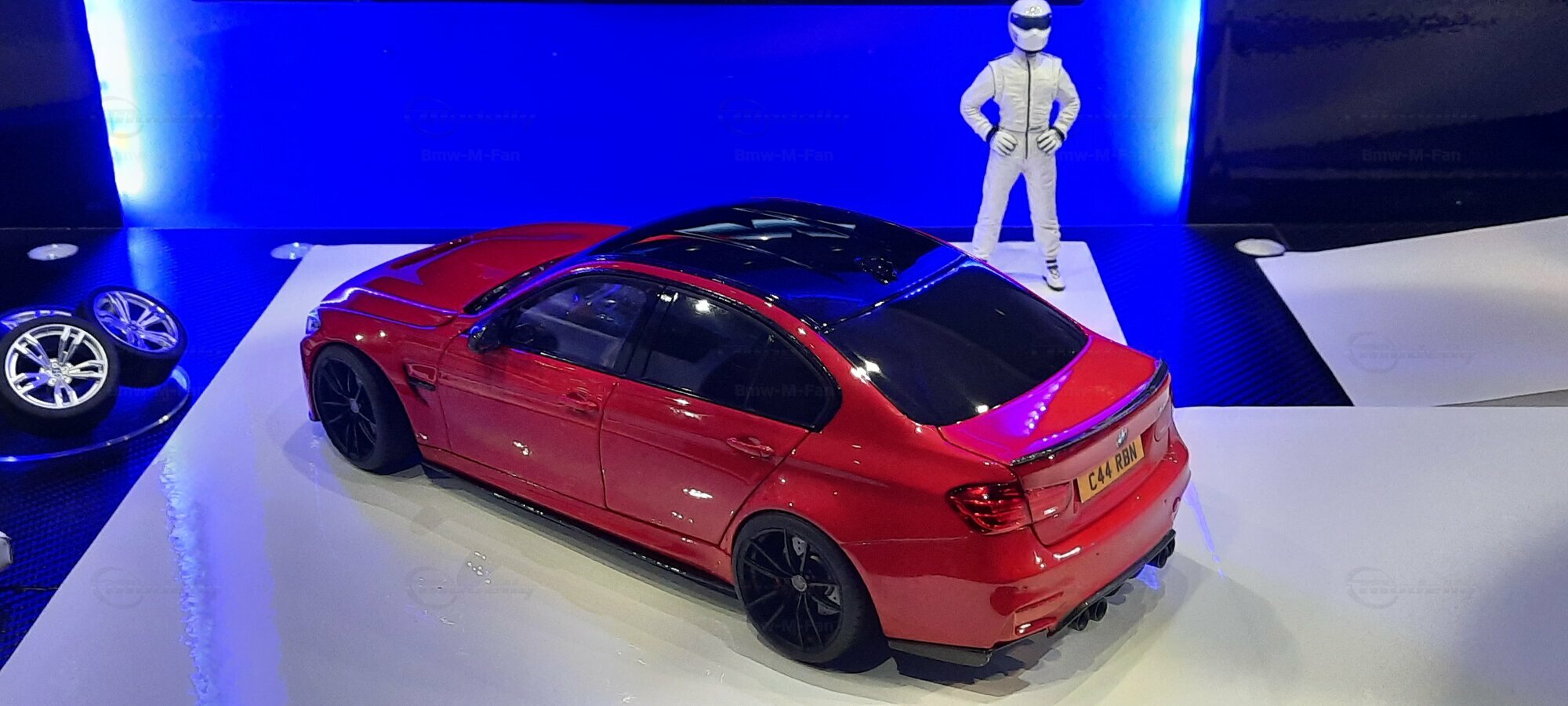
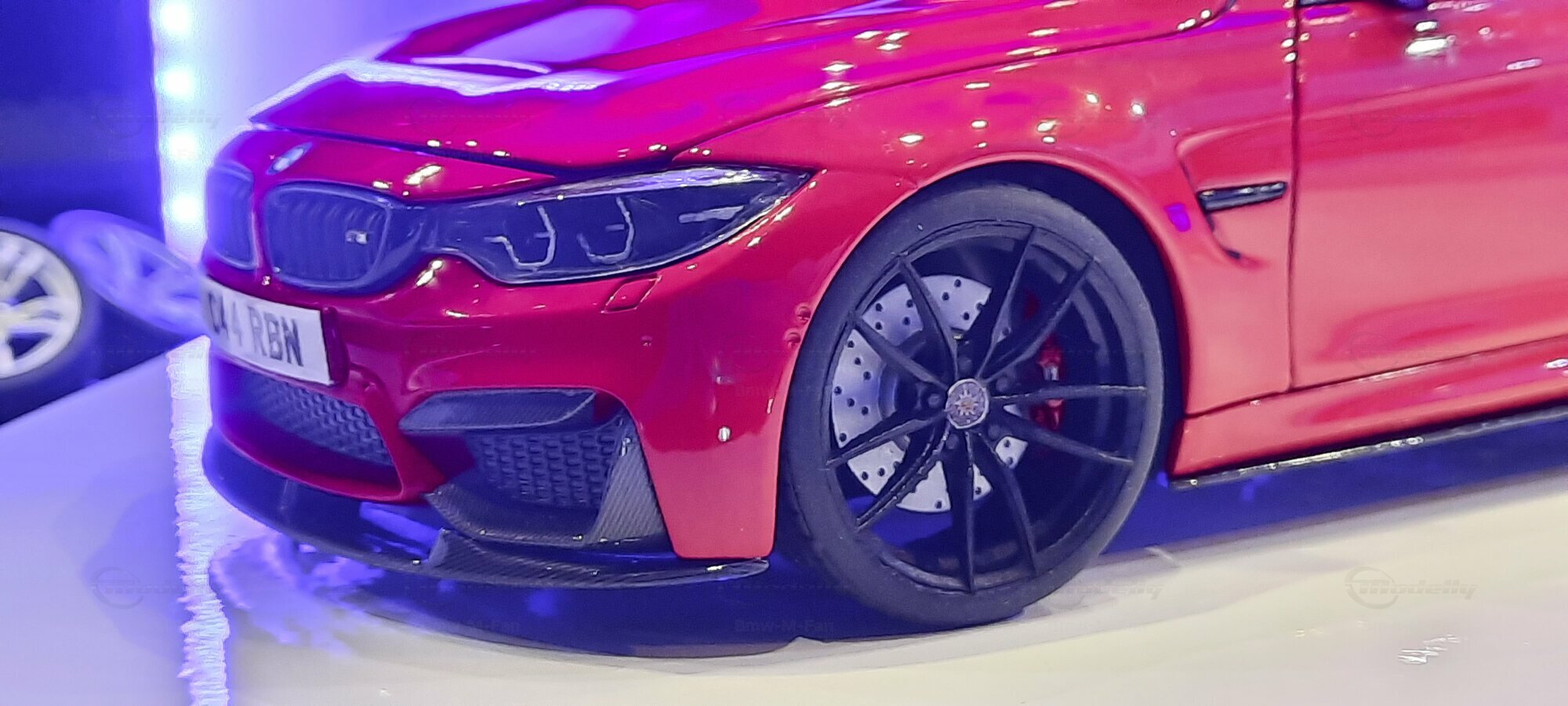
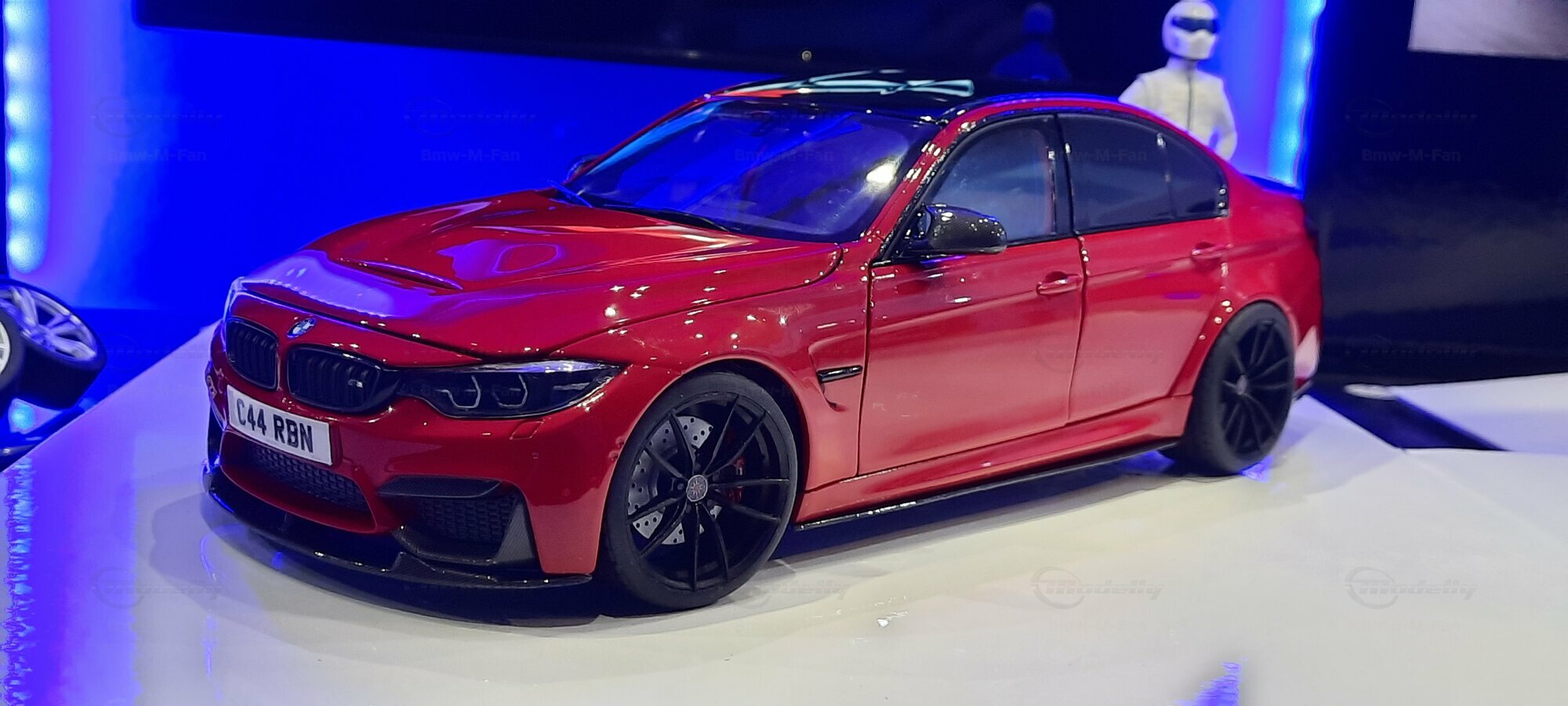
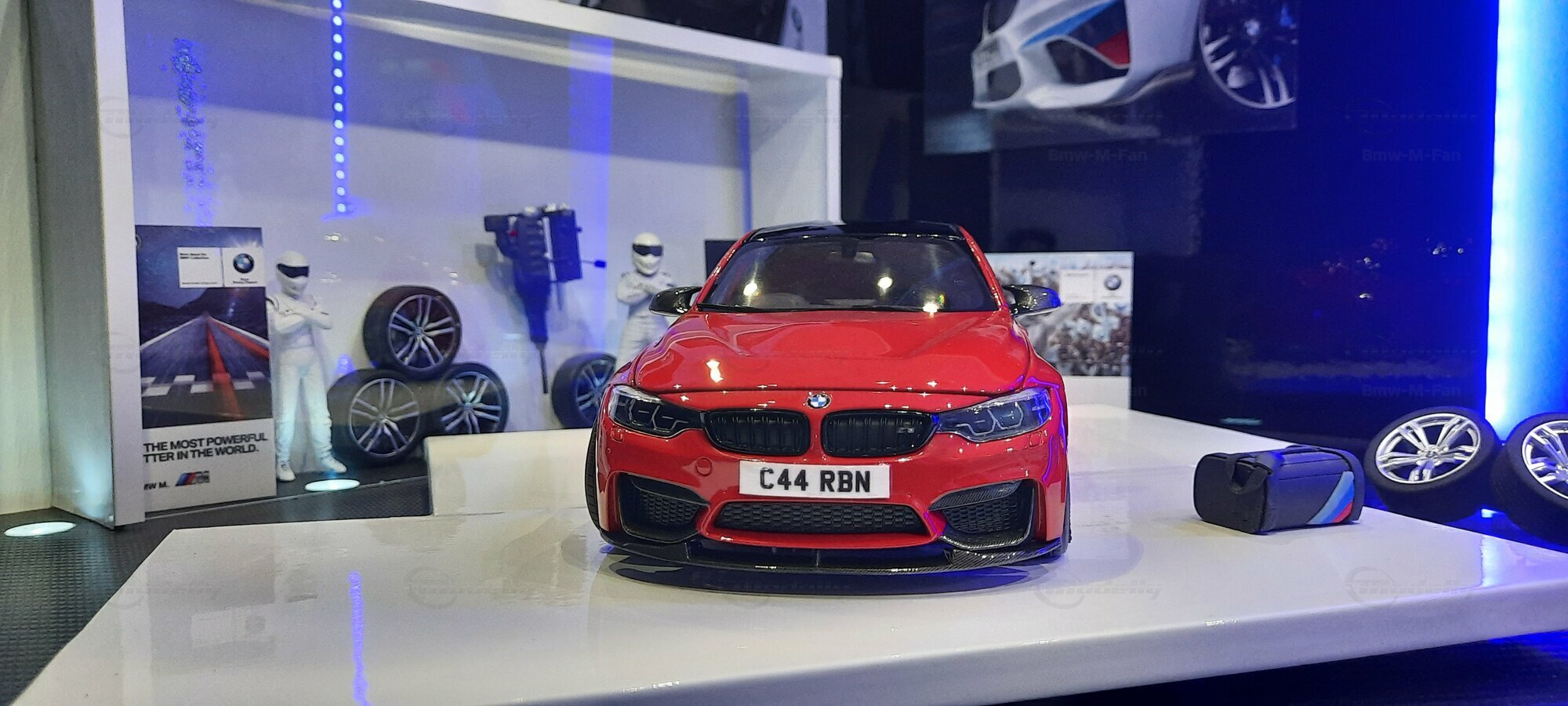
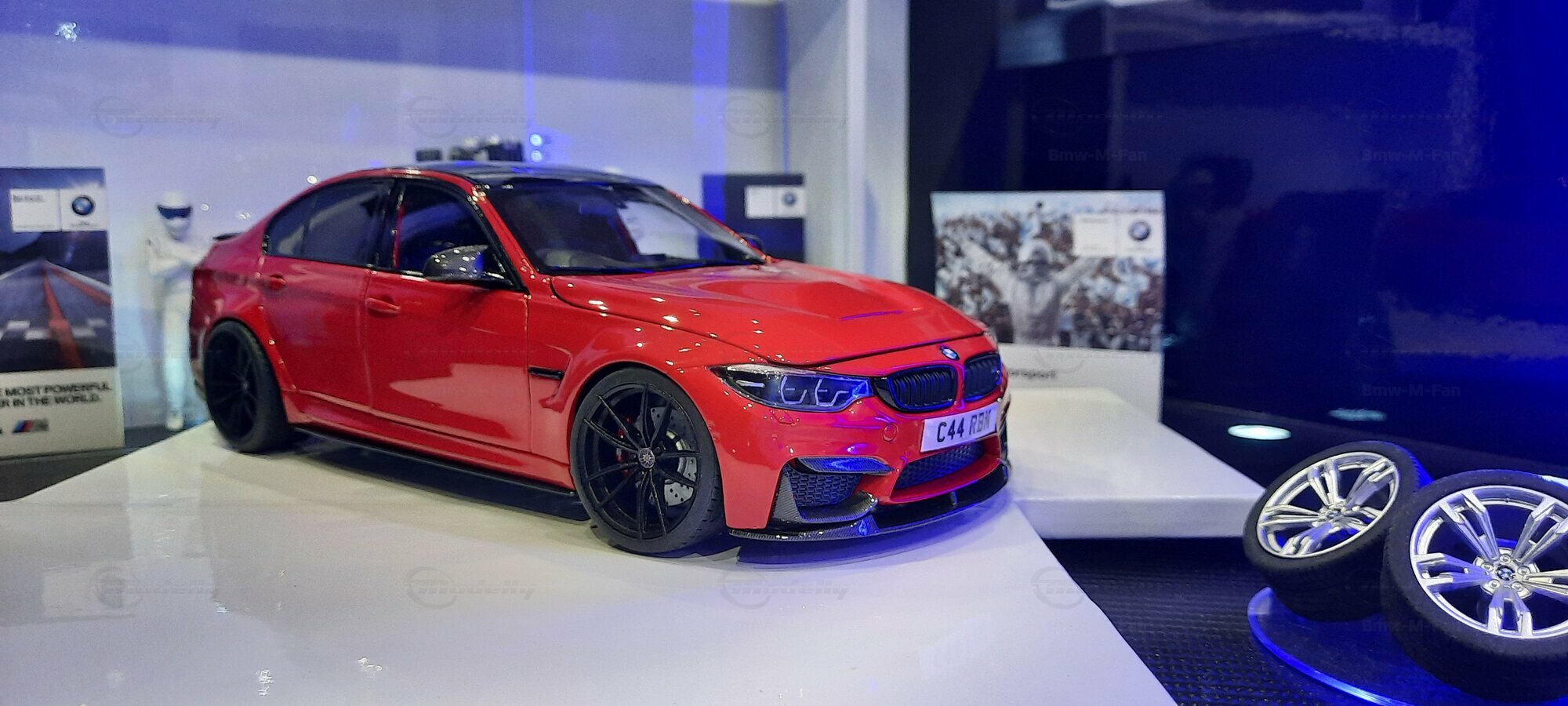
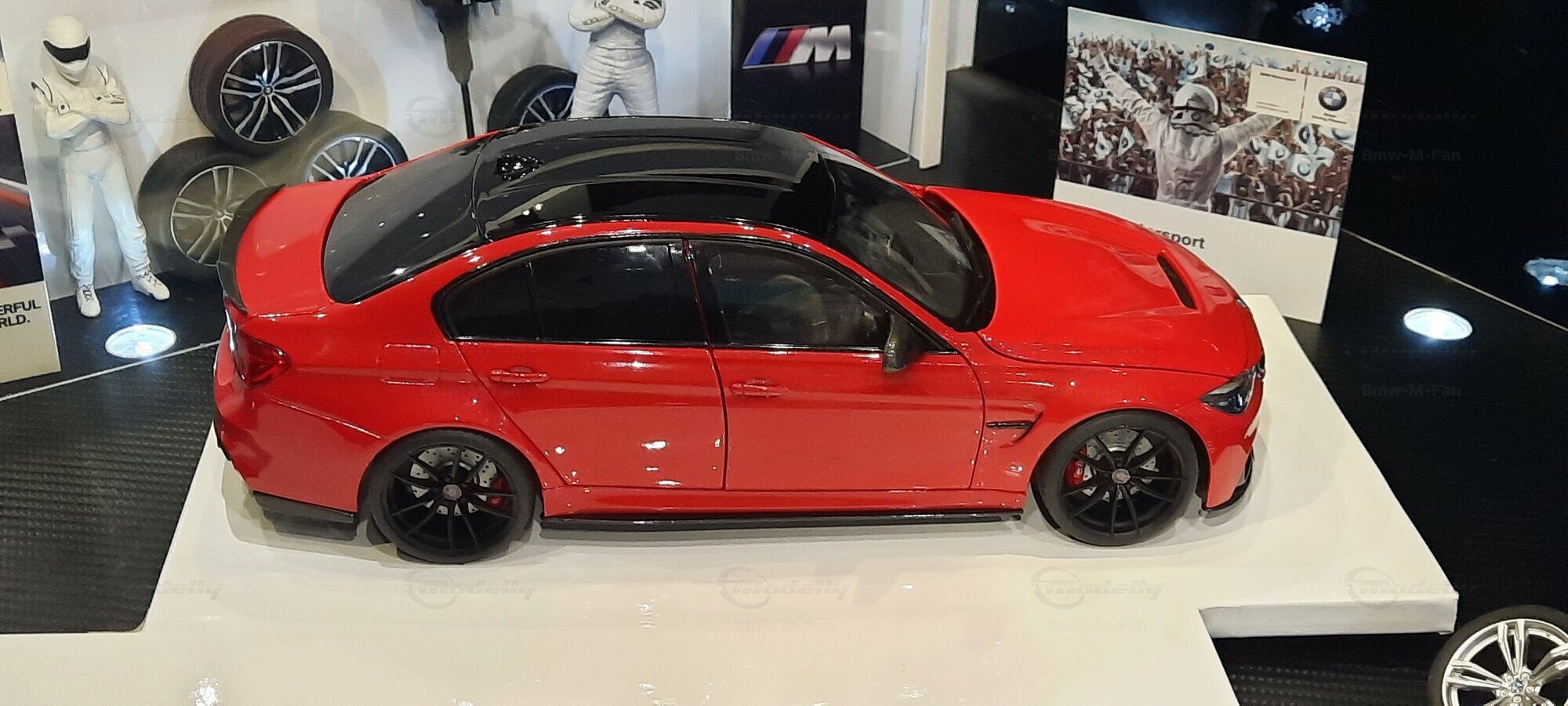
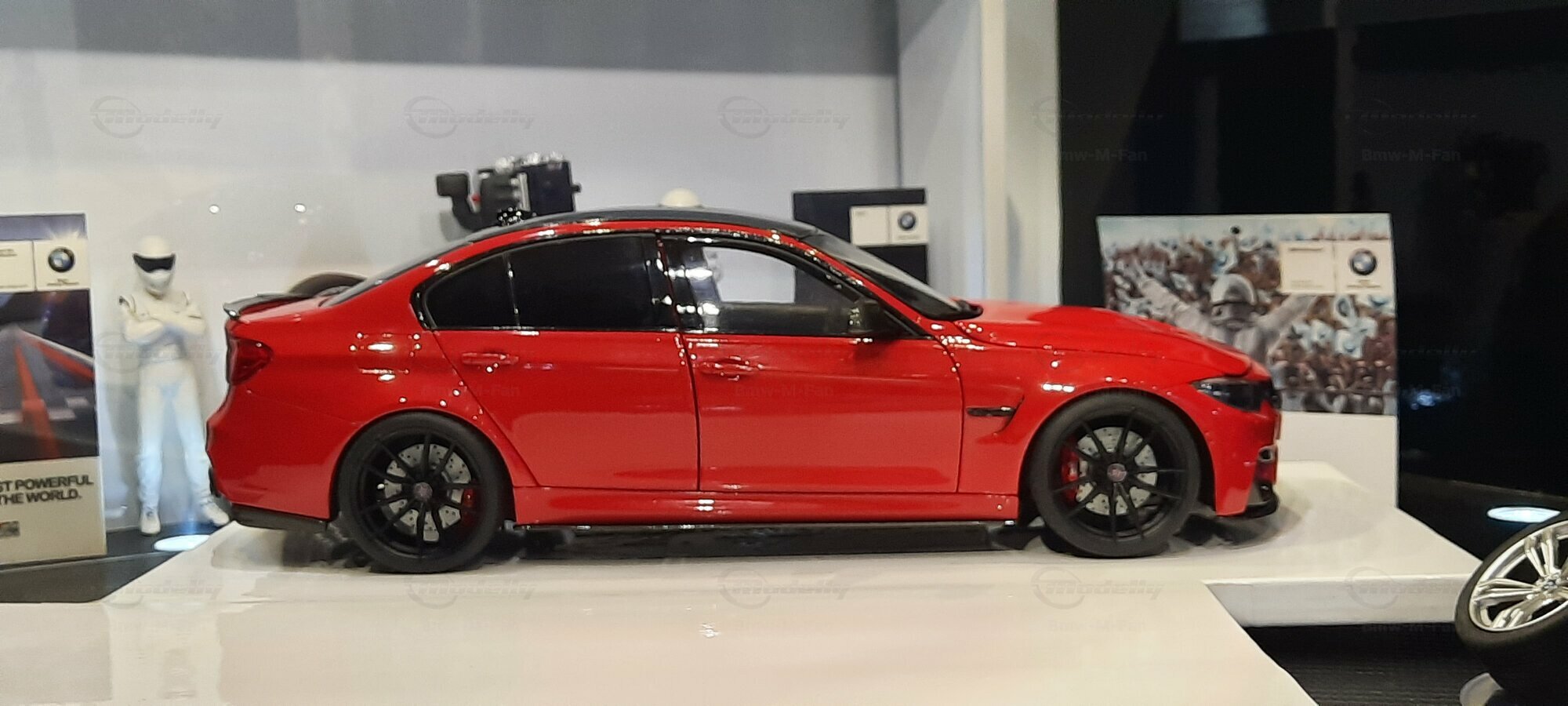
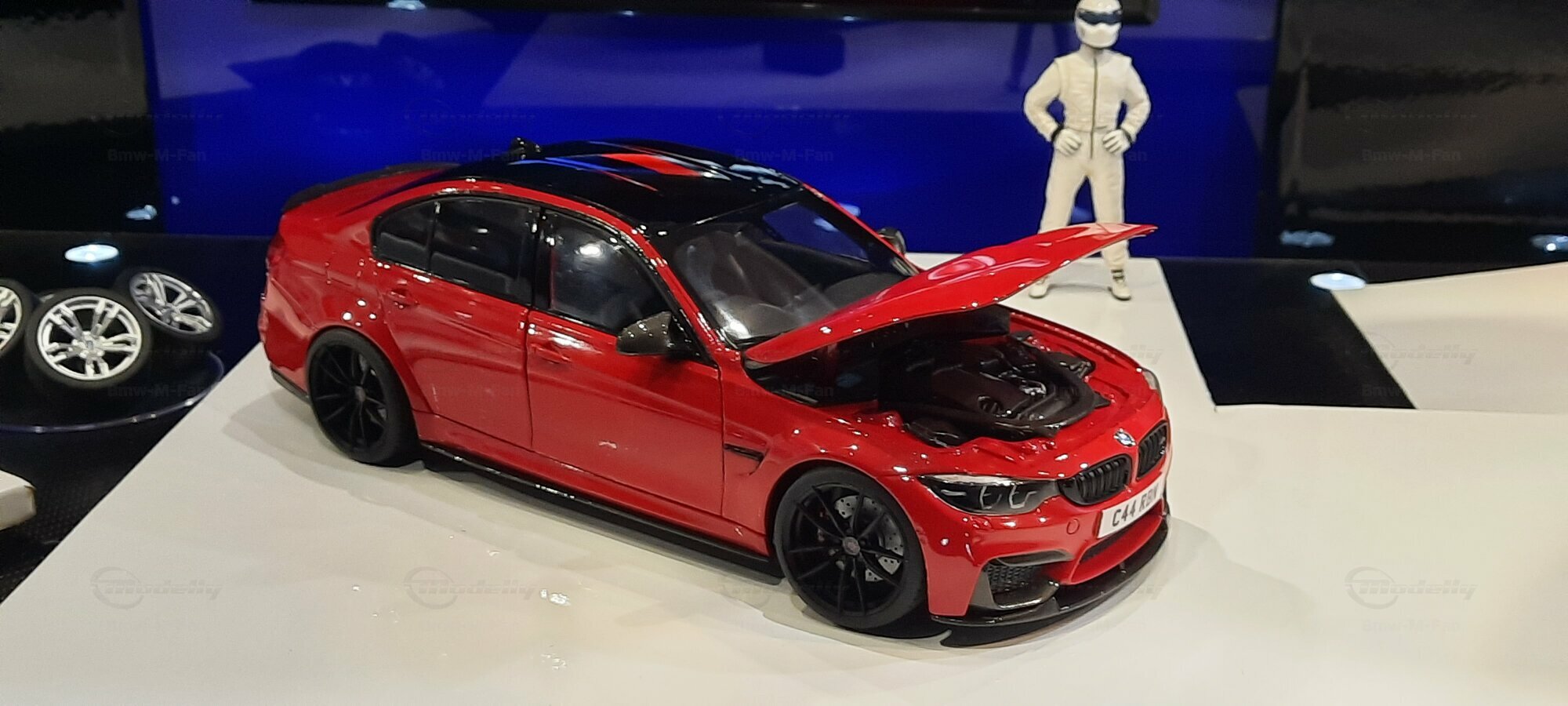
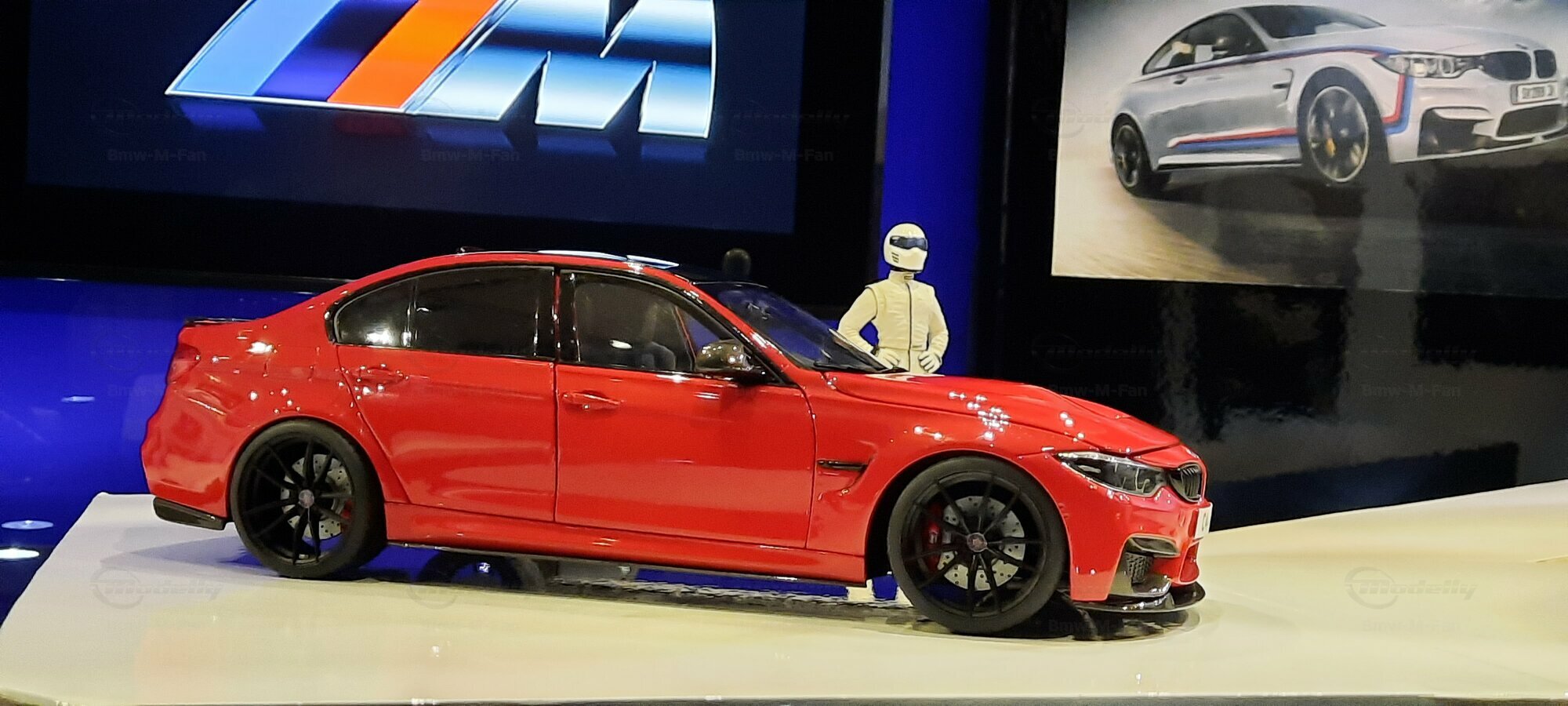
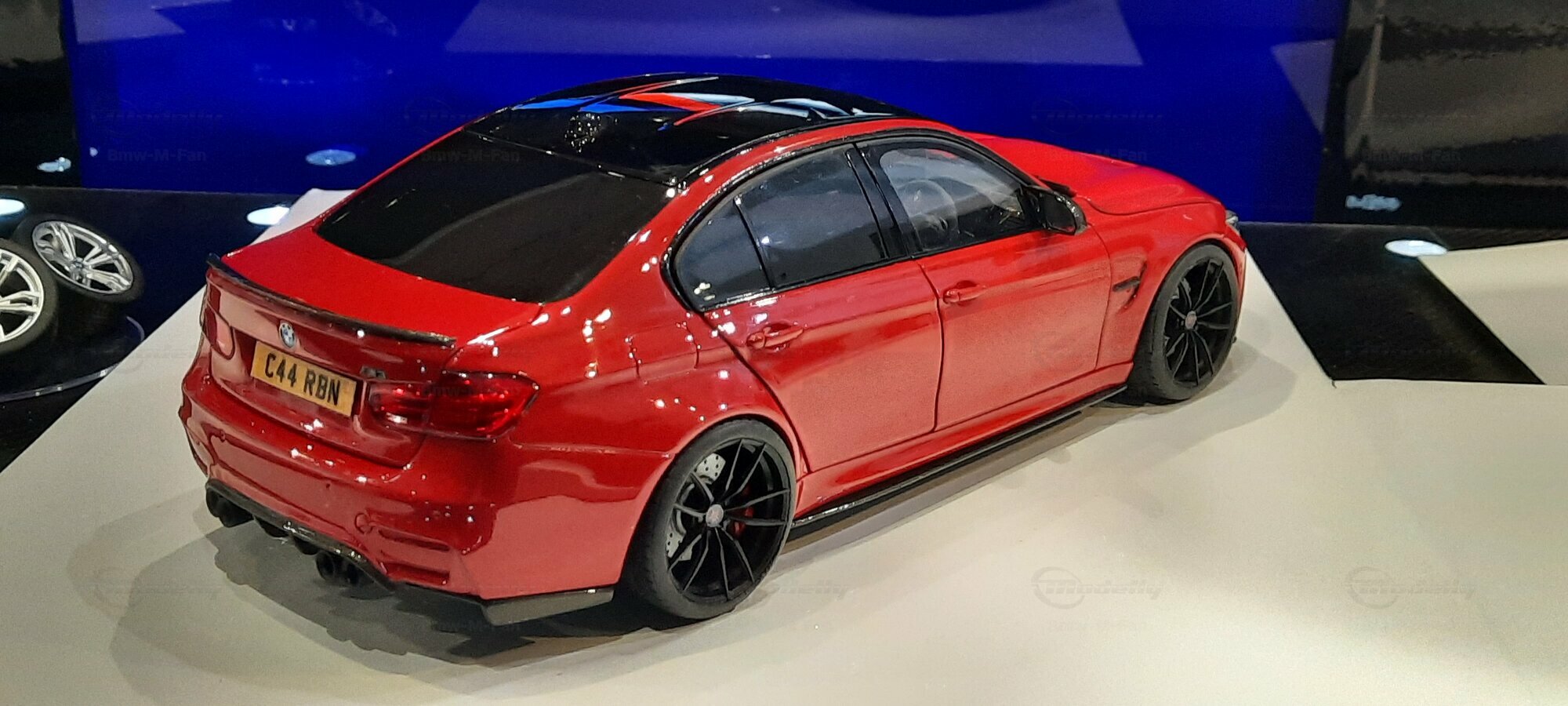
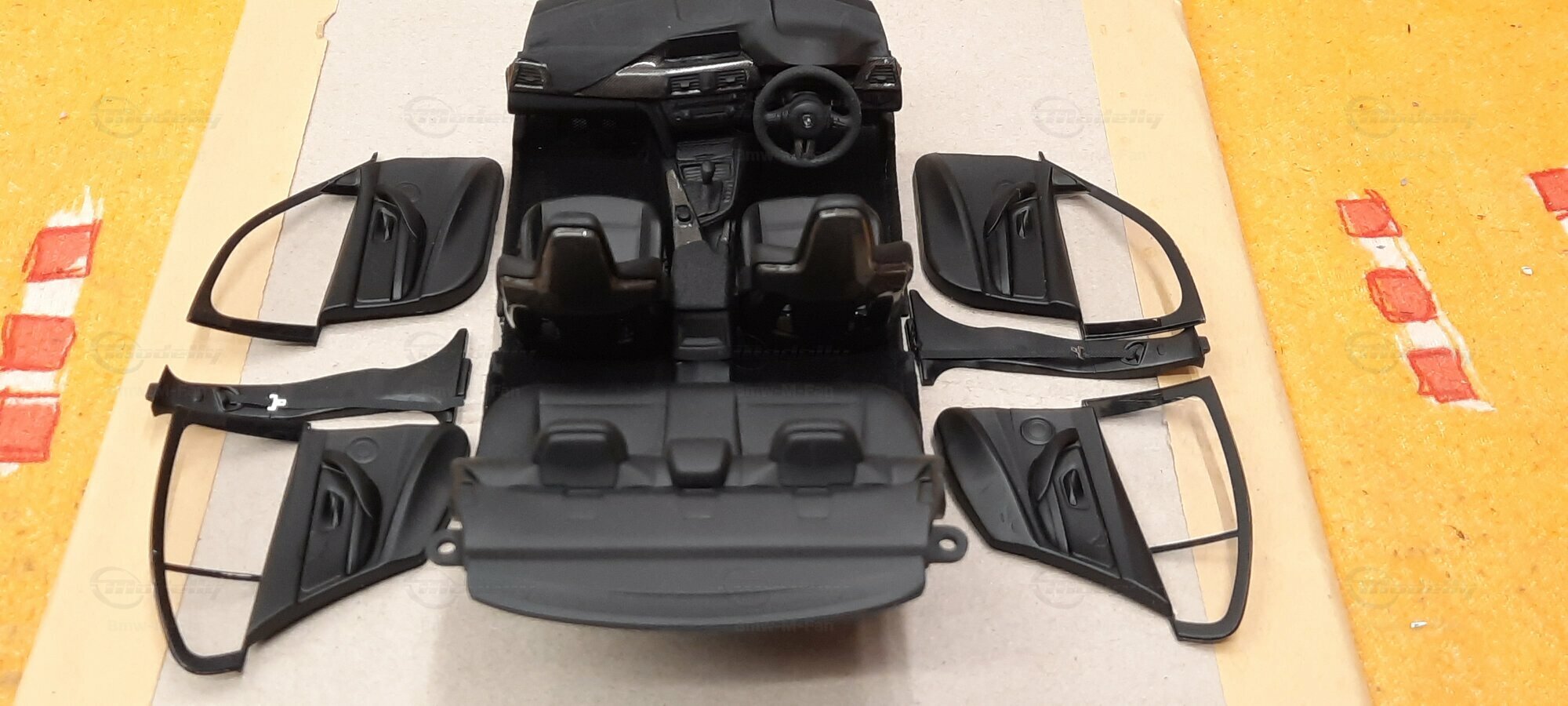
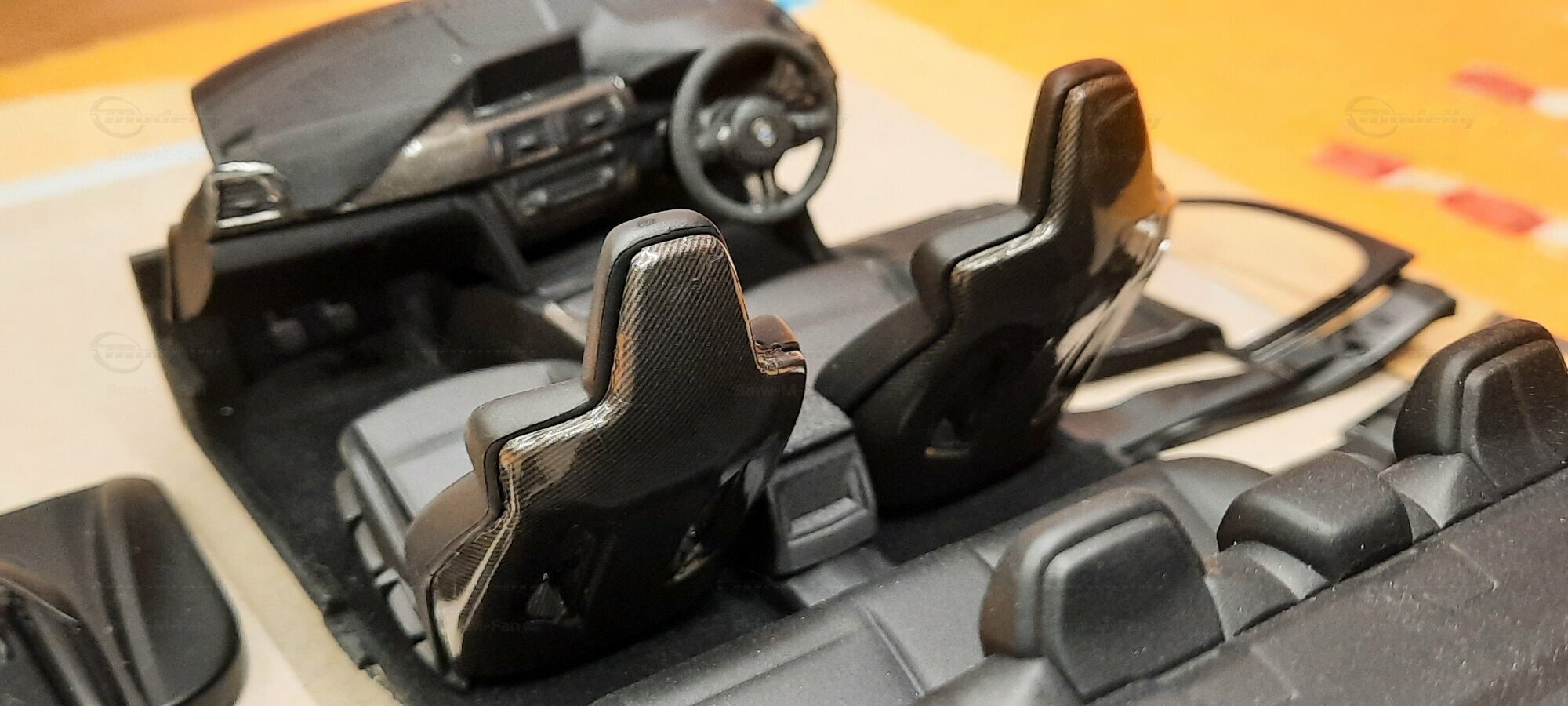
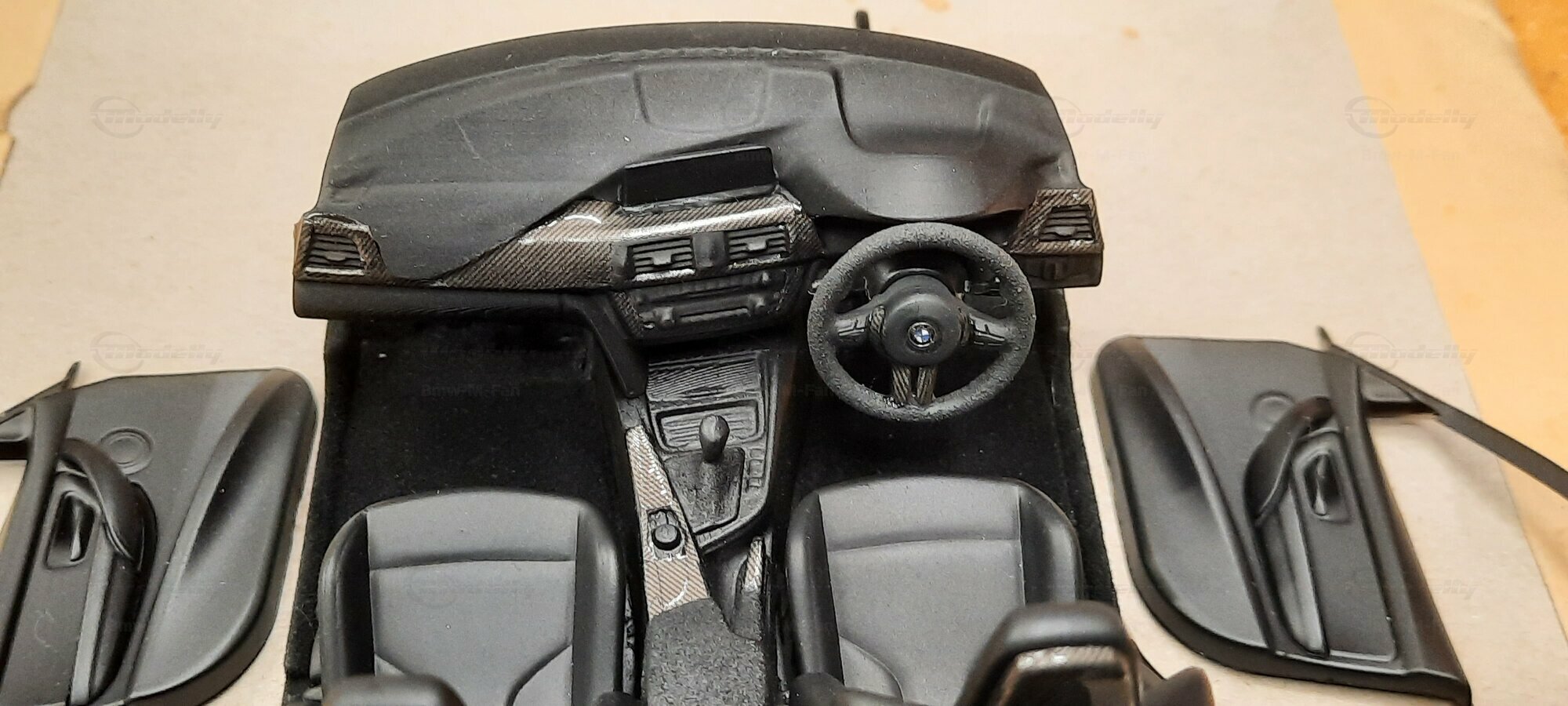
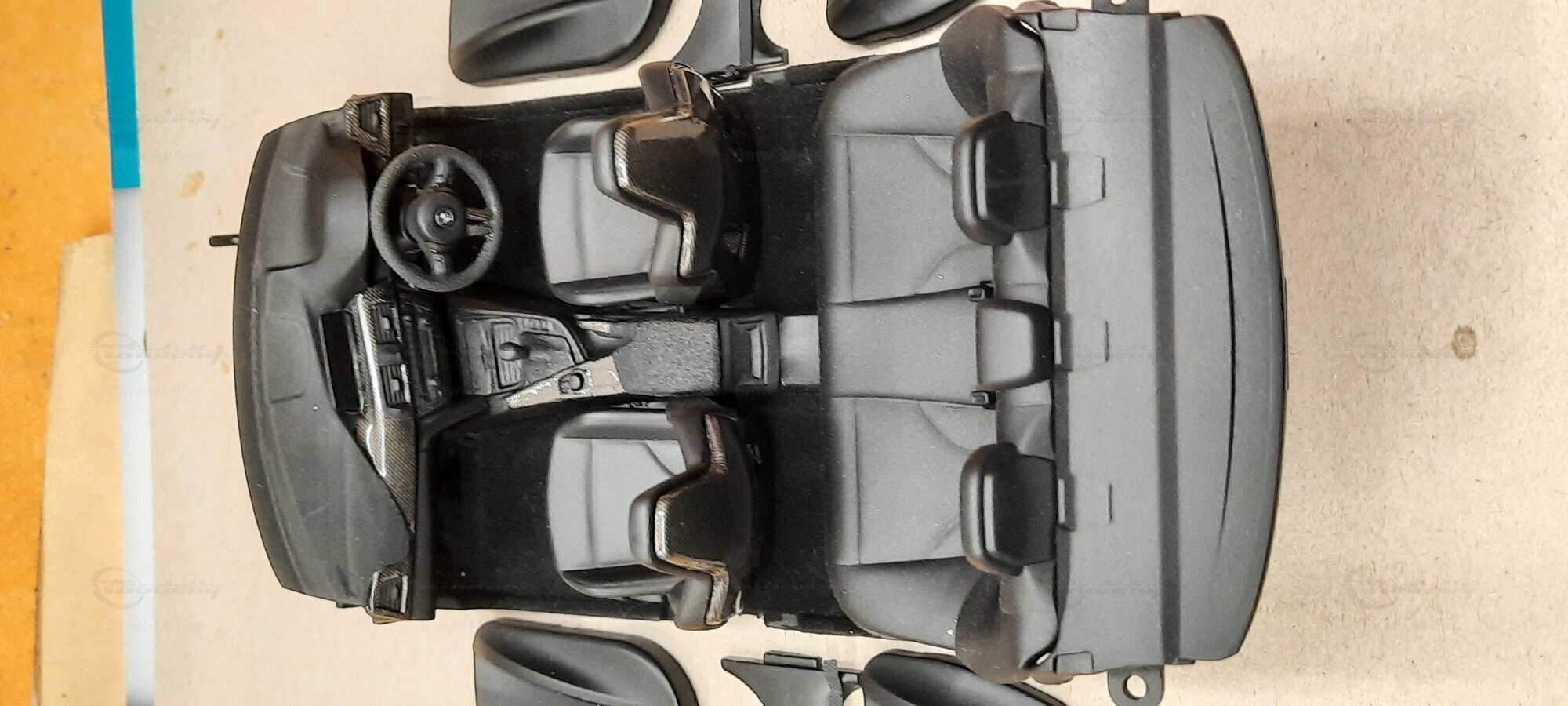
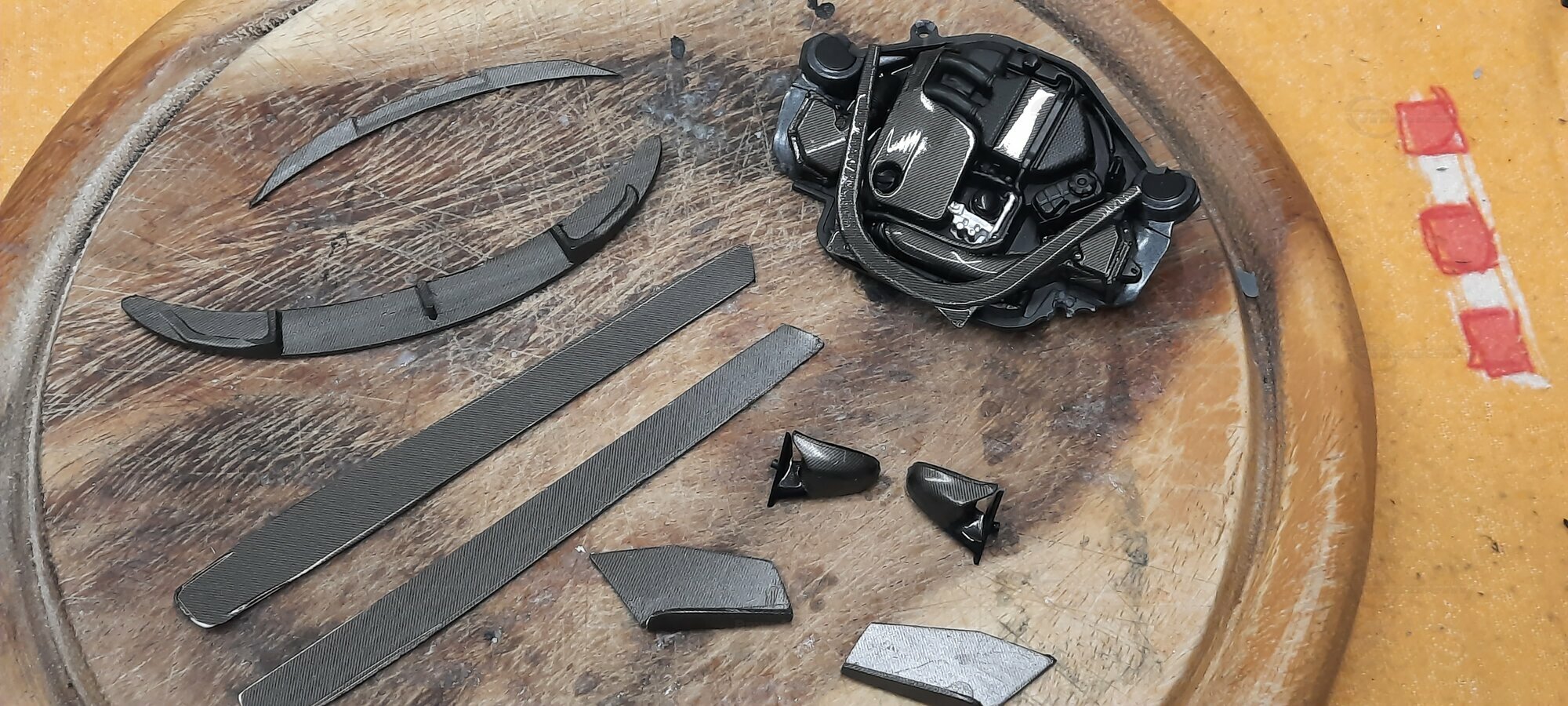
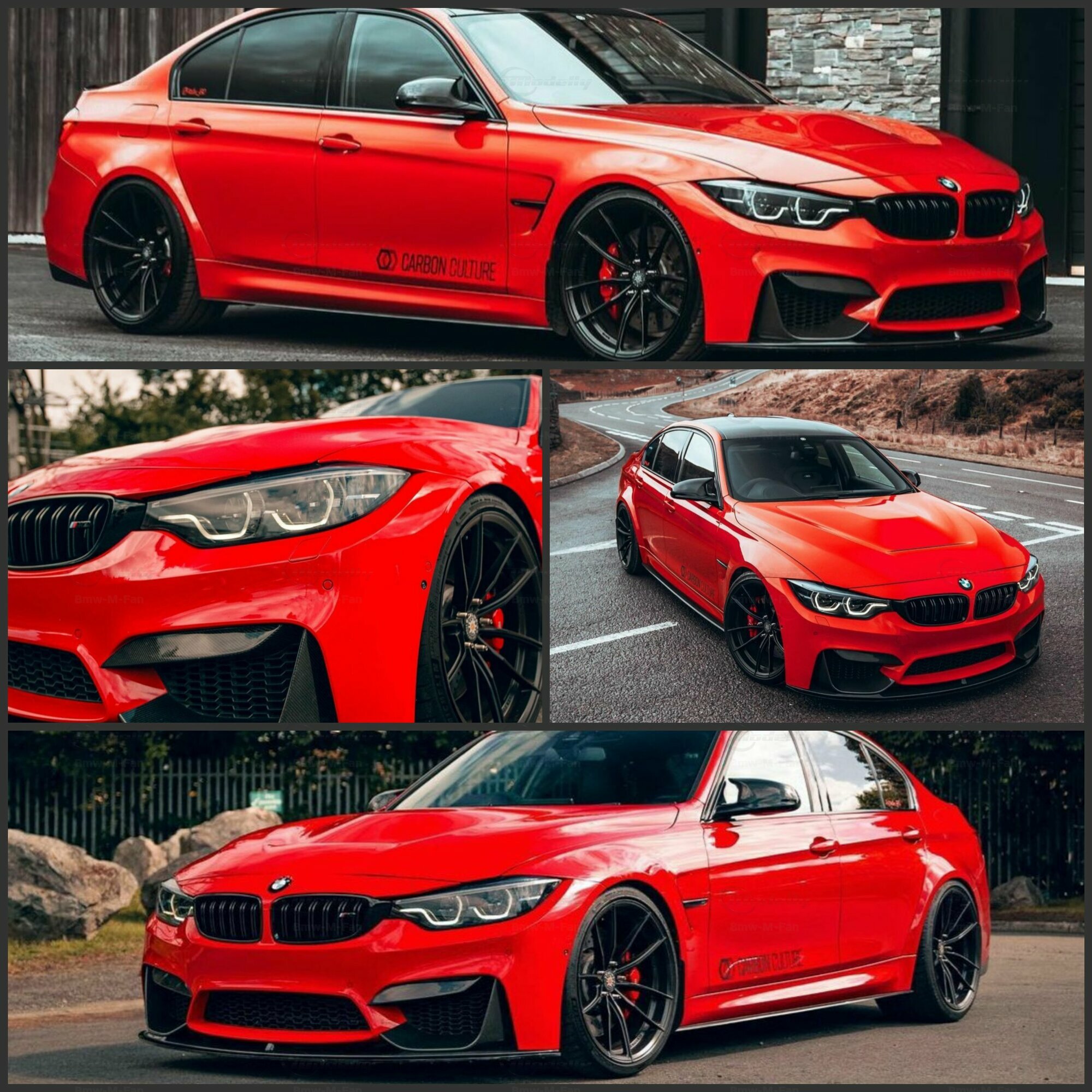
The object shown is a scale model in 1/18 by Norev, made from zinc diecast, and it belongs to the collection of the Modelly member “Bmw-M-Fan”. Important note for collectors: this is a modified miniature — it does NOT match the condition originally shipped by Norev. Many visible details go beyond the factory version. The model sits much lower, has enlarged black multi-spoke wheels with deep concavity and wears a front bumper with an extended lip in carbon-look. The kidney grille is blacked out, the headlights have a darker treatment of the light graphics. The body is painted a strong red; the roof and mirror caps are done in black and look like a carbon finish. Notable are the widened rear wheel arches and little bolt details at the fender edges, suggesting a widebody look. Tinted windows reduce interior visibility; visible badges are limited to the BMW roundels. In front of the car on the photos you can see a small prop with M-colour stripes used for the presentation. The front license plate in UK style reading “C44 RBN” reinforces the British vibe. Again: this 1/18 Norev model has been modified after purchase; the bodywork, lowered ride height, wheels and color scheme are not factory-original.
Collector’s view: paint, looks and relation to the real car
For collectors the photographed miniature is mainly interesting because of its coherent, aggressive look. The red paint has an even gloss; panel gaps and the F8x bodylines are neatly reproduced. The black roof creates a strong contrast; you can make out the power dome on the hood, referencing the real BMW M4 F82’s layout. Up front the deep intakes and side air curtains reproduce the prototype’s aerodynamic elements. From the side you notice the wedge shape with a low front lip and slightly flared sills. The wheels sit flush with the fender edges; dark wheel bolts and brake discs keep the silhouette clean. The mirrors with carbon-look caps and black window trim echo M-style details. The display scene with BMW M motorsport graphics, wheel sets in the background and figures in race suits underlines a workshop / trackday vibe without tying the model to a specific racing series. There’s no clear movie or TV link visible, so that’s left out. For a display cabinet I’d place it at a slight angle that shows the front bumper and roof — that brings out the M4’s lines and the model’s mods. Overall it’s a custom diecast that captures the F8x proportions and gives “Bmw-M-Fan”’s collection a distinct touch.
Chriskitt
Auto-translated
 Beautiful car 🤍💙♥️👍👍😎 I really like the execution.
Chriskitt
Auto-translated
 Beautiful car 🤍💙♥️👍👍😎 I really like the execution.