
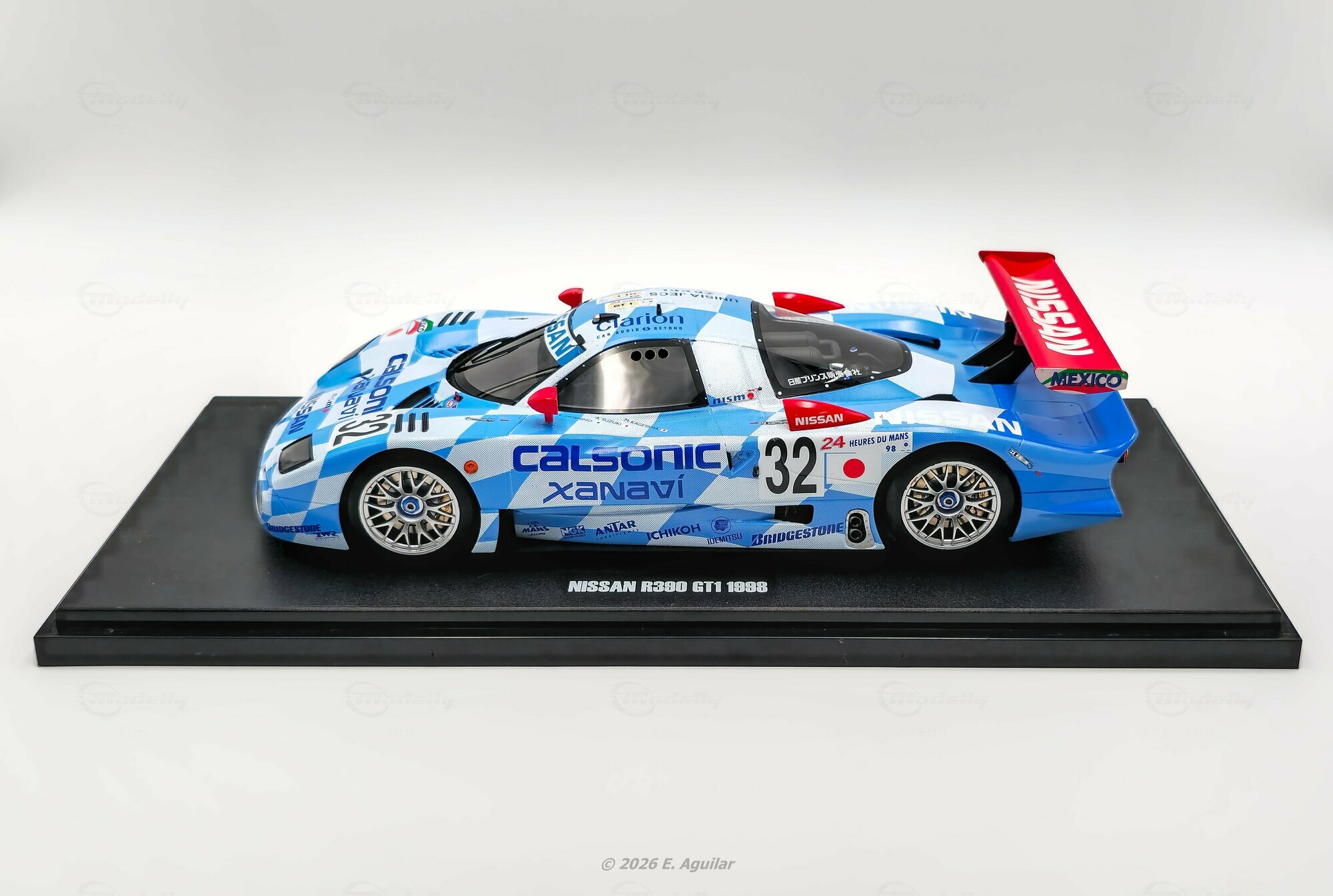
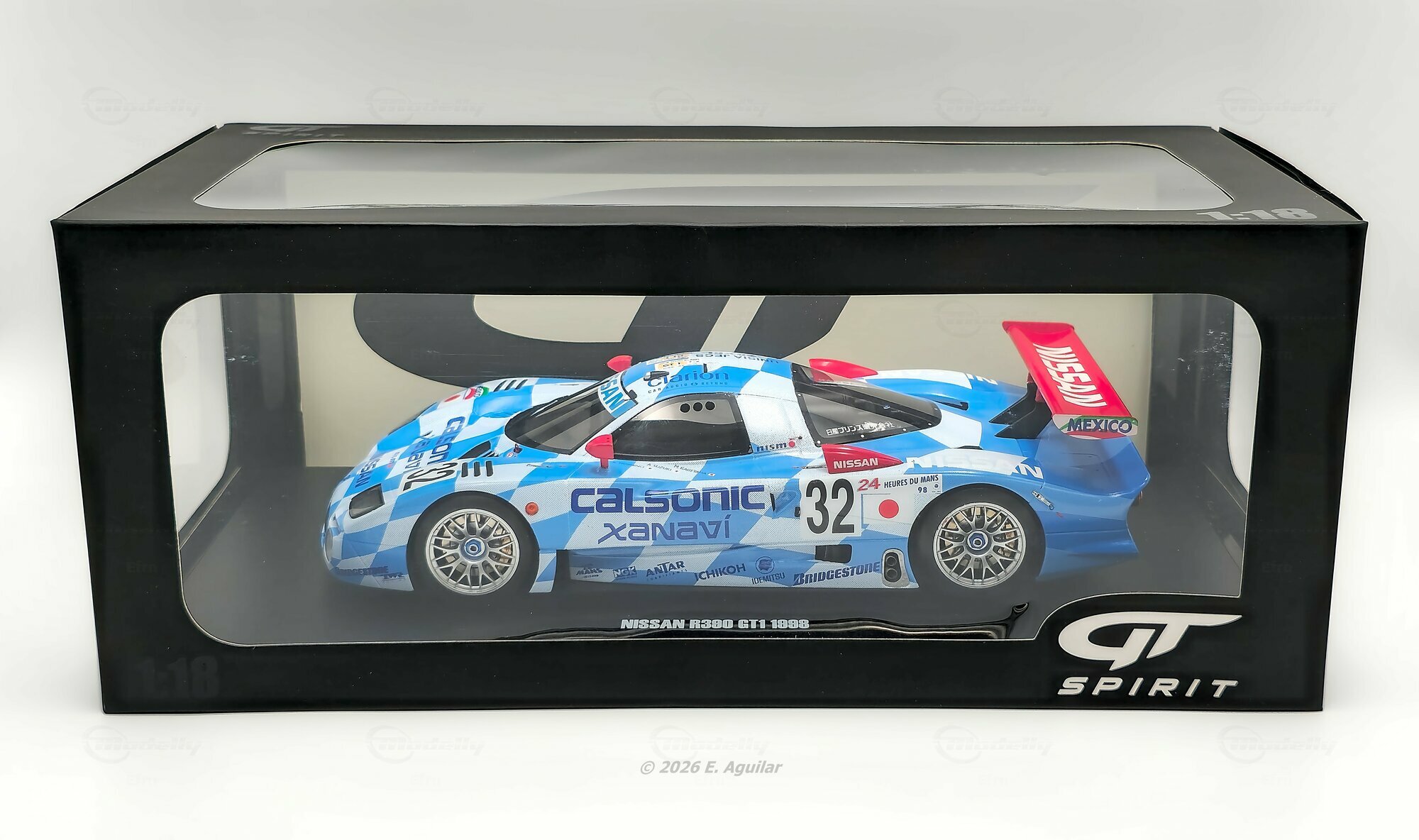
Nissan R390 GT1(1:18, GT Spirit)
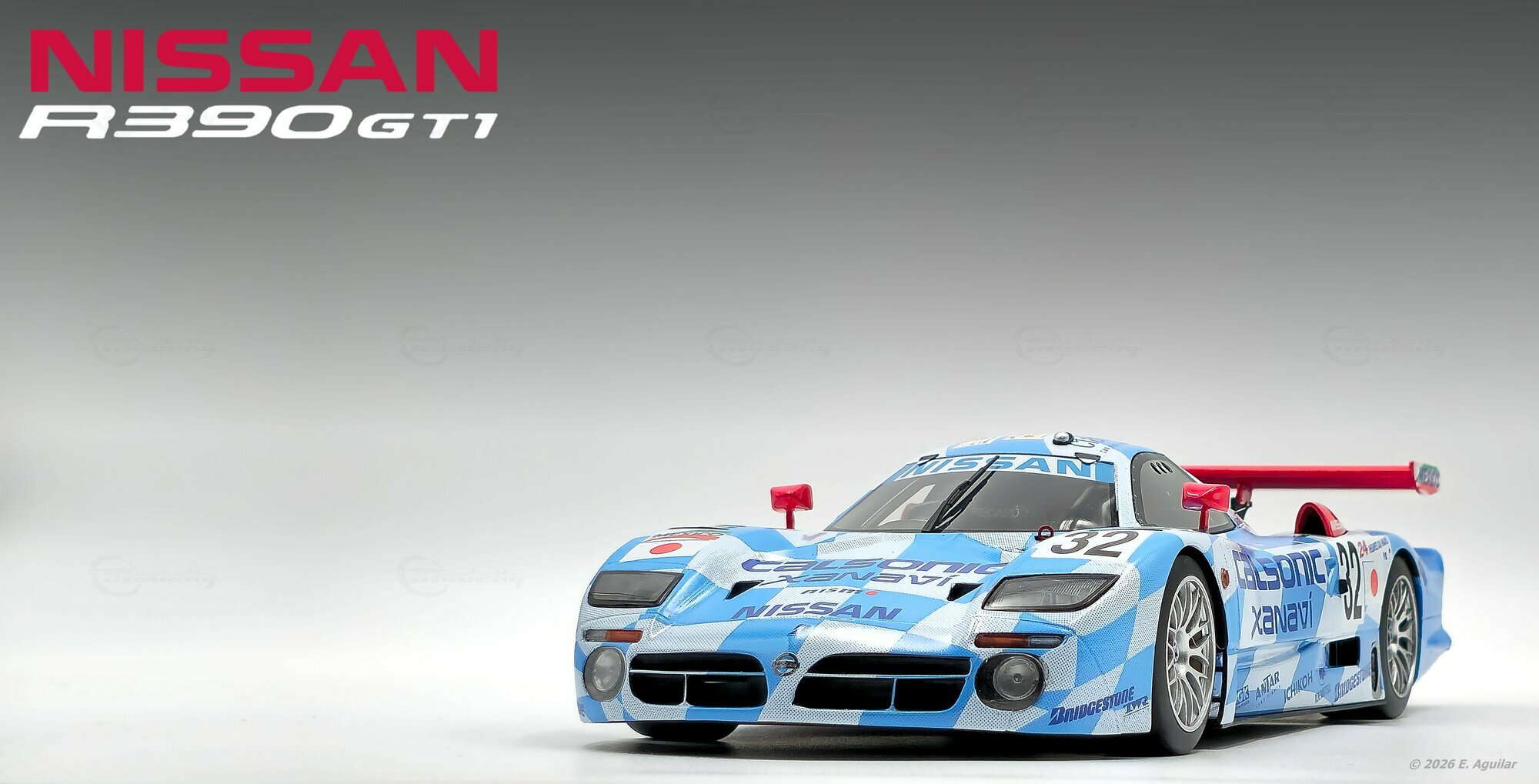
- Nissan R390 GT1 (from 1998)
- GT Spirit
- 1:18
- Showcase model / No engine
- resin
- racing / multicolored
- Perfect mint condition
- Original packaging exists
- Not for sale
Le Mans GT1 from Japan — history and where it fits
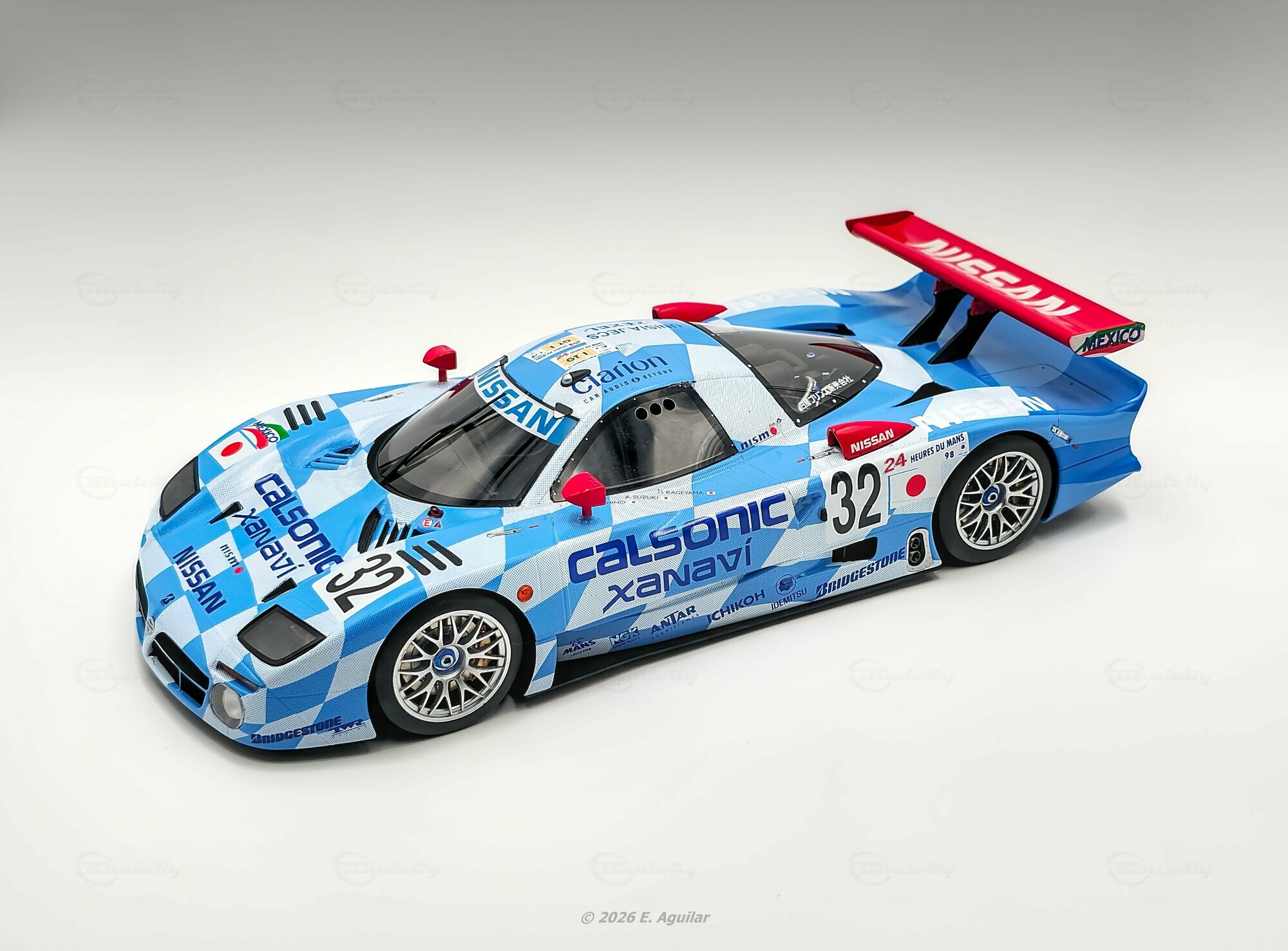
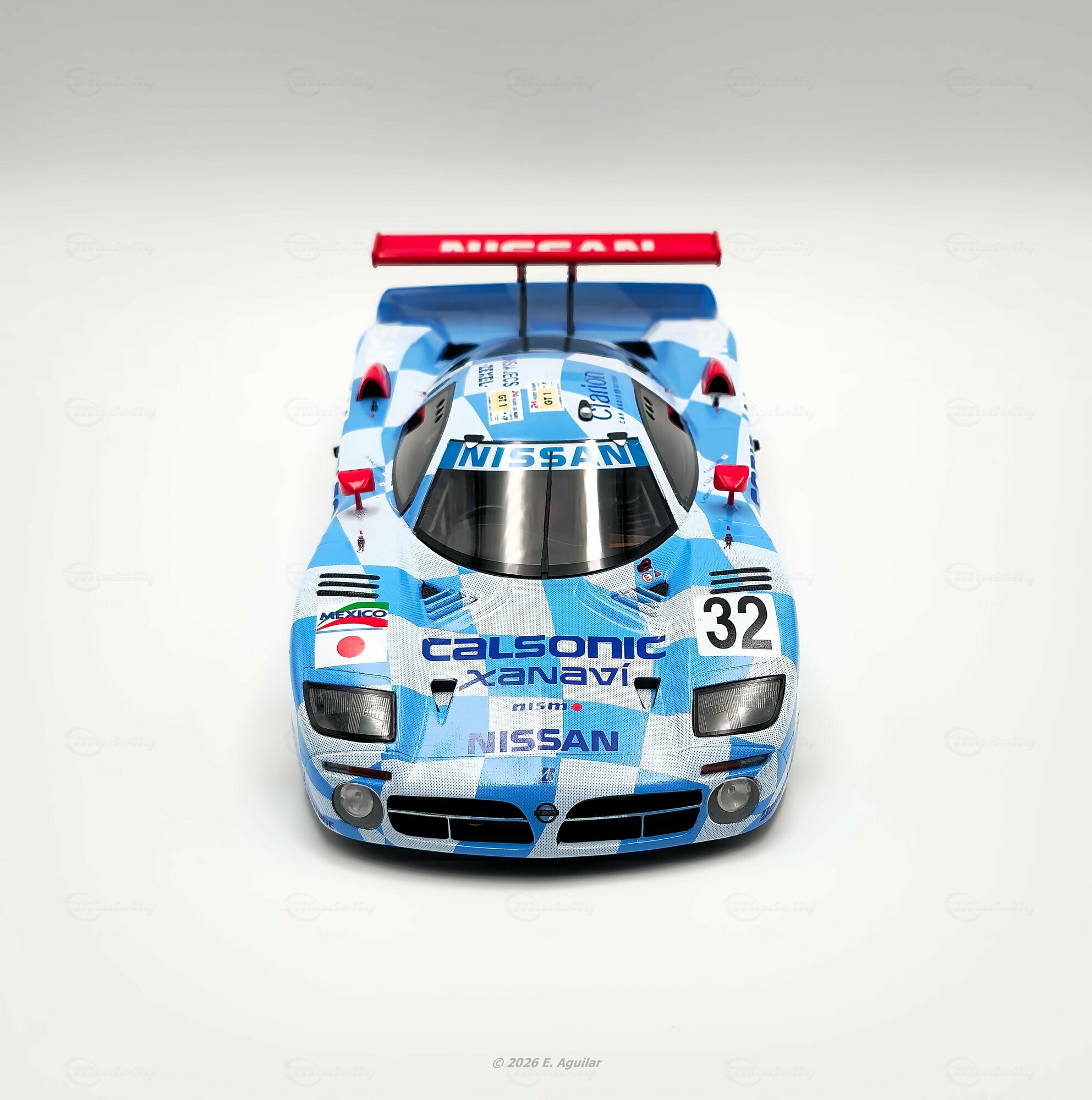
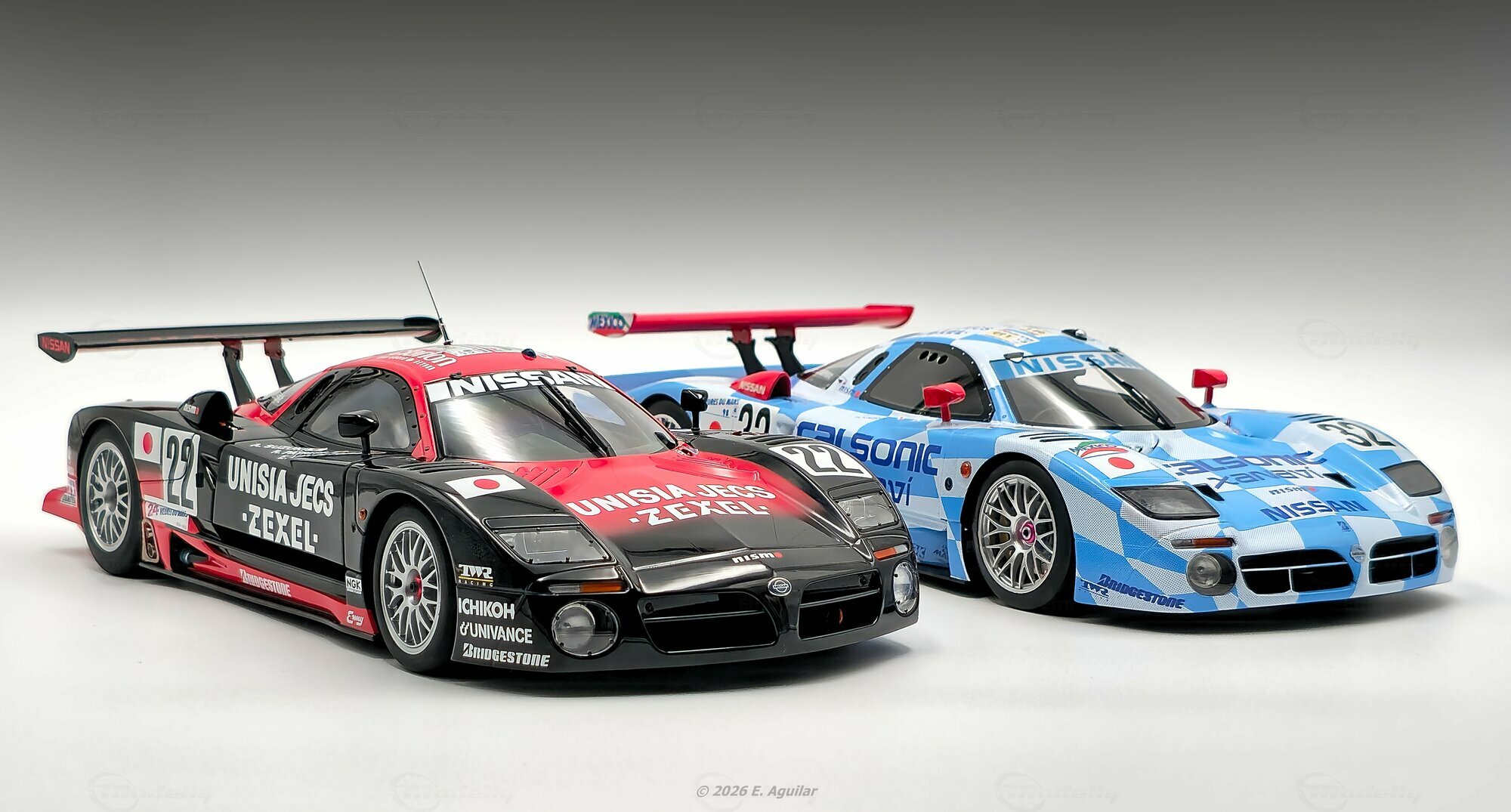
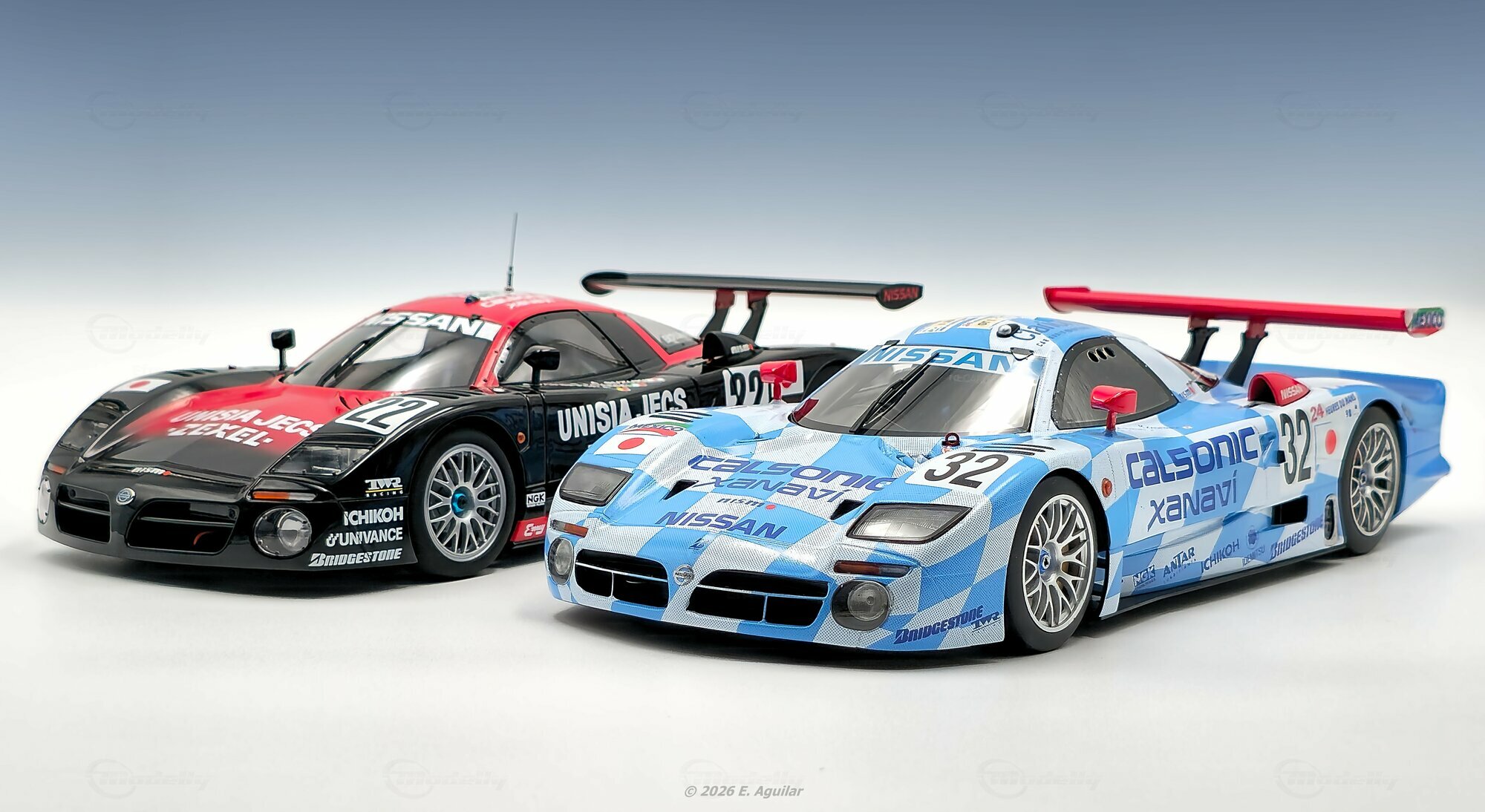
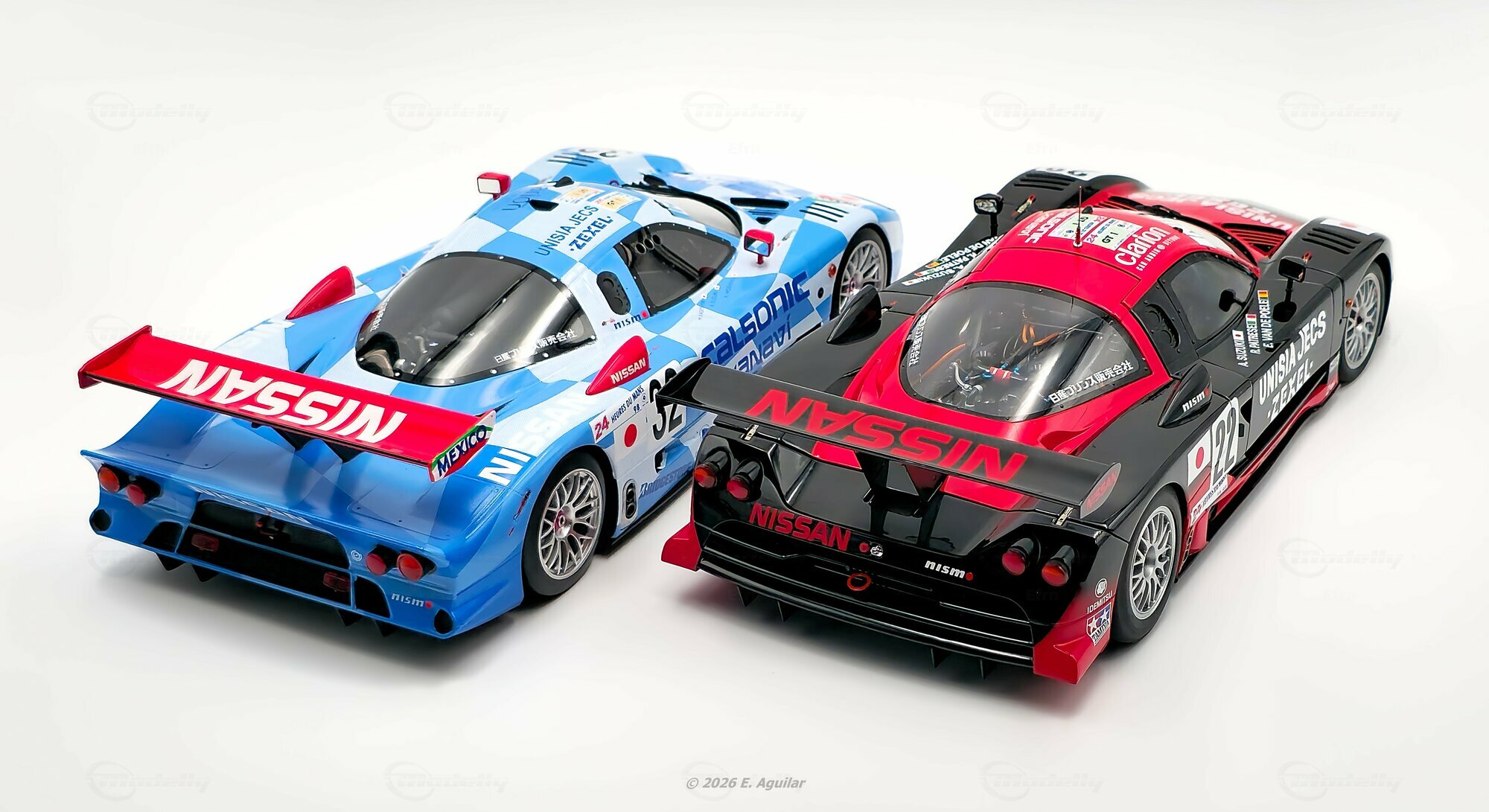
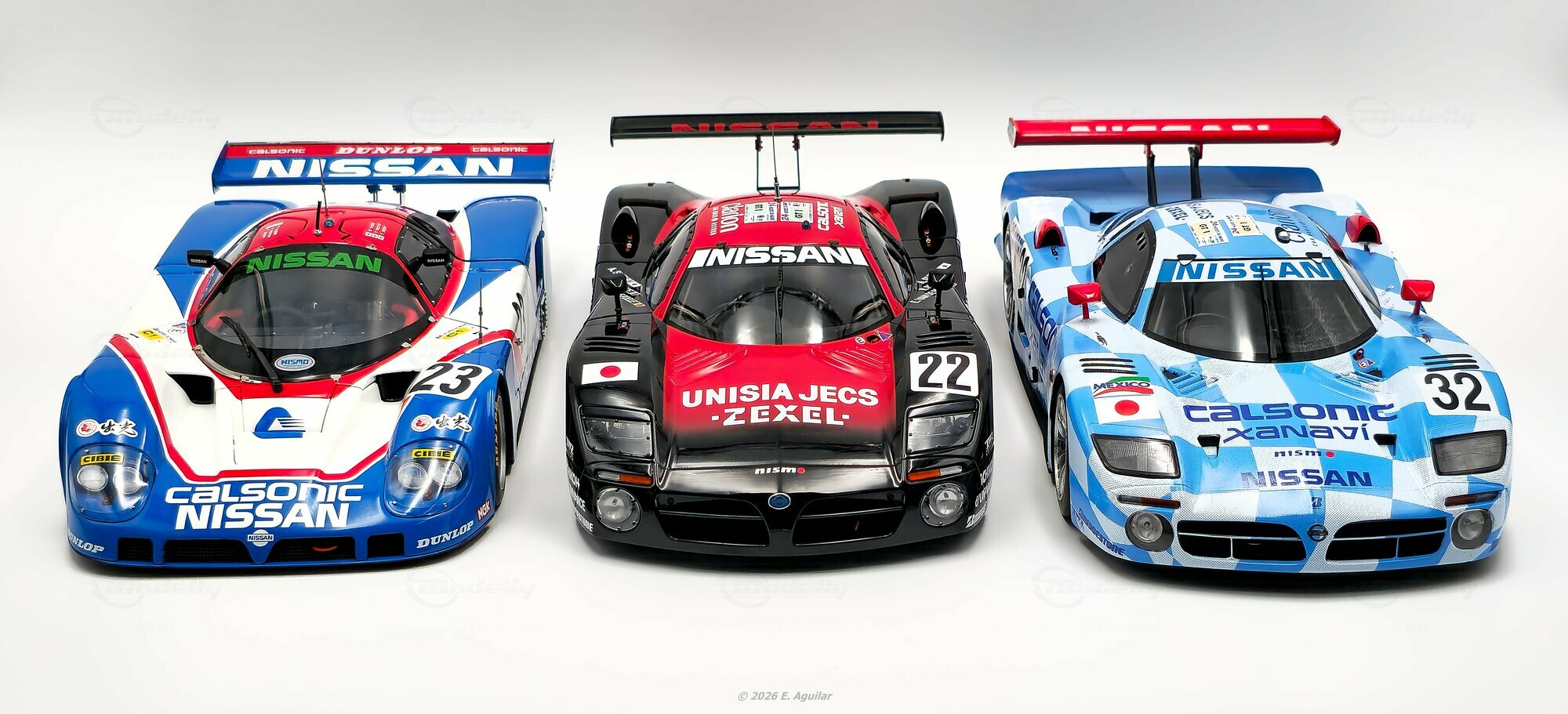
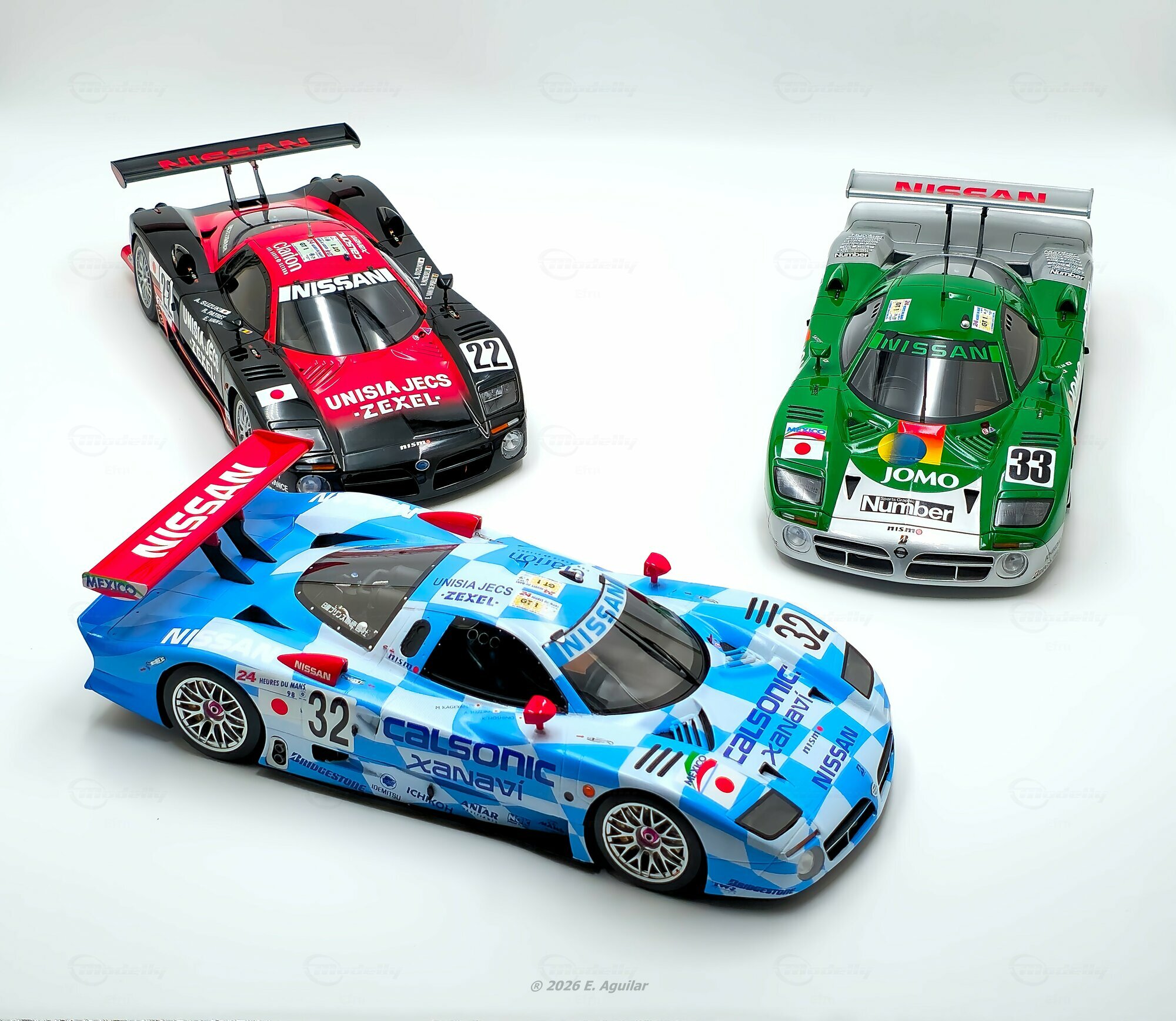
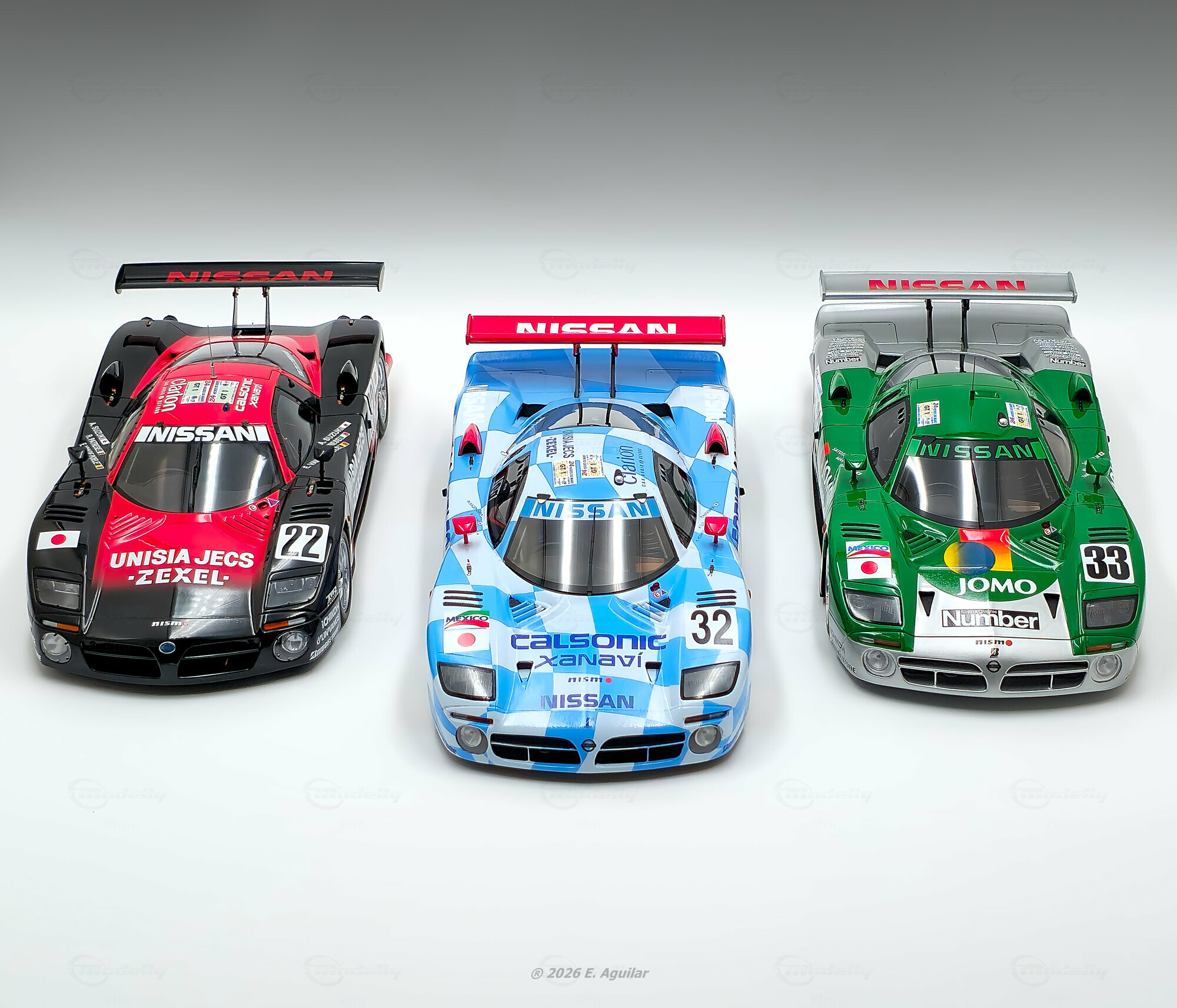
The pictured model is based on the race car Nissan R390 GT1, which was developed for the GT1 class at the 24 Hours of Le Mans. It came out of a cooperation between Nismo and Tom Walkinshaw Racing (TWR). Technical direction and aero were handled by Tony Southgate, and the exterior design was by Ian Callum. The car fits into that short era of road-homologated GT1 cars that dominated in the mid/late 1990s. For homologation a single road-legal example was built. The immediate racing predecessor was the Nissan Skyline GT-R LM, which ran at Le Mans in 1995/1996 but, with its turbocharged inline-six layout, hit the performance limits of that base. Moving to a pure mid-engine carbon-chassis with the Nissan R390 GT1 was therefore a logical step. Officially this car belongs to the generation: R390 GT1 and was developed and campaigned from 1997; the 1998 evolution got major aerodynamic changes. The photos show the model from Modelly member “Efrn”.
Tech and layout of the original
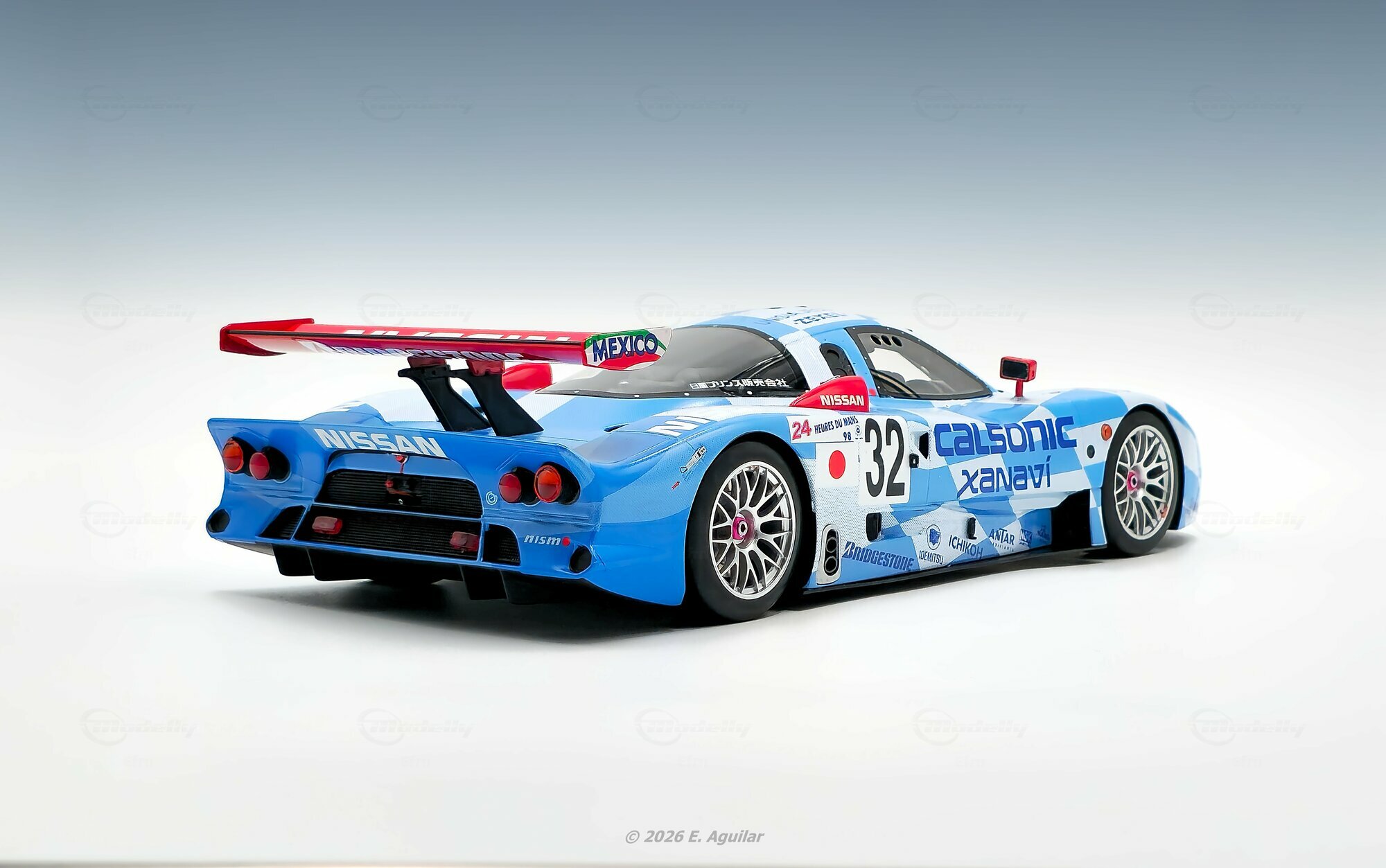
The Nissan R390 GT1 used a carbon-fiber monocoque built by TWR. The engine was the VRH35L, a 3.5‑liter V8 (3.5 L / 213.6 cubic inches) with twin turbos, based on Nissan’s IndyCar/sports‑car VRH family. In Le Mans specification the output was around 650 PS (about 641 hp). Drive went through a sequential 6‑speed gearbox from Xtrac. Double wishbones, pushrod suspension and large Brembo brakes were standard. For 1998 the car got an overhauled, longer tail (“longtail”) with better cooling and a reduced frontal area; the front intakes, headlight housings and brake cooling were also optimised. Top speed on the Hunaudières was over 340 km/h (over 211 mph), depending on wing settings. The chassis separates cooling airflow for engine, charge air and brakes, which helped on long stints. The fact that only a single homologated road car was produced shows the Nissan R390 GT1 was conceived more as a no‑compromise race car from the start, before the GT1 rules were scrapped at the end of 1998.
Racing in 1997 — a learning phase and first results
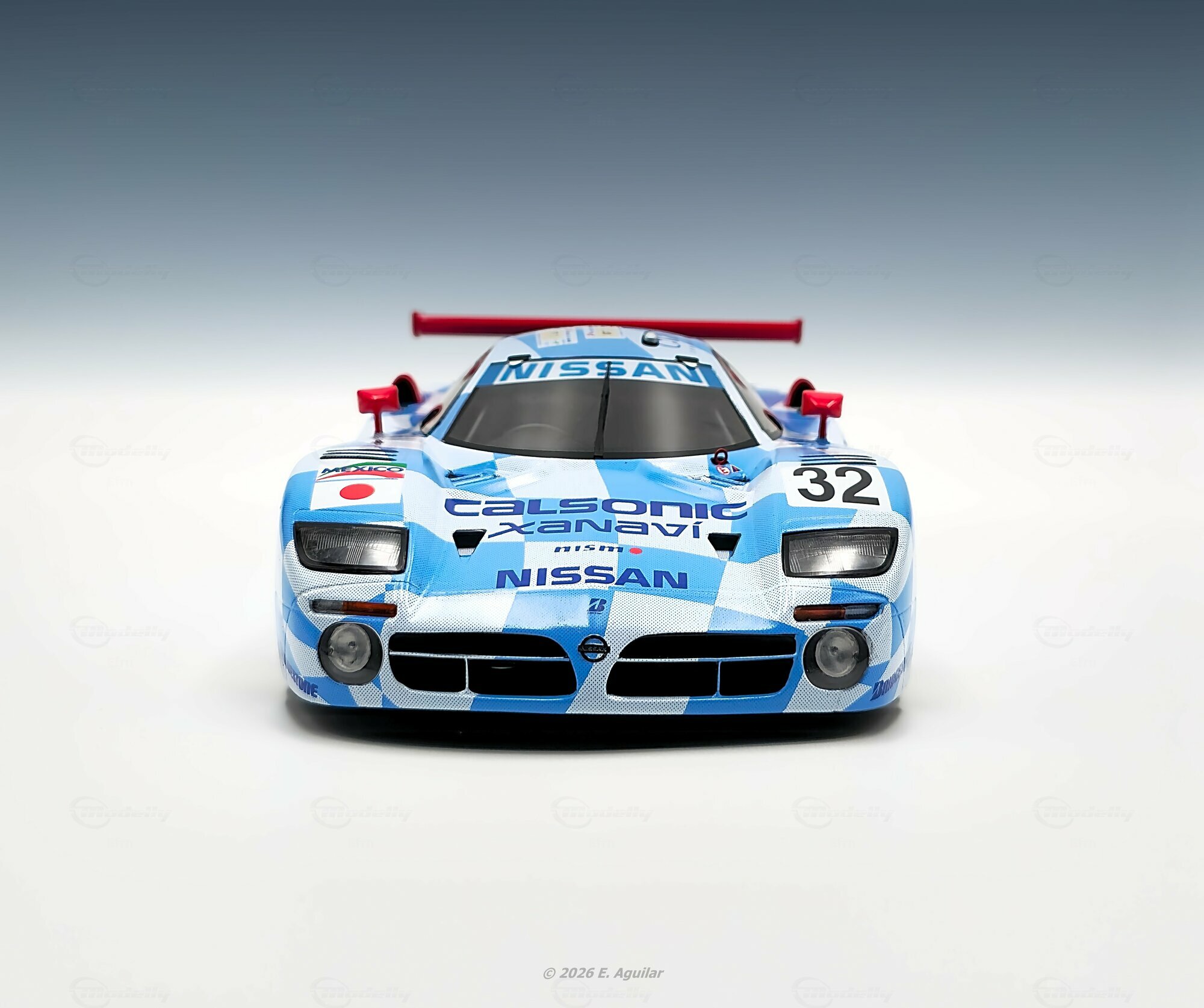
It debuted at the 1997 24 Hours of Le Mans. Qualifying times were on par with Porsche and McLaren, which proved the basic speed was there. Still, the race brought gearbox troubles and heat-management issues, and there were debates about some homologation details. Of the three cars that started only one finished, classified way down the order, while two cars retired early. Drivers included Eric Comas, Michael Krumm and other Japanese works drivers from the JGTC/group background. The data collected went straight into the big 1998 evolution: better cooling, a tougher gearbox and a sleeker aero body. Pitstop procedures were sped up too — things like faster wheel-change systems and revised brake-cooling ducts were implemented. The team also stuck with Bridgestone tyres, set up for long stints, which let them run fewer stops strategically.
Racing in 1998 — a Le Mans podium
In 1998 the development paid off. Four Nissan R390 GT1s started Le Mans and all four finished. The best result was third overall behind Porsche prototypes — a solid outcome in a transition year where GT1s were already shifting toward prototype territory. The podium car was driven by Kazuyoshi Hoshino, Masahiko Kageyama and Aguri Suzuki. Sister cars included crews with Eric Comas and Michael Krumm. Consistent stint lengths, reliable machinery and efficient pitstops were the main factors. With the GT1 rules ending, the short racing life of the Nissan R390 GT1 was over, but its tech core — carbon monocoque, twin‑turbo V8 and aero efficiency — fed into Nissan’s later prototype work. The car remains a clear link between classic GTs and modern Le Mans prototypes.
- Write a first comment about this model now!Any comment can be discussed by all members. It's like a chat.Mention other Modelly members by using @ in your message. They will then be informed automatically.
- Write a first comment about this model now!Any comment can be discussed by all members. It's like a chat.Mention other Modelly members by using @ in your message. They will then be informed automatically.