
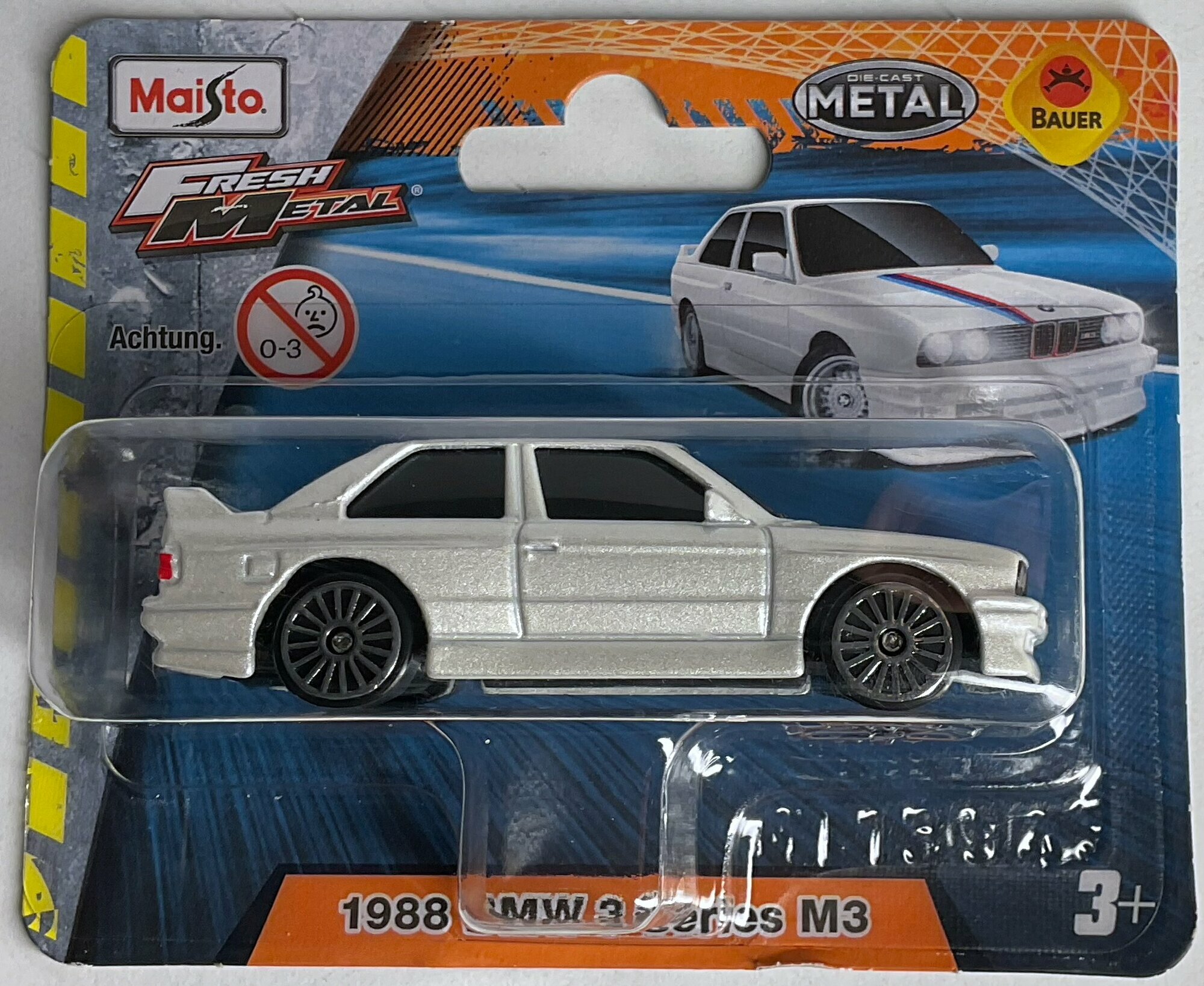
BMW M3 (E30)(diecast 1:64, Maisto)
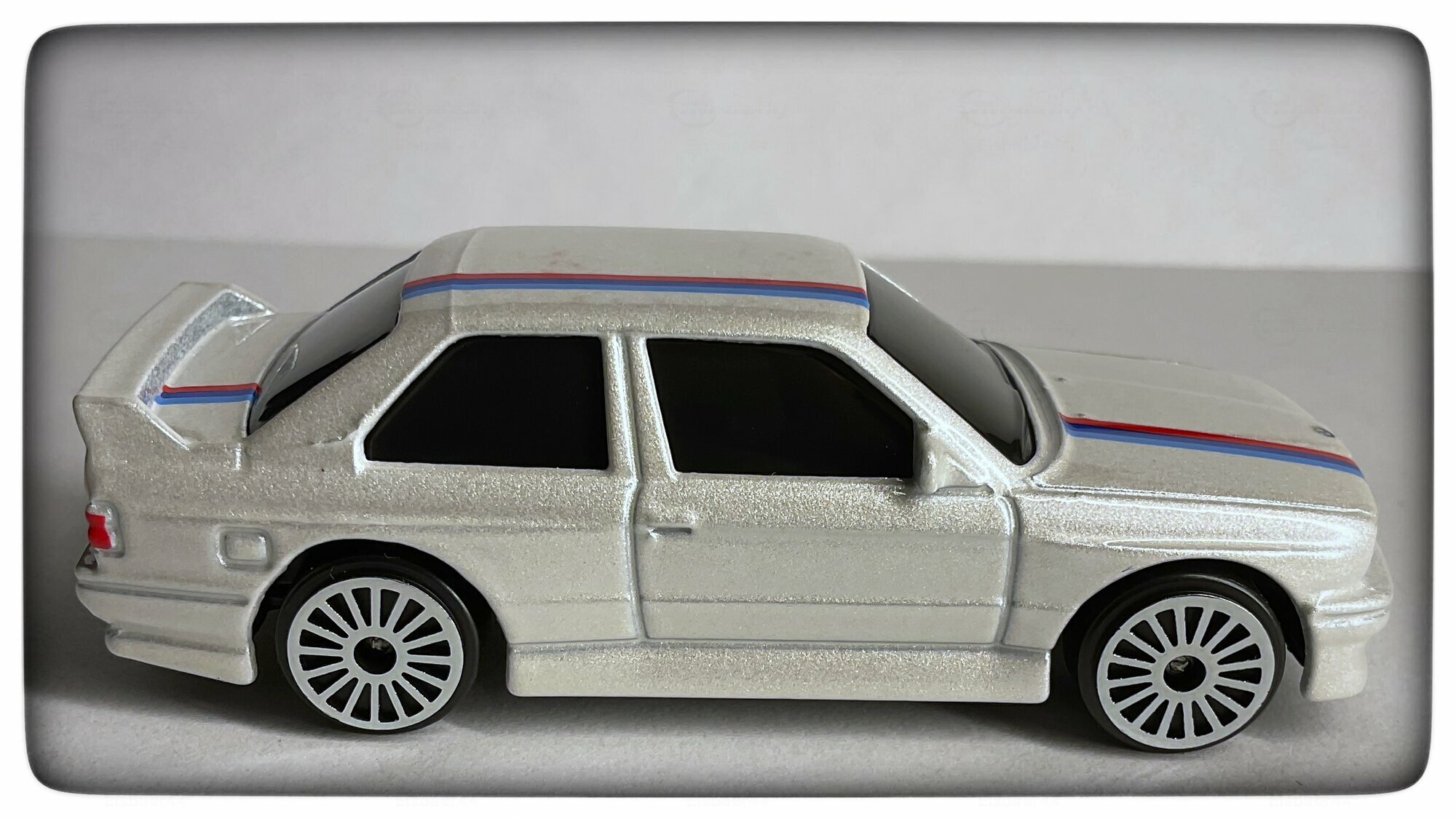
- BMW M3 (E30) (from 1988)
- Maisto
- 1:64
- Showcase model / No engine
- diecast
- white
- 1039 (#20-20033 Metallic White)
- locale dealer (Drogerie Müller)
- 1,79 EUR
- In near mint condition
- Original packaging does not exist
- Not for sale
BMW M3 E30: the homologation model of the first M3 generation
The model behind this collectible is the BMW M3 (E30), the first generation of the M3 and at the same time a homologation model developed for touring car racing. The E30 series was built from 1982 as the second generation of the BMW 3 Series; the BMW M3 (E30) entered the market in 1986 and stayed in the lineup until 1991. In the strict sense, the M3 had no direct predecessor, because BMW Motorsport created it as the first dedicated M model based on the 3 Series. The starting point was Group A homologation: to race it, BMW had to build at least 5,000 road-legal cars. Compared with a regular E30, the BMW M3 (E30) stood out thanks to flared fenders, revised bumpers, a changed trunk lid with a rear spoiler, and a flatter rear window. These body changes were not just for looks; they were meant to improve aerodynamics and reduce lift at high speed. Key people behind the car include BMW chief designer Claus Luthe, under whose direction the E30 shape was developed, and engine engineer Paul Rosche, who was responsible for the M3 powertrain.
Technology, motorsport background, and the 1986 timeline
In the BMW M3 (E30), the S14 inline-four had a displacement of 2,302 cm³ (140.5 cubic inches), four valves per cylinder, and individual throttle bodies. The early European production version made 143 kW (195 hp) and could reach around 235 km/h (146 mph), depending on gearing and version. The drivetrain and suspension were designed with motorsport in mind: the car came with a five-speed manual transmission, a limited-slip differential, and suspension setup adapted from the standard E30. Later versions such as the Evo II, Sport Evolution, and Cabriolet expanded the range; the Sport Evolution got 2.5 liters (152.6 cubic inches) of displacement and 175 kW (238 hp). In touring car racing, the BMW M3 (E30) won many national championships and titles in the DTM and the European Touring Car Championship. For time context: in 1986, the Space Shuttle Challenger exploded shortly after launch, Spain and Portugal joined the European Community, and Peter Gabriel’s album “So” was released. That helps place the car in its era.
Maisto model car in 1/64 scale with M stripes
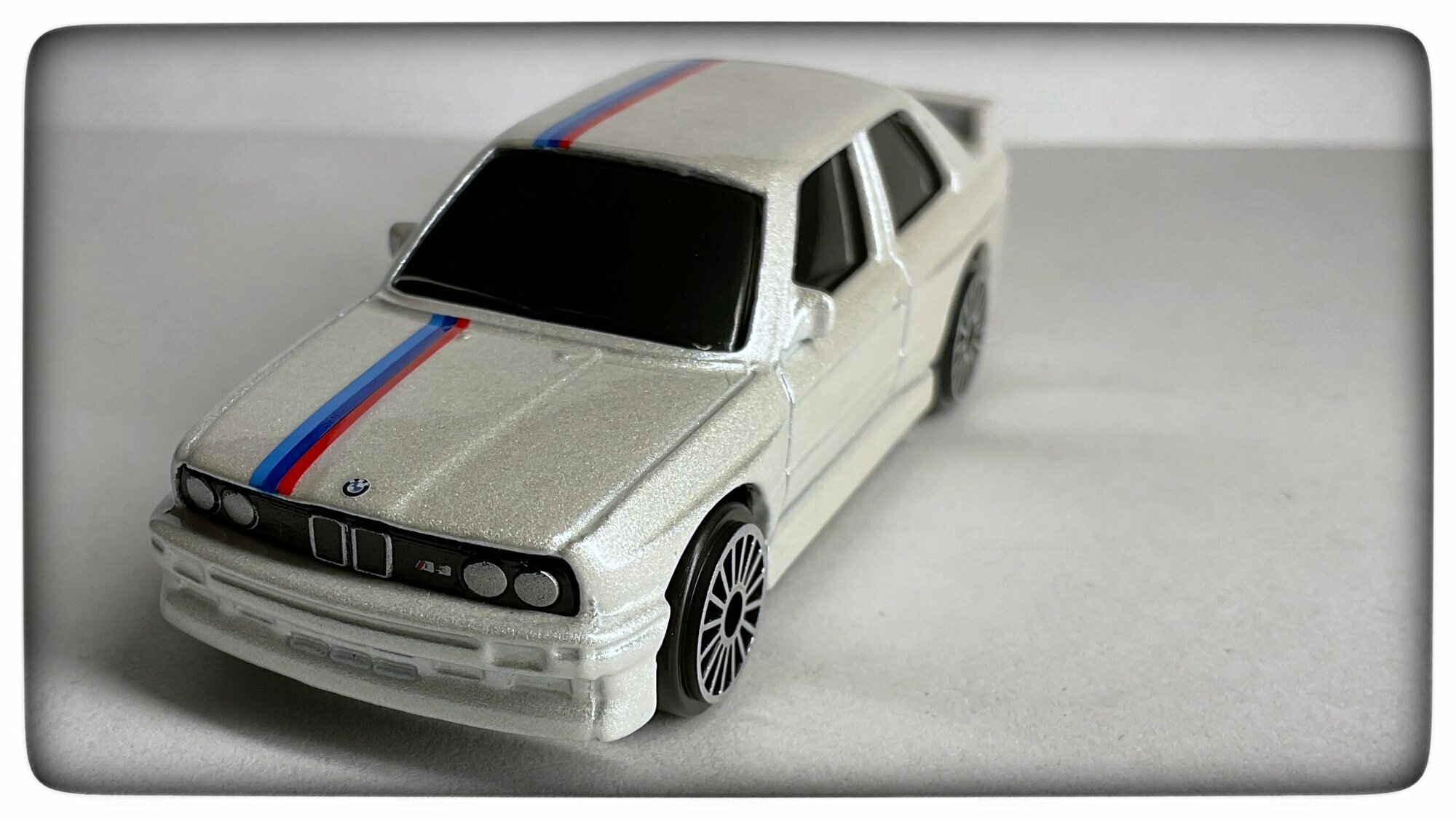
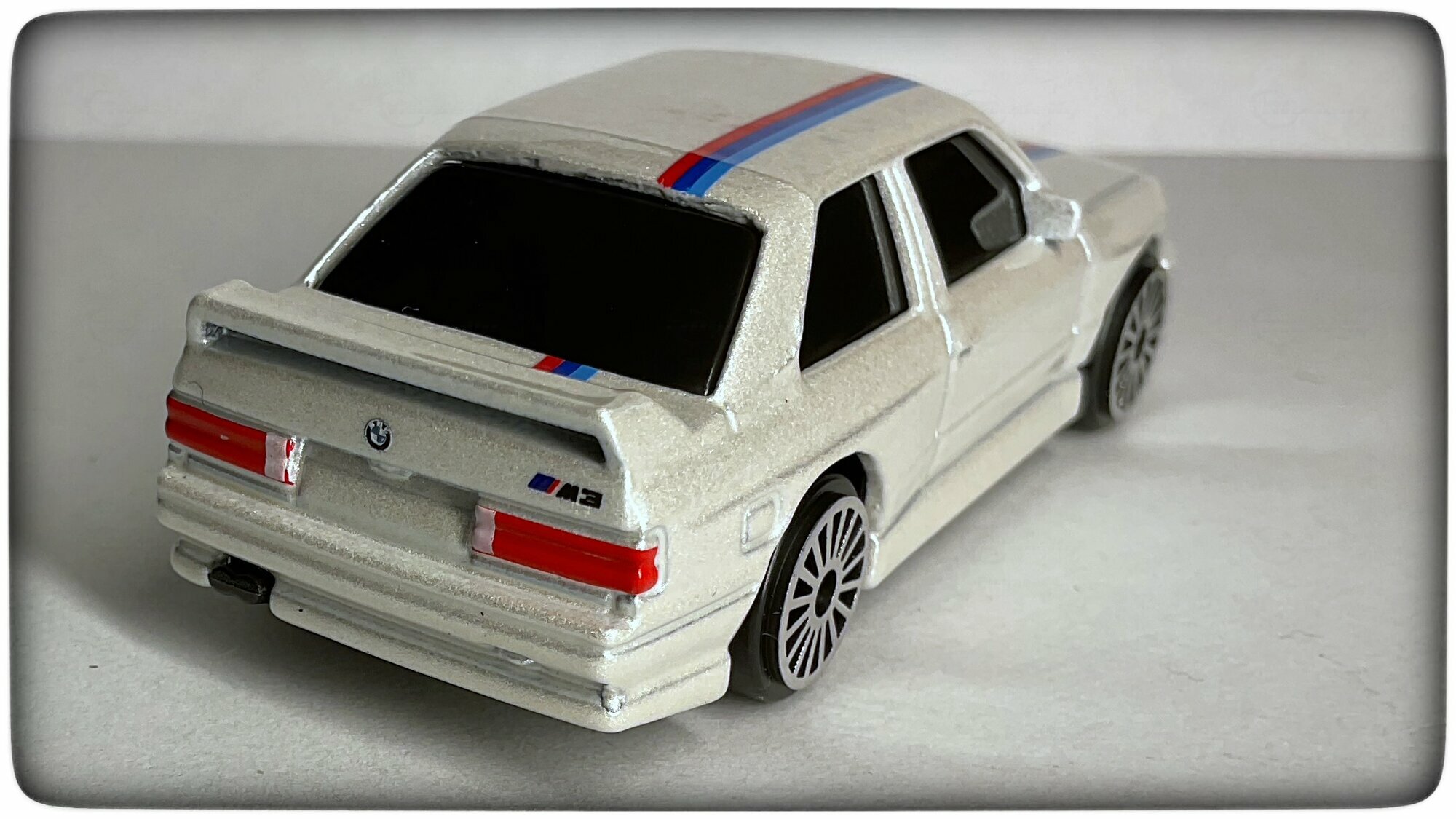
The model from Modelly member “Eisbaer44” shows the sharp two-door body of the BMW M3 (E30). This model car in 1/64 scale was made by Maisto. The miniature is diecast, so the body is mostly made of metal, while the wheels, glazing, and other add-on parts are made of plastic. You can clearly see the M3’s signature flared wheel arches, separate rear wing, deep front spoiler, and sculpted side skirts. Up front, it has twin headlights, the BMW kidney grille, and a small M3 badge in the grille area. The rear also carries a BMW emblem and an M3 badge. The blacked-out windows with no visible interior are totally understandable at this tiny size. The multi-spoke silver wheels sit in black tires; from the photos, it’s not possible to reliably identify a specific wheel brand or exact wheel design.
Silver paint and visible details on the 1/64 miniature
This model car in 1/64 scale was made by Maisto in a silver version. The paint has a light metallic or pearlescent look. A thin blue-and-red stripe graphic runs over the hood, roof, and rear section. In its color choice, it recalls the motorsport colors of BMW M, but on this miniature it does not use a full three-color M graphic. The lines start on the hood near the left side of the car, run across the roof, and end on the trunk lid below the spoiler. That keeps the base color visible while the decoration emphasizes the car’s length. Red taillights, dark-tinted headlights, black windows, and the small BMW and M3 badges add even more contrast. What makes this model car nice, based on the photos, is the clearly recognizable E30 silhouette, the strong flared fenders, and the balance between the silver body, dark window areas, and the fine red-and-blue stripes. For collectors, the rear spoiler, M3 badges, and compact diecast construction make it easy to recognize this as a street-legal homologation car in miniature form.
- Write a first comment about this model now!Any comment can be discussed by all members. It's like a chat.Mention other Modelly members by using @ in your message. They will then be informed automatically.
- Write a first comment about this model now!Any comment can be discussed by all members. It's like a chat.Mention other Modelly members by using @ in your message. They will then be informed automatically.