
Trolza, ZIU, Uritsky trolleybus factory 682B(diecast 1:43, Start Scale Models)
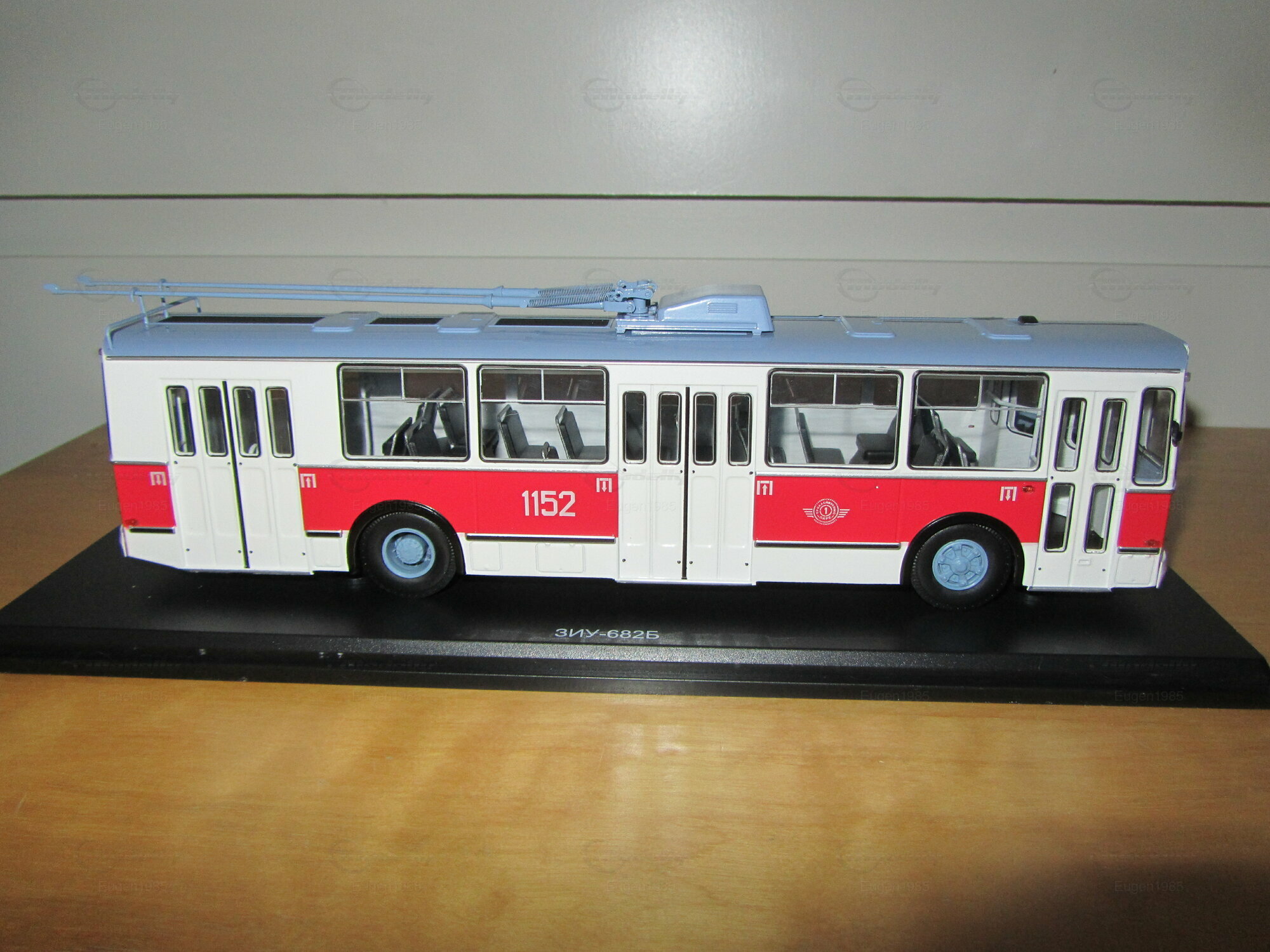
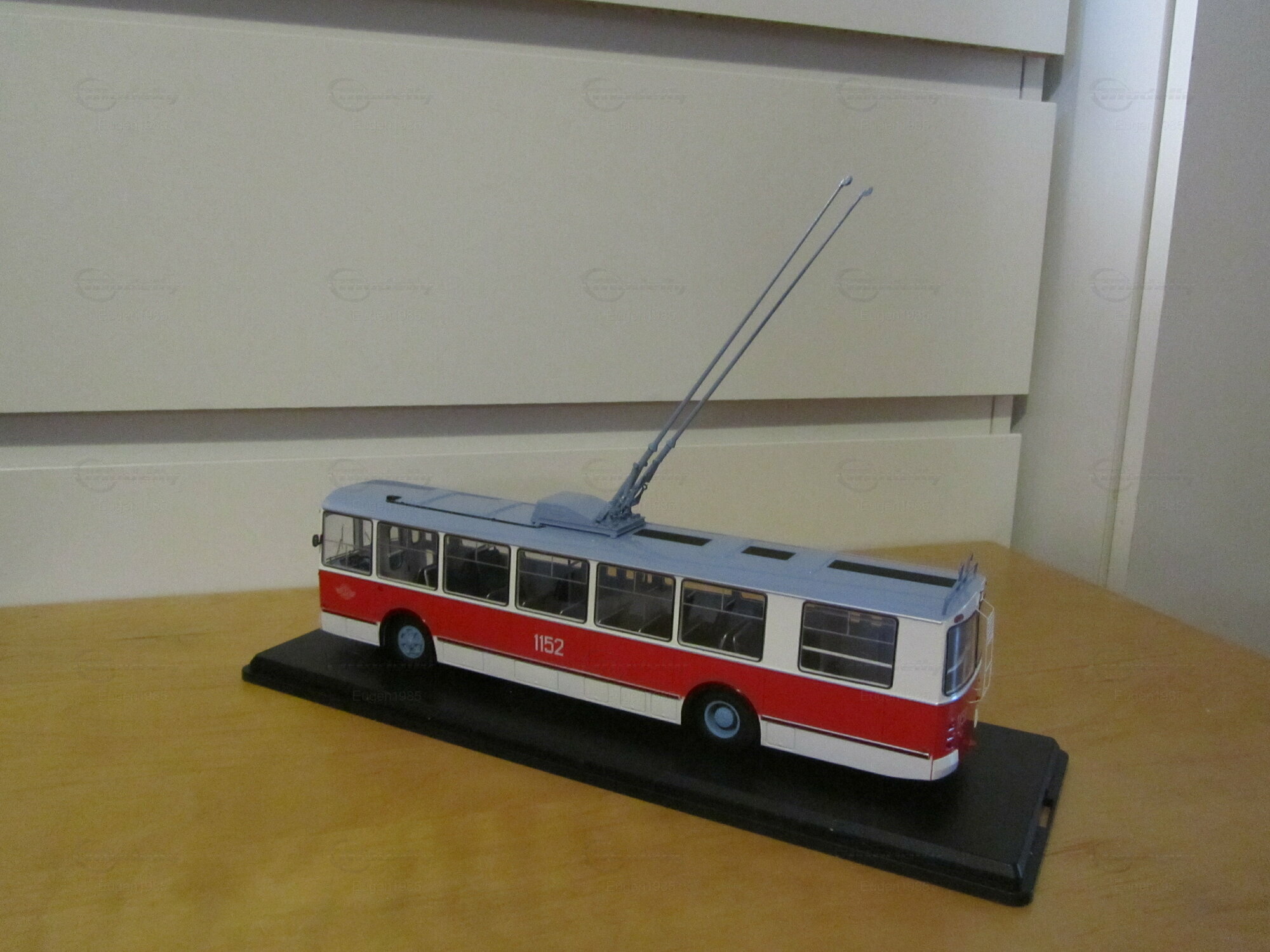
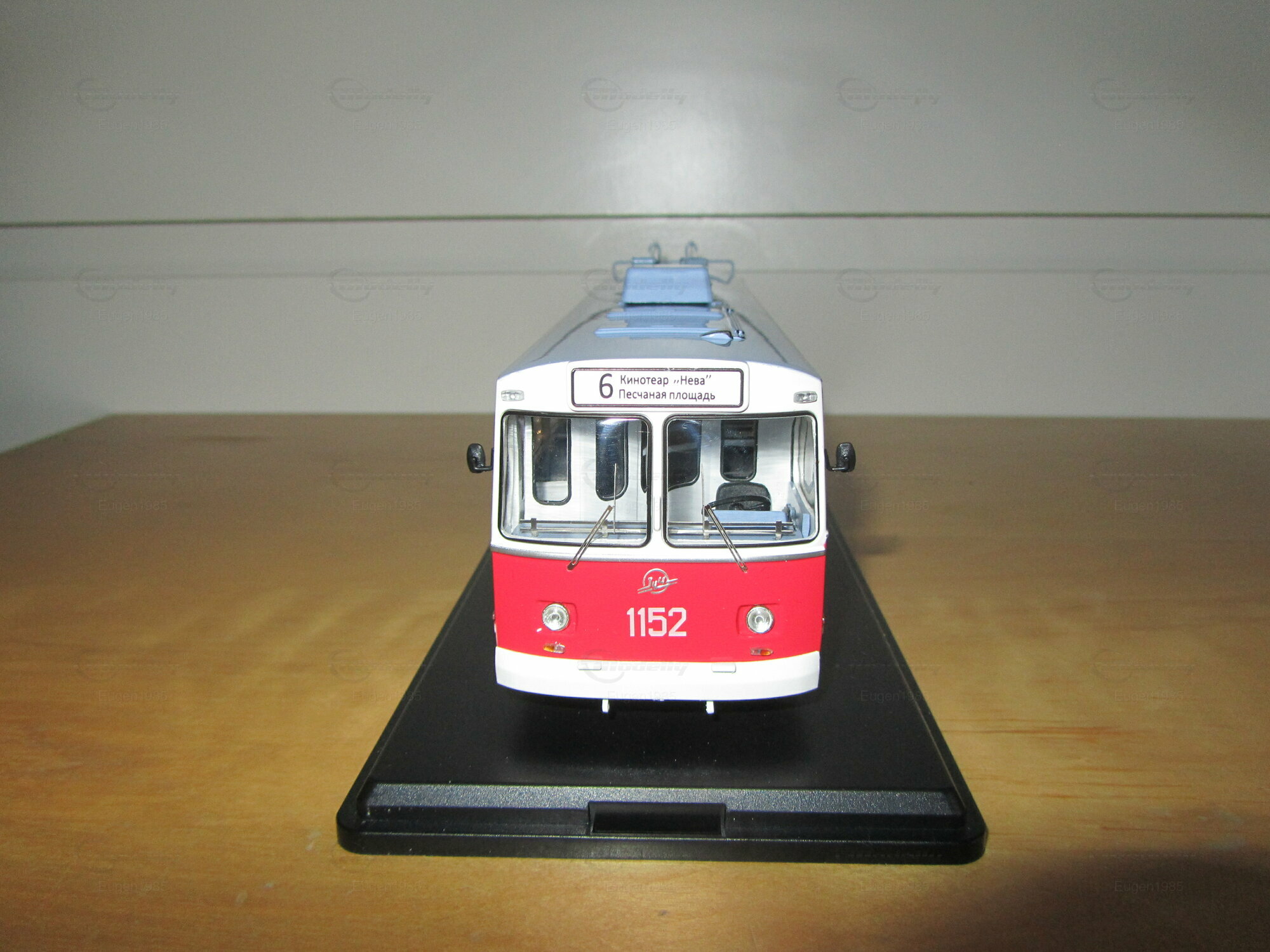
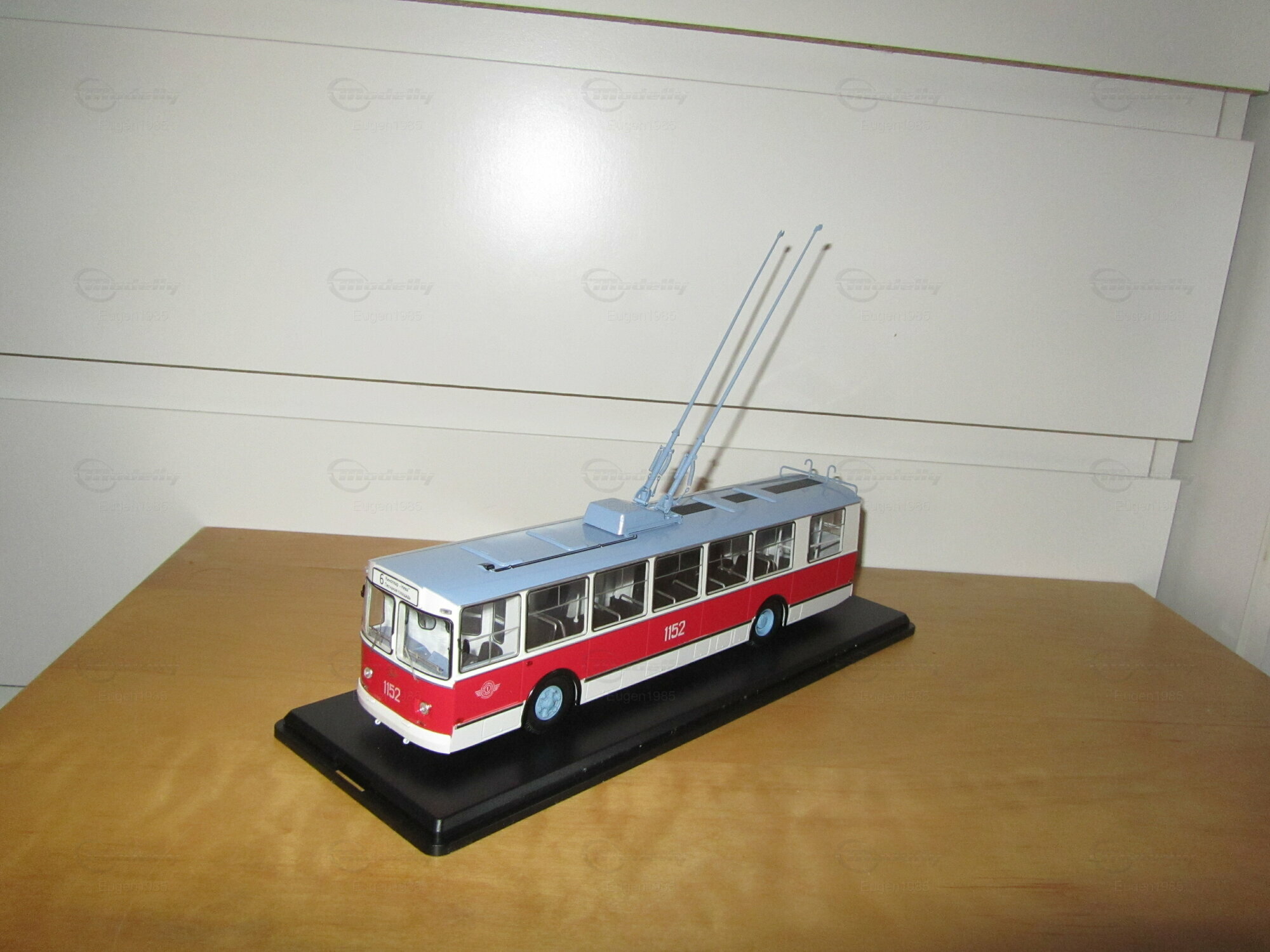
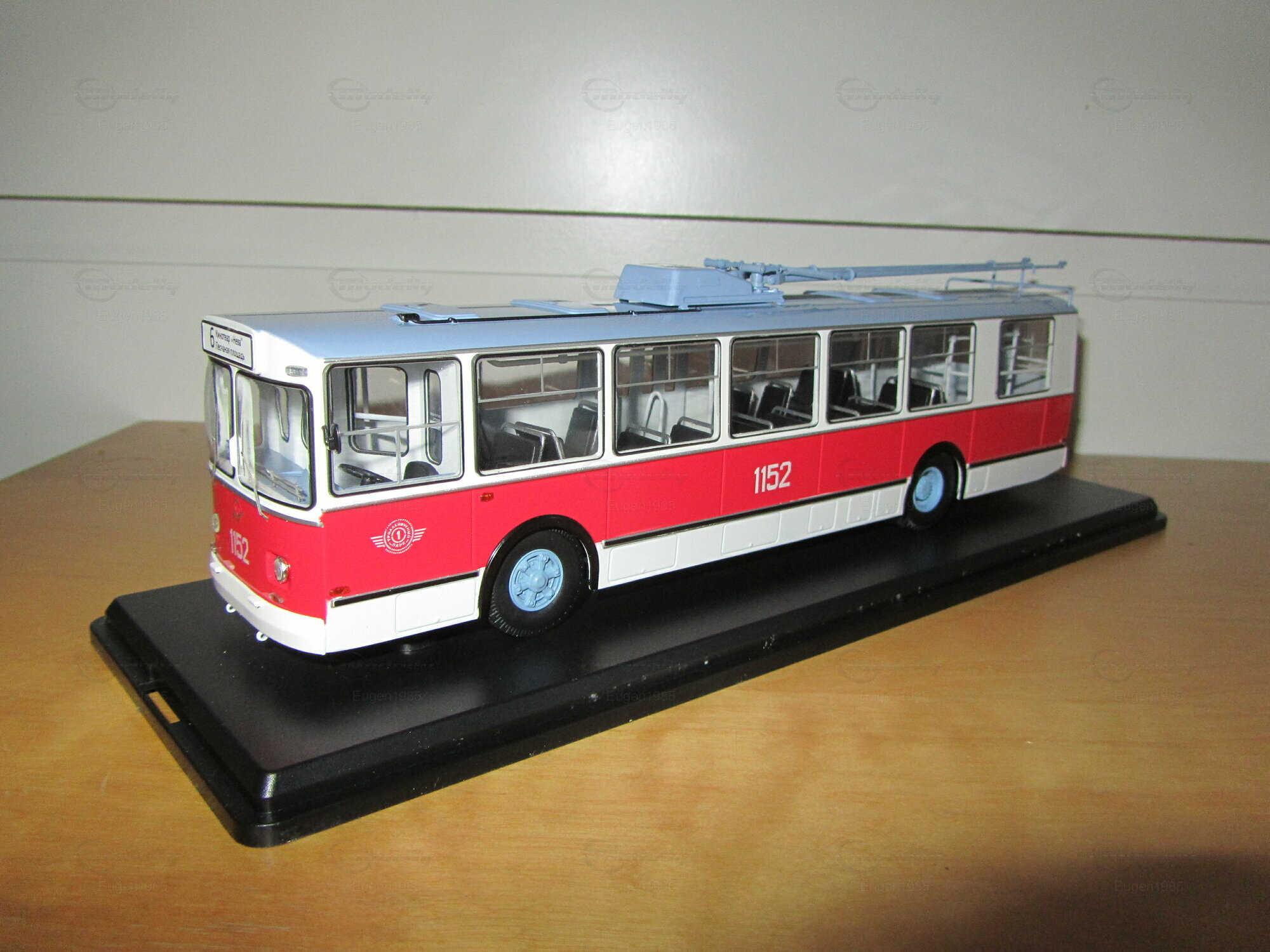
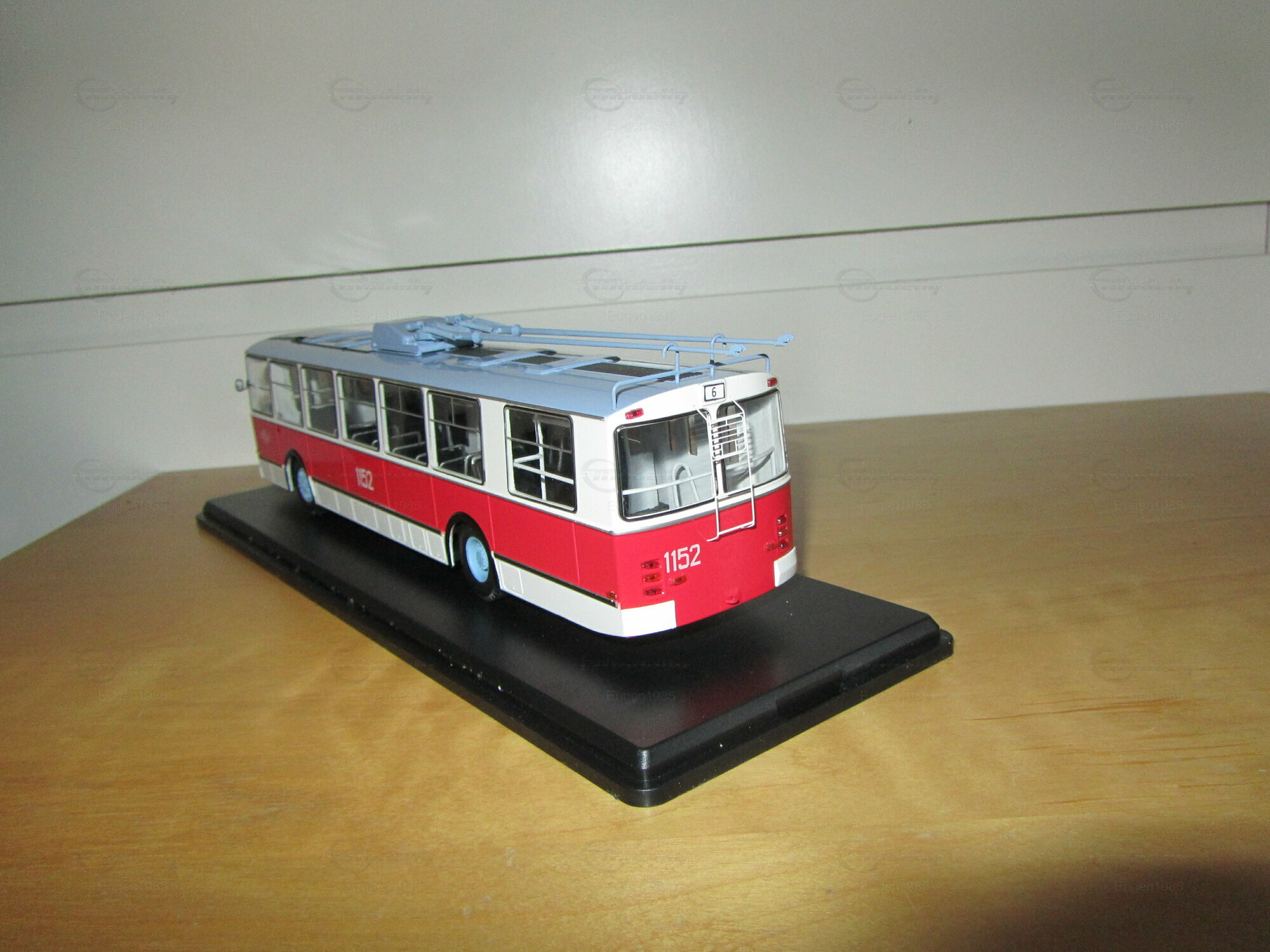
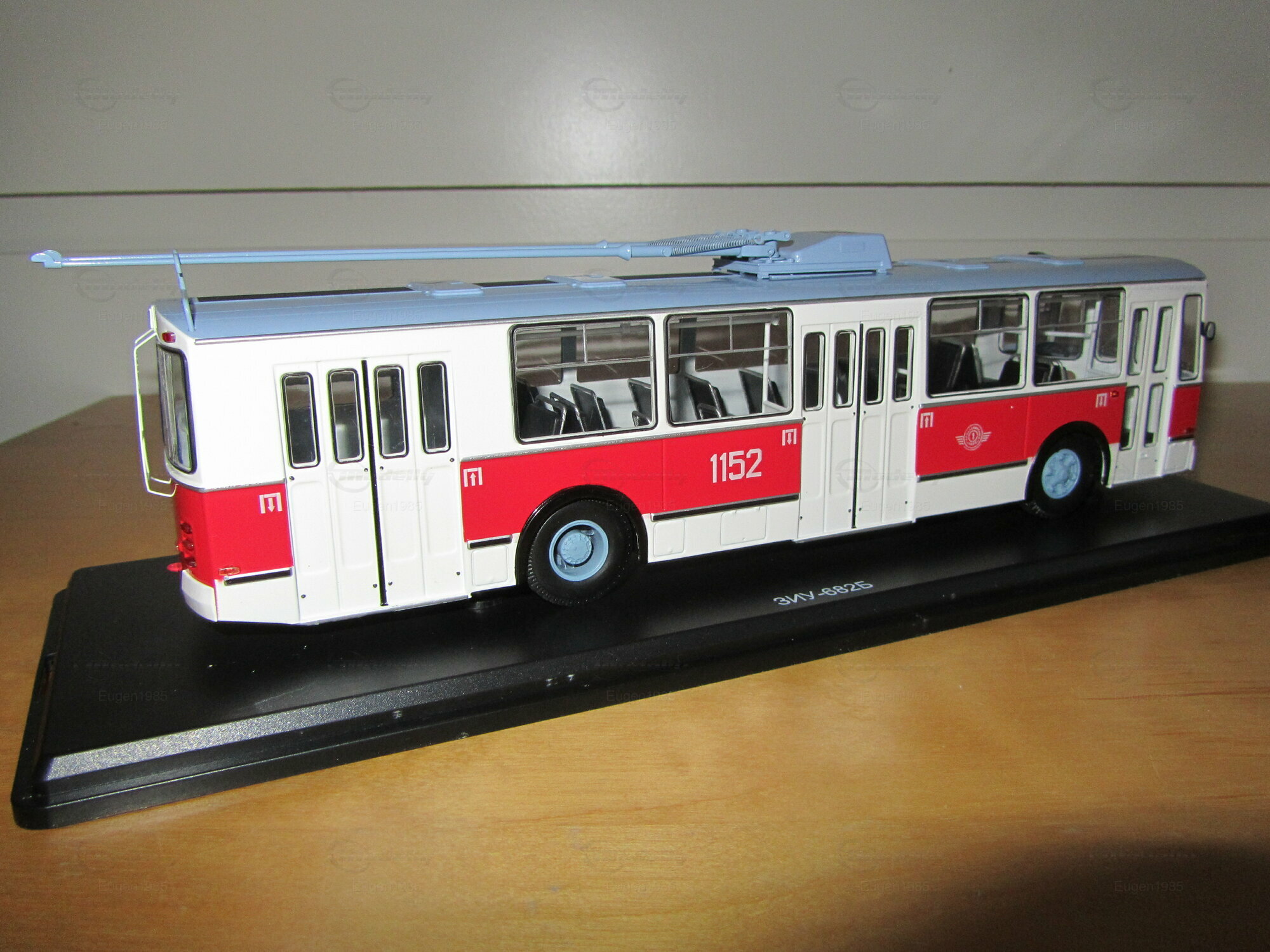
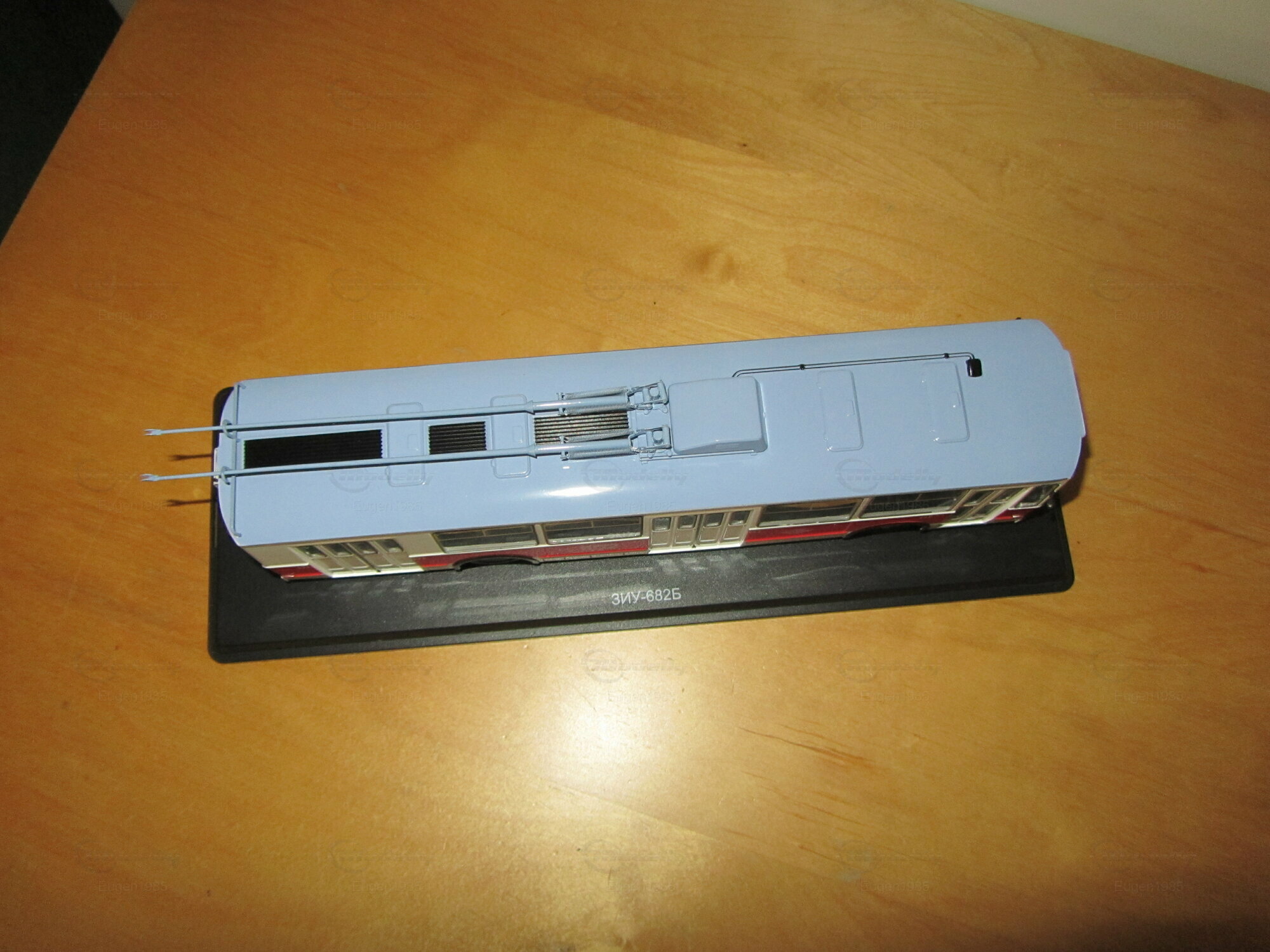
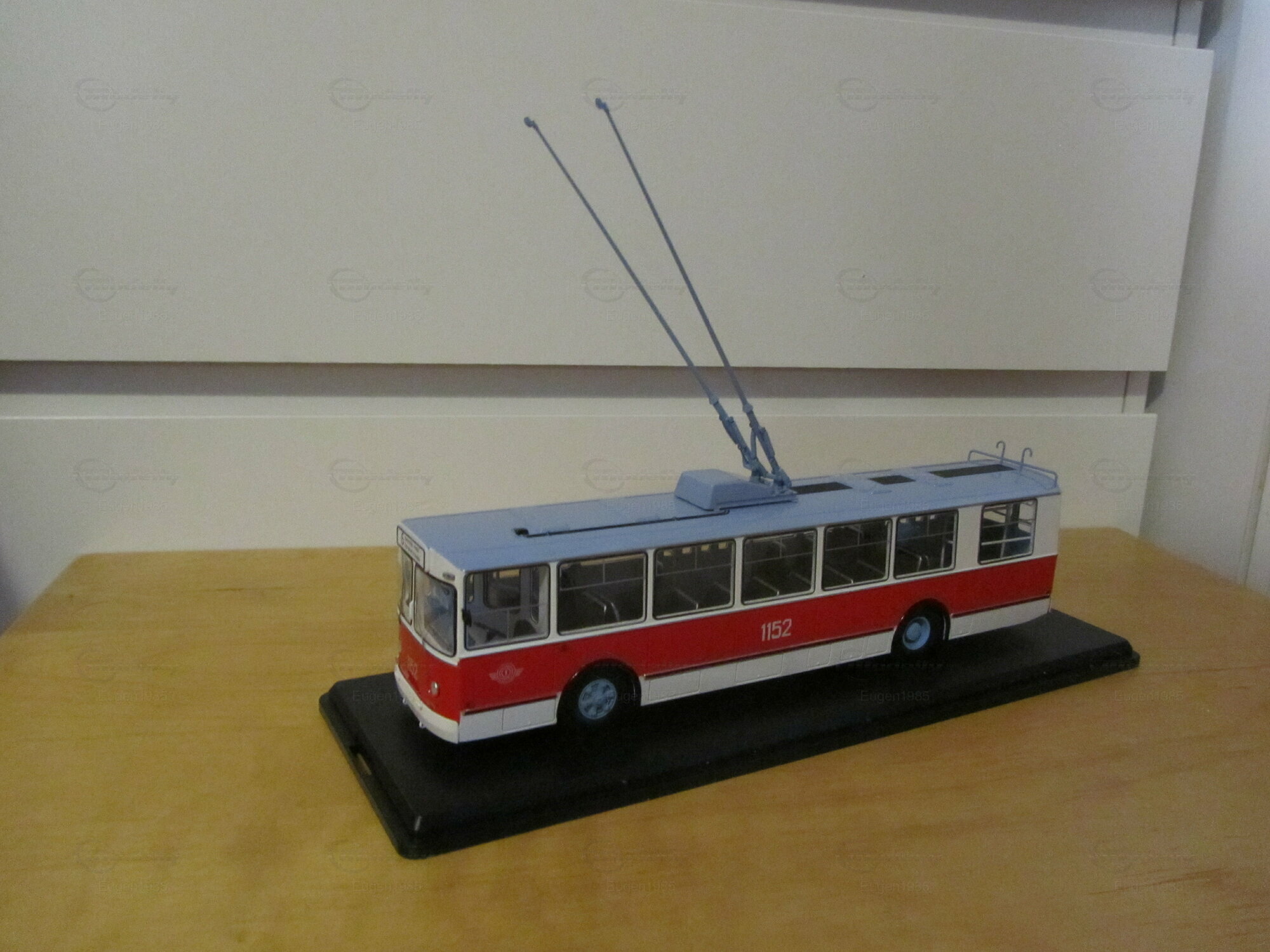
- Trolza, ZIU, Uritsky trolleybus factory 682B (from 1972)
- Start Scale Models
- 1:43
- Showcase model / No engine
- diecast
- others
- Perfect mint condition
- Original packaging exists
- Not for sale
In general in total, more than 42,000 trolleybuses of ZiU-9 family have been produced.
This is the most mass model of the trolleybus in the world.
The experience of operating a huge number of ZiU-5 trolleybuses in the cities of the USSR showed that the Union needed a significantly more dynamic, reliable, durable, and comfortable single-hull trolleybus. It should have not two, but three doors, and to facilitate the entry of passengers, it was necessary to lower the floor of the rear platform if possible.
In order not to overload the steerable axle, it was necessary to reduce the front overhang, the front door was made narrow, double-leaf. To improve reliability in cold weather, an electromechanical low-voltage door drive (24 V) was used. It was supposed to use other progressive technical solutions: a more powerful traction motor, power steering, interior trim with modern plastics. Given the immensity of our territory, we decided to produce the ZiU-9 in two versions: the usual one and for the southern regions with a sunscreen on the roof, which
reduced the overheating of the cabin.
The new trolleybus used an all-metal welded load-bearing body, consisting of stamped
large-sized panels (roofs, sidewalls, etc.) and a tubular welded subframe. The driver's cab was separated by a partition. For inspection and maintenance of the traction motor and electrical equipment in the floor, three hatches were provided in the cabin, and for natural ventilation of the cabin, four more on the ceiling and through sliding windows. To heat the cabin, an electric furnace and starting rheostats were used, through which the outside air was driven.
The main design feature of the ZiU-9 was the double suspension of the bridges. A steering axle beam was attached to two longitudinal half-springs, on which the front part of the body rested through two pneumatic elements. The rear axle was suspended on two longitudinal springs, fastened by a subframe, on which the rear part of the body rested through four pneumatic elements. The automated system, which was the same as on the LAZ-699A bus, controlled the maintenance of a constant body level above the road. For accelerated vibration damping of
the trolleybus, the front axle beam was connected to the body subframe with two hydraulic shock absorbers from the MAZ-500 dump truck, and the rear axle subframe with four. The spring and pneumatic suspension of the axles worked in parallel, thanks to which a high ride smoothness was achieved on uneven roads.
Three braking systems were used on the ZiU-9: electric, pneumatic (separately - on the rear and front axles) and a hand-operated parking brake (only on the rear wheels). Electric and pneumatic braking was carried out by one pedal. At high speed, only rheostatic braking worked. On the middle, together with pneumatic. On small only pneumatic. This combination ensured high reliability of trolley bus braking. The parking brake kept the car on a slope up to 10%. In 1971, a ZiU-9 prototype was made, tested, the documentation was corrected, and it was handed over for serial production. At this time, a new trolleybus designation system was introduced. Therefore, the ZiU-9 was renamed ZiU-682 and with this designation at the end of 1972 was mastered in mass production. However, the operators and passengers continued to call this car in the old ZiU-9.
In August, the production of the first serial modification of the ZiU-682B began. The first serial trolleybuses were somewhat different from the cars of later releases. In 1973, cars began to be produced with rounded wheel arches instead of angular ones. The first batches of trolleybuses were equipped with an outdated DK-207G engine, which was already replaced by a DK-210 with a power of 110 kW already in 1973. The suspension on the first ZiU-682B was pneumatic, with jet rods as guide elements, later it became pneumatic spring. The rear storage area had a lower floor level, which made it possible to reduce the number of steps at the back door by one and facilitate the loading of wheelchairs and prams, as well as large items. However, this "advantage" was leveled by the presence of a high separating handrail on the steps of the rear and middle doors. The transition from a high floor level in the cabin to a low one was smoothly carried out in the aisle between the rear wheel arches, which caused in convenience to passengers during peak hours (especially in winter), who stood downhill on an icy "slide". In 1991, the developers replaced the high step divider with handrails attached to the doors, but by this time all accumulation platforms were at the level of three steps from the level of the sidewalk. For natural ventilation of the interior, 4 skylights were equipped in the roof, and each side window was equipped with a sliding window. Currently, several copies of the ZIU-682B have been preserved, but they are all museum pieces, with the exception of the trolleybus with tail number 562, which is operated in Zaporozhye.
At the end of 1976, mass production of the next modification of the ZiU-682V began, which
replaced the ZiU-682B. Due to the presence of design flaws that appeared during the first years of operation, instead of jet rods, springs began to be used as load-bearing elements of the suspension. Since 1976, the number of lamps in the cabin has been reduced from 12 to 11, every second window in the cabin has lost its vents. Since 1978, the number of ceiling hatches has been reduced to three (due to the hatch above the front axle), trolleybuses began to be equipped with electric boom catchers (apparently, by order, since they were not on Moscow
cars until 1996). Since 1983, the shape and location of the front and rear marker lights has changed. Lanterns of the original form, informally called "boats", were replaced by unified ones and shifted from the edges closer to the route indicators. In 1985, similar design changes were made to the exterior signal lights and direction indicators. From March-May 1984, trolleybuses began to be produced without a lowered level of the rear accumulation platform, which was due to the need to strengthen the structure of the body base in the rear overhang. Since 1988, the plant switched to the production of the ZiU-682V-012 (ZiU-682V0A) modification, equipped with a DK-213 engine with a power of 115 kW. Since 1989, the shape of the casing of
the radio reactors on the roof of the trolleybus has changed, it has decreased in size and has sharp edges (although there were even ZiU-682G with an old casing). In 1989, the production of the transitional modification ZiU-682V0B began in parallel, on which the electric drive of the door opening mechanism was replaced by a pneumatic one. By the end of the 1980s. individual structural elements of the trolleybus, which had been produced at that time for almost 20 years, were significantly outdated. Therefore, simultaneously with the launch
of the latest ZiU-682V modifications, a deeper modernization of this trolleybus model, which received the designation ZiU-682G, was being prepared for production. Prototypes of the ZiU-682G were produced back in 1988, and on February 1, 1991, the plant completely switched to their mass production.
During the existence of the USSR, the ZiU-9 trolleybus was exported to Bulgaria, Czechoslovakia, Yugoslavia, Hungary, Romania, Finland, Poland, Greece,´Argentina, Colombia, Mongolia, and planned shipments to India. After the collapse of the USSR, new trolleybuses of this model entered the former soviet union republics: Ukraine (1992-1996, 2002-2004, 2006-2008, 2013), Belarus (1993-1995, 2002), Moldova (1992-1994) , Transnistria (1992-2008), Armenia (1993), Kazakhstan (1991-1998, and also 2001-2002), Kyrgyzstan (1993-1994, 2001, 2003, 2010, 2011, 2013), Uzbekistan (1992 , 1995-1998), Abkhazia (2001, 2004, 2010), as well as to Mongolia (1990) and Yugoslavia (2000). In Georgia, in 2002, the re-exported ZiU-9 from Athens arrived, and in some cities of Russia - from Hungary and Serbia. In 2007, two ZiU-682G-016 (012) P trolleybuses were sent to Addis Ababa (Ethiopia), where on January 10, 2008 the first trolleybus route was planned to open. Their further fate is unknown. Until now, ZiU-9 trolley buses continue to be operated in the cities of Mendoza and Córdoba in Argentina, where rare two-door versions are found.
Author: Eugen1985
- Write a first comment about this model now!Any comment can be discussed by all members. It's like a chat.Mention other Modelly members by using @ in your message. They will then be informed automatically.
- Write a first comment about this model now!Any comment can be discussed by all members. It's like a chat.Mention other Modelly members by using @ in your message. They will then be informed automatically.