
BMW E36 M3(diecast 1:18, Solido)
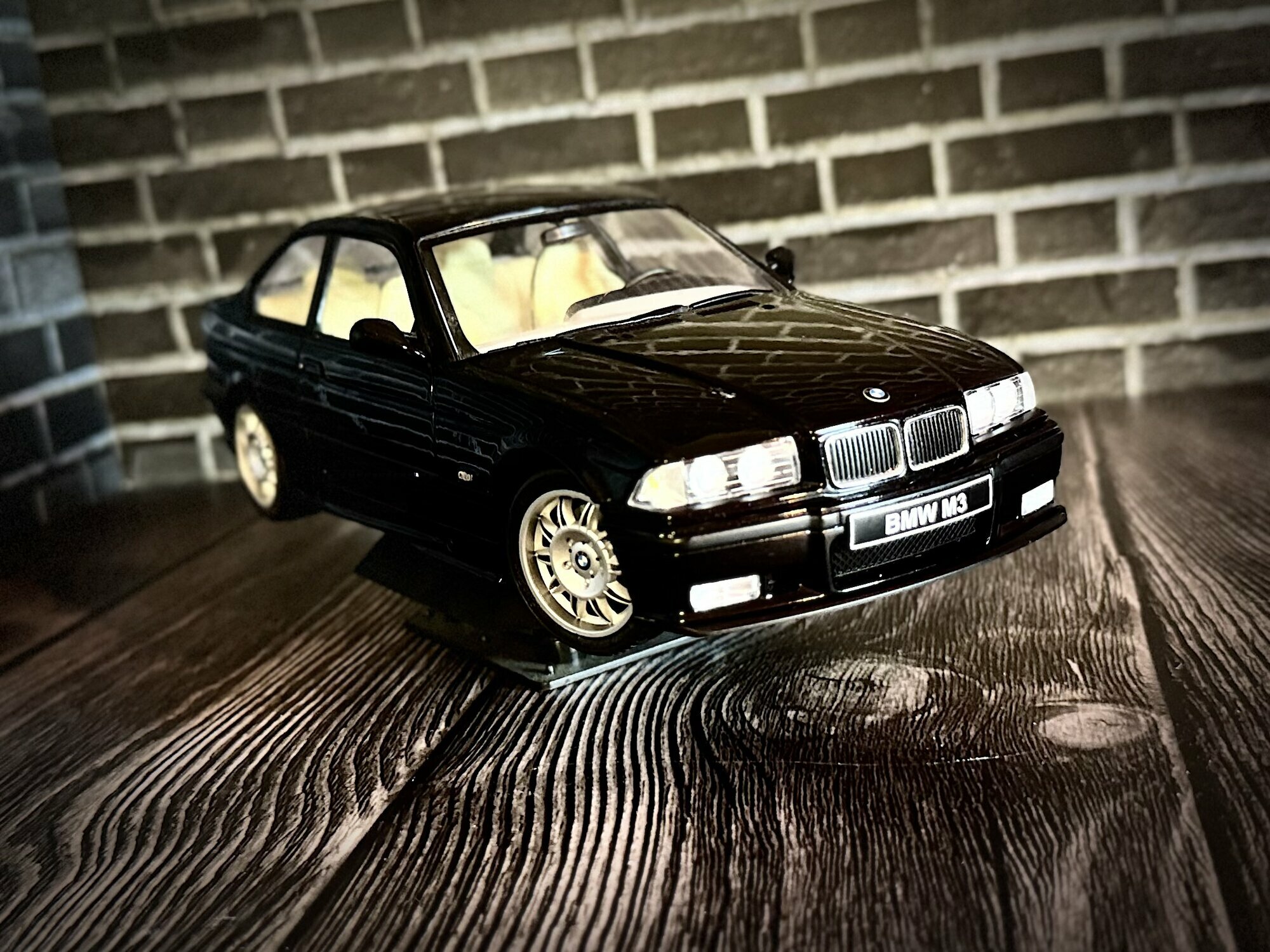
- BMW E36 M3 (from 1993)
- Solido
- 1:18
- Showcase model / No engine
- diecast
- cosmosschwarz
- Perfect mint condition
- Original packaging exists
- Not for sale
Classification of the prototype: BMW E36 M3
The model shown is based on the BMW E36 M3, the third-generation M3 built on the E36 3 Series platform. The E36 was produced from 1992 to 1999 and replaced the E30. The BMW E36 M3 was the first M3 that BMW offered more broadly as a sedan and convertible; the E30 predecessor was mainly known as a homologation coupe. The project’s chief designer was Claus Luthe, and the production E36 styling is partly credited to Boyke Boyer. The M-specific drivetrain work was done by BMW M GmbH, with engine development under Paul Rosche. The BMW E36 M3 shifted the model line away from pure homologation specials toward a high-performance road car with clear motorsport DNA. To place it in time: 1992, the launch year of the BMW E36 M3, saw things like the Maastricht Treaty being signed, the Summer Olympics in Barcelona, and Whitney Houston releasing “I Will Always Love You.” Just giving you a feel for the era and how old the car is.
Technical specs and highlights of the original
The BMW E36 M3 started in Europe with the inline-six S50B30 with 2,990 cm³ (182.5 in³) displacement and 210 kW (286 PS) at 7,000 rpm, and 320 Nm torque. In 1995 BMW introduced the S50B32 with 3,201 cm³ (195.4 in³), individual throttle bodies and double VANOS, making 236 kW (321 PS) and 350 Nm. Top speed was electronically limited to 250 km/h (155 mph); 0–100 km/h (0–62 mph) times were around 5.5–5.6 s depending on the version. In the US there were different engines (S50B30US, later S52) rated at 179 kW (240 hp) to meet local emissions rules. Gearbox-wise it launched with a 5-speed manual, the 3.2-liter got the 6-speed Getrag 420G; a 5-speed automatic was optional. The suspension used MacPherson struts up front and the so-called Z-axle with multi-link geometry at the rear. Larger ventilated discs, a stiff-but-streetable spring-and-damper setup, and a mechanical limited-slip rear differential (market-dependent) were part of the package. The BMW E36 M3 was available as a coupe, sedan and convertible; special models like the M3 GT (295 PS, limited) and the US-focused M3 Lightweight targeted more hardcore buyers. Curb weight sat roughly between 1,460 and 1,570 kg (3,220–3,460 pounds) depending on spec. The coupe’s drag coefficient was about 0.32. Typical ID features of the BMW E36 M3 include the twin-kidney grille, specific front and rear bumpers, M-style mirrors and 17-inch wheels.
The Solido 1/18 collector model
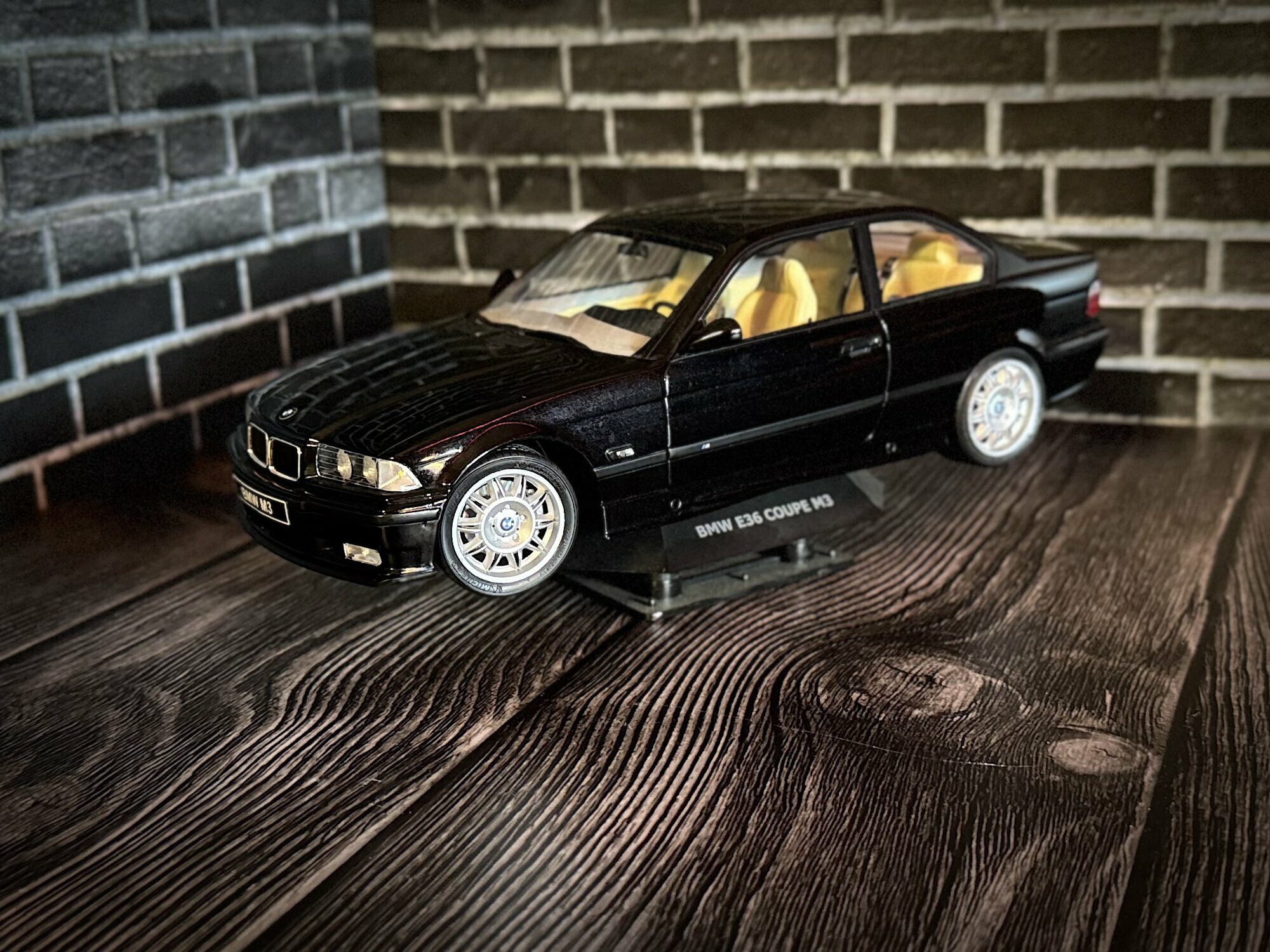
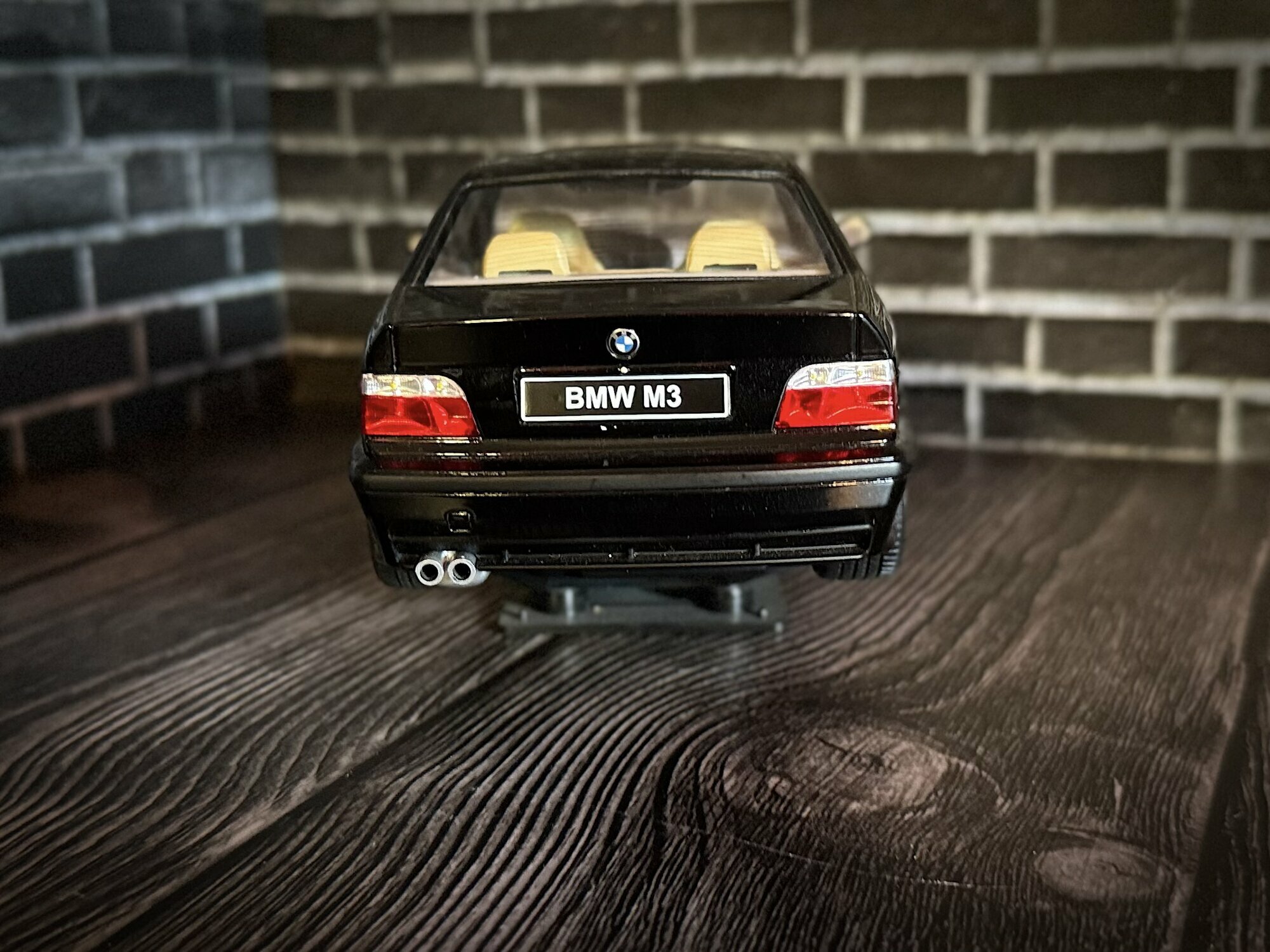
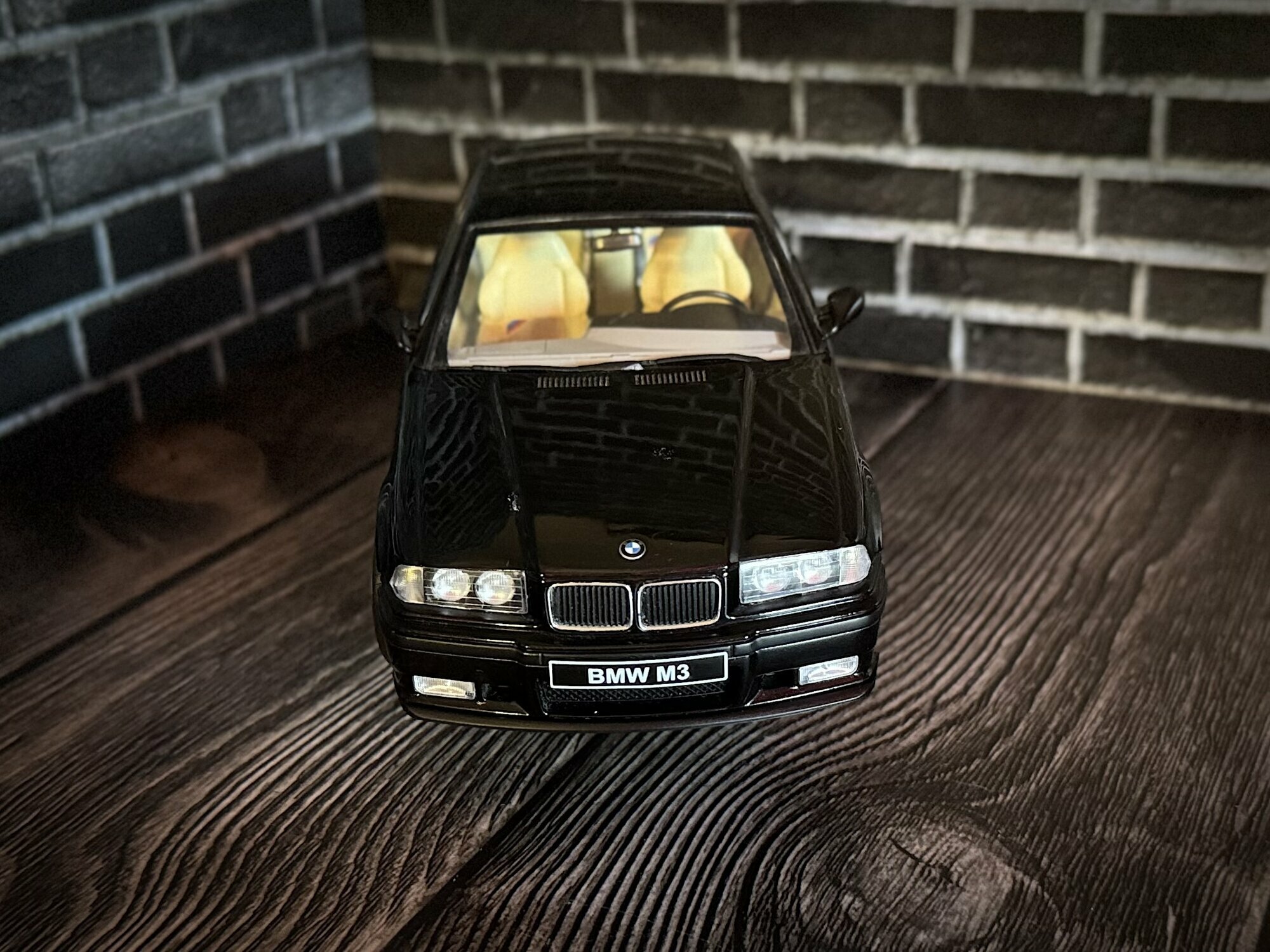
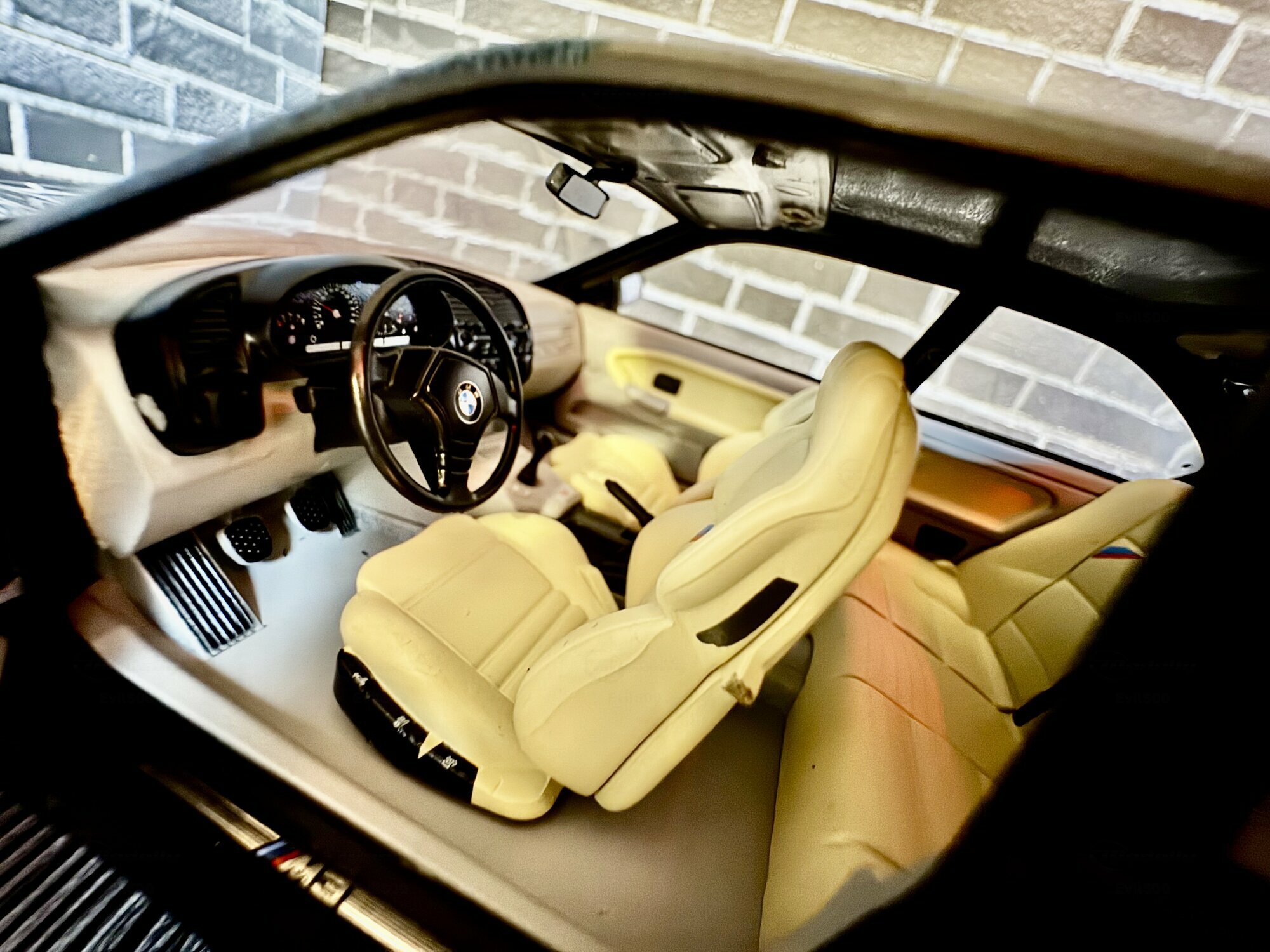
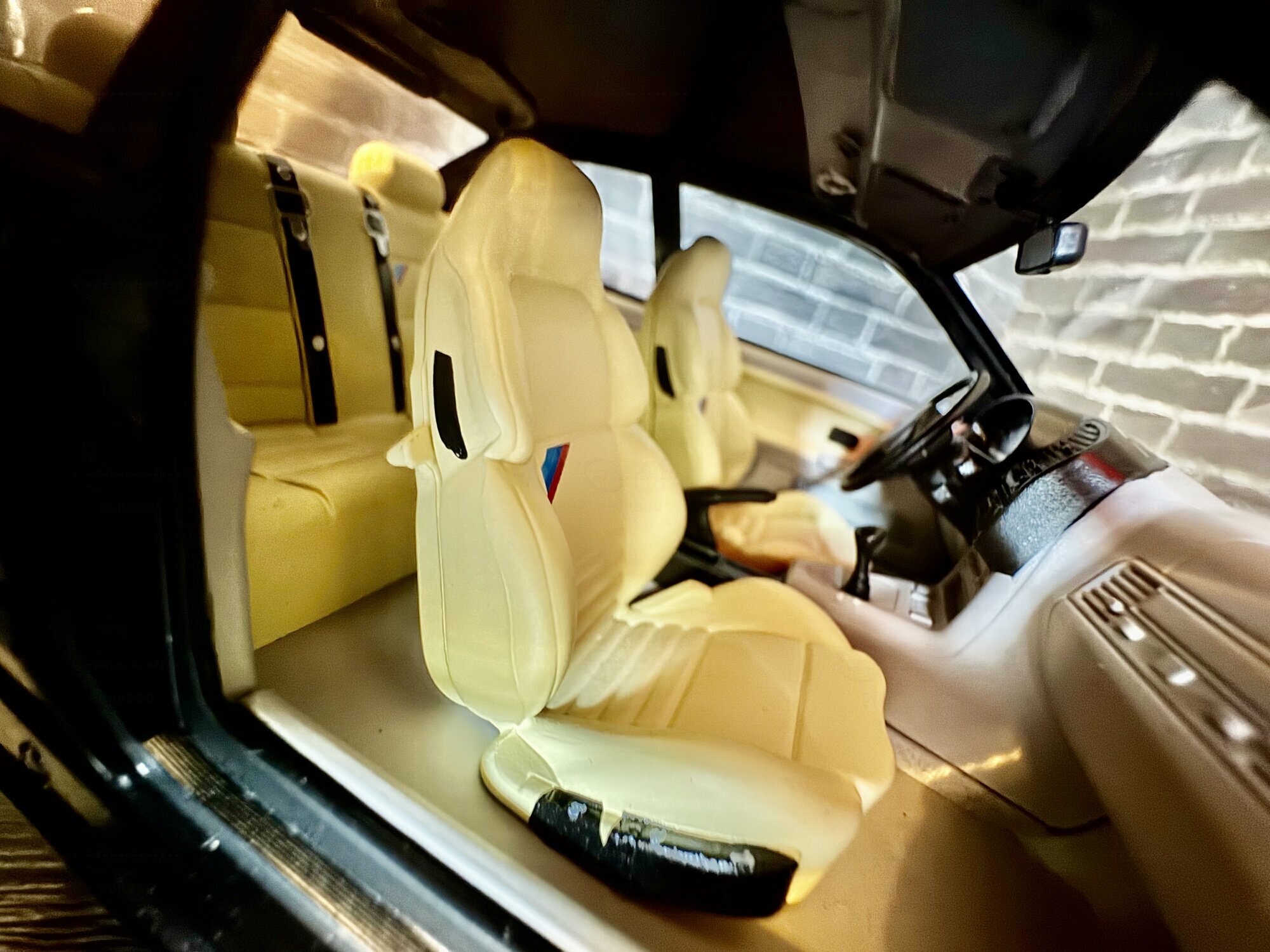
The photos show a 1/18 scale model from Solido that’s modeled on the BMW E36 M3 coupe. It’s part of collector Evil500’s collection. According to the maker it’s diecast metal, which gives a solid body and crisp edges. The finish is black with an even gloss. The twin-kidney grille is a separate piece, and the rectangular clear headlights include suggested reflectors. The front bumper has the M-type lower valance and small fog lamps. Along the sides you can see neatly engraved panel lines, separately fitted door handles and a continuous side trim. The wheels are multi-spoke with a BMW center cap; I can’t tell a specific wheel maker from the photos. At the rear the red tail lamps have clear indicator sections, there’s a twin-tip exhaust on the left and a license plate area with an “BMW M3” badge. The interior is a light beige, with heavily bolstered front seats, hinted headrests and a black dash. Proportions match the coupe—short overhangs and a slightly rising beltline. The model sits on a base labeled “BMW E36 COUPE M3”, so it’s clearly presented as the M3. Worth noting: it’s a standard, road-car representation from Solido in 1/18 diecast form, with no obvious racing livery or movie tie-in—basically a stock-looking display piece.
Context, history and collector relevance
As the E30’s successor, the BMW E36 M3 was aimed at a wider market. It combined a usable, big inline-six engine with M-specific chassis tuning. BMW used touring-car know-how in development, but the E36 M3 was more of a well-engineered road car than a pure homologation special. Collectors like the E36 for its variety of body and engine variants and for that distinct 1990s look. The pictured 1/18 diecast by Solido captures key details like the grille, headlights, M bumpers and twin exhaust. The black paint with the light interior gives a strong contrast and highlights the coupe’s lines. You can clearly make out the flat body surfaces, the fitted bumpers and the slightly tilted C-pillar—basically the E36 coupe silhouette. To re-tie it to its era: 1992 also saw Euro Disney open near Paris, Microsoft release Windows 3.1, and the UN Security Council impose sanctions on Serbia and Montenegro. I’m just pointing that stuff out to frame when the BMW E36 M3 came out. In a display case the model looks tidy and well-proportioned on its base, so it’s a solid documentary piece for Evil500’s collection or for anyone who wants an accurate, no-nonsense representation of the BMW E36 M3.
- Write a first comment about this model now!Any comment can be discussed by all members. It's like a chat.Mention other Modelly members by using @ in your message. They will then be informed automatically.
- Write a first comment about this model now!Any comment can be discussed by all members. It's like a chat.Mention other Modelly members by using @ in your message. They will then be informed automatically.