
Chevrolet Custom Camaro(diecast 1:64, Customized)
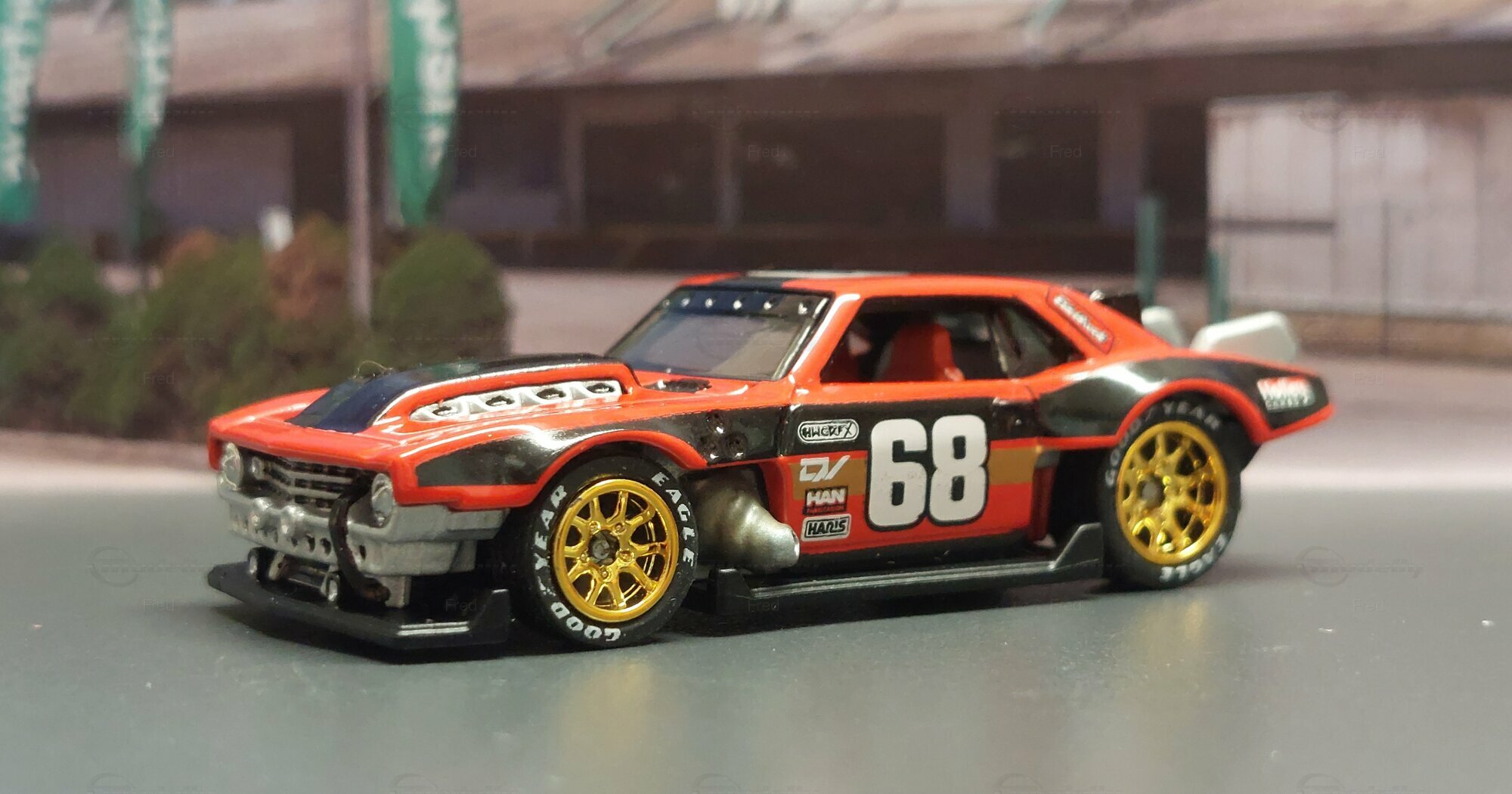
- Chevrolet Custom Camaro (from 1968)
Hot WheelsUmgebautes Modell- 1:64
- Showcase model / No engine
- diecast
- red
- locale dealer
- In near mint condition
- Original packaging does not exist
- Not for sale
Hot Wheels Custom ’68 Camaro in 1/64 scale
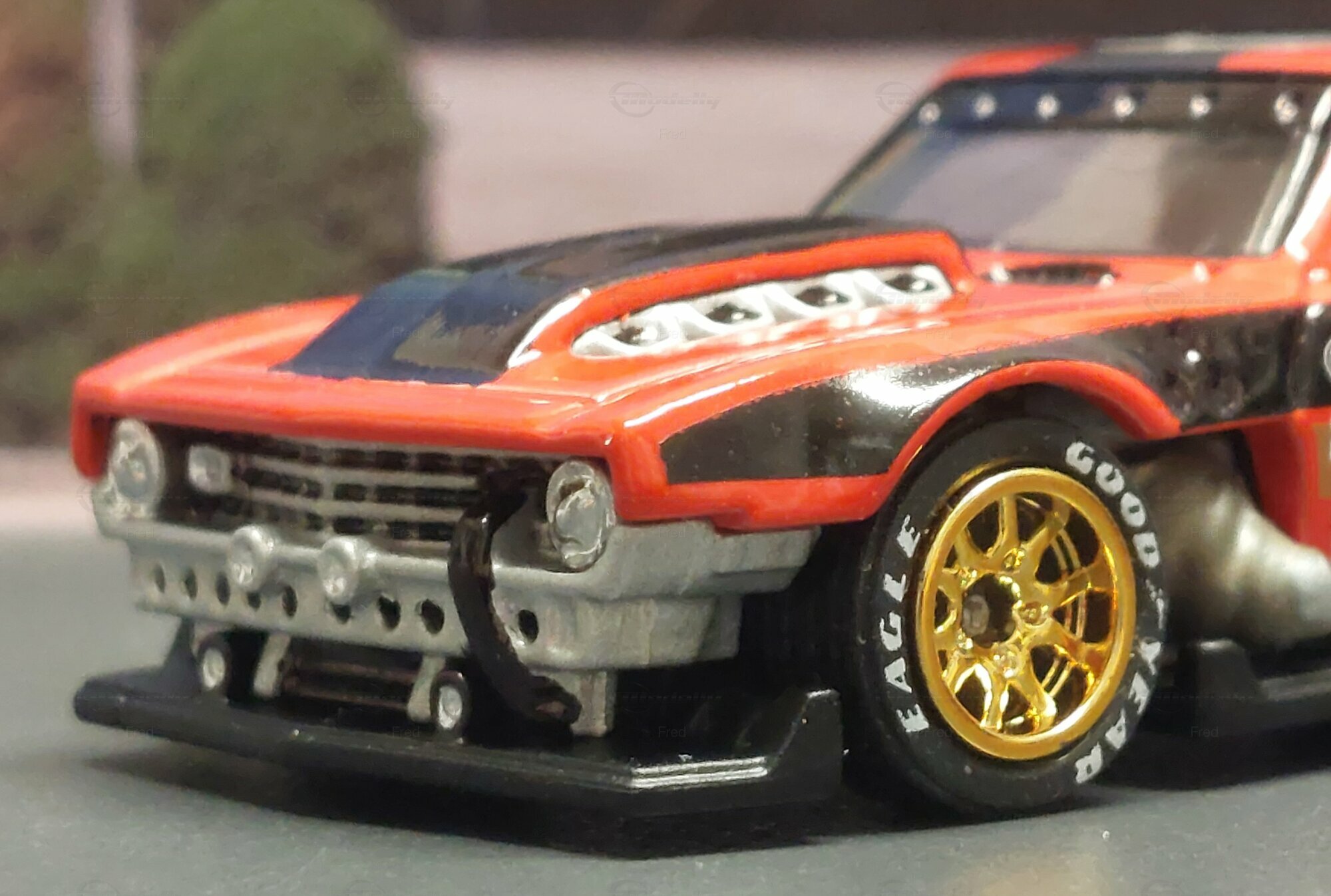
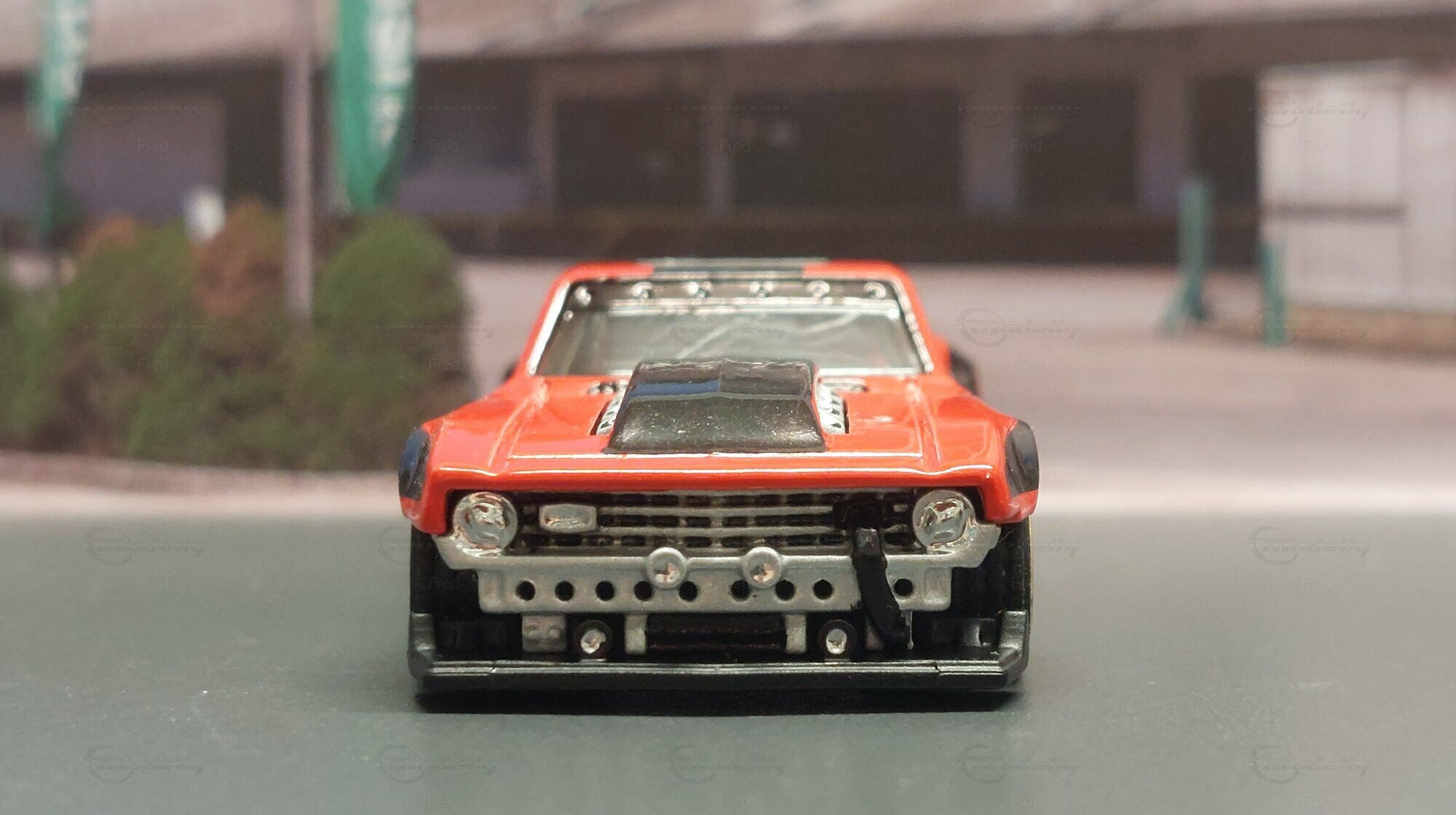
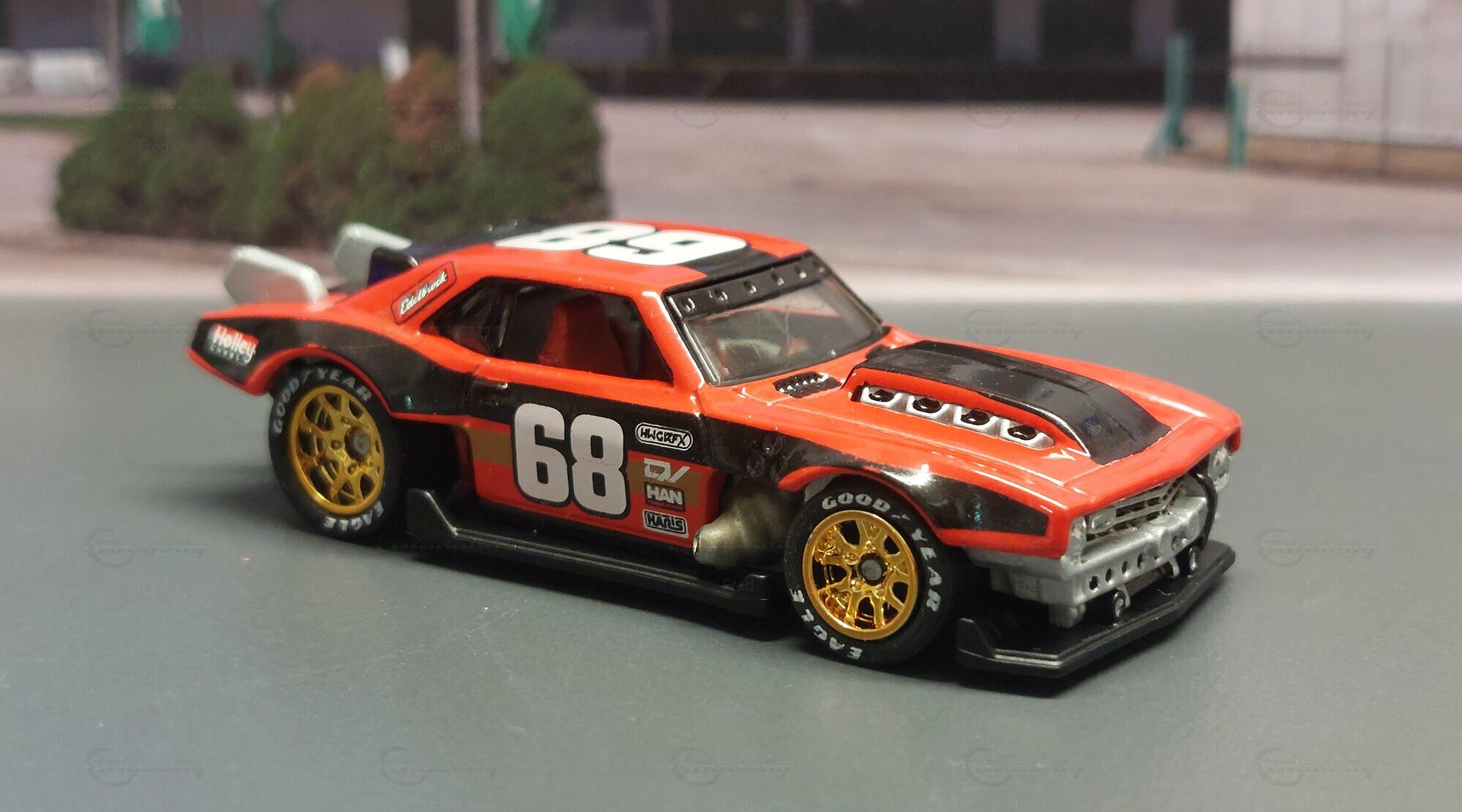
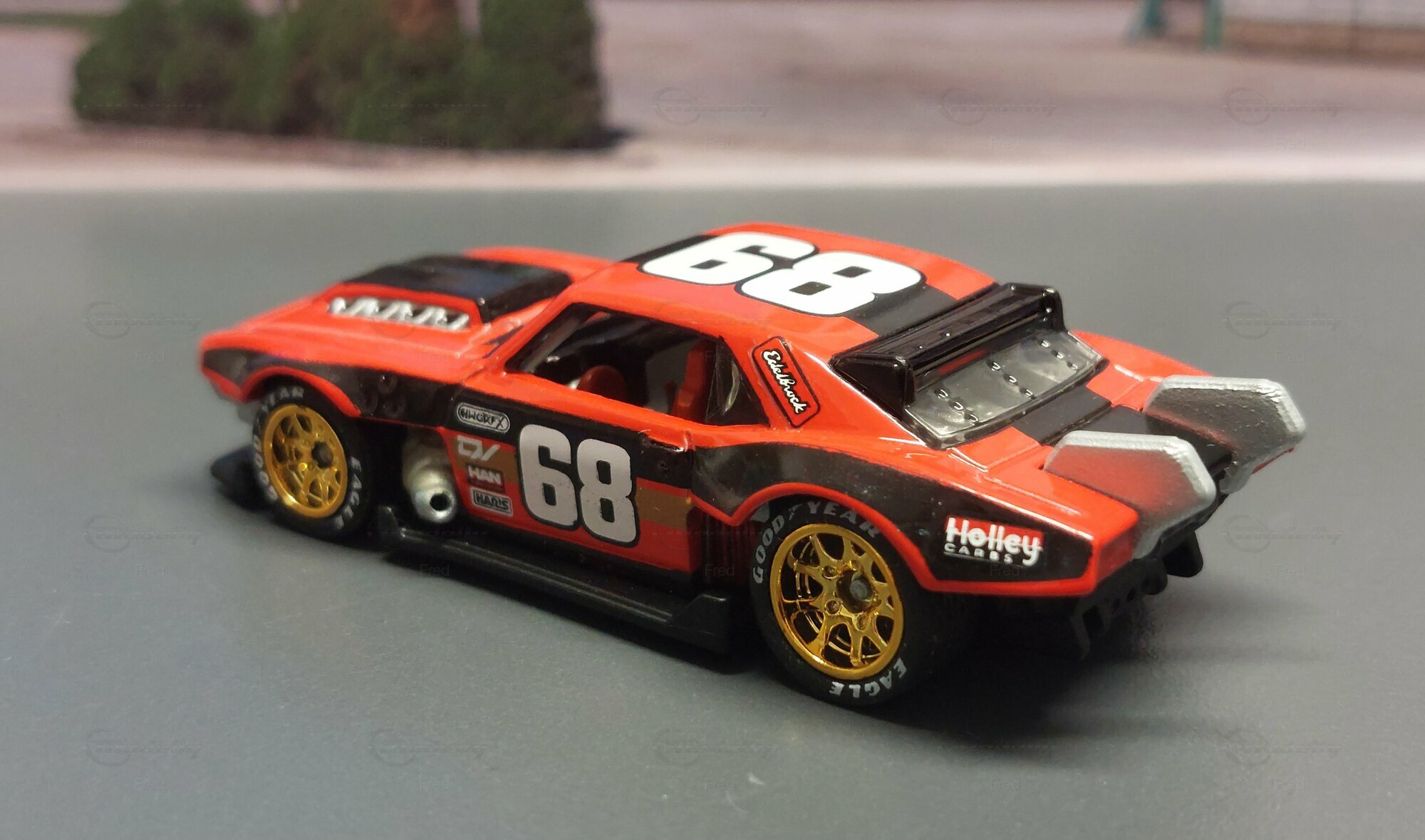
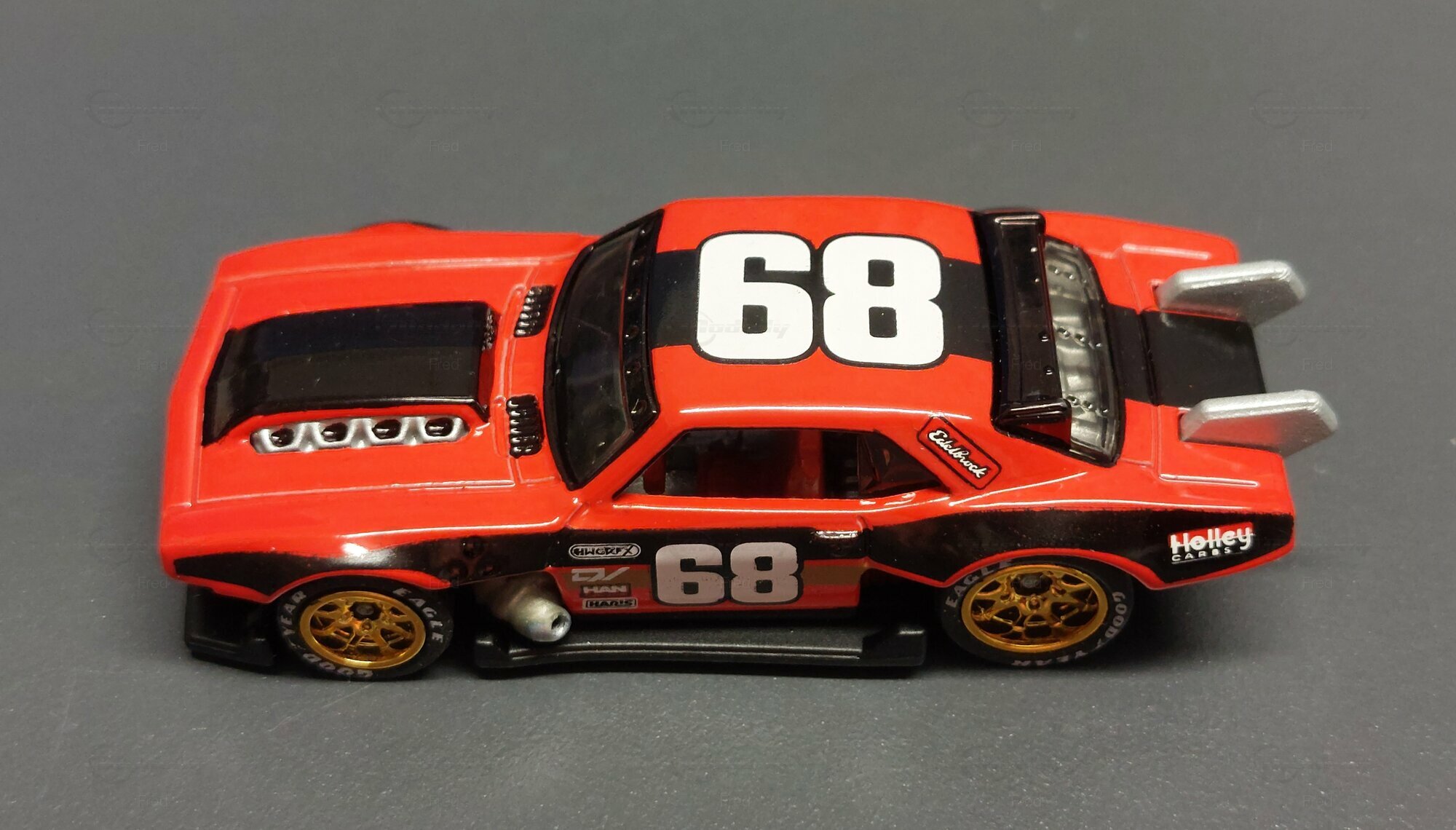
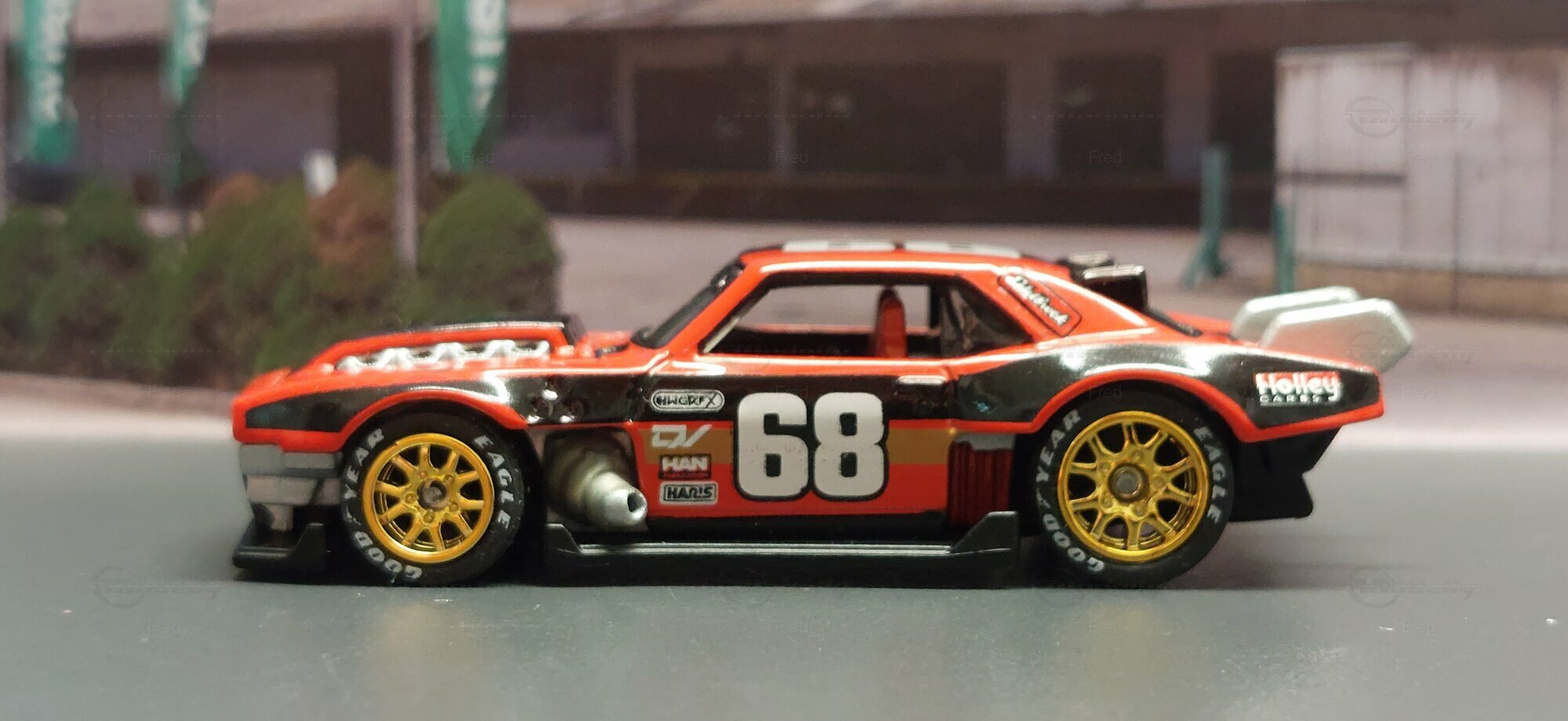
The vehicle shown by Modelly member “Fred” is a model car in 1/64 scale, made by Hot Wheels. Based on the body shape, the front end, and the side window line, the prototype is very likely a 1968 Chevrolet Camaro; the Hot Wheels version is called the Custom ’68 Camaro. The long hood, short rear end, and the grille with round headlight openings are inspired by the design of the first Camaro model year. This collectible is built as a race car with heavily widened fenders, side exhaust pipes, a front splitter, a rear diffuser, and a large rear wing. So while it keeps the main shape of the original street car, it is not a stock version of the historic vehicle.
First-generation Camaro and the technical basis of the prototype
The 1968 Chevrolet Camaro belongs to the first generation, which was built from 1966 to 1969 and was available starting with the 1967 model year. Chevrolet developed the car as a compact sporty coupe within GM’s F-body program. There was no direct predecessor to the Camaro: it was a brand-new model and was placed below the larger Chevelle line in the Chevrolet range. The Camaro shared its platform with the Pontiac Firebird. Up front it used coil springs and a double-wishbone front suspension, while the rear had a solid axle on leaf springs. Depending on the version, the engine lineup ranged from inline-six engines to small-block and big-block V8s. For the 1968 model, available options included 230 and 250 cubic inches for the six-cylinder engines, plus V8 versions with 307, 327, 350, 396, and 427 cubic inches. The design was led by Bill Mitchell, then GM vice president for design; at Chevrolet, John Z. DeLorean was a major force in model planning and management.
Modified mini model by Fred — not a stock Hot Wheels product
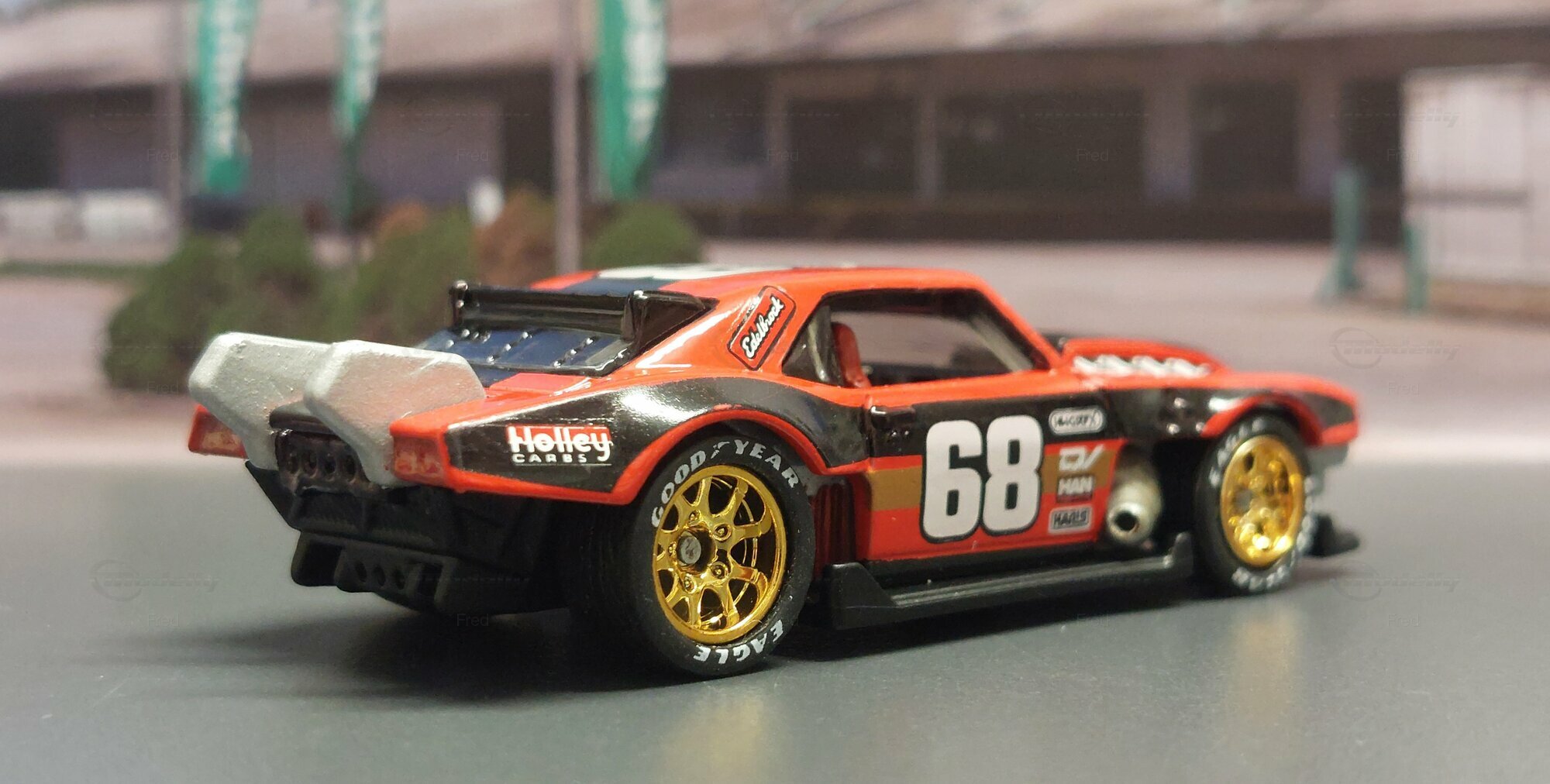
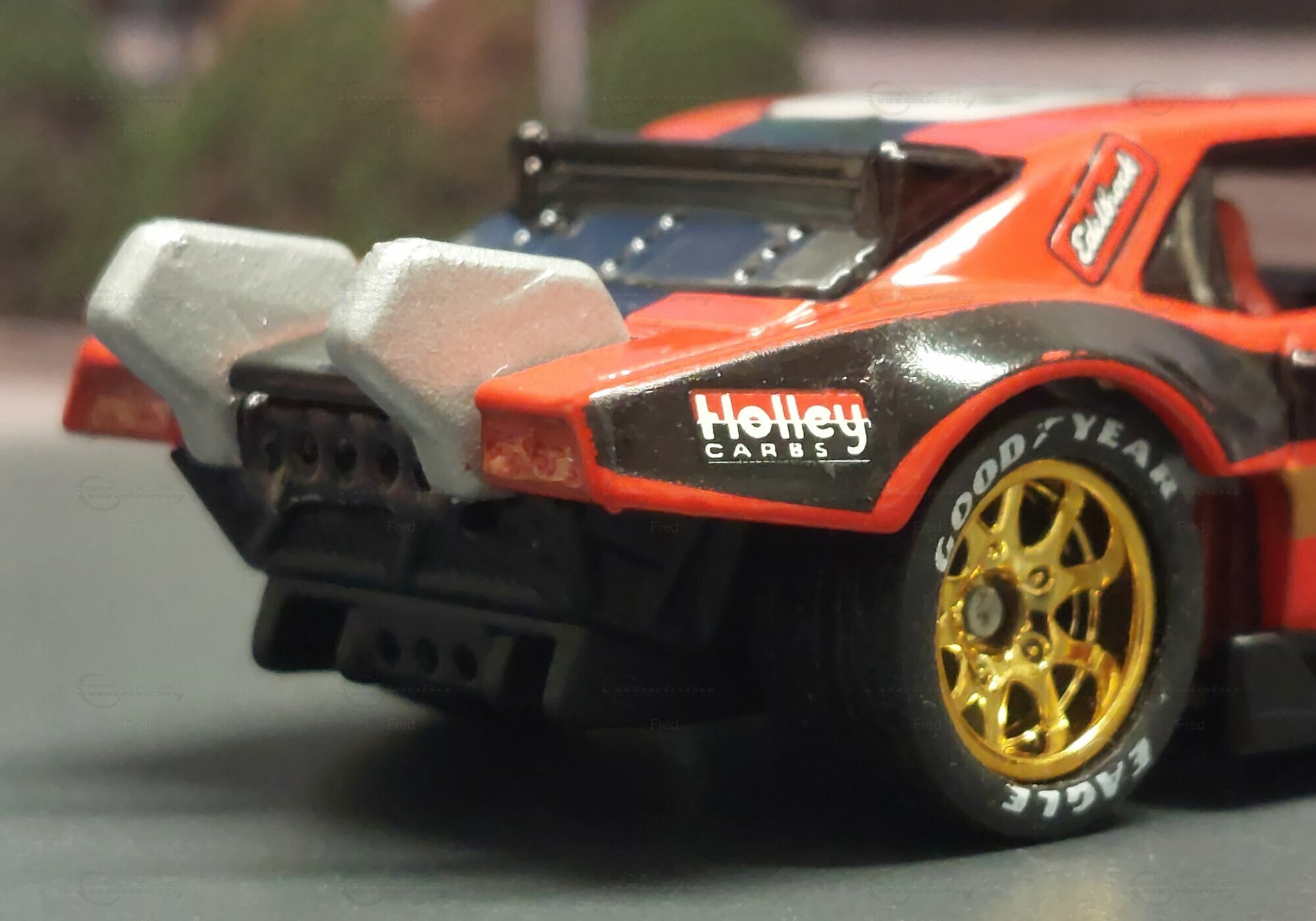
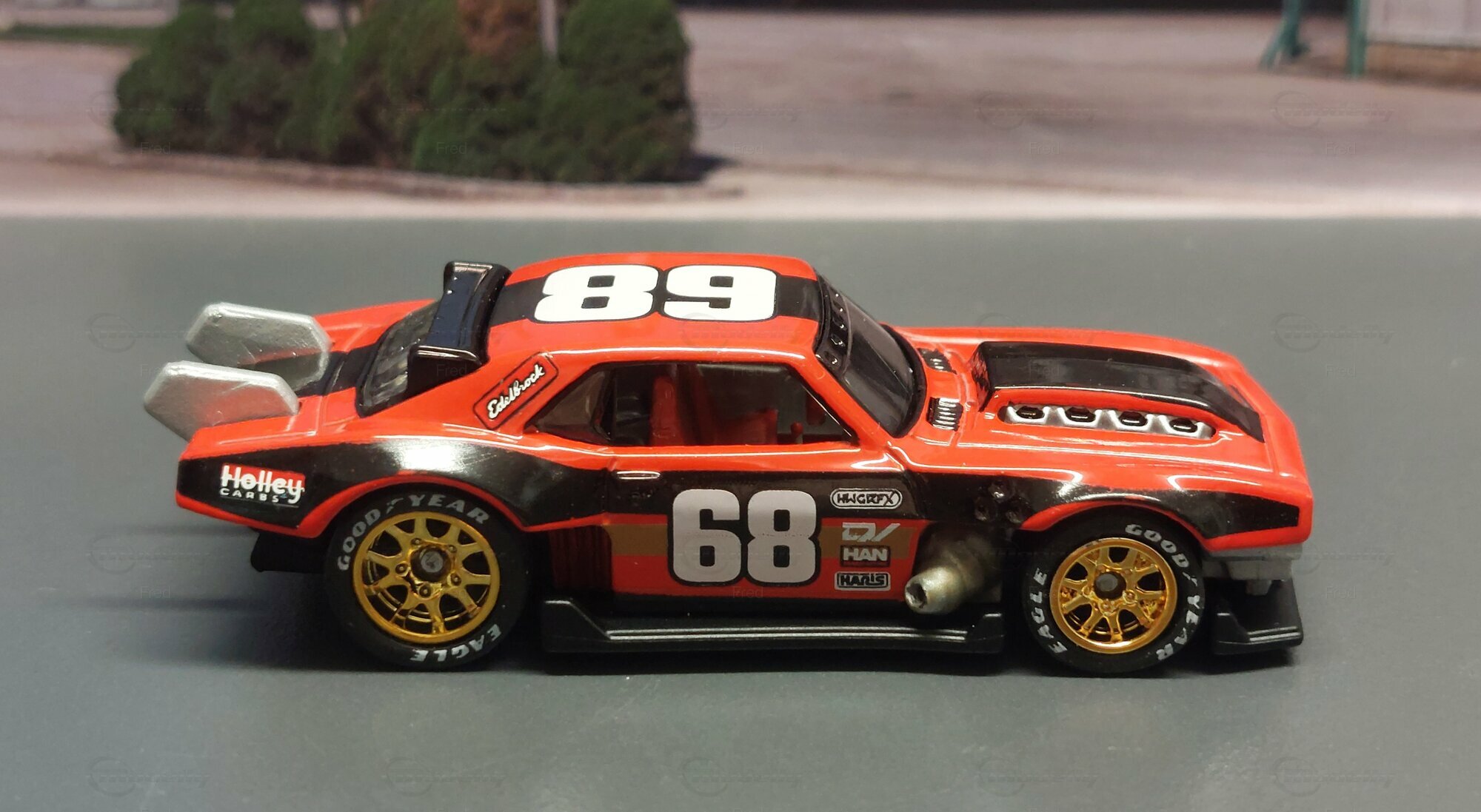
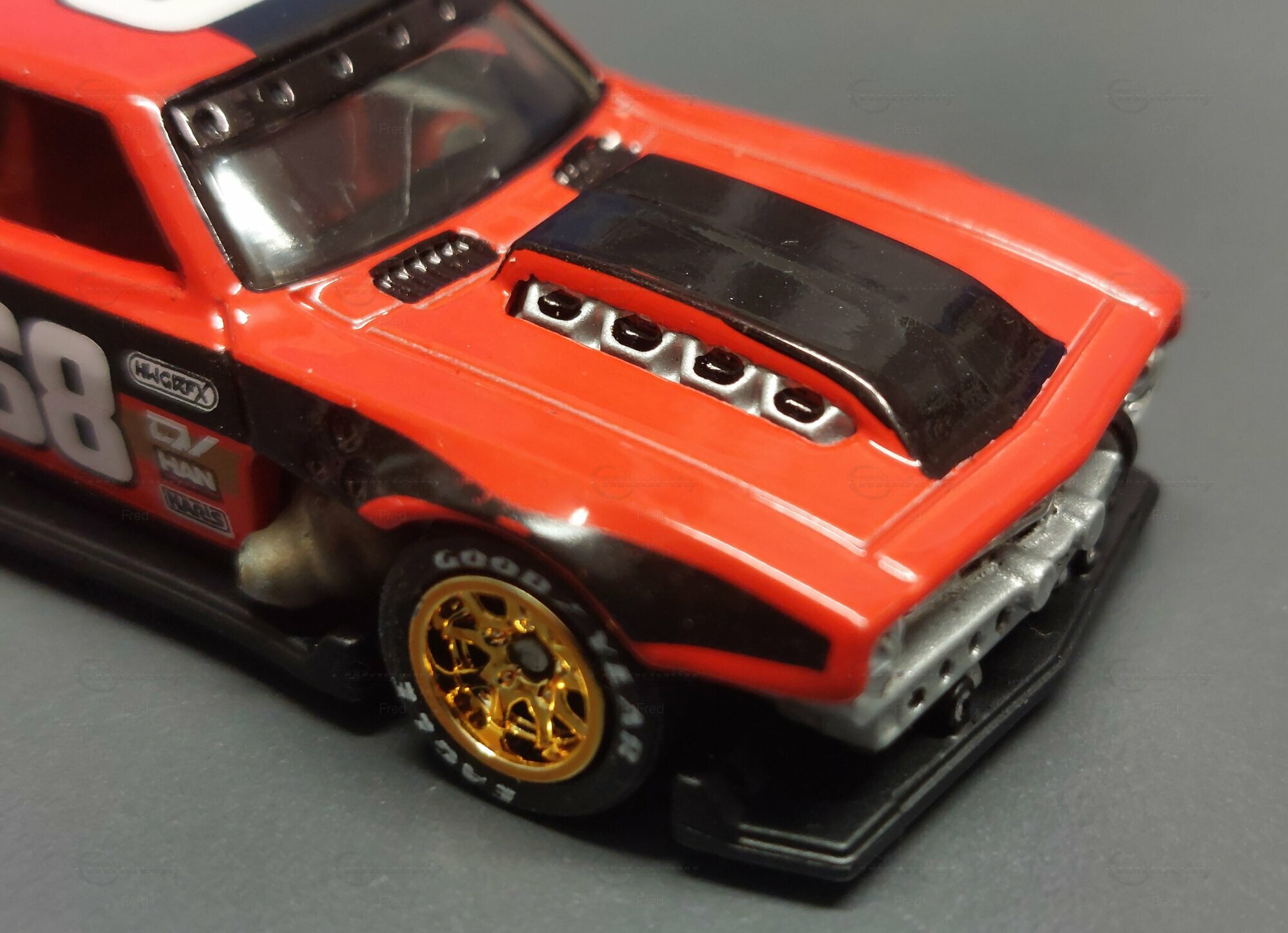
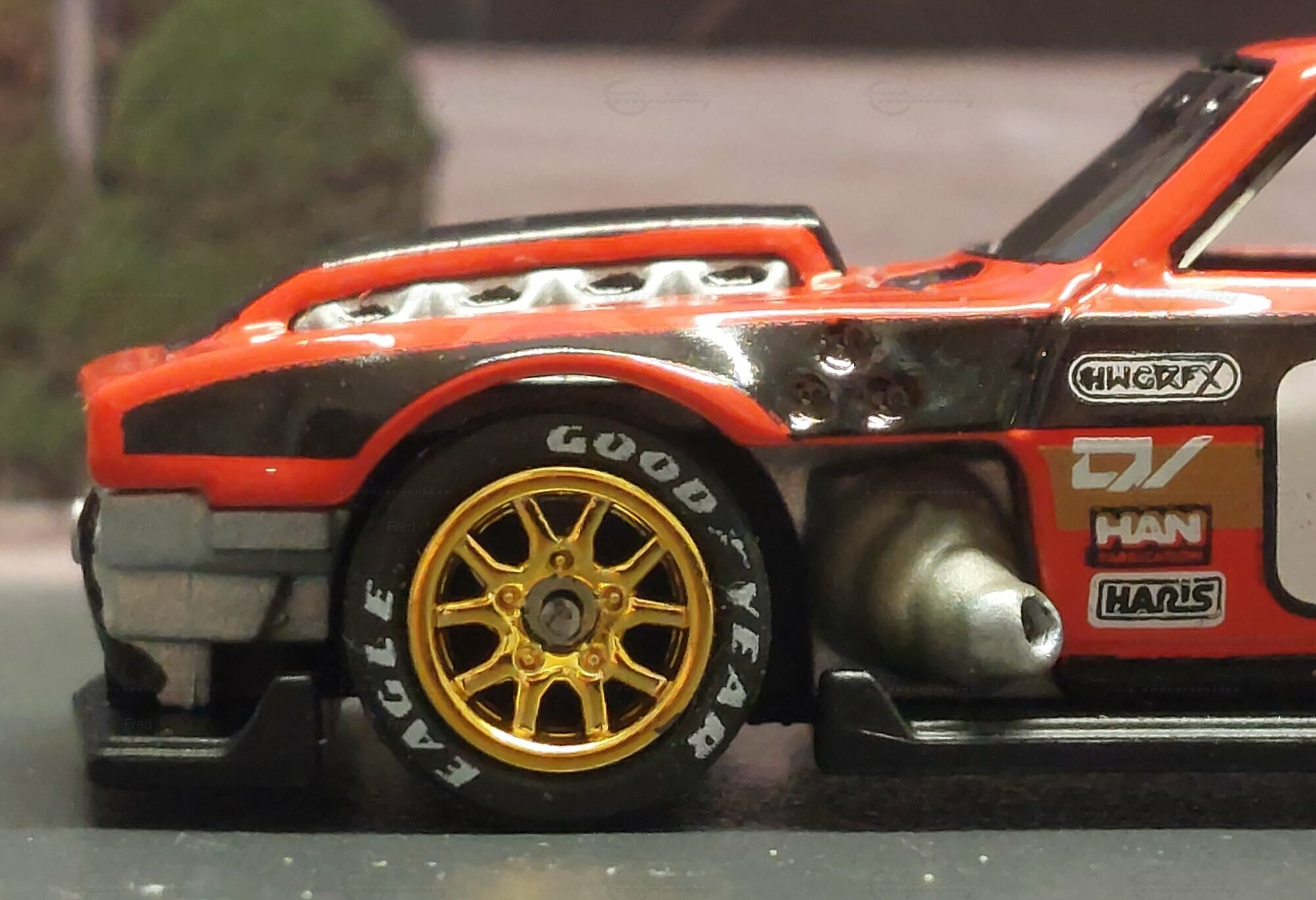
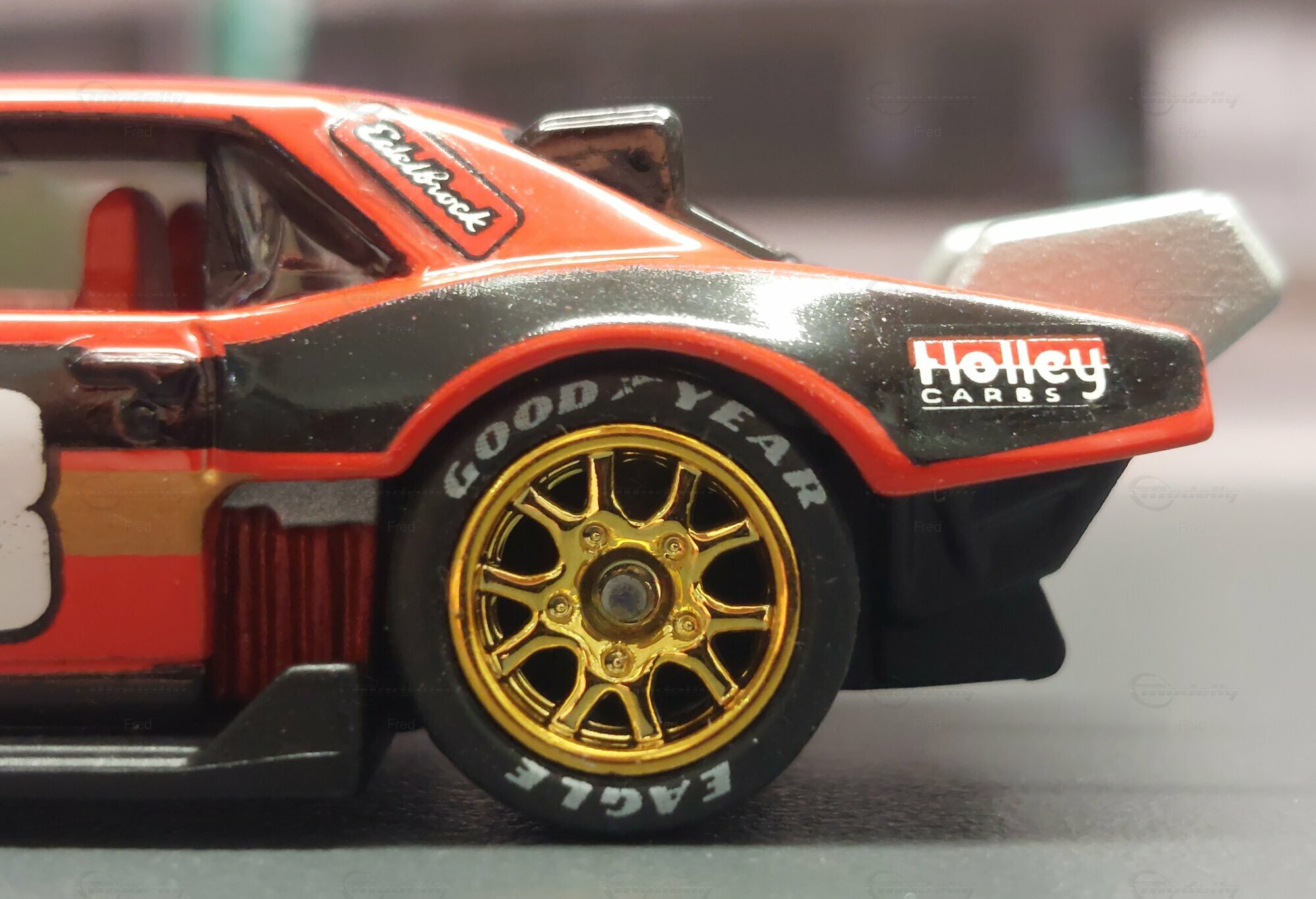
Important for collectors: This piece is a modified miniature and does not represent the product that was originally released by Hot Wheels. You can clearly see changes to the wheels, tires, body details, and paint scheme. Still, it is a model car in 1/64 scale, made by Hot Wheels, with a base that has been individually customized. The miniature is built from die-cast material, meaning the body is cast metal; other parts such as the chassis, glazing, and add-on pieces are typically plastic in model form. The gold multi-spoke wheels with white-letter Goodyear Eagle tires differ from a standard base version and really push the race-car look. Also noticeable are the side-exit exhaust pipes ahead of the rear wheel, the low side skirts, and the wide black front lip. On the hood there’s a raised intake with a silver insert and several visible openings, which feels inspired by drag-racing or circuit-racing builds.
Paint scheme, number 68, and visible racing details
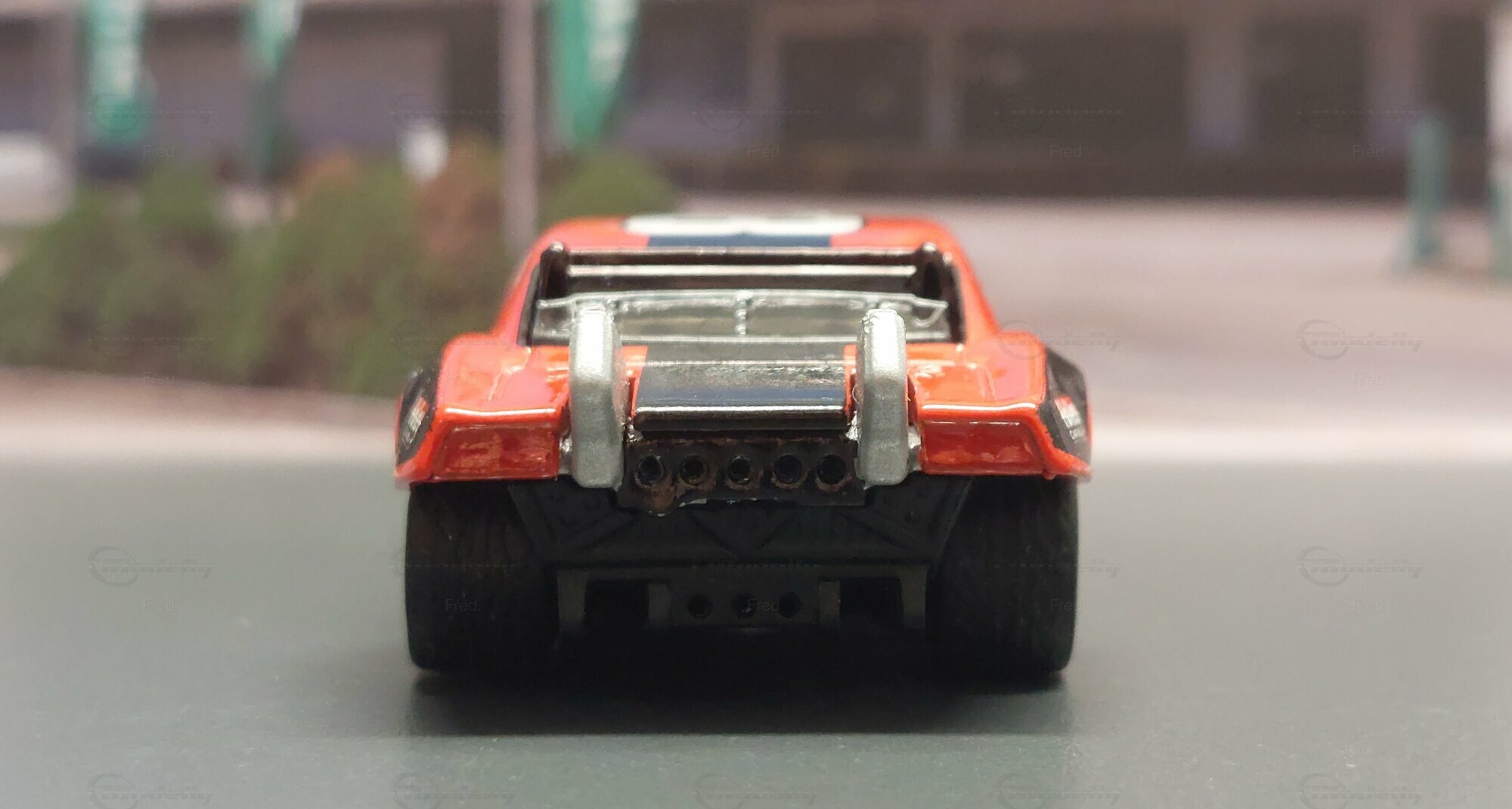
The paint job mixes a strong orange with black areas over the fenders, doors, hood, and rear section. Orange outline lines frame the wheel arches and carry the body color across the dark panels. On the doors, there’s a large white race number “68” with a dark outline. Next to it are small, clearly visible sponsor decals, including Cherry, Edelbrock, and Holley Carburetors; these graphics belong to a stylized motorsport look and should not be read as an actual factory paint scheme for a 1968 Chevrolet Camaro. At the rear, the model has a silver rear wing and a black spoiler element. The back view also shows a dark exhaust setup and a diffuser-like lower section. It’s really the mix of visible die-cast metal, gold wheels, high-contrast lettering, and the clearly separated black body zones that gives this model car its appeal in a straightforward, easy-to-read way: even at this small size, the shapes, decals, and custom mods stay very clear.
- Write a first comment about this model now!Any comment can be discussed by all members. It's like a chat.Mention other Modelly members by using @ in your message. They will then be informed automatically.
- Write a first comment about this model now!Any comment can be discussed by all members. It's like a chat.Mention other Modelly members by using @ in your message. They will then be informed automatically.