
Ferrari 330 P4 Spyder(diecast 1:64, Customized)
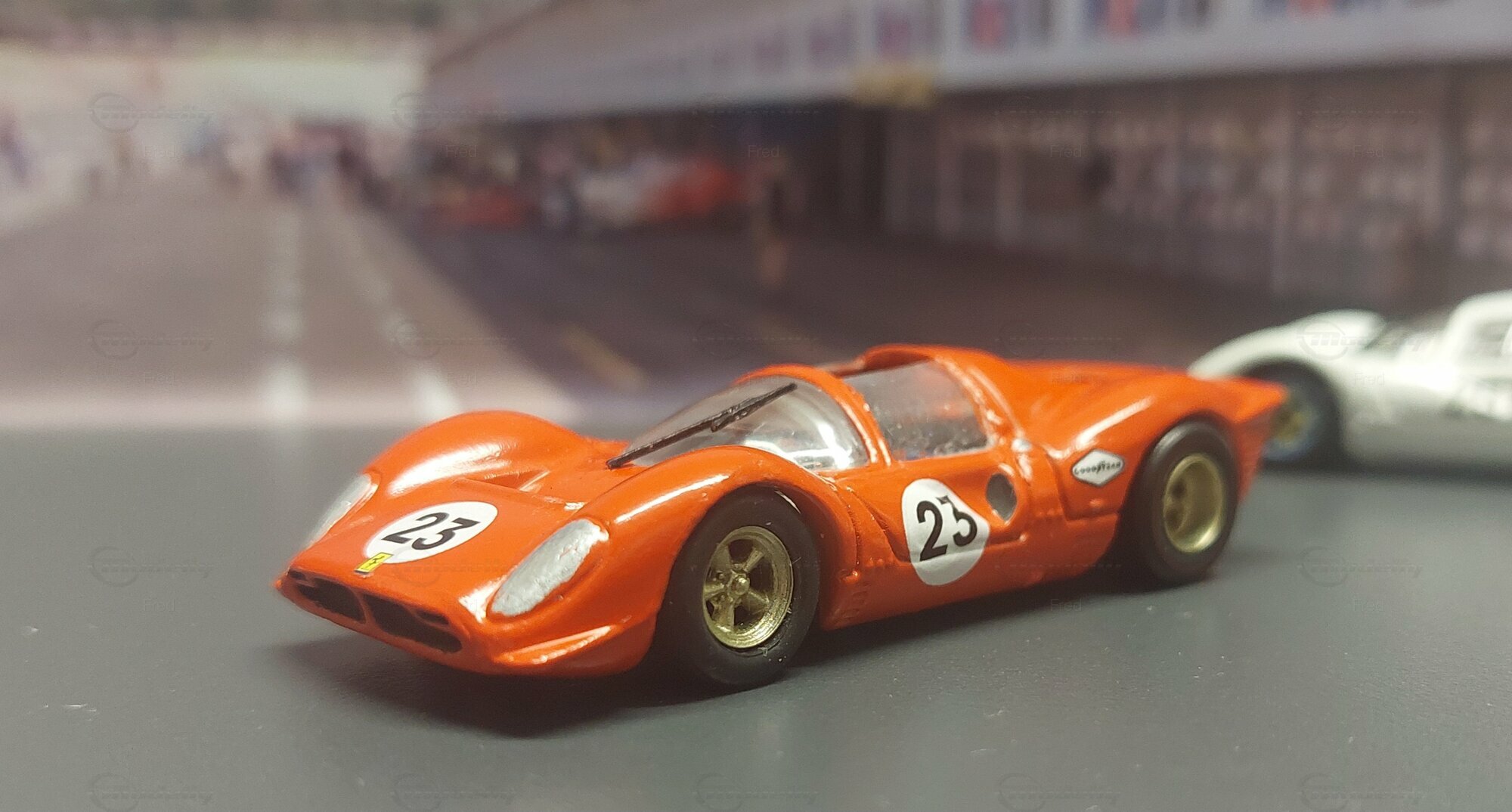
- Ferrari 330 P4 Spyder (from 1967)
Hot WheelsUmgebautes Modell- 1:64
- Showcase model / No engine
- diecast
- red
- locale dealer
- In near mint condition
- Original packaging does not exist
- Not for sale
Ferrari 330 P4 Spyder as a Technical Racing Prototype
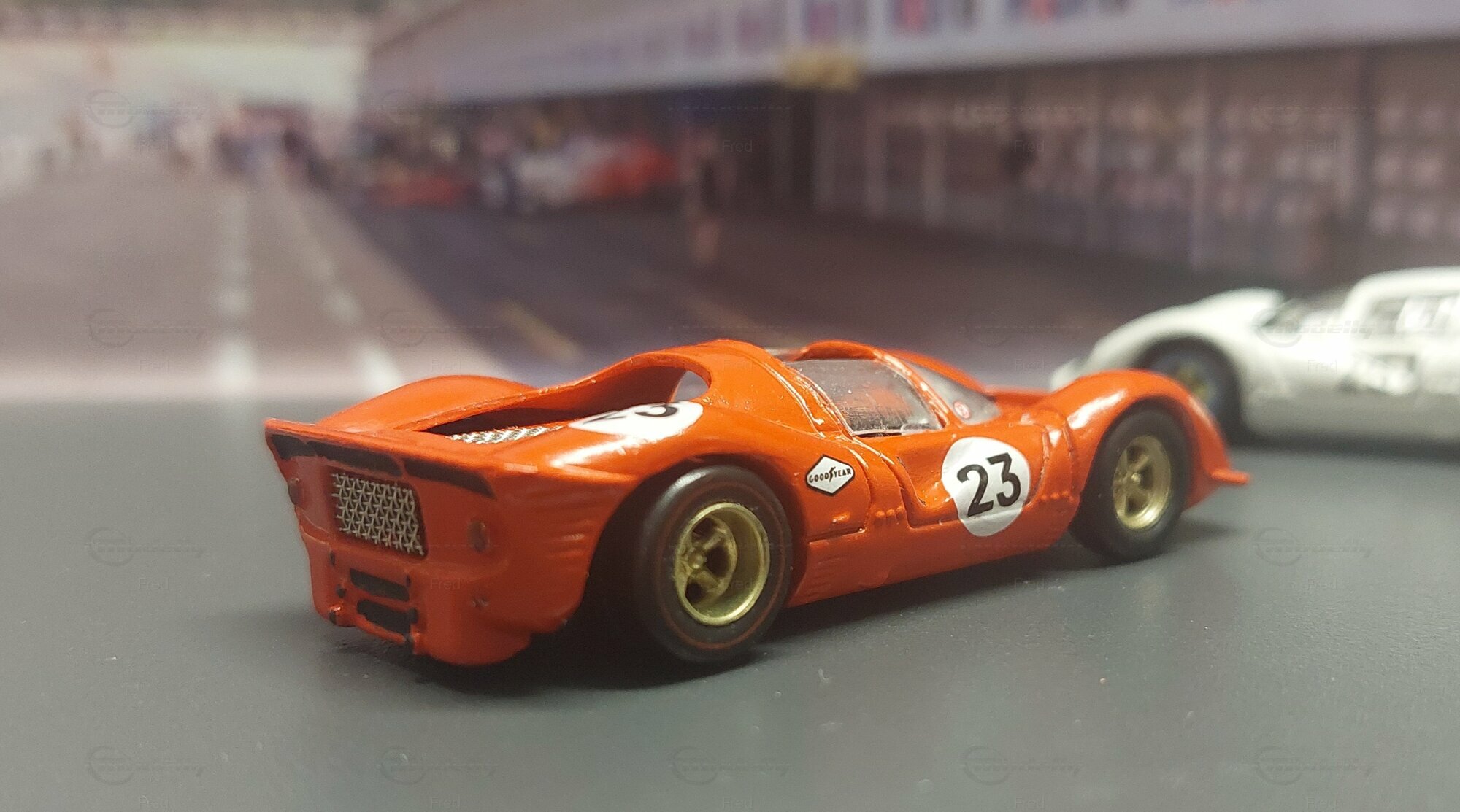
The miniature shown here is clearly based on the Ferrari 330 P4, a sports prototype from the P4 generation that was built in 1967. The car was developed as an evolution of the Ferrari 330 P3 and was designed for the most important class in the Sports Car World Championship at the time. Ferrari used a longitudinally mounted 4.0-liter V12 in the Ferrari 330 P4, with four overhead camshafts. Depending on the setup, it made about 450 hp at around 8,000 rpm. A five-speed gearbox, independent suspension, and inboard rear disc brakes were part of the package. The chassis was a tubular frame, while the low-slung body was made from lightweight metal. For long-distance racing, the large front area for cooling and brake ventilation, the side air intakes, and the compact glazing were all functional elements. The responsible designer is named as Mauro Forghieri; the body shape was developed at Ferrari under the leadership of Franco Rocchi and with aerodynamic work from the racing department.
Racing Record of the Ferrari 330 P4 in 1967
The best-known racing scene of the Ferrari 330 P4 is the 1967 24 Hours of Daytona. Ferrari scored a triple victory there ahead of Porsche, with prototypes from the 330 P3/4, 330 P4, and 412 P groups used. The famous photo of the Ferraris running side by side at the finish documents this manufacturer win, even though it does not reflect the exact timing order. Drivers who piloted cars from this group included Lorenzo Bandini, Chris Amon, Mike Parkes, Ludovico Scarfiotti, Pedro Rodríguez, and Jean Guichet. The results showed how competitive Ferrari’s prototypes were against Ford, Porsche, Chaparral, and Lola in a season with very different track types.
Races, Le Mans, and a Limited Production Run
At the 1967 24 Hours of Le Mans, a Ferrari 330 P4 driven by Mike Parkes and Ludovico Scarfiotti finished second overall; the winner was a Ford GT40. Ferrari’s prototypes were also up at the front in the 1,000 km of Monza. The season also showed the limits of the concept: the V12 offered power and smoothness, but compared with some rivals it was not always the best in weight, fuel consumption, and durability. Only a very small number of pure P4 cars were built, which is why conversions, P3/4 hybrids, and later recreations are often discussed together in the literature. For collectors, it makes sense to distinguish between the Ferrari 330 P4, the P3/4, and the 412 P customer racers, since despite their similar silhouettes they can differ in engine, chassis, and history.
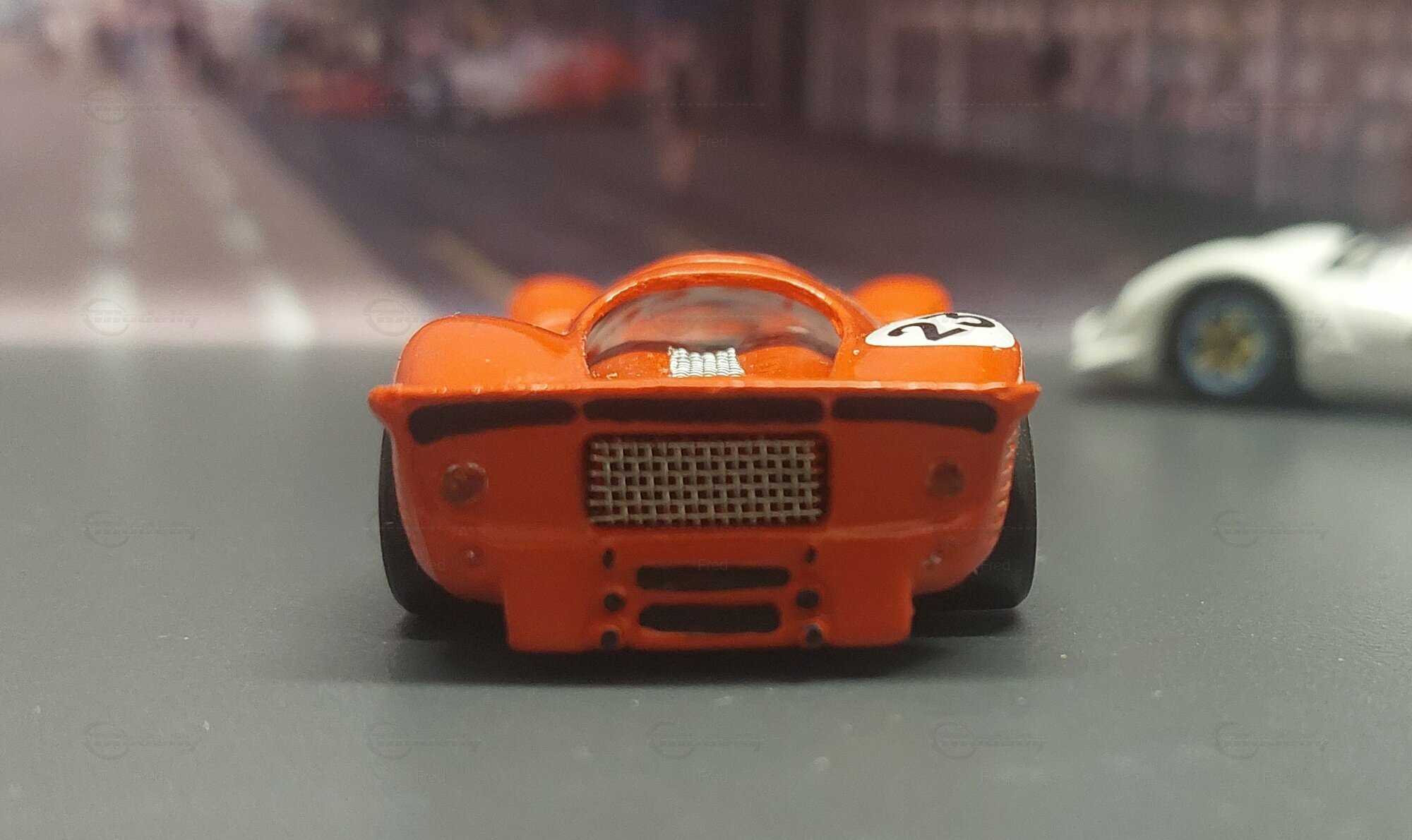
Clearly Marked Hot Wheels Custom in 1/64
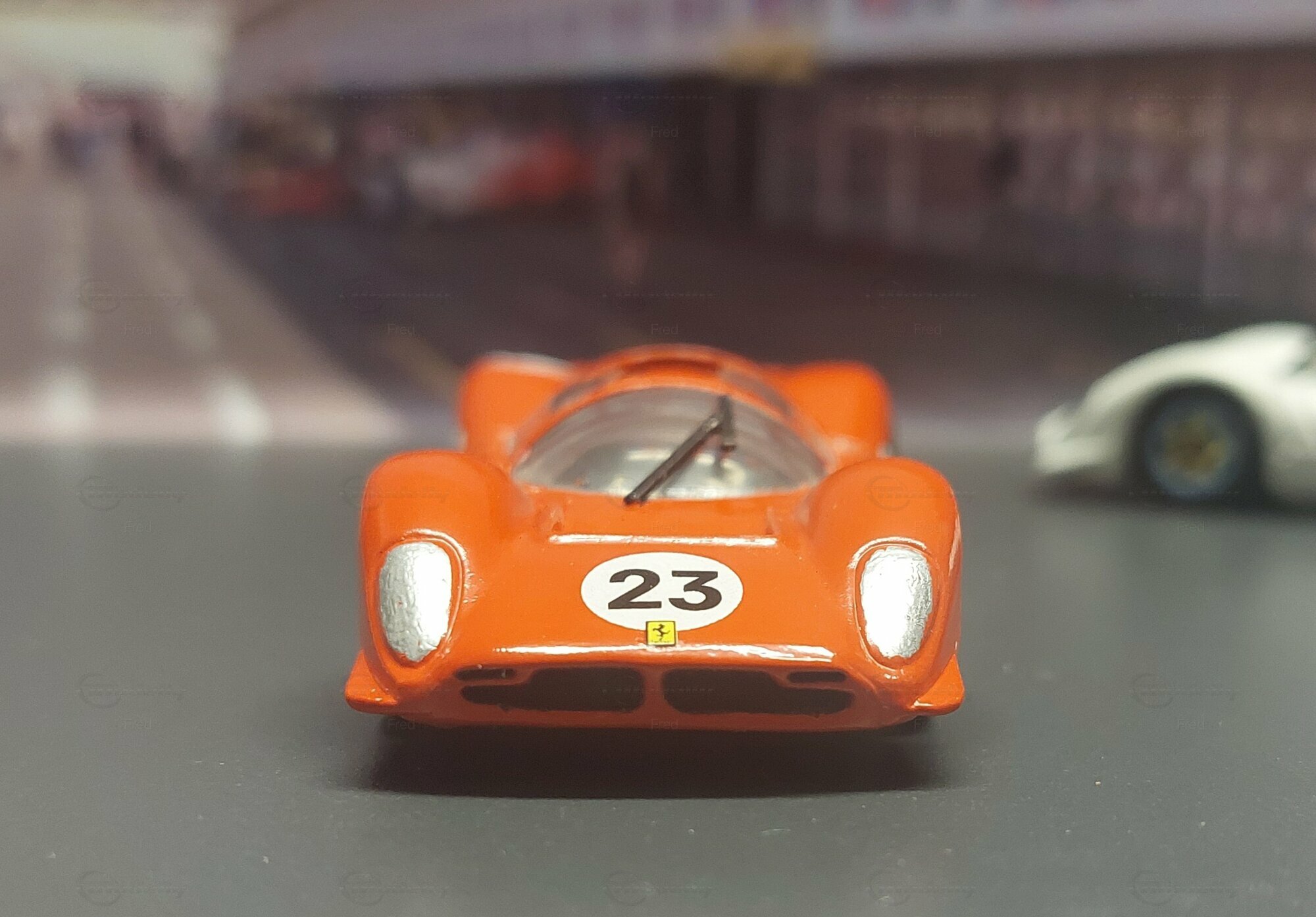
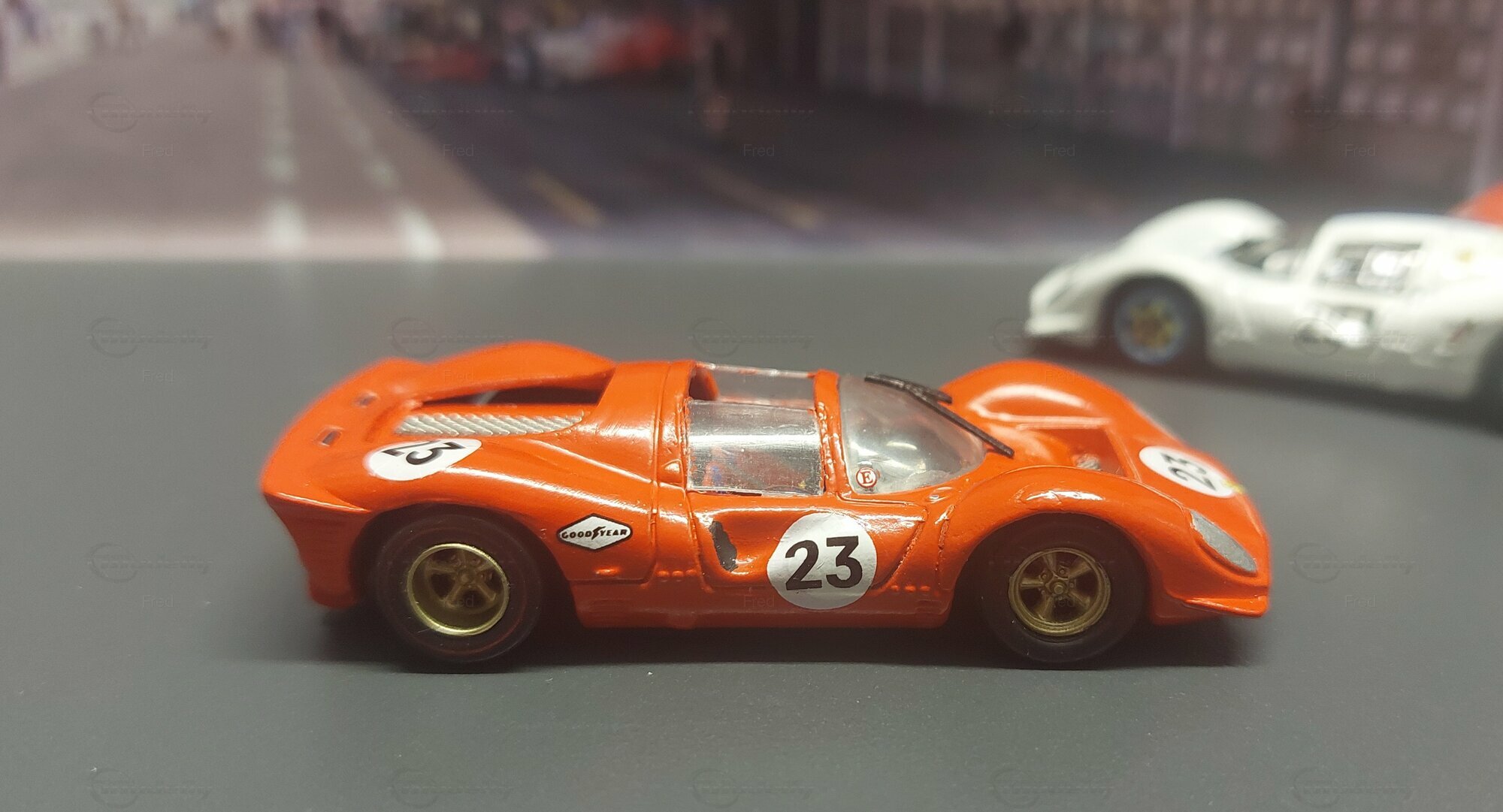
Important note for collectors: this example is a modified miniature and does not match the original product that was first made by Hot Wheels. It is a model car in the 1/64 scale, made by Hot Wheels, whose appearance was changed afterward. The base is diecast, and you can see an orange-painted body, a clear plastic insert for the windows, and black tires. The gold-colored wheels are noticeably different from a standard setup and add to the custom-build look, along with added or repositioned details. The fine metal mesh at the rear imitates a radiator, vent, or exhaust opening. The front lights are highlighted in silver, while the air intakes and openings are darkened.
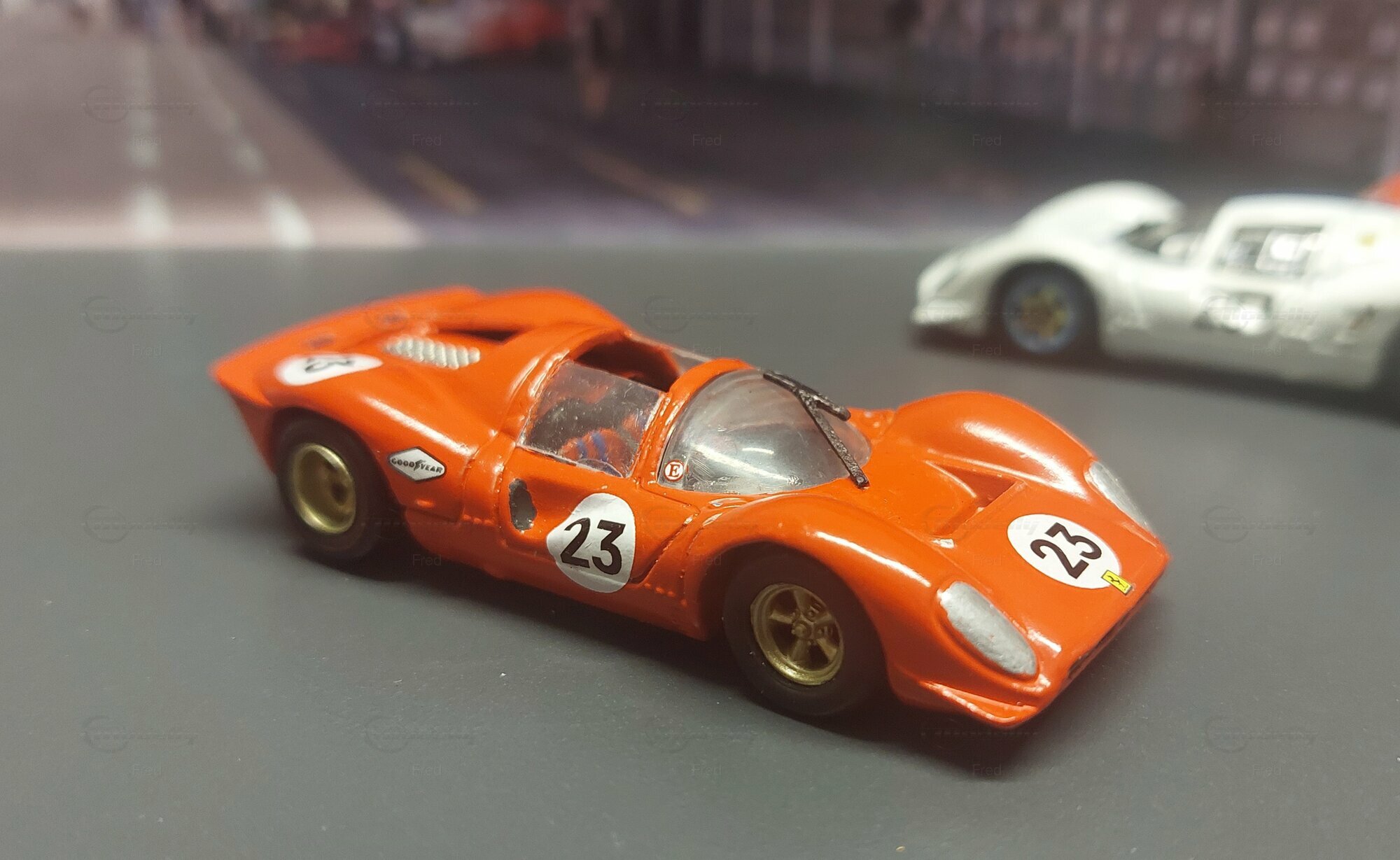
Orange Racing Livery and Details in Fred’s Modelly Collection
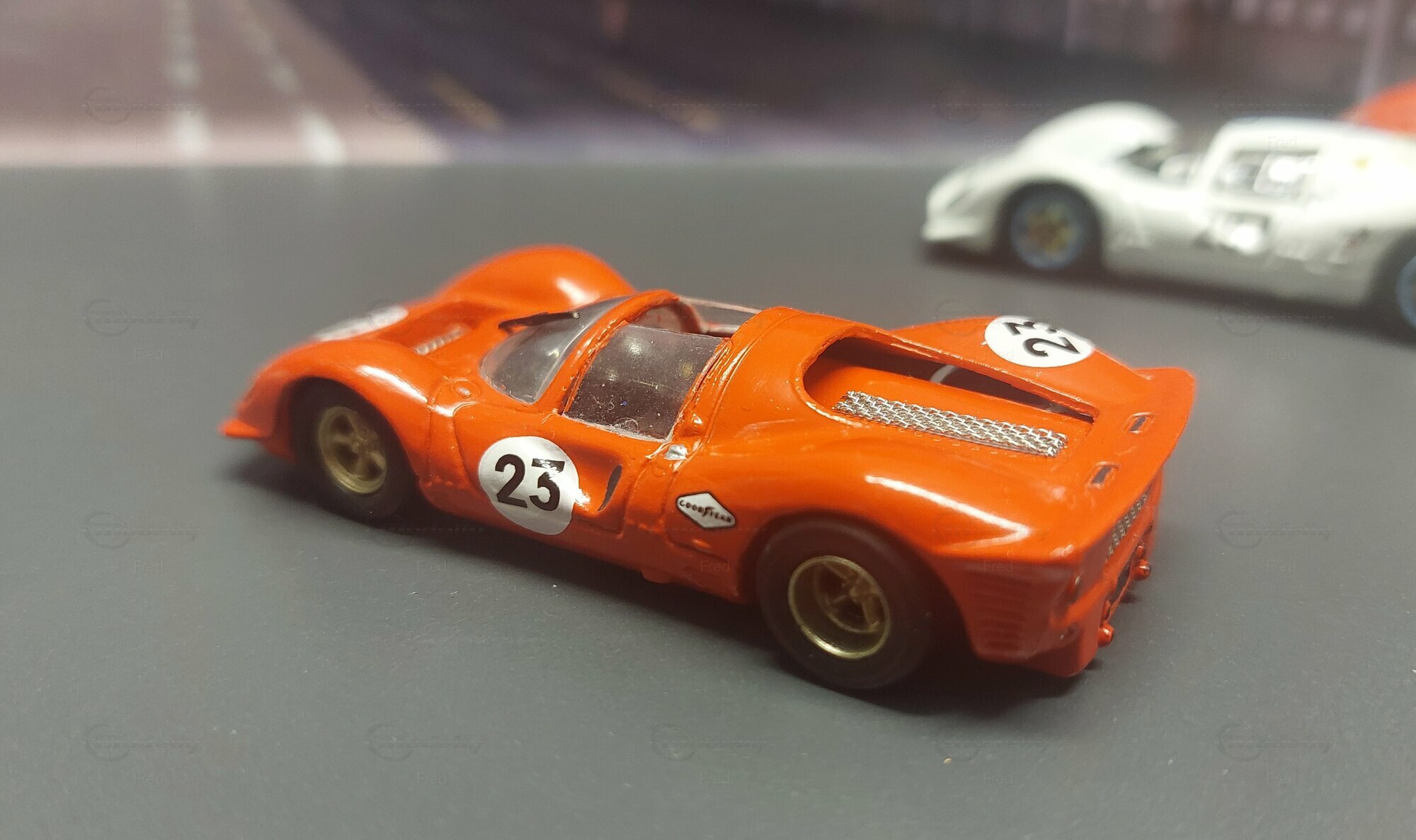
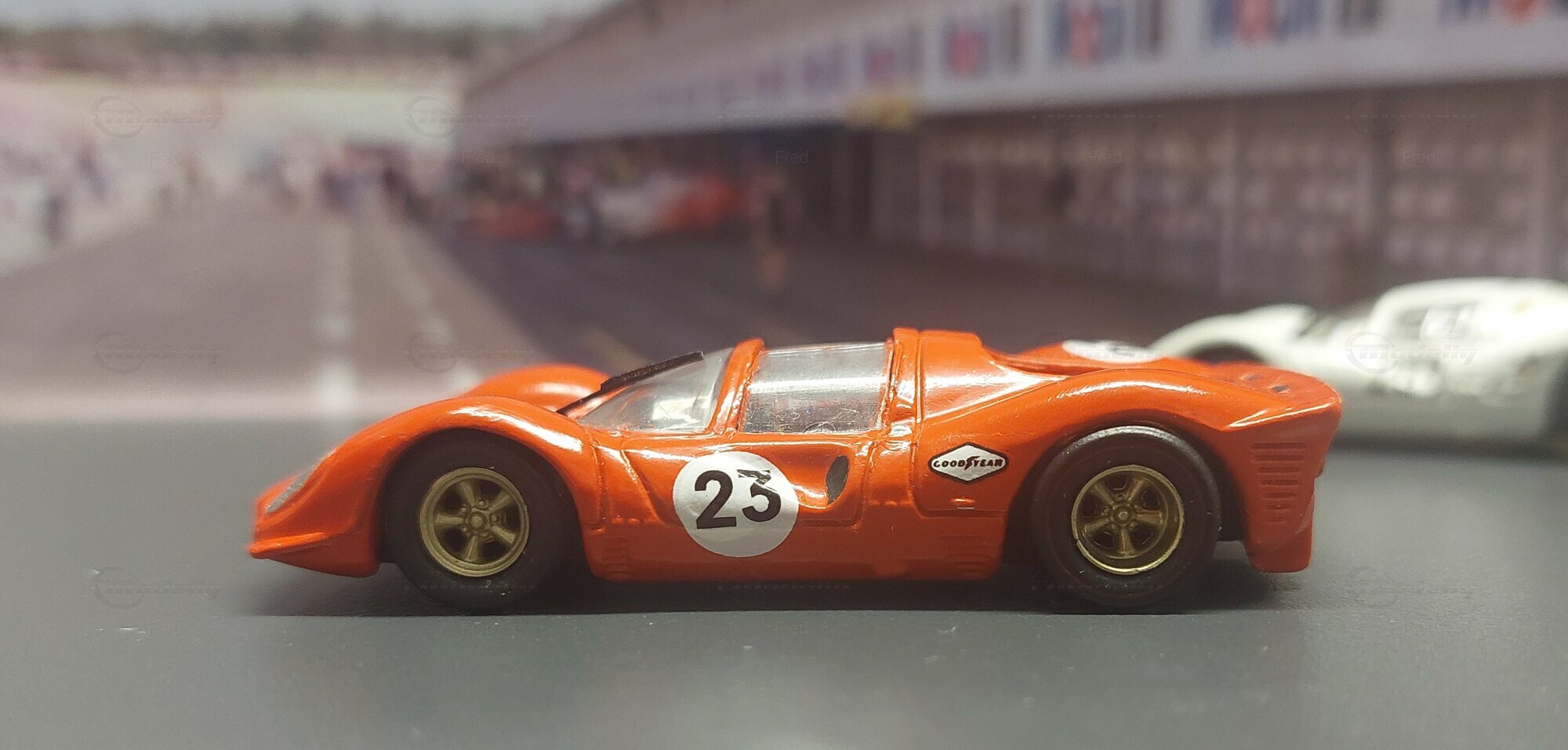
In Modelly member “Fred’s” collection, the model car in 1/64 scale wears an orange racing livery with white oval number panels. The black number 23 is placed on the hood, doors, and rear section of the body. A small yellow Ferrari badge sits at the front, and another Ferrari emblem can be seen on the side of the car. A Goodyear tire marking is visible too, matching historic racing tires, though that does not mean it can be directly linked to a specific factory car. The model’s shape is defined by its long nose, wide-cut wheel arches, short cockpit, and open rear end. From the views shown, you get strong contrasts between orange, white, black, silver, and gold. The applied numbers, wheels, mesh inserts, and color-accented lights make the body shape of the real car easy to understand for viewers.
- Write a first comment about this model now!Any comment can be discussed by all members. It's like a chat.Mention other Modelly members by using @ in your message. They will then be informed automatically.
- Write a first comment about this model now!Any comment can be discussed by all members. It's like a chat.Mention other Modelly members by using @ in your message. They will then be informed automatically.