
VW 1200 Export - Herbie goes to Monte Carlo(diecast 1:18, Hot Wheels Elite)
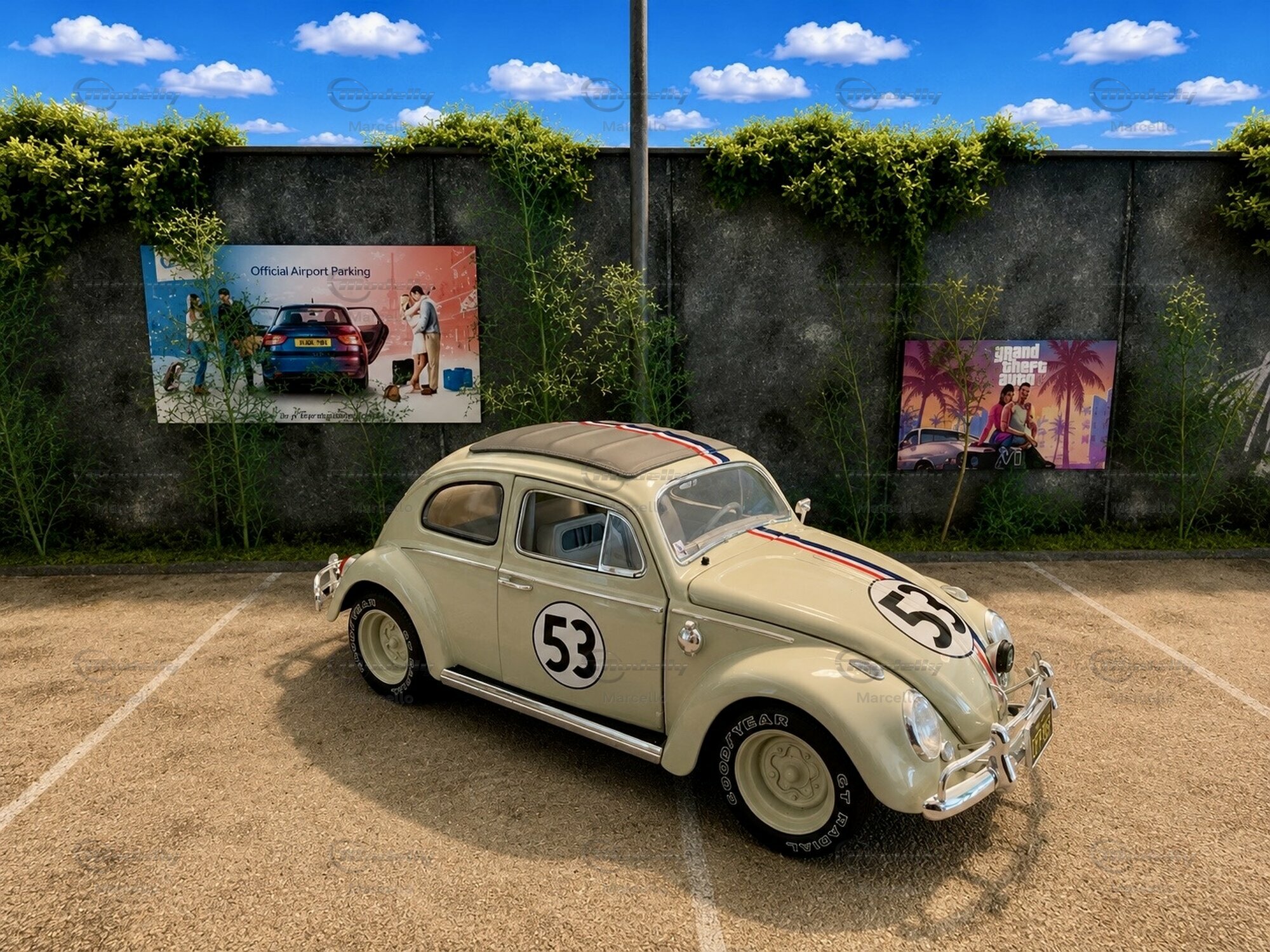
- VW 1200 Export - Herbie goes to Monte Carlo (from 1963)
- Hot Wheels Elite
- 1:18
- Showcase model / No engine
- diecast
- racing / multicolored
- BLY22
- private sale
- 190,00 EUR
- Perfect mint condition
- Original packaging exists
- Not for sale
VW Beetle 1200 Export as a reference: generation, tech, and classification
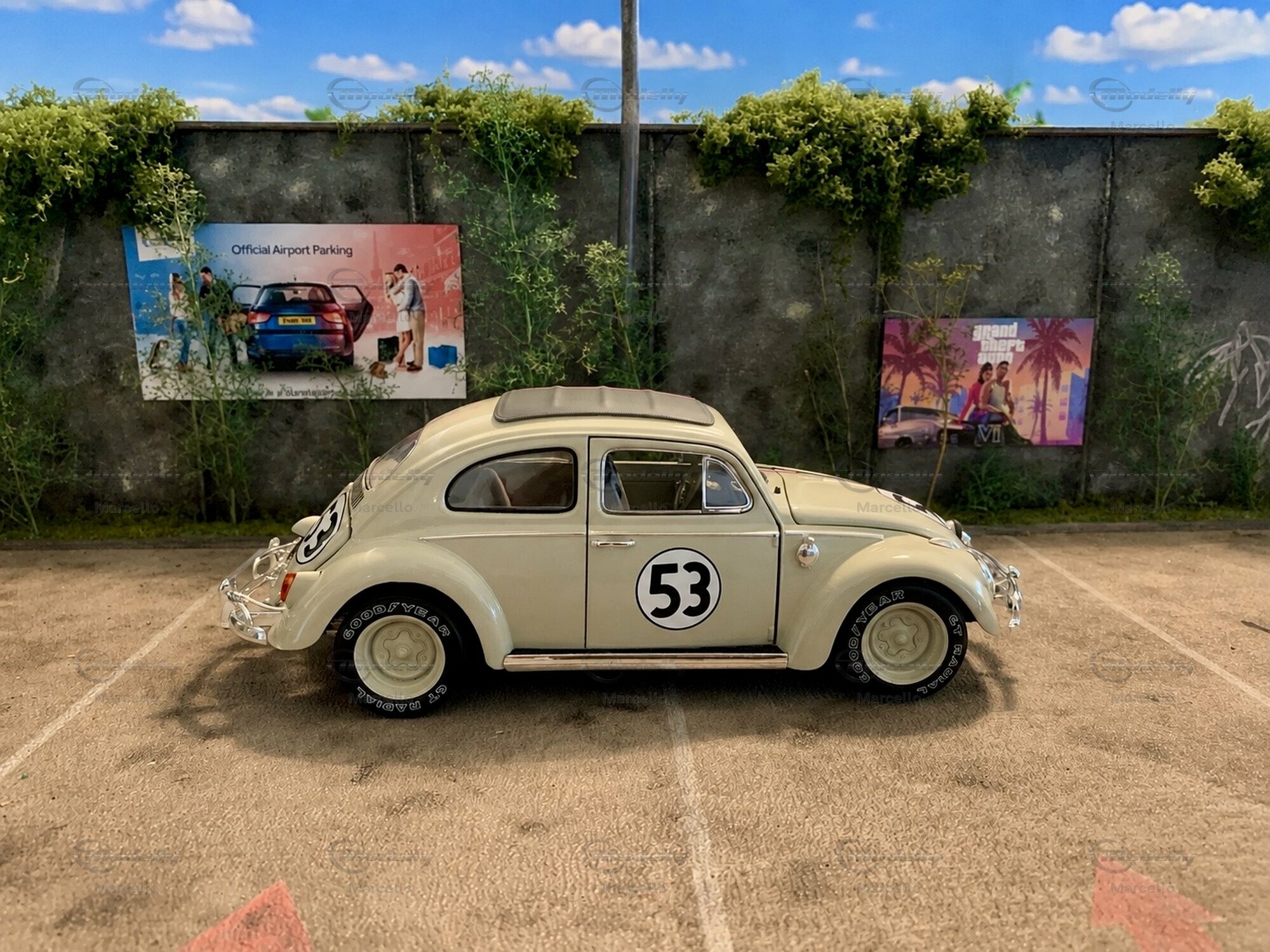
The miniature shown here from Modelly member Marcello is based on a classic VW 1200 Export in the style of Herbie from “Herbie Goes to Monte Carlo.” The most likely real-world base is the VW Beetle Type 1, meaning the 1st generation, built from 1938. There wasn’t really a direct predecessor within the model line, since the Beetle itself was already the early mass-production version of this concept; only the KdF car development stages came before it. Design-wise and technically, the car is often linked to Ferdinand Porsche, while Erwin Komenda is also mentioned as an important body designer. The VW 1200 Export was one of the better-known Beetle versions and combined the familiar unibody steel body with an air-cooled rear engine, rear-wheel drive, and compact proportions. Typical features included round fenders, exposed headlights, a strongly curved roofline, and the relatively small front trunk area under the hood.
Technical features of the VW 1200 Export: boxer engine, suspension, and body
In the original VW 1200 Export, power came from an air-cooled four-cylinder boxer engine mounted at the rear. Depending on the year, displacement was around 1,192 cm³ (72.8 cubic inches), with output in many versions at about 34 hp. This was usually paired with a manual four-speed gearbox. The air-cooled engine setup meant there was no classic water-cooling system, which helped keep maintenance simple. Up front, the Beetle used independent suspension with torsion bars for a long time, while the rear had a swing axle, later improved in certain versions. Export versions differed by market in details like trim, interior, bumpers, lighting, and wheels. That mix of simple tech, sturdy construction, and instantly recognizable shape made the VW 1200 Export an easy pick for special editions and movie cars. For collectors, it’s interesting that the Herbie cars from the films were not always identical, but were instead based on different Beetle model years and modifications.
Motorsport with the Beetle: rallies, long-distance events, and well-known drivers
Even though the VW 1200 Export was not originally built as a pure competition car, the Beetle had a long run in motorsport. Especially in rallies, reliability events, and endurance races, teams used its simple design, low weight, and good traction on loose surfaces. Across Europe, North America, and Latin America, lots of privately entered cars appeared with reinforced suspension, extra spotlights, modified engines, and adjusted gearing. So the Beetle was less of a factory race car and more of a platform for privateers and tuners. It’s also famous for its role in the Mexican Baja scene, which later gave rise to the well-known Baja Bugs. Names like Vic Wilson or Ted Simon often come up in the historic rally world of the Beetle, although the exact cars and events can vary a lot depending on the source.
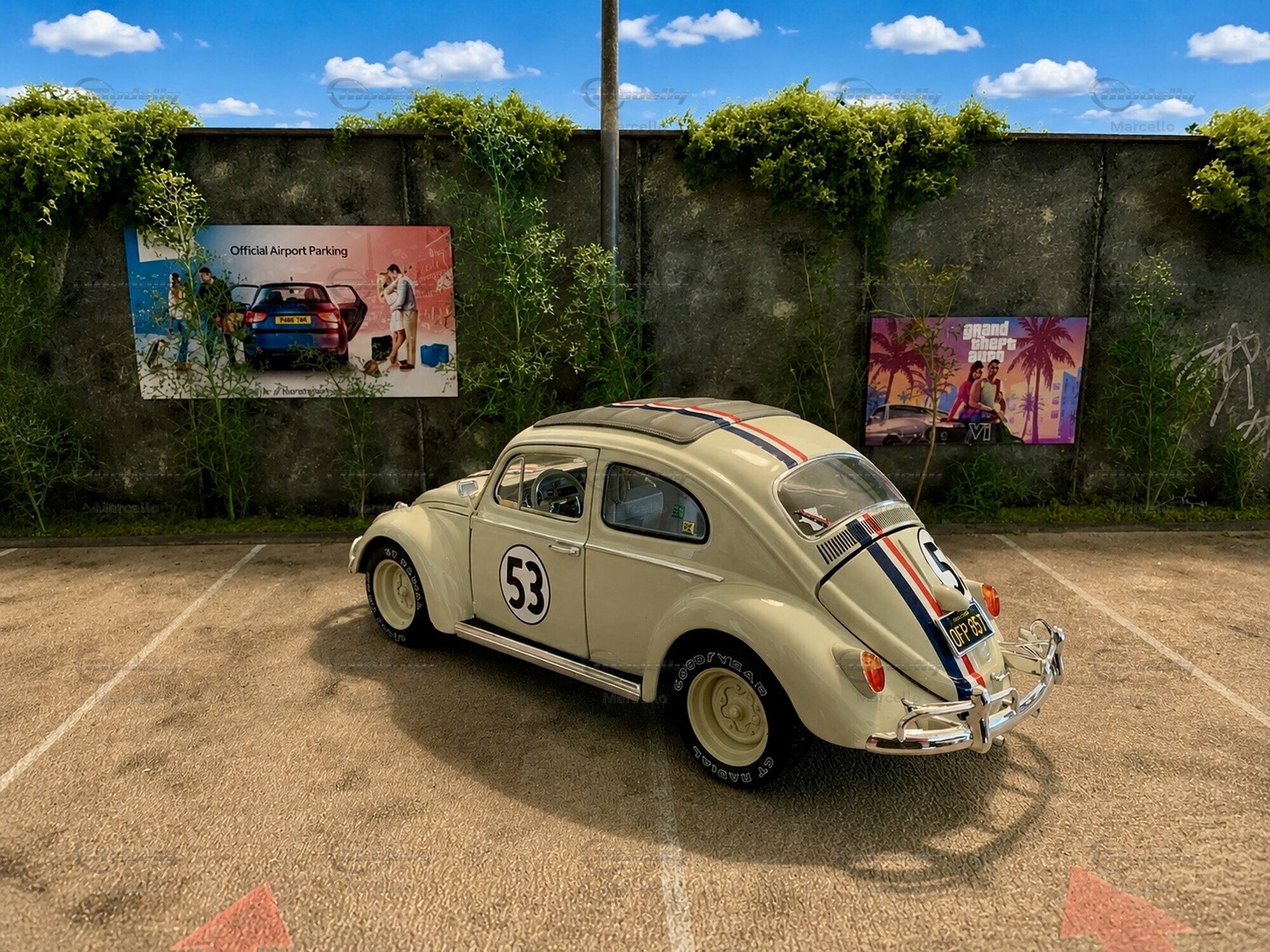
The Beetle in competition and pop culture: Herbie connection and race look
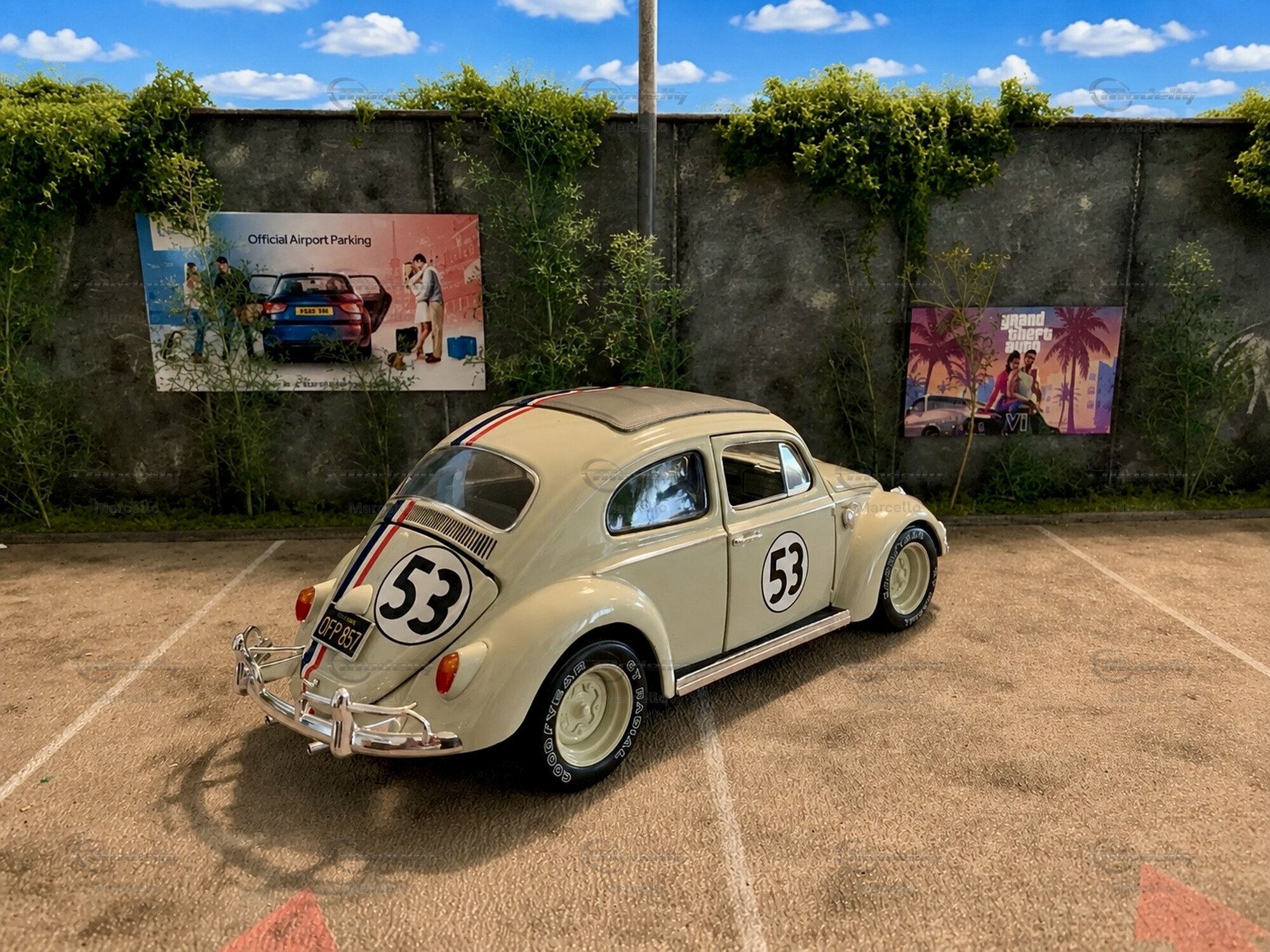
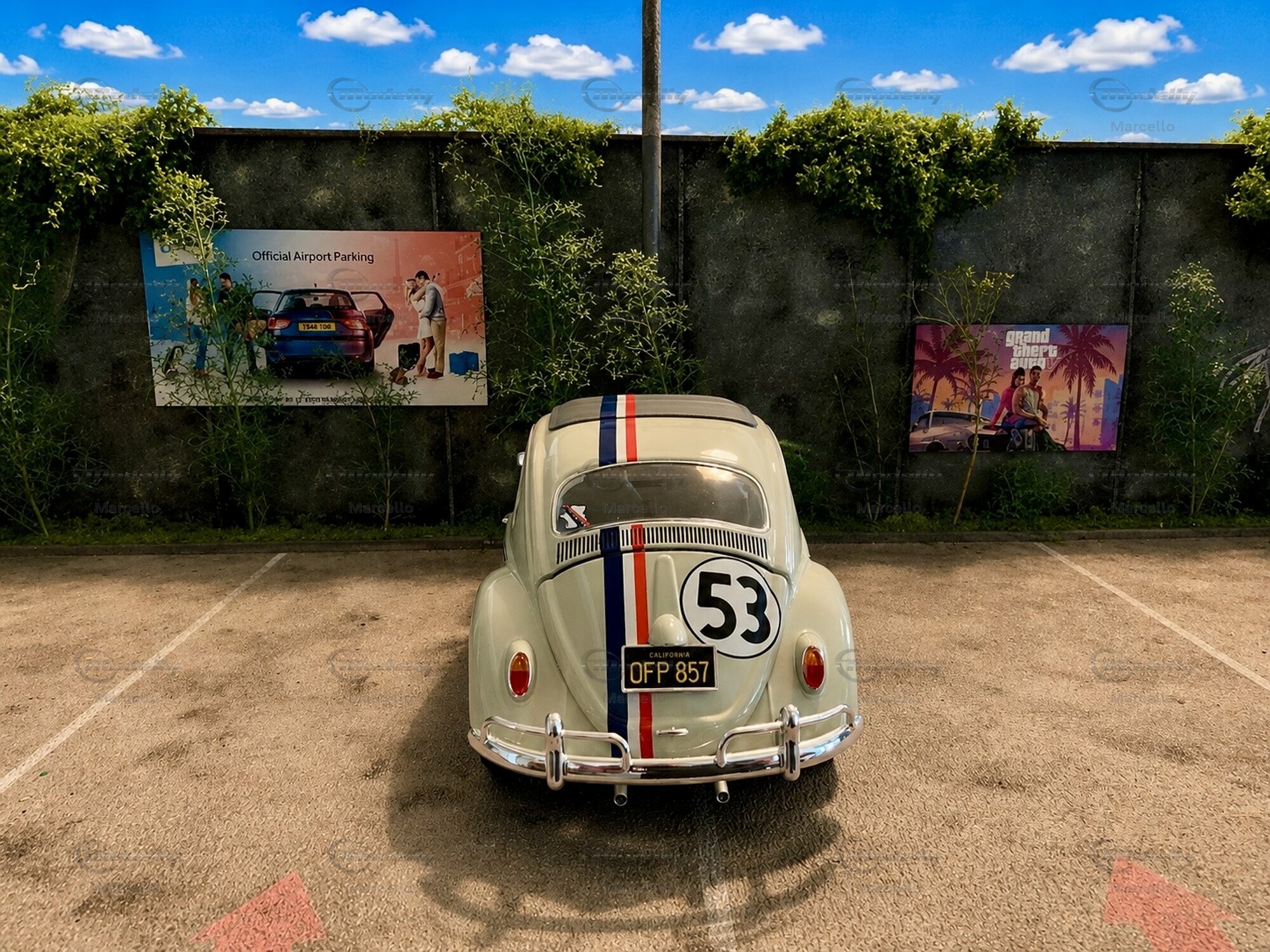
On top of its real motorsport history, the VW 1200 Export got its own kind of racing legacy through the Herbie character. In the Herbie films, the Beetle was shown as a race and rally car, including the Monte Carlo setup with starting number 53 and the typical red, white, and blue stripes. That image shaped the world’s view of the sporty Beetle even more than many real race appearances did. Drivers from the film world obviously weren’t historical racers of the original, but the motorsport vibe was made believable through real race numbers, extra mirrors, bumper bars, and a stripped-down look. In real life, the Beetle mainly proved itself through durability and easy repairability. Well-known drivers who ran Beetles in historic or national competitions included Rico Steinemann in a journalism-documented classic VW context, plus many private drivers whose cars still show up at historic events today.
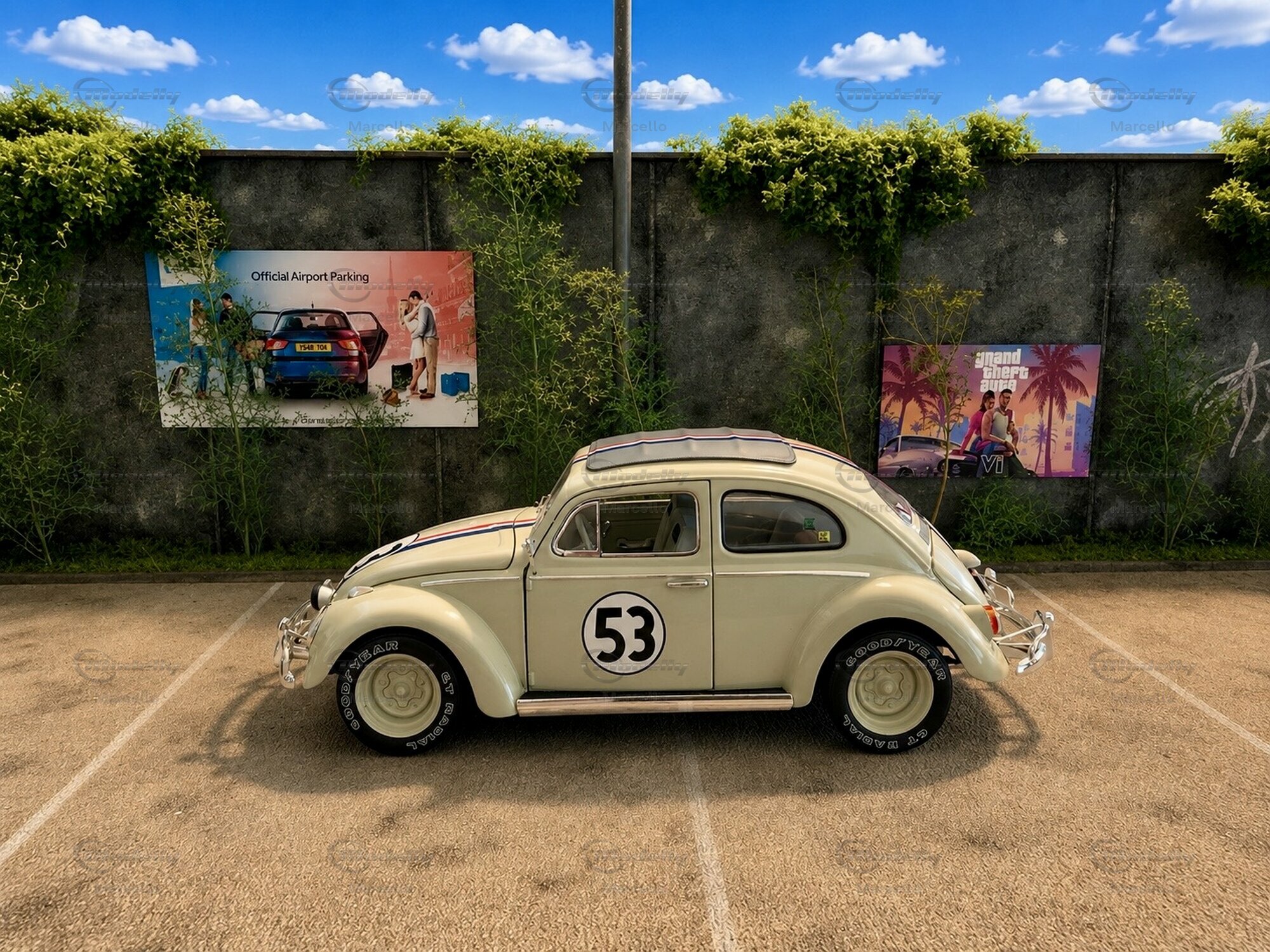
Hot Wheels Elite 1/18 model car: paintwork, details, and visible execution
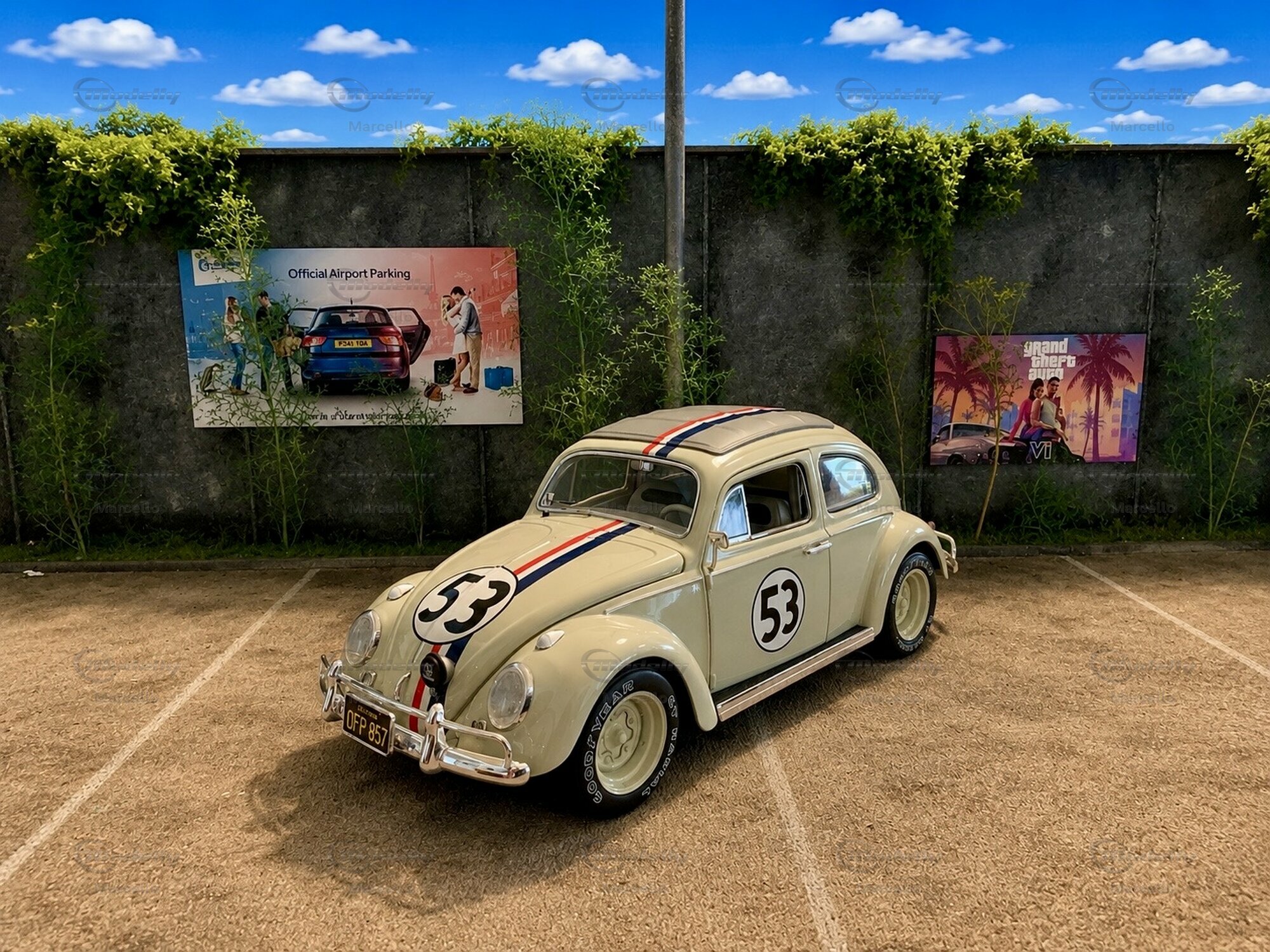
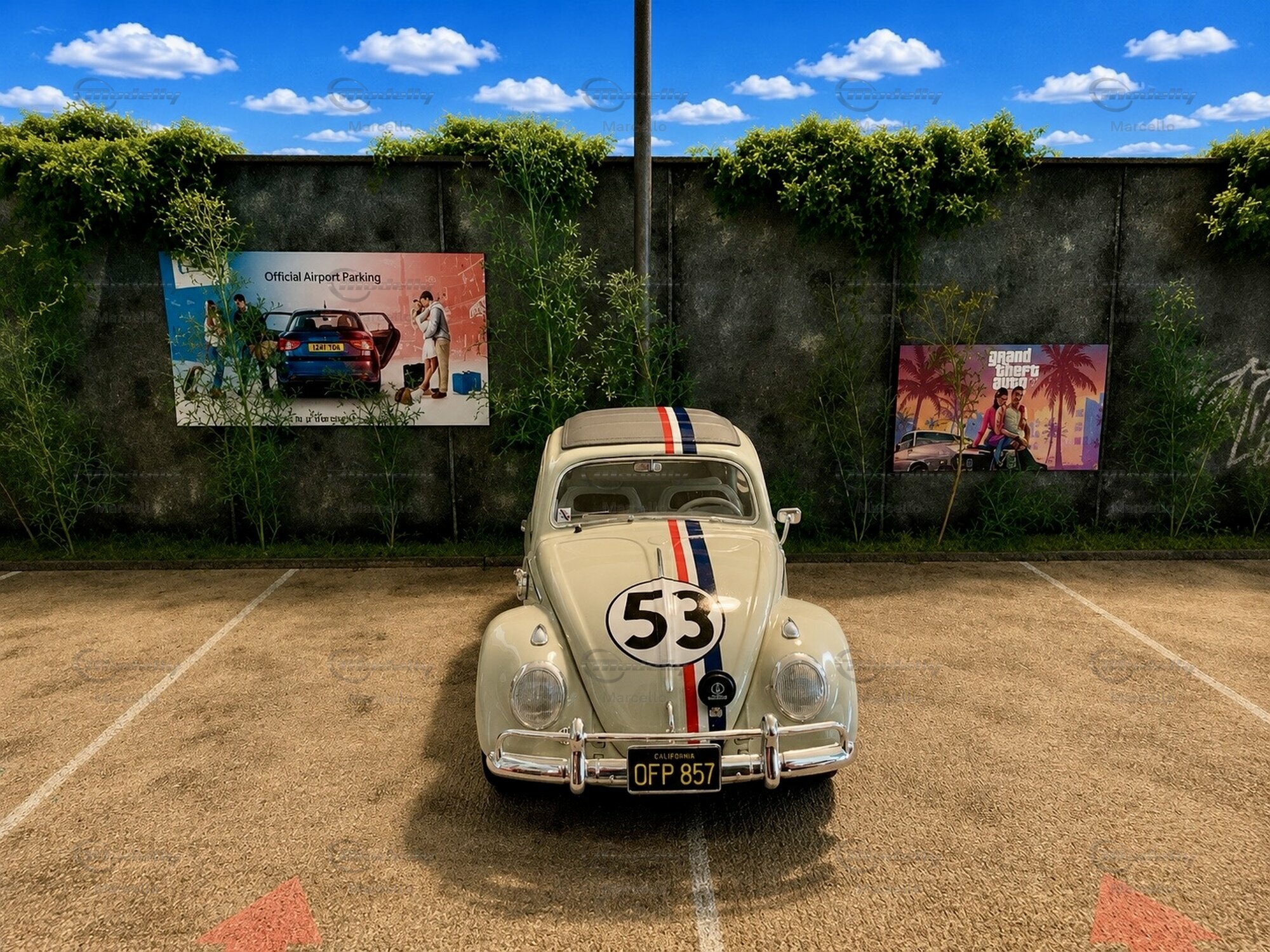
The collectible shown here is a 1/18 scale model from Hot Wheels Elite and it shows the Herbie look in a clearly recognizable Monte Carlo version. You can see a cream-white or off-white base color with the striking longitudinal stripes in red, white, and blue running across the hood, roof, and rear. There are also black round panels with the starting number 53 on the doors, hood, and rear. The bumper bars are shown in chrome, as are the side trim pieces and the outside mirrors. You can also spot classic steel wheels painted in body color, tires with the sidewall marking “Goodyear GT Radial,” a beige interior, and a folding roof insert. No sponsor decals are visible in the photos; the visible lettering mainly refers to the tire sidewall with Goodyear. The model car in 1/18 scale by Hot Wheels Elite is made as a die-cast piece, which shows in the clean body shape and the precisely applied chrome parts. The Beetle’s proportions, curved fenders, and flowing roofline come across really well in the photos. At the same time, the paint looks even, and the high-contrast 53 graphic gives it an instant link to the movie version. For collectors, it’s also worth noting the edition: Limited Edition. In this view, the model can be classified as a limited collector’s release with a film-related theme, and the visible body details, window frames, and attached parts clearly point to a display-focused version made for the cabinet.
Chriskitt
Auto-translated
 Beautiful Beetle (Herbie) 👍📺♥️👏👏 I found the car today. Have a nice Sunday!
Chriskitt
Auto-translated
 Beautiful Beetle (Herbie) 👍📺♥️👏👏 I found the car today. Have a nice Sunday!