
BMW E39 M5(1:18, Ottomobile)
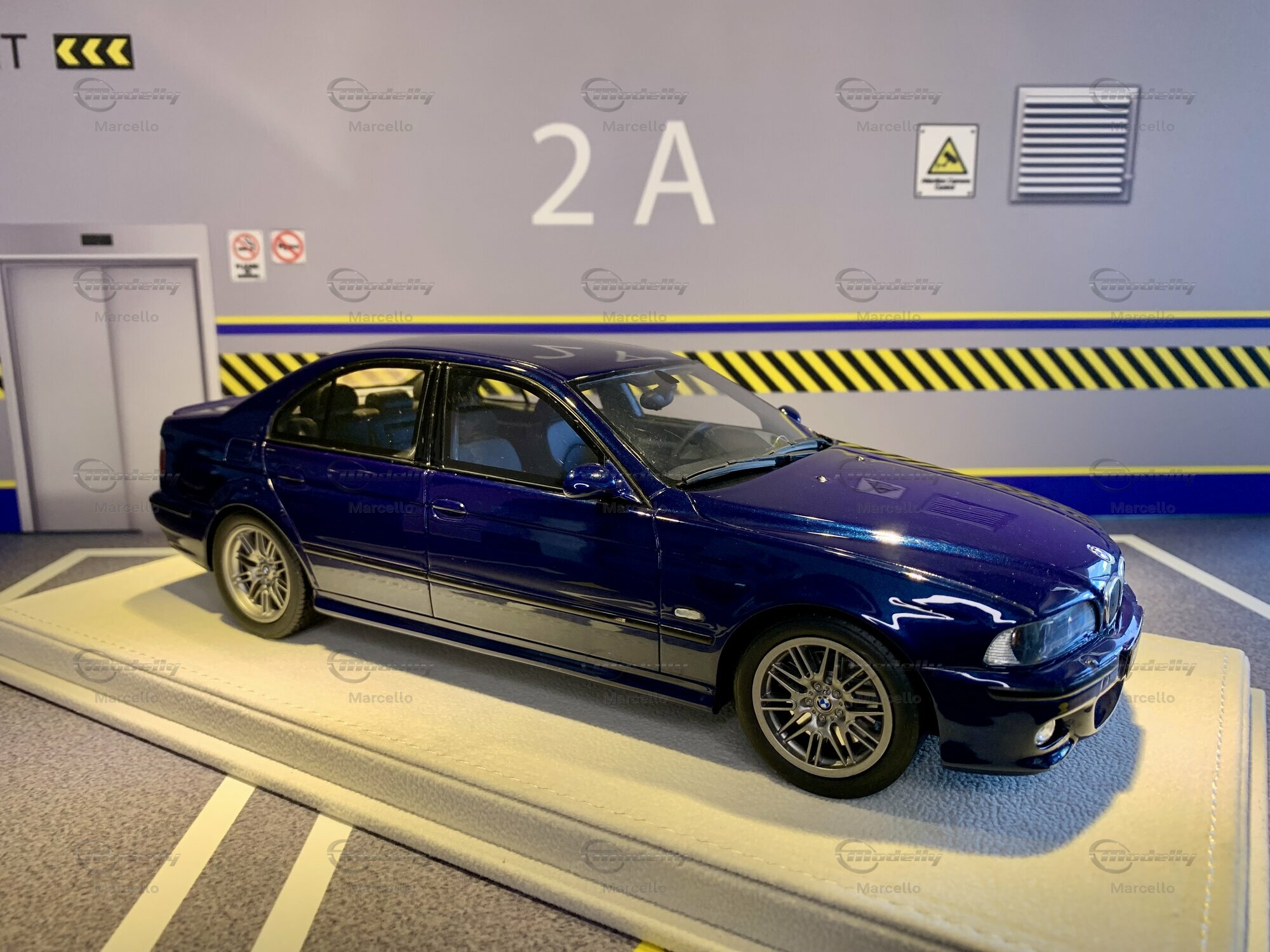
- BMW E39 M5 (from 1998)
- Ottomobile
- 1:18
- Showcase model / No engine
- resin
- Silverstone Blue
- private sale
- 220,00 CHF
- Perfect mint condition
- Original packaging exists
- Not for sale
BMW E39 M5 as the template: generation, tech, and classification
The collectible shown here is very likely based on the BMW E39 M5, meaning the M5 version of the 5 Series from the E39 generation, built from 1995 to 2003. Its direct predecessor was the BMW E34 M5, which was still more of a hand-built small-series car. With the E39, the M5 entered a phase where strong performance, long-distance comfort, and a fairly understated four-door body were combined. The exterior of the E39 was designed under Joji Nagashima; the M models were developed by BMW M GmbH, which specifically tuned the production car for higher power, a revised suspension setup, and its own drivetrain technology. The BMW E39 M5 was first shown in 1998. To put that into perspective: in 1998, Gerhard Schröder was sworn in as Germany’s chancellor, France won the FIFA World Cup, and songs like “Baby One More Time” by Britney Spears were shaping pop culture. Examples like that help give you a better sense of the car’s age and historical setting.
V8, manual gearbox, and suspension: technical data of the BMW E39 M5
In the original BMW E39 M5, BMW used the 4.9-liter V8 S62B50 with 4,941 cc of displacement. The engine made 400 hp (294 kW) and 369 lb-ft of torque. Its trademark features included individual throttle bodies, variable valve timing with double VANOS, a high-revving character for a V8 in this class, and a 6-speed manual transmission. Power went to the rear wheels. The 0 to 62 mph sprint took around 5.3 seconds, and top speed was electronically limited to 155 mph (250 km/h). The car also came with an M-specific suspension, bigger brakes, revised bumpers, side skirts, and four exhaust tips. Compared with the regular E39, the BMW E39 M5 also got a wider track, special mirrors, and 18-inch wheels. Among collectors, the car is seen as an important example of the sporty executive sedan from the late 1990s and early 2000s, because it mixes a classic sedan shape, a naturally aspirated engine, and a manual gearbox.
1/18 model car by Ottomobile: version, paint, and visible details
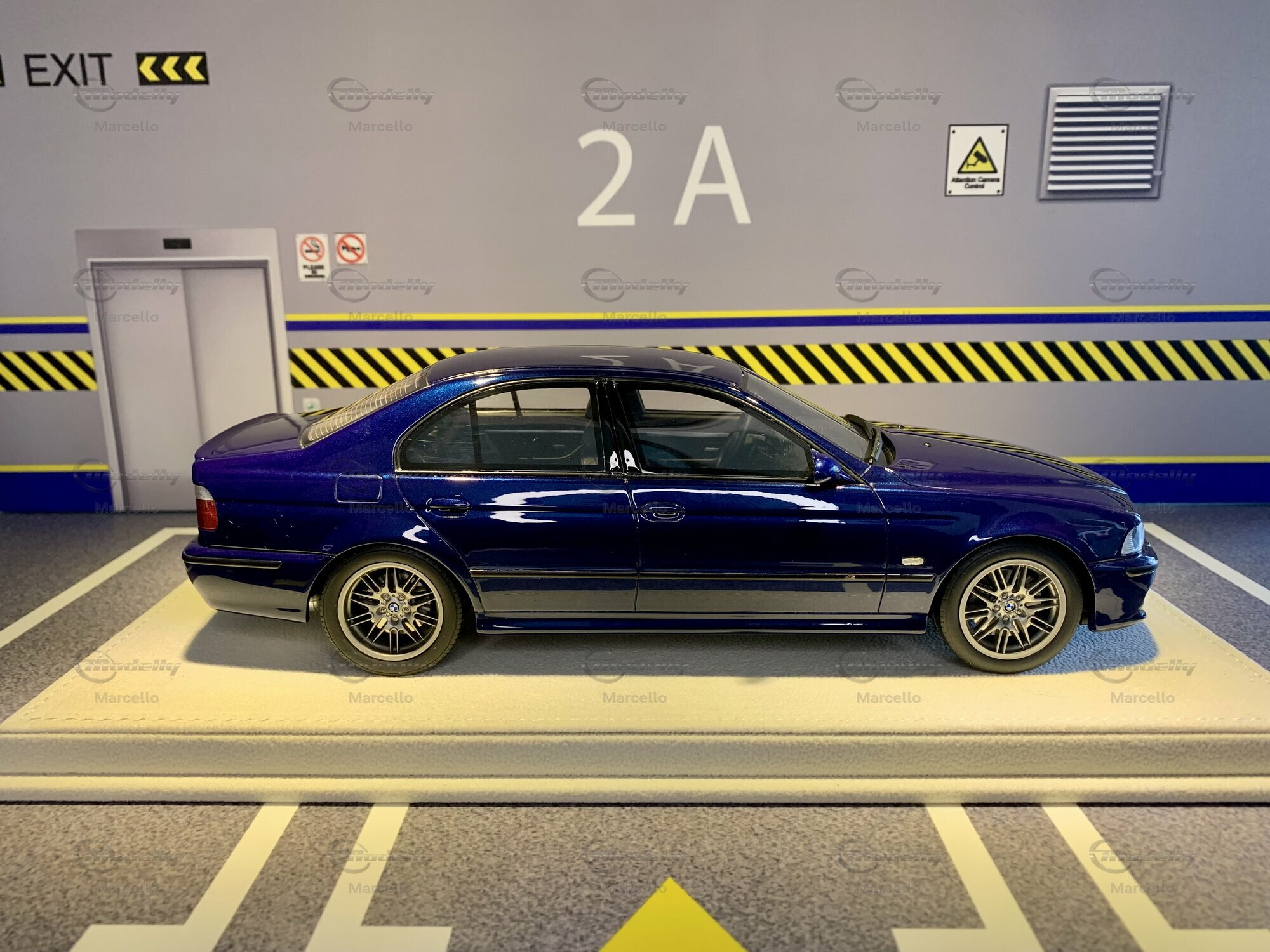
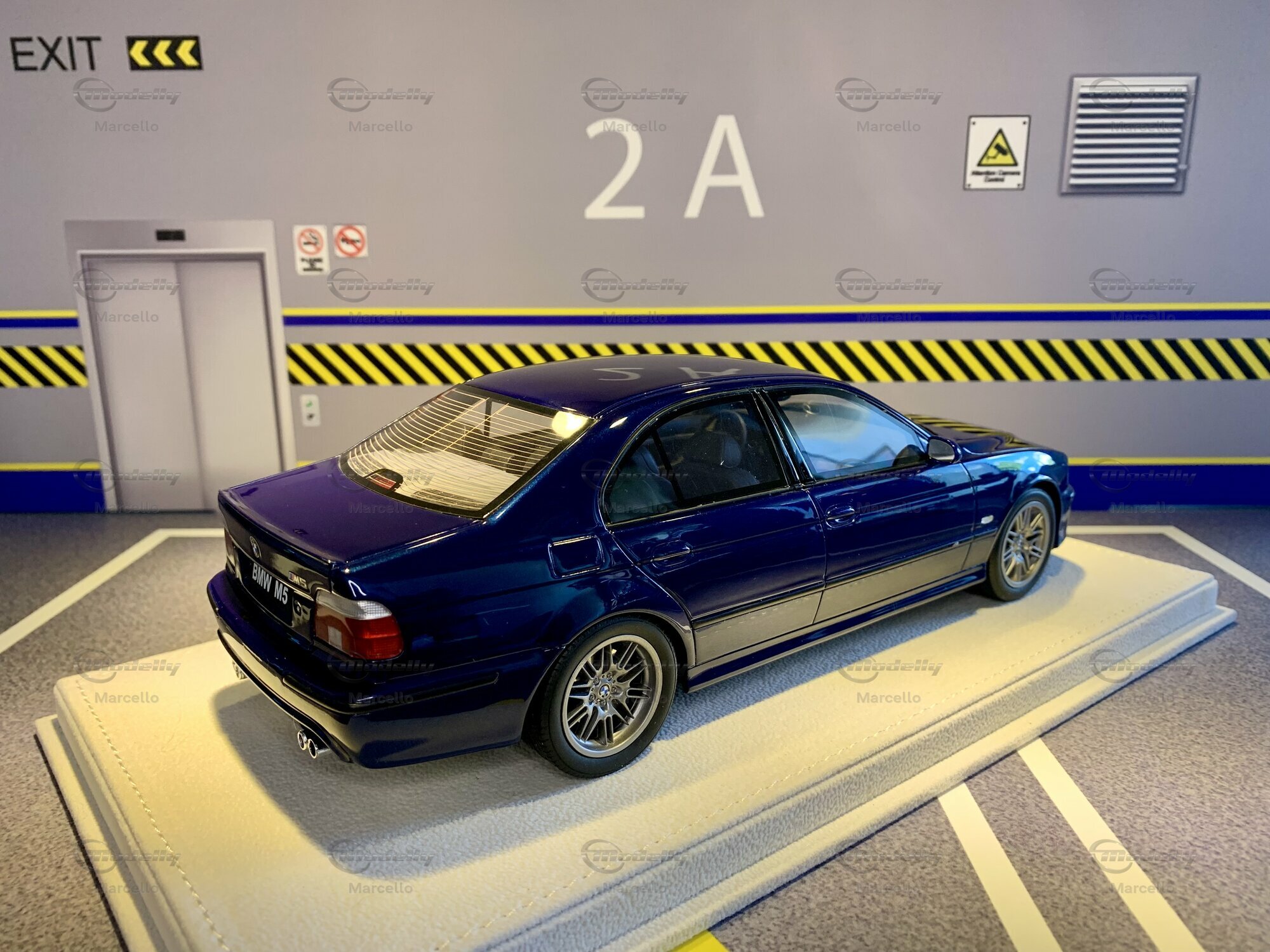
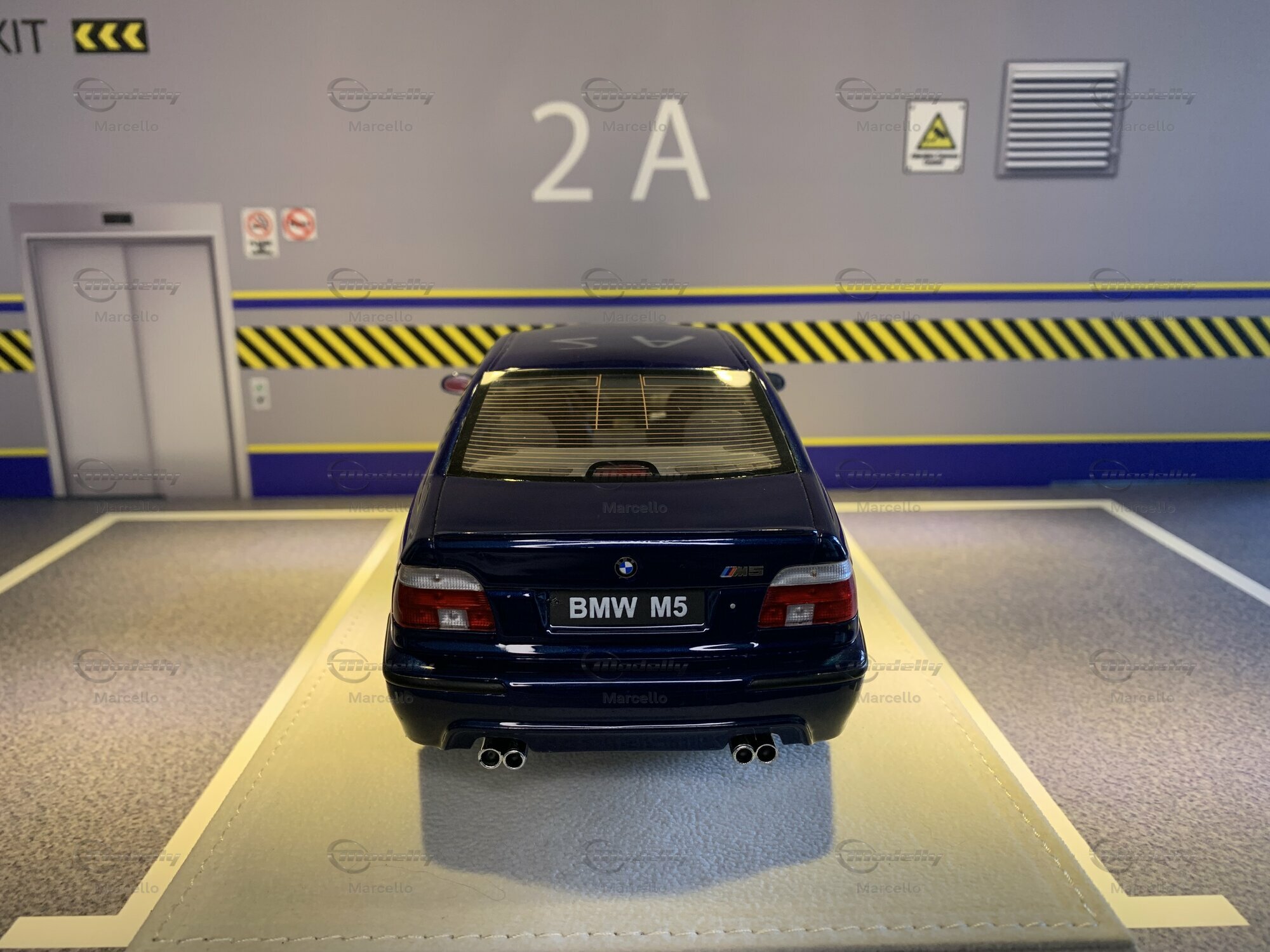
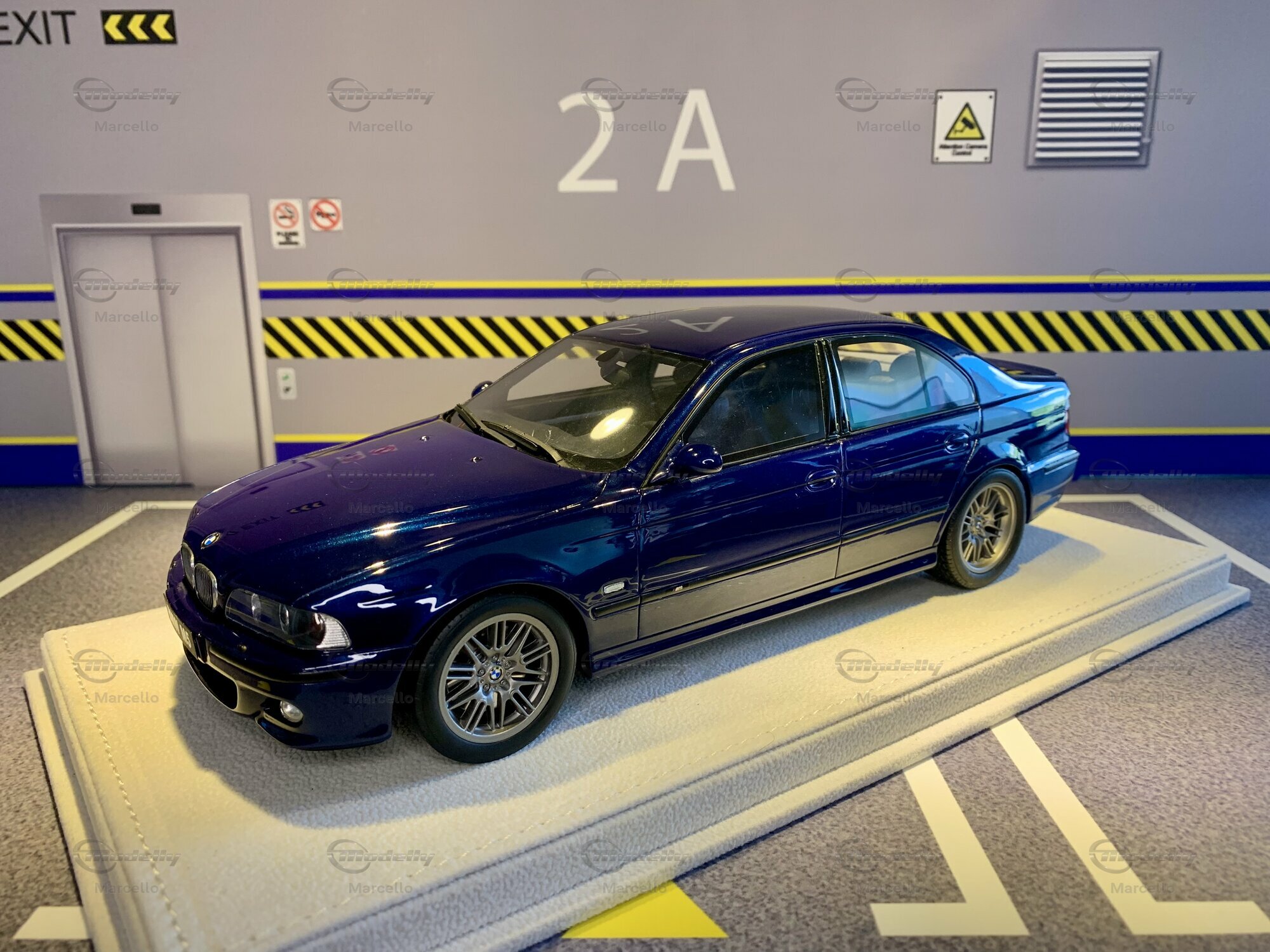
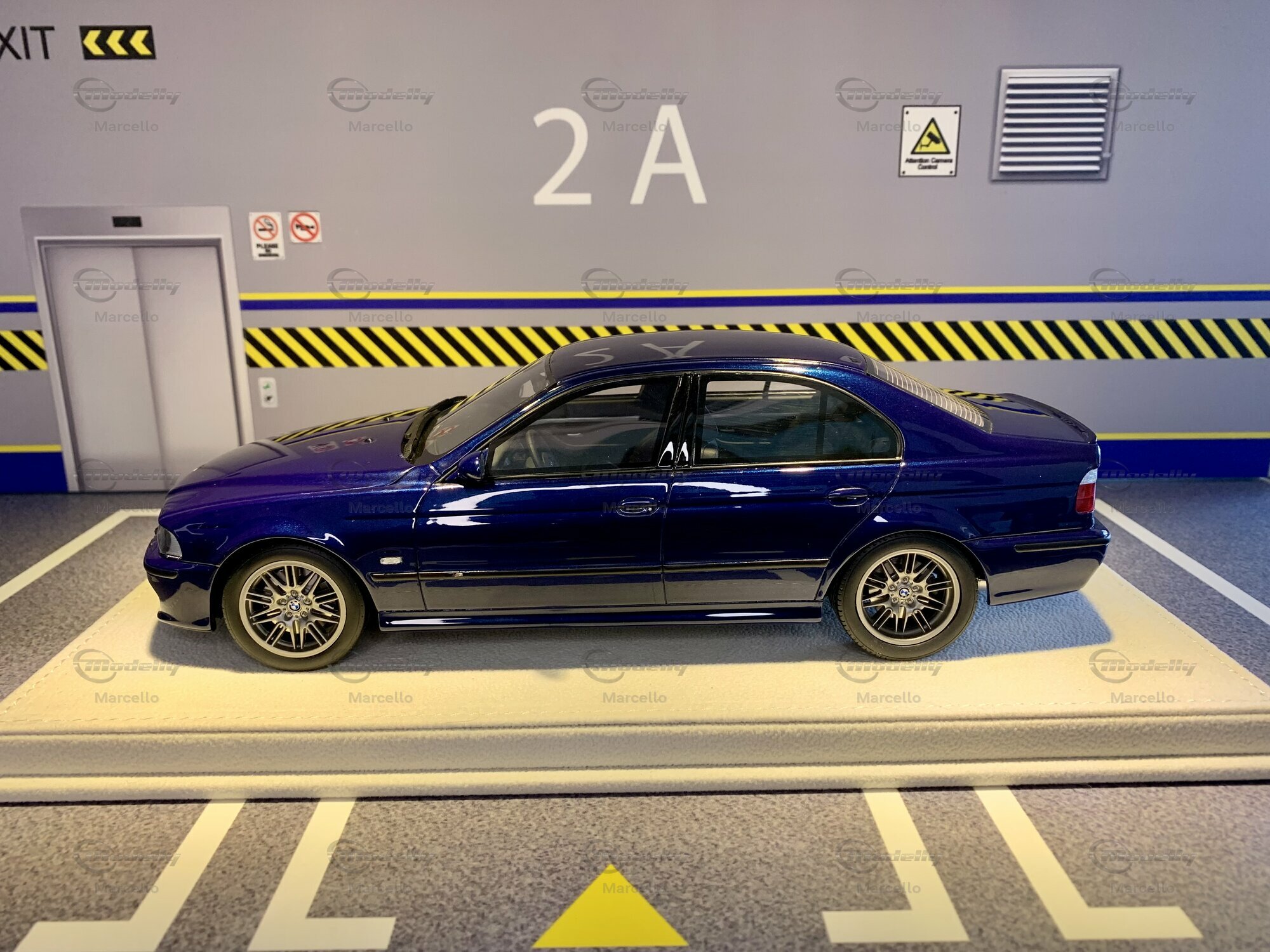
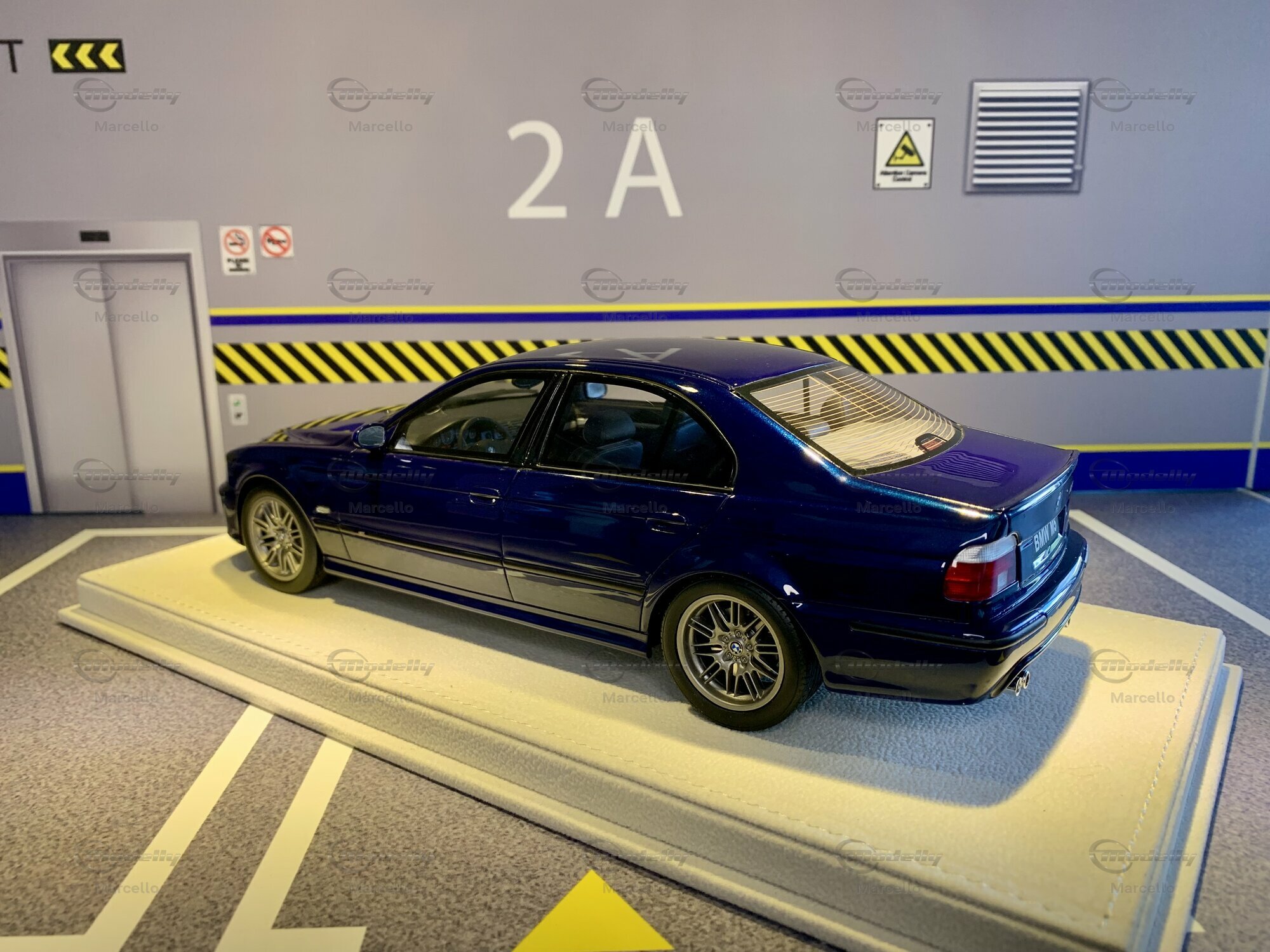
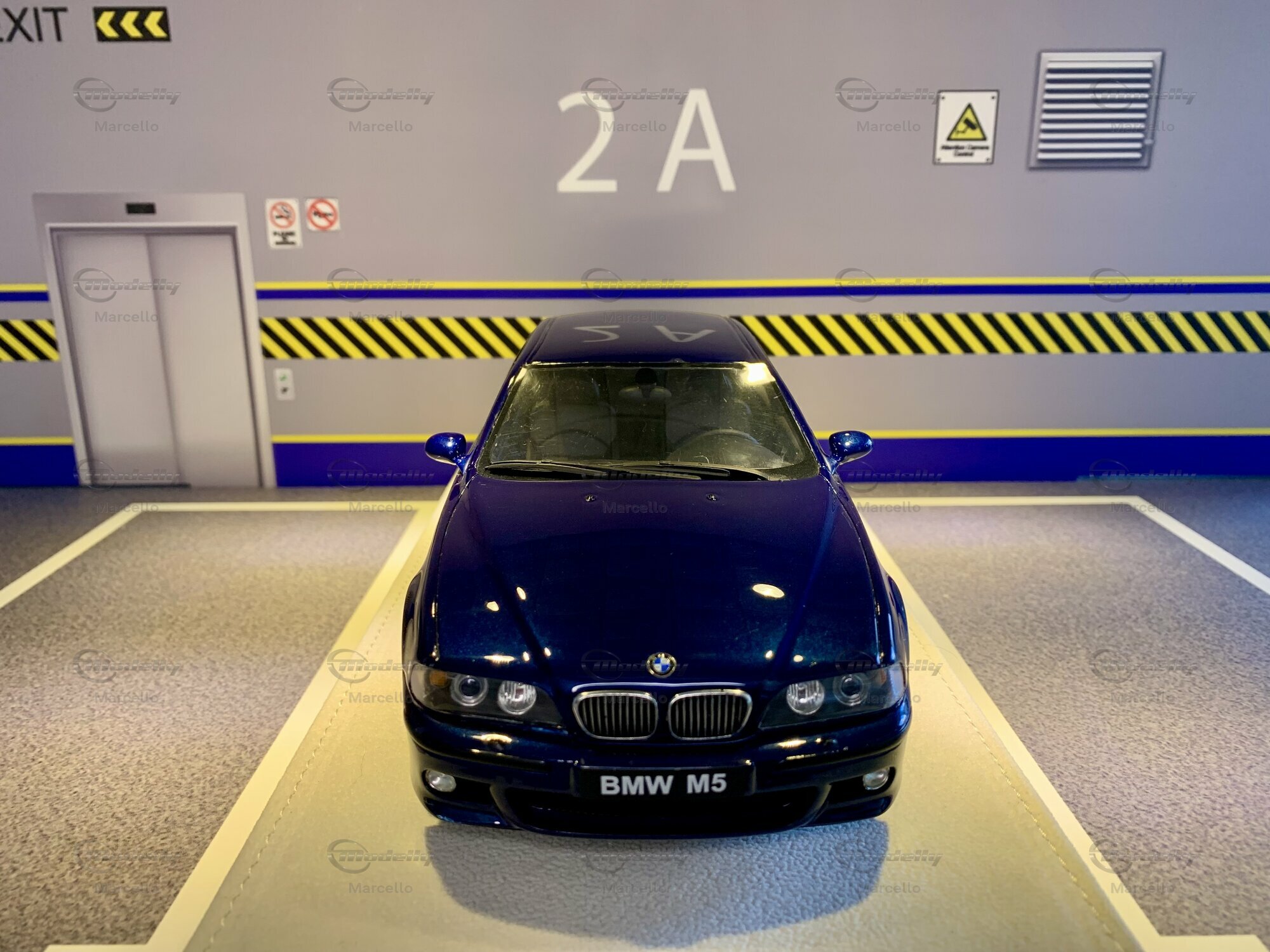
The piece shown here from Modelly member Marcello’s collection is a model car in 1/18 scale, made by Ottomobile. The miniature is made of resin, which is a type of synthetic material often used in collector models to achieve clean body shapes and sharp panel lines. At the same time, this 1/18 scale model car by Ottomobile is listed as limited to 2000 pieces worldwide. In the photos, you can see a dark blue metallic paint finish that fits the character of the E39 M5 and makes the body surfaces look different depending on the light. You can clearly spot the typical four-door sedan shape, the low roofline, the M5-specific bumpers, the side skirts, and the four exhaust tips at the rear. There are also black window trim pieces, a fine reproduction of the rear window defroster lines, the fuel cap on the left rear side, and M5 and BMW badges on the back. The wheels match the well-known multi-spoke M wheels of the E39 M5; however, based on the photos alone, neither the wheel maker nor the exact wheel model can be identified with certainty. The model also nails the original proportions: long front end, short rear deck, and a balanced side profile with clearly defined protective strips.
BMW E39 M5 collectible model: proportions, display, and shelf presence
For model car collectors, what stands out most about this miniature is its clean execution of the body lines. The photos show a precise-looking reproduction of the body with neatly fitted light units, finely molded door handles, and a clearly shaped front end. The paint appears evenly applied; light reflections on the surface make the curves of the hood, roof, and sides easy to see. Inside, the seats, dashboard, and steering wheel are visible on the pictures, although only to a limited extent because of the glazing. The rear view with the license plate reading “BMW M5,” the M5 badge, and the four exhaust pipes clearly points to the BMW E39 M5 as the source. Even without opening parts, the resin model gives a convincing impression of the sporty sedan’s shape. Displayed on a light base in front of a garage backdrop, it highlights the car’s length and makes the differences between the standard 5 Series and the M5 easy to notice, especially in the bumpers, ride height, and wheels. Based on the photos, there is no clear proof that this is a specific movie or TV car, so the focus here is simply on its identity as a collector model of a technically notable road car.
- Write a first comment about this model now!Any comment can be discussed by all members. It's like a chat.Mention other Modelly members by using @ in your message. They will then be informed automatically.
- Write a first comment about this model now!Any comment can be discussed by all members. It's like a chat.Mention other Modelly members by using @ in your message. They will then be informed automatically.