
Lamborghini Aventador LP760-2 Oakley Design(diecast 1:18, Welly FX)
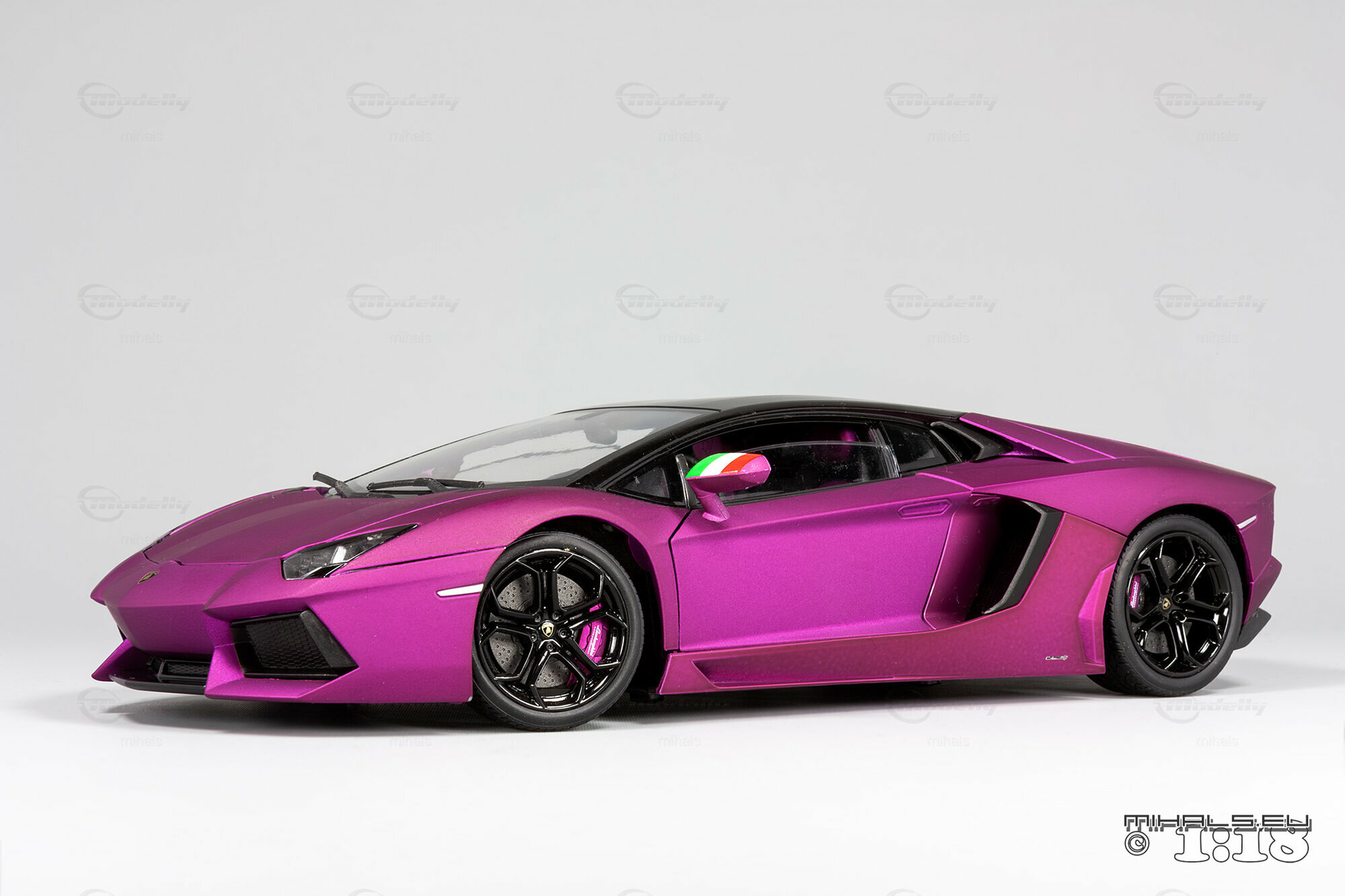
- Lamborghini Aventador LP760-2 Oakley Design (from 2012)
- Welly FX
- 1:18
- Showcase model / No engine
- diecast
- Matte Purple
- AliExpress
- Perfect mint condition
- Original packaging exists
- Not for sale
Model and where the Aventador fits
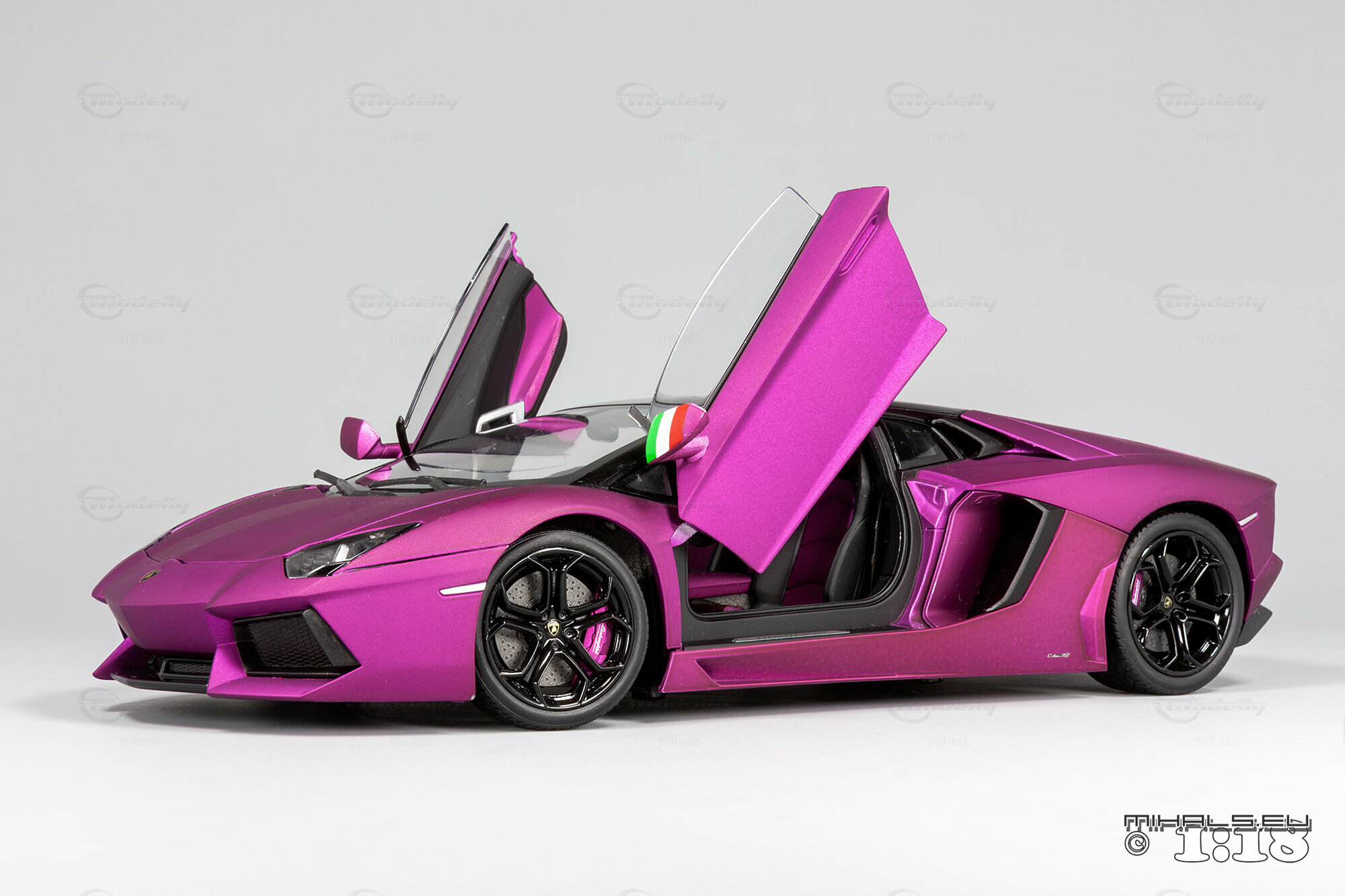
The shown miniature is based on the Lamborghini Aventador, the successor to the Murciélago. The model line belongs to the first generation of the Aventador and was produced from 2011; the family stayed in production until 2022. The design comes from Lamborghini’s Centro Stile, led by Filippo Perini, while the technical development was headed by Maurizio Reggiani. Characteristic are the sharp-edged lines, the large side air intakes and the scissor doors that Lamborghini has used on its V12s for decades. Alongside the production car there were various power levels (LP700-4, later S and SVJ). There were also aftermarket tuners who made modified versions, some aiming for rear-wheel bias and higher power. The photos of the model show a sporty, modified look; you can’t reliably match it to a specific tuning kit just from the pictures.
Technical specs and construction features of the original
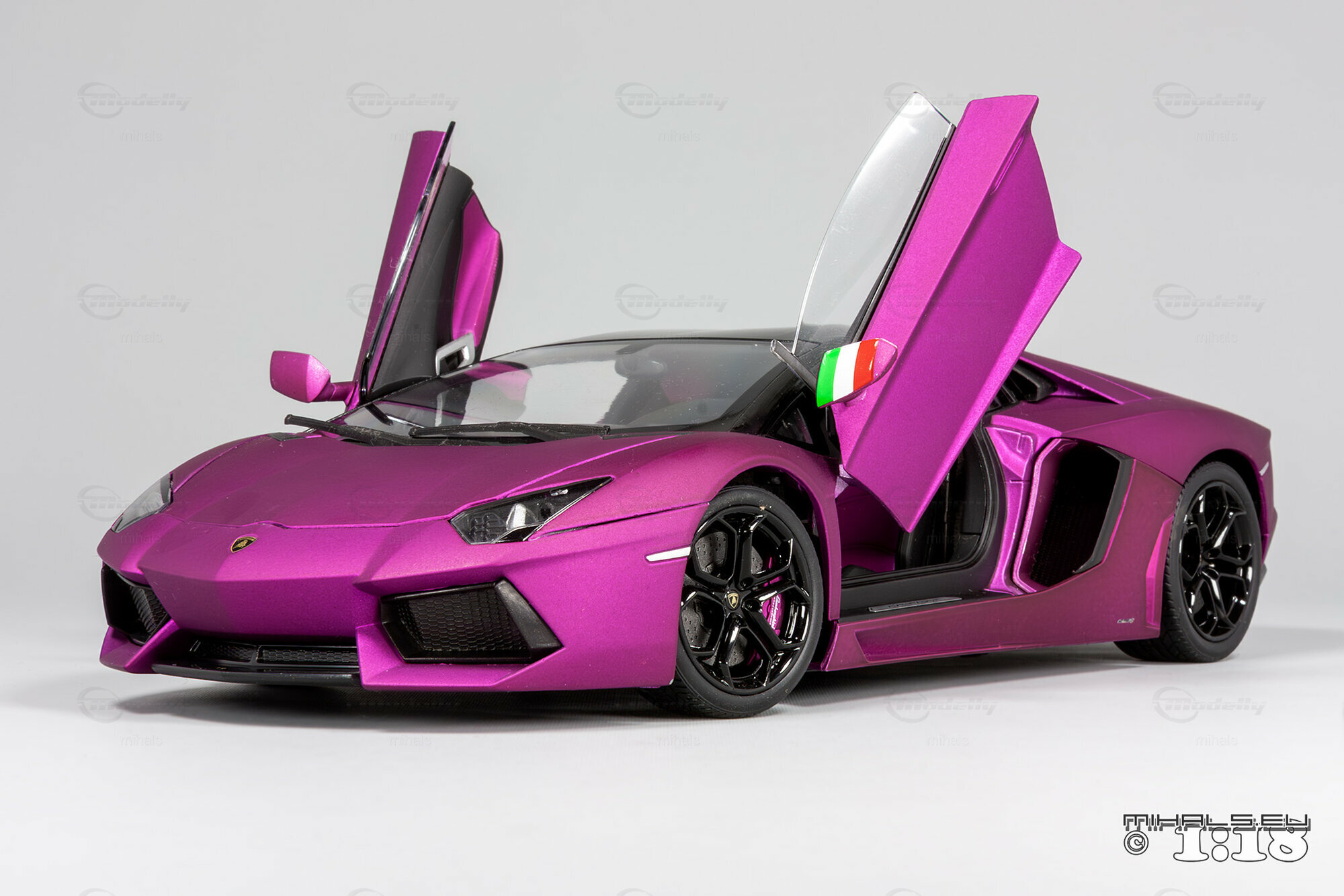
The Lamborghini Aventador uses the V12 engine with the internal code L539. The 6.5‑liter engine (6.5 liters; about 1.72 US gallons) produces, in the base version, 515 kW (700 PS / ~692 hp) at 8,250 rpm and delivers 690 Nm (≈509 lb-ft) of torque. It’s paired with a 7‑speed gearbox of the ISR (Independent Shifting Rod) type, an automated transmission with very short shift times. The car features a lightweight carbon-fiber monocoque, with aluminum front and rear subframes. Curb weight is around 1.6 tonnes (≈3,527 pounds). A notable detail is the pushrod-style suspension layout, something you usually see in racing. Power is sent to all four wheels in the standard car via a Haldex-type coupling; traction and dynamics systems can be adjusted in multiple modes. Top speed is about 350 km/h (≈217 mph), and 0 to 100 km/h (0–62 mph) happens in under three seconds. Carbon-ceramic brakes were available as an option, which help with heat resistance and a stable pedal feel. Some tuners offered upgrades that pushed power to roughly 760 PS (~750 hp) and even converted setups to rear-wheel drive; those are aftermarket concepts aimed at a more direct driving feel and are not factory options.
The model in “mihals” collection
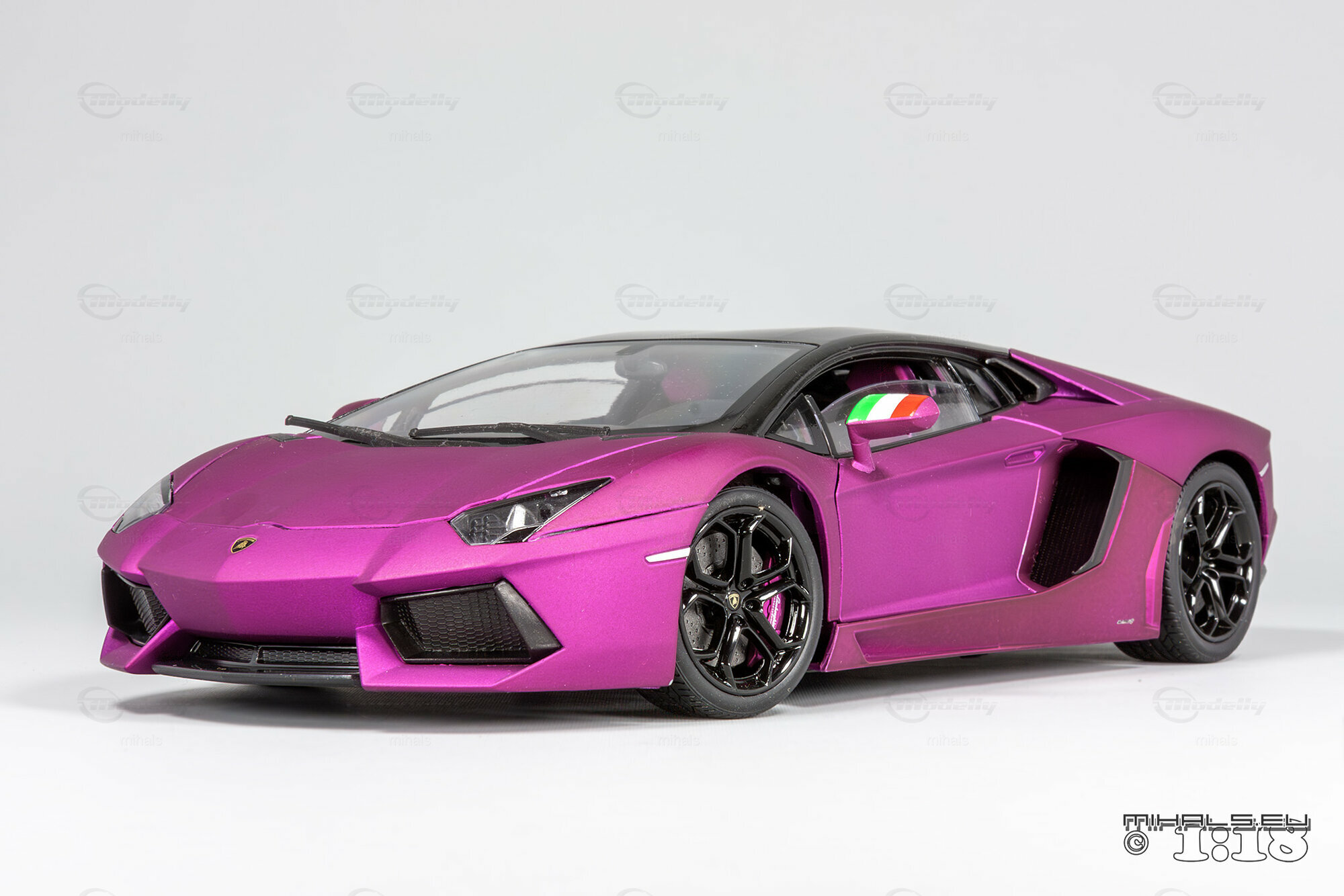
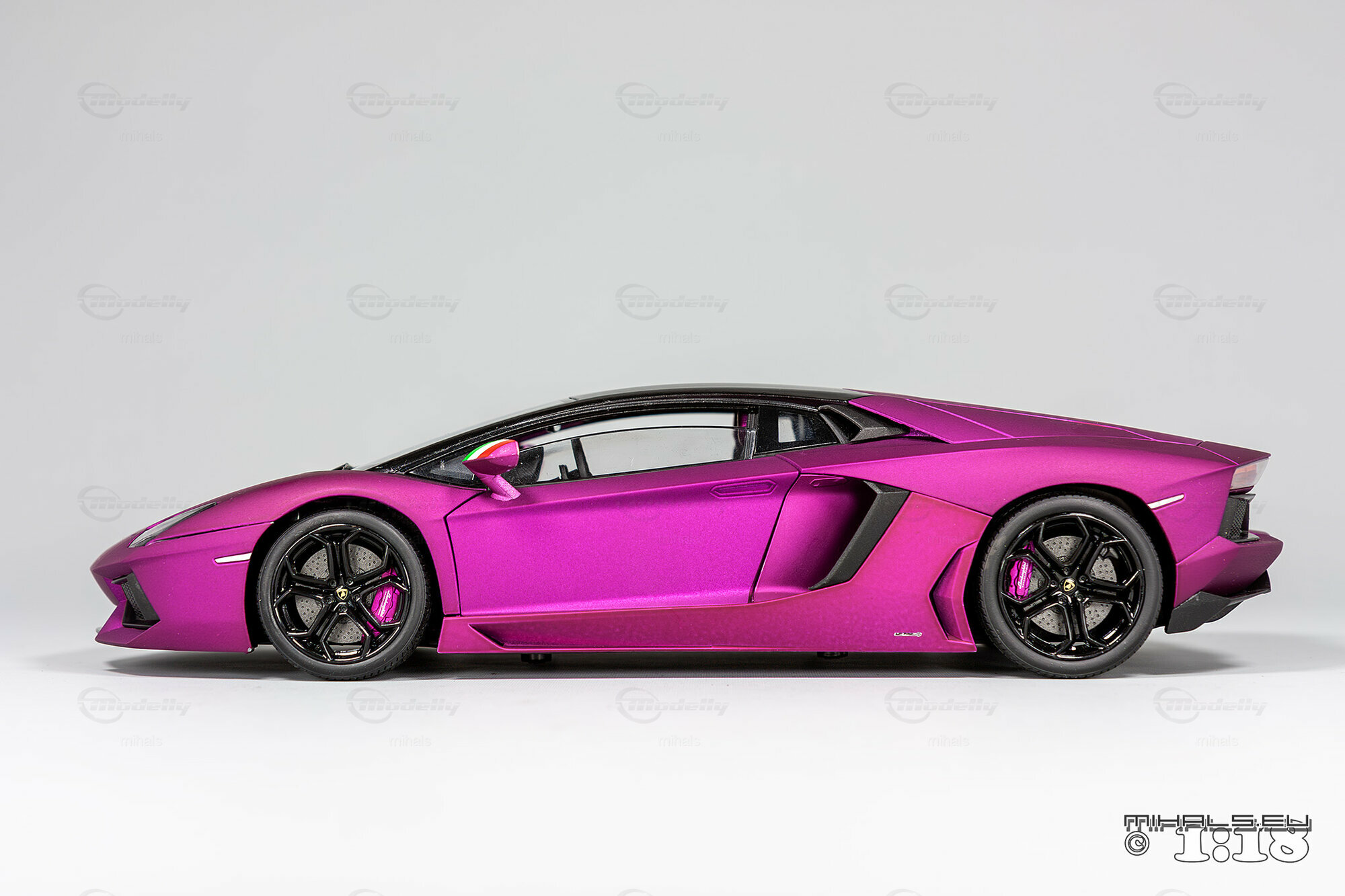
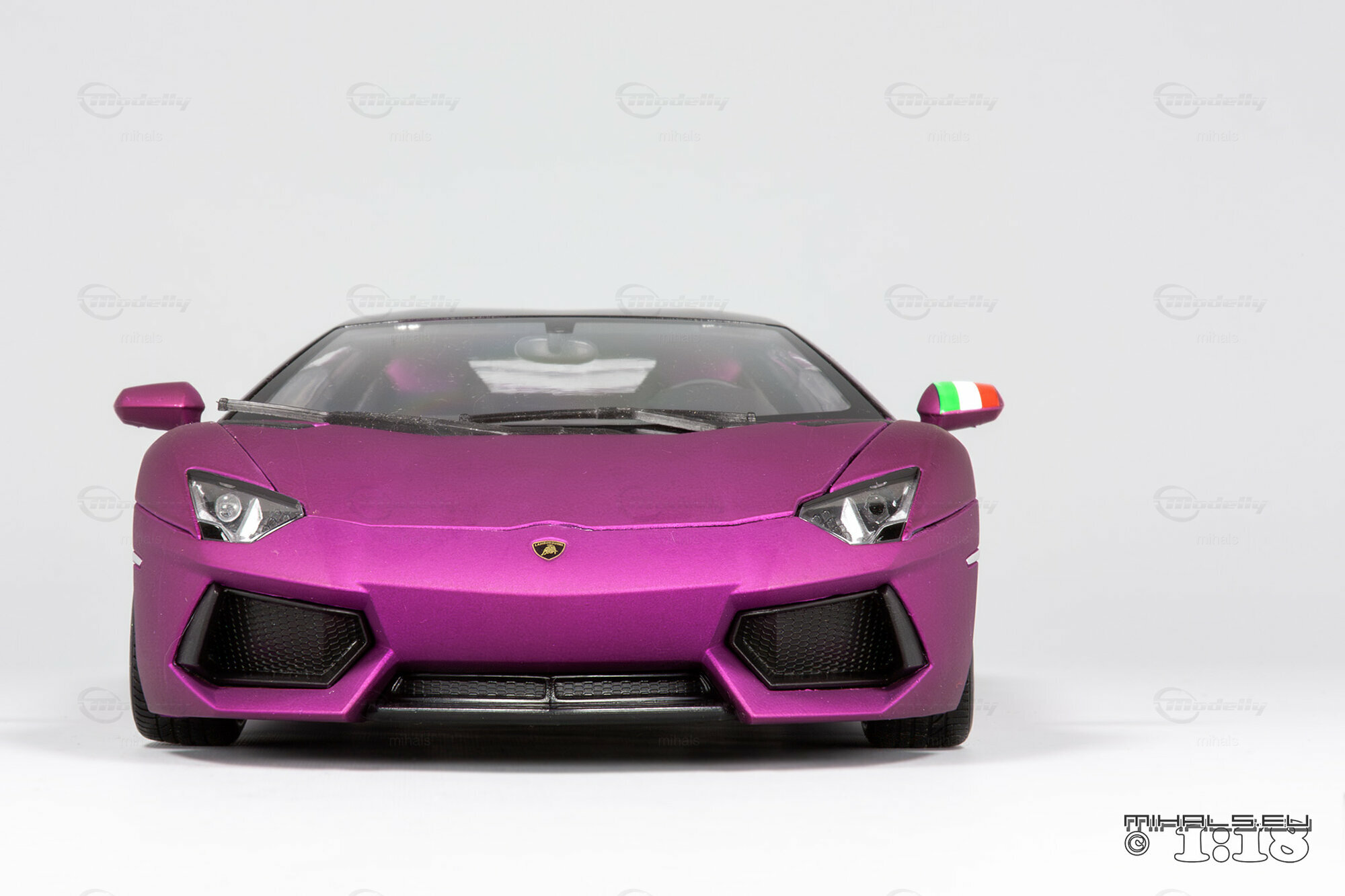
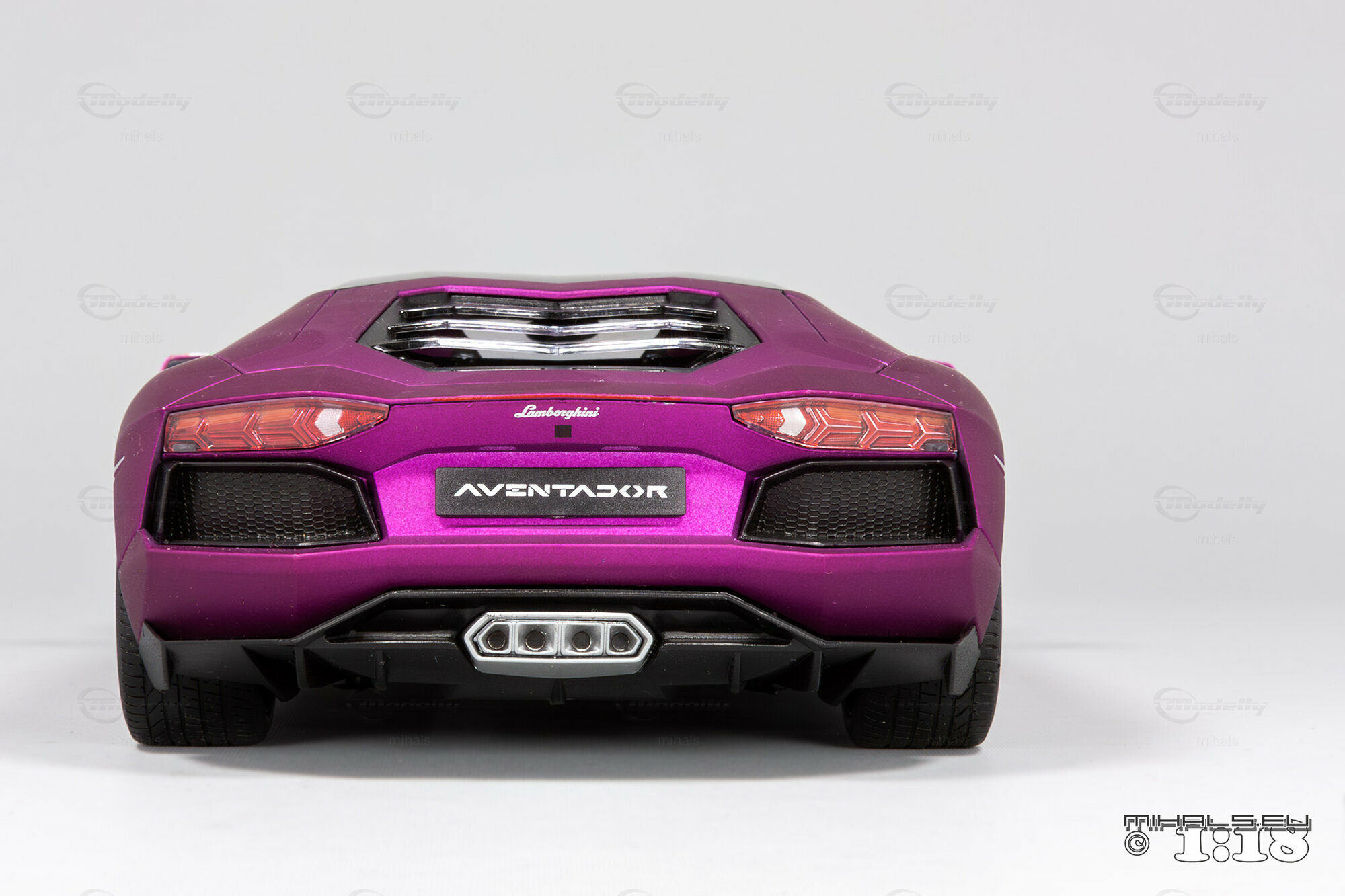
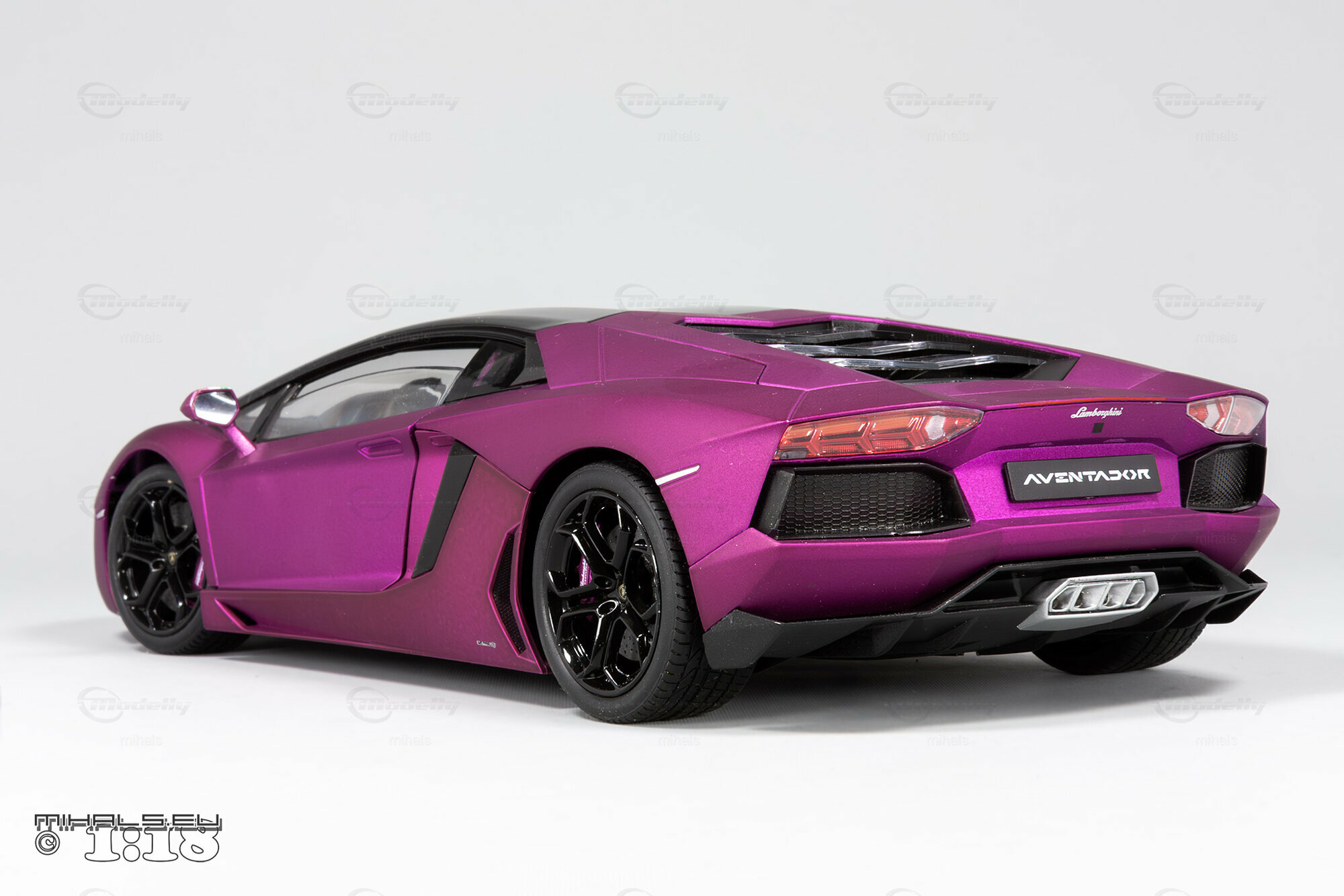
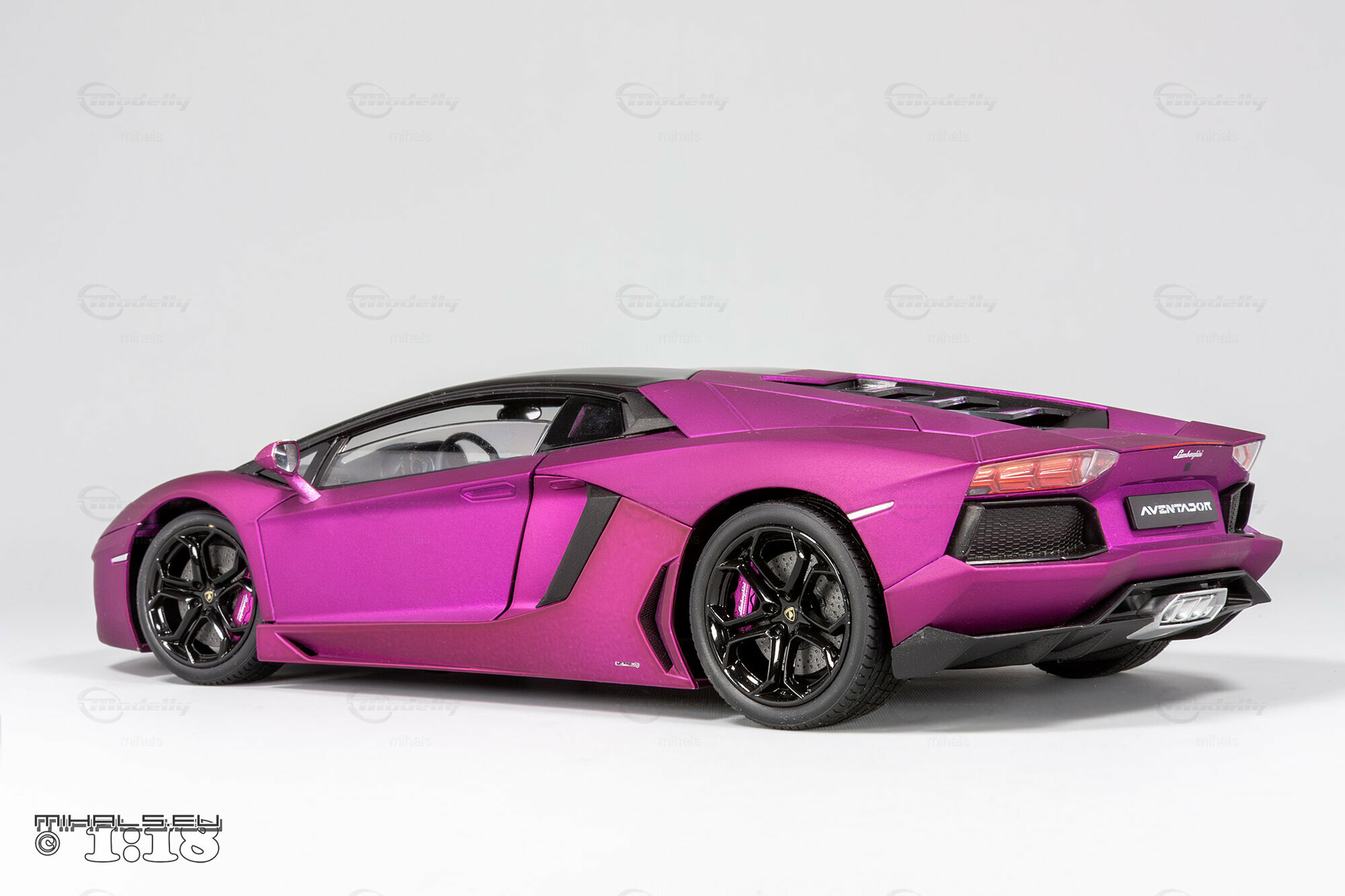
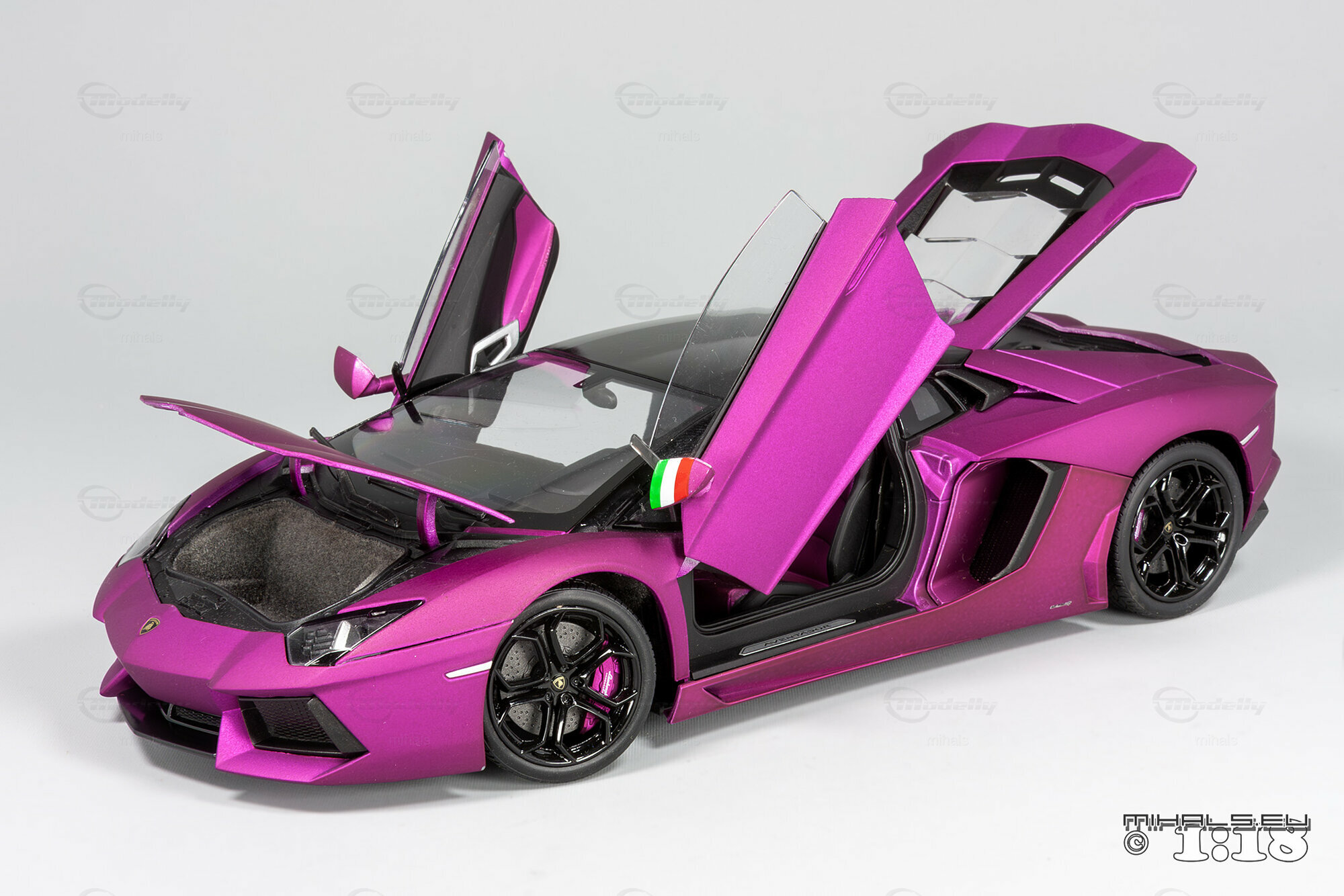
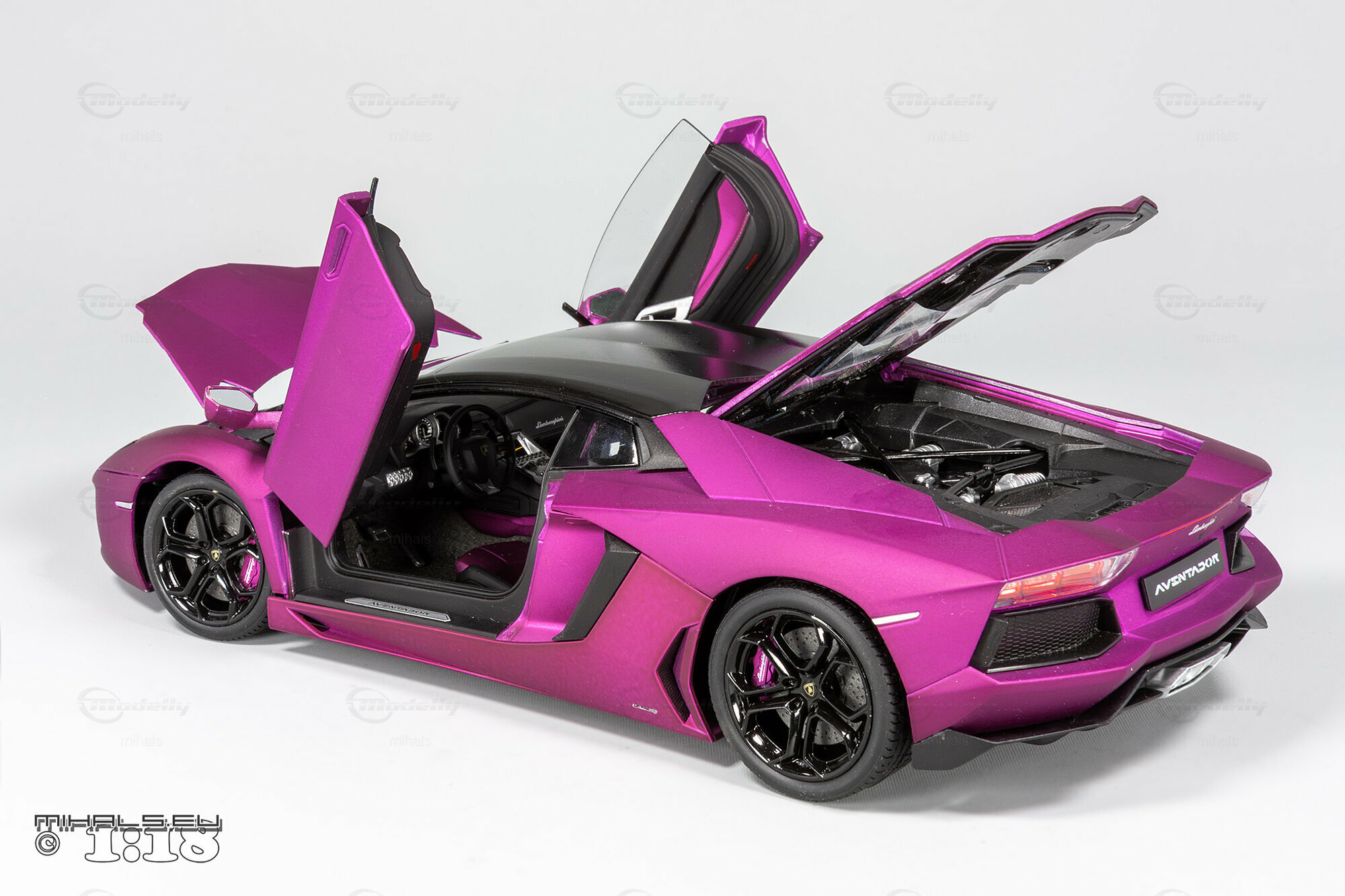
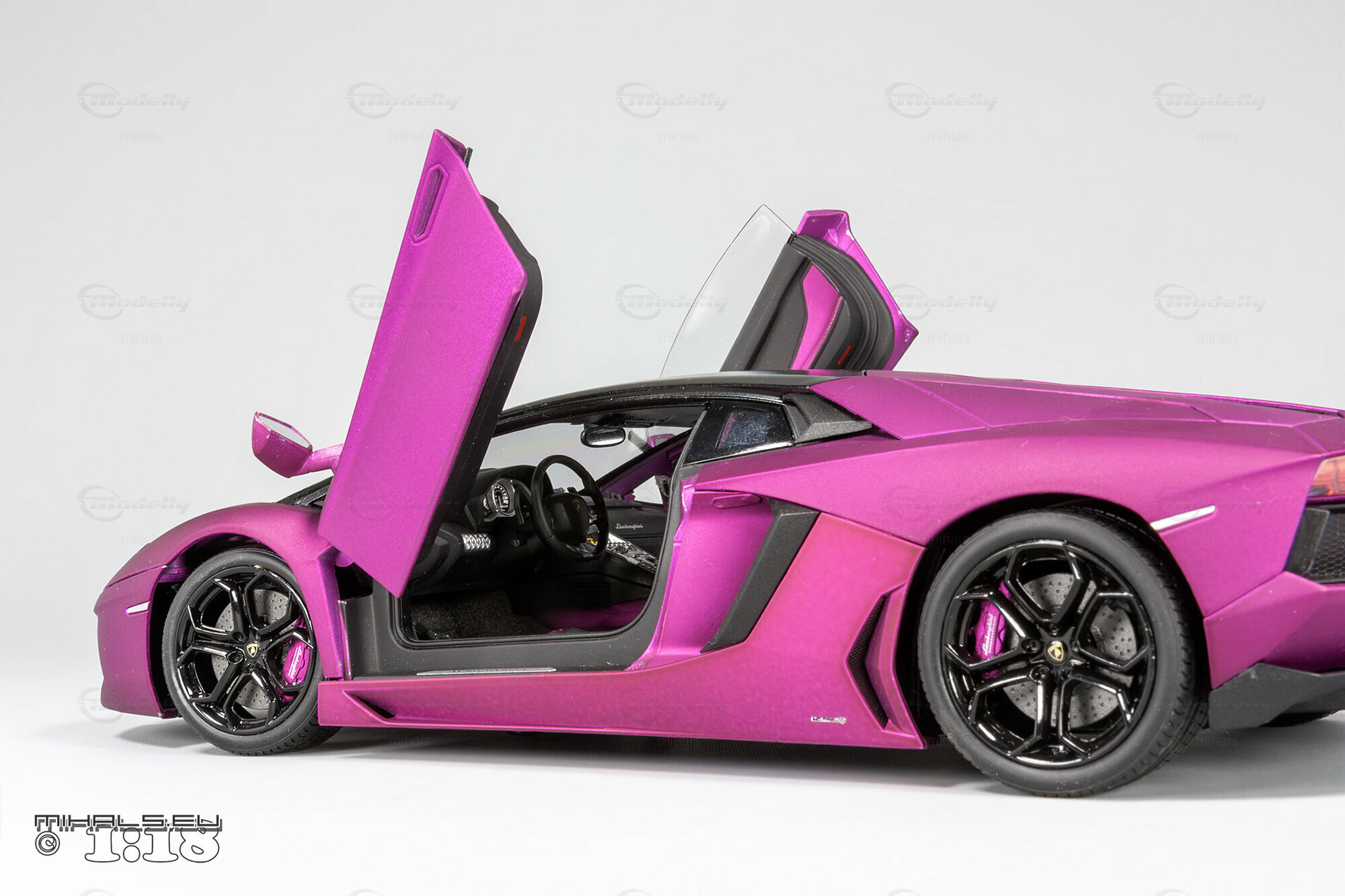
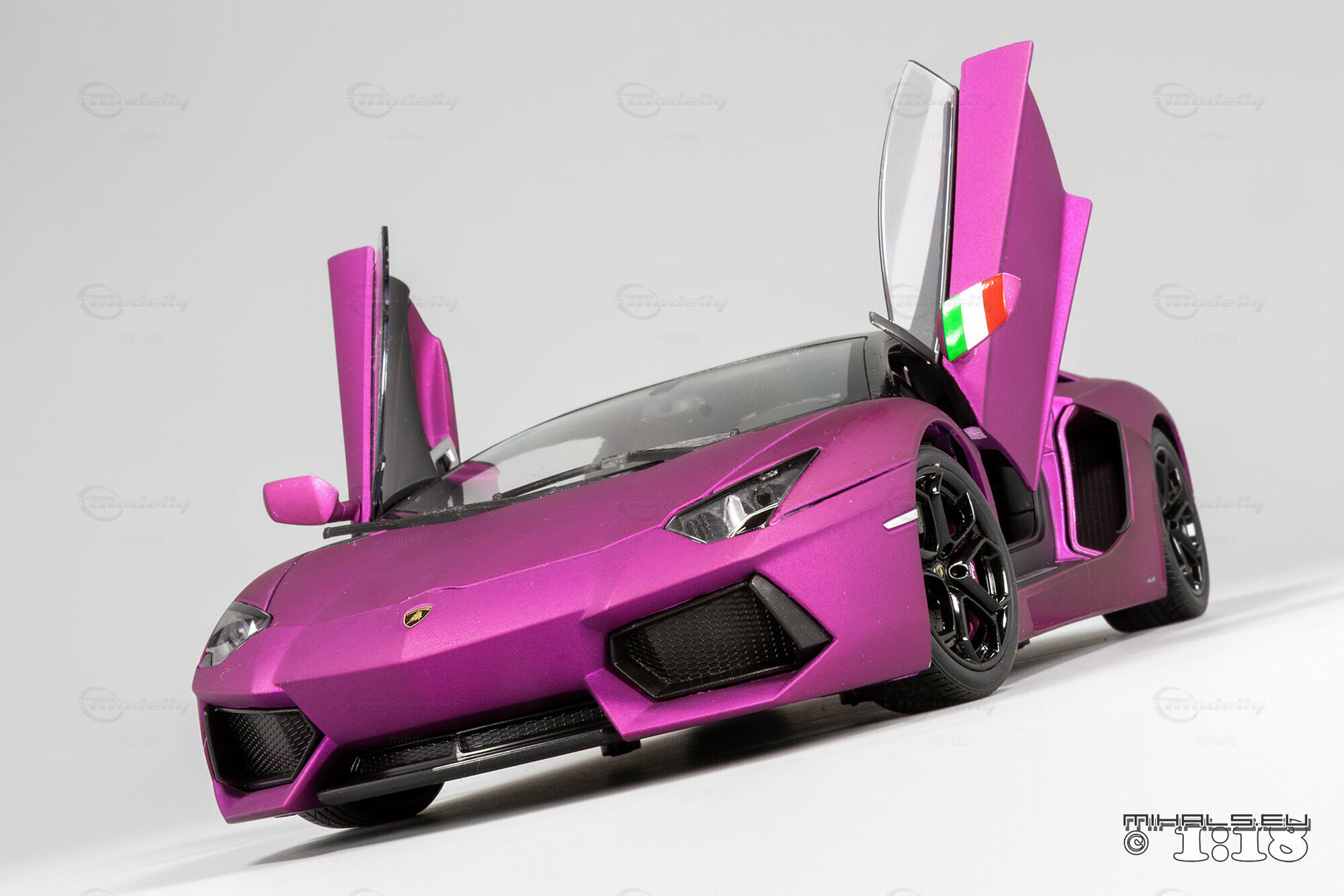
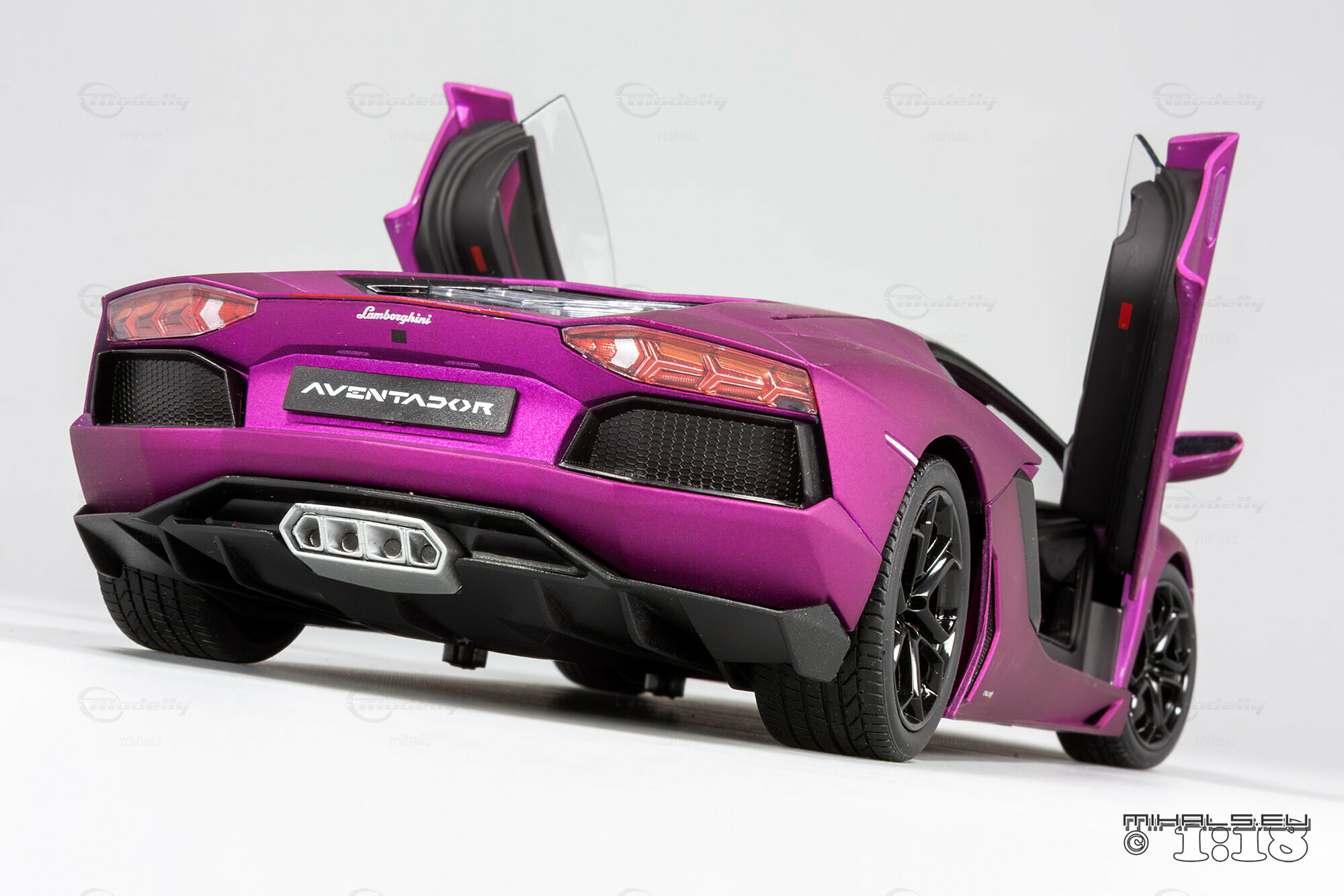
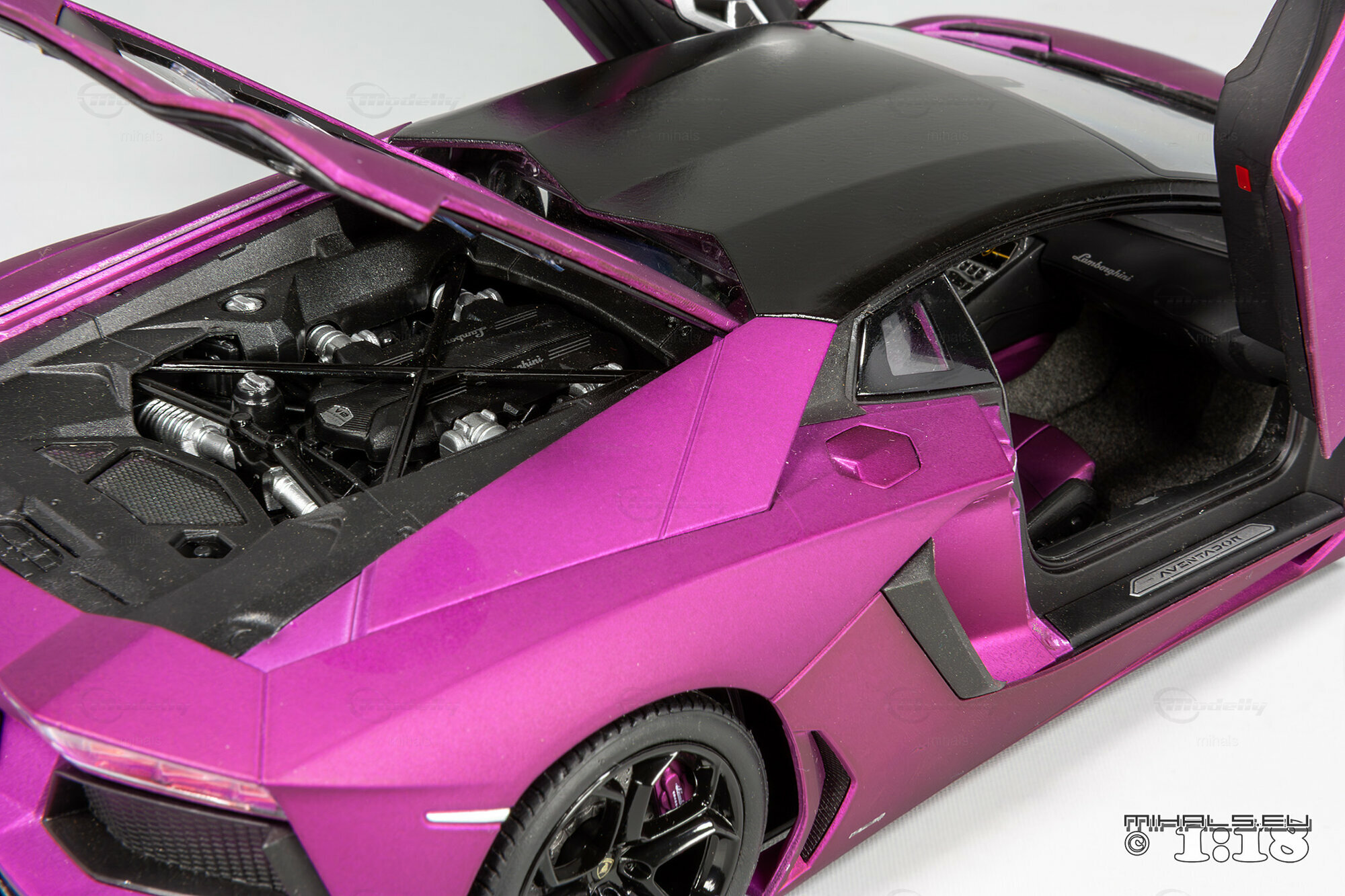
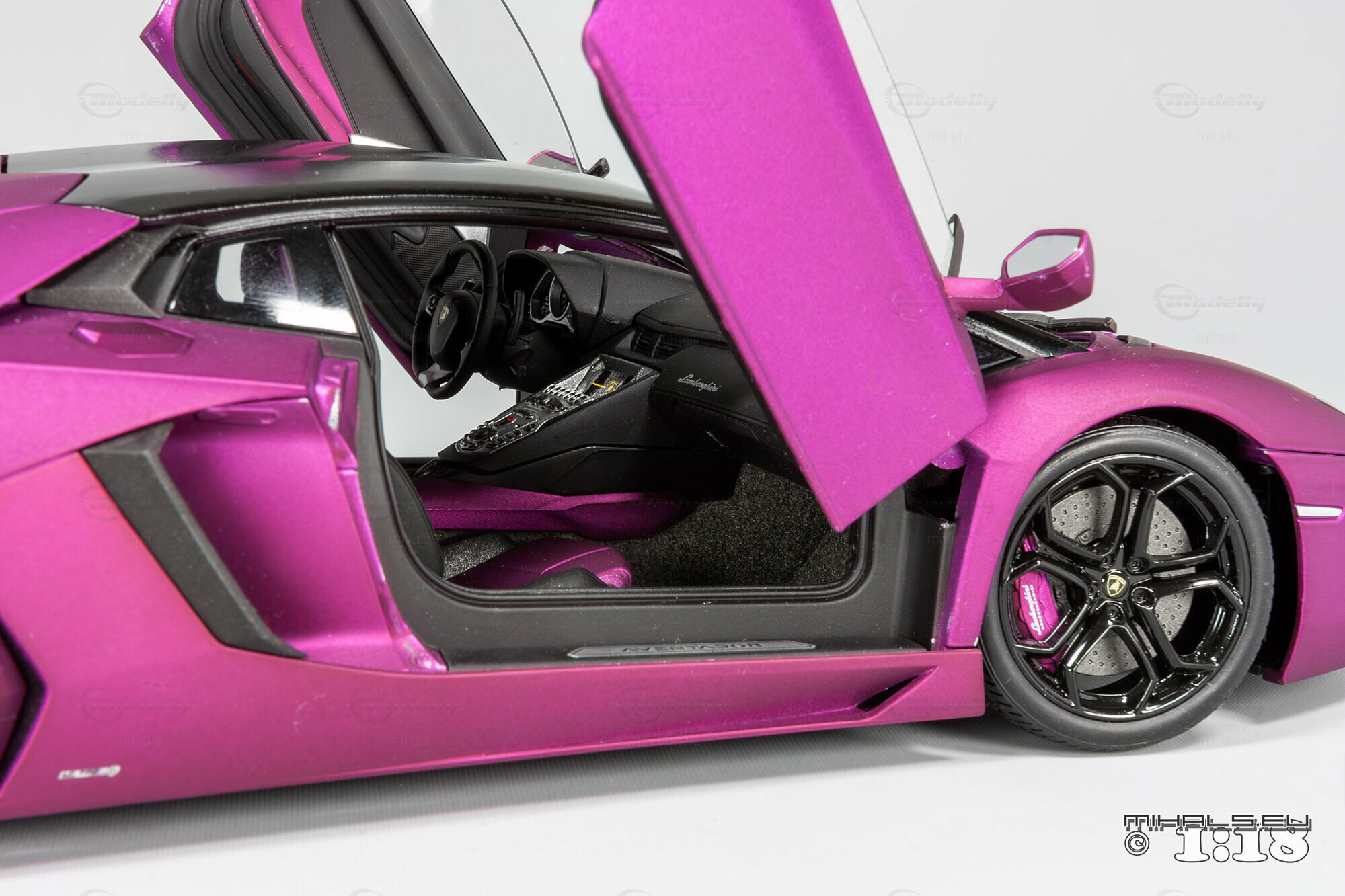
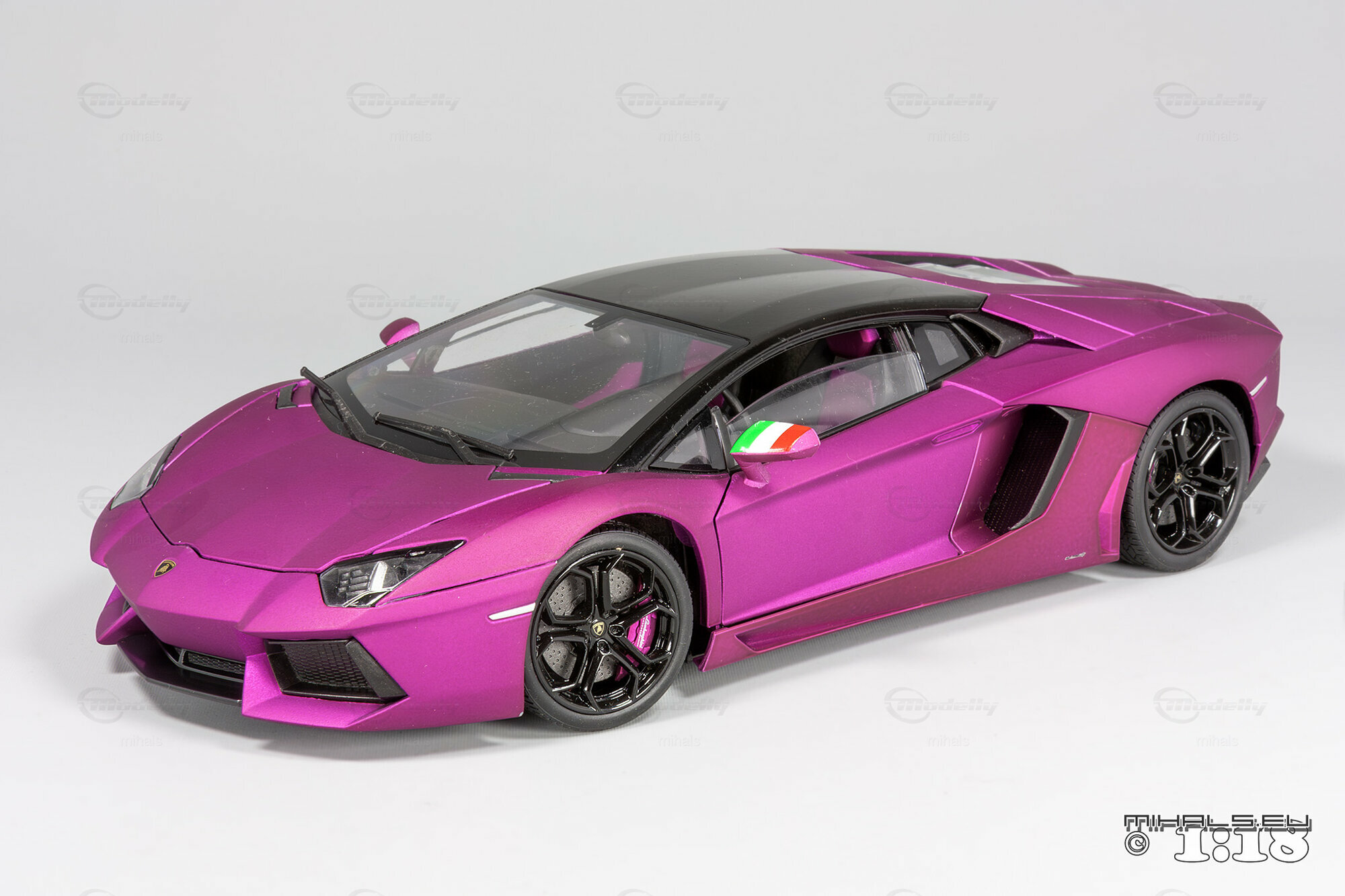
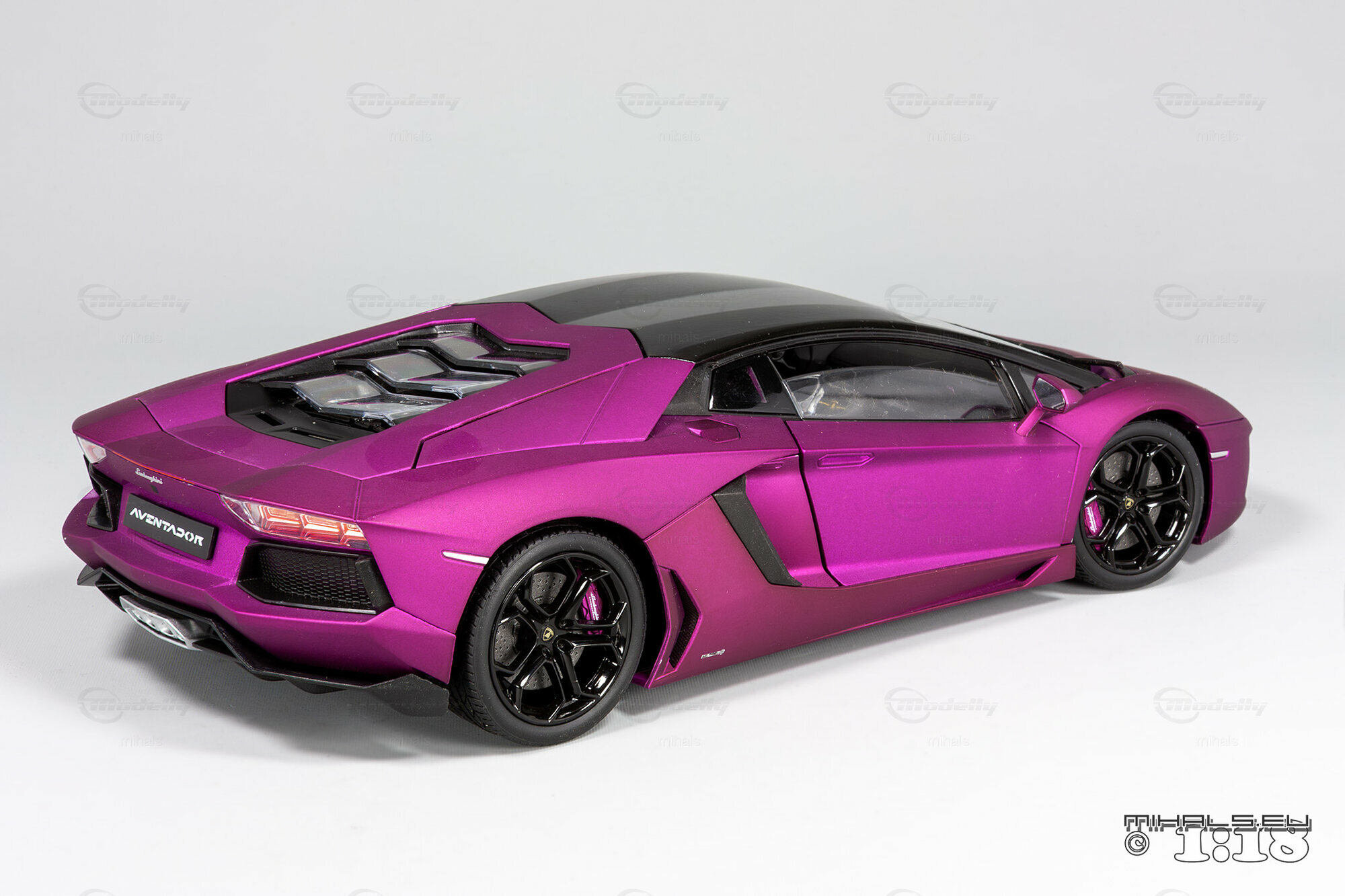
The photos show a model car in scale 1/18 from the maker Welly FX, inspired by the lines of the Lamborghini Aventador. It’s a diecast model, i.e., made of zinc alloy. The scissor doors open and follow the movement of the real thing. The front with the flat headlight units, the triangular air openings and the prominent spoiler lip is reproduced correctly. From the side you can see the large air intakes and the long window line. The sample in “mihals” collection has black five-spoke wheels, with drilled brake discs and painted calipers visible behind them. The glazing is clear; mirrors, door handles and the sharp creases on the side skirts are well executed. Inside you can make out the seats, center console and instrument cluster; the layout mimics the cockpit with the central start button and the raised center tunnel. Proportions — short overhangs, flat silhouette, wide rear — capture the lines of the first Aventador generation well. The little bull badge on the nose is present too, which makes it instantly recognizable. For collectors: this is a 1/18 scale model from Welly FX and therefore matches many display and diorama setups in size.
Color, details and tips for collectors
The color is a violet-magenta metallic with a black roof. The gloss and metallic flakes highlight panel edges and shape changes. On the mirrors there’s a decal in green, white and red, hinting at the Italian tricolore. The badge on the nose is gold. The wheels are glossy black; the tires have a tread profile. The gaps on the opening parts are uniform for a diecast piece, and the doors stay open. The material is classic diecast, so the model has noticeable weight and a solid feel. For display I’d recommend a neutral, light base — the violet paint pops under direct light and shows the lines better. In the photos from “mihals” you can see how the front fender crease runs into the doors — a typical Aventador cue. If you want to add this model to a collection, pair it with other V12 Lamborghinis from the era, like a Murciélago as the predecessor or later Aventador S/SVJ models as evolution pieces. One more thing: the pictured miniature from Welly FX is in 1/18 scale, so it fits right in with other models from that brand. The visible details — scissor doors, large side intakes and black roof — make the miniature a faithful, compact representation of the original for your display case.
- Write a first comment about this model now!Any comment can be discussed by all members. It's like a chat.Mention other Modelly members by using @ in your message. They will then be informed automatically.
- Write a first comment about this model now!Any comment can be discussed by all members. It's like a chat.Mention other Modelly members by using @ in your message. They will then be informed automatically.