
Mercedes-Benz 190E 2.3-16 (W201)(1:87, Herpa)
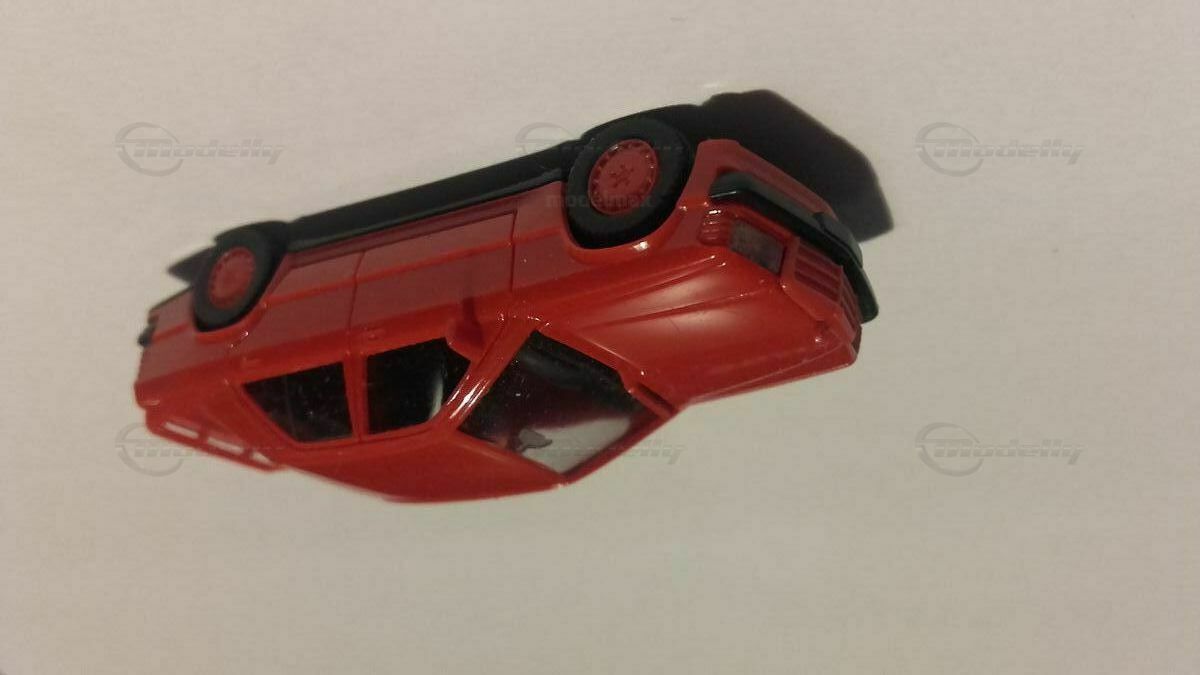
- Mercedes-Benz 190E 2.3-16 (W201) (from 1982)
- Herpa
- 1:87
- Showcase model / No engine
- plastic
- red
- Not specified
- Not specified
- Not for sale
Role model: The compact athlete from Stuttgart
As the role model for this mini is the Mercedes-Benz 190 (W201) in its sporty version Mercedes-Benz 190E 2.3‑16. The series carries the internal designation W201 and was built from 1982 to 1993. The 190 was Mercedes‑Benz’s first standalone compact class car; there wasn’t a direct predecessor in this form. The design was led by Bruno Sacco, whose clean lines and the characteristic, wind‑tunnel‑optimized silhouette give the W201 its lasting look. Technically, the 190 introduced important novelties, including the five‑link rear axle that really improved handling in this class. The Mercedes-Benz 190E 2.3‑16 was launched in 1984 and added a much sportier touch thanks to a 16‑valve head developed by Cosworth. Depending on the market it made about 170 to 185 PS (roughly 168–183 hp), paired with a closely spaced, five‑speed manual Getrag gearbox in the so‑called “dogleg” layout and often a limited‑slip differential. The combo of good aerodynamics, compact size and an efficient drivetrain made the Mercedes-Benz 190E 2.3‑16 a notable technology bearer within the W201 generation.
Tech, records and where it fits
The Mercedes-Benz 190E 2.3‑16 wasn’t just a sporty street car — it was also used to set records and later to race. In 1983 on the high‑speed track at Nardò they set long‑distance records over 25,000 and 50,000 kilometers (about 15,534 and 31,069 miles), with average speeds well over 240 km/h (about 150 mph), proving the engine’s durability. With a drag coefficient of around 0.32, a large‑capacity cooling system and oil and water temperature gauges inside, the 190E 2.3‑16 was built for sustained high speeds. The front suspension used McPherson struts and the new five‑link rear axle gave precise self‑steering behaviour — a philosophy shaped over years under development figures like Rudolf Uhlenhaut. Later variants like the 2.5‑16 and the Evolution models became famous in DTM, but the 2.3‑16 already marked the technical peak of the early production years. Compared to the base cars it had a spoiler on the trunk lid, lower skirts and a sportier suspension. The miniature you showed doesn’t carry any clear tuner branding; there are no visible hints tying it to a particular company like AMG or other tuners.
The Herpa 1/87 model in Modelly member “modelmax”’s collection
The model shown here is by Herpa and represents the Mercedes-Benz 190E 2.3‑16 in 1/87 scale. It’s a plastic model: the body, glazing and wheels are made from precisely fitted, painted or colored plastic parts. This 1/87 Herpa model is from Modelly member “modelmax”’s collection. In the photos the red paint stands out, paired with black bumpers and side trim. The windows are slightly tinted and the A, B and C pillars are neatly separated, so the classic three‑box shape of the Mercedes-Benz 190 (W201) is clear. The long hood, high beltline and short trunk are well reproduced. The wheels show closed disc‑style rims that hint at early series or accessory rims; there’s no clear maker marking on the rims. Door gaps and the contours of the front indicators are finely engraved. The proportions look balanced, which isn’t a given at 1/87. Despite the small size you can spot the steering wheel and seat shapes inside. The underside is smooth and lacks separate exhaust or axle details, which fits the sturdy plastic build and makes it suitable for use on HO layouts.
Paint, visible details and timing
The finish on the model is a solid, opaque red without a metallic effect. Black parts provide contrast: bumpers, sills and the surrounding protective trim are dark, which helps show off the 190E’s lines. Door frames and mirror housings are the same dark tone. Emblems or model badges aren’t printed on this version, so the mini has a more generic look within the W201 family. The overall feel lets the clean design of the real car shine: the straight roofline, the angular C‑pillar and the slightly rising shoulder. For collectors it’s a nice 1/87 addition for HO layouts or Mercedes‑themed displays. The material is plastic, giving it low weight and a clean surface finish. For a time reference: the series started in 1982. In that year the Falklands War between the UK and Argentina happened, Michael Jackson’s album “Thriller” was released and Sony brought early consumer CD players to market. Those kind of anchors help place the car historically. The example shown from “modelmax” gives a neat glimpse at an important step in the brand’s development, without any obvious movie or TV tie‑in — there aren’t any clues on the model itself. The clean shapes and fine engraving highlight the understated charm of this 1/87 car, which pairs well with other models from the same era.
- Write a first comment about this model now!Any comment can be discussed by all members. It's like a chat.Mention other Modelly members by using @ in your message. They will then be informed automatically.
- Write a first comment about this model now!Any comment can be discussed by all members. It's like a chat.Mention other Modelly members by using @ in your message. They will then be informed automatically.