
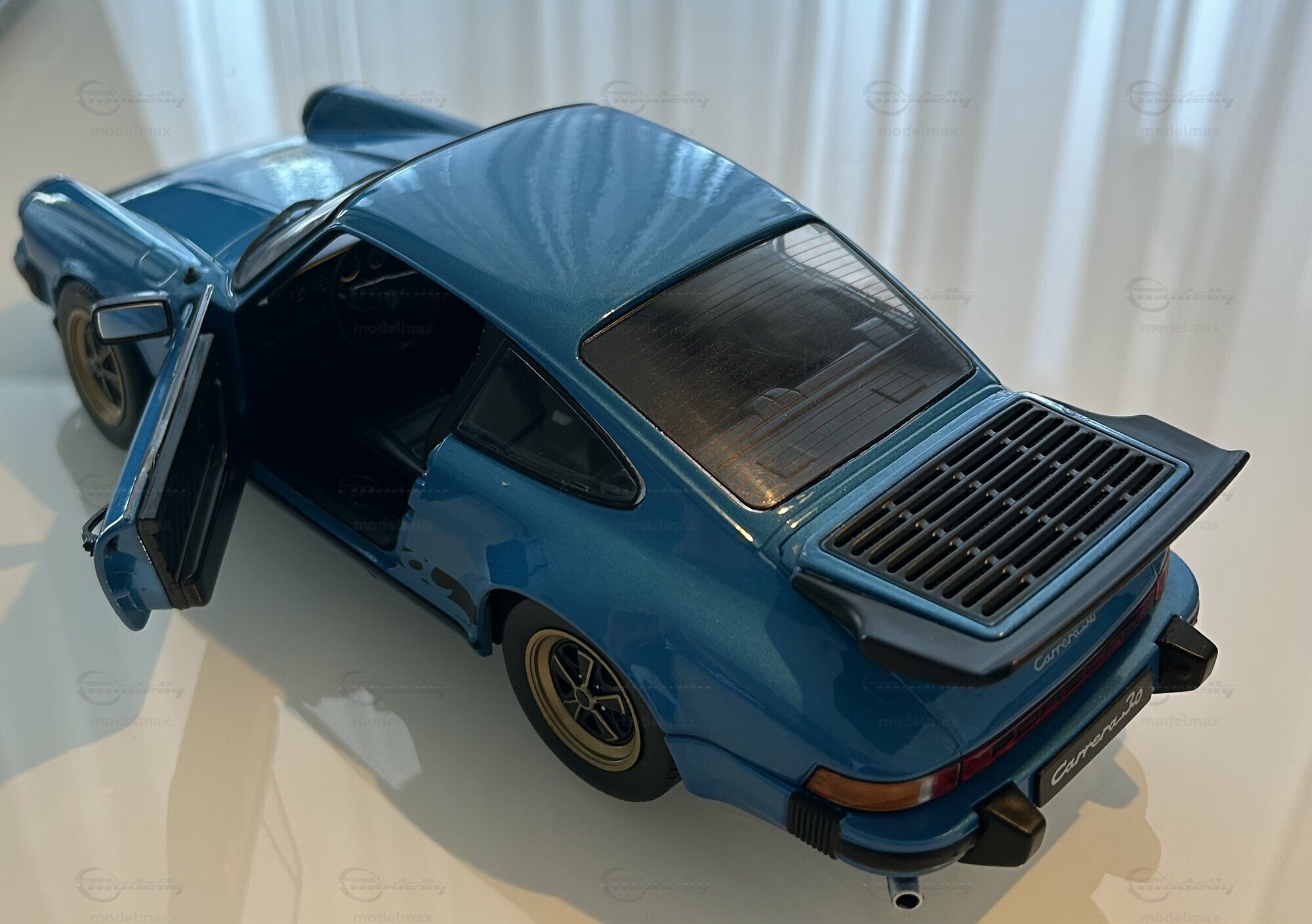
Porsche 911 Carrera 3,2(diecast 1:18, Solido)
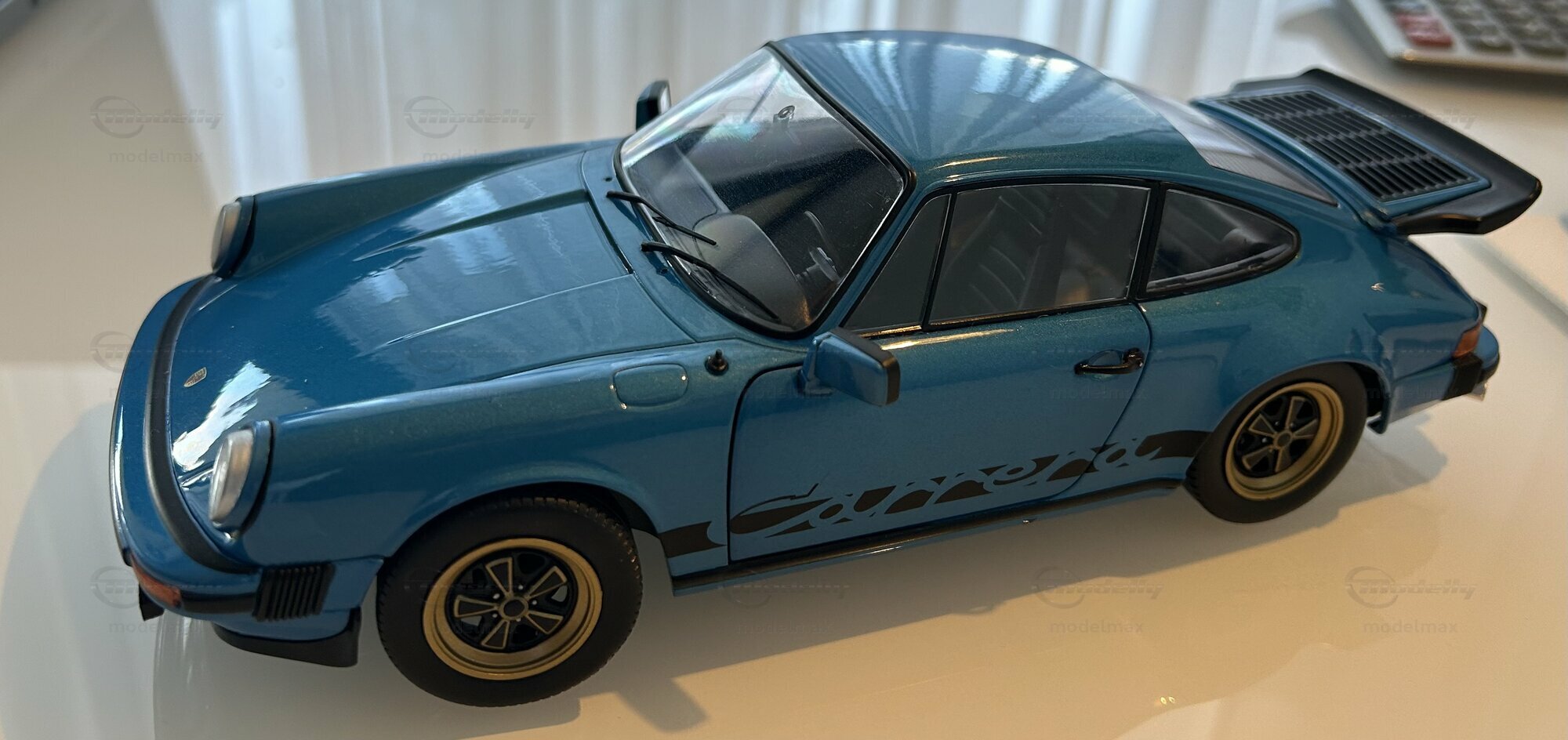
- Porsche 911 Carrera 3,2 (from 1978)
- Solido
- 1:18
- Showcase model / No engine
- diecast
- blue
- In near mint condition
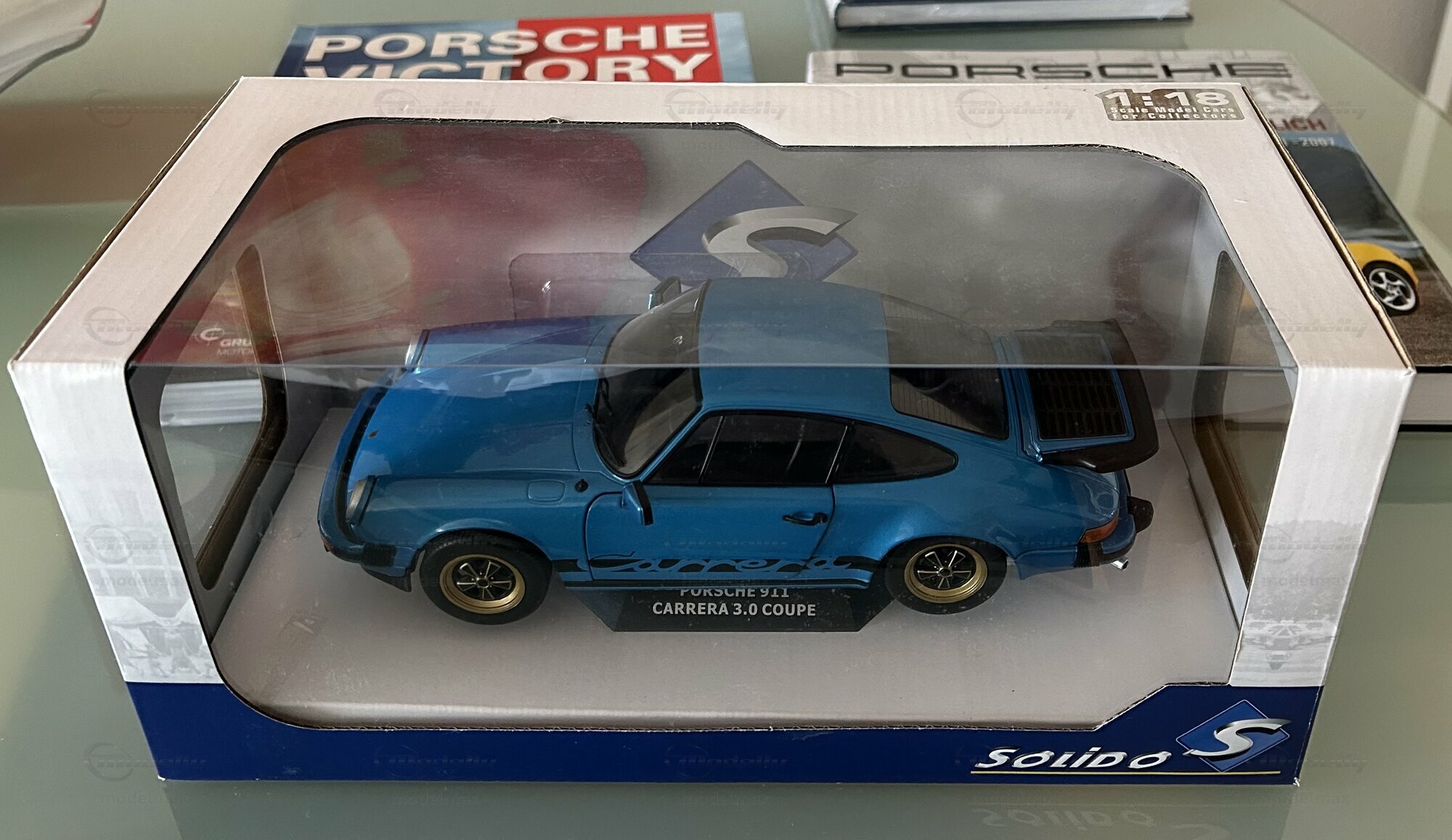
- Original packaging exists
- Not for sale
Model: The Porsche 911 Carrera 3.0 in historical context
This model is based on the Porsche 911 Carrera 3.0, a version of the second 911 generation, the G-Serie (911 G‑Modell), which was built from 1973. The Porsche 911 Carrera 3.0 showed up for the 1976 model year and was made until 1977. It followed the 911 Carrera 2.7 and sat below the 911 Turbo 3.0 (Type 930). Technically it used the turbo’s crankcase base combined with a 2,994 cm³ (182.7 cu in) air‑cooled six‑cylinder boxer engine. Power was around 147 kW (200 PS) (about 197 hp) at 6,000 rpm. The transmission was usually the 915 five‑speed gearbox. Top speed was roughly 230 km/h (143 mph) and 0–100 km/h (0–62 mph) came in about 6.7–7.0 s. One big plus: like all G‑models from 1976, it featured a largely galvanized body, which cut down on rust compared with the previous generation. The 911’s design goes back to Ferdinand Alexander Porsche, and the boxer engine and lots of its engineering are closely linked to Hans Mezger. To place it in time: 1976 saw Apple being founded, the Montreal Summer Olympics, and ABBA’s “Dancing Queen” — little anchors to help feel the era of this car.
Bodywork, tech and equipment of the original
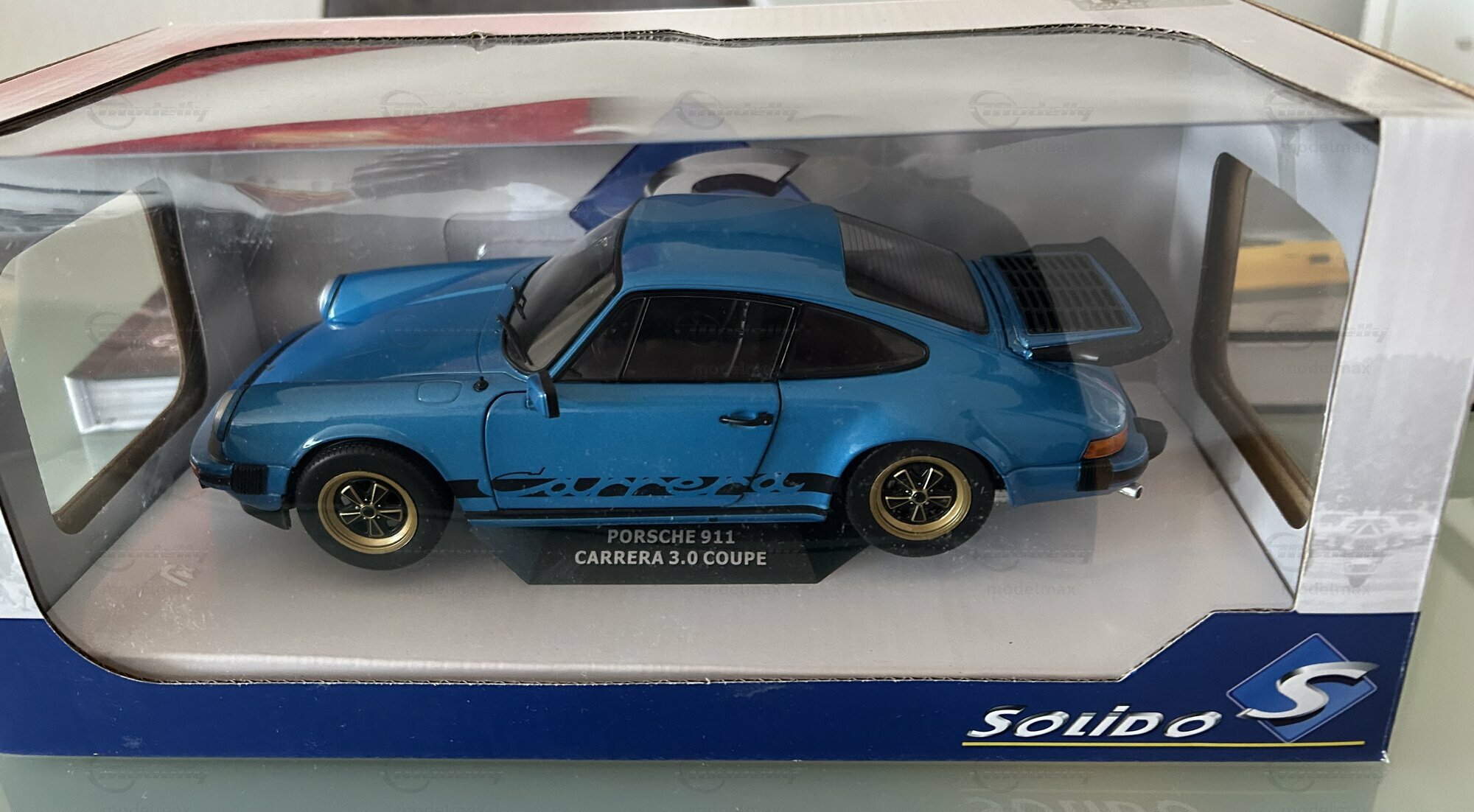
Visually the Porsche 911 Carrera 3.0 is marked by the bumper systems with rubber bellows used on all G‑models. Many cars got that distinctive rear spoiler with a rubber lip that helped engine cooling and stability at speed. The suspension used McPherson struts up front and torsion bars with trailing arms at the rear; ventilated disc brakes all around were standard. A typical detail are the forged Fuchs alloy wheels in the five‑leaf design, which gave the Porsche 911 Carrera 3.0 its classic look. Inside you’d find, depending on spec, sports seats, a four‑spoke steering wheel and the flat instrument cluster with five round dials. Fuel metering was handled by Bosch K‑Jetronic (CIS), known for a smooth idle and tidy power delivery. The car was seen as a well‑balanced compromise between the torquey 3.0 engine and the still relatively modest weight of the G‑model.
The Solido 1/18 collectors’ model
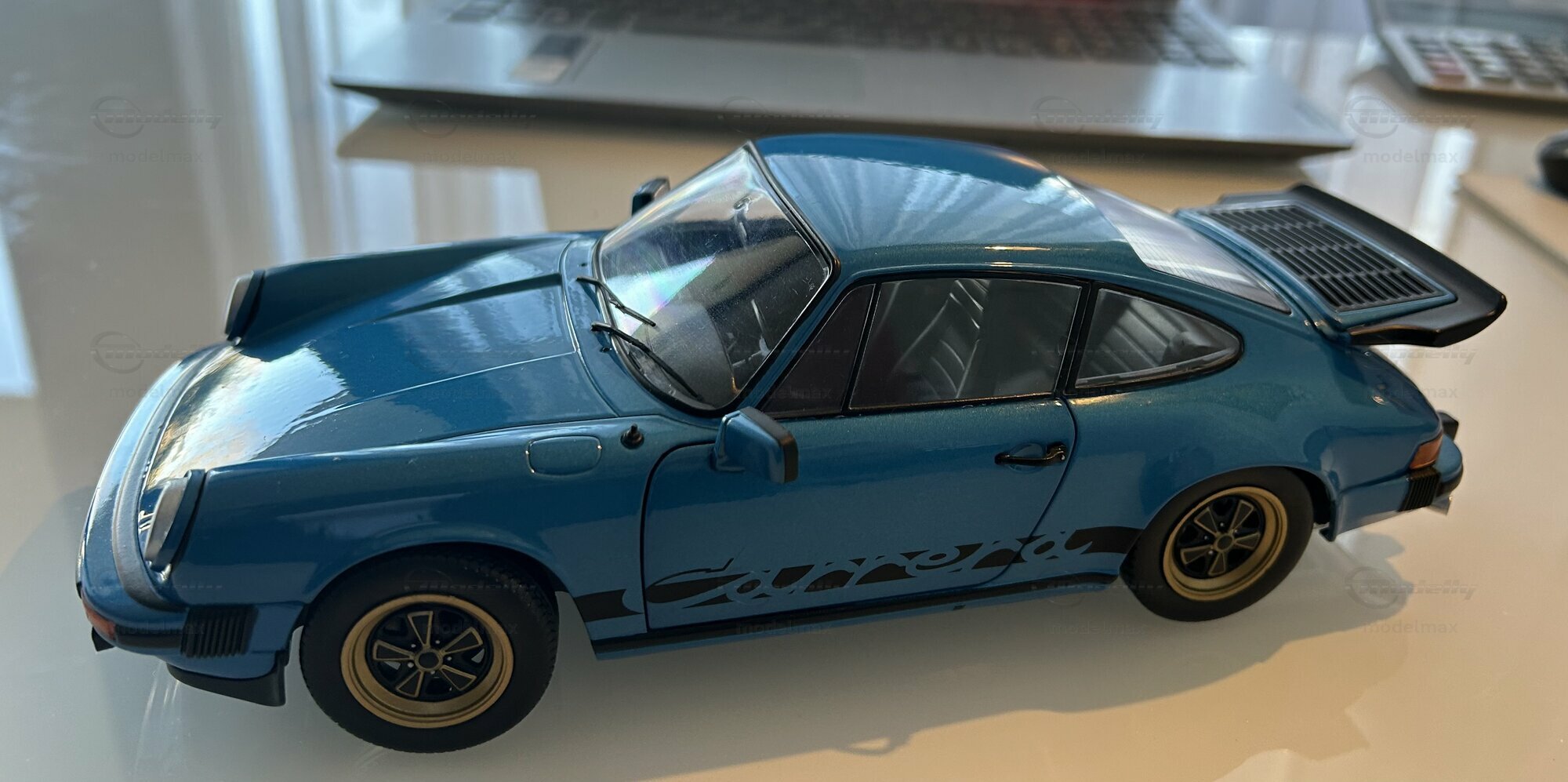
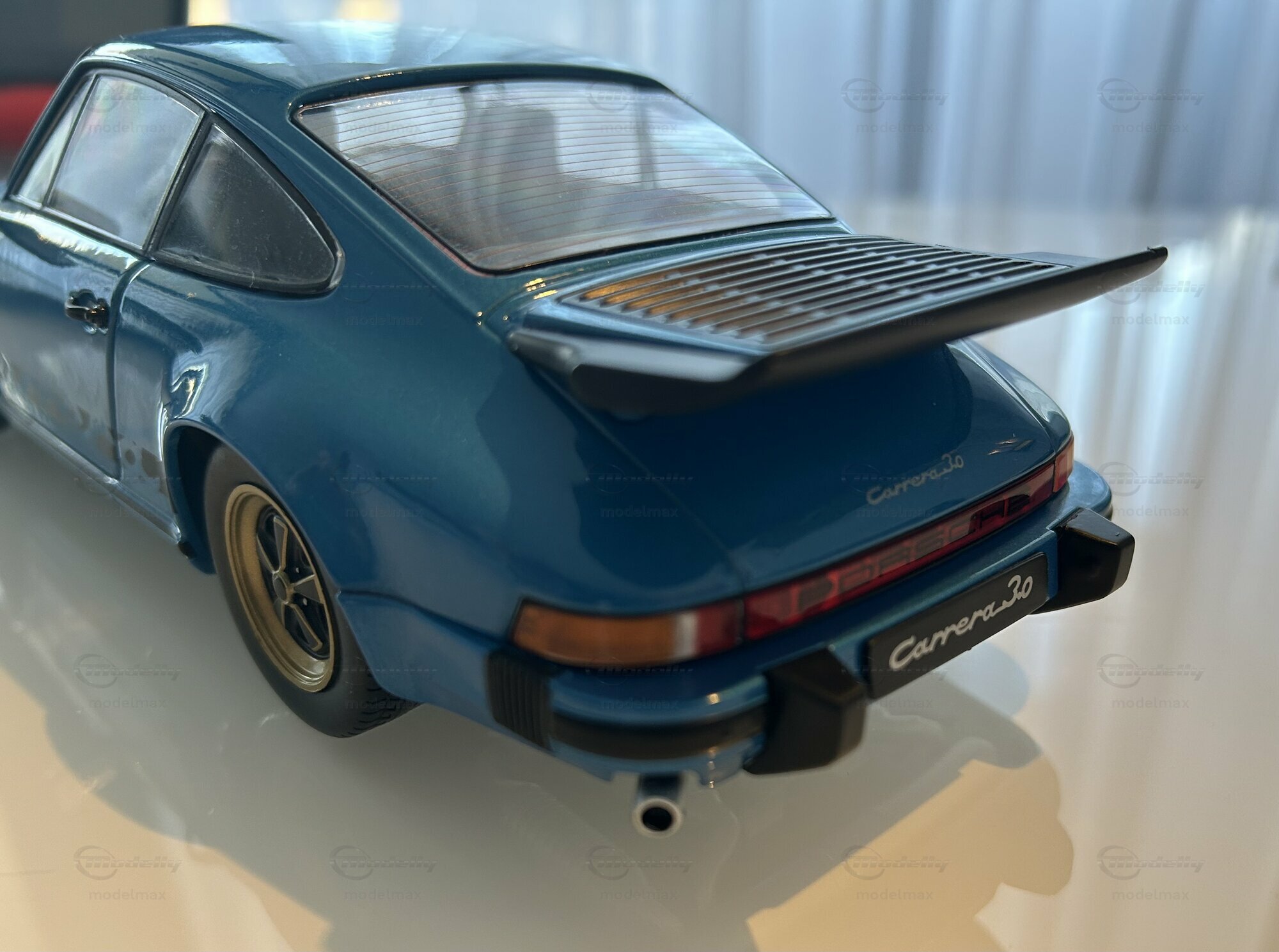
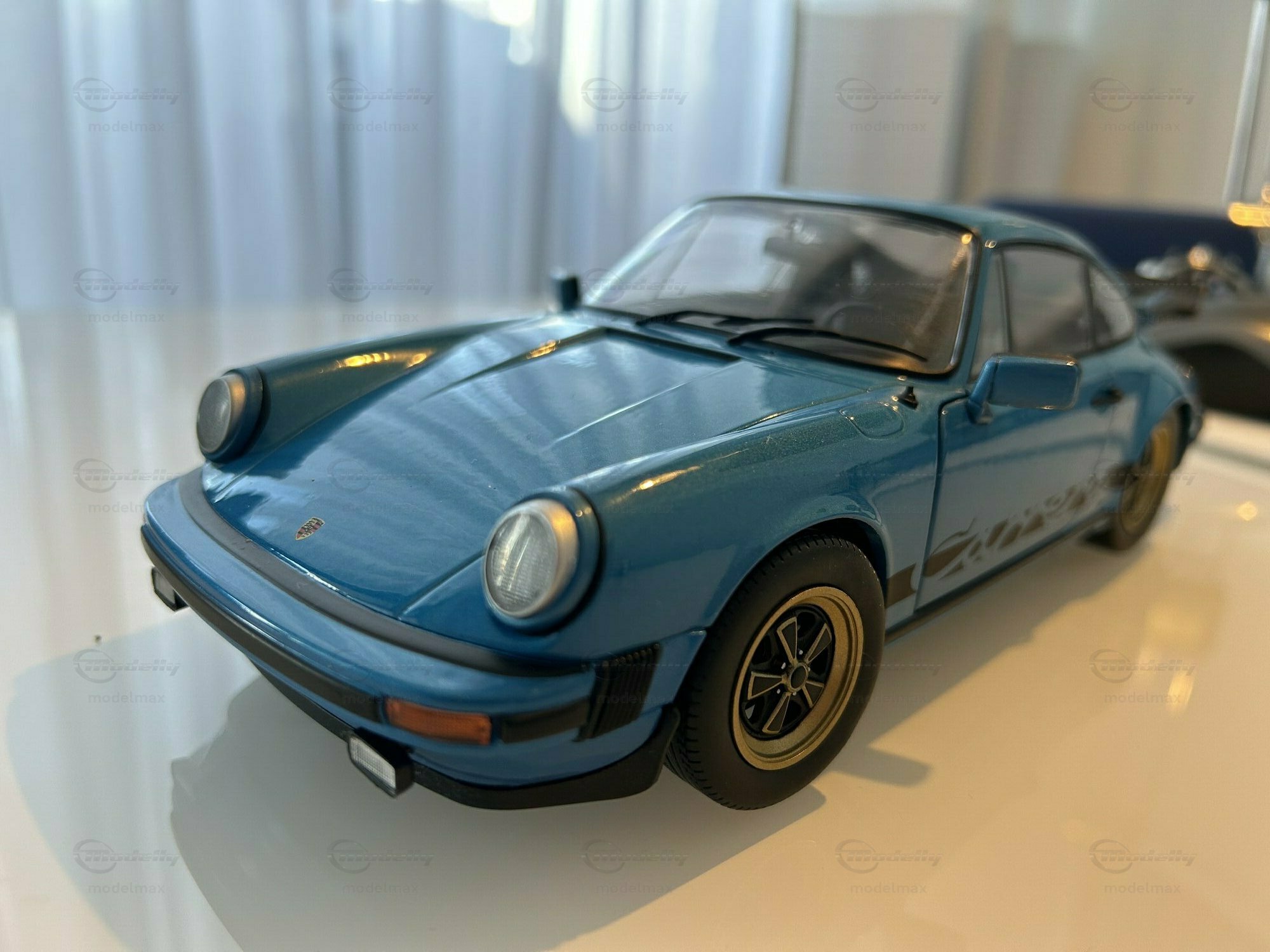
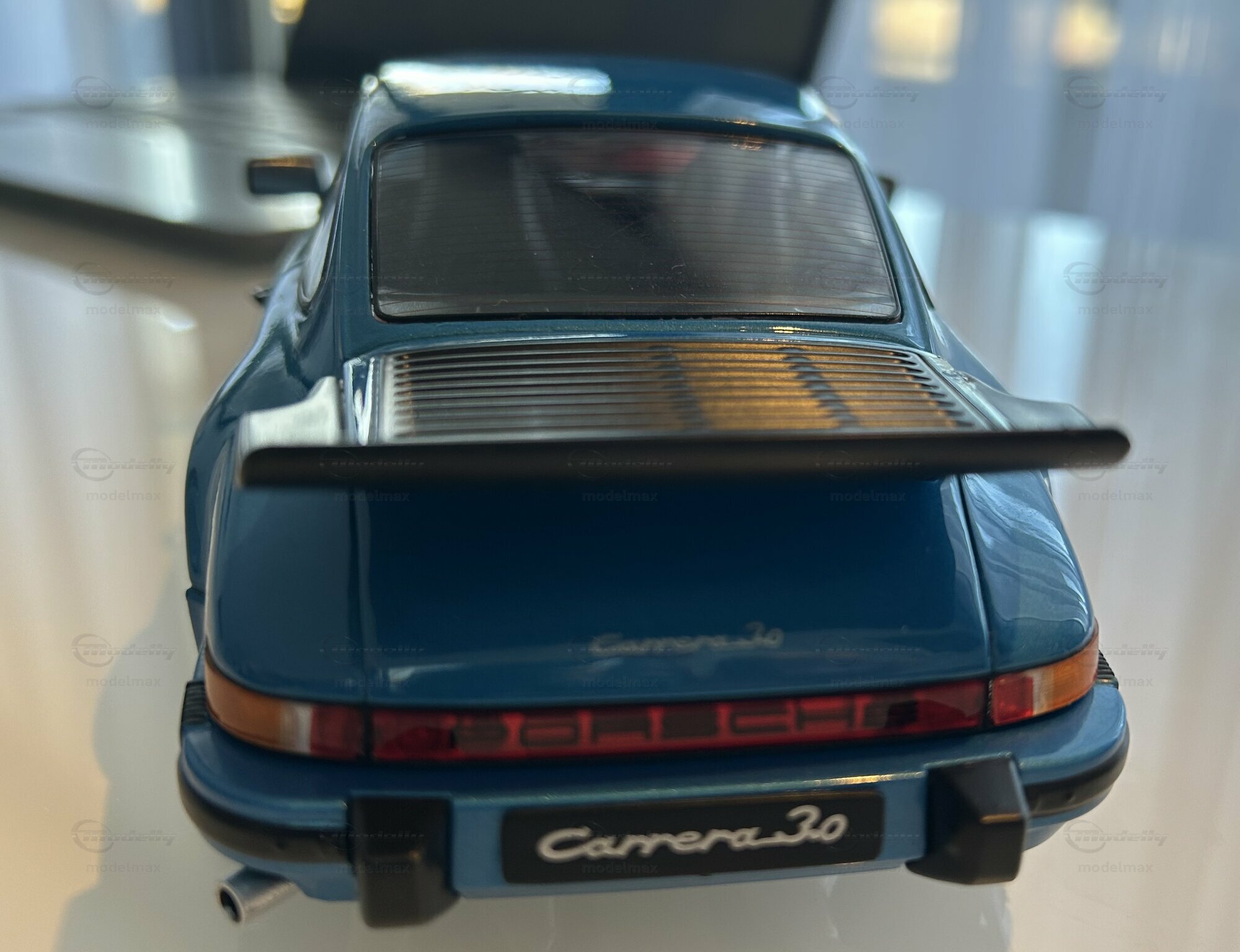
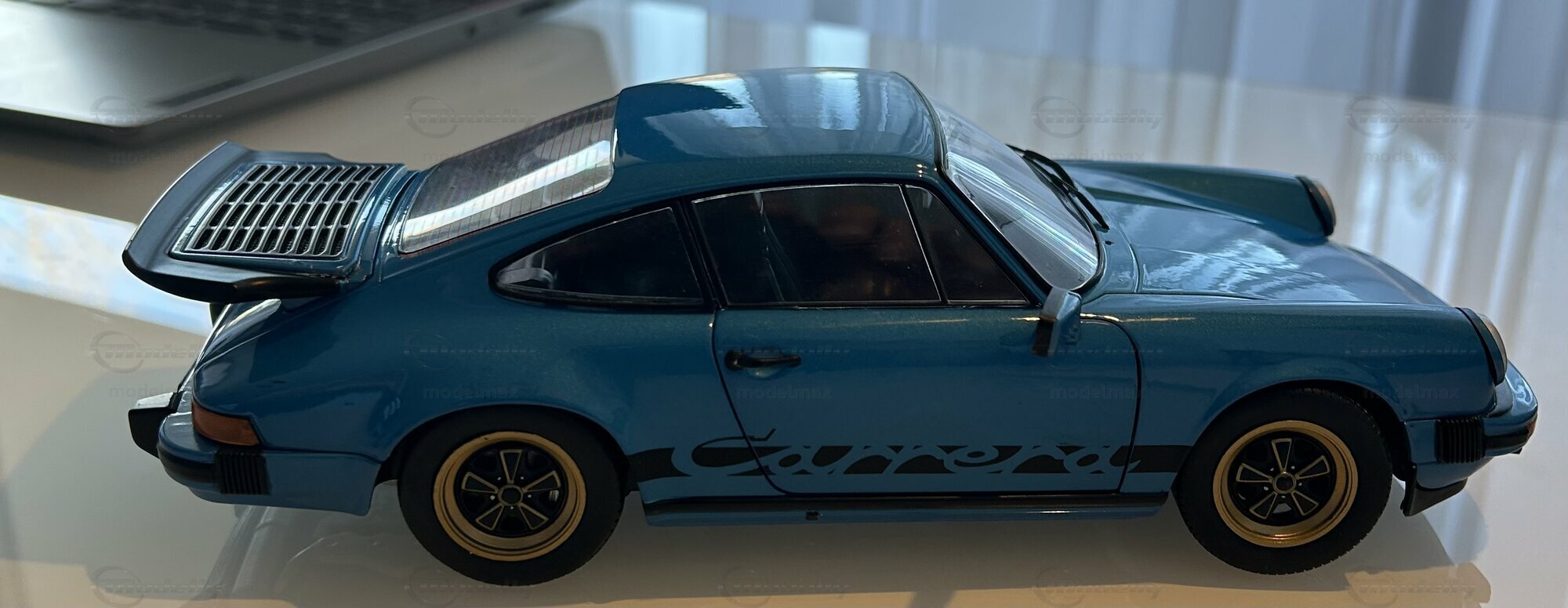
The specimen shown from the collection of the Modelly member “modelmax” is a 1/18 scale model from Solido. It represents a Porsche 911 Carrera 3.0 coupe. The body is painted metallic blue, a shade that fits the 1970s vibe and shows a subtle shimmer in the right light. Along the sill there’s the black “Carrera” side script, which matches the real car. The model features the typical black G‑model bumpers with bellows, front round headlights with clear lenses, separate wipers and an exterior mirror. At the back you can see the engine‑lid grille and the wide spoiler with its rubber lip. The two‑tone wheels echo the Fuchs style: black centers with a gold‑colored rim, a look that was available as a special option on real cars. Window frames are blacked out, the fuel flap on the right front fender is molded as a recess.Because it’s a 1/18 from Solido made from die‑cast zinc, it has a satisfying heft and a sturdy body; details like the interior, lights and grilles are separate plastic parts. The interior shows ribbed seat surfaces, a three‑spoke wheel and the flat 911 dashboard. The model comes in a display case with a printed base reading “Porsche 911 Carrera 3.0 Coupé,” as you can see in the photos.
Collector’s take and visible details
For collectors, the Porsche 911 Carrera 3.0 is interesting because it was only made for about two model years, a sort of in‑between step between the 2.7 and the later 3.2 Carrera. That makes the miniature appealing: it captures a distinct phase of the G‑series. The 1/18 Solido does a lot of the key cues justice: the low sloping front hood, the upright headlights, the rubber lip on the rear spoiler, the black window seals and the slim bumper trims. The Fuchs‑style wheels give the car the right proportions and pop nicely against the blue paint thanks to the gold ring. The underside of the spoiler, the ribbed taillight lenses and the small rear bumper overriders are cleanly molded. The “Carrera” scripts are nicely tampo‑printed, door gaps are even, and the windows sit flush in the frames.This model isn’t tied to any movie or TV car — it’s a straightforward representation of the Porsche 911 Carrera 3.0. For display in “modelmax”’s cabinet it gives a secure, neat presentation while keeping the lines easy to see. And again: thinking about when the real car was made — 1976 — helps put it in context alongside events like Apple’s founding, the Montreal Olympics and Jimmy Carter’s election, which makes the era feel more real. Overall the miniature combines the technical quirks of the G‑model with a tidy, accurate shape.
- Write a first comment about this model now!Any comment can be discussed by all members. It's like a chat.Mention other Modelly members by using @ in your message. They will then be informed automatically.
- Write a first comment about this model now!Any comment can be discussed by all members. It's like a chat.Mention other Modelly members by using @ in your message. They will then be informed automatically.