
BMW M3 CS Limousine (G80)(diecast 1:18, Pauls Modell Art / Minichamps)
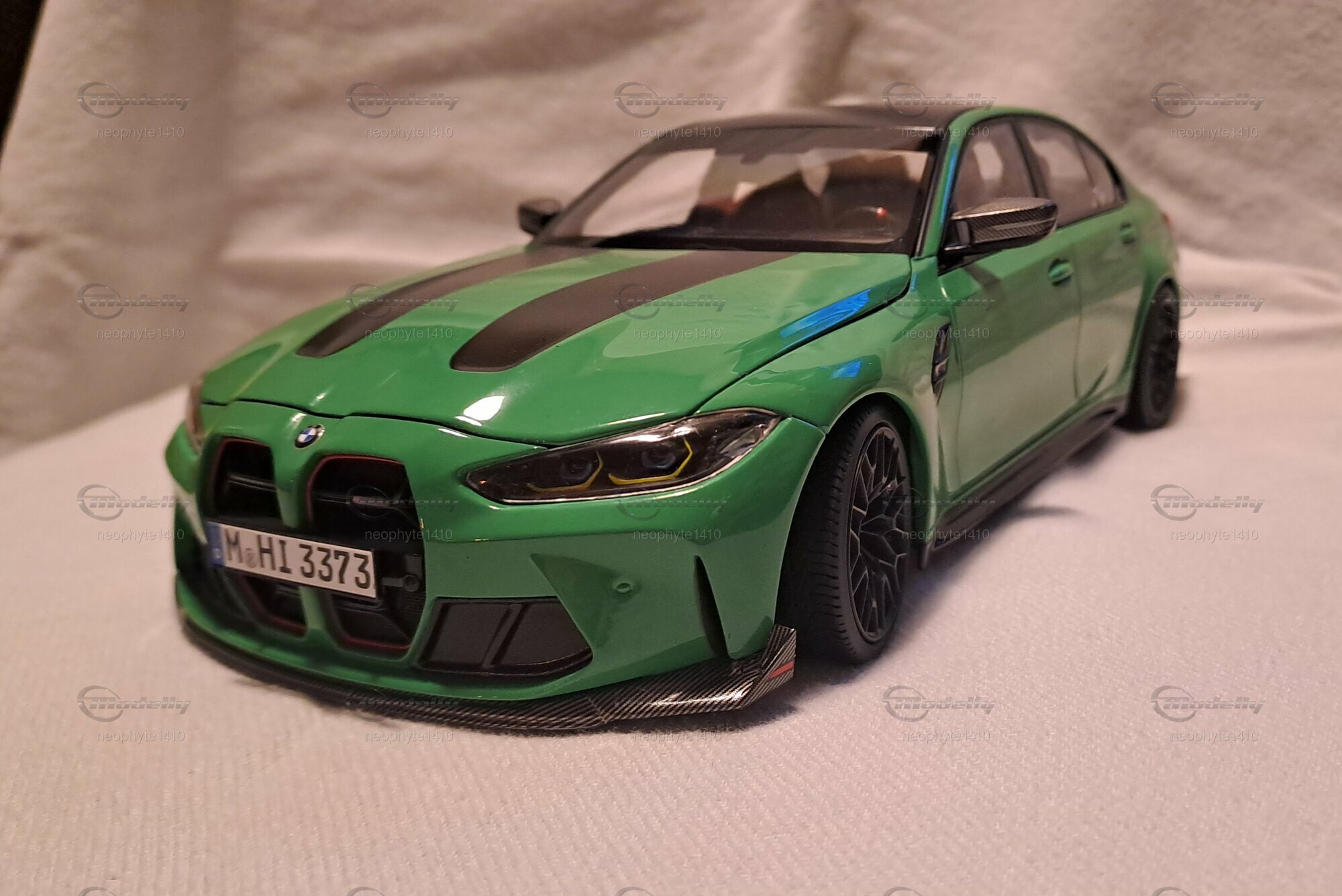
- BMW M3 CS Limousine (G80) (from 2023)
- Pauls Modell Art / Minichamps
- 1:18
- Showcase model / No engine
- diecast
- Signalgrün
- 80435B308D0
- In near mint condition
- Original packaging exists
- Not for sale
Reference: Tech and where the BMW M3 CS Limousine (G80) fits
The model shown refers to the BMW M3 CS Limousine (G80), a high-performance special version of the M3 lineup. The current M3 generation carries the code G80 and has been built since 2020. The CS was introduced in 2023 and was available only for a limited time. At its heart is the inline-six S58 with 3.0 liters (0.79 US gallons) displacement and twin mono-scroll turbochargers. In CS spec it produces 405 kW (543 hp / 550 PS) and 650 Nm (479 lb-ft) of torque. Power is sent through an 8-speed M Steptronic gearbox with Drivelogic to all four wheels via M xDrive, which can be switched to a 2WD mode that deactivates the front axle. BMW M pairs this with an active rear differential, M Traction Control in ten stages, and adaptive M suspension. The 0–100 km/h sprint (0–62.1 mph) takes about 3.4 seconds, and top speed is quoted above 300 km/h (186+ mph). Stopping power comes from M Compound brakes, with carbon-ceramic brakes offered as an option. Compared with the regular M3 Competition, the CS is more aggressively weight-optimized: hood, roof, front splitter, mirror caps, rear wing and parts of the center console are made from carbon fiber reinforced plastic (CFRP). The predecessor in the family, the BMW M3 Limousine (F80), still used a dual-clutch gearbox and rear-wheel drive; its S55 engine made between 431 PS (425 hp) and 460 PS (454 hp) depending on the version. The switch to the S58, to the automatic gearbox and the (optional or in the CS standard) all-wheel drive marks the main technical differences between the generations.
Design, development and what makes the original special
The design of the BMW M3 CS Limousine (G80) follows the G2x 3 Series theme with an enlarged, vertical double kidney grille and heavily sculpted air intakes. The styling and aggressive front end were brought to production under BMW design chief Domagoj Dukec, while BMW M—led at the time by Frank van Meel—handled the performance tuning. On the CS you also get functional aero parts: a fixed rear wing, a multi-piece front splitter and dive planes on the front and sill areas. Typical CS details include yellow-lit daytime light signatures, a red-accented grille surround and specific forged wheels in 19 inches (front) and 20 inches (rear). The body is just under 4.8 meters (15.7 feet) long, with a wheelbase of around 2.86 meters (9.4 feet). Inside you can get lighter M Carbon bucket seats that not only save weight but lower the seating position. Standard kit includes M Drive Professional, Track mode, drift analyzer, telemetry features and the full suite of 3 Series driver assistance systems. The CS came fitted with cup-oriented tires and unique damper and anti-roll bar settings. Production and final assembly of the M3 sedan take place at the BMW plant in Munich, with many M-specific parts coming from BMW M GmbH and suppliers. For collectors, notable paint choices include Frozen finishes and standout single-stage colors from BMW Individual; the black CFRP roof and visible carbon aero parts are signature touches.
The actual model car: 1/18 by Minichamps in neophyte1410’s collection
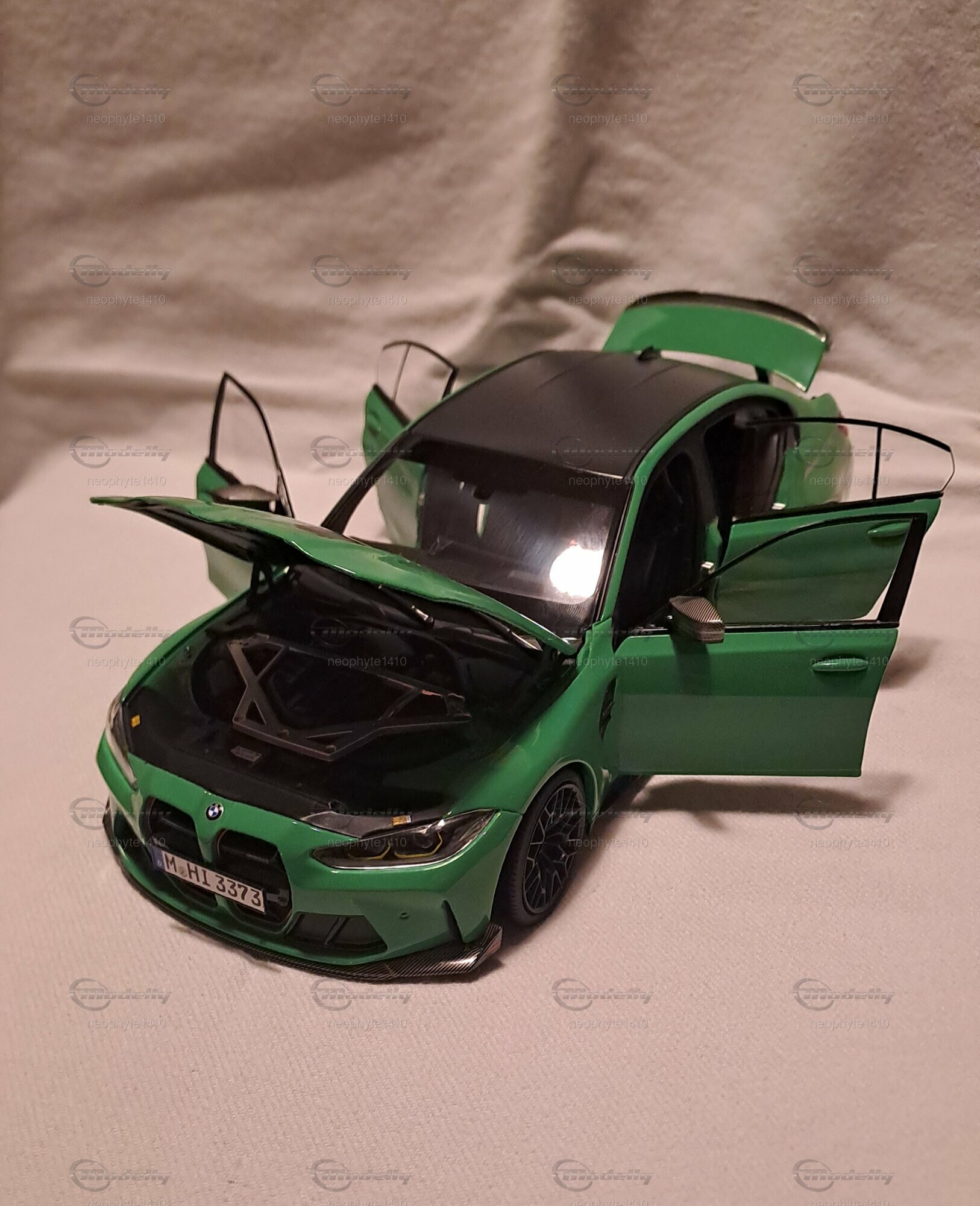
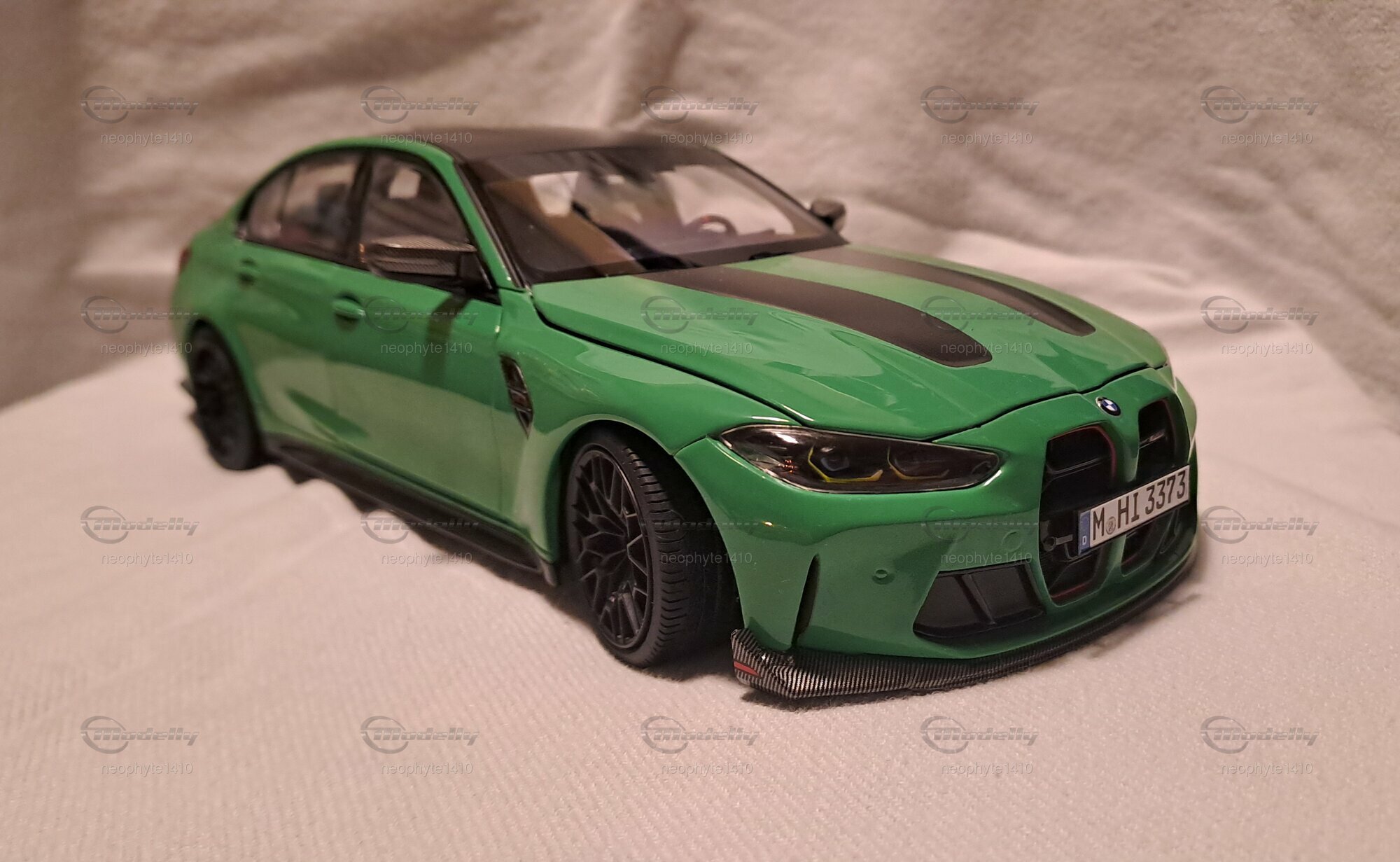
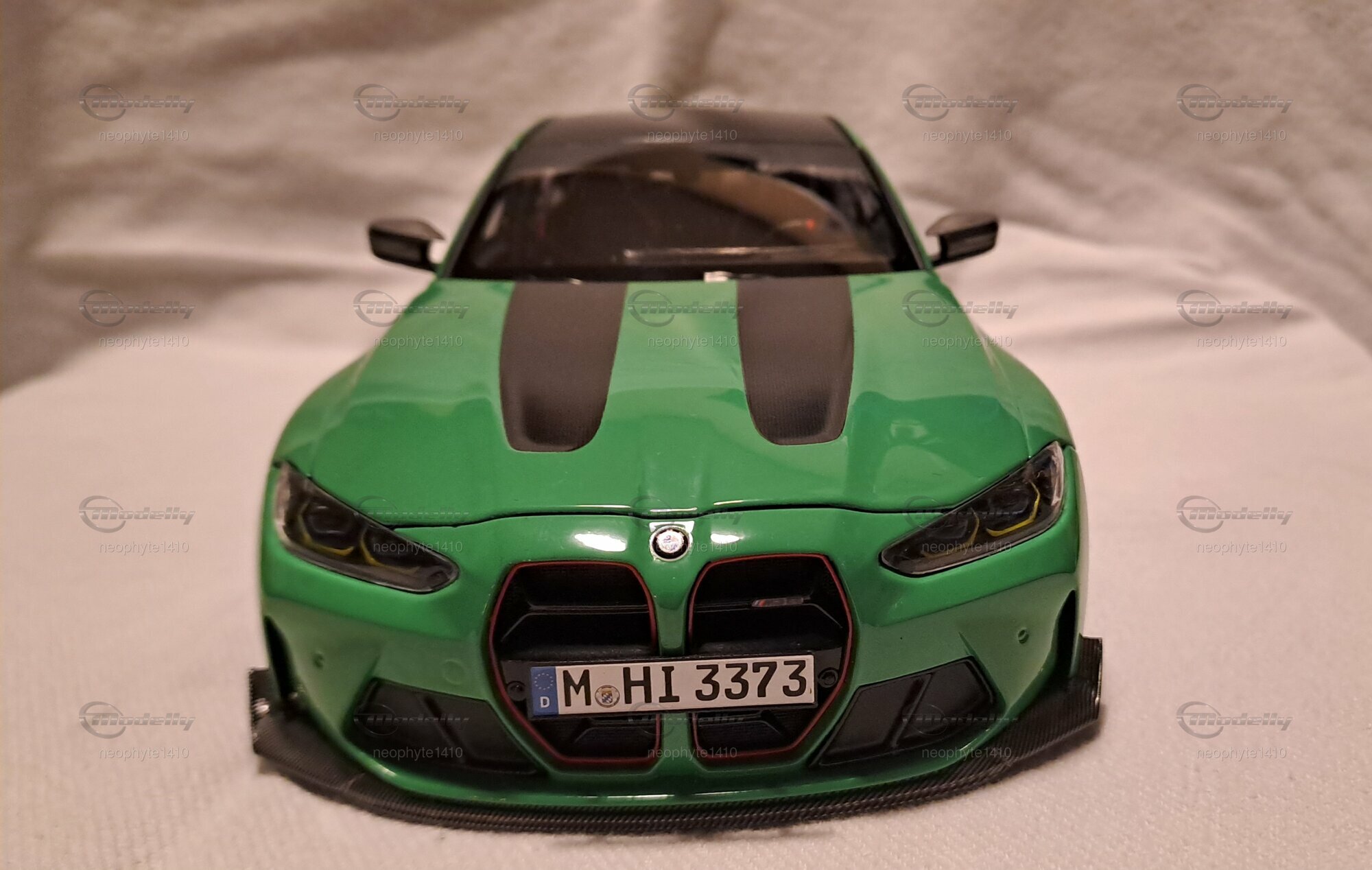
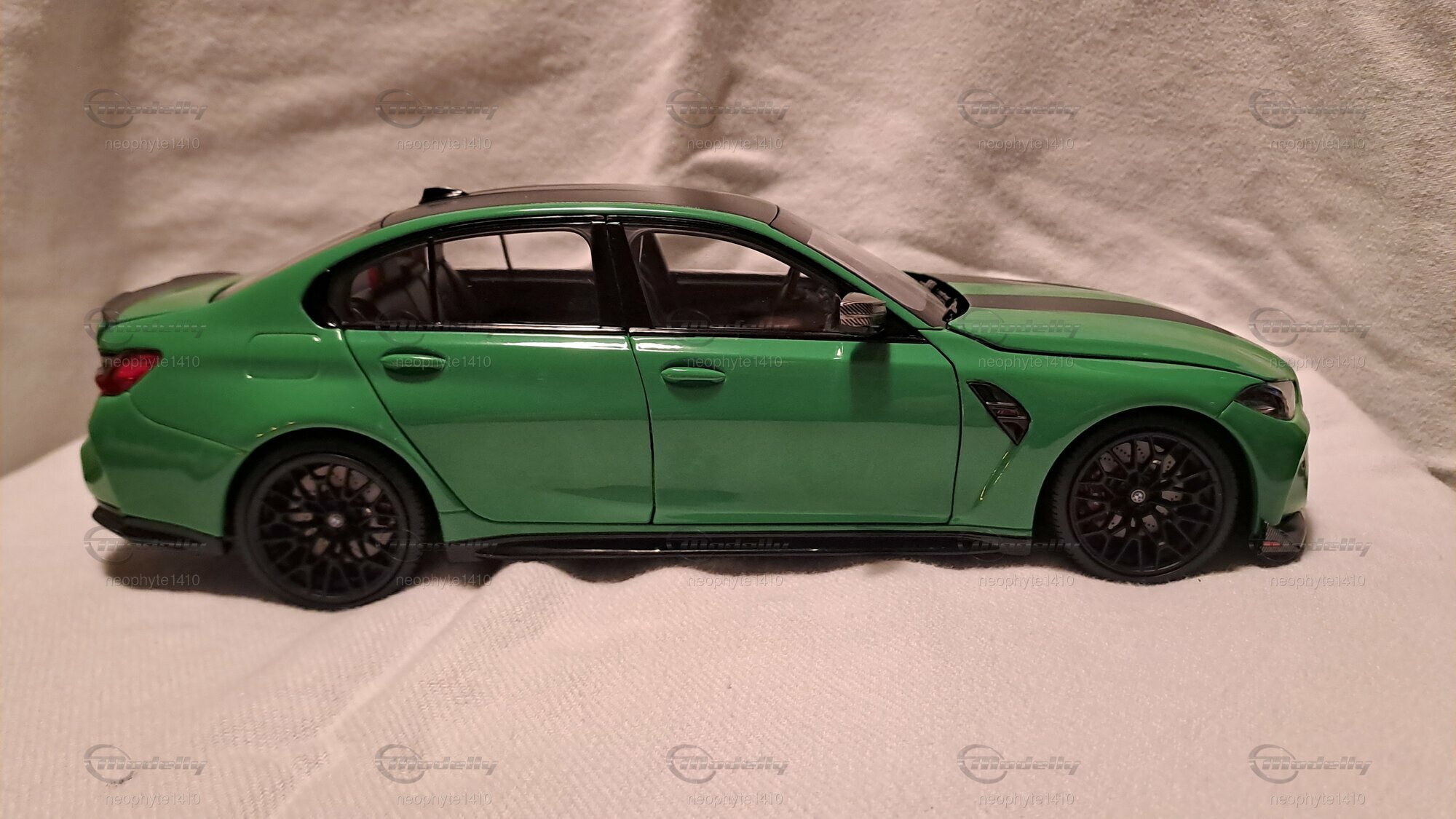
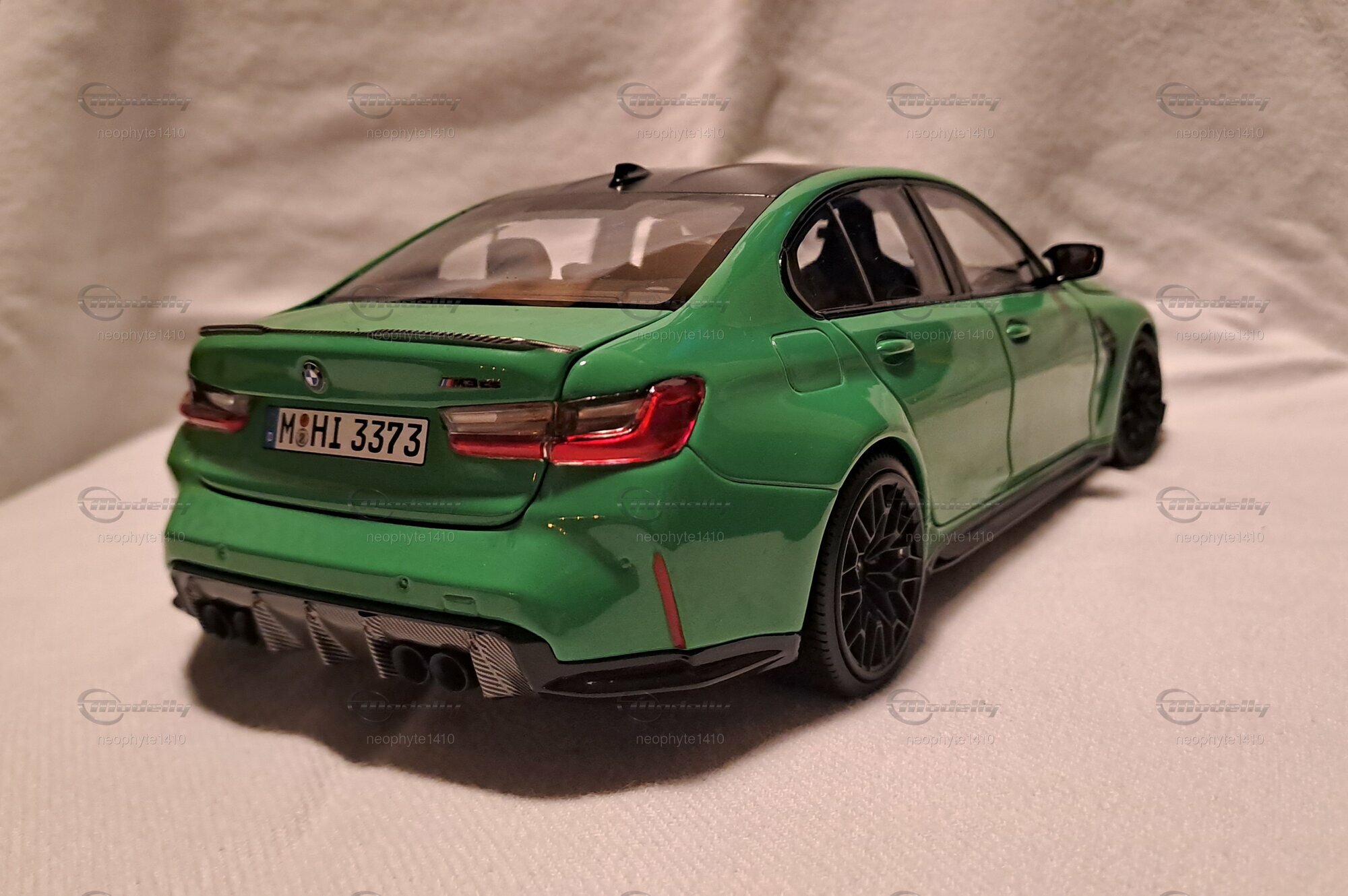
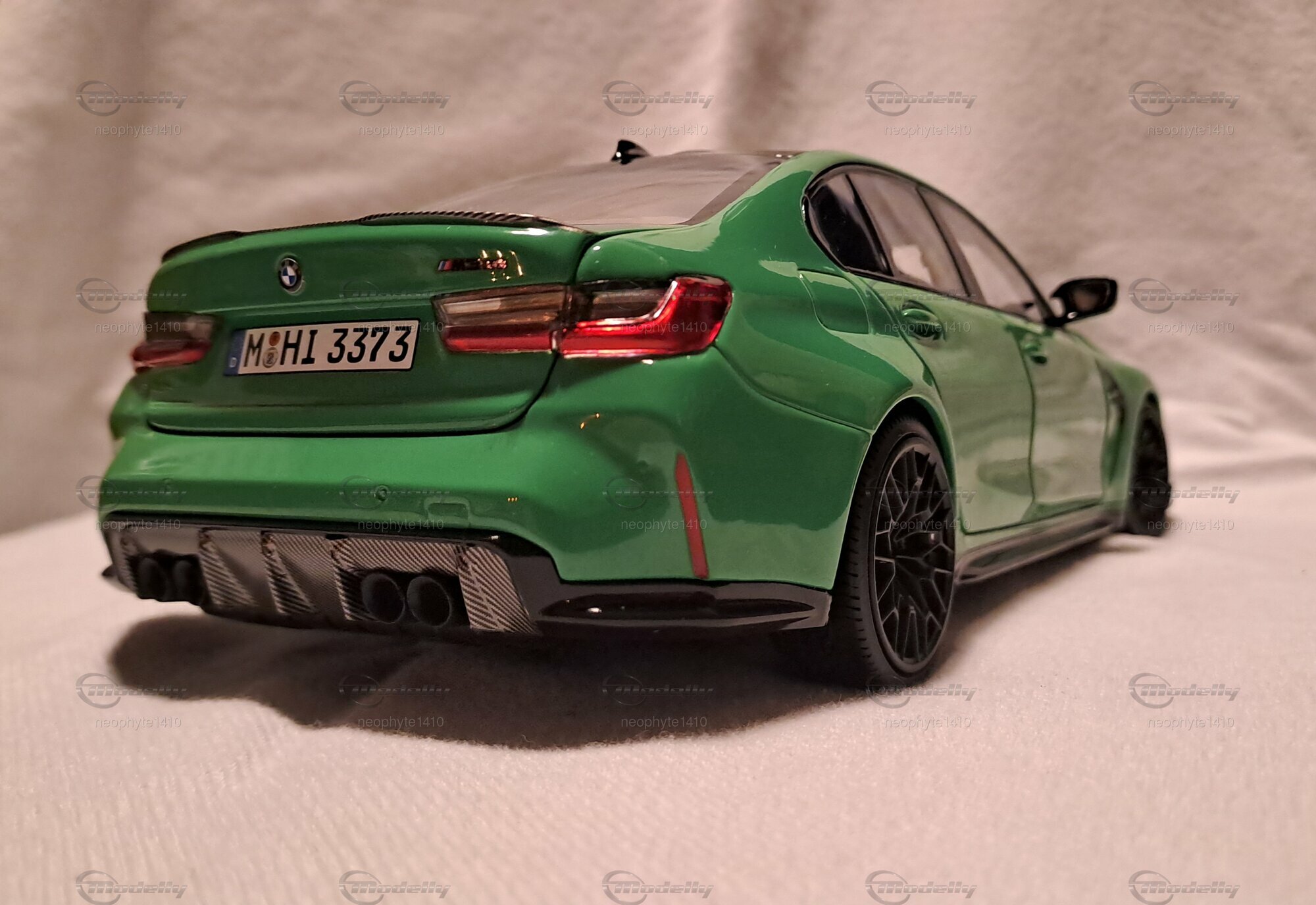
The photos show a 1/18-scale model by Minichamps, part of the collection of Modelly member “neophyte1410.” It’s a diecast model with opening parts. The hood, four doors and trunk lid are shown open. Under the hood you can see a stylized reproduction of the S58 with the X-shaped strut brace, cover panels and simplified cables and hoses. The front has the CS’s red grille trim, large air intakes and yellow-tinted light guides in the headlights. From the side you’ll notice black sills and multi-spoke matte-black wheels with low-profile tires. The cabin is clearly visible through the open driver’s door: suggested M sport seats, harnesses, a three-spoke wheel and a center console with a gear selector are all noticeable. The rear features a separate decklid spoiler that echoes the original’s CFRP lip. Small details like carbon-look mirror caps and front splitter accents are well-represented. The license plate “M‑HI 3373” fits the era of the car. As a diecast 1/18 piece, the model has a solid weight and well-fitting opening parts. Proportions are faithful for display—roofline, wide fenders and short overhangs look correct in scale.
Color, visible details and tips for collectors
The paint on this particular model leans toward a strong green tone that on the real car would be called Signal Green or an Individual color in some markets. You’ll spot black panels on the hood and a black roof—both calling back to the CS’s CFRP components. Up front there’s a carbon-look splitter and small dive planes; at the rear there’s a matching spoiler. The headlights show the yellow rings for the daytime-light signature, a CS-specific touch. The smooth surface and sharp edges capture the big intakes’ geometry; the M gills are hinted at on the flanks. The wheels copy the forged M design with different front and rear diameters; drilled discs are visible behind the spokes. For collectors it’s nice that the doors open wide so you can see the cabin details—stitching, seat contours and seatbelts are all suggested. Carbon texture on mirrors, front lip and sills is tastefully done. Since the real car is a special CS model, the red grille trim and yellow light accents make the model instantly identifiable. No film or TV tie-ins are known for this specific car—it’s unlikely to be linked to any famous production. For care, use a soft cloth—those dark elements show dust easily. If you want scale consistency in your display, this diecast 1/18 piece pairs well with other M cars from the same era. The material choice gives the model a reassuring heft while keeping movable parts nicely adjustable. In neophyte1410’s collection it sits as a current-era G80 representative that captures the CS’s key visual cues in miniature.
- Write a first comment about this model now!Any comment can be discussed by all members. It's like a chat.Mention other Modelly members by using @ in your message. They will then be informed automatically.
- Write a first comment about this model now!Any comment can be discussed by all members. It's like a chat.Mention other Modelly members by using @ in your message. They will then be informed automatically.