
Ford GT40 MK II(diecast 1:18, Exoto Racing Legends)
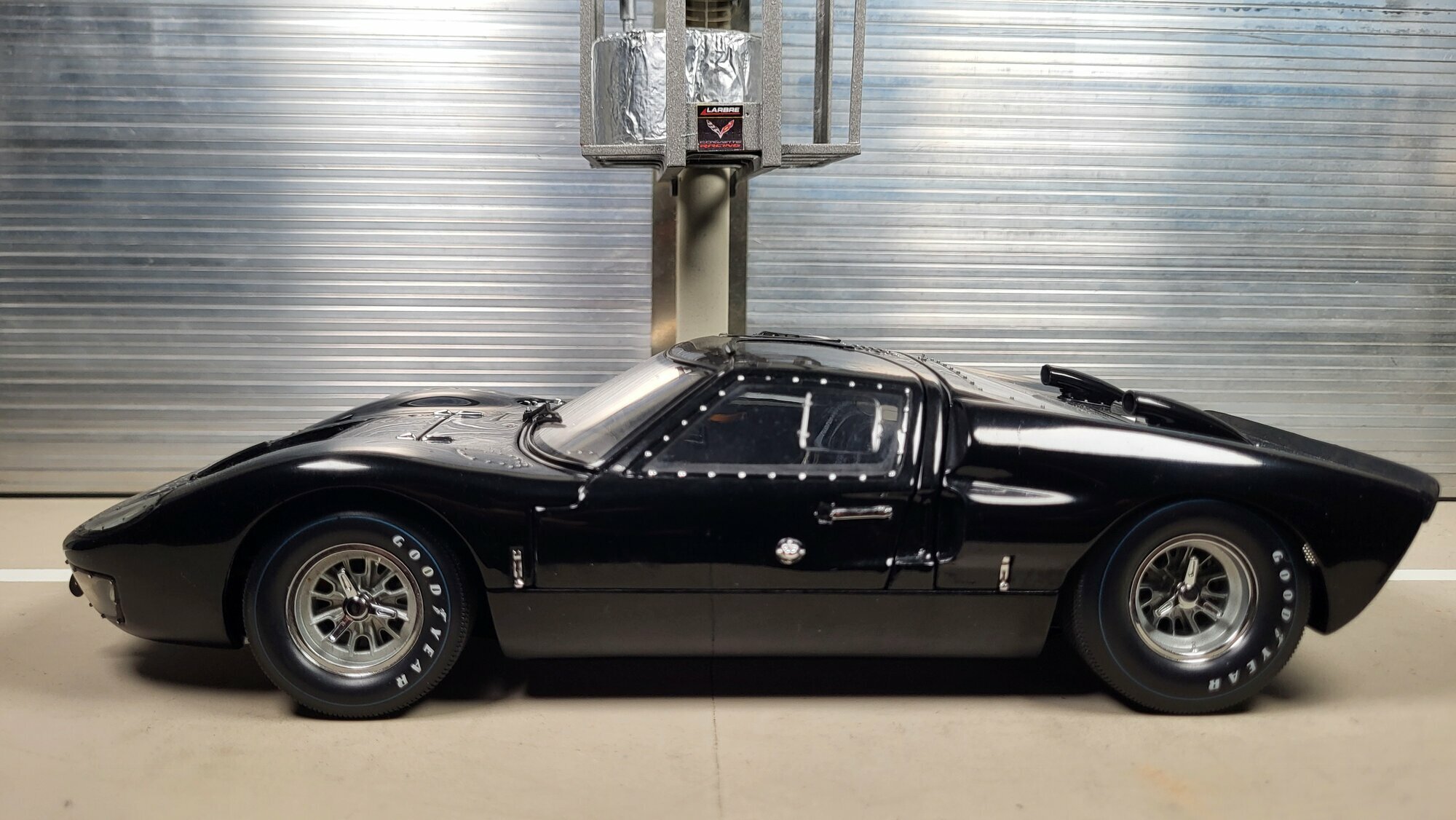
- Ford GT40 MK II (from 1966)
- Exoto Racing Legends
- 1:18
- Showcase model / No engine
- diecast
- black
- 18040
- Not specified
- Not specified
- Not for sale
Historical context and technical placement of the original
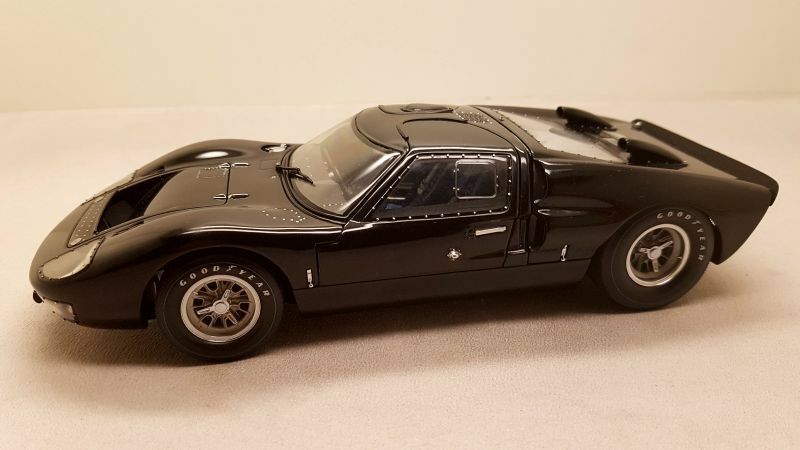
The original this model is based on is the Ford GT40 Mk II, an evolution of the endurance race car that Ford used to dominate the big 24‑hour races in the mid‑1960s. The MK II generation was created to improve reliability and power over the Mk I and was built in 1966–1967. The concept was developed by the British Ford Advanced Vehicles team together with Ford’s US teams. Key contributors included Roy Lunn, John Wyer and Eric Broadley; on the American side, Carroll Shelby and test/driver Ken Miles were heavily involved in development and race work. The Ford GT40 Mk II used a 7.0‑liter (1.85 gallons) Ford FE 427 V8 with a single camshaft, dry‑sump lubrication and a multi‑carburetor setup. Output was around 485–500 PS depending on tune. Power went through a beefed‑up T‑44 four‑speed transaxle from Kar‑Kraft. The chassis was a steel monocoque with a fiberglass body, all‑round disc brakes and big cooling systems for endurance racing. Distinctive Mk II features you can spot in the photos include the wider intake snouts and extra cooling inlets on the front and rear. The direct predecessor was the Mk I; conceptually the Lola Mk6 GT also influenced it.
Racing history and timeframe
The Ford GT40 Mk II is famous for Ford’s 1‑2‑3 finish at the 24 Hours of Le Mans in 1966, where Ford beat Ferrari. The Mk II also did well at the 24 Hours of Daytona and Sebring, proving that a big US V8 paired with European aerodynamics could work on long distance tracks. Depending on gearing it could hit just over 320 km/h (199 mph), weighed about 1,200 kg (2,645 pounds) race‑ready, and at Le Mans ran clear headlight covers and quick‑release front and rear hatches. For broader context: 1966 was the year England won the World Cup, Star Trek premiered in the US, and Luna 9 and Surveyor 1 achieved early soft landings on the Moon — helps place when the Ford GT40 Mk II showed up. On the tech side, the Mk II typically had fuel tanks distributed along the sills, double‑wishbone suspension front and rear with adjustable dampers, and magnesium race wheels with center locks for fast pit stops. Aerodynamics featured a flat nose, NACA ducts and a sleek tail.
The model in Phat‑T’s collection
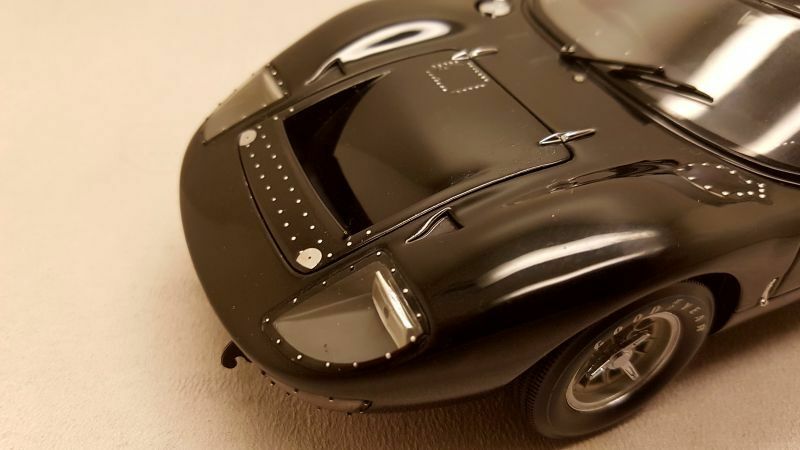
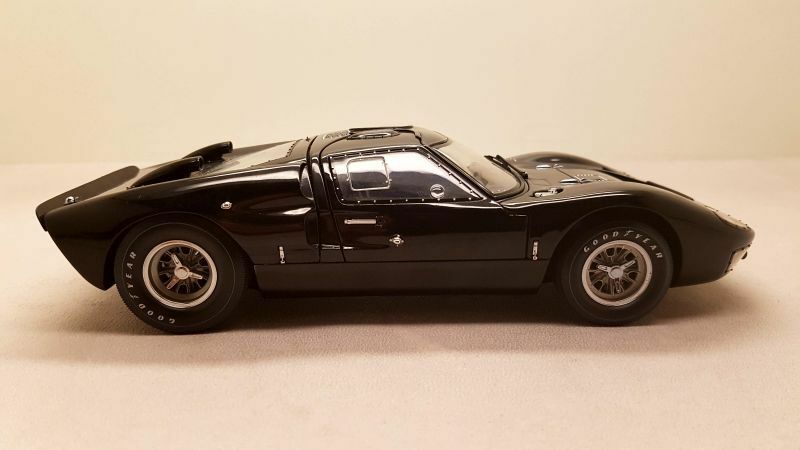
The miniature shown comes from collector “Phat‑T.” It’s a 1/18-scale model by Exoto Racing Legends. The body is diecast metal, noticeable from the tight panel gaps and solid finish. The model represents the Ford GT40 Mk II in a full black paint job without race numbers. You can see the rivet‑style window frames, the intake openings on the front hood and the trademark quick‑release fasteners that let the real car be opened quickly for service. Two upward‑pointing intake stacks on the rear deck hint at the Mk II’s characteristic peripheral mods — that detail shows up clearly in the photos. The headlight covers are clear, and there are little auxiliary lights in the front. The tires have readable “Goodyear” logos; the classic center‑lock spinners are reproduced. The proportions — very low roofline, cockpit pushed forward and flowing fenders — match the look of the Ford GT40 Mk II. Through the side windows you can make out seat belts, a delicate steering wheel and a dash. The rows of rivet details around the windshield frame are visible in the photos and add to the racey feel. This 1/18-scale Exoto Racing Legends model fits nicely into collections focused on 1960s Le Mans prototypes.
Facts, paint and collector relevance
The model’s paint is deep black, with no stripes or race numbers, which really highlights the Ford GT40 Mk II’s shape: the rounded front fender peaks, the flat falling nose with integrated NACA inlets, and the slightly raised rear with the engine‑bay outlet. Small silver details like hood hinges, locks and fuel fillers are tasteful accents. The wheels are a multi‑spoke style with a center nut, matching the era’s tech; the tires have a visible bead in keeping with an endurance setup. For collectors it matters that this is a diecast model, so it has some heft. Many visible parts — the headlight covers, little locking pins and exhaust outlets — are finely reproduced, which helps sell the race‑ready look of the real Ford GT40 Mk II. The real car had tech details like four‑piston disc brakes, 15‑inch wheels, roughly 160 liters (42.3 gallons) of fuel capacity and gearing aimed at endurance speeds. The simple black finish of Phat‑T’s model draws attention to those construction details and makes it a well‑documented example of that racing era.
- Write a first comment about this model now!Any comment can be discussed by all members. It's like a chat.Mention other Modelly members by using @ in your message. They will then be informed automatically.
- Write a first comment about this model now!Any comment can be discussed by all members. It's like a chat.Mention other Modelly members by using @ in your message. They will then be informed automatically.