
Ford GT40 Mk II 'X-1' Roadster(diecast 1:18, Exoto Racing Legends)
- Ford GT40 Mk II 'X-1' Roadster (from 1966)
- Exoto Racing Legends
- 1:18
- Showcase model / No engine
- diecast
- Authentic Blue
- 19047
- Not specified
- Not specified
- Not for sale
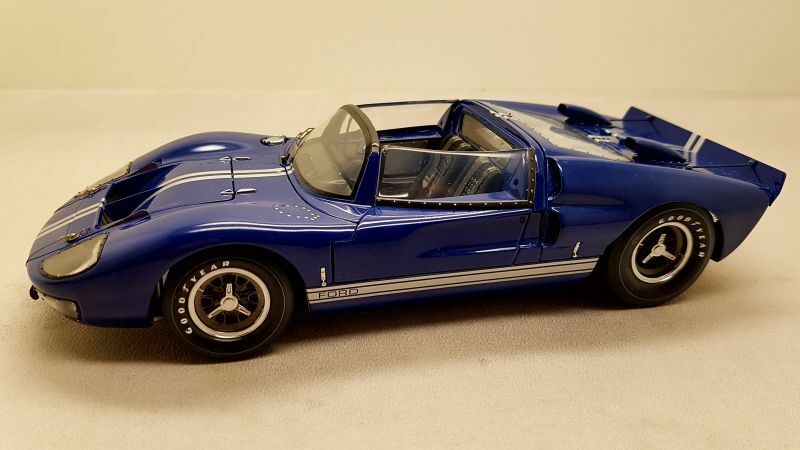
Model in Phat‑T’s collection: a roadster classic in scale
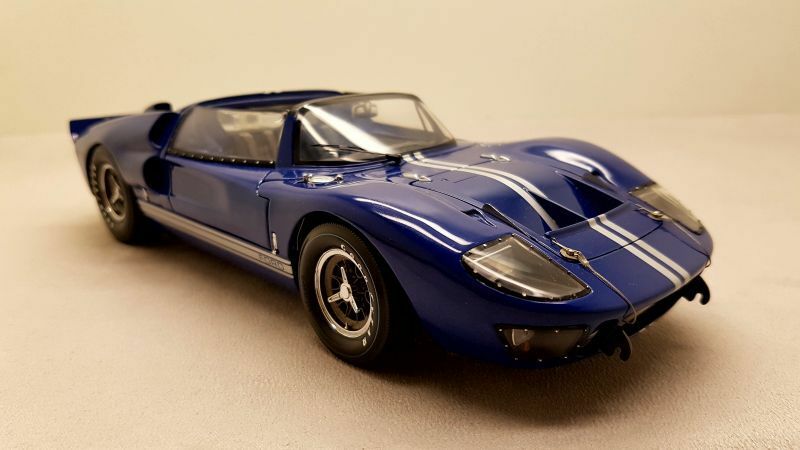
This model car is part of model‑collector “Phat‑T”’s collection and represents the Ford GT40 Mk II X-1 Roadster in 1/18 scale. It was made by Exoto Racing Legends, known for detailed replicas of historic race cars. The photos show the open cockpit shape, the distinctive air intakes and the low, streamlined nose of the real thing. The miniature is made of diecast metal, which gives it solid weight and allows for tight panel gaps. Doors and hatches aren’t open on this example, but you can clearly see the fasteners, rows of rivets on the windshield frame and the delicate headlight covers. The FORD badge on the side stripe, the three‑wing central spinners and the molded tire sidewalls with Goodyear lettering are other visible details that reference the race car. The low windscreen and the specific shape of the roadster’s rear spoiler are also well reproduced in the model.
Historical background and development of the original
The Ford GT40 Mk II X-1 Roadster came out of Ford’s program to win endurance races like Le Mans. The GT40 line itself grew from work by Ford Advanced Vehicles and Lola Cars. Key contributors were designer Eric Broadley, Ford chief engineer Roy Lunn and aerodynamicist Len Bailey. The Ford GT40 Mk II X-1 Roadster belongs to the Mk II generation, which was built starting in 1966. Its direct predecessor was the GT40 Mk I, whose chassis geometry, basic layout and many components were carried over and beefed up for the stresses of long‑distance racing. The GT40 Mk II X-1 Roadster was a special open‑cockpit version with lightweight bodywork, created for certain regulations and testing purposes. It later received the Mk‑II hardware with a big V8, which put it on the map internationally in 1966.
Technical data and design features
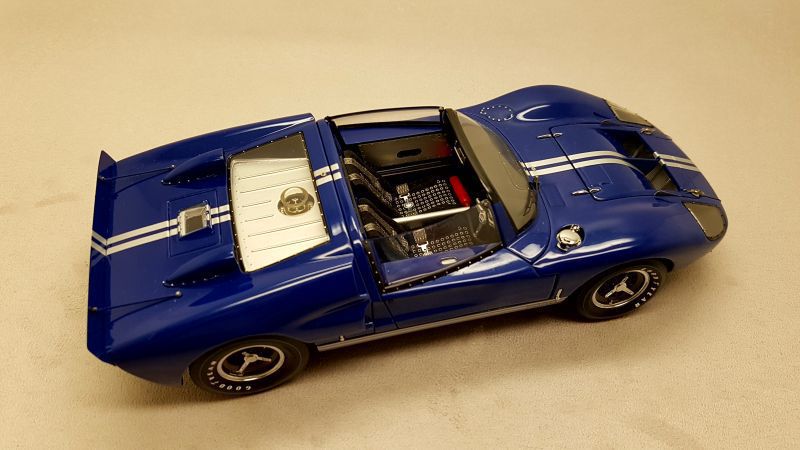
The Ford GT40 Mk II X-1 Roadster, like the other Mk‑II cars, used the 7.0‑liter Ford FE V8 (427 cui) — that’s 7.0 liters (1.85 US gallons) — with overhead valves, a dry‑sump lubrication system and multi‑carburetor induction. Power figures varied by tune; in endurance trim they were around 355–365 kW (about 476–489 hp), mated to the rugged Kar‑Kraft T‑44 four‑speed transaxle. The steel‑sheet monocoque with bonded and riveted panels was lightened on the roadster, but the open body meant extra reinforcements in the sills and windshield area — which explains the visible rivet rows on the model’s frame. Suspension was double‑wishbone up front and back with uniball joints and adjustable dampers. Girling disc brakes on all four corners handled the stopping duties, and the three‑wing wheel spinners allowed quick pit‑lane changes. In Le Mans spec the Mk‑II cars reached top speeds of over 320 km/h (over 199 mph); the GT40 Mk II X-1 Roadster benefited from its open body and low drag on tracks with long acceleration sections. The piece in Phat‑T’s collection shows these traits well: low front hood with central intake, external hood fasteners, side radiator inlets and the pronounced rear deck with a small integrated spoiler.
Racing results, appearances and notable drivers
The Ford GT40 Mk II X-1 Roadster scored one of its key results at the 12‑hour Sebring race in 1966. Raced by Shelby American, the car won with drivers Ken Miles and Lloyd Ruby — a result that proved the Mk‑II drivetrain’s durability and the brakes’ endurance. That same year the Mk‑II generation played a major role in Ford’s historic Le Mans 1‑2‑3 victory, with drivers like Bruce McLaren and Chris Amon taking overall honors. Drivers such as Denny Hulme and Ken Miles also stood on the podium at Le Mans that season. The GT40 Mk II X-1 Roadster itself campaigned mainly as an open prototype on North American endurance events and doubled as a testbed for aero and tire work — including collaborations with Goodyear.
Other famous names in the program included Dan Gurney, Pedro Rodríguez and Richie Ginther. The 1966 season showed that the combo of a 7‑liter engine, a strong gearbox and efficient cooling gave Ford the edge over European rivals. The GT40 Mk II X-1 Roadster followed a different aero approach from the coupes but gave teams easier access to the mechanics and better visibility for drivers. Mk‑II hardware was later used in follow‑on developments, while Mirage prototypes also borrowed the GT chassis. The successes of the GT40 Mk II X-1 Roadster are tightly linked to Ford’s overall program that beat Ferrari and reshaped endurance racing in both North America and Europe.
Paint, visible details and how the model is executed
The model shown in 1/18 scale by Exoto Racing Legends wears a dark blue paint with a pair of narrow white double stripes running down the center over the nose, cockpit and tail. A white GT side stripe with a “FORD” script runs along the flank. The front has the teardrop‑shaped headlight lenses, secured hood fasteners and that characteristic air‑flowing snout. The flanks feature recessed radiator inlets and the bulging fender edges behind the doors are well defined. The wheels are multi‑piece, with dark centers and polished rims; the three‑wing center nuts stick out slightly. The tires carry the Goodyear name in white, matching period photos. In the cockpit you’ll notice the low windscreen frame with finely modelled rivets and the simple rollover protection behind the seats. The rear, with its short fin and engine cover, follows the roadster spec. The proportions feel right and show how incredibly low the real car was — the actual vehicle was only about 1 meter (3.28 feet / 39.37 inches) tall. For collectors: the parts are neatly fitted, the white stripes run clean and the clear lenses are free of visible flaws. The diecast replica is a solid display piece for a shelf or for subtle weathering work. As part of Exoto Racing Legends’s line it clearly references the real car without unnecessary extras, giving collectors like “Phat‑T” a faithful representation of the Ford GT40 Mk II X-1 Roadster in 1/18 scale that captures its historic tech and racing look.
- Write a first comment about this model now!Any comment can be discussed by all members. It's like a chat.Mention other Modelly members by using @ in your message. They will then be informed automatically.
- Write a first comment about this model now!Any comment can be discussed by all members. It's like a chat.Mention other Modelly members by using @ in your message. They will then be informed automatically.