
Chevrolet Corvette C2 Pro Mod Monster Dragster(1:43, Kentucky Legend)
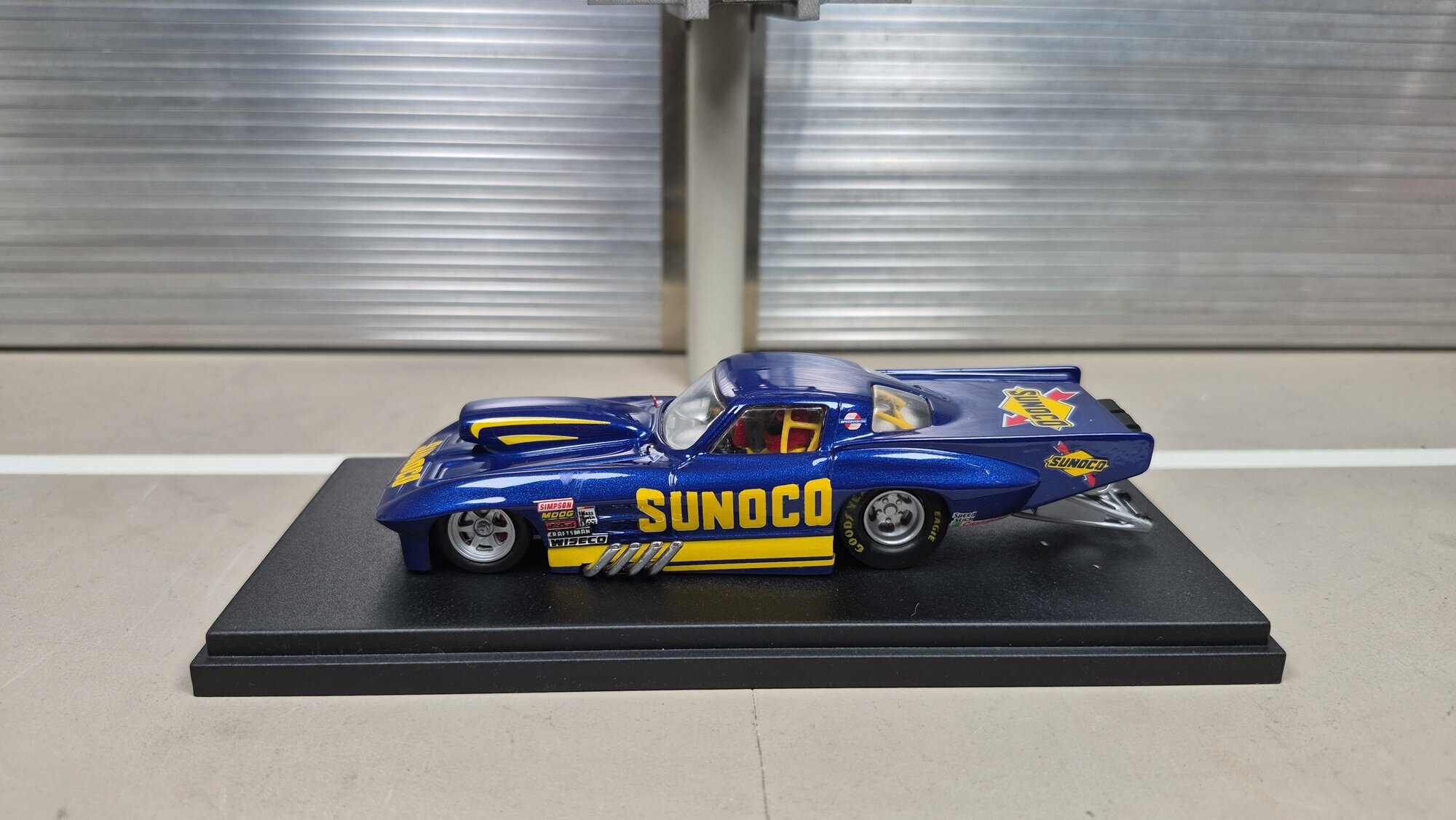
- Chevrolet Corvette C2 Pro Mod Monster Dragster (from 1963)
- Kentucky Legend
- 1:43
- Showcase model / No engine
- resin
- blue
- Not specified
- Not specified
- Not for sale
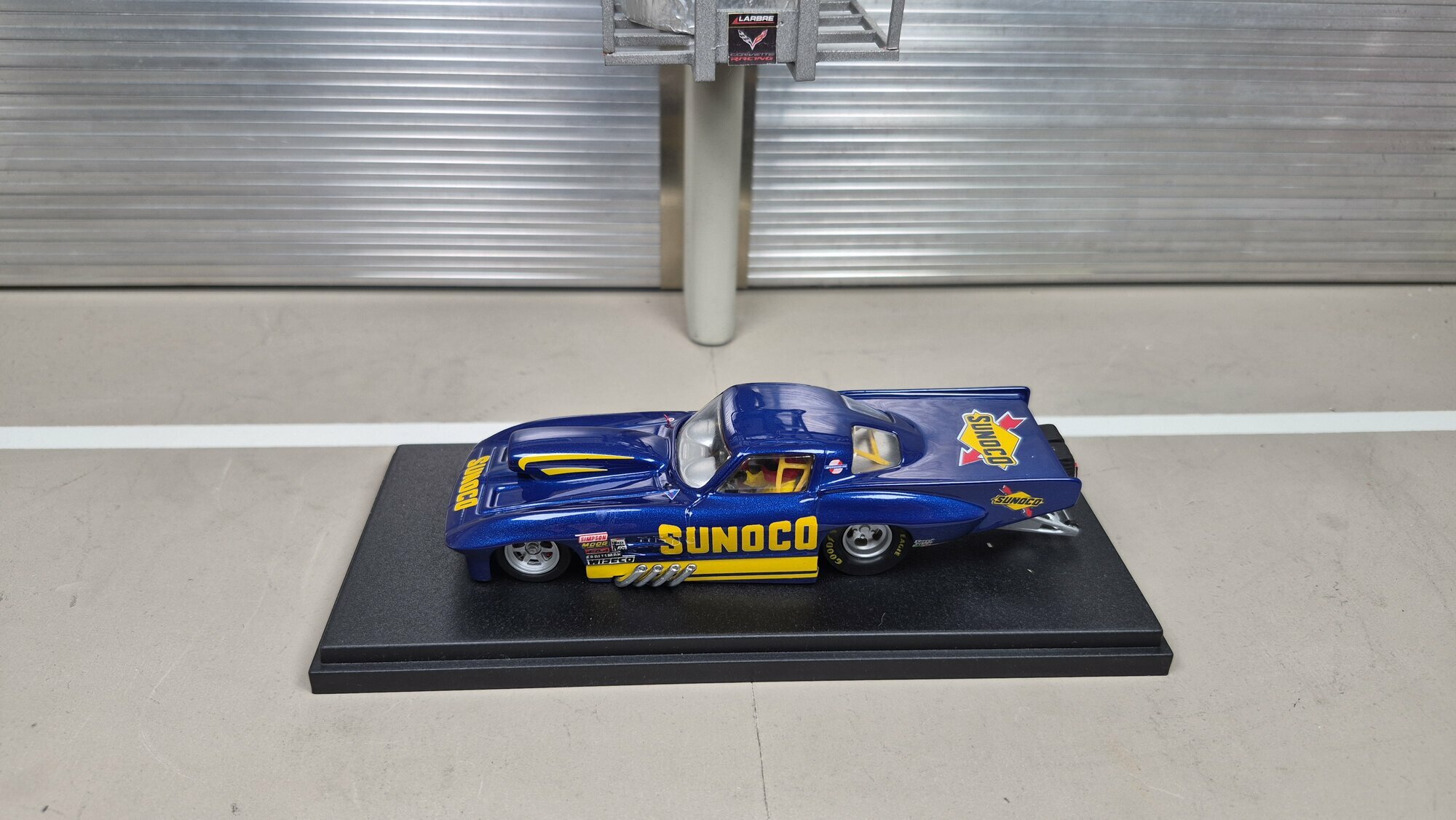
Chevrolet Corvette C2 as the base: a Pro Mod drag-racing build
The model shown clearly draws on a heavily modified Chevrolet Corvette C2, meaning the second Corvette generation, known internally as the Sting Ray. This generation was built from 1963 to 1967 and followed the C1. In terms of the generation, the C2 is the one that matters here, and in stock form it’s one of the most iconic American sports cars of the 1960s thanks to its short cabin, pronounced fenders, and long front end. The original C2 was developed under General Motors design chief Bill Mitchell; key design work also came from Larry Shinoda, while Zora Arkus-Duntov had a huge influence on the Corvette’s technical direction. But the version shown in this mini is not a stock street car—it’s a dragster-style, Pro Mod-style conversion based on the C2. That kind of build has been common in the U.S. drag-racing scene for years. These cars often kept only the Corvette’s recognizable body shape, while underneath they had a tube-frame chassis, race suspension, huge rear tires, and a drivetrain built for straight-line acceleration. The C2 was especially popular for show and competition builds because its shape is so well known and its proportions work really well as a shell for quarter-mile cars.
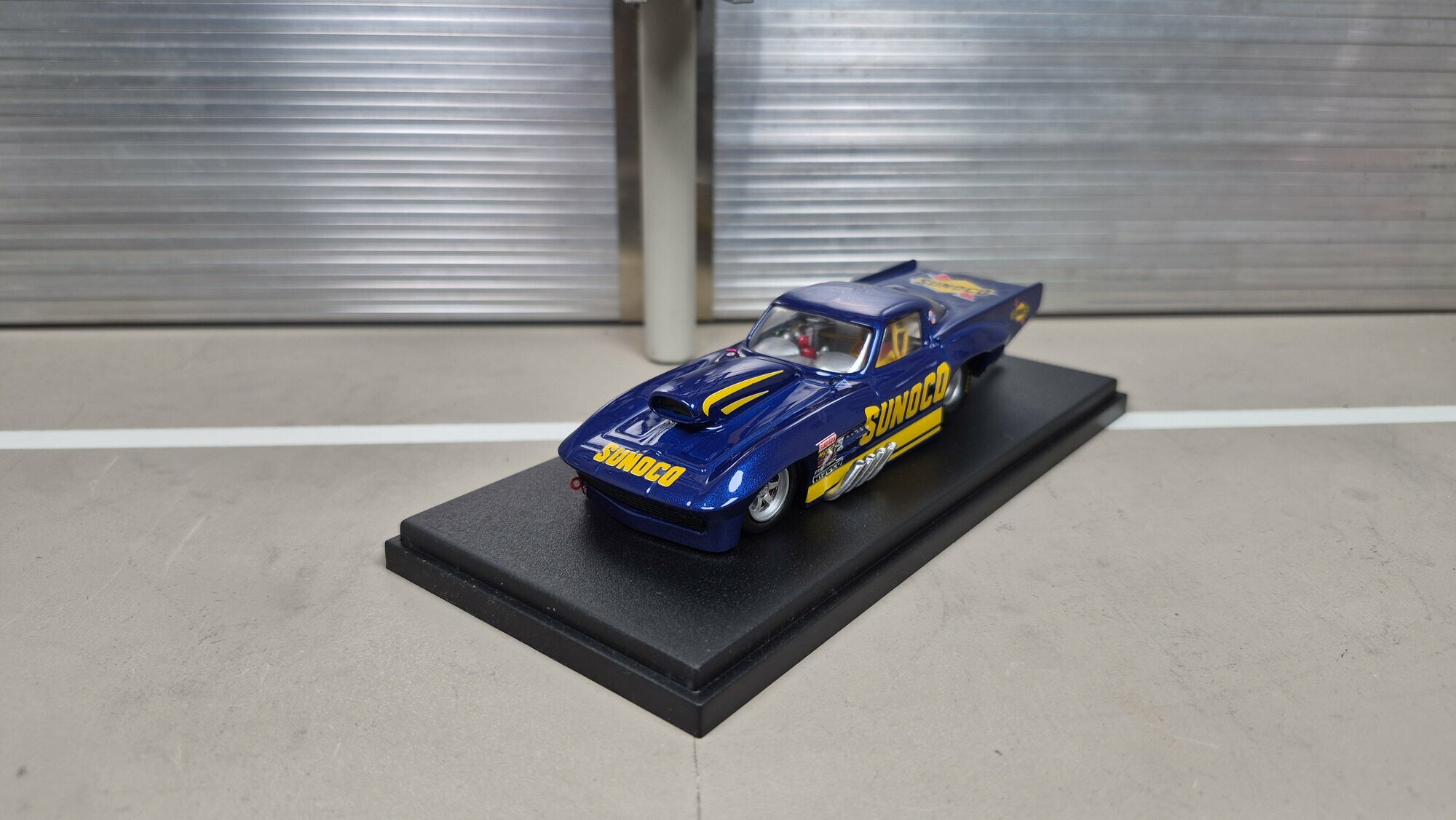
The original’s tech: tube frame, big-block power, and Pro Mod traits
While a stock Chevrolet Corvette C2 came with Small-Block and Big-Block V8 options, including 327 and 427 cubic inch engines, a Pro Mod or monster dragster build went in a much wilder direction. Typical setups used fiberglass or lightweight bodies, a modified or stretched chassis, extremely wide rear slicks, a solid or specially controlled rear axle, race brakes, a safety cage, and often a driving position shifted farther back. Depending on the era, big-displacement V8s with superchargers, mechanical fuel injection, or later turbochargers and nitrous setups were used. Power outputs well over 1,000 hp were nothing unusual in those classes. Visual cues on the model like the big hood scoop, the side-exit exhaust pipes, the tall rear tire coverage, and the wheelie bar at the back all fit that kind of technical setup. In drag cars like this, the focus was on traction, weight balance, and putting huge torque to the ground reliably. That explains the low front end, the skinny front tires, and the much more massive rear axle area. For collectors, the key thing is this: this is not a stock Chevrolet Corvette C2, but a stylized competition version with classic Pro Mod ingredients.
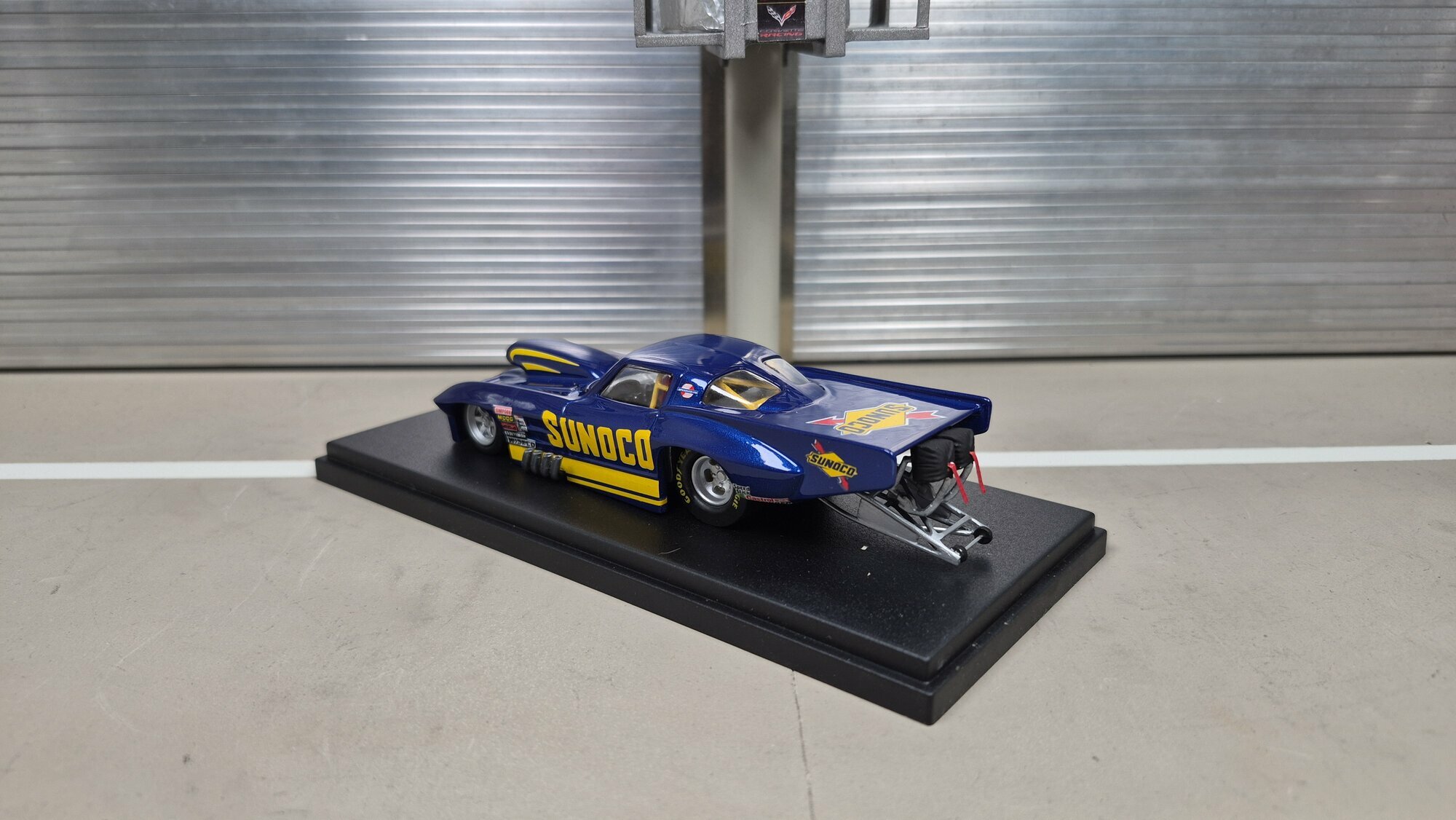
Corvette success in drag racing and notable drivers
The Corvette was never limited to just one kind of motorsport in the U.S. Besides road racing, SCCA events, and endurance racing, there was a long tradition of modified Corvette cars in drag racing. Early generations in particular were used in Super Stock, Gas, Modified Production, and later Pro Street or Pro Mod classes. The C2 body was a natural choice because it’s instantly recognizable and has a pretty good aerodynamic shape to start with. Many of these cars were one-off builds or small-run custom creations, so the technical specs vary a lot. There wasn’t a single factory program for exactly this kind of Pro Mod C2, but there were tons of private and professional teams that used Corvette bodies successfully. So the motorsport importance comes less from one factory car and more from the Corvette’s long-standing presence across different drag-racing classes.
Well-known Corvette names in drag racing show up in several eras. Names like Doug Kruse, John Lingenfelter, or Rickie Jones appear in the wider world of high-powered Corvette race cars, even if not always in exactly the C2 Pro Mod setup shown here. In the scene of show cars, match racers, and modified doorslammers, individual cars were often identified more by team names and sponsors than by a factory model name. That also explains paint schemes like the Sunoco look seen here, which is inspired by classic American racing style. The model also shows smaller sponsor decals, including Simpson, Moog, Craftsman, Wiseco, Goodyear, and Eagle. Those kinds of decals are totally typical for drag cars, where technical suppliers, tire brands, and equipment makers were usually displayed right on the body.
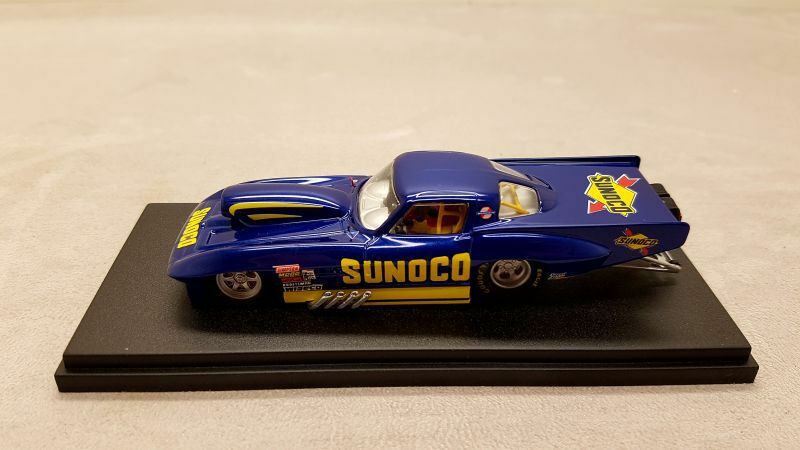
1/43 resin model by Kentucky Legend: styling, paint, and visible details
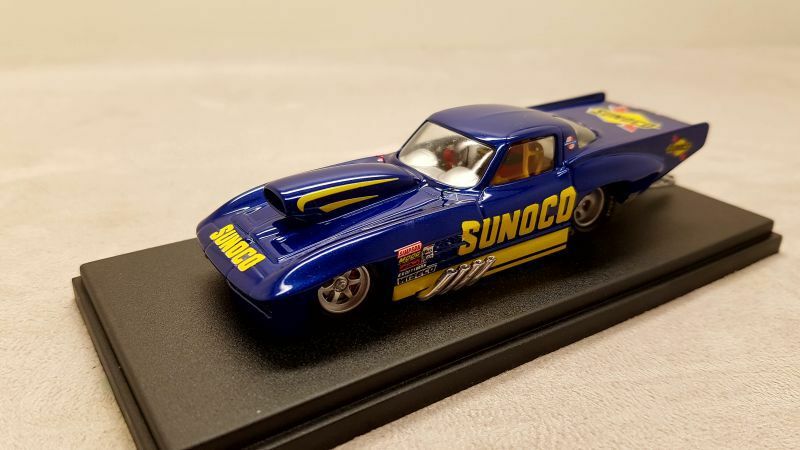
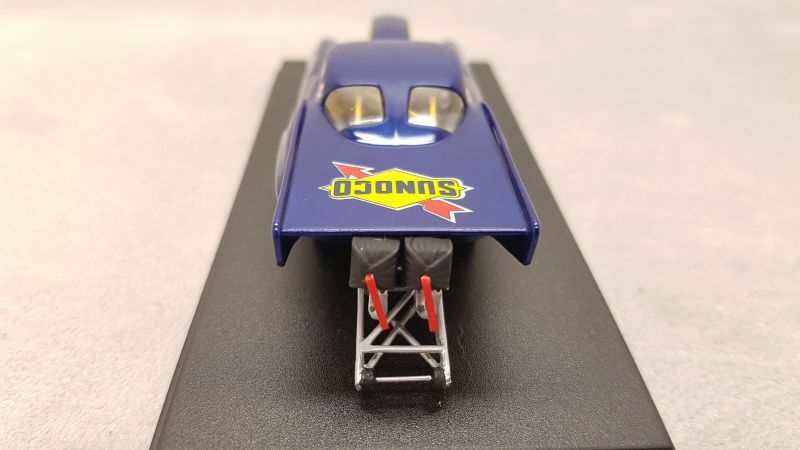
For collectors, the specific version here is especially interesting because it’s a model from the collection of Modelly member “Phat-T.” What you’re looking at is a 1/43 model by Kentucky Legend, mounted on a black display base. The miniature is made of resin, which is commonly used for small-batch models to capture special body shapes and fine proportions without opening parts. The 1/43 model by Kentucky Legend features a dark blue metallic paint job with yellow accents. The big Sunoco lettering on the doors is the main visual element, along with additional Sunoco logos on the front, rear wing, and rear side panels. The color split runs along the lower body with a yellow rocker area; on the hood there are yellow arrow-like graphics beside the scoop. You can also spot silver side pipes, clear windows, a yellow roll cage inside, race seats, and the wheelie-bar setup sticking out at the rear. The tires have sidewall lettering, and the wheels show typical drag-racing proportions with skinny fronts and much wider rears.
A collector’s take on the shape and presence of the mini
From the photos, it’s easy to see how the mini turns the C2’s long nose, deeply sculpted sides, and low roofline into a drag-racing silhouette. The proportions feel tight and well balanced, with the hood, roof, rear end, and tall rear structure all working together nicely. The model’s look is helped a lot by the readable sponsor logos and the high-contrast blue-and-yellow combo, which really stands out on the black base. The shape has a nice straightforward presence: low and wide in front, compact in the middle, and built for traction and stability in back. For collectors of U.S. drag cars, Corvette-based customs, or resin small-batch models, this is a pretty cool piece because it sits right between a classic sports-car form and pure quarter-mile engineering. The visible details on the exhaust, hood scoop, cockpit, and rear bars give the model a clear racing identity and make it instantly recognizable as a drag-racing subject in any 1/43 collection.
- Write a first comment about this model now!Any comment can be discussed by all members. It's like a chat.Mention other Modelly members by using @ in your message. They will then be informed automatically.
- Write a first comment about this model now!Any comment can be discussed by all members. It's like a chat.Mention other Modelly members by using @ in your message. They will then be informed automatically.