
Lotus Esprit Turbo(diecast 1:18, KK Scale)
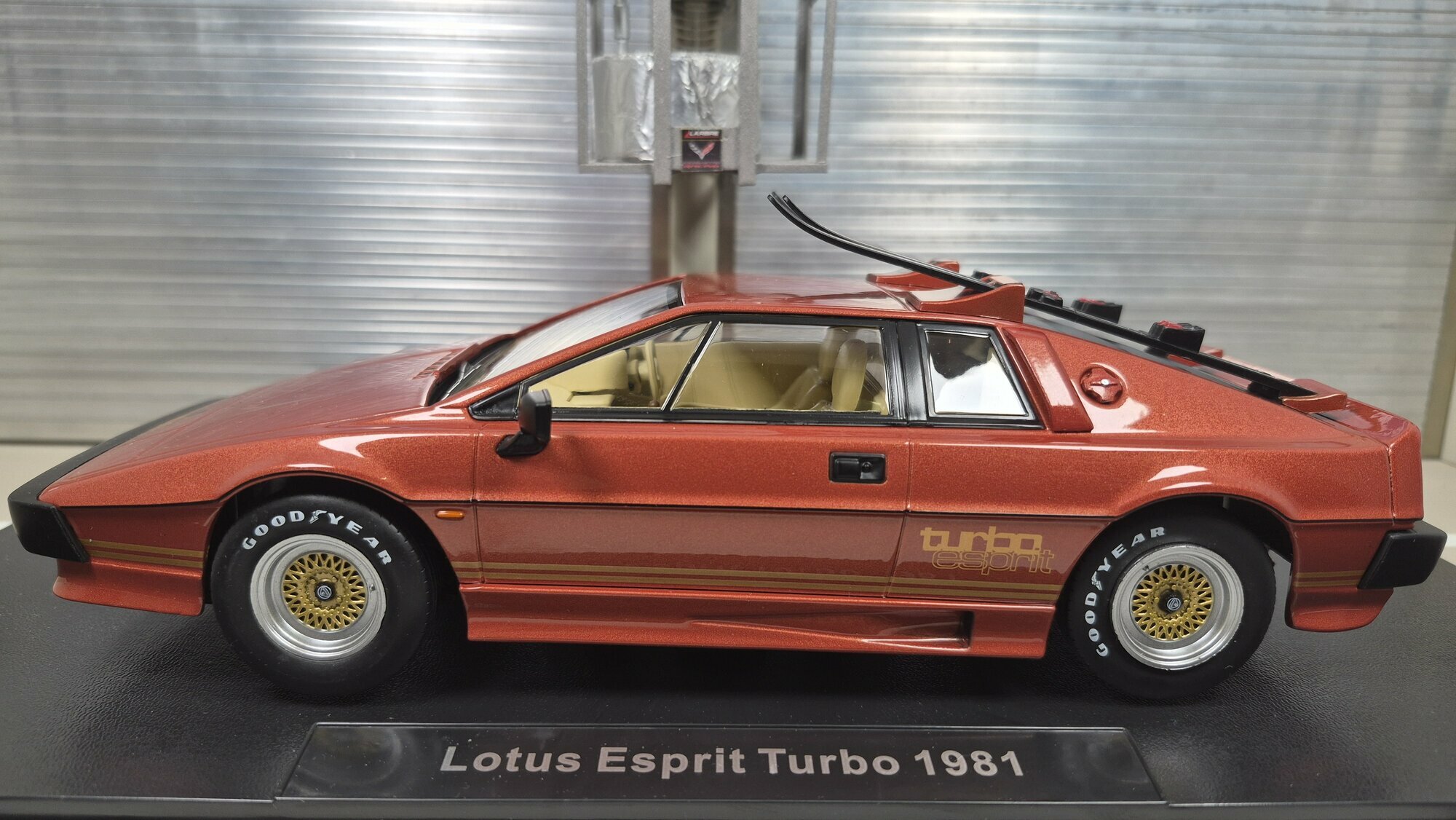
- Lotus Esprit Turbo (from 1981)
- KK Scale
- 1:18
- Showcase model / No engine
- diecast
- Sky Copper & Gold / James Bond 007 – In tödlicher Mission
- KKDC181192
- Perfect mint condition
- Original packaging exists
- Not for sale
Lotus Esprit Turbo 1981: reference model, generation, and historical context
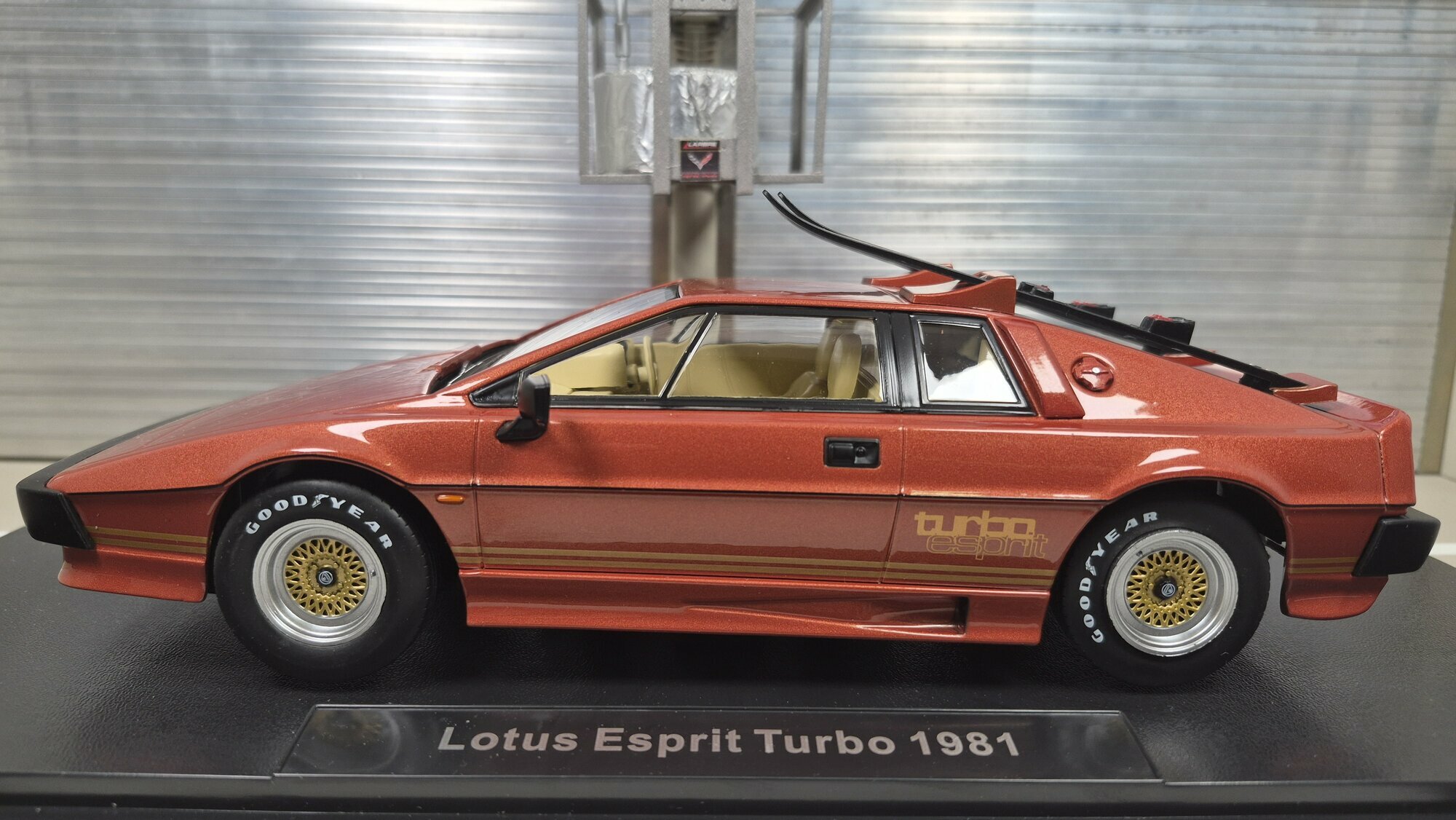
This collectible from Phat-T’s Modelly collection is based on the Lotus Esprit Turbo from the early S3 period. The underlying model line belongs to the 1st generation, built from 1976 onward. The Turbo was introduced in the early 1980s as the more powerful version of the Esprit and, in technical and visual terms, followed the earlier Esprit S2. So the predecessor here is the naturally aspirated Lotus Esprit S2. The wedge-shaped body design was created by Giorgetto Giugiaro, while the engineering development was closely tied to Colin Chapman and the Lotus team in Hethel. The Lotus Esprit Turbo used a longitudinally mounted four-cylinder mid-engine with 2.2 liters (134.3 cubic inches) of displacement and a turbocharger. Depending on the market and version, output was around 210 horsepower, paired with a manual 5-speed gearbox. Typical features included the steel backbone chassis with a fiberglass body, Lotus’s weight-saving approach, and the suspension setup focused on handling stability. To place the car in its time: in 1981, the Space Shuttle Columbia launched for the first time, MTV went on air in the U.S., and songs like “In the Air Tonight” by Phil Collins helped define the era. Little references like that make the car’s historical context easier to picture.
Technical details and body design of the Lotus Esprit Turbo
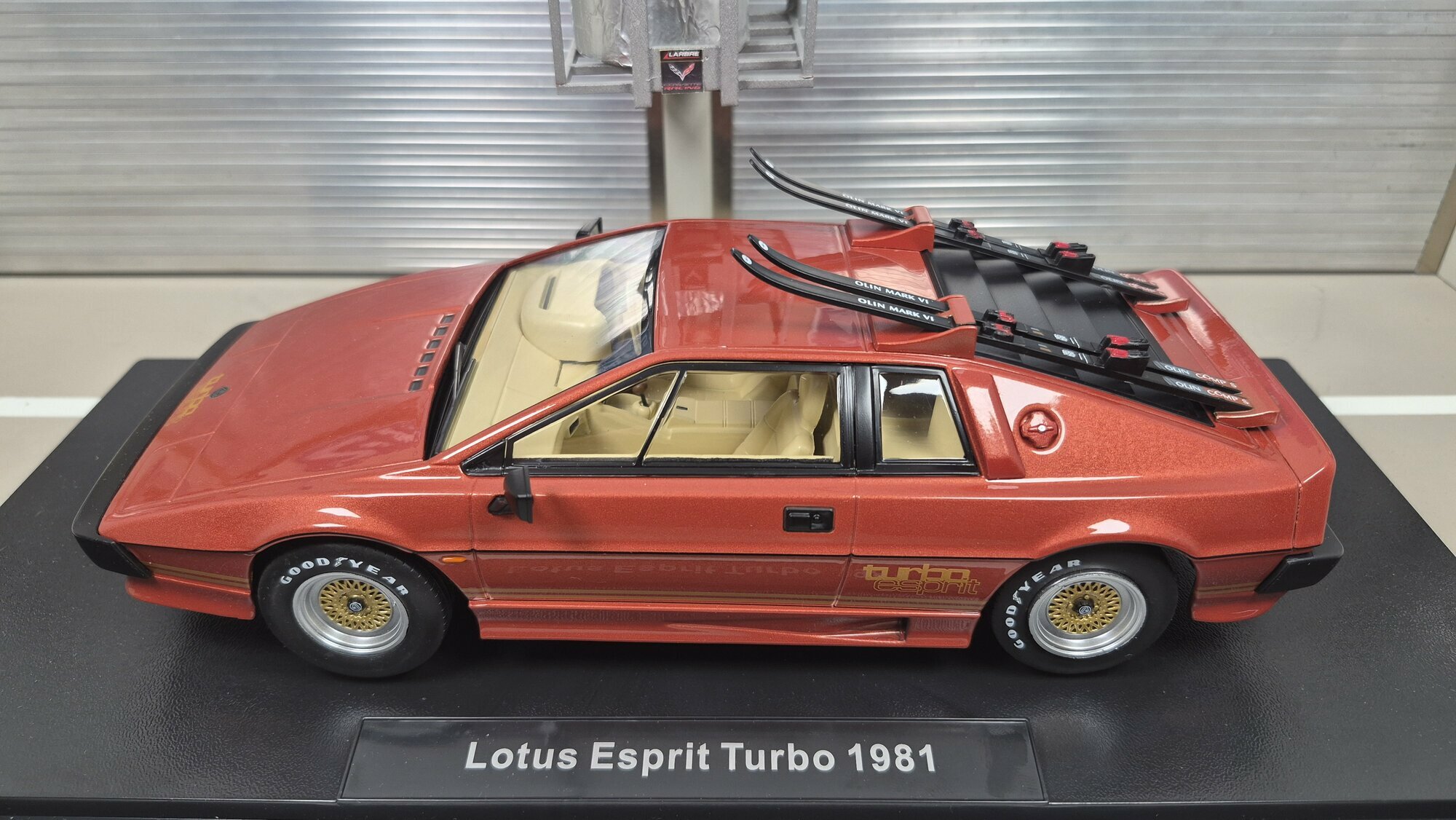
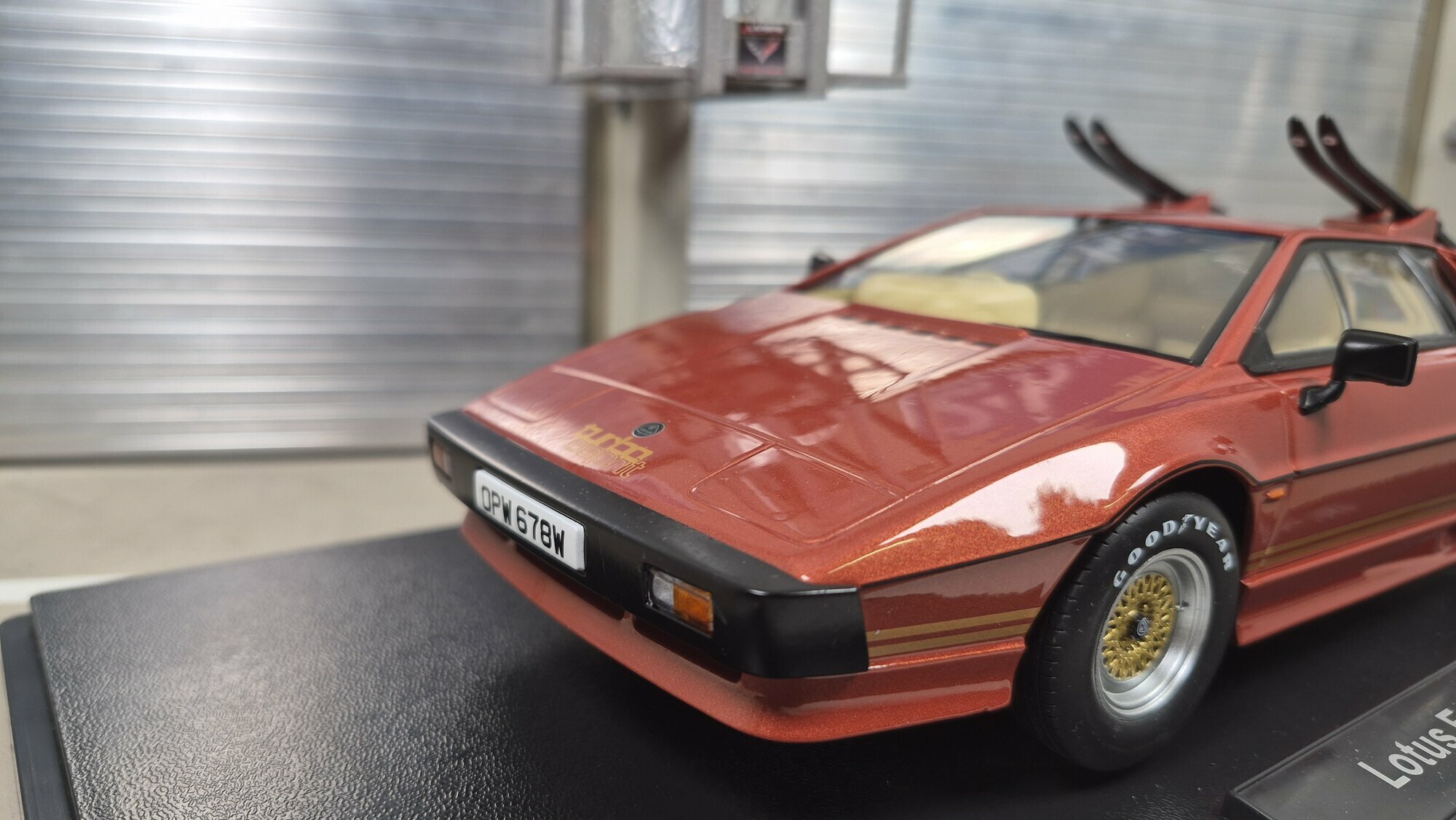
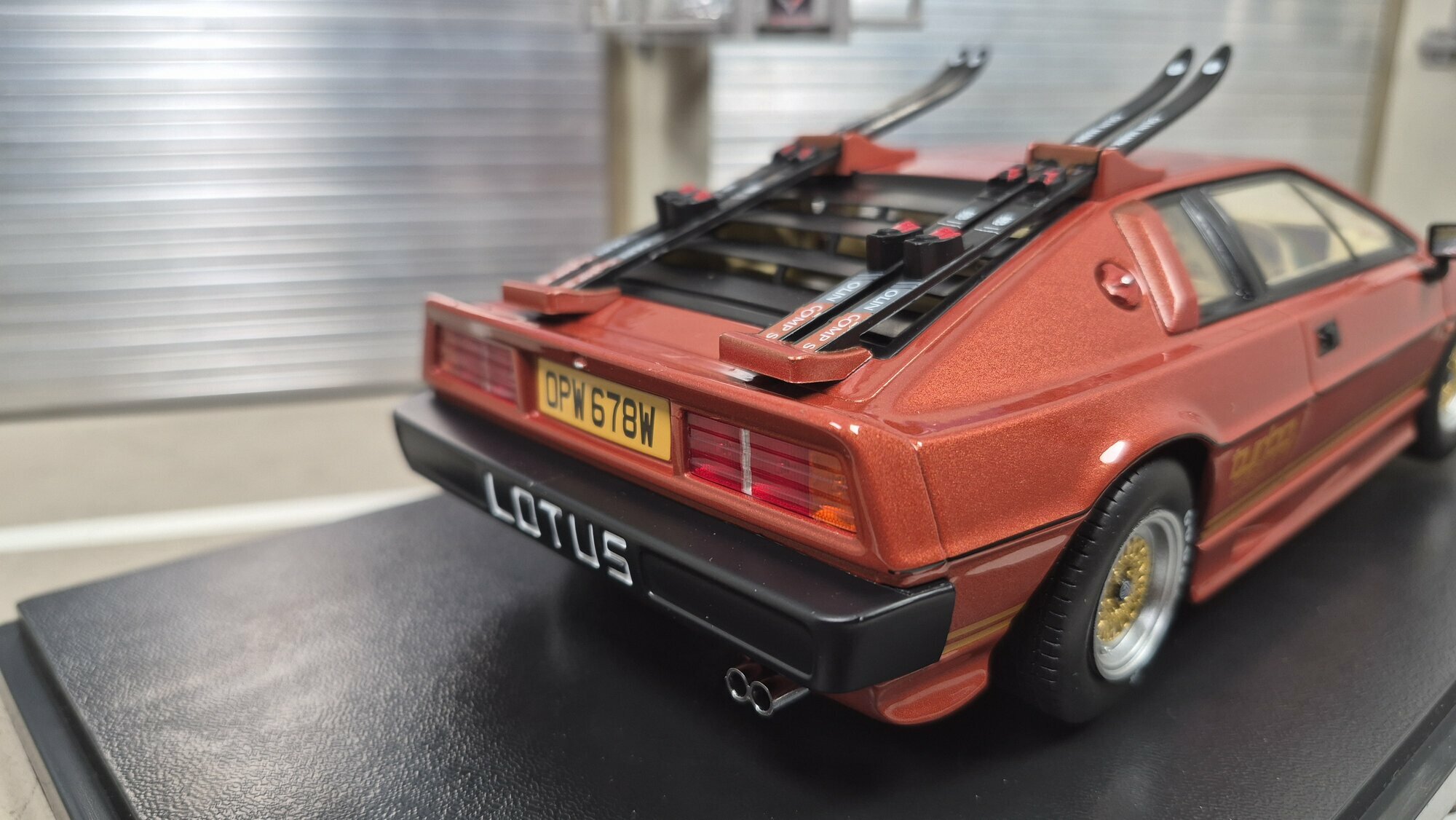
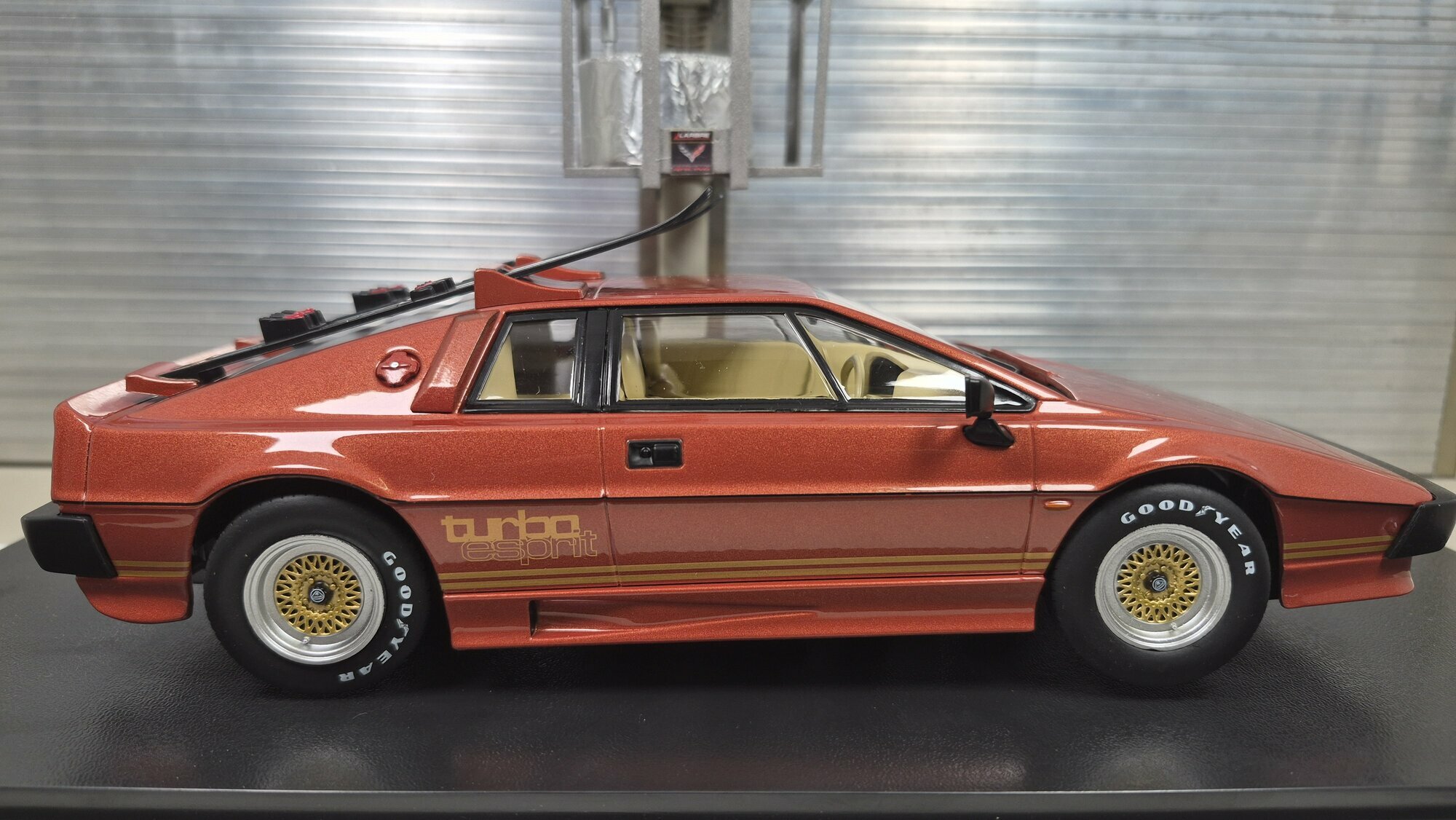
With the Lotus Esprit Turbo, Lotus combined the familiar low Giugiaro silhouette with some functional changes. What stands out are the widened body sections, integrated side skirts, air intakes, and the specific rear end. The turbo engine was based on the Lotus 907/912 family, but got forced induction, which gave the car way more punch than the earlier naturally aspirated versions. The mid-engine setup brought a nice weight balance, while the fiberglass body sat on a backbone chassis, a classic Lotus trait from that era. Disc brakes were used front and rear, and the suspension was tuned for sharp feedback. In many people’s minds, the Lotus Esprit Turbo is also linked to movie cars, but the model shown here doesn’t clearly match any specific film or TV vehicle. Instead, you’re looking at classic road-car details: the flat nose, the distinctive window line, the small rear spoiler, and the gold-colored graphics with the “turbo esprit” lettering along the sides. Those details fit the early Turbo Esprit versions really well and make the car’s era easy to recognize.
1/18 model car by KK Scale: visible build, paint, and materials
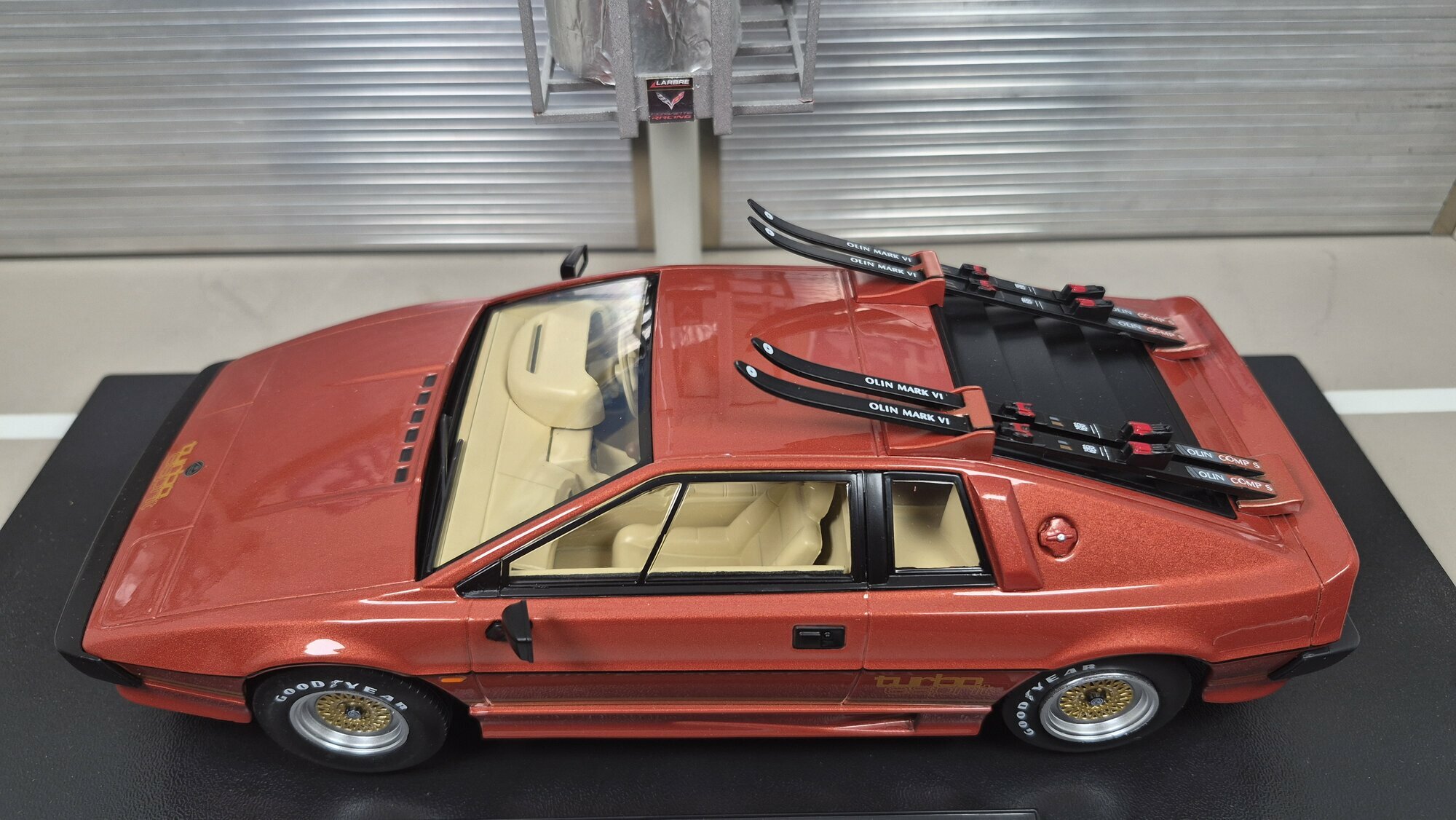
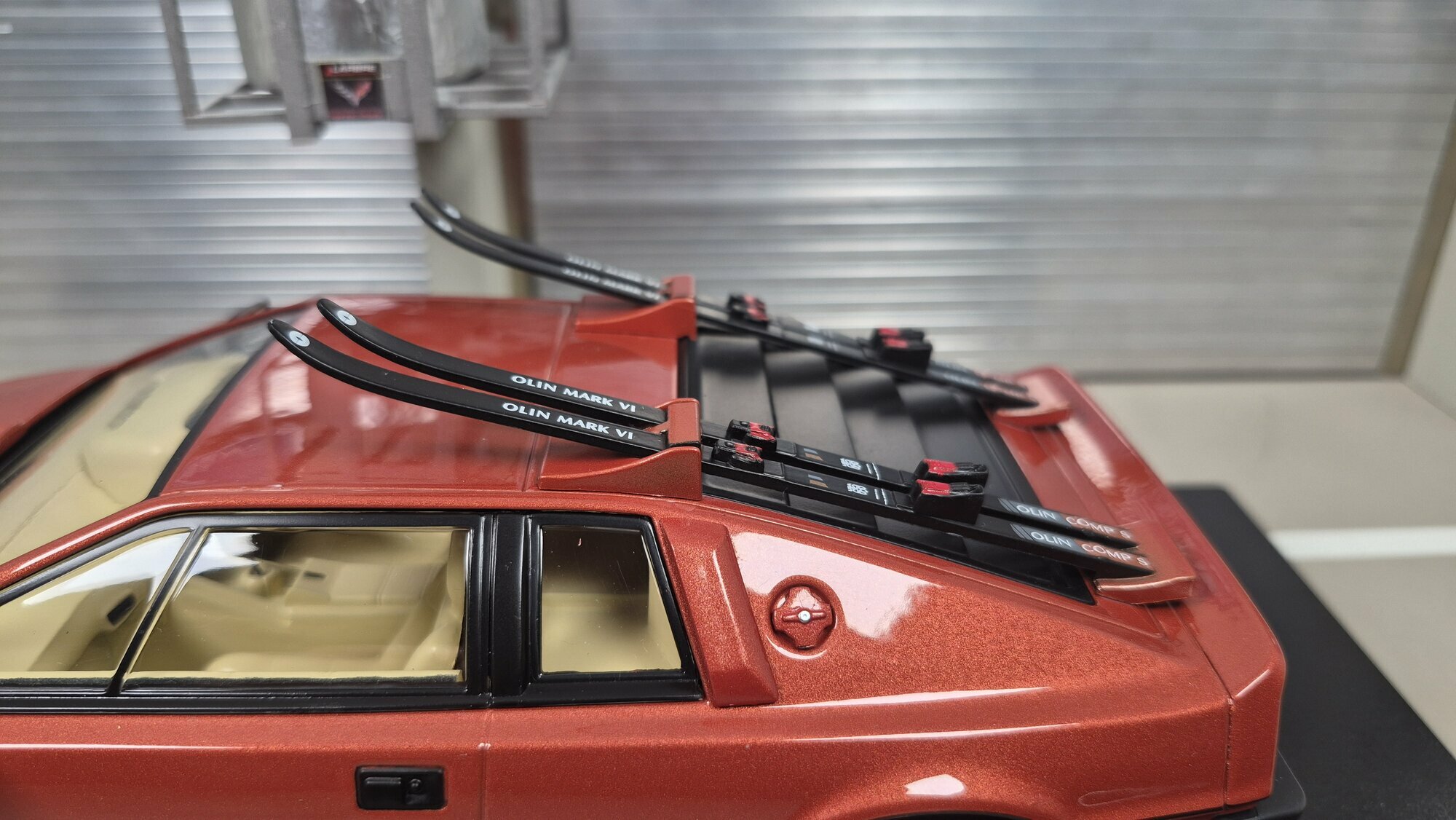
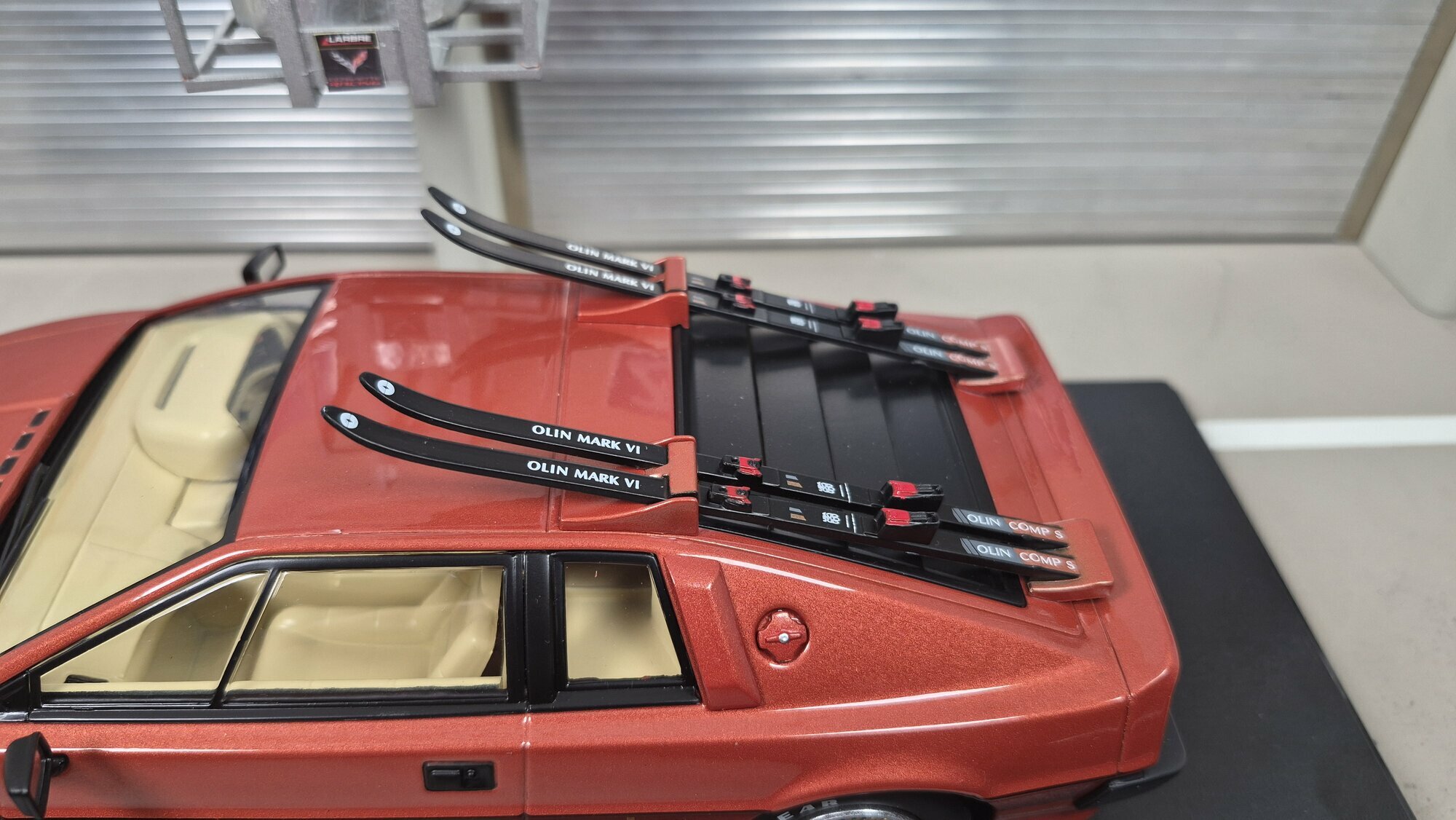
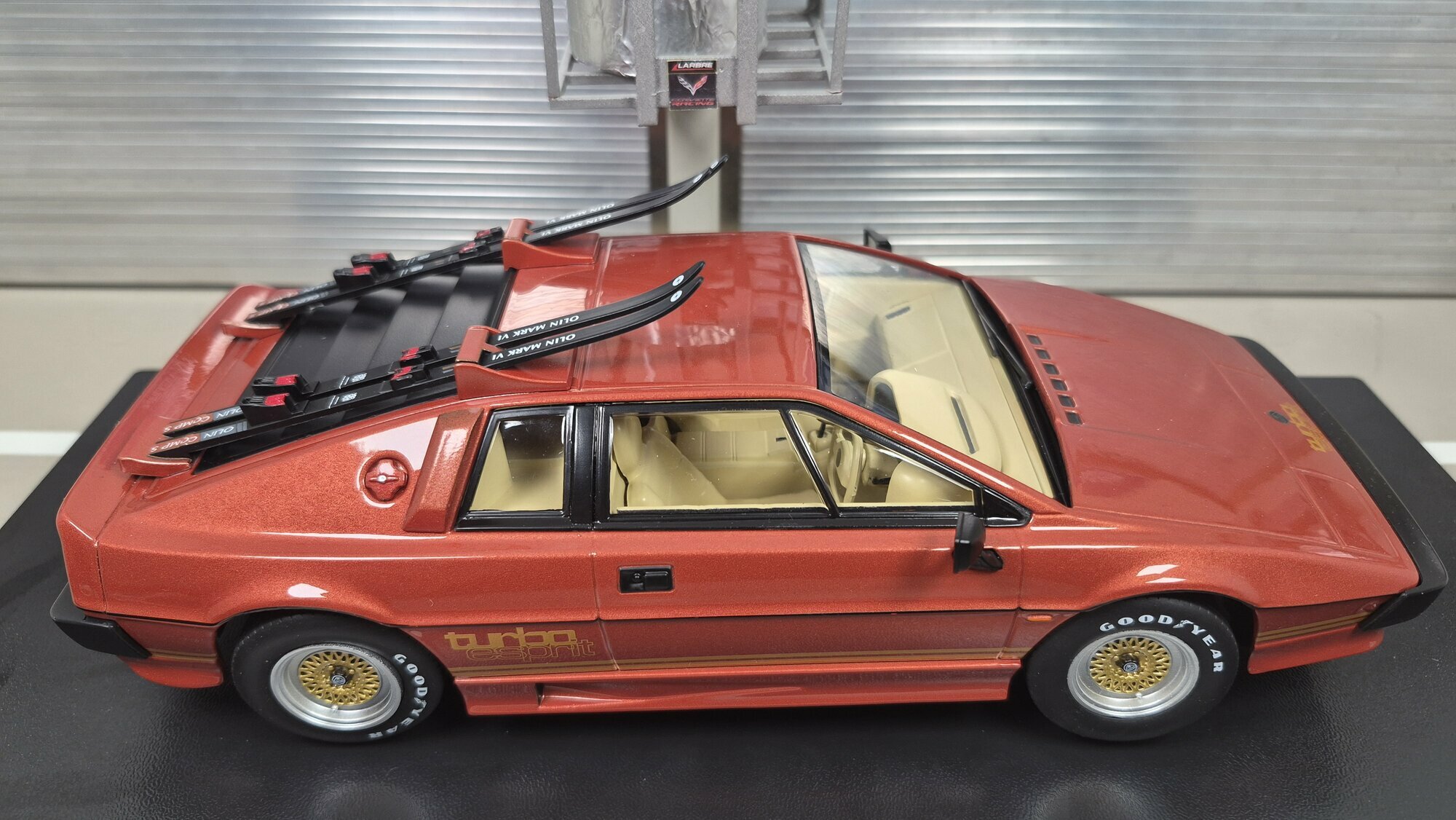
This model car is a 1/18 scale piece by KK Scale, and in the photos it appears in a copper to reddish-brown metallic paint finish. The surface has a fine metallic shimmer that shows off the car’s sharp body panels nicely. It also has gold side stripes plus the large “turbo esprit” script on the rear part of the door and side panel. The bumpers and trim are finished in black, which matches the original early-1980s look. Inside, you can see a light beige interior with visible seats, door panels, and dashboard. The model sits on a base labeled “Lotus Esprit Turbo 1981.” You can also clearly spot the multi-piece style of the wheels, with a gold mesh center and silver outer rim, plus tires with white Goodyear lettering. That said, it’s not possible to identify the exact wheel maker or precise wheel model with certainty from the photos alone. It’s also worth mentioning that this miniaturized version is made from Diecast material. This 1/18 scale model car by KK Scale therefore uses a solid body construction, which is pretty standard for collectibles in this category.
Phat-T’s collectible: roof rack, accessories, and overall visual effect
For collectors, the most interesting parts of this example are the add-ons visible in the photos. Mounted on the rear section is a rack system with skis; the skis appear to show markings like Olin Mark VI and Olin Comp. The brand Olin was a U.S. company with roots in the United States; the Olin Corporation was founded in 1892. These accessories refer to winter sports gear and give the model a more personalized look without changing the basic shape of the Lotus Esprit Turbo. The proportions of the original car come through very clearly in the model too: long, low front section, heavily raked windshield, compact cabin, and a profile that slopes down toward the rear. From a collector’s point of view, that gives the model a clean and accurate appearance, especially from the side. The paint helps emphasize the Giugiaro lines, while the light interior creates a strong contrast with the exterior color. In Phat-T’s collection, this piece stands out because it combines an early Turbo Esprit, visible 1980s-style graphics, and the mounted ski accessories. For collectors of Lotus models, 1980s sports cars, or British mid-engine cars, this version offers a clearly recognizable mix of road car, period style, and display-piece presentation.
- Write a first comment about this model now!Any comment can be discussed by all members. It's like a chat.Mention other Modelly members by using @ in your message. They will then be informed automatically.
- Write a first comment about this model now!Any comment can be discussed by all members. It's like a chat.Mention other Modelly members by using @ in your message. They will then be informed automatically.