
BMW M3 (E46) GTR(diecast 1:18, Minichamps)
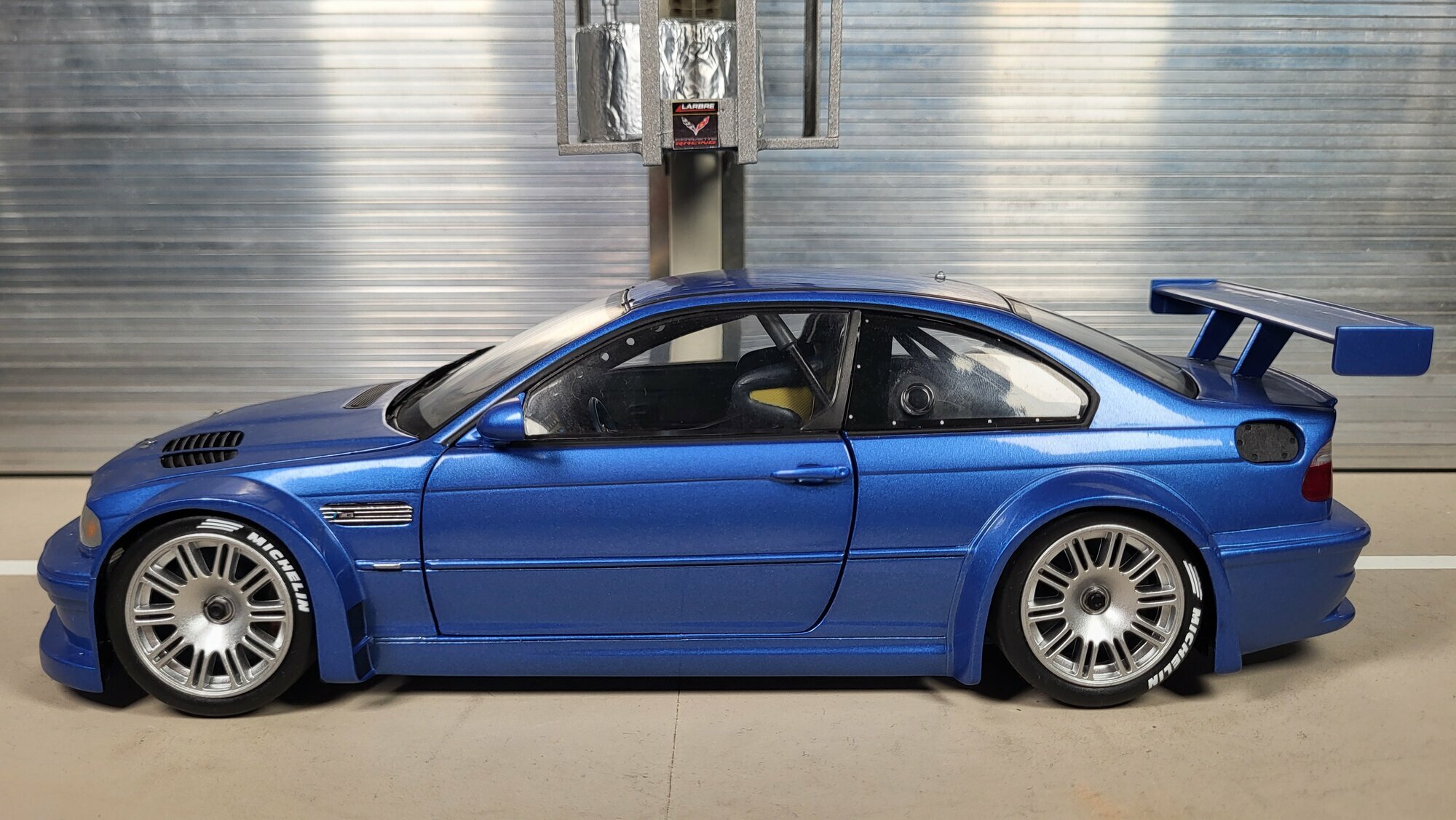
- BMW M3 (E46) GTR (from 2001)
- Minichamps
- 1:18
- Showcase model / No engine
- diecast
- estorilblau
- Not specified
- Not specified
- Not for sale
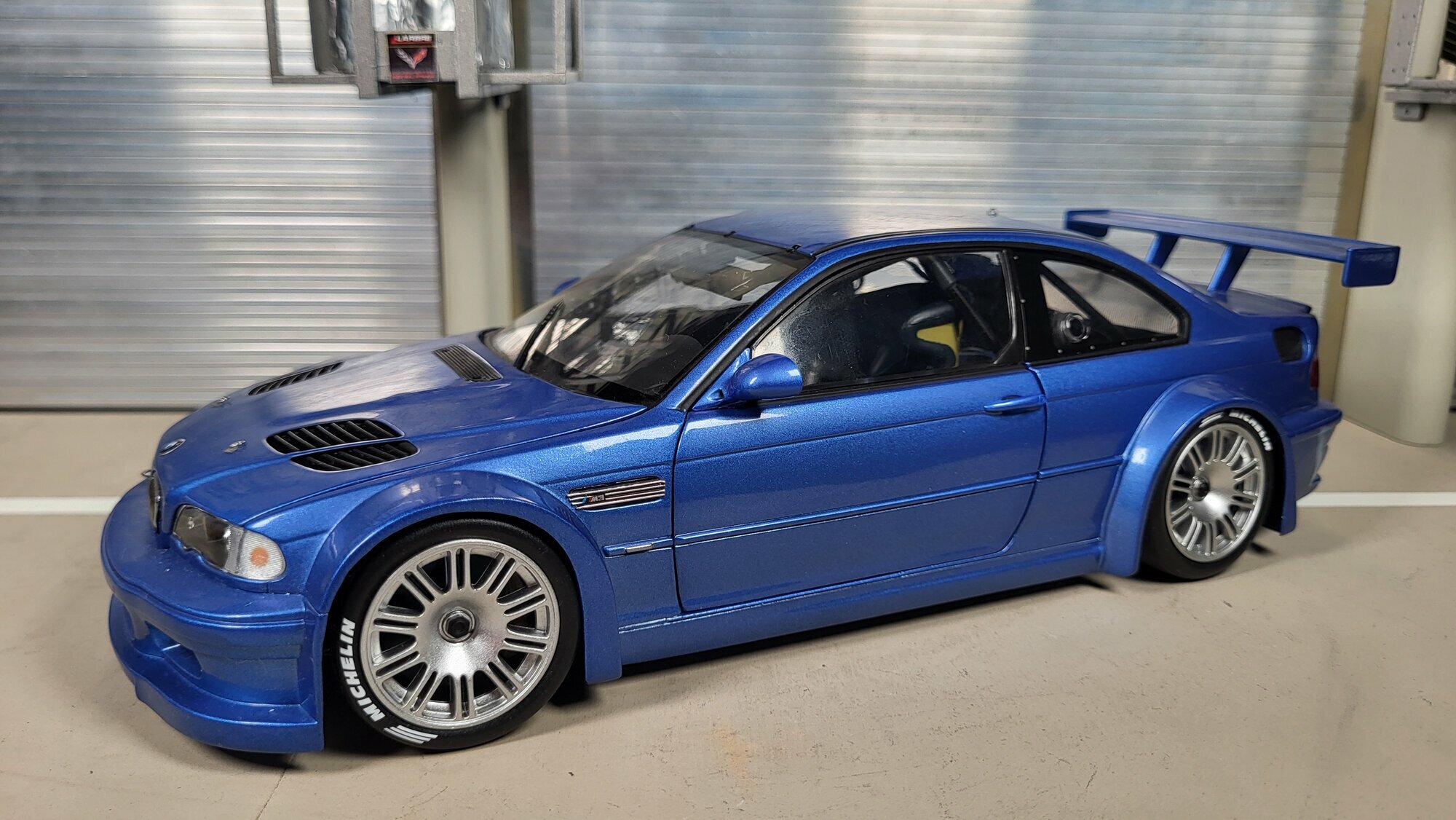
Role model and classification: the road and race offshoot of the BMW coupe
This model is based on the BMW M3 (E46) GTR, a race-focused version of the fourth-generation E46 3 Series. The generation was built from 2000–2006 and replaced the E36. Design work was led by Chris Bangle, with M-specific tuning handled by BMW M and the motorsport department. The road-going counterpart to the BMW M3 (E46) GTR used the inline-six S54 with 3.2 liters (0.85 US gallons) displacement, a high-revving layout, double VANOS, individual throttle bodies and a six-speed manual gearbox. Chassis-wise it had MacPherson struts up front, a multi-link rear axle (Z‑axle) and big compound brakes as the base. The GTR version was created to meet GT racing rules. For homologation BMW produced a very small run of road-legal cars — sources cite 6 to 10 examples. The BMW M3 (E46) GTR is therefore a link between road sportscars and GT prototypes. This 1/18 scale model is made by Minichamps and shows that mix of road-related detail and race tech. The piece is part of Modelly member “Phat‑T”’s collection and is aimed at collectors who want an authentic miniature.
Technology and highlights of the GTR: V8 power and aero
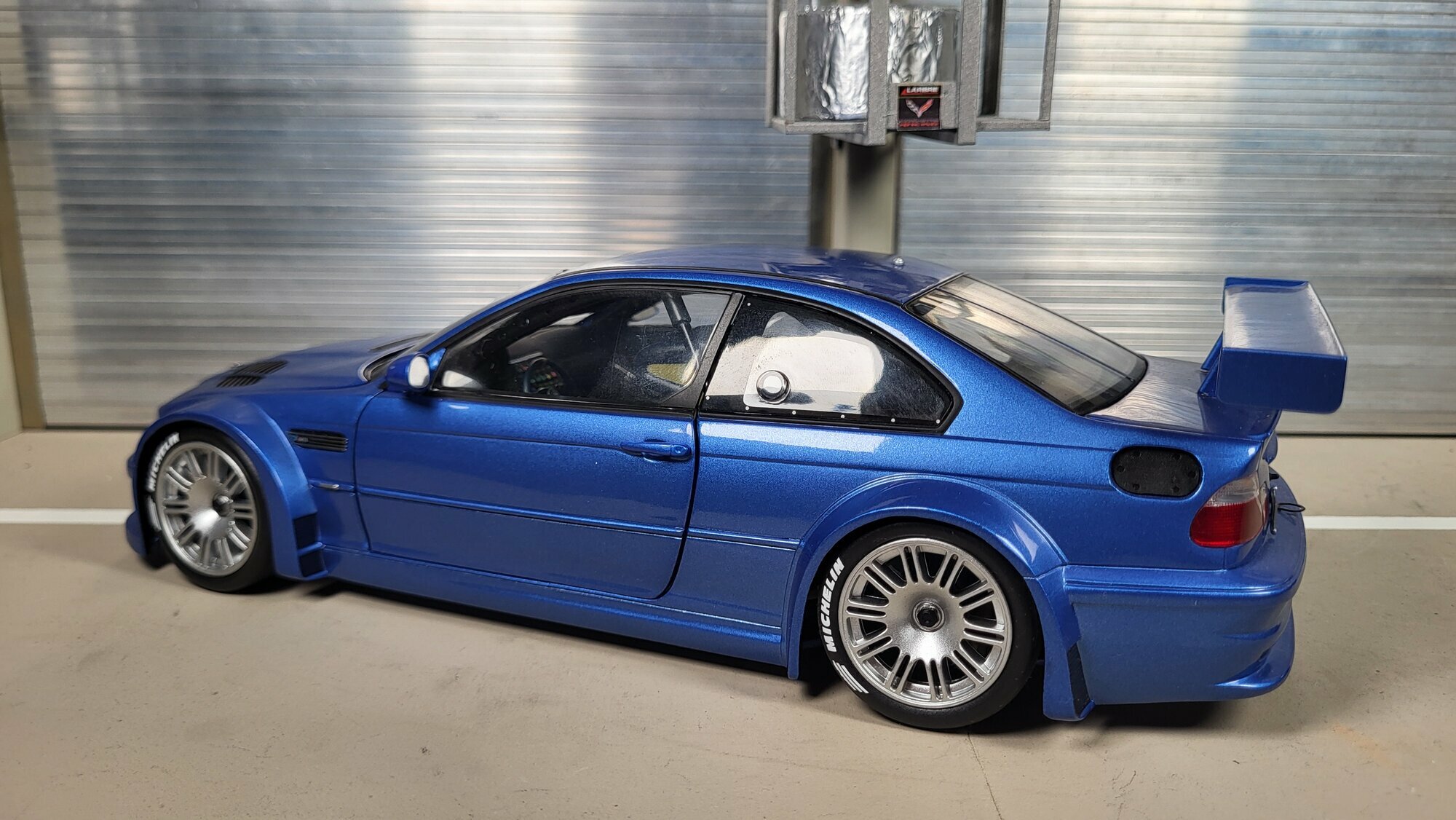
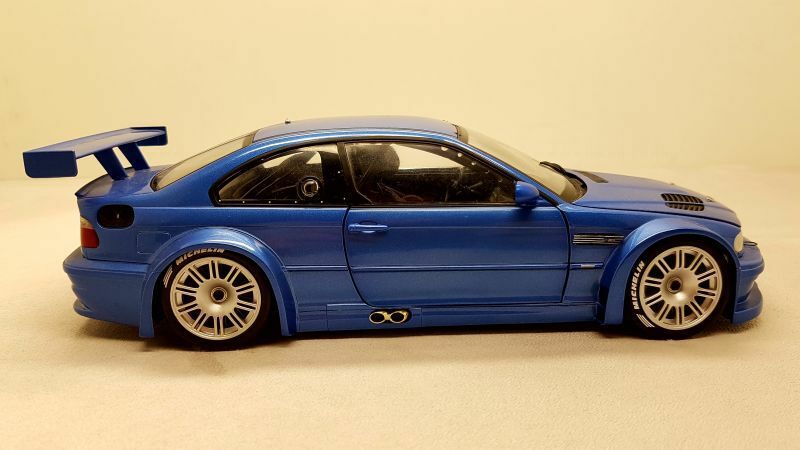
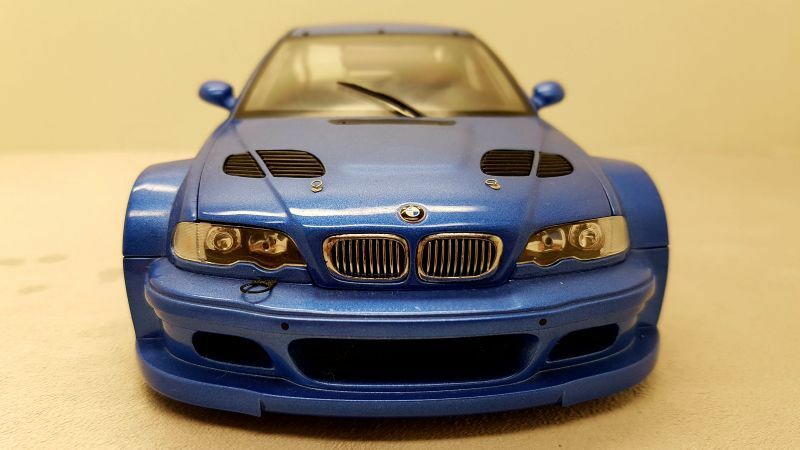
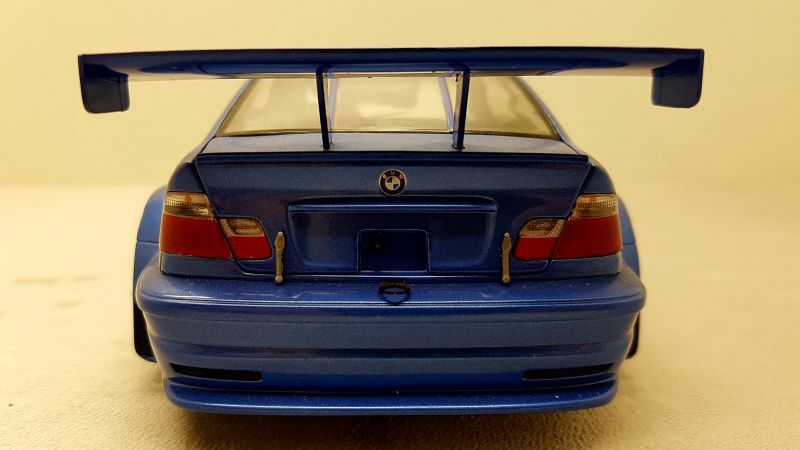
The BMW M3 (E46) GTR ran a P60B40 4.0‑liter V8 with dry-sump lubrication (4.0 liters (1.06 US gallons)). In race trim BMW Motorsport tuned it to around 330 kW (about 443 hp; approx. 450 PS), while the road version was quoted lower. A sequential six-speed gearbox, a stiff limited-slip diff and enlarged cooling packs were central to the concept. The body got heavily flared wheel arches, a deep front splitter, hood vents and a massive rear wing. You can spot those features on the model: the side exhaust outlet in front of the rear wheel, the wide fenders and the hood scoops. Inside the real car it was stripped out for racing: roll cage, bucket seats and a fire extinguisher system replaced comfort bits. The 2001/2002 rules caused a stir because competitors complained about the tiny homologation run; after rules changes BMW briefly pulled back from ALMS. The Minichamps 1/18 model reproduces the aero, proportions and tech details nicely. The bodycast is diecast metal, with fine plastic parts for intakes, window frames and the wing.
Racing history part 1: ALMS and international outings
The BMW M3 (E46) GTR debuted in the 2001 American Le Mans Series (ALMS) and immediately scored several class and overall wins at tracks like Laguna Seca, Portland and Mid‑Ohio. Notable drivers included Jörg Müller, JJ Lehto, Bill Auberlen and Boris Said. The car benefited from a light, stiff chassis, the revvy V8 and a well-balanced weight distribution. Adjustable setup items — anti-roll bars, dampers, spring rates — let teams tune the car to different tracks. Braking came from large race discs with multi‑piston calipers. BMW took the GT title in ALMS 2001, helped by reliability and smart pit strategy. After tighter homologation rules in 2002 BMW shifted focus to European endurance racing and tested parts for later Nordschleife use.
Racing history part 2: Nürburgring and endurance
On the Nürburgring Nordschleife the BMW M3 (E46) GTR gained huge recognition. Cars run by Schnitzer Motorsport dominated the 24‑hour races in 2004 and 2005, with drivers like Dirk Müller, Jörg Müller and Hans‑Joachim Stuck; others such as Andy Priaulx and Pedro Lamy also drove it. The combo of a durable V8, balanced aero and good cooling worked well over long distances and changing weather. Team boss Charly Lamm handled strategy and driver stints. In VLN (now NLS) and other endurance events the GTR also acted as a tech mule for suspension and tire development. Those lessons fed into later GT programs. Historically the car sits between classic GTs and the later tightly regulated GT2/GT3 cars — that makes it interesting for collectors because it represents a clear era in GT history.
The Minichamps 1/18 miniature in the Modelly “Phat‑T” collection
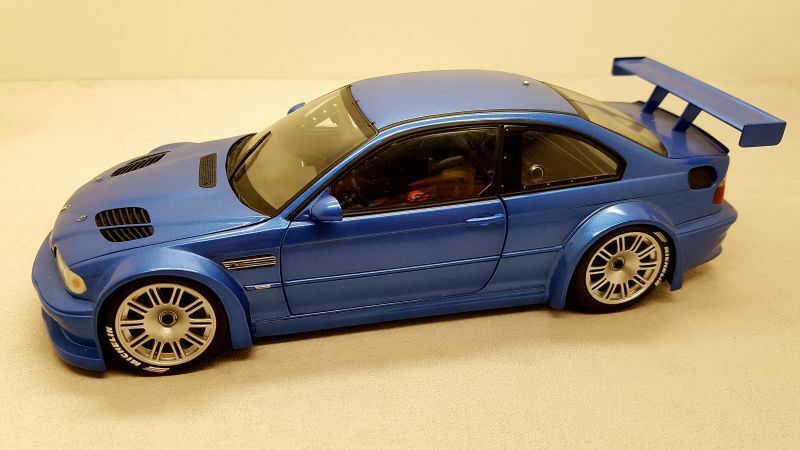
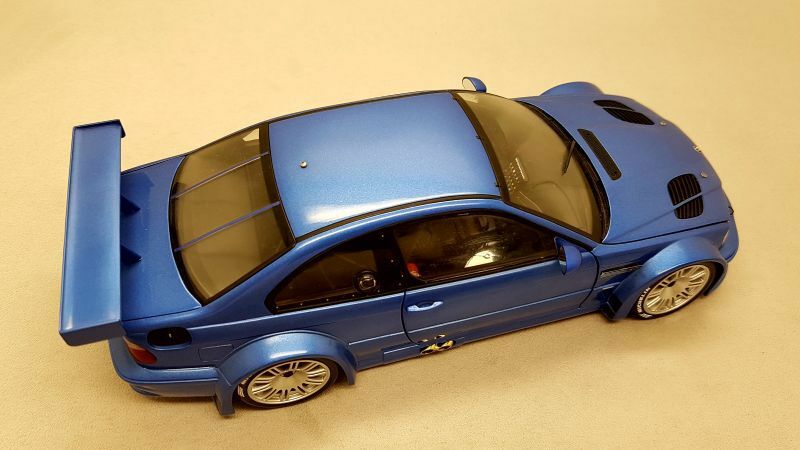
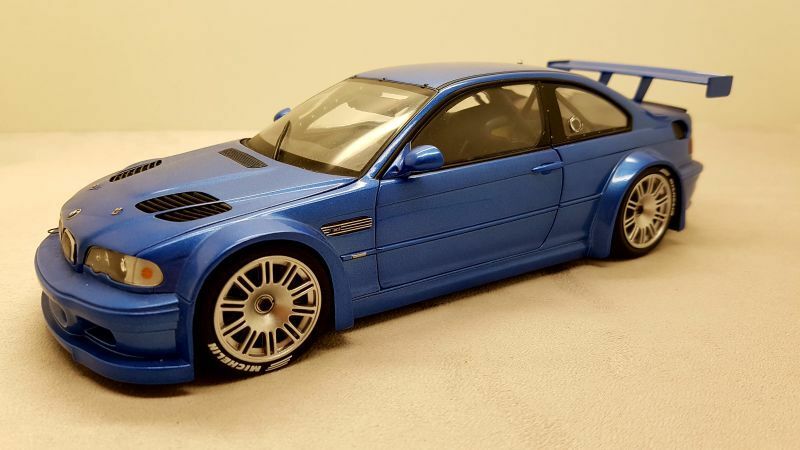
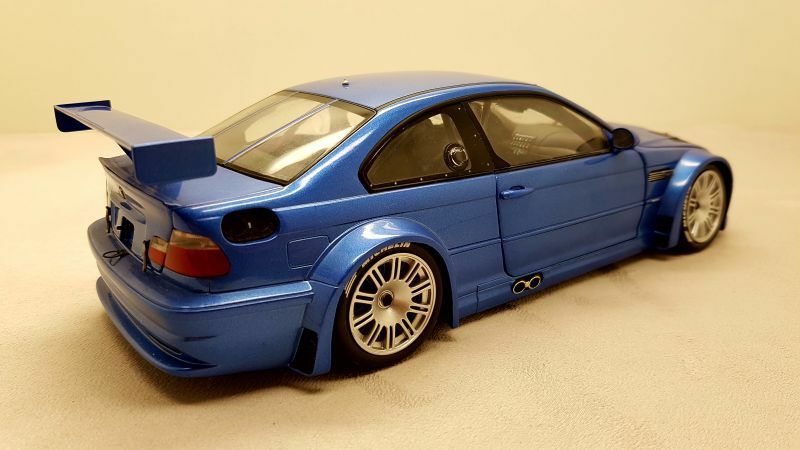
The pictured Minichamps 1/18 model in the Modelly member “Phat‑T”’s collection shows the BMW M3 (E46) GTR in a plain blue‑metallic finish without race numbers. The paint is even, the window frames are blacked out and the large rear wing is body‑colored. Side vents behind the front wheel, the flared arches, a deep front splitter and the hood vents are all accurately reproduced. A standout detail is the side twin exhaust under the door — a hallmark of the real car. The multi‑spoke wheels show drilled brake discs and caliper-like inserts; the tires are marked Michelin, which hints at a racing link. Through the side windows you can see a roll structure and an outlined bucket seat with harness detail. The diecast construction gives the model a solid weight, the panel gaps are believable and the windows sit flush. This version focuses on faithful shape and clean detailing rather than lots of functional openings. Overall it reads like a race‑oriented but display‑friendly example of the BMW M3 (E46) GTR: accurate, not overloaded with sponsor decals, with a clear nod to the Michelin shod race cars.

- Write a first comment about this model now!Any comment can be discussed by all members. It's like a chat.Mention other Modelly members by using @ in your message. They will then be informed automatically.
- Write a first comment about this model now!Any comment can be discussed by all members. It's like a chat.Mention other Modelly members by using @ in your message. They will then be informed automatically.