
BMW 325i Baur Cabrio (E30)(1:18, Otto Models)
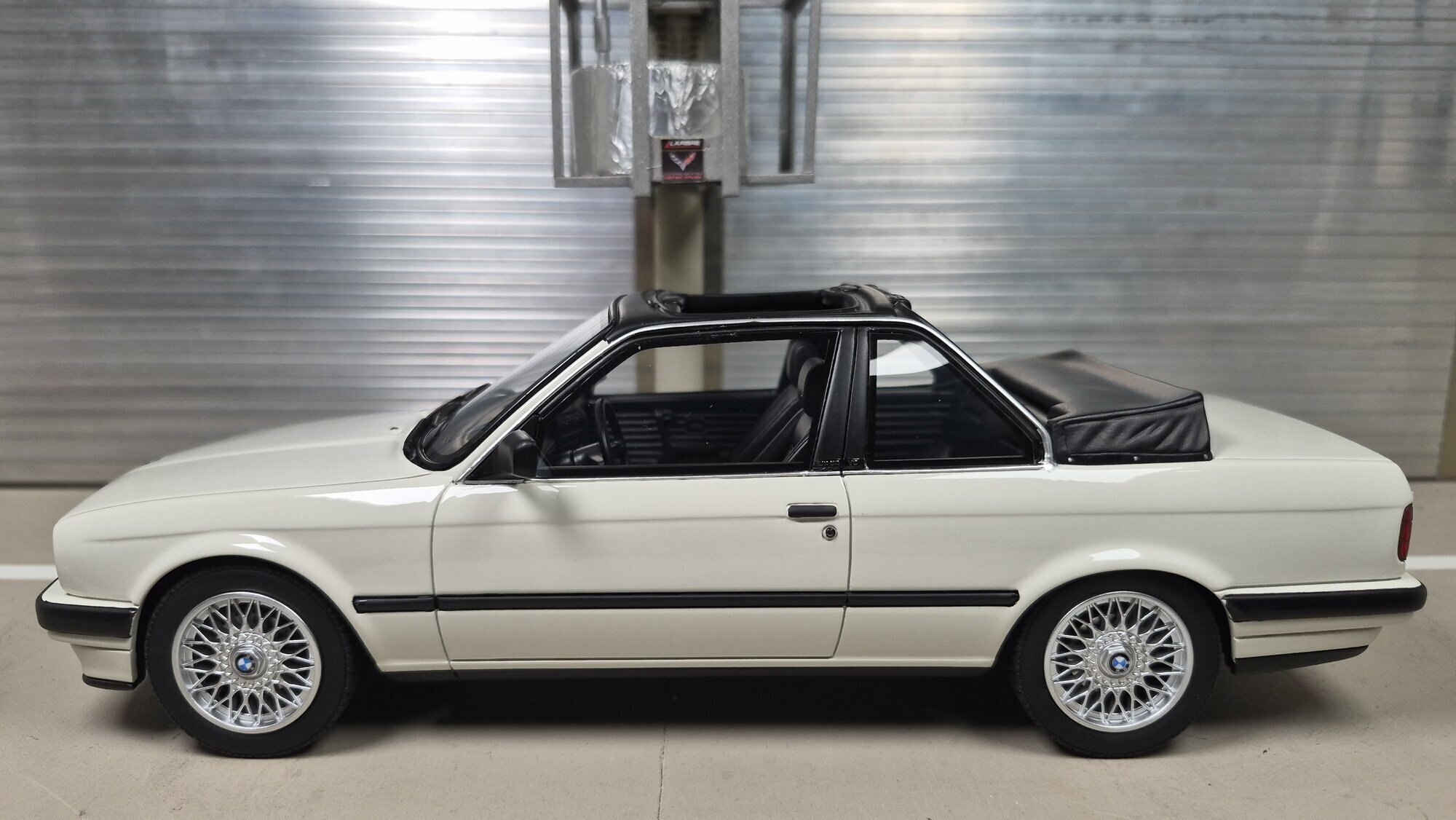
- BMW 325i Baur Cabrio (E30) (from 1987)
- Otto Models
- 1:18
- Showcase model / No engine
- resin
- white
- OT1097
- In near mint condition
- Original packaging exists
- Not for sale
BMW E30 Baur Cabrio as the inspiration: body style, generation, and historical context
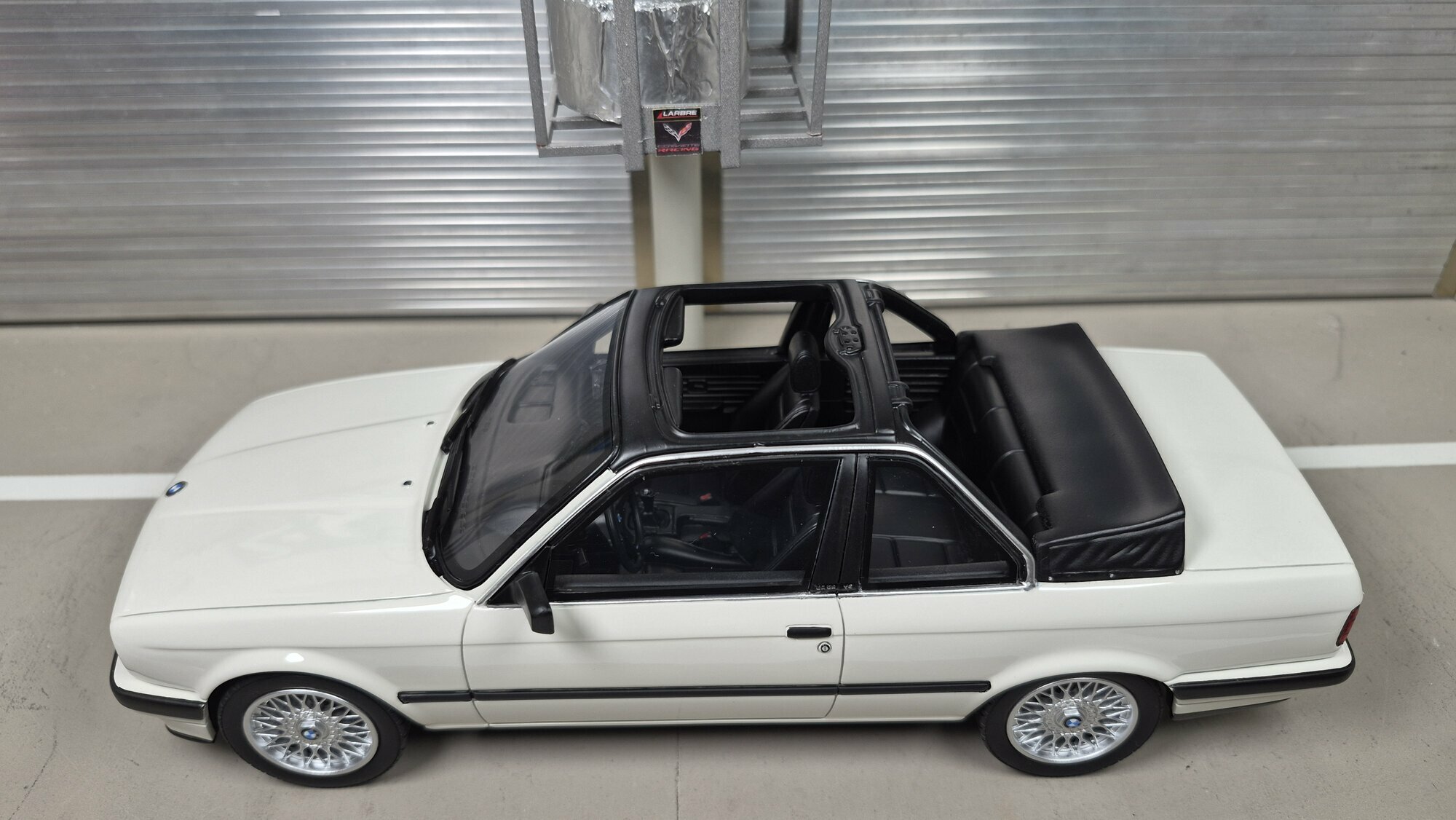
This collectible shown here from Modelly member “Phat-T” is very likely based on the BMW 325i Baur Cabrio (E30). The E30 belongs to the 2nd generation of the 3 Series and was built from 1982 to 1994, although the Cabrio and Touring versions stayed in the lineup longer than the early sedan models. Its predecessor was the BMW 3 Series E21, which shaped the idea of BMW’s compact, rear-wheel-drive sports sedan in the 1970s. The design of the E30 is usually credited to Claus Luthe, while the exterior work is also linked to Boyke Boyer. In the case of the Baur Cabrio, this was not a full convertible in the usual sense, but the “TopCabriolet” version built by the coachbuilder Baur, with a fixed rollover bar, a removable center roof section, and a separate rear soft top. This setup came about at a time when body rigidity and safety regulations for open cars were a big deal. To put the age and historical context into perspective: 1982, the E30’s first model year, was when the FIFA World Cup took place in Spain, Michael Jackson released the album “Thriller,” and the Commodore 64 started its global rise in the home computer market. Those examples help show the historical setting in which the BMW 325i Baur Cabrio (E30) was created.
BMW 325i Baur Cabrio E30 technology: engine, suspension, and special features
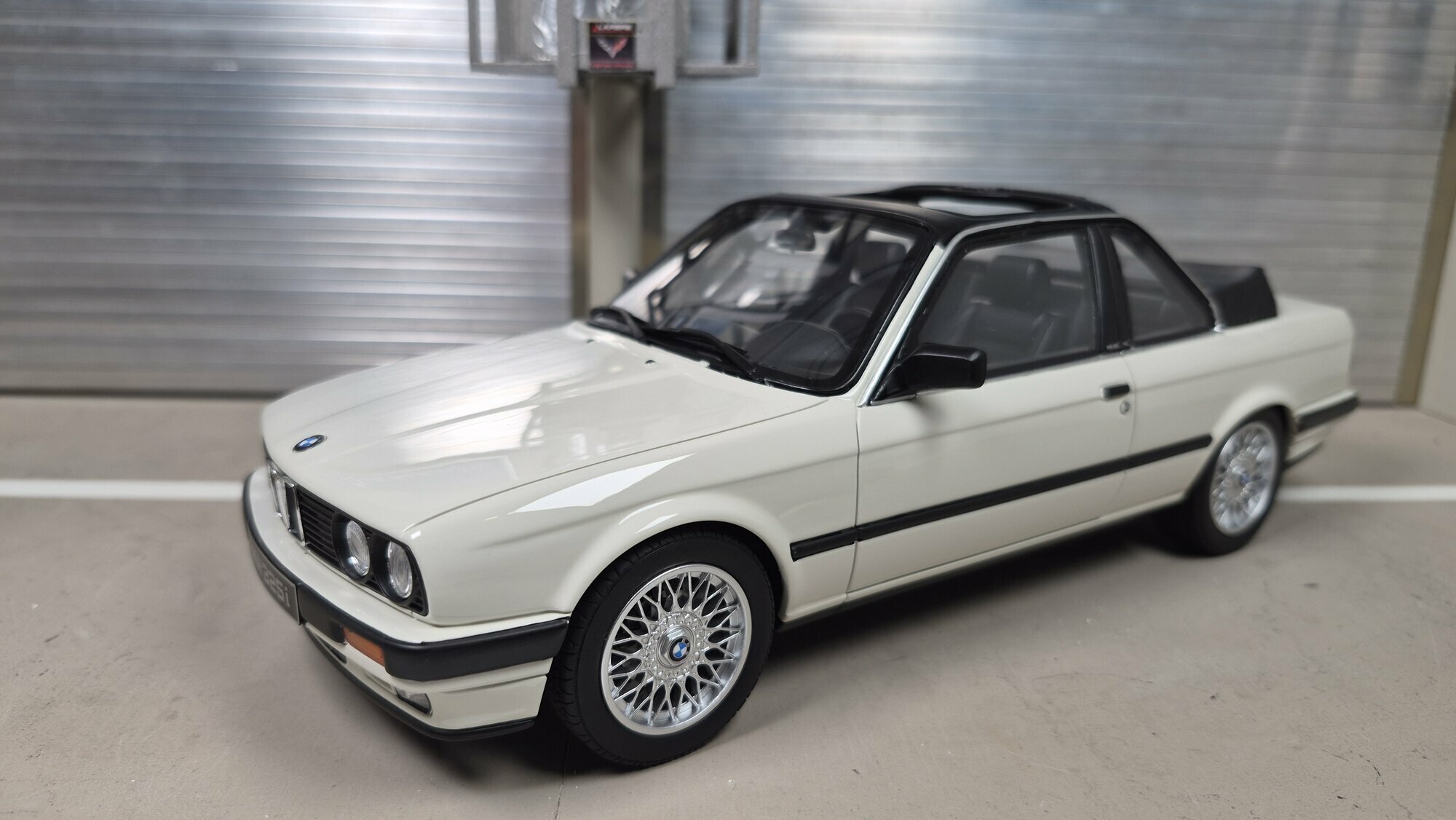
If the original vehicle here really is the BMW 325i Baur Cabrio (E30), then it’s based on one of the stronger mainstream E30 versions. The 325i used the M20B25 inline-six with 2,494 cm³ (152.4 cubic inches) of displacement, Bosch Motronic fuel injection, and an output of 125 kW, or 171 hp. Typical for this engine are its smooth running, relatively refined power delivery for its class, and the front-engine, rear-wheel-drive layout that BMW was known for at the time. Depending on the model year, a five-speed manual gearbox or an automatic transmission was available. Up front it used MacPherson struts, and at the rear it had semi-trailing arms, which played a big part in the E30’s well-known handling. Disc brakes at the front were standard, and on the 325i often also at the rear. Power steering, an onboard computer, ABS, and electric windows were available depending on the trim. The TopCabriolet TC2 built by Baur in Stuttgart was technically interesting because it combined open-air driving with a fixed roof frame and rollover bar. That made torsional rigidity much easier to manage than with many fully open conversions. In the photos, you can also see cross-spoke wheels, which strongly resemble BBS wheels in the style of the BBS cross-spoke; however, it’s not possible to identify a specific wheel model with complete certainty from the pictures alone. There’s no clearly identifiable tuning company here, so it wouldn’t be right to make any further attribution.
Otto Models 1/18 resin model car: visible details of the miniature
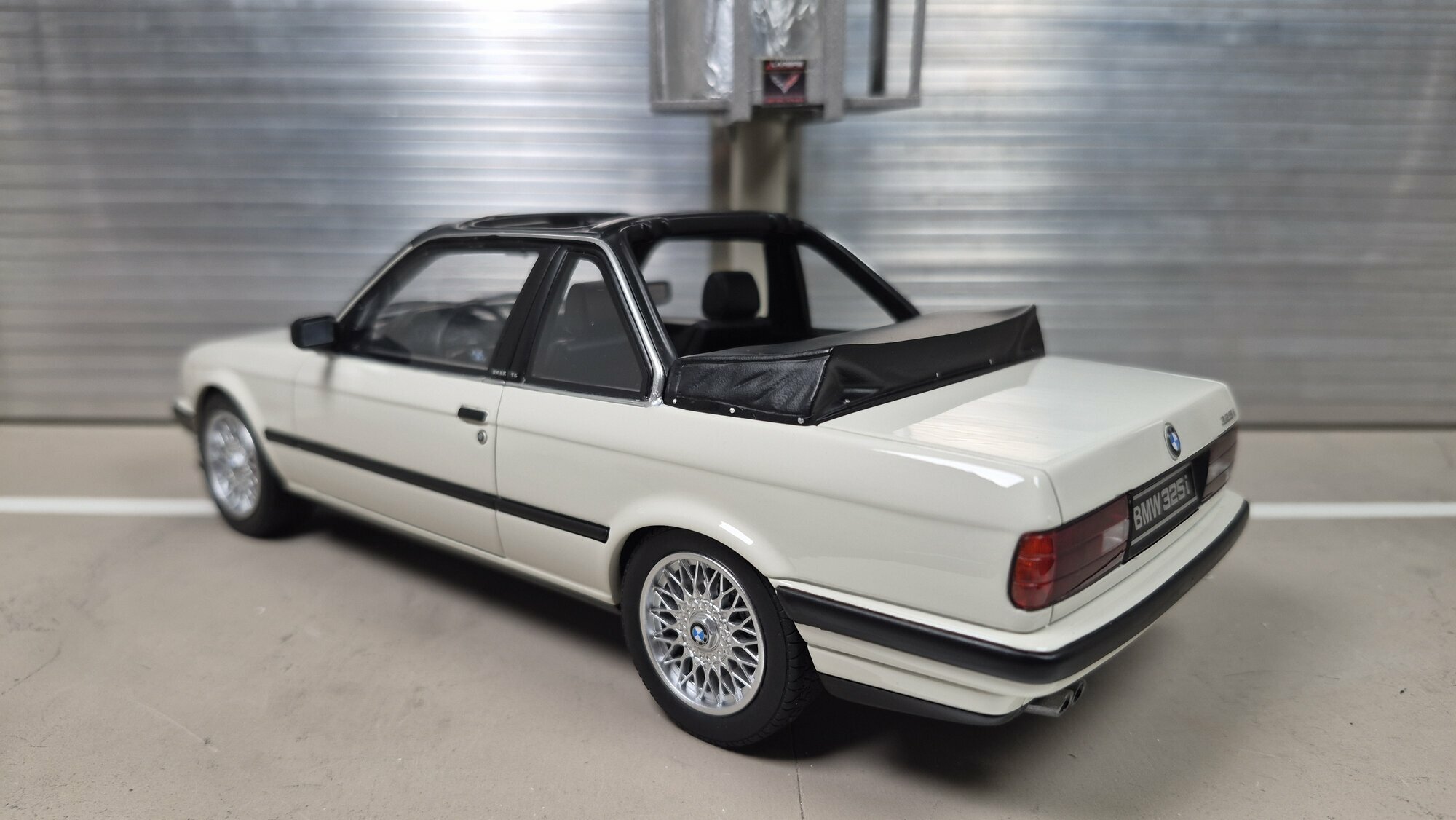
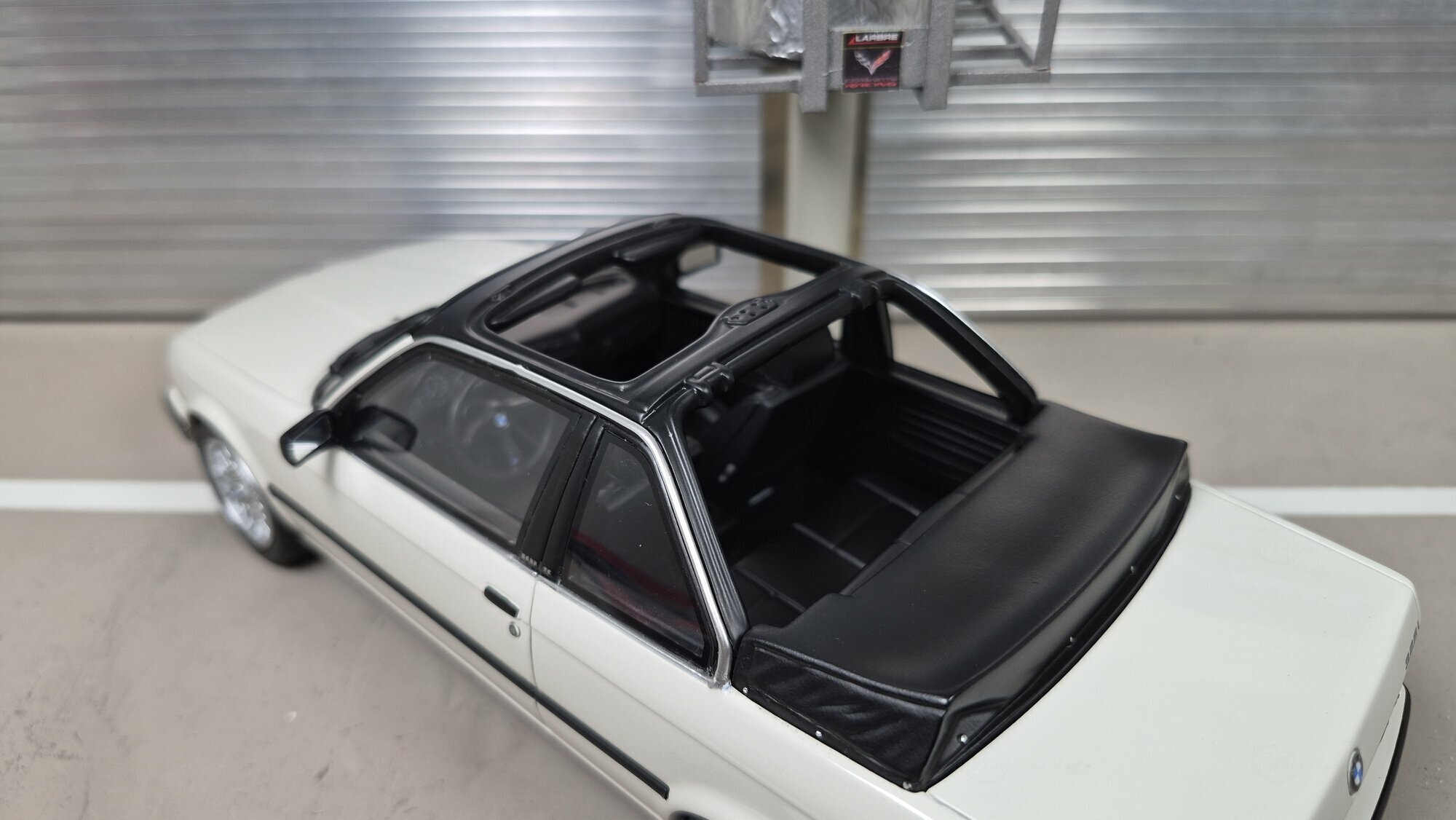
This is a model car in 1/18 scale, made by Otto Models. For collectors, it’s also important that the miniature is made of resin, so it’s a resin model. This type of construction is often used for closed collector models because it can reproduce proportions, edges, and surfaces very accurately. In the photos, the light paint finish stands out in a solid or slightly off-white tone, combined with black add-on parts and black bumpers in the style of late E30 versions. The slim side trim, BMW kidney grille, twin headlights, and the restrained front spoiler shape are all easy to spot. You can also see the door gaps, the lock on the driver’s door, the side mirror on the driver’s side, and the classic E30 side profile. The roof concept of the BMW 325i Baur Cabrio (E30) is clearly reproduced in the miniature: at the front, the roof opening is fully visible, in the middle sits the iconic Baur bar, and at the rear the folded soft top rests as a black bundle over the back section. That makes the silhouette noticeably different from the regular BMW E30 convertible. Inside, dark seats, a steering wheel, and door cards can be seen. The wheels are finished in silver and use the kind of cross-spoke look typical of BMW from that era. BMW emblems on the hood and wheel hubs are visible too. The overall shape feels clean and close to the original, which makes the model interesting for collectors who document special E30 body versions.
Limited Otto Models miniature for collectors: execution, impact, and display
This 1/18 scale model car from Otto Models is made as a limited edition; however, no specific edition number can be seen in the photos provided here, so it can only be safely described as a limited edition. For international model car collectors, the choice of subject is especially relevant, because the BMW 325i Baur Cabrio (E30) is much rarer as a miniature subject than the sedan, Touring, or M3. In “Phat-T’s” presentation, the combination of white bodywork, black Baur roof frame, and black rear soft top really stands out. These contrasts give the model a clean visual structure: bright, long side panels at the bottom, a dark window-and-roof area on top, and silver wheels as technical accents. Add to that the straight edges along the shoulder line, hood, and trunk lid, which are typical of the E30. Especially from the side, it’s easy to see why many collectors like this body style: the car has compact proportions, the balance stays right, and the unique Baur setup gives the roof area its own identity. The miniature shows these traits clearly, without extra decals or modified add-on parts. That keeps the link to the historical production car intact, and it makes it easy to compare the differences between a regular coupe, a factory convertible, and a Baur conversion on the shelf. For anyone searching for BMW E30 model car, Baur Cabrio miniature, Otto Models resin, and 1/18 collector model, this example offers a clearly recognizable and photo-friendly version.
- Write a first comment about this model now!Any comment can be discussed by all members. It's like a chat.Mention other Modelly members by using @ in your message. They will then be informed automatically.
- Write a first comment about this model now!Any comment can be discussed by all members. It's like a chat.Mention other Modelly members by using @ in your message. They will then be informed automatically.