
Porsche 908/2(diecast 1:18, AUTOart Signature)
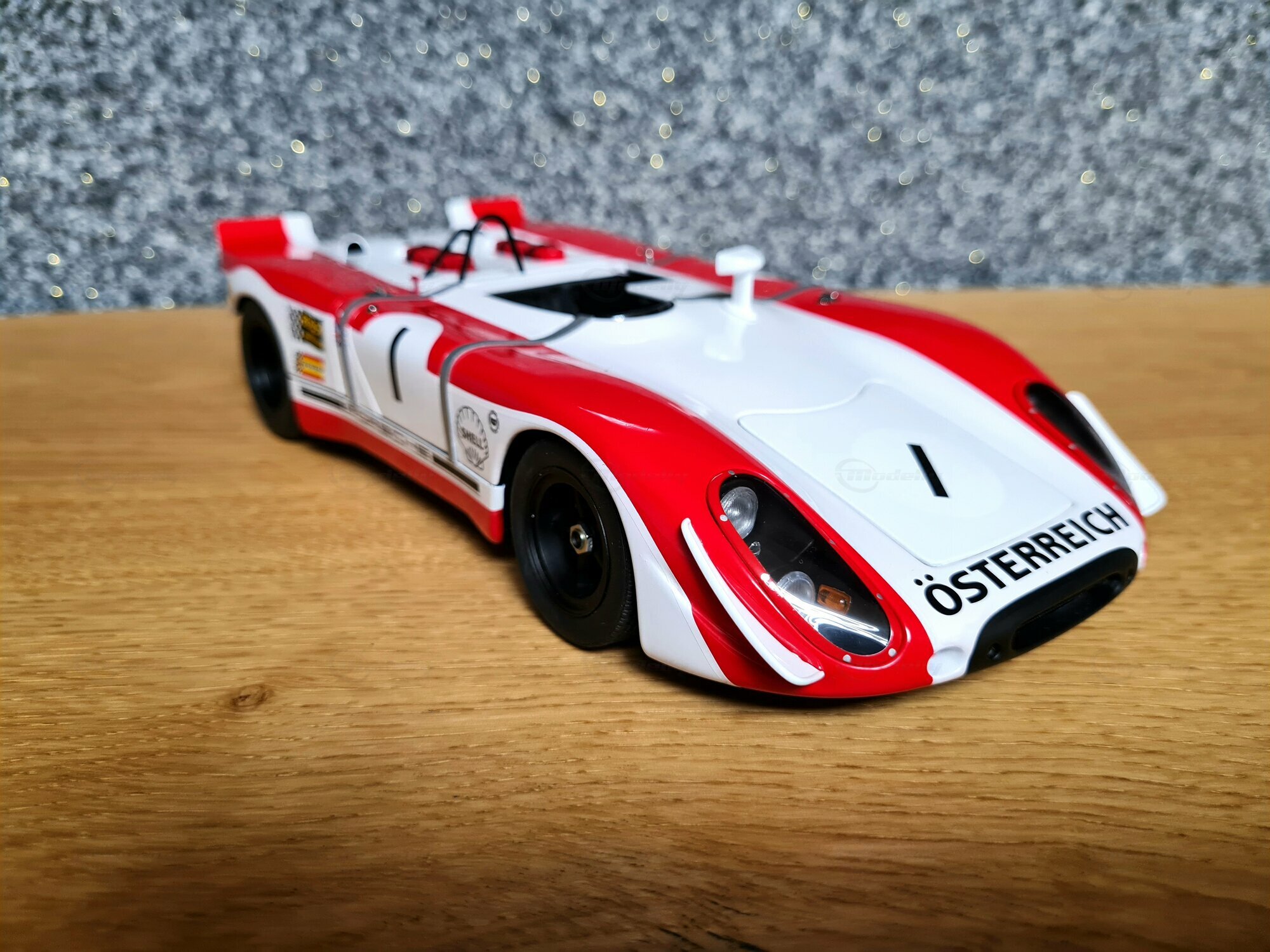
- Porsche 908/2 (from 1969)
- AUTOart Signature
- 1:18
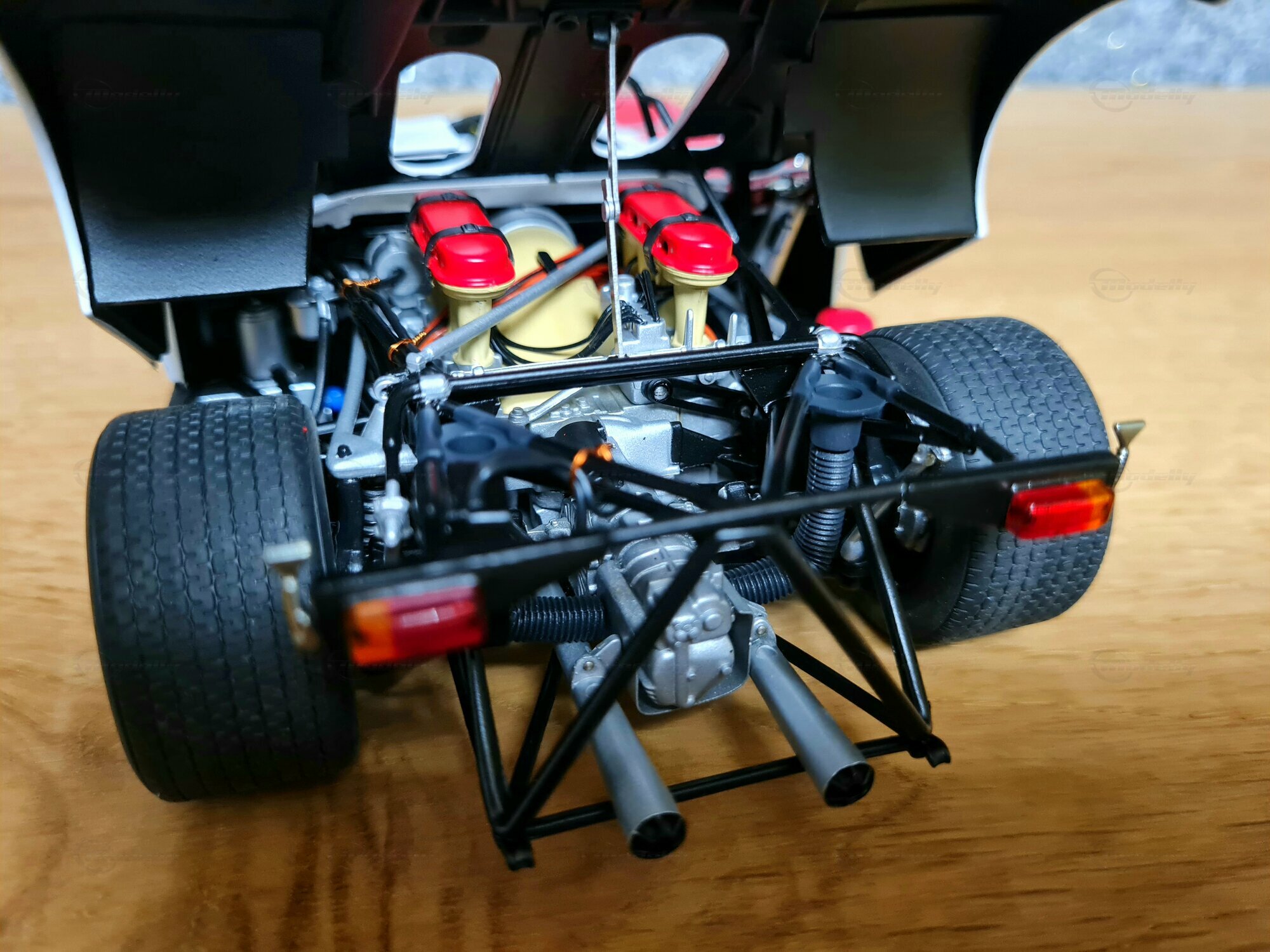
- Showcase model / No engine
- diecast
- white
- Perfect mint condition
- Original packaging exists
- Not for sale
Limited edition
Historical context of the Porsche 908/2 Flunder from 1969
The prototype behind this collector’s model is the Porsche 908/2, an open racing car from the first generation, built from 1969 to 1971. The short-tail version, nicknamed “Flunder,” was created for the European Hill Climb Championship and for twisty endurance races. It followed the Porsche 910 and complemented the closed Porsche 908 coupe. The Porsche 908/2 had a lightweight tubular frame, a body made of fiberglass-reinforced plastic, and an open cockpit designed to keep weight down. Its low nose, wide-cut wheel arches, and exposed rear sections were all aimed at reducing drag and improving airflow. Porsche’s technical development at the time was led by Ferdinand Piëch; the air-cooled flat-eight engine was largely designed by Hans Mezger.Advertisement
Technology of the Porsche 908/2 race car
The Porsche 908/2 was powered by an air-cooled 3.0-liter flat-eight engine with eight cylinders, four overhead camshafts, and mechanical fuel injection. Depending on the stage of development, output was around 350 hp, sent to the rear wheels through a manual five-speed gearbox. With a vehicle weight of about 600 kilograms (1,323 pounds), it had a pretty low power-to-weight ratio for its class. Independent suspension, inboard disc brakes, and wide racing tires were all part of the package. The open layout made it easier for the driver to get in and out and saved weight compared with the coupe. For faster tracks, there were versions with a longer body and more aero-focused shaping; the short, low version was especially good for hill climbs and tighter road circuits.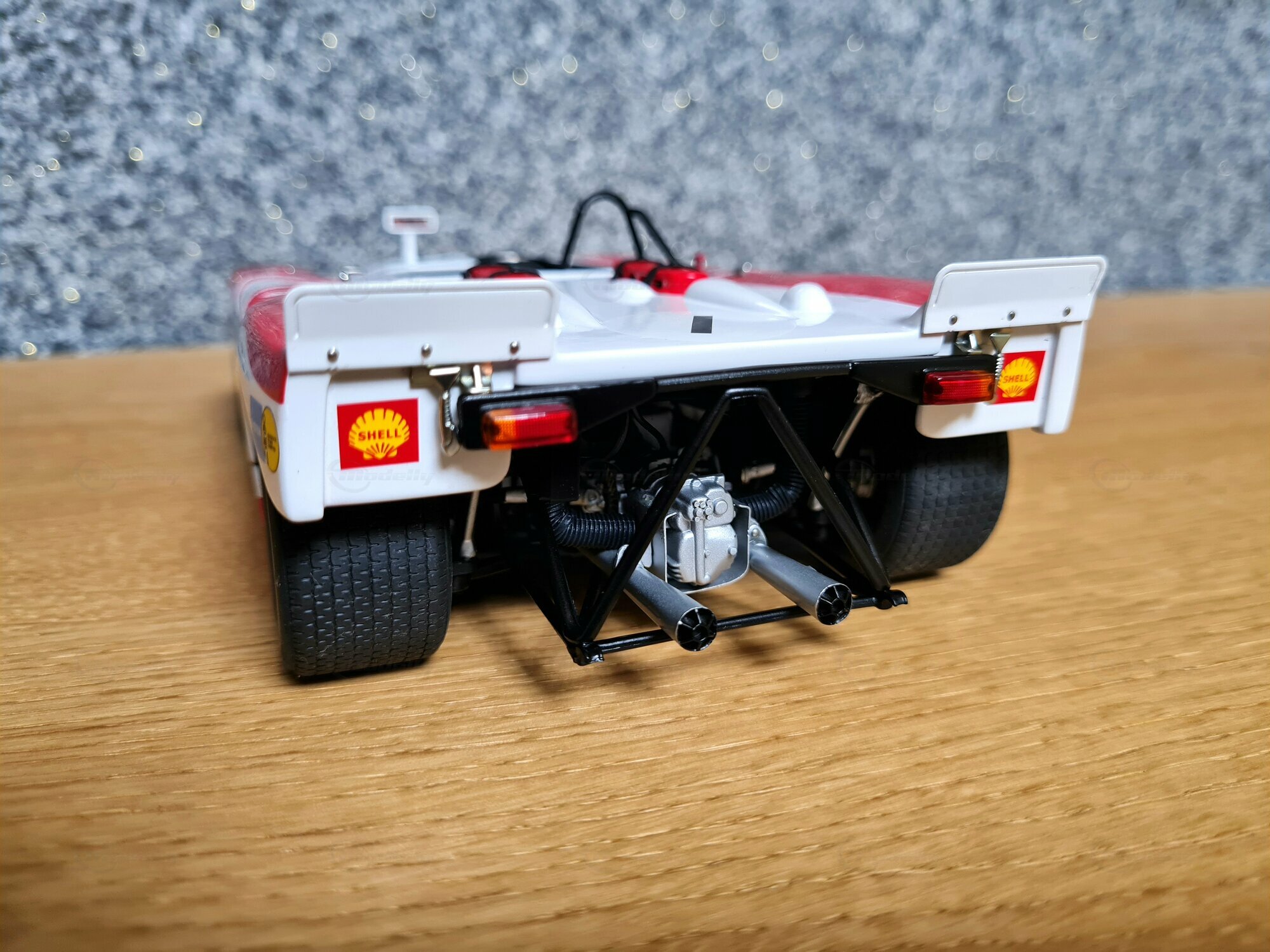
Motorsport wins and well-known drivers of the Porsche 908/2
In motorsport, the Porsche 908/2 became a key car for the factory team and customer teams starting in 1969. It played a major role especially in the European Hill Climb Championship. Gerhard Mitter won the 1969 European Hill Climb Championship in a 908/2, after Porsche had already found success in this category with smaller eight-cylinder race cars. The mix of low weight, engine power, and compact open bodywork fit the demands of hill climb courses with lots of direction changes and short bursts of acceleration.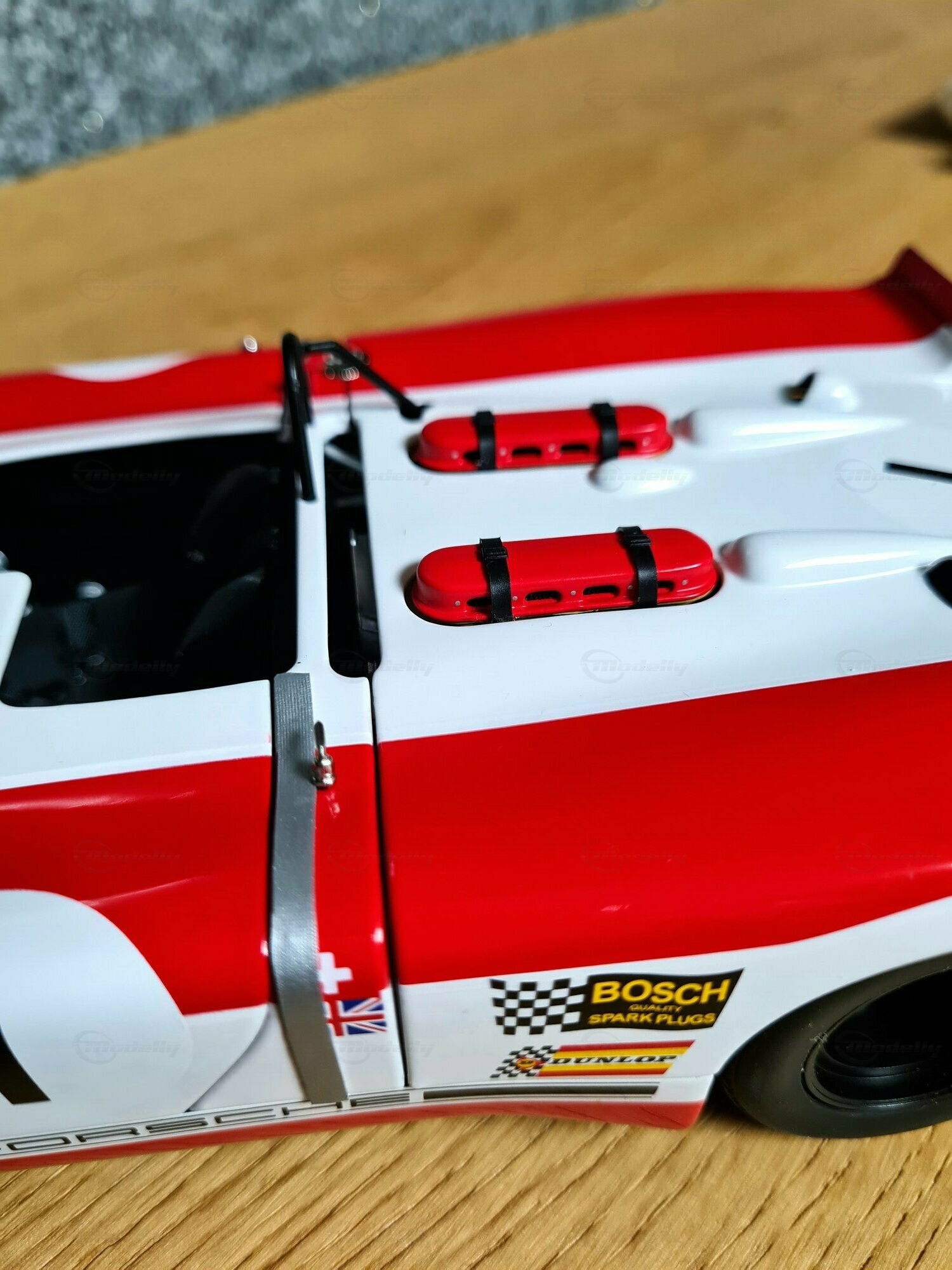
Endurance racing, Targa Florio, and driver appearances
The Porsche 908/2 was also used in sports car racing. At the 1969 Targa Florio, Gerhard Mitter and Udo Schütz drove a 908/2 to the overall win. Other drivers who raced Porsche 908 cars in this era included Jo Siffert, Brian Redman, Hans Herrmann, and Rolf Stommelen. Depending on the race, different body, engine, and rear wing setups were used. The results of the open 908/2 and related 908 versions helped Porsche establish itself in the 3-liter prototype class, before the Porsche 917 took over the top spot in many major endurance races. Even so, the 908 stayed a useful car for private teams and special events.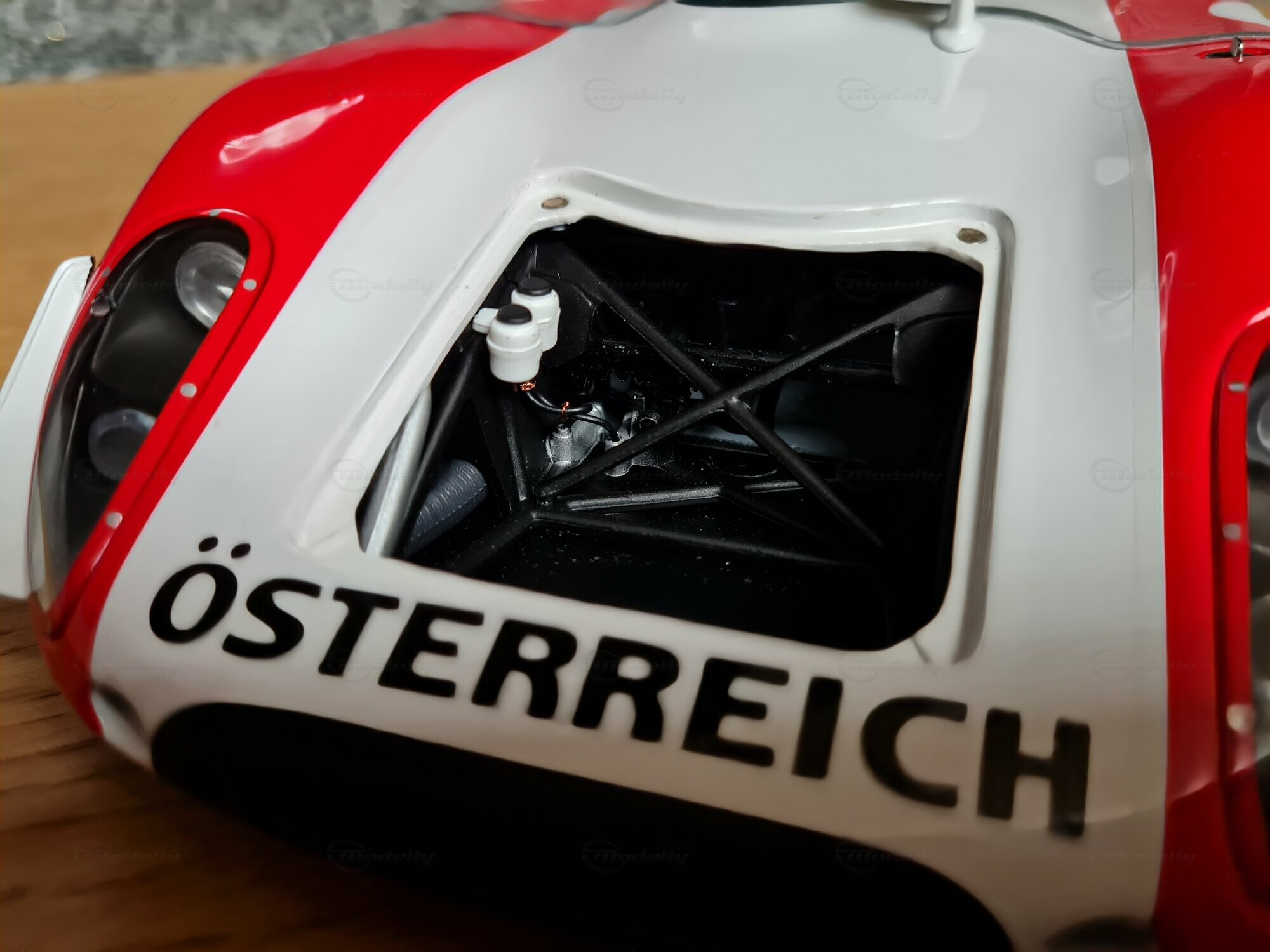
AUTOart Signature model car in 1/18 from the Play-X collection
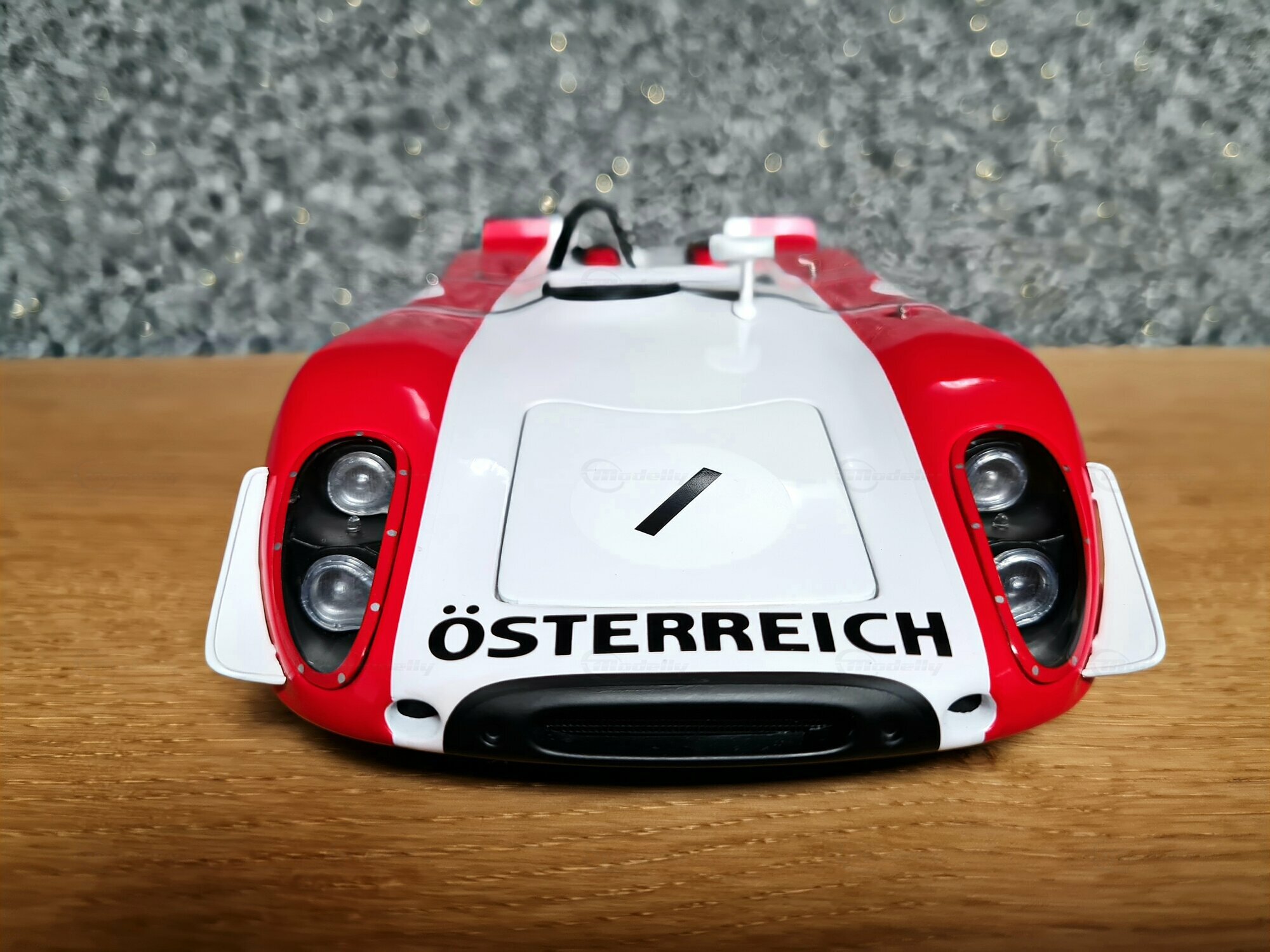
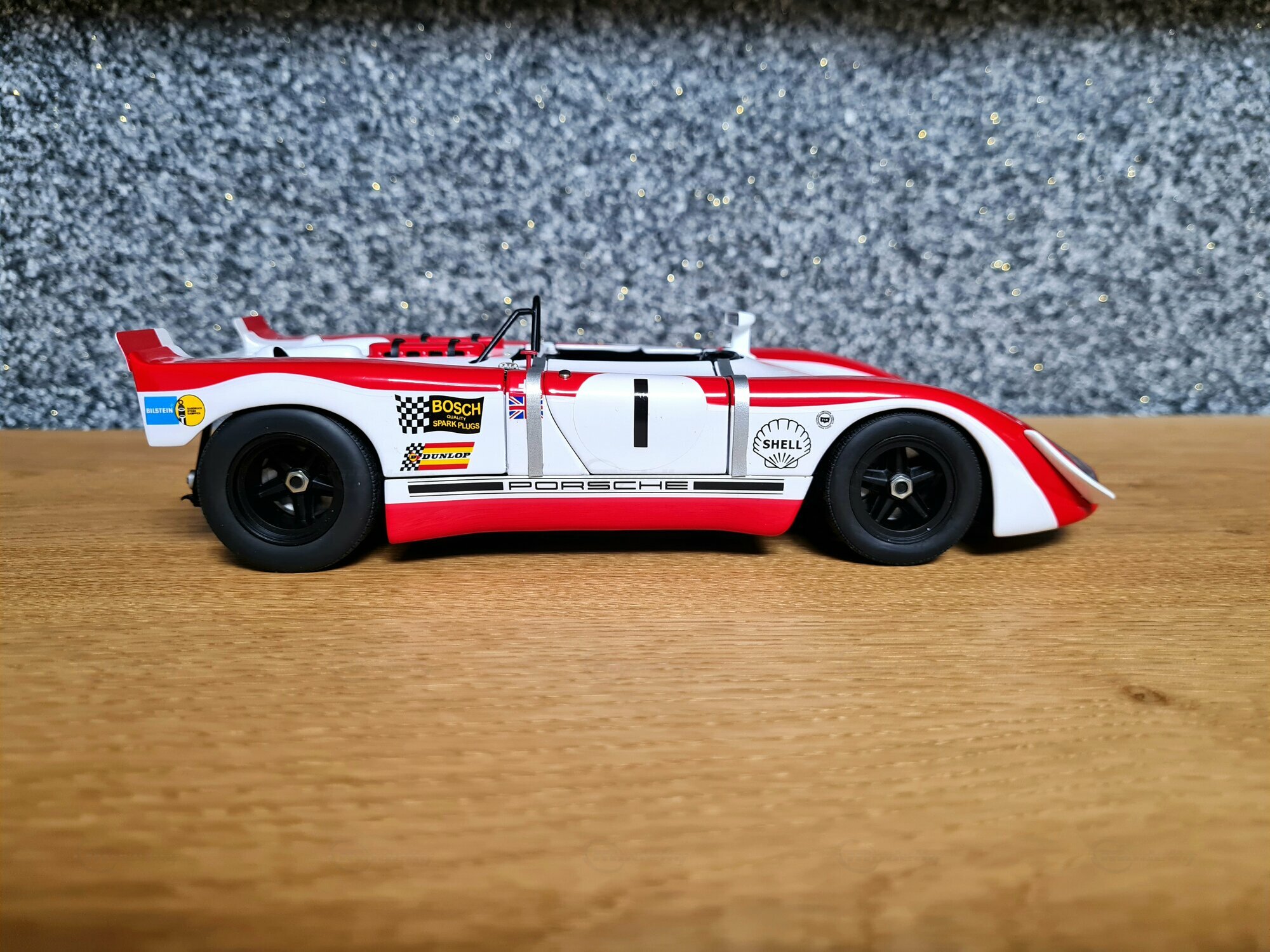
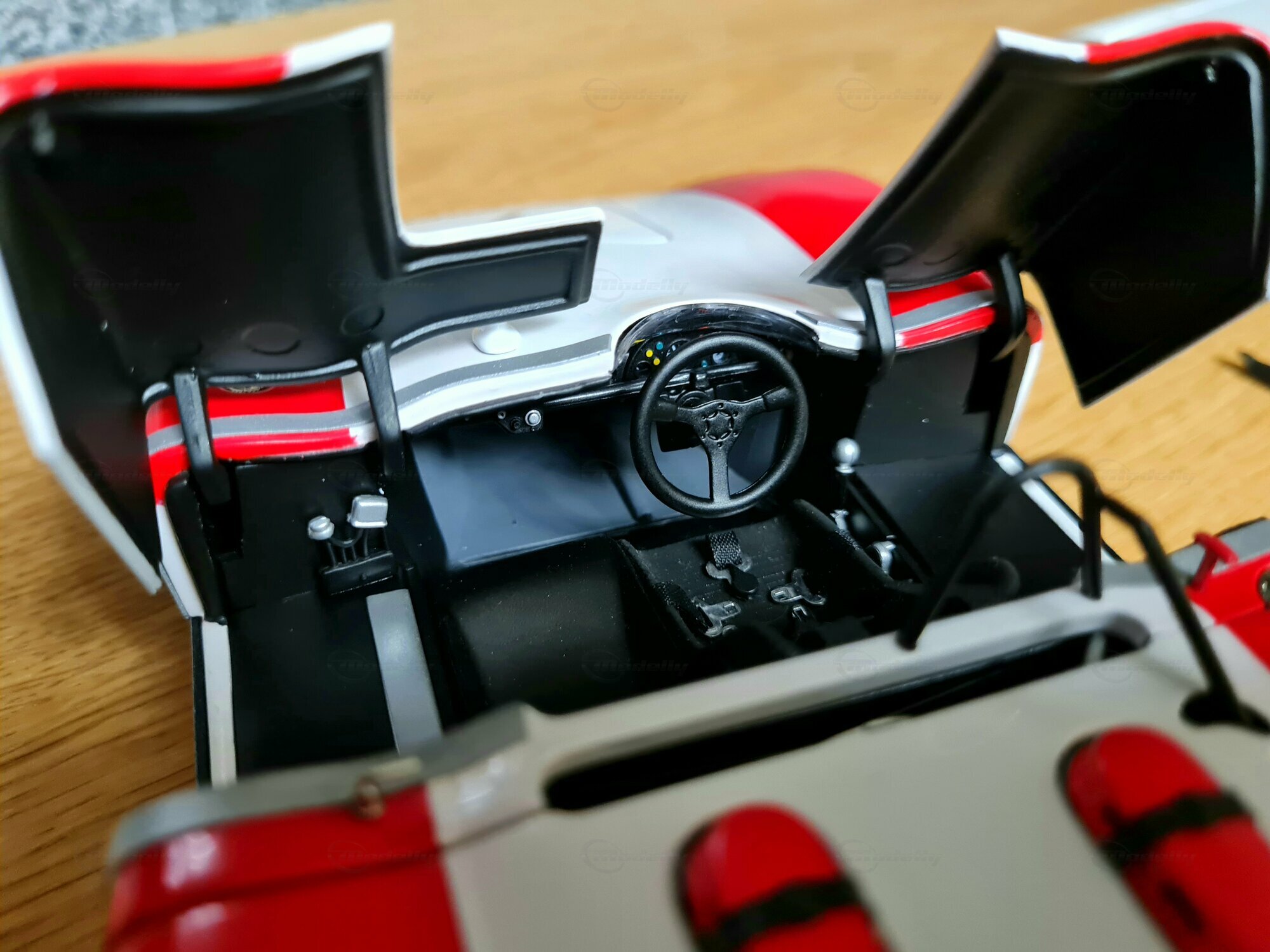
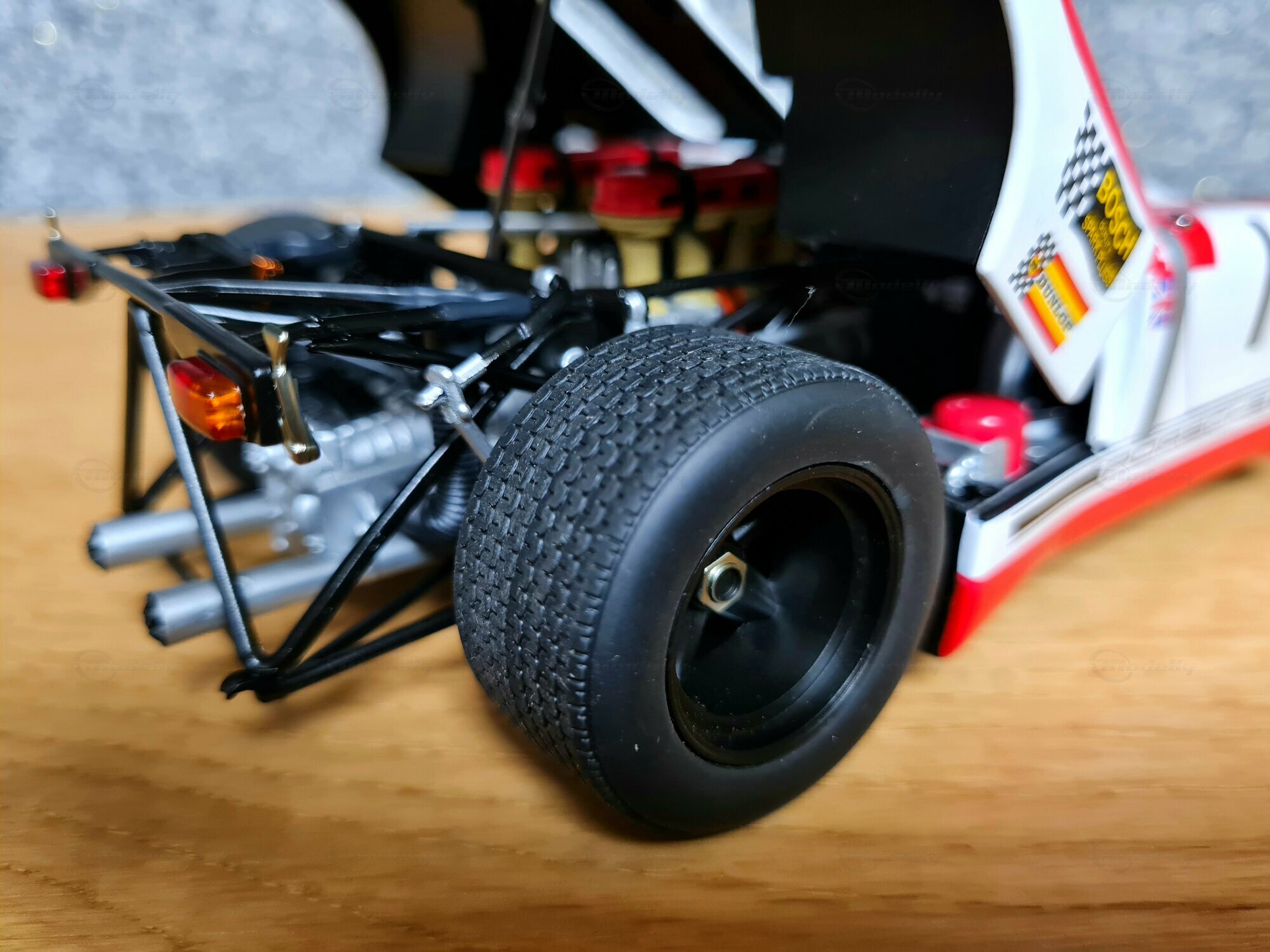
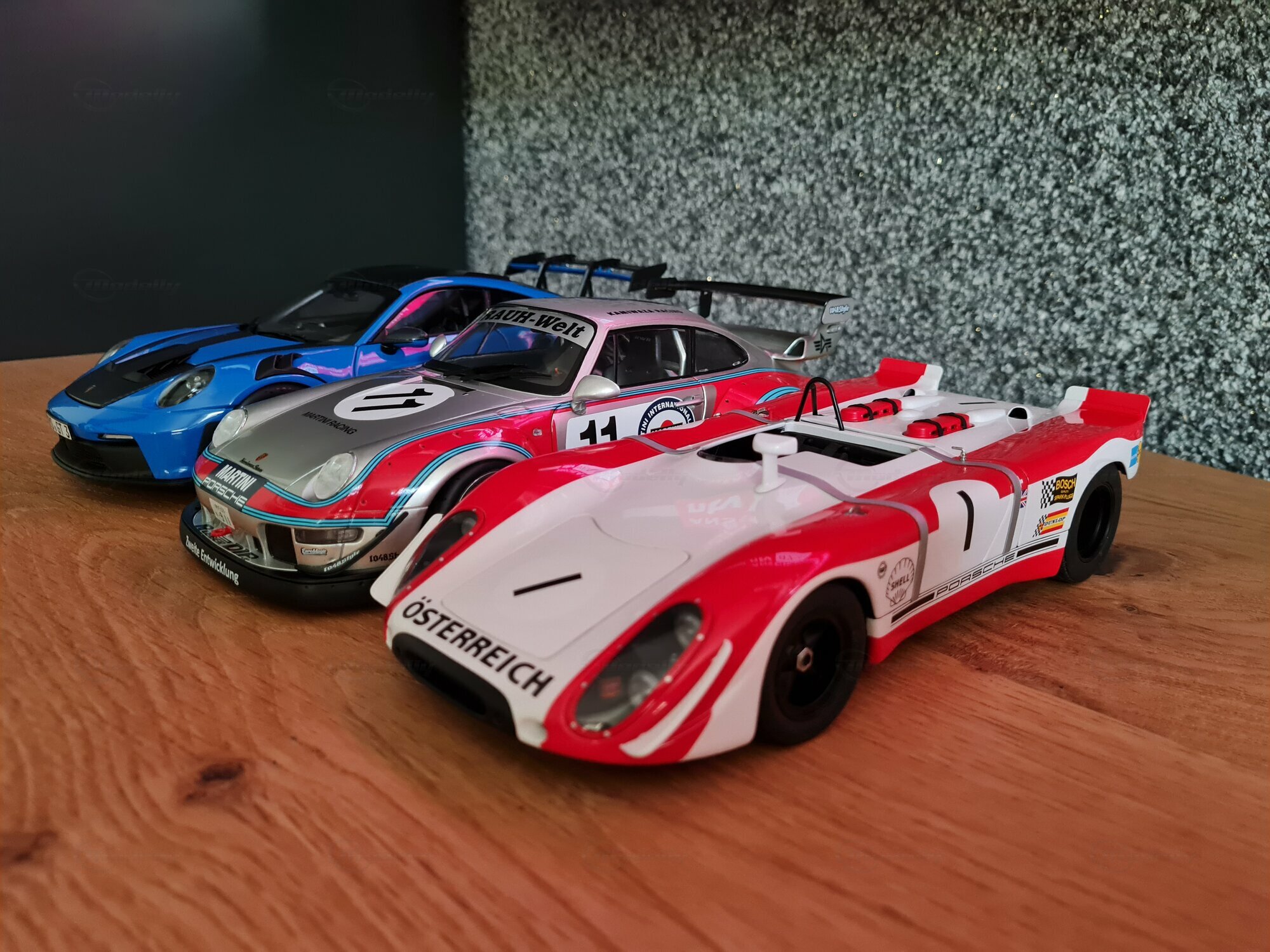
The model shown here from Modelly member “Play-X” is a 1/18-scale model car made by AUTOart Signature. This diecast miniature shows an open Porsche 908/2 in a white and red racing livery. On the front, “ÖSTERREICH” is clearly written in black letters; the number 1 appears on the white center section of the body and on the side doors. You can also see black headlight surrounds with several individually modeled lamps, a black front air intake, white side air deflectors, and a black roll bar behind the cockpit. The side view shows the “PORSCHE” lettering, the logos of Shell, Bosch, Dunlop, and Bilstein, plus a small British flag. Black wheels with center-lock style detailing, the red rear section, and the white rear wing complete the look of the real car. The sharply separated red areas over the fenders, side skirts, and rear contrast nicely with the white base color and make the body lines easy to read. This is a limited edition. For collectors, it’s a 1/18-scale model car made by AUTOart Signature, with a detailed cockpit, separate add-on parts, and motorsport-inspired decals.No responsibility is taken for the correctness of this information


850 Visitors since 03/23/2024
Comment
(0)
- Write a first comment about this model now!Any comment can be discussed by all members. It's like a chat.Mention other Modelly members by using @ in your message. They will then be informed automatically.
- Write a first comment about this model now!Any comment can be discussed by all members. It's like a chat.Mention other Modelly members by using @ in your message. They will then be informed automatically.