
Ford Modell A Pickup(diecast 1:18, Motor City Classics)
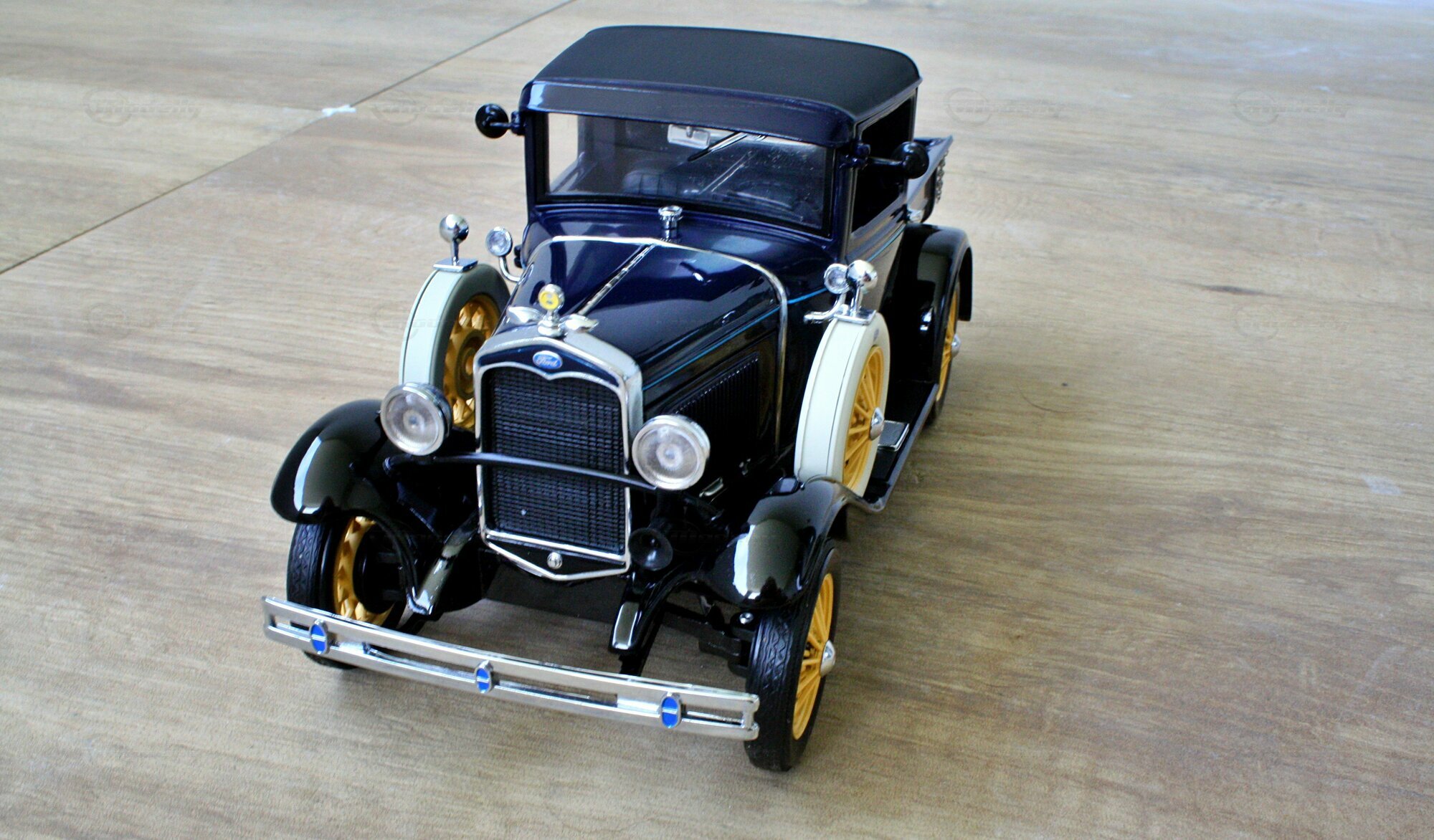
- Ford Modell A Pickup (from 1931)
- Motor City Classics
- 1:18
- Showcase model / No engine
- diecast
- Lombard Blue
- Perfect mint condition
- Original packaging exists
- Not for sale
Ford Model A Pickup as a Utility Vehicle
The prototype for this collector’s model is a Ford Model A Pickup from the second generation, built from 1927 to 1931. Ford introduced the series at the end of 1927 as the successor to the Ford Model T; production in some cases continued until 1932. The pickup combined the passenger-car chassis with an open cargo bed and was used by tradespeople, farmers, and delivery services, among others. The Model A family included a wide range of body styles, including Tudor and Fordor sedans, roadsters, coupes, station wagons, and commercial vehicles. Depending on the model year and body setup, the Ford Model A Pickup had a payload that was designed for the light-duty hauling needs of the time. The design of the series was strongly influenced by Edsel Ford, who played an important role at Ford in styling and model policy. Compared with the Ford Model T, the Model A got a more modern-looking body, standard brakes on all four wheels, an electric starter, and a bigger selection of body and color options.
Ford Model A Pickup technology from 1927
The Ford Model A Pickup used a water-cooled inline four-cylinder engine with a displacement of 201 cubic inches, which is about 3.3 liters. This side-valve engine, often called an L-head, put out around 40 horsepower. Power was sent through a manually shifted three-speed transmission and a driveshaft to the rear axle. Unlike the Model T, the transmission was operated with a conventional gear lever. The wheelbase was about 103.5 inches (2,629 millimeters). Ford used solid axles front and rear with transverse leaf springs. The mechanically operated drum brakes on all four wheels were a major technical step forward compared with the older Model T design. To place it in time: in 1927, Charles Lindbergh flew solo across the Atlantic, the sound film The Jazz Singer hit theaters, and radio broadcasting in Germany kept expanding. Those examples help show how old the Ford Model A Pickup is and what historical moment it belongs to.
Motor City Classics diecast model in 1/18 from the Play-X collection
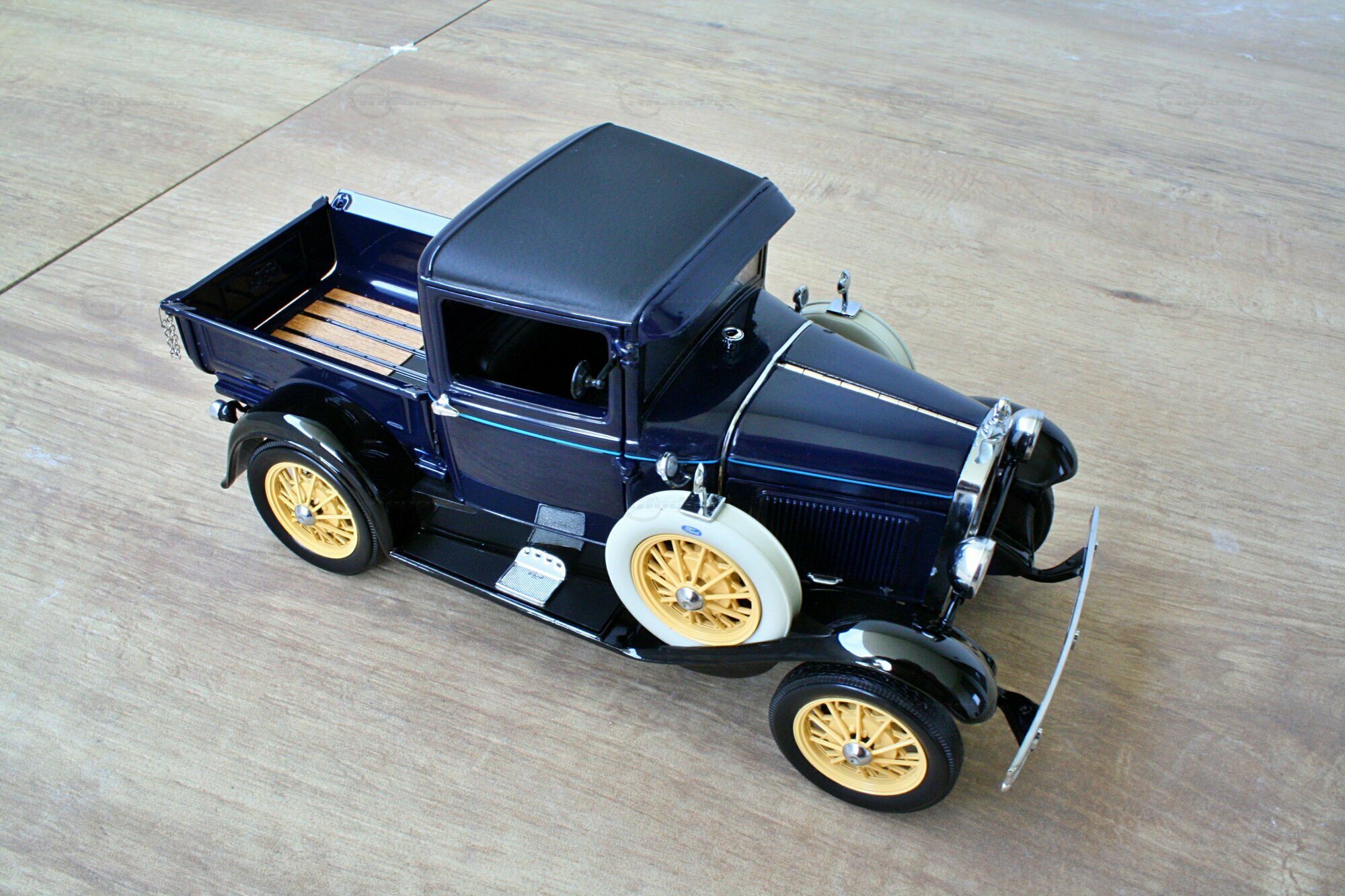
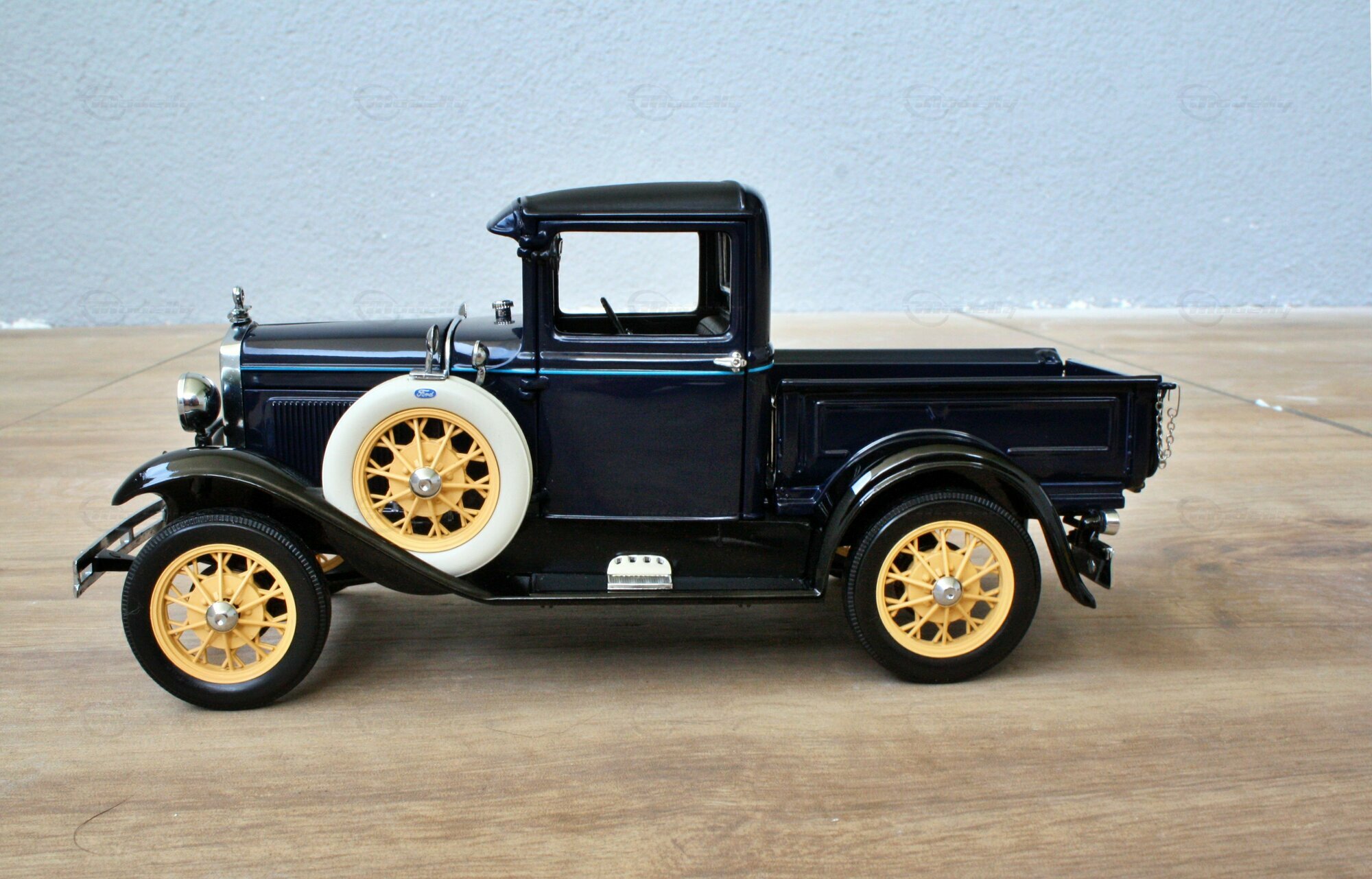
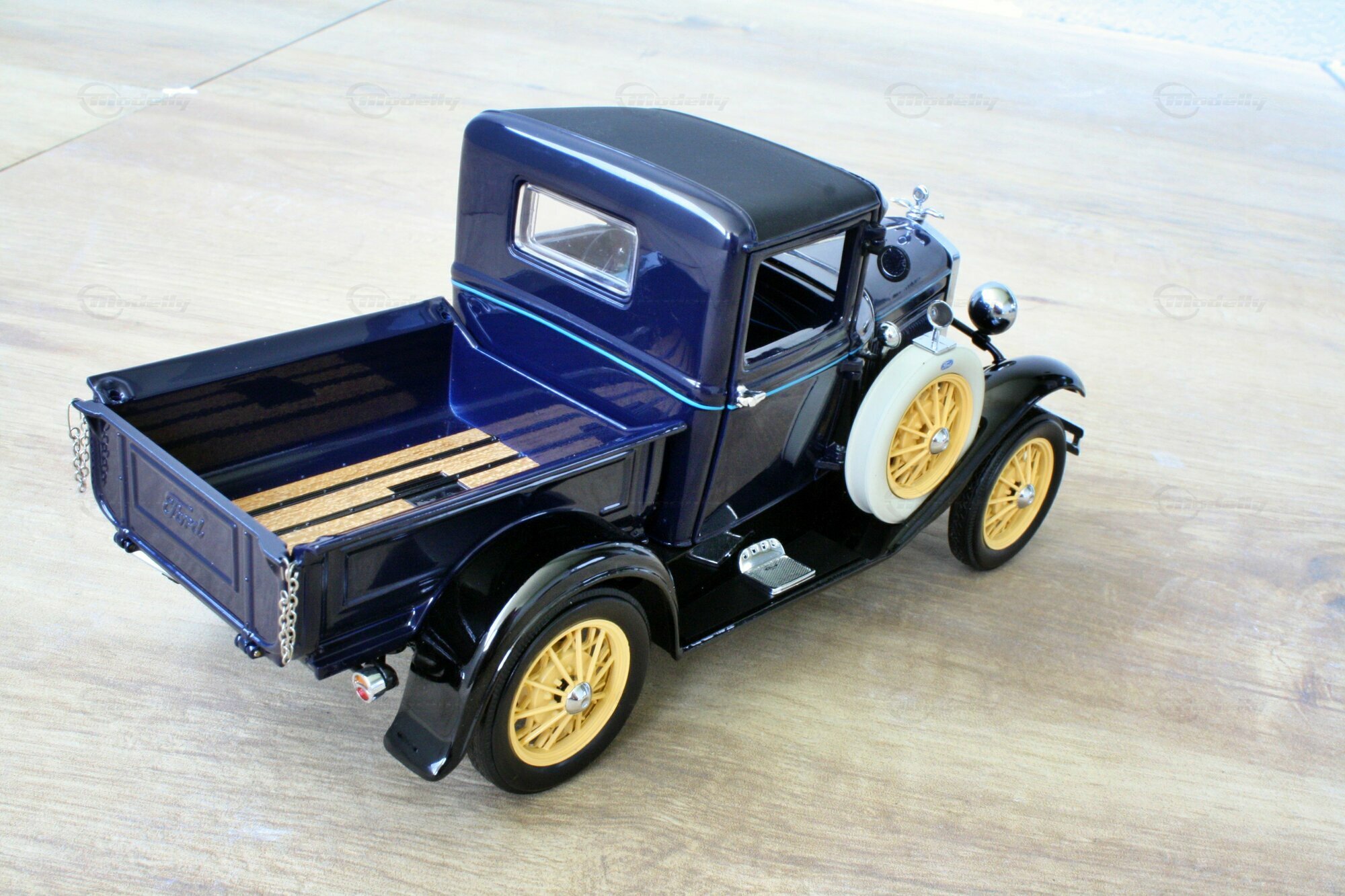
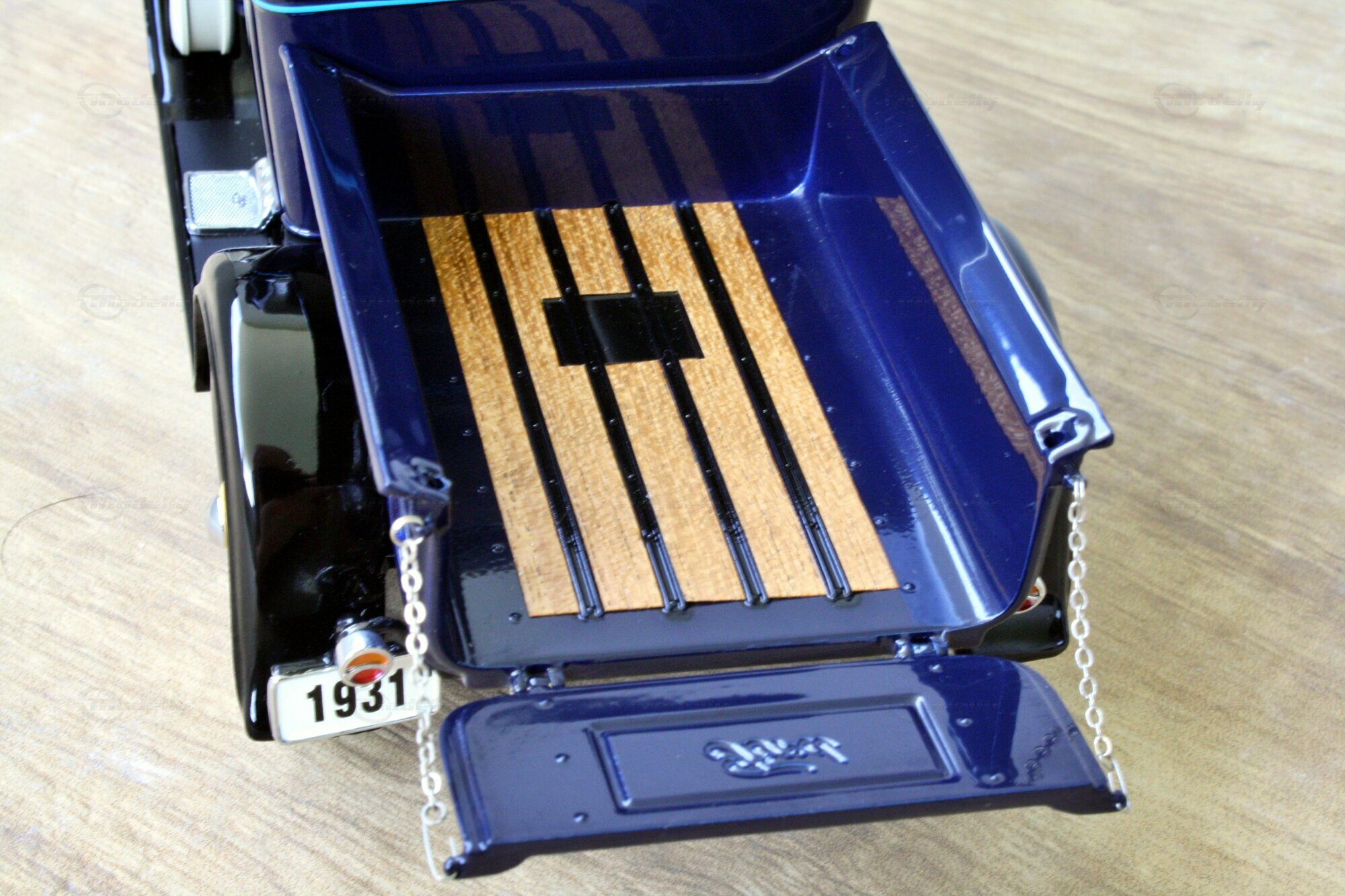
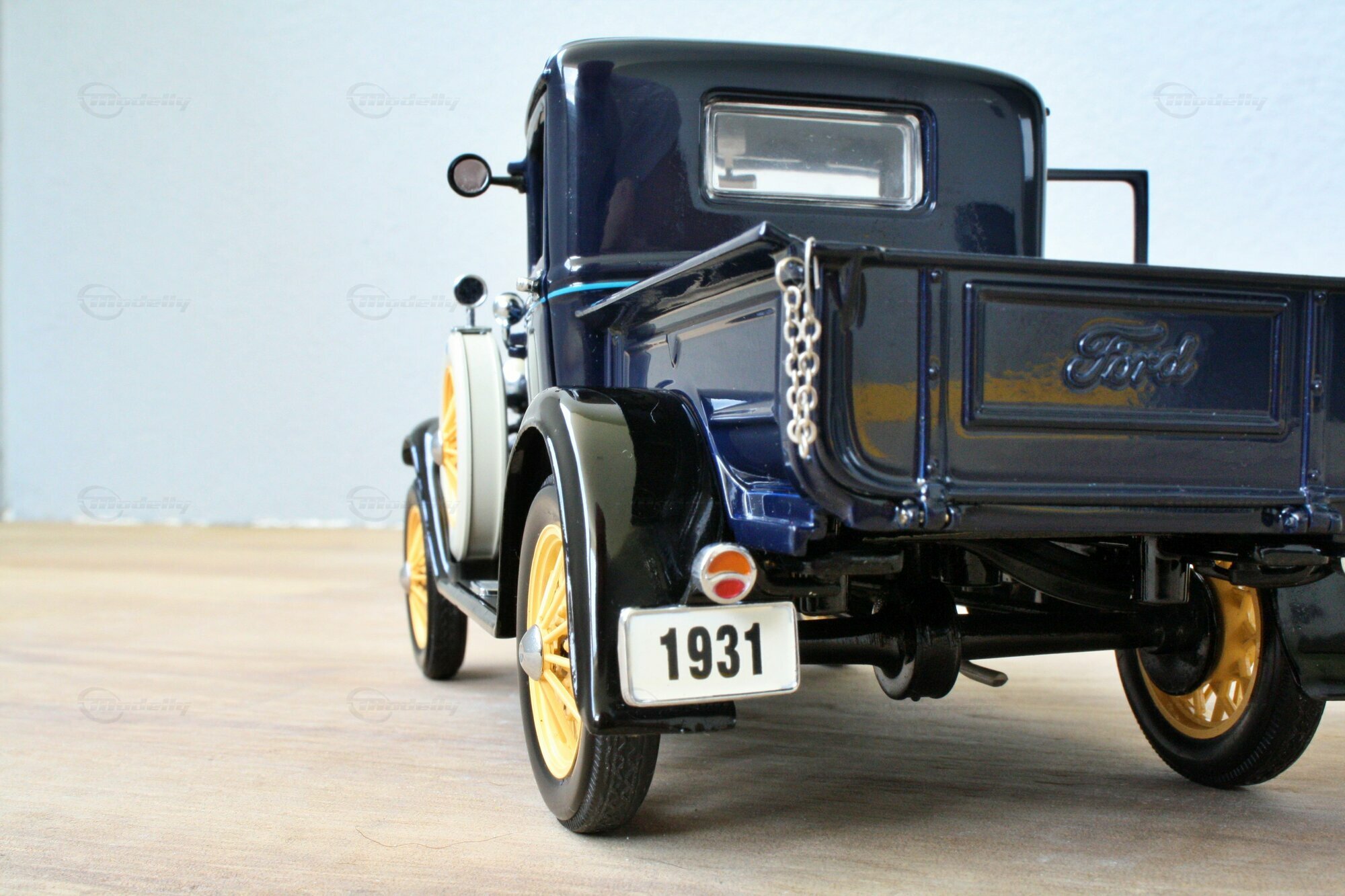
The vehicle shown belongs to the Modelly member “Play-X” and is a 1/18 scale model car from Motor City Classics. The miniature is made as a diecast model; the body and major structural parts are made from metal casting, with plastic parts used for trim pieces, glazing, and interior details. It shows a closed pickup with a short cab and an open cargo bed. You can see the wooden bed planks, the chains on the tailgate, running boards, fenders, a chrome radiator surround, and separately fitted headlights. The hood has the long shape typical of the Ford Model A Pickup, with side louvers. The spare wheels mounted on both sides also match a feature often used on early commercial vehicles and passenger cars. Small Ford emblems are visible on the radiator and on the spare wheel covers. The steering wheel position, window frames, windshield wipers, and mirrors are also modeled as separate parts.
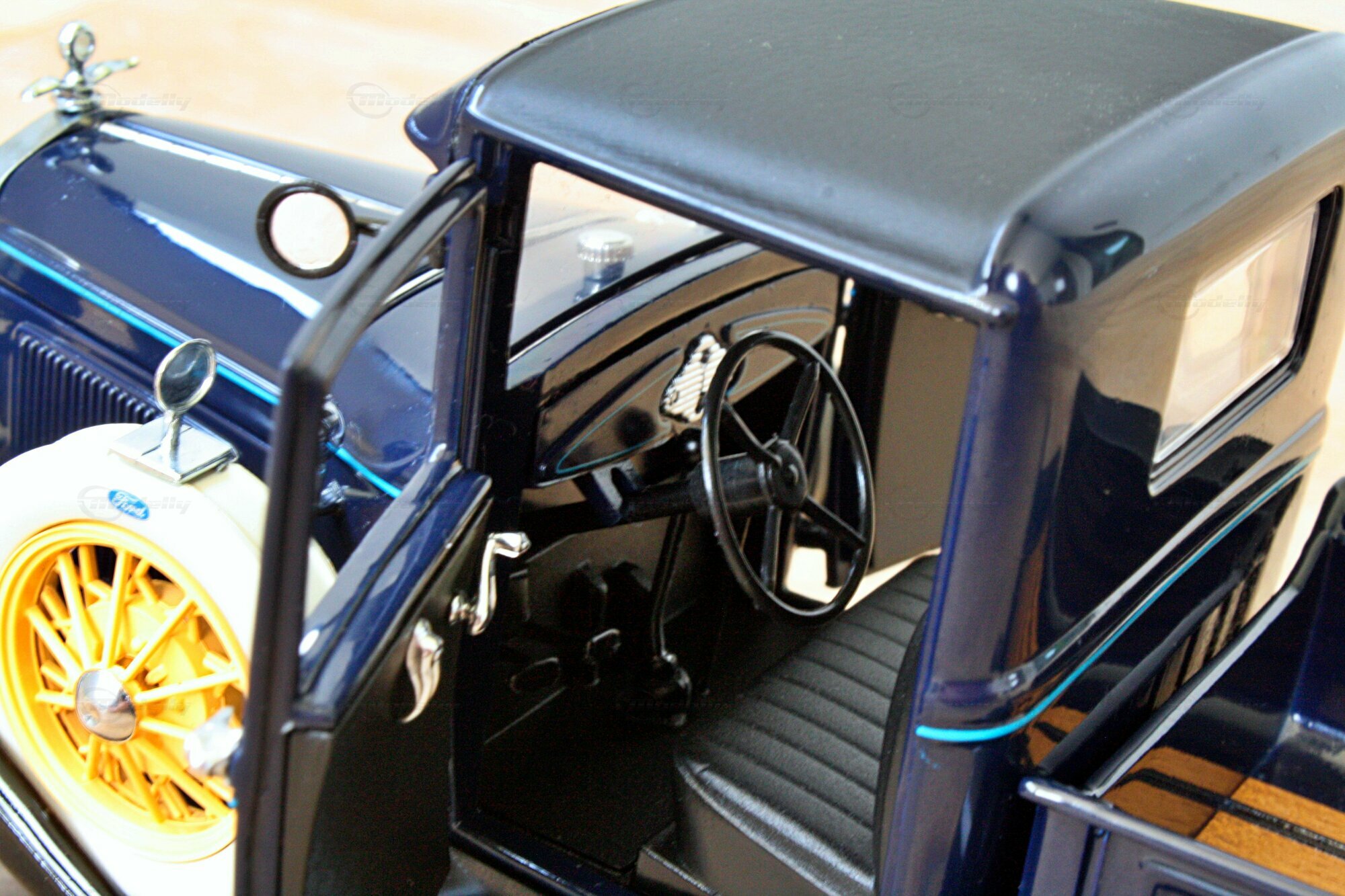
Dark blue paint, whitewall tires, and visible model details
This 1/18 scale model car from Motor City Classics comes in a dark blue, almost black finish with a glossy surface. The roof, cab, hood, cargo bed, and fenders all share this uniform color, while the bumpers, radiator shell, headlamp housings, and some trim pieces are done in silver. The yellowish-ochre spoke wheels create a strong contrast. The side-mounted spare wheels have cream-white tire covers and small blue Ford badges. Black tires with visible tread are mounted up front; the wheels have a spoke look with silver hubcaps. The white spare-wheel covers, chrome parts, and dark body color give the side view a clear, layered look. From the different photo angles, you can also make out the tall radiator front, the separate fenders, the narrow front bumper, and the boxy cargo body. It’s this believable mix of historic body shapes and carefully separated colors that gives the miniature its clean, authentic look.
- Write a first comment about this model now!Any comment can be discussed by all members. It's like a chat.Mention other Modelly members by using @ in your message. They will then be informed automatically.
- Write a first comment about this model now!Any comment can be discussed by all members. It's like a chat.Mention other Modelly members by using @ in your message. They will then be informed automatically.