
Opel Kadett C GT / E 16 V(1:18, BoS Models)
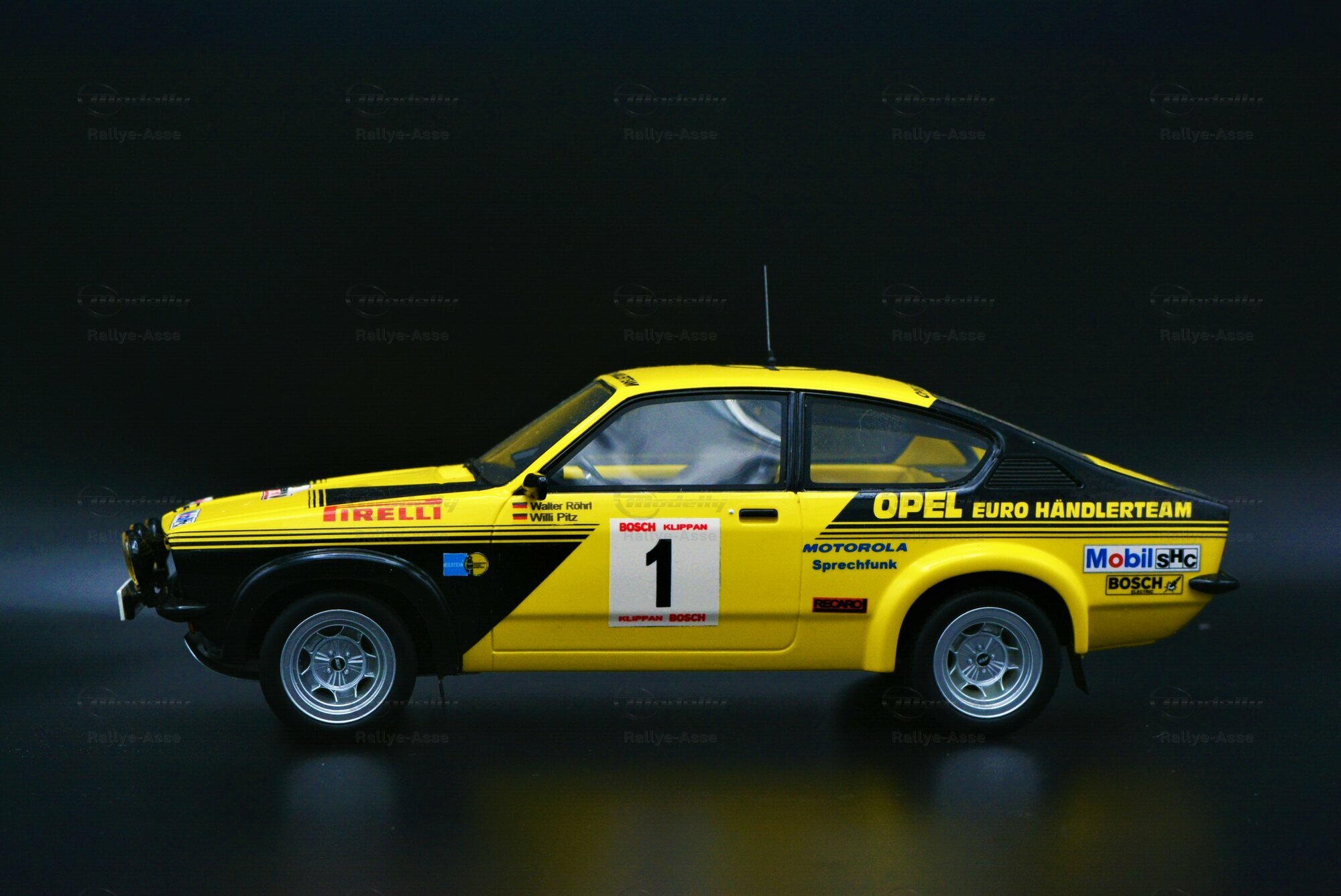
- Opel Kadett C GT / E 16 V (from 1976)
- BoS Models
- 1:18
- Showcase model / No engine
- resin
- racing / multicolored
- locale dealer
- 150,00 EUR
- In near mint condition
- Original packaging exists
- Not for sale
Opel Kadett C GT/E as the rally model’s inspiration
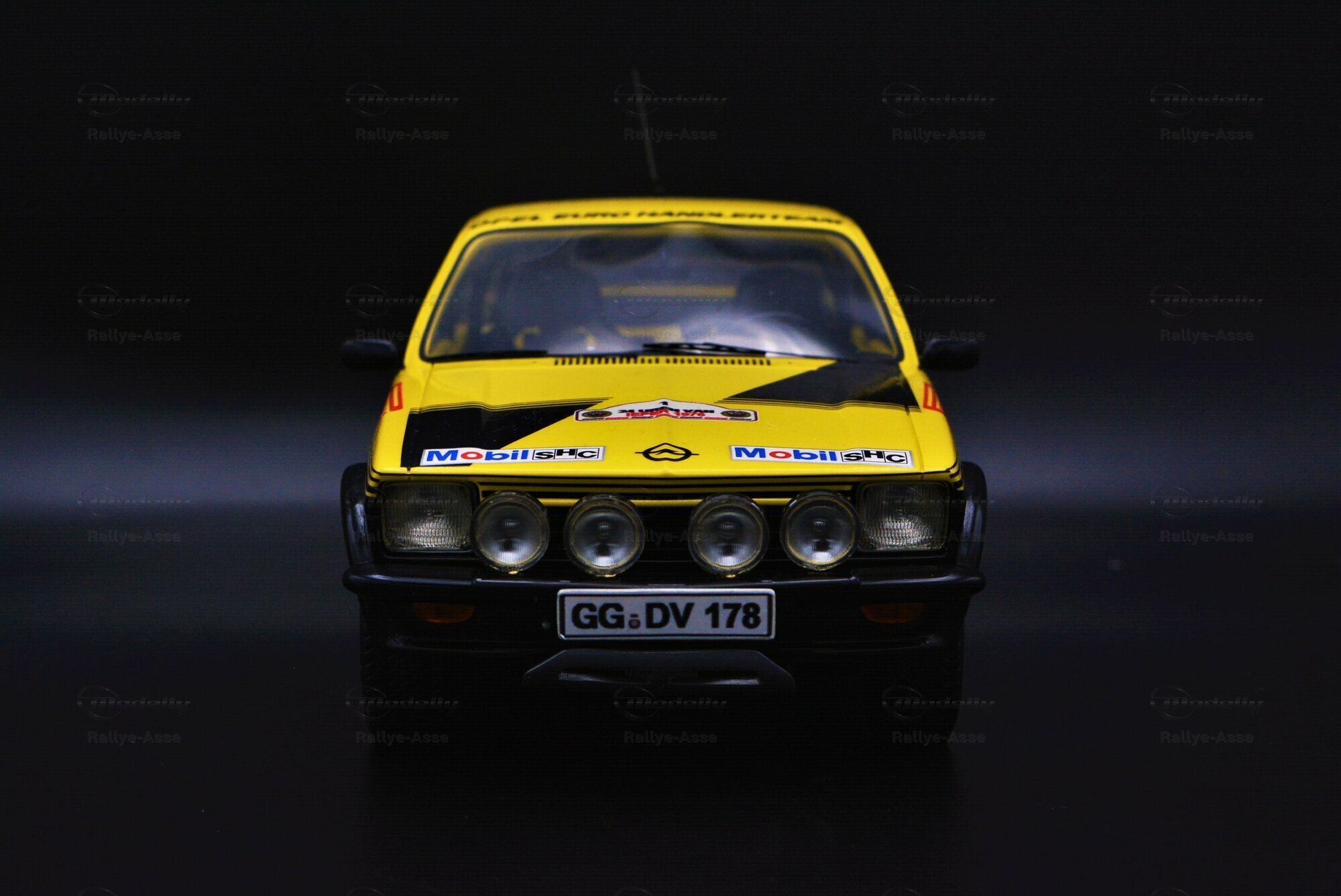
The basis for this miniature is the Opel Kadett C GT/E, a sporty version of the Kadett line. The third Kadett generation was built from 1973 to 1979 and carries the internal designation Kadett C. It followed the Kadett B and, like several GM cars of that era, used the so-called T-Car platform. It was available as a sedan, Caravan, City, Aero, and coupe; for rally racing, the two-door fastback coupe was especially important. With rear-wheel drive, a longitudinally mounted engine, and a relatively simple mechanical setup, the Opel Kadett C GT/E was a solid base for both tarmac and gravel events. The model shown here is based on a car used by the Opel Euro dealer team with Walter Röhrl and co-driver Willi Pitz.
Technology of the Opel Kadett C GT/E and rally upgrades
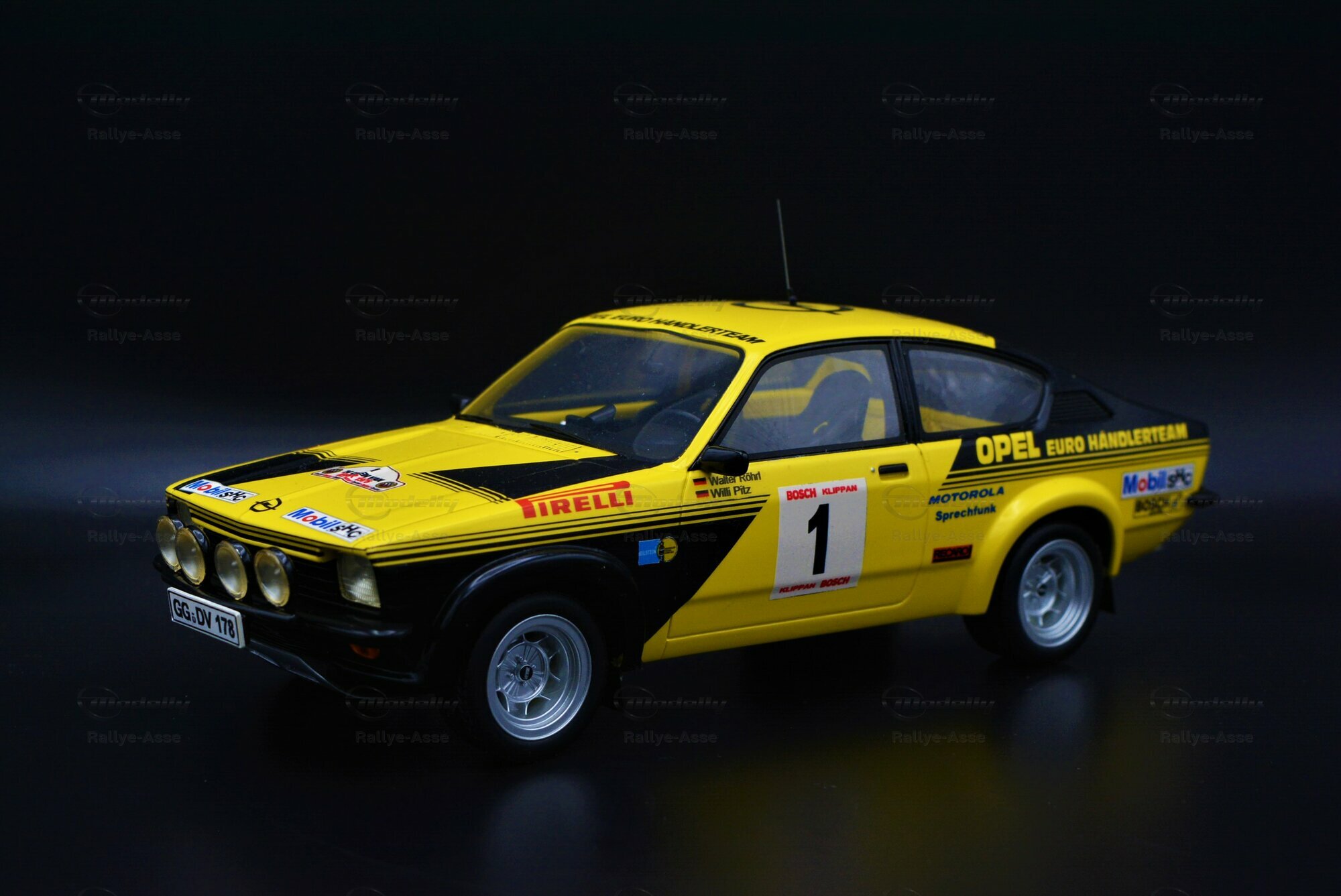
In stock form, the Opel Kadett C GT/E came with the 1.9-liter four-cylinder engine with Bosch L-Jetronic fuel injection. In road trim, the engine made about 105 horsepower and sent its power to the rear axle through a manual five-speed transmission. Up front, it had independent suspension with wishbones, while the rear used a live axle with trailing arms and a Panhard rod. Disc brakes up front, drum brakes at the rear, and direct steering were part of the basic package. Rally cars were modified depending on the rules, with upgrades like reinforced suspension, a roll cage, skid plates, extra headlights, adjusted gearing, a limited-slip differential, and engines tuned to much higher output. The body of the Opel Kadett C GT/E offered a decent starting point thanks to its short overhangs and low weight. The development of the model came out of Opel’s and GM’s engineering structure; the specific engineers responsible for each rally version are not consistently named in the available factory sources.
Rally success with Walter Röhrl and Willi Pitz
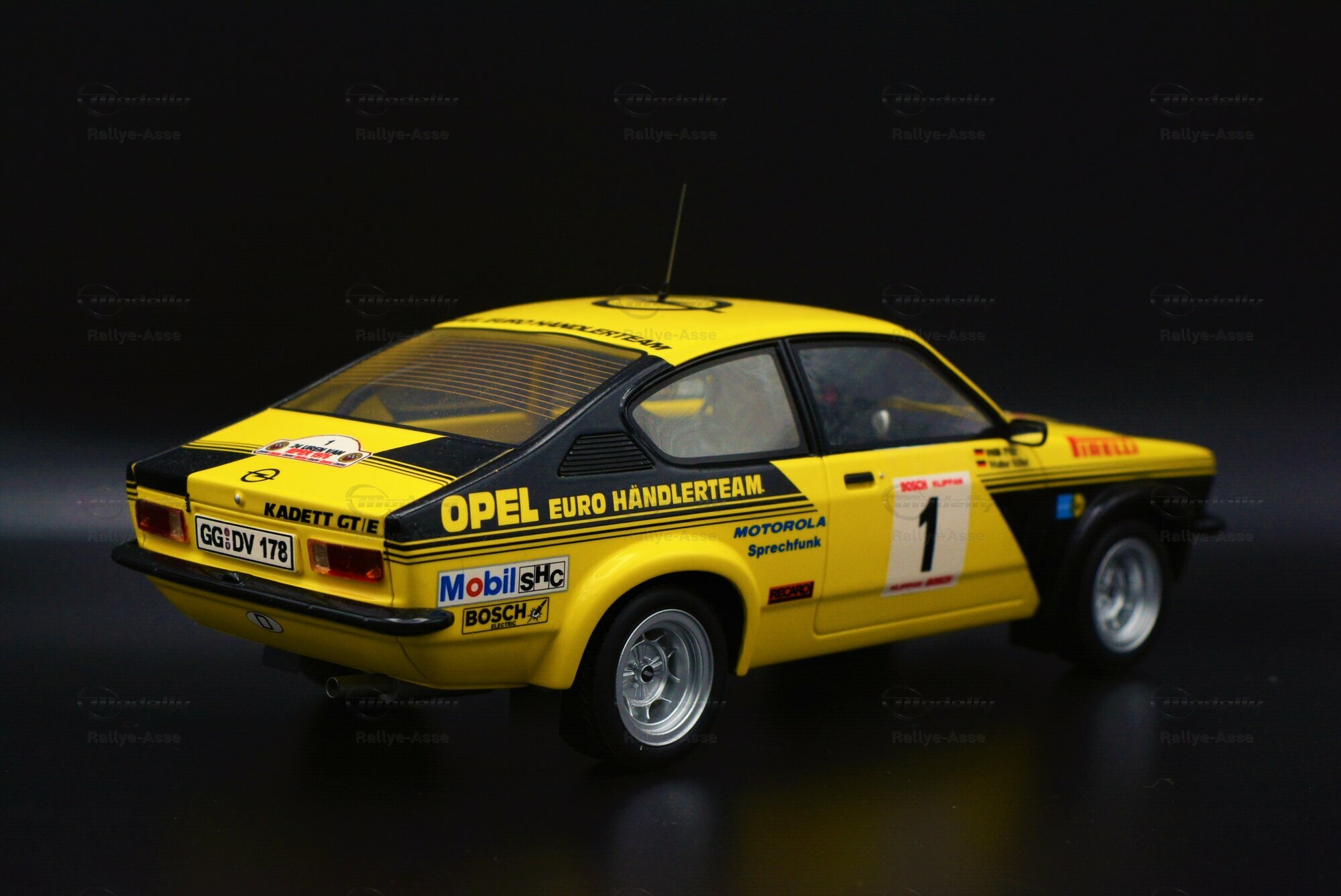
The Opel Kadett C GT/E was used in the 1970s in national championships and international rallies. It is especially well known for its link with Walter Röhrl, who raced together with his co-driver Willi Pitz for the Opel Euro dealer team. The dealer team was not a pure Opel factory team, but it did get support and ran technically prepared cars. Röhrl won many events in the Kadett and became the 1978 German Rally Champion. The use of the compact coupe represented a period when Opel fielded both the Ascona and the Kadett in customer racing and national competitions.
Motorsport history of the Kadett GT/E in the international scene
Besides Walter Röhrl, Kadett GT/E cars were also driven in rallies by racers like Anders Kulläng, Tony Fall, and Jochi Kleint. Depending on the country, event, and technical class, the car competed against machines like the Ford Escort RS, Fiat 131 Abarth, and Lancia Stratos. Its competitiveness came less from one single technical advantage and more from the mix of lightweight construction, chassis tuning, reliable drivetrain hardware, and the experience of the teams running it. On fast special stages, the Opel Kadett C GT/E was just as much at home as it was on changing gravel roads. The four auxiliary lights, as seen on the model, match a typical rally setup for night stages and poor visibility.
BoS Models Opel Kadett C GT/E in 1/18 from the Rallye-Asse collection
The collectible shown here from the Modelly collection of “Rallye-Asse” is a model car in 1/18 scale, made by BoS Models. The miniature is made from resin, so it has a sealed body with no opening doors or hood. Limited to 1000 pieces worldwide, the model recreates the yellow #1 livery with black areas on the hood, fenders, and doors. You can see the “OPEL Euro Händlerteam” lettering, the names Röhrl and Pitz, the license plate GG-DV 178, the black antenna, and the silver multi-spoke wheels. The sides and hood carry decals from Pirelli, Bosch, Klippan, Mobil SHC, Motorola, Recaro, and Bilstein. The black wheel arch extensions, front spoiler, auxiliary lights, and rally equipment define the look. As a model car in 1/18 scale from BoS Models, the miniature shows the coupe’s lines, the contrast of the paint scheme, and the finely reproduced sponsor markings in a display-friendly presentation.
- Write a first comment about this model now!Any comment can be discussed by all members. It's like a chat.Mention other Modelly members by using @ in your message. They will then be informed automatically.
- Write a first comment about this model now!Any comment can be discussed by all members. It's like a chat.Mention other Modelly members by using @ in your message. They will then be informed automatically.