
Mercedes-Benz G55 AMG (W463)(diecast 1:18, Customized)
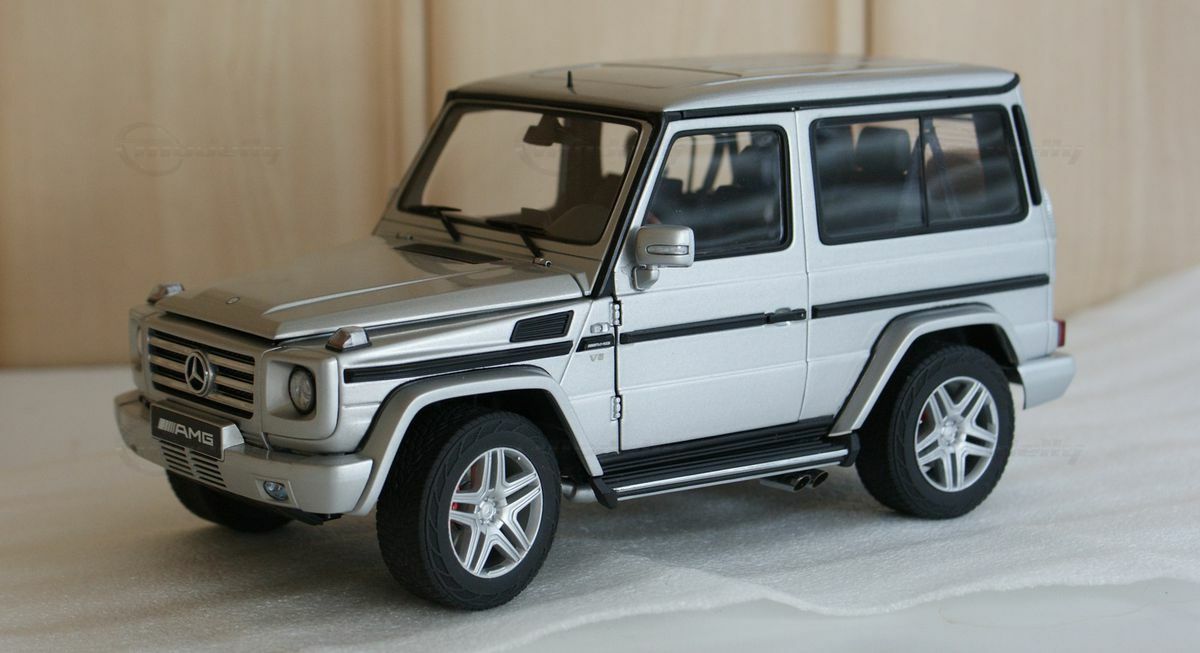
- Mercedes-Benz G55 AMG (W463) (from 2008)
AUTOart MillenniumUmgebautes Modell- 1:18
- Showcase model / No engine
- diecast
- silver
- Not specified
- Not specified
- Not for sale
Icons of the off‑roader: data and placing the original
The mini here is based on the Mercedes-Benz G 55 AMG (W463), a high‑performance version of the G‑Class. The W463 generation has been built since 1990 and marks the G‑Class’s shift from a mostly military/work vehicle to a civil luxury off‑roader. Development and production of the base vehicle were done in Graz at Steyr‑Daimler‑Puch (now Magna Steyr). Technically it stuck to the classic setup: ladder frame, solid axles front and rear, permanent 4WD with a low‑range transfer case and three 100% locking differentials. The sporty version, the Mercedes-Benz G 55 AMG (W463), was realized by the in‑house performance shop AMG (Aufrecht, Melcher, Großaspach). AMG was founded in 1967 by Hans Werner Aufrecht and Erhard Melcher and has been tightly involved with Mercedes’ sporty models since the 1990s. Under design leadership like Bruno Sacco and with engineering input from Steyr engineer Erich Ledwinka, the G‑Class got the boxy, instantly recognizable look it still has today. The Mercedes-Benz G 55 AMG (W463) initially came with a normally aspirated 5.5‑liter (5.5 L / 1.45 gallons) V8; from 2004 it got the well‑known supercharged version with 476 PS (350 kW / ~469 hp) and 700 Nm (516 lb‑ft), and later was bumped to 507 PS (373 kW / ~500 hp). Production of the AMG supercharged V8 versions ended in 2012 and was followed by the G 63 AMG. Typical for the Mercedes‑Benz G 55 AMG (W463) is the high curb weight around 2.5–2.6 t (2.5–2.6 metric tons / 5,512–5,733 lb), a towing capacity up to 3.5 t (3.5 metric tons / 7,716 lb), and a 0–100 km/h sprint in roughly 5.5–5.9 s (0–62 mph in ~5.5–5.9 s) when paired with the 5‑speed automatic.
The RiggsM model: short wheelbase, 1/18 and diecast
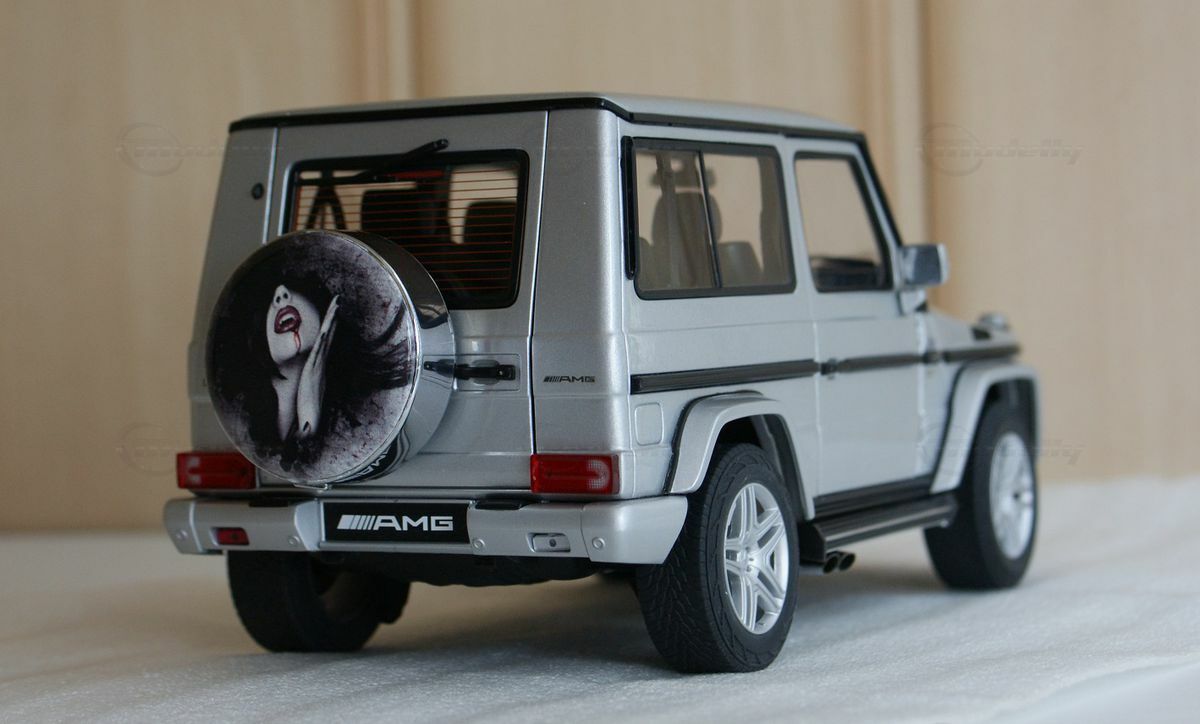
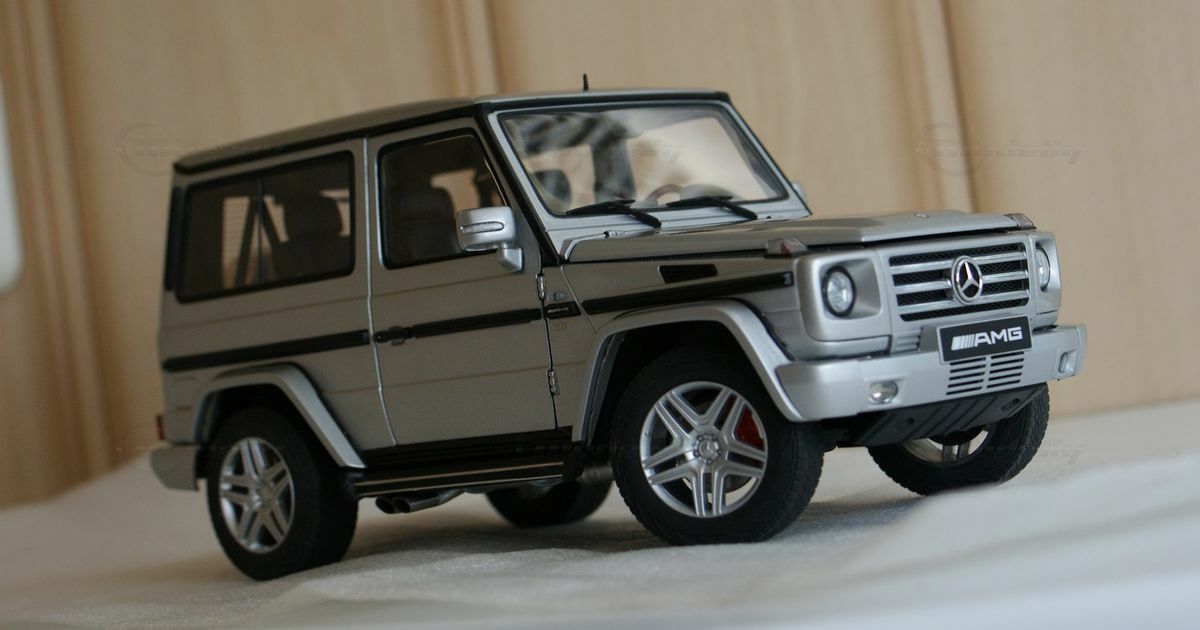
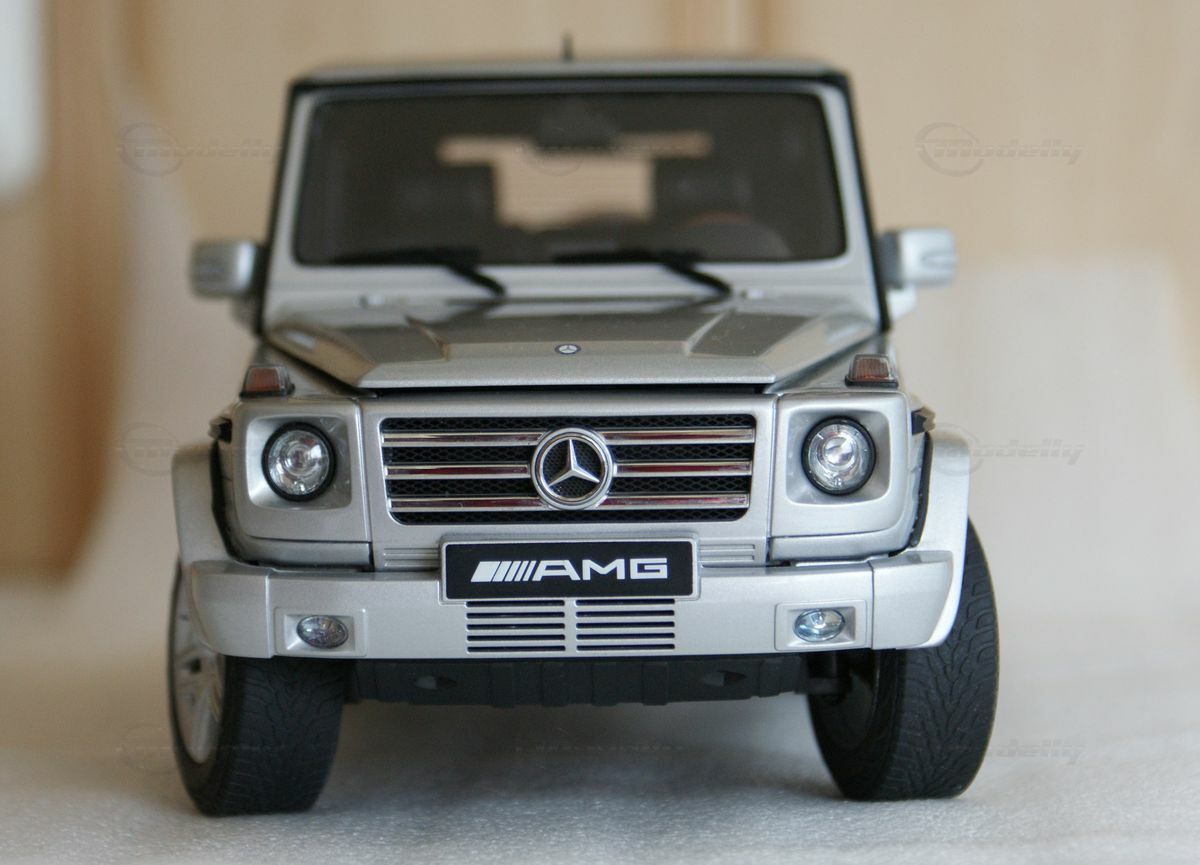
This piece from collector “RiggsM” is a 1/18 scale model from AUTOart Millennium, made of zinc diecast. Important for collectors: this example has been noticeably modified and is not in the original factory condition. So it’s a customized mini, not the stock AUTOart Millennium release. You can see the rare three‑door body with the short wheelbase that the real W463 only had in small numbers and in certain markets. The photos show a silver metallic paint with black protective strips and bumper accents, the big star in the grille and AMG badges front and rear. The spare‑wheel cover is striking: instead of the stock single‑color cap this mini has a custom graphic with a portrait — that’s part of the conversion. The windows are neatly done, including a rear wiper. The wheels match an AMG five‑spoke look, and you can spot brake bits and painted calipers behind them. Doors, hood and tailgate open, letting you see the interior with upright seating and a clearly modeled dashboard.
Technical facts about the Mercedes-Benz G 55 AMG (W463) for collectors
For a realistic reference, here are some key specs of the real car. The Mercedes‑Benz G 55 AMG (W463) used the AMG V8 M113 / M113K with 5,439 cm³ (5.439 liters / 1.45 gallons) displacement. In the supercharged version it puts out 476 PS (350 kW / ~469 hp) at 6,100 rpm and 700 Nm (516 lb‑ft) at 2,750–4,000 rpm; from the 2009 update power rose to 507 PS (373 kW / ~500 hp). Power goes through a 5‑speed automatic (series 722.6) to a permanent all‑wheel system with a Torsen center differential, a low‑range ratio of 2.16:1 and manually engageable locks at front, center and rear. The brakes are big ventilated discs all around; ESP and traction control were added over the years. The body sits on a torsion‑resistant ladder frame built for serious off‑road work: approach/departure angles are roughly 36°/27°, and wading depth is about 600 mm (600 millimeters / 23.6 inches). The Mercedes‑Benz G 55 AMG (W463) is, despite AMG power, still a proper workhorse and follows the tradition of the W460/W461 lines that go back to 1979. Inside, the AMG gave fancier materials, sport seats and multimedia systems of the time. Options like xenon headlights, Parktronic, heated seats and an optional sunroof were available. These straightforward facts help you match mini details — like the big air inlets, the twin side exhaust tips and AMG badges — to the real G 55 AMG (W463).
Modifications and collector notes on the AUTOart Millennium model
Collectors should note again: this is a 1/18 AUTOart Millennium model that’s been modified after purchase. The most obvious change is the custom spare‑wheel cover with the graphic. That piece doesn’t match the stock factory part, so this mini does not represent the factory finish. Still, fit and finish of the diecast body — gap lines, hinge detailing and sharp body edges — show that the underlying quality is intact. The silver paint is even, the black strips are crisp, and the red tail lenses and AMG plates are neatly done. The model’s boxy, short‑wheelbase proportions highlight the G’s upright grille, rectangular front lamps and flared fenders correctly. Since real G 55s are more commonly five‑door, this three‑door mini has a bit of rarity value for collectors who want to show the G‑Class’ variety. Bottom line: it’s a nice display piece, but it’s a modified unit, not the original AUTOart Millennium release.
- Write a first comment about this model now!Any comment can be discussed by all members. It's like a chat.Mention other Modelly members by using @ in your message. They will then be informed automatically.
- Write a first comment about this model now!Any comment can be discussed by all members. It's like a chat.Mention other Modelly members by using @ in your message. They will then be informed automatically.