
Ford Panel Delivery Truck US Mail(diecast 1:24, Danbury Mint)
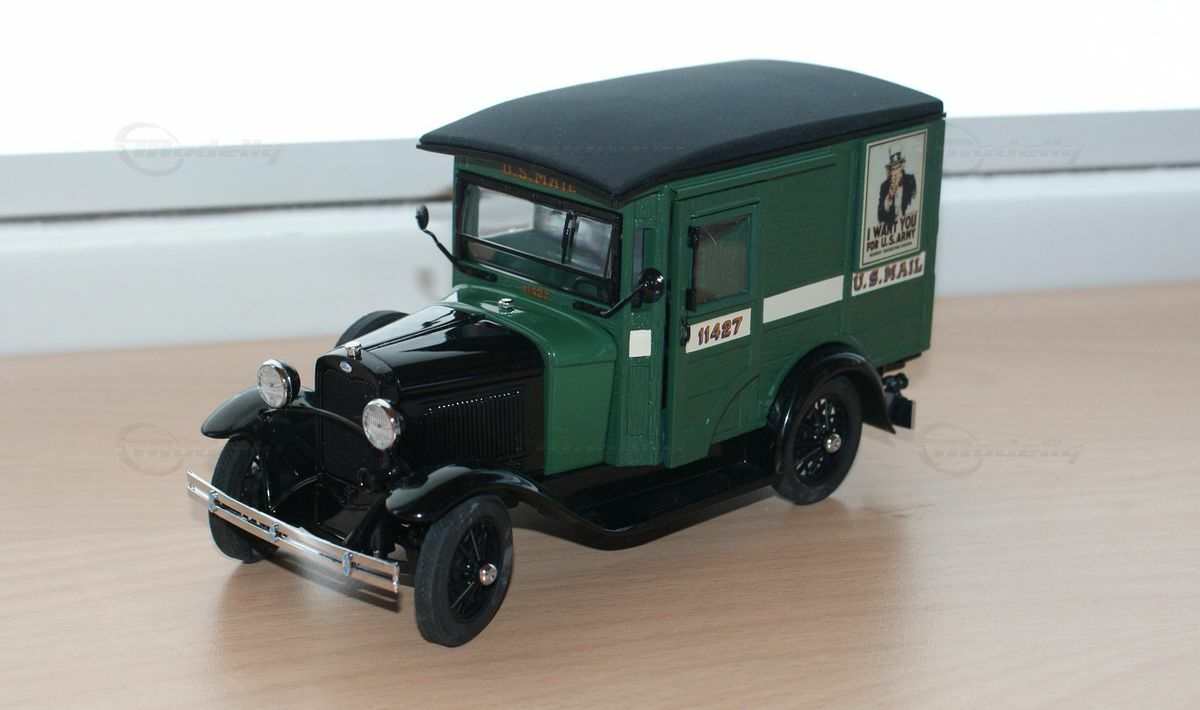
- Ford Panel Delivery Truck US Mail (from 1931)
- Danbury Mint
- 1:24
- Showcase model / No engine
- diecast
- green
- Not specified
- Not specified
- Not for sale
Historical delivery van of the U.S. Post: classification and time context
The model this miniature is based on is the Ford Model A Panel Delivery, a light delivery vehicle built on the Ford Model A chassis that was used by city services like the U.S. Post on lots of inner‑city routes. The Ford Model A Panel Delivery functionally replaced older delivery bodies that were still often based on the Model T and belonged to the first generation of the Model A, built from 1928 to 1931. Its immediate predecessor in the company was the Model T with various delivery bodies; the new design brought a more modern chassis, improved brakes and more comfort for the driver. To give a feel for the period around the model’s launch in 1928: the Kellogg–Briand Pact was signed, Walt Disney released “Steamboat Willie” (the first widely known sound cartoon with Mickey Mouse), and researcher Alexander Fleming noticed the effects of penicillin. I’m just throwing those in so you can place the vehicle in time.
Technical details and body of the real vehicle
The Ford Model A Panel Delivery used the 3.3‑liter (201 cu in) inline four‑cylinder from the Model A with side valves. Output was about 40 SAE hp, paired with a non‑synchromesh three‑speed gearbox. The chassis had solid front and rear axles with transverse leaf springs; braking was mechanical on all four wheels. The tank sat at the firewall area and fed the carburetor by gravity, and the electrical system was a 6‑volt setup. The light panel body was fully enclosed, usually with two outward‑opening rear doors, often with ventilation grilles for postal work, and at least one side sliding door to speed deliveries in narrow streets. Compared with the heavier Ford AA (the 1.5‑tonne (3,307 lb) truck), the Panel Delivery stayed compact and nimble, which made it attractive to post offices and small merchants. Styling decisions were driven by Edsel Ford, while the engineering side was strongly influenced by Joe (József) Galamb and Eugene Farkas, two long‑time Ford engineers. The Ford Model A Panel Delivery was usually painted in muted official colors; for the U.S. Post that often meant green tones with contrasting “U.S. MAIL” lettering.
The Danbury Mint 1/24 model: visible details and materials
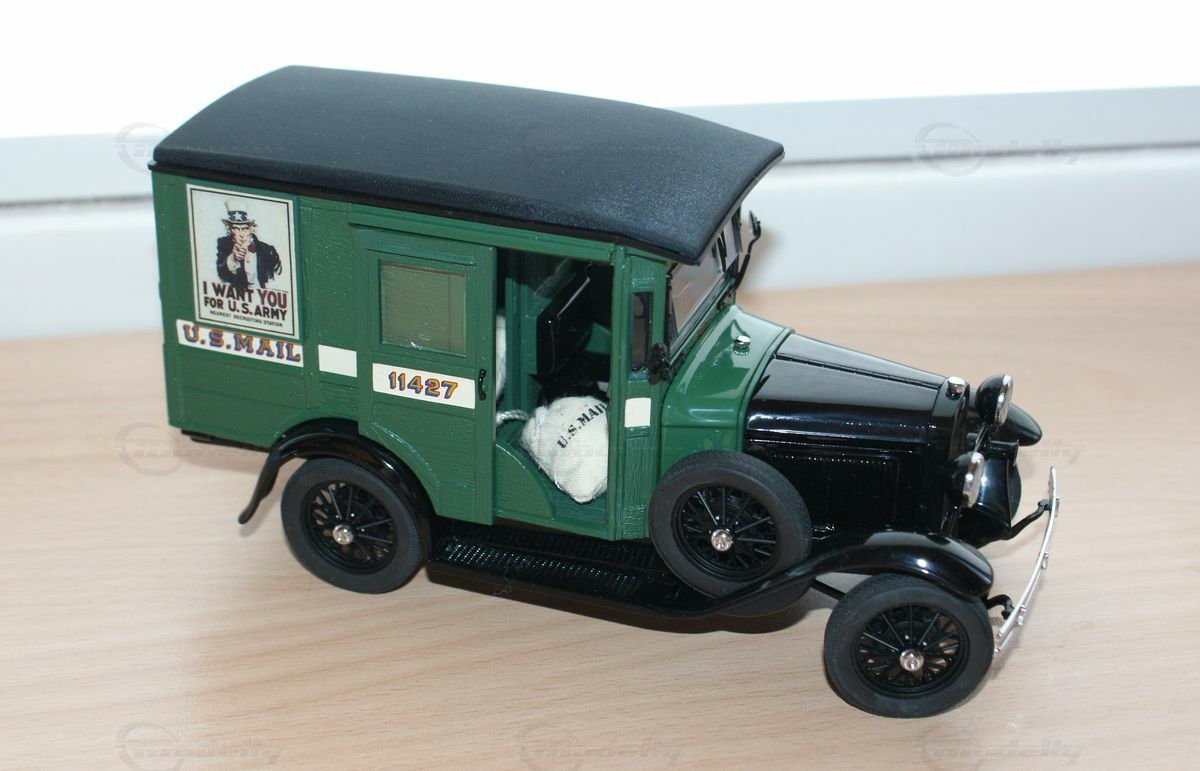
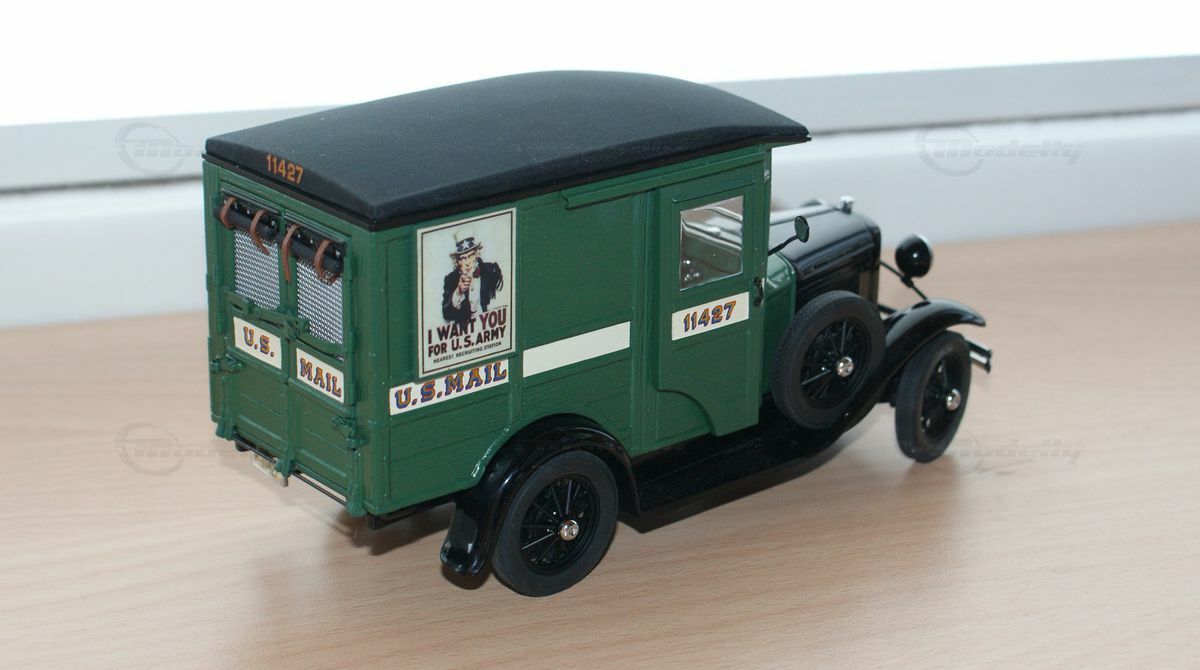
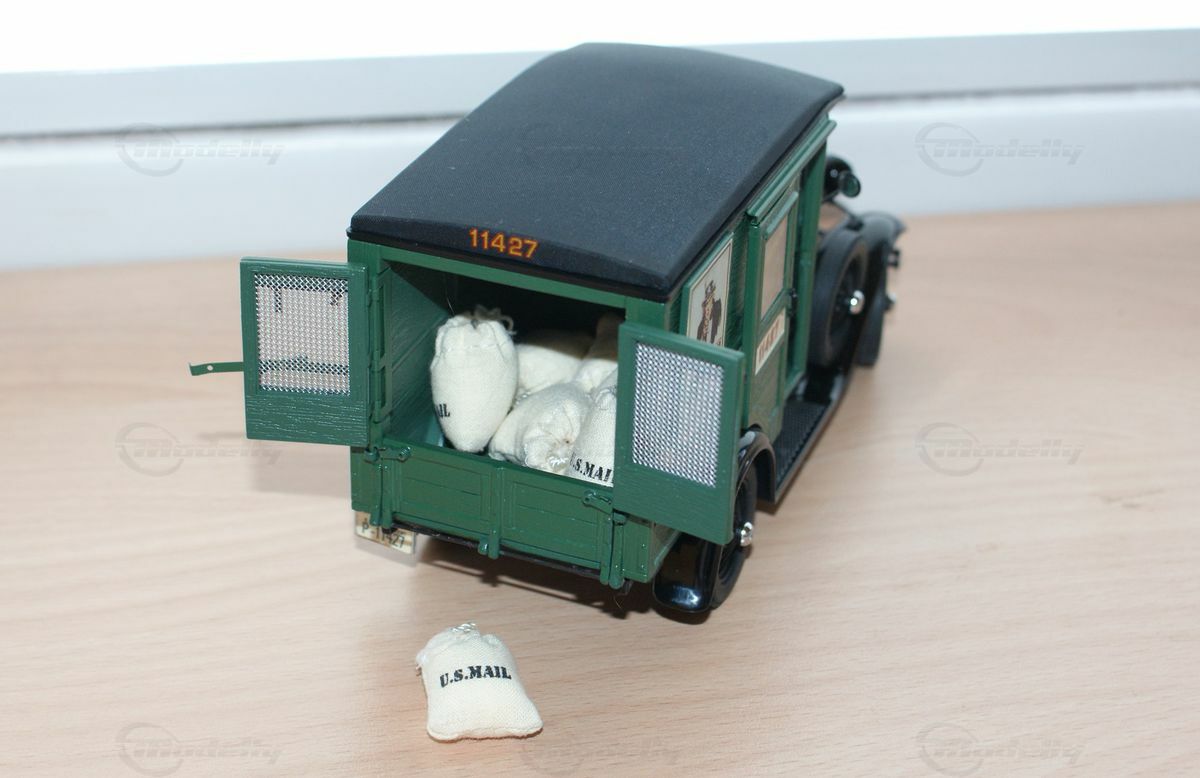
The photos here show a 1/24 scale (1/24) miniature made by Danbury Mint and owned by the collector RiggsM. It’s a diecast metal model, so it has a nice solid weight to it. You can clearly see the classic black spoke wheels, separate chrome headlights with mounts, and the nickel‑plated bumper. There’s no clear reference to a specific real‑world rim maker — it’s just period‑typical wire‑spoke style. There’s a spare wheel mounted on the passenger side and the front fender shapes of the Ford Model A Panel Delivery are reproduced to scale. One neat feature is the sliding side door: in one photo it’s open and you can see modeled mailbags with “U.S. MAIL” printed on them. The front shows the upright radiator shell, the small Ford badge, and separate wipers and mirror. At the back you get double doors with suggested ventilation plates and straps — a detail that fits how the U.S. Post would have used these vans.
Paint, lettering and collector’s notes
The paint job on this model follows a U.S. Post look for the Ford Model A Panel Delivery: the box is a medium green, with hood, fenders and running boards in black. The roof has a matte, slightly textured finish to mimic the period‑typical leather or fabric‑covered roof. You can see the fleet number “11427” and a white stripe like service vehicles wore. Notice the side poster “I WANT YOU FOR U.S. ARMY” after the James Montgomery Flagg motif; those sorts of posters were common in public spaces and fit the vehicle’s era. Several “U.S. MAIL” markings are present, plus small handles, hinges and rivet details on the rear. The shape of the radiator, the narrow free‑standing fenders and straight running boards all point clearly to the Ford Model A Panel Delivery. As a collector’s piece it’s understated but detailed: thin window frames, good proportions, and a simple interior with seats, steering wheel and a basic dash. The modeled mailbags inside make the usage believable — a nice touch if you want it in a postal or commercial‑vehicle themed display. Lastly, just to repeat: it’s a 1/24 scale (1/24) model made by Danbury Mint, diecast for the collector market.
- Write a first comment about this model now!Any comment can be discussed by all members. It's like a chat.Mention other Modelly members by using @ in your message. They will then be informed automatically.
- Write a first comment about this model now!Any comment can be discussed by all members. It's like a chat.Mention other Modelly members by using @ in your message. They will then be informed automatically.