
BMW M3 Cabrio (E46)(1:18, Ottomobile)
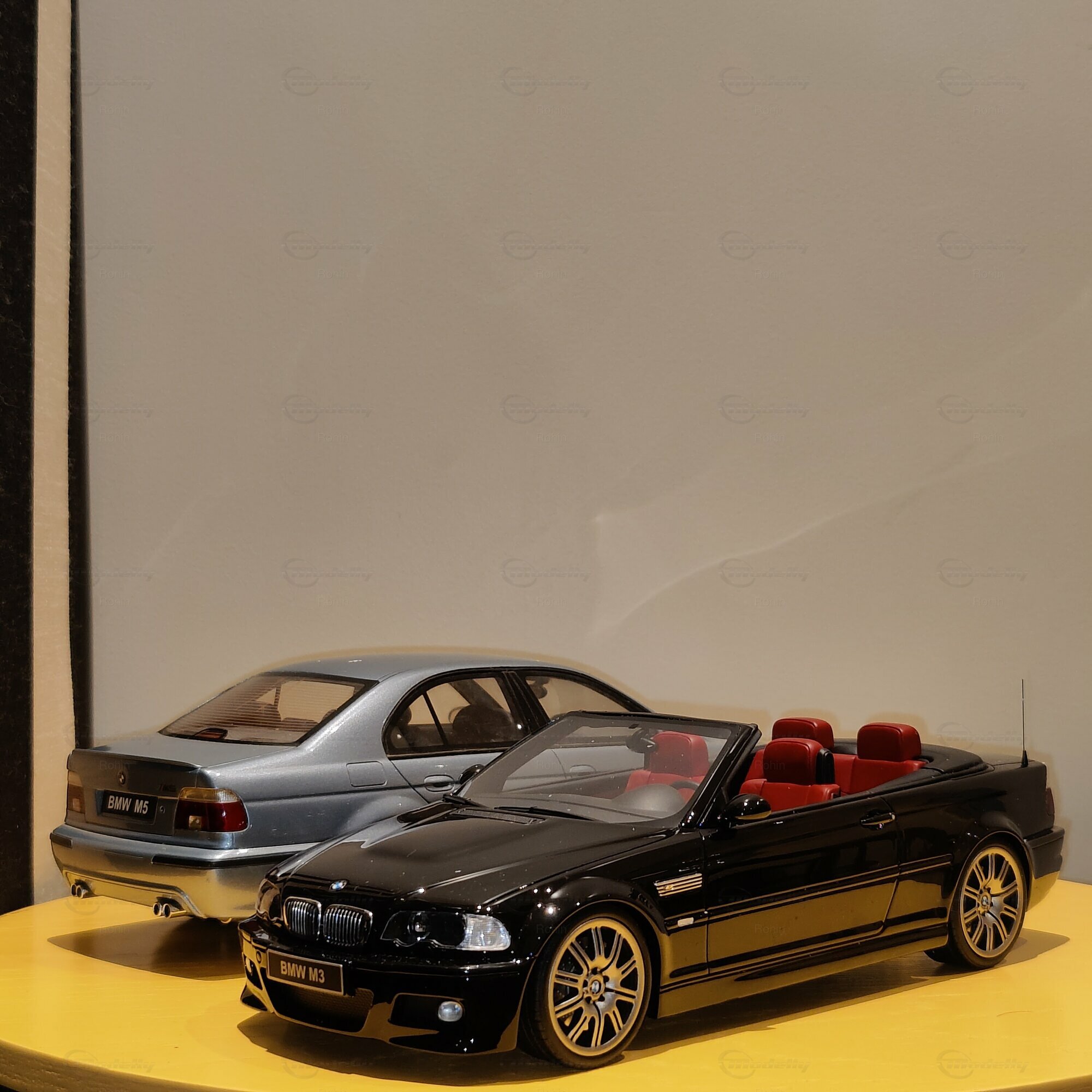
- BMW M3 Cabrio (E46) (from 2000)
- Ottomobile
- 1:18
- Showcase model / No engine
- resin
- Black
- online dealer
- Perfect mint condition
- Original packaging exists
- Not for sale
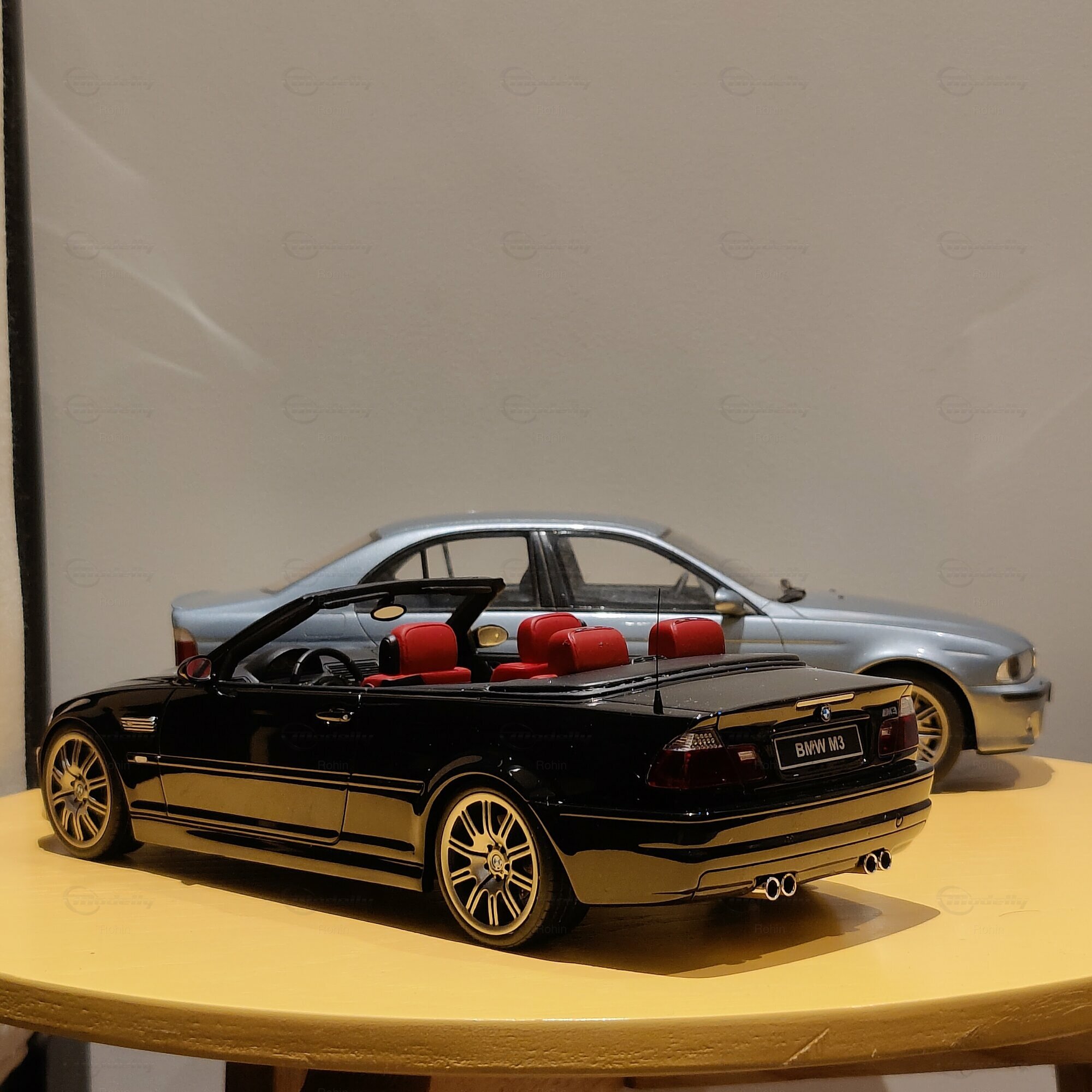
Model in Rohin's collection: 1/18 BMW M3 Cabrio
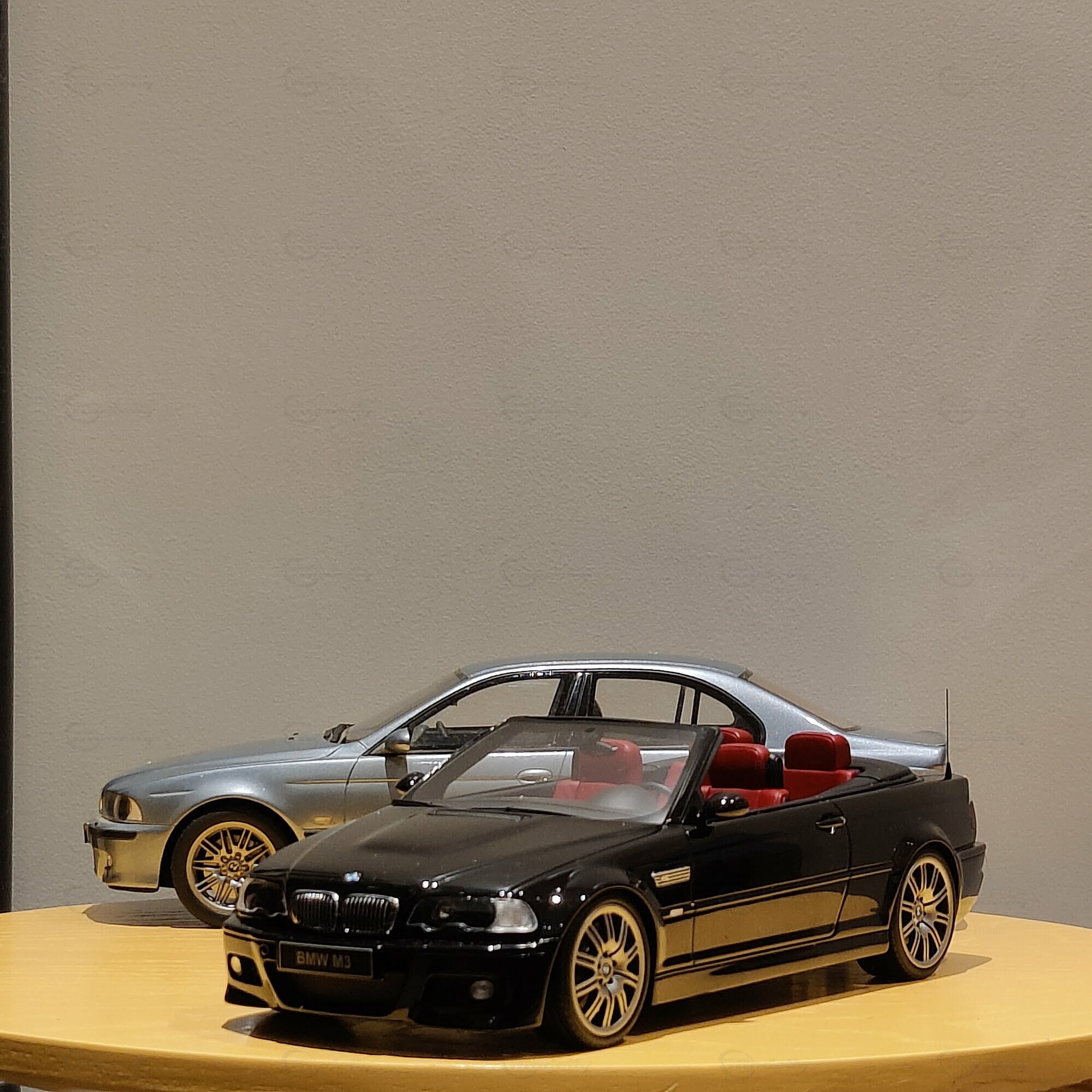
This model belongs to the collection of the Modelly member Rohin and shows a 1/18-scale version of the BMW M3 Cabrio (E46). It was made by Ottomobile from resin, so it's a cast piece without opening doors or hoods — that gives nice, clean panel gaps and smooth surfaces. The photos show a black exterior with a clear glossy coat and a red interior. You can clearly see the typical BMW kidney grilles, the front bumper with integrated fog lights, and the attached side mirrors. At the rear there are four tailpipes and a subtle trunk lip spoiler, matching the real car. The little antenna mast, the M side gills and the shadow lines along the beltline are finely reproduced. This 1/18 resin model from Ottomobile is aimed at collectors who want a faithful, shelf-friendly representation of the BMW M3 Cabrio (E46).
The real thing: tech of the BMW M3 Cabrio (E46)
The real car, the BMW M3 Cabrio (E46), is based on the E46 series and uses the inline‑six S54 with 3,246 cm³ (198.1 in³) displacement. The engine makes 252 kW (338 hp / 343 PS) at 7,900 rpm and 365 Nm (269 lb·ft) at 4,900 rpm. Typical performance figures for the BMW M3 Cabrio (E46) are: 0–100 km/h (0–62 mph) in about 5.8 seconds (with the manual gearbox), an electronically limited top speed of 250 km/h (155 mph), and a curb weight starting at around 1,650 kg (3,638 lb), depending on options and the roof mechanism. It was available with a 6‑speed manual or the automated 6‑speed SMG II. The suspension uses MacPherson front struts and a multi‑link rear with M‑specific springs, dampers and anti‑roll bars. Big ventilated discs came standard, optionally with BMW DSC (Dynamic Stability Control). As a convertible four‑seater it has an electro‑hydraulic fabric roof, extra body stiffening and — unlike the coupe — no CSL variant. The predecessor was the BMW M3 Cabrio (E36), whose S50/S52 engines were less free‑revving and couldn't match the S54's high‑revving character and power.
Historical context, development and styling
The E46 generation in M3 form was produced roughly from 2000–2006. The E46 design work is often associated with Joji Nagashima, under the design leadership of Chris Bangle. The M‑specific body parts — wider fenders, different side skirts, the hood with a power dome and unique bumpers — define the look of the BMW M3 Cabrio (E46). To give a time reference: in 2000 the dot‑com bubble burst, the Summer Olympics were in Sydney, and Britney Spears released “Oops!... I Did It Again.” I’m just throwing those in to help place the car in time. There’s no obvious tuner branding on this specific model; most details match factory equipment.
Details of the Ottomobile miniature and visible features
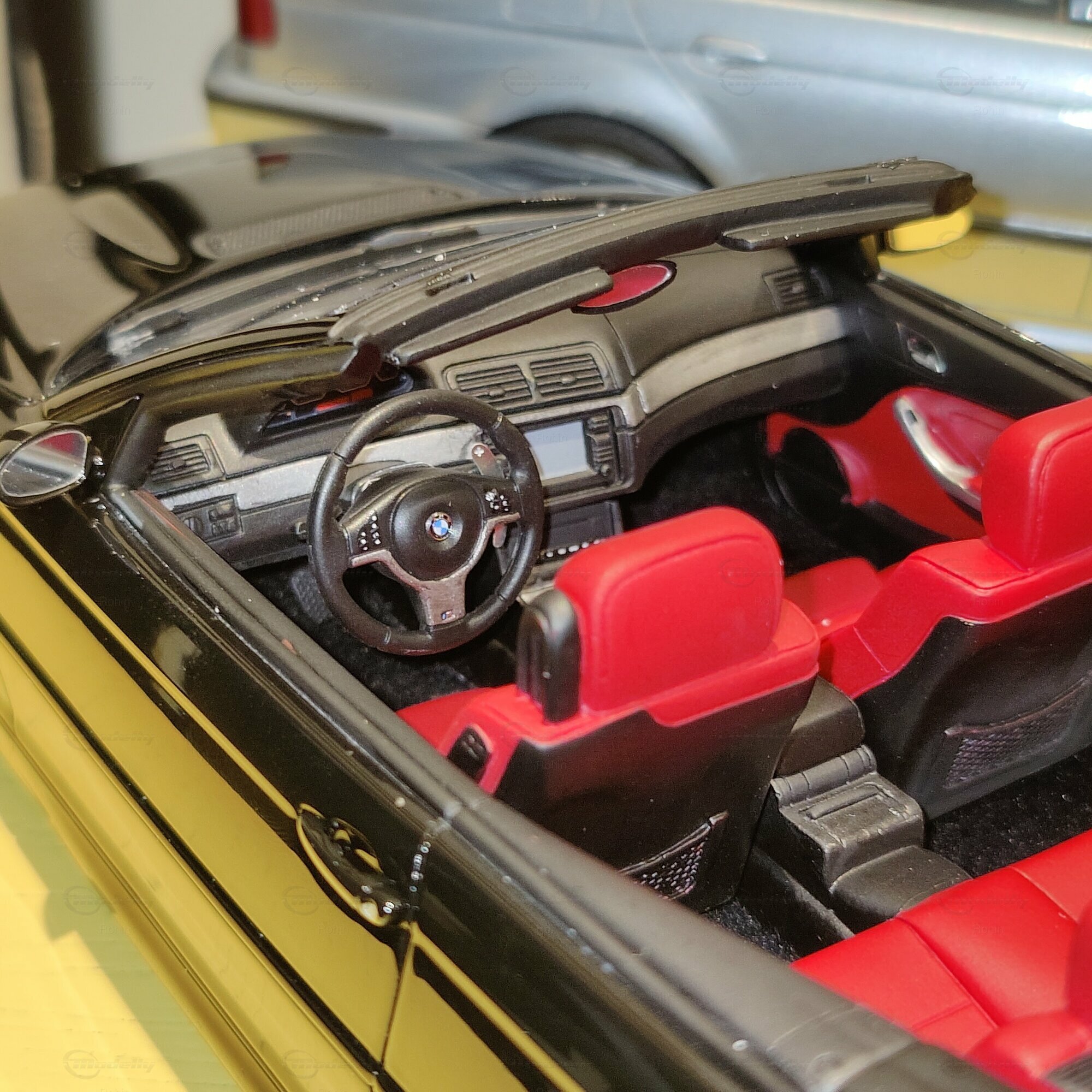
The resin model shows nicely done light clusters and the delicate M gills on the front fenders. The wheels match the look of the 19‑inch BMW Style 67 M double‑spoke rims often fitted to the real BMW M3 Cabrio (E46). The seats, belts and steering wheel are clearly sculpted; the gauges and center console are printed. The paint and surface quality highlight the car’s lines: the front hood bulge, the strong shoulder line and the subtly flared rear with four exhaust tips. The license plates with “BMW M3” lettering and the blue‑and‑white roundels are neatly placed. With the roof down you can see the red rear seats, which give a strong contrast to the black exterior on the shelf. As a resin piece, you shouldn’t expect opening parts — that keeps the body seams clean and the proportions right. Collectors often like that because it preserves crisp contours and tight gaps. Overall, this 1/18 Ottomobile model fits well into a lineup of sporty BMW M cars and adds a detailed, no‑nonsense miniature that conveys the character of the real thing.
- Write a first comment about this model now!Any comment can be discussed by all members. It's like a chat.Mention other Modelly members by using @ in your message. They will then be informed automatically.
- Write a first comment about this model now!Any comment can be discussed by all members. It's like a chat.Mention other Modelly members by using @ in your message. They will then be informed automatically.