
Dodge Monaco "Chicago Fire Dept."(1:32, Scalextric)
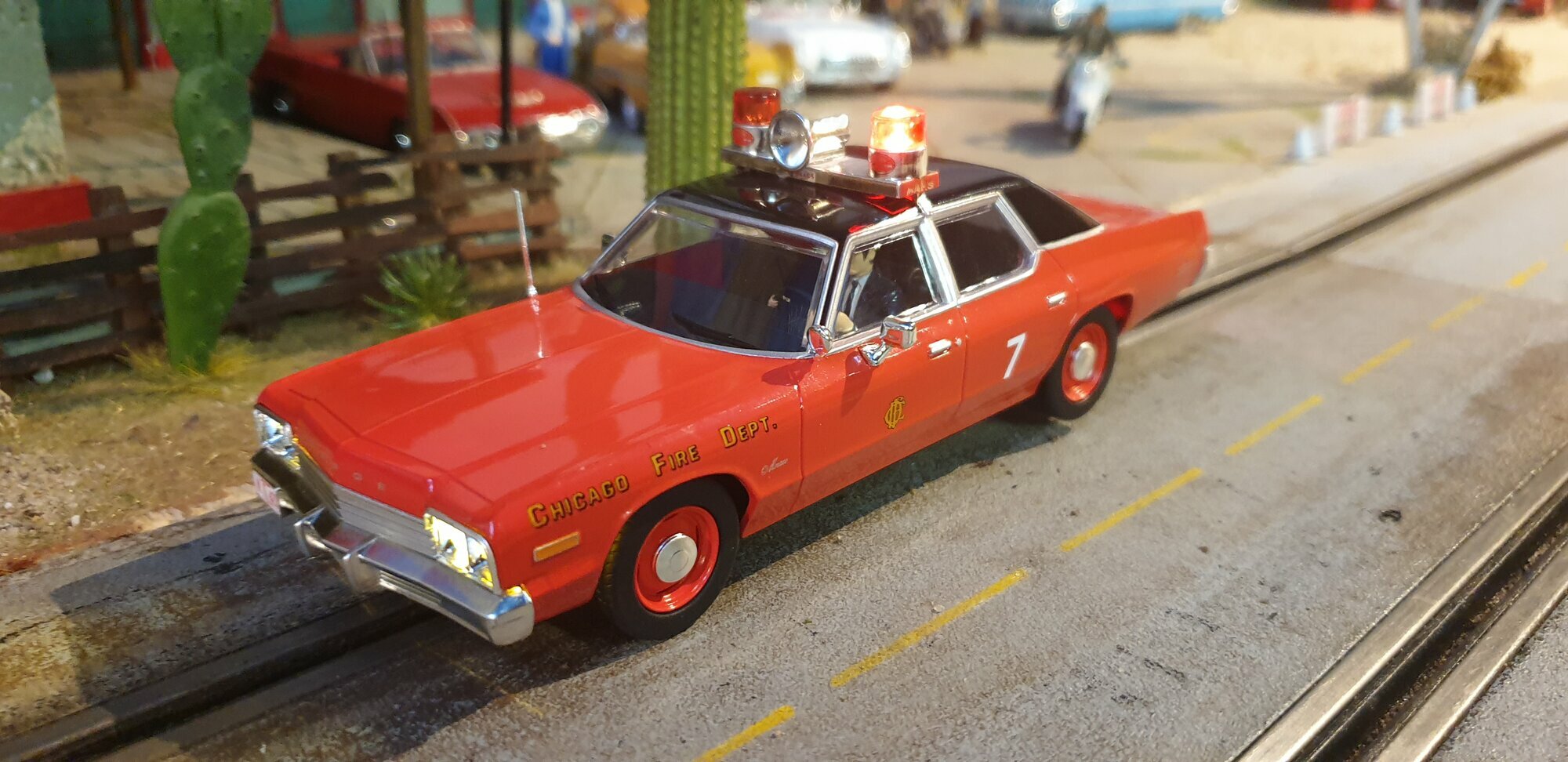
- Dodge Monaco "Chicago Fire Dept." (from 1974)
- Scalextric
- 1:32
- Slotcar
- plastic
- red
- other source
- Perfect mint condition
- Original packaging exists
- Not for sale
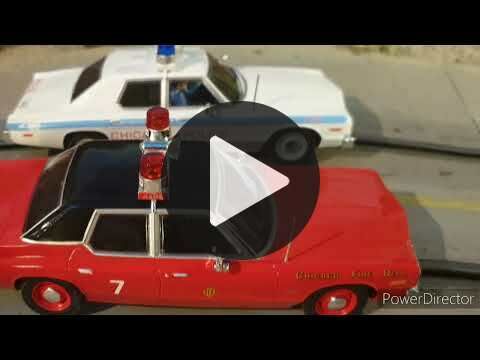
Dodge Monaco as a basis for a service vehicle
The prototype for this miniature is a Dodge Monaco of the fourth generation, built from 1974 to 1977. Back then, Dodge positioned the Monaco as a big American full-size car. The line replaced the Dodge Polara as the brand’s main large sedan and used Chrysler’s C-body platform. Body styles like four-door sedans, hardtops, and station wagons were aimed at families, government agencies, fleets, and taxi companies. The long wheelbase, wide stance, and angular body also made the Dodge Monaco a good candidate for conversion into an emergency vehicle. The year 1974 is easier to picture when you think of a few events from that time: Richard Nixon resigned as U.S. president, the Volkswagen Golf hit the market, and ABBA won the Eurovision Song Contest with “Waterloo.” These examples help place the car’s age and historical setting.
Technology of the big U.S. sedan Dodge Monaco
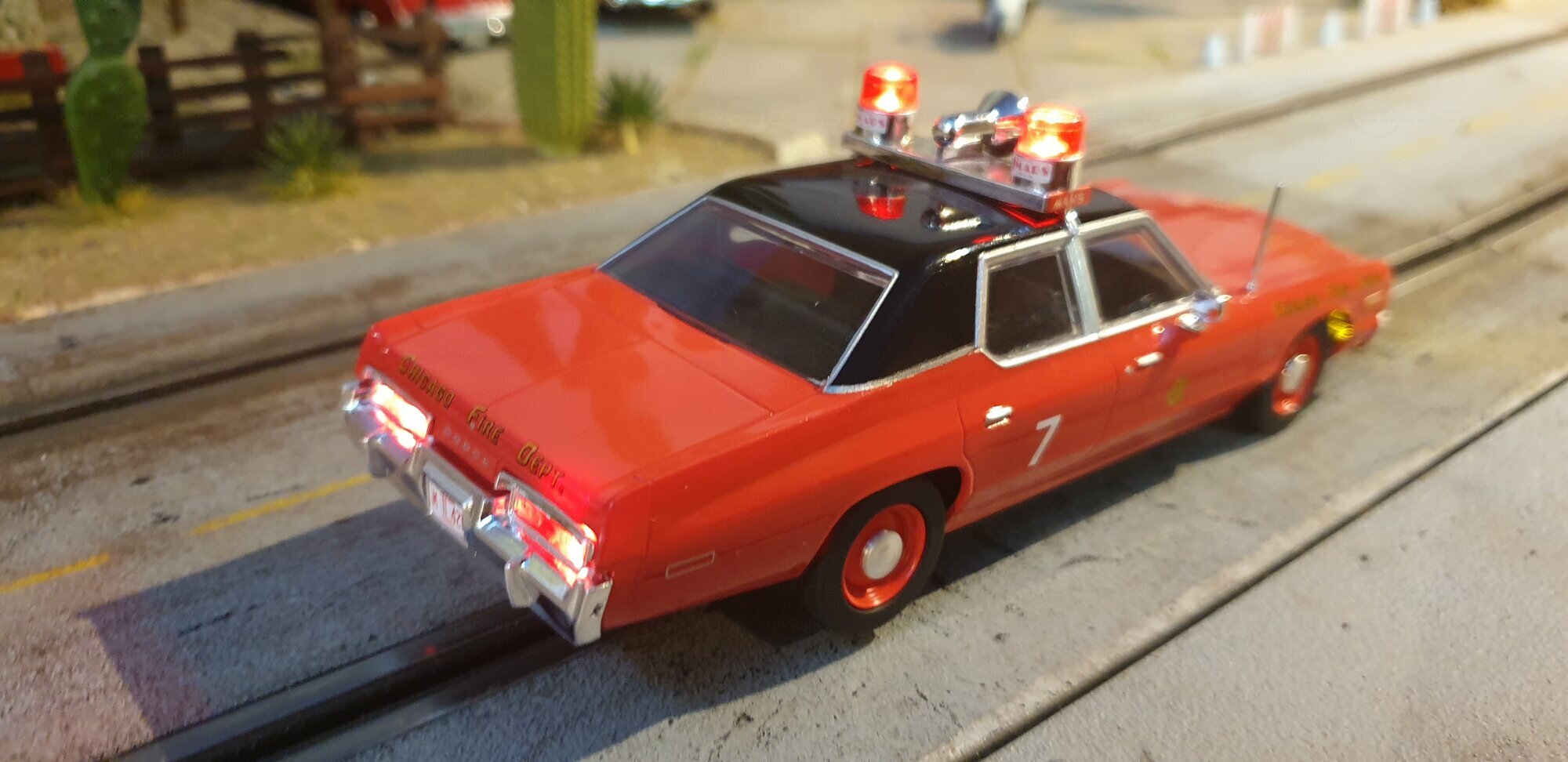
The Dodge Monaco had a unibody construction with a front subframe, independent front suspension with torsion bars, and a rear live axle on leaf springs. This setup was common on American mass-market cars of the era and was designed to handle heavy loads and long distances. The braking system used front disc brakes and rear drum brakes; power steering was part of the equipment on many versions. For 1974, several V8 engines were available, including the 5.9-liter (360 cubic inch), 6.6-liter (400 cubic inch), and 7.2-liter (440 cubic inch) units. Depending on engine choice, carburetor setup, and emissions rules, output and torque varied quite a bit. The TorqueFlite three-speed automatic transmission was the usual drivetrain choice. Police and government cars could be ordered or later fitted with upgraded cooling, a bigger alternator, modified electrical wiring, heavy-duty suspension, and special radio or warning equipment. On the photos, the roof setup of the model especially points to a service-vehicle use.

Scalextric slot car in 1/32 scale from sparksfly’s collection
The model shown from modelly member “sparksfly” is a model car in 1/32 scale, made by Scalextric. It portrays a red Dodge Monaco as a “Chicago Fire Dept.” vehicle with start or unit number 7. The miniature is built as a slot car and runs on electricity: during operation, a metal guide in the track slot picks up power that feeds an electric motor inside the model. The scene shown makes the guide rail of the track and the embedded conductors easy to see. The model is mainly made of plastic; the body, interior parts, and many of the add-on details follow the typical slot-car construction. Chrome-like bumpers, window frames, side mirrors, and hubcaps clearly stand out from the red body. The photos also show lit headlights, taillights, and red roof beacons. So the lighting isn’t just for show — it’s a visible electrical function of the miniature.
Red Chicago Fire Dept. livery and visible details
The paint scheme combines a strong red on the fenders, doors, hood, and rear with a black roof. Along the front doors and front fenders, “Chicago Fire Dept.” is written in gold lettering; on the doors there is the white number 7 plus a small yellow emblem. The wheels are painted red and wear silver hubcaps. On the roof sits a chrome-looking light and siren bar with two red rotating lights and a centrally placed loudspeaker horn. Antennas are mounted at the front and rear. The license plates, chrome trim along the body, and dark-tinted windows complete the look. As a model car in 1/32 scale by Scalextric, the miniature shows a clear connection between a U.S. sedan, fire department markings, and slot-car technology. Its visual impact in the photos comes especially from the contrast between the red body, black roof, shiny chrome parts, and the active lights in the staged street scene.
- Write a first comment about this model now!Any comment can be discussed by all members. It's like a chat.Mention other Modelly members by using @ in your message. They will then be informed automatically.
- Write a first comment about this model now!Any comment can be discussed by all members. It's like a chat.Mention other Modelly members by using @ in your message. They will then be informed automatically.