
BMW 3.0 CSi(diecast 1:18, AUTOart BMW dealer edition)
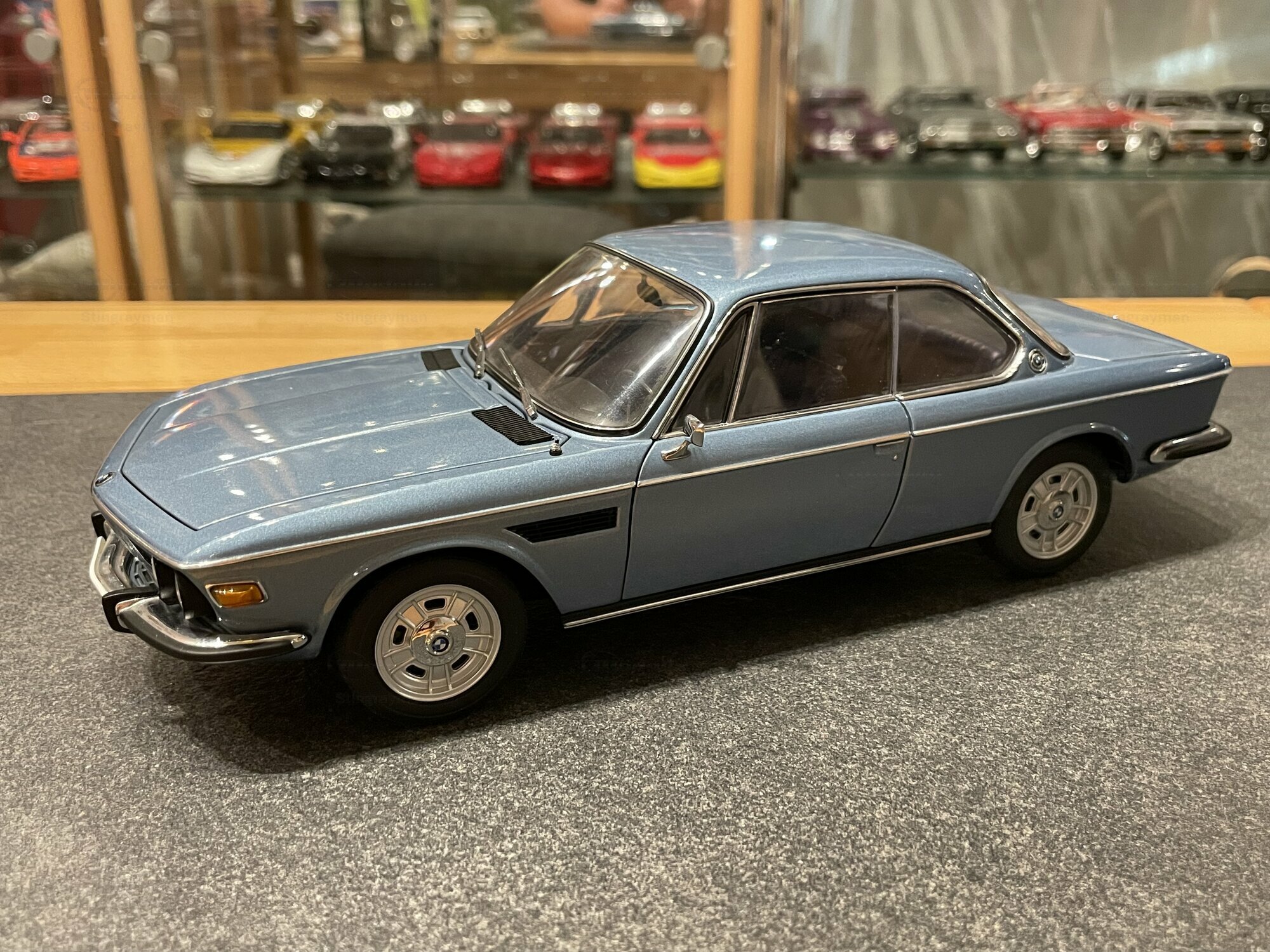
- BMW 3.0 CSi (from 1971)
- AUTOart BMW dealer edition
- 1:18
- Showcase model / No engine
- diecast
- Fjordblau Metallic
- Slight shortcomings / damage
- Original packaging does not exist
- Not for sale
Historical context and series of the BMW E9
The real car this model is based on is the coupe BMW 3.0 CSi, which belongs to the E9 series. The E9 generation was built from 1968 to 1975, the specific variant from 1971–1975. The BMW 3.0 CSi is the fuel‑injected version of the 3.0‑liter coupe and is mechanically based on the predecessor BMW 2000 C/CS, which still had a 2.0‑liter (122 cu in) four‑cylinder and a different front end. The bodies of the E9 coupes were made by Karmann and then finished by BMW. The design is credited to BMW’s chief stylist Wilhelm Hofmeister, clearly visible in the pronounced Hofmeister kink in the C‑pillar. The inline‑six engine of the M30‑family was developed under BMW engineer Alexander von Falkenhausen. The 3.0 CSi uses the Bosch D‑Jetronic injection system, which improves mixture control and raises output versus the carburetted CS to about 200 PS (148 kW; 199 hp) at 5,500 rpm; peak torque is around 272 Nm (201 lb‑ft). To place it in time: in 1971 the Intel 4004 was introduced as the first commercial microprocessor, NASA’s Apollo 14 took Alan Shepard to the Moon, and John Lennon released the famous solo song “Imagine.” I’m just throwing those in so you get a feel for the car’s era.
Tech, specs and standing of the original
The BMW 3.0 CSi coupe uses a unibody steel construction with MacPherson front suspension and a semi‑trailing/strut type rear setup. It has disc brakes all around — the front ones are vented — and the length vs. wheelbase proportions (about 4.66 m (15 ft 3.5 in) overall with a 2.62 m (8 ft 7.2 in) wheelbase) give it fairly nimble handling for its day. Curb weight varies by model and equipment but sits at roughly 1,400 kg (3,086 lb). Gearboxes offered were a 4‑speed manual and a 3‑speed automatic from the factory; later cars sometimes got a 5‑speed Getrag box. Top speed for the BMW 3.0 CSi is around 220 km/h (137 mph), which made it one of the faster European GTs of the early 1970s. The interior styling with wood veneer, clear instrumentation and frameless side windows placed the E9 a step above the BMW sedans of the same era. Overall, around 30,000 cars of the E9 line were built; about 8,100 of those were the 3.0 CSi. The chassis also formed the basis for the lighter, race‑focused CSL homologation specials that made a big mark in touring car racing. The direct predecessor is the BMW 2000 C/CS, and the E9’s role was later taken over by the E24 6 Series in the late 1970s.
The 1/18 model in Stingrayman’s collection
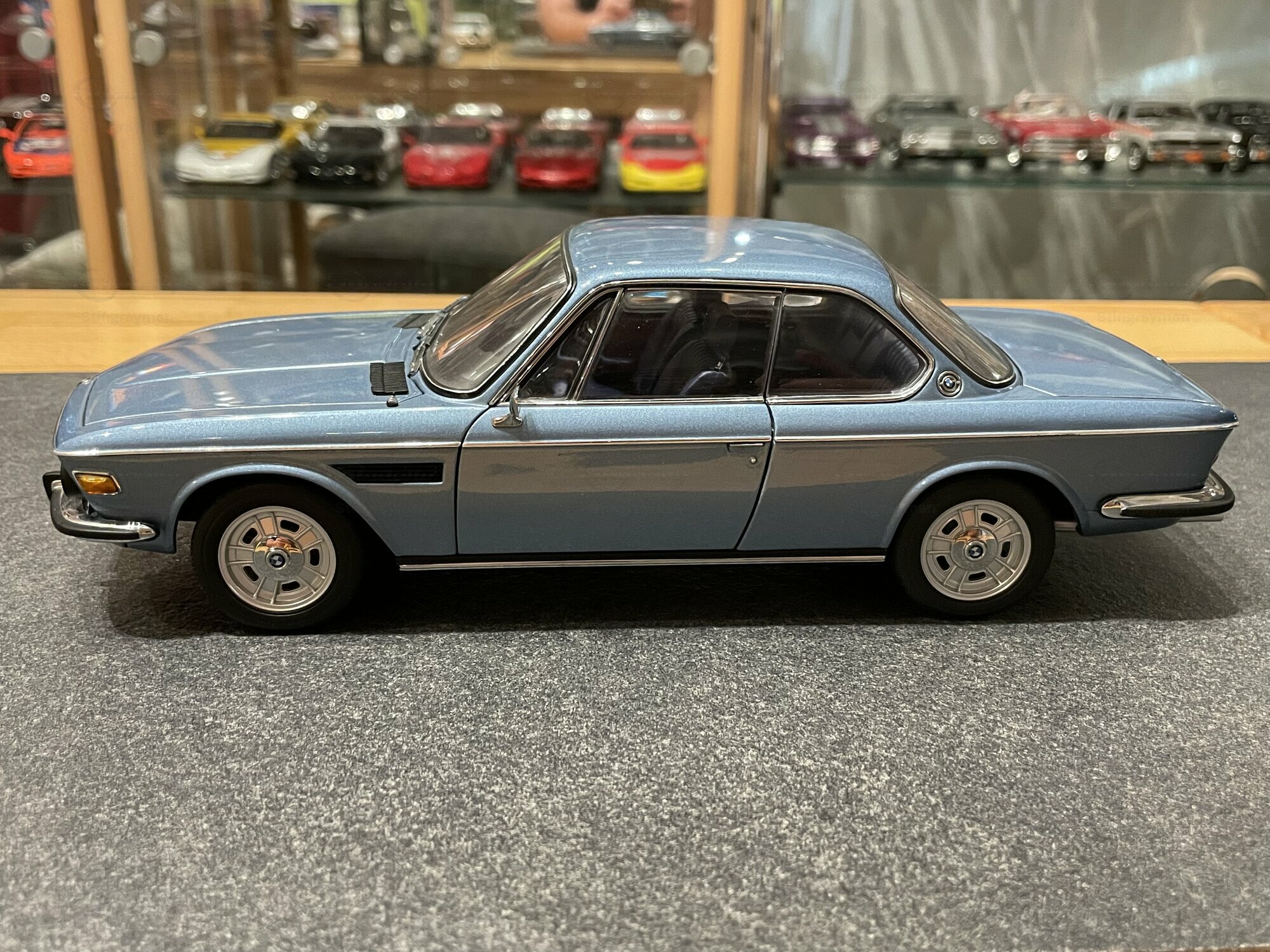
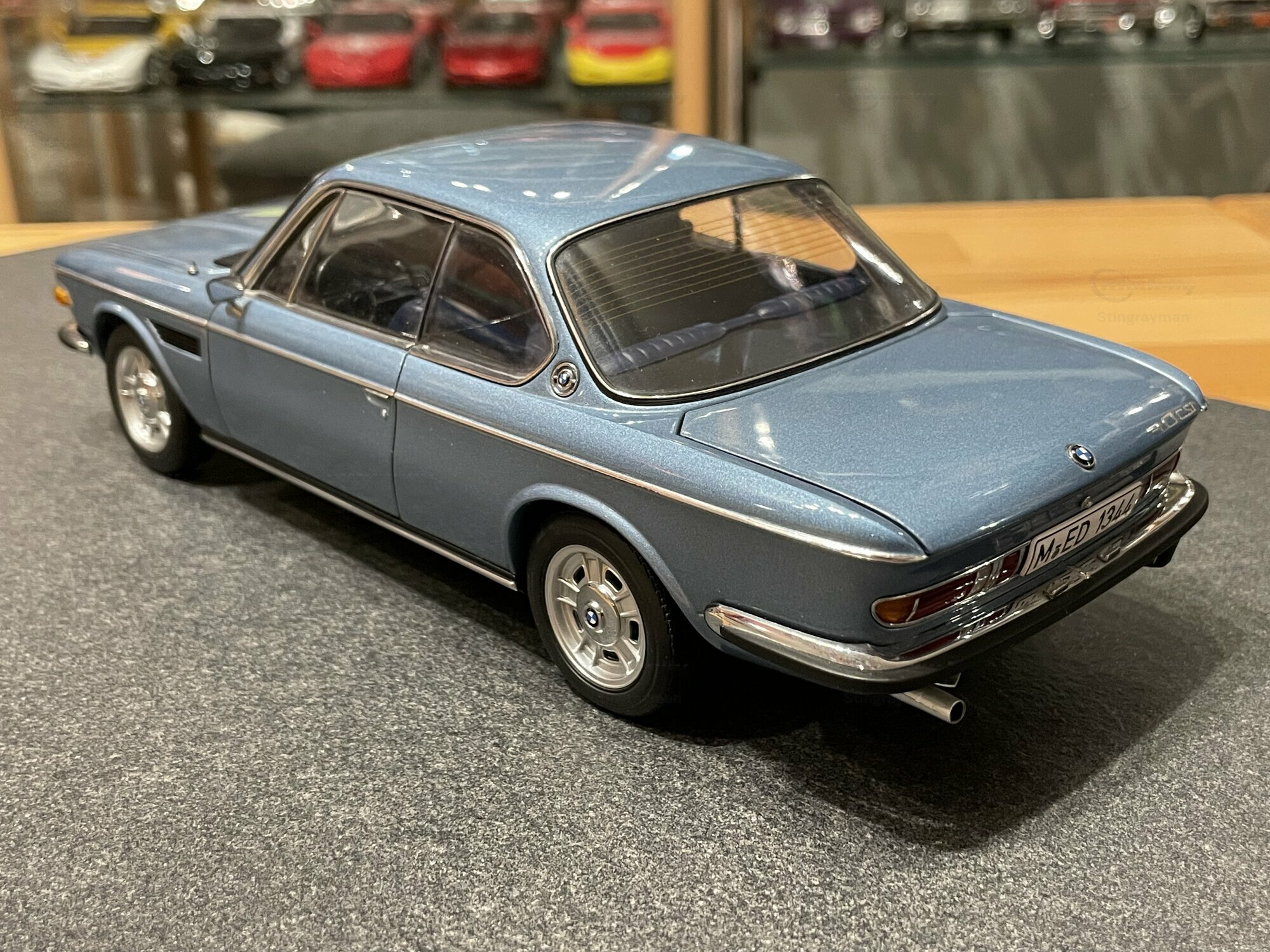
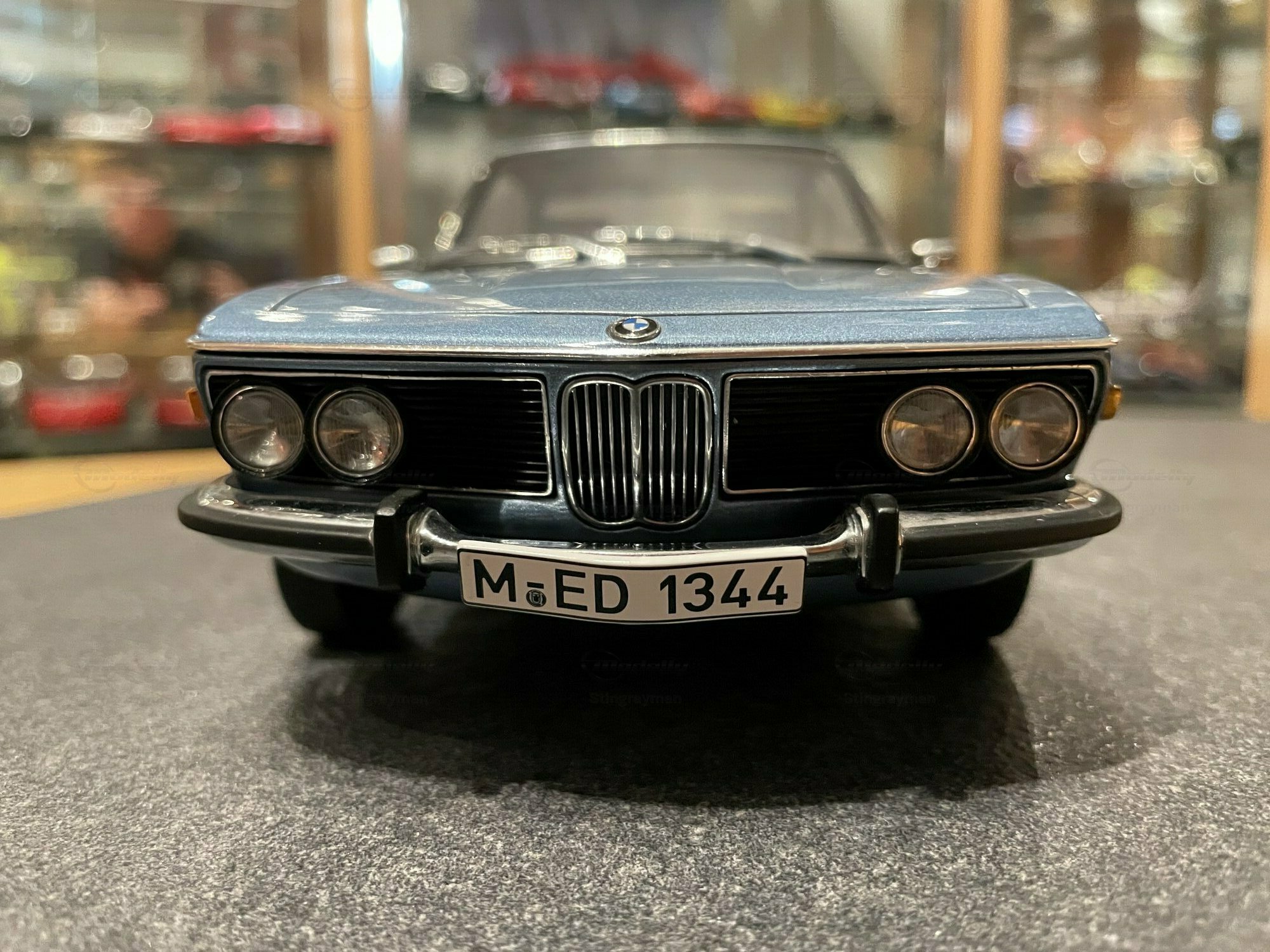
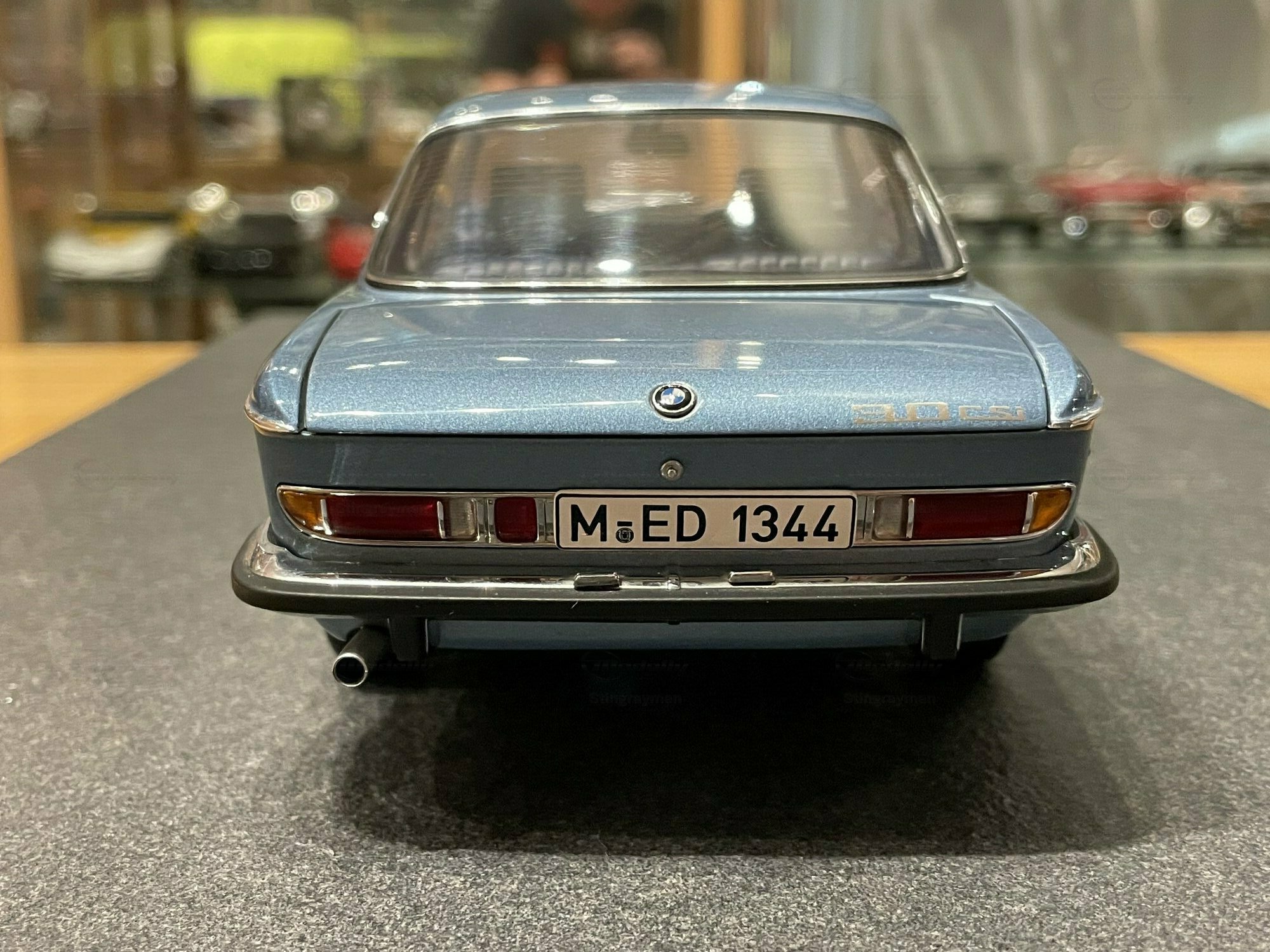
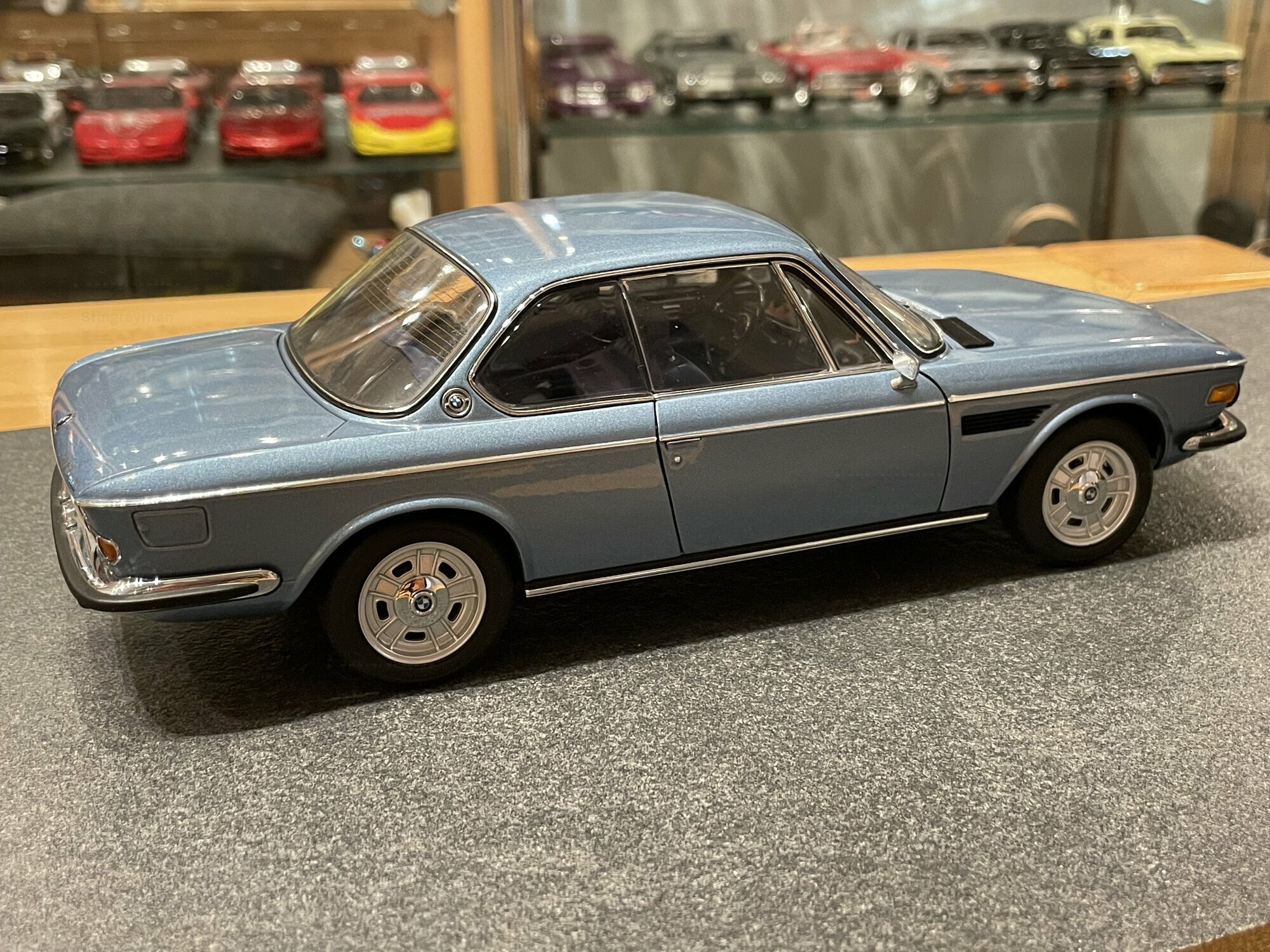
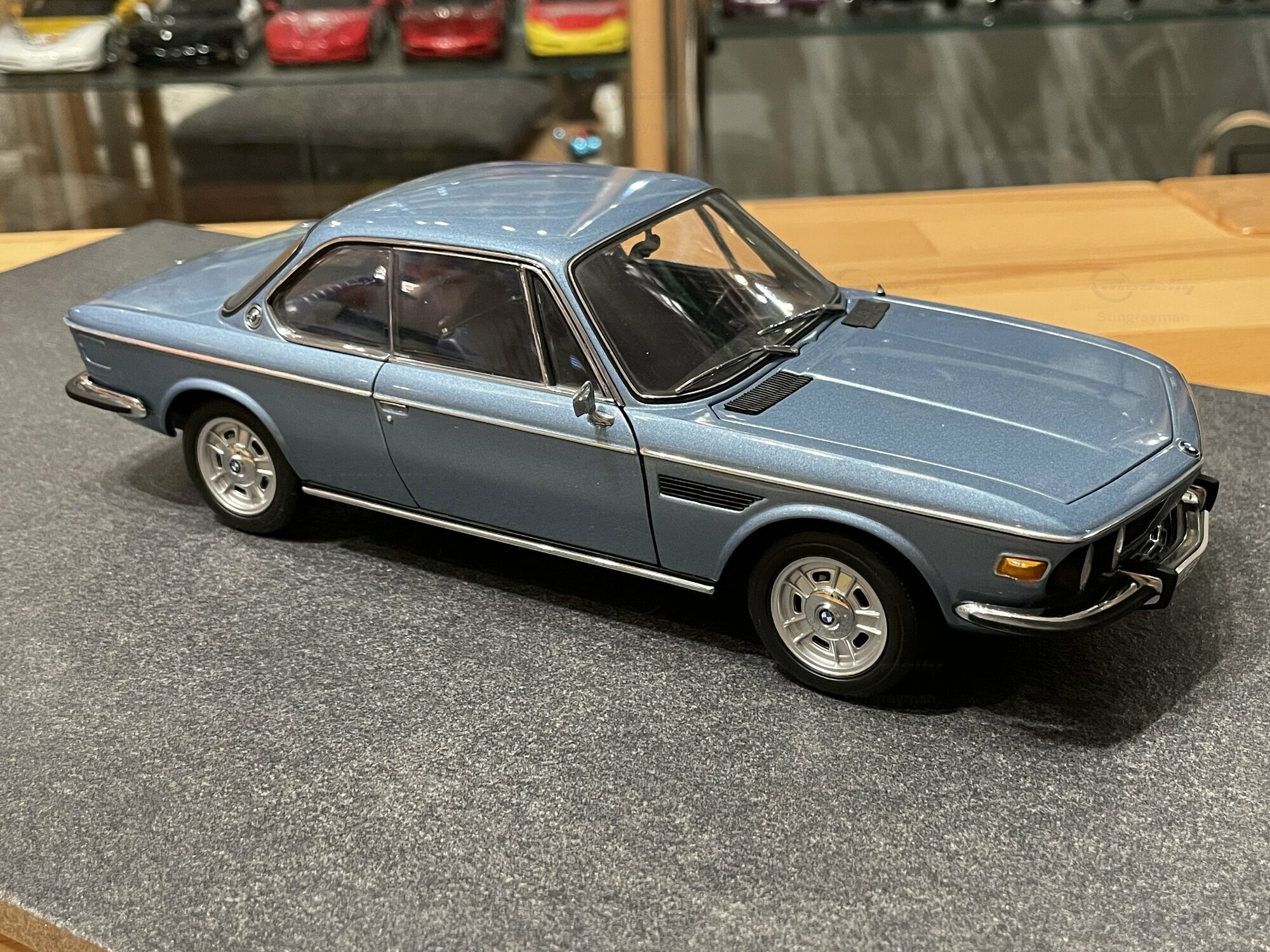
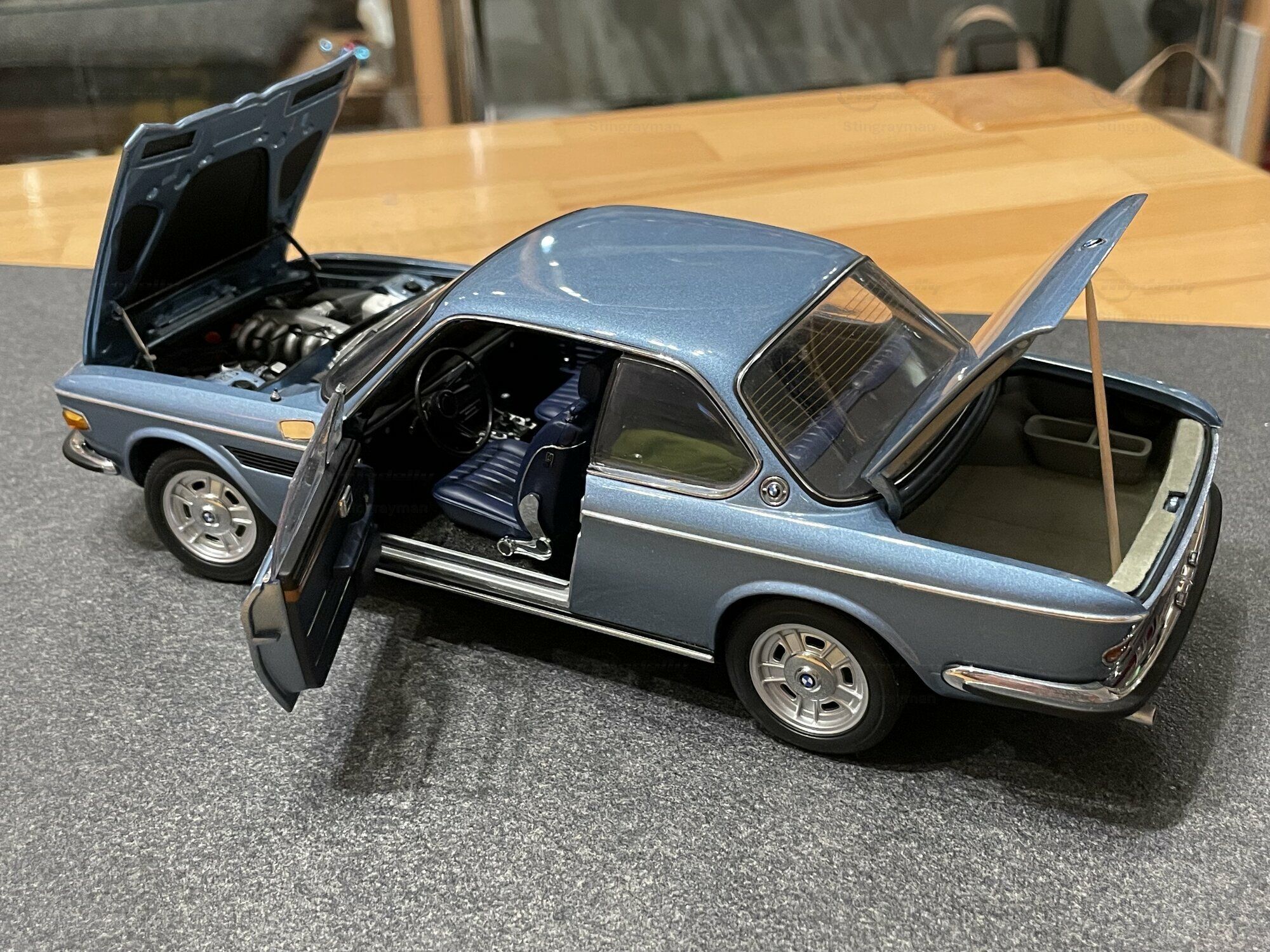
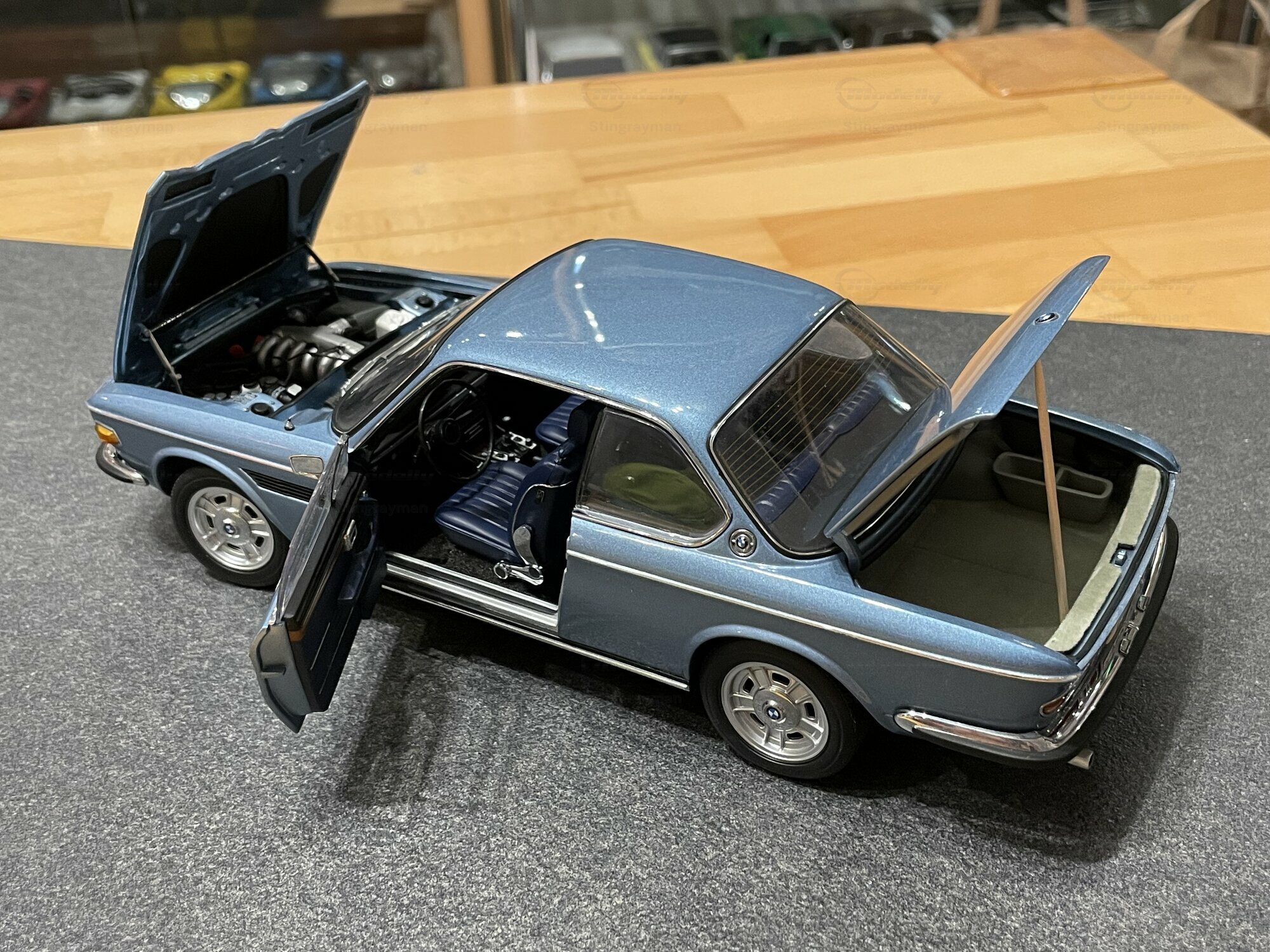
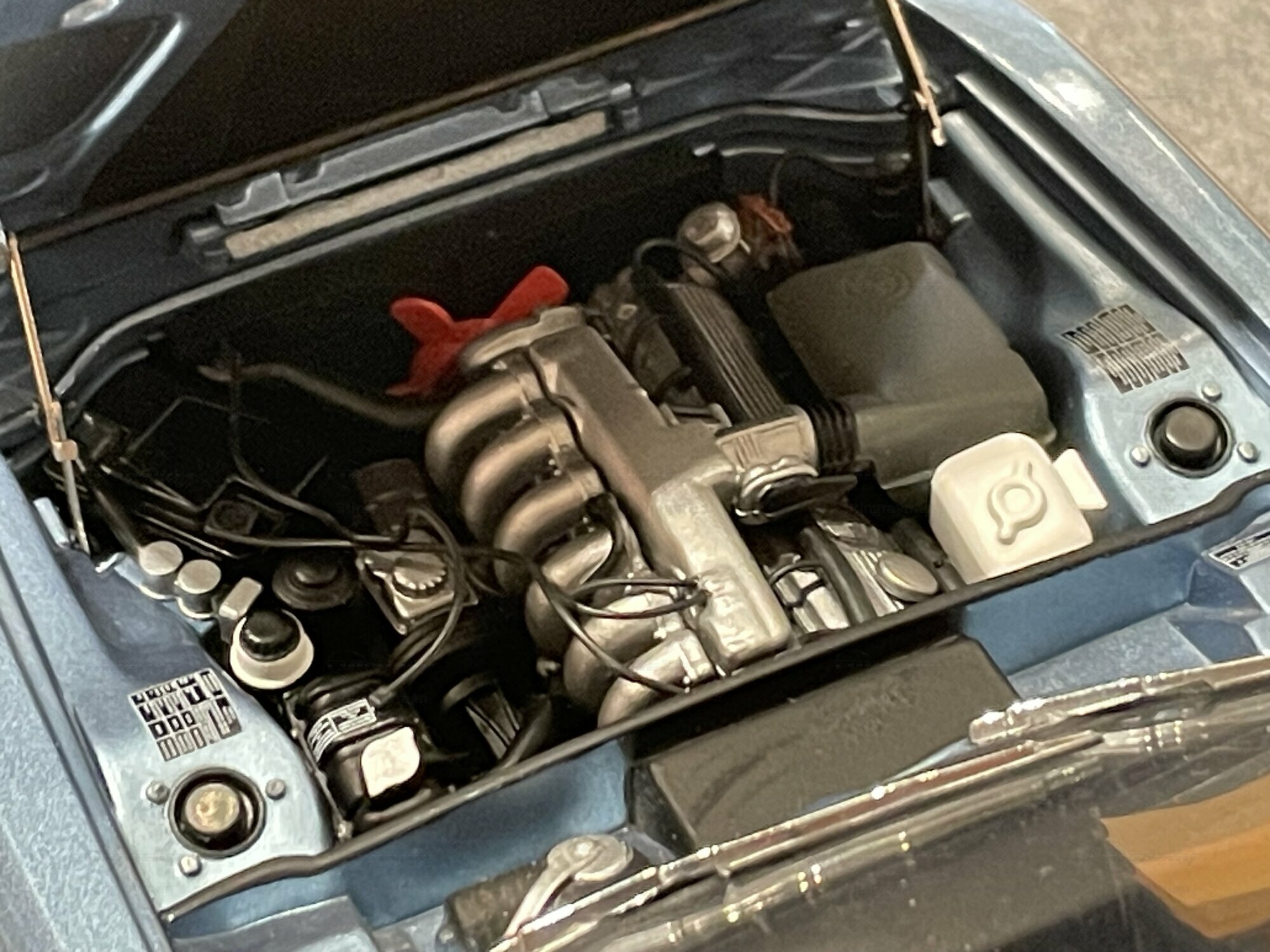
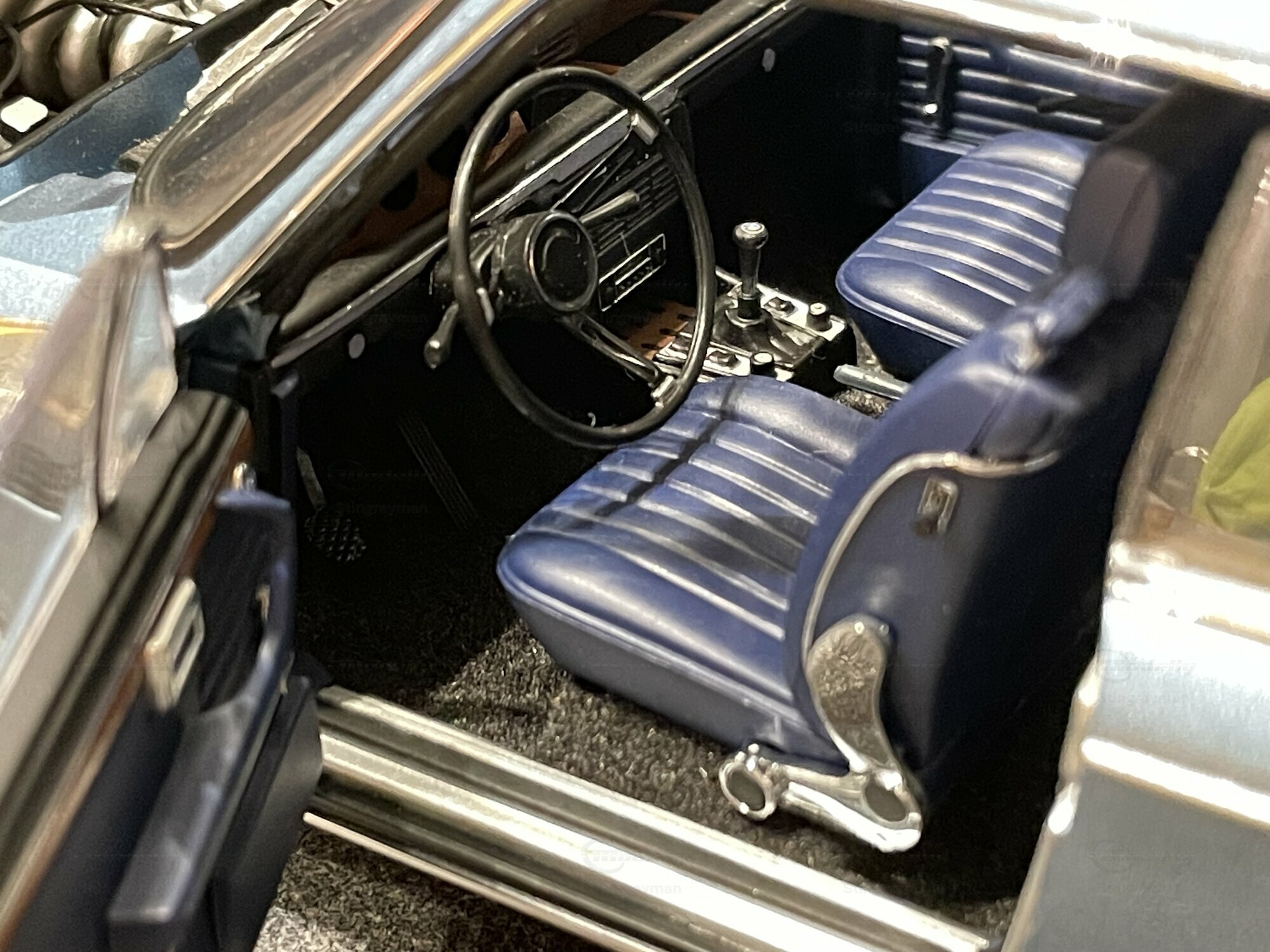
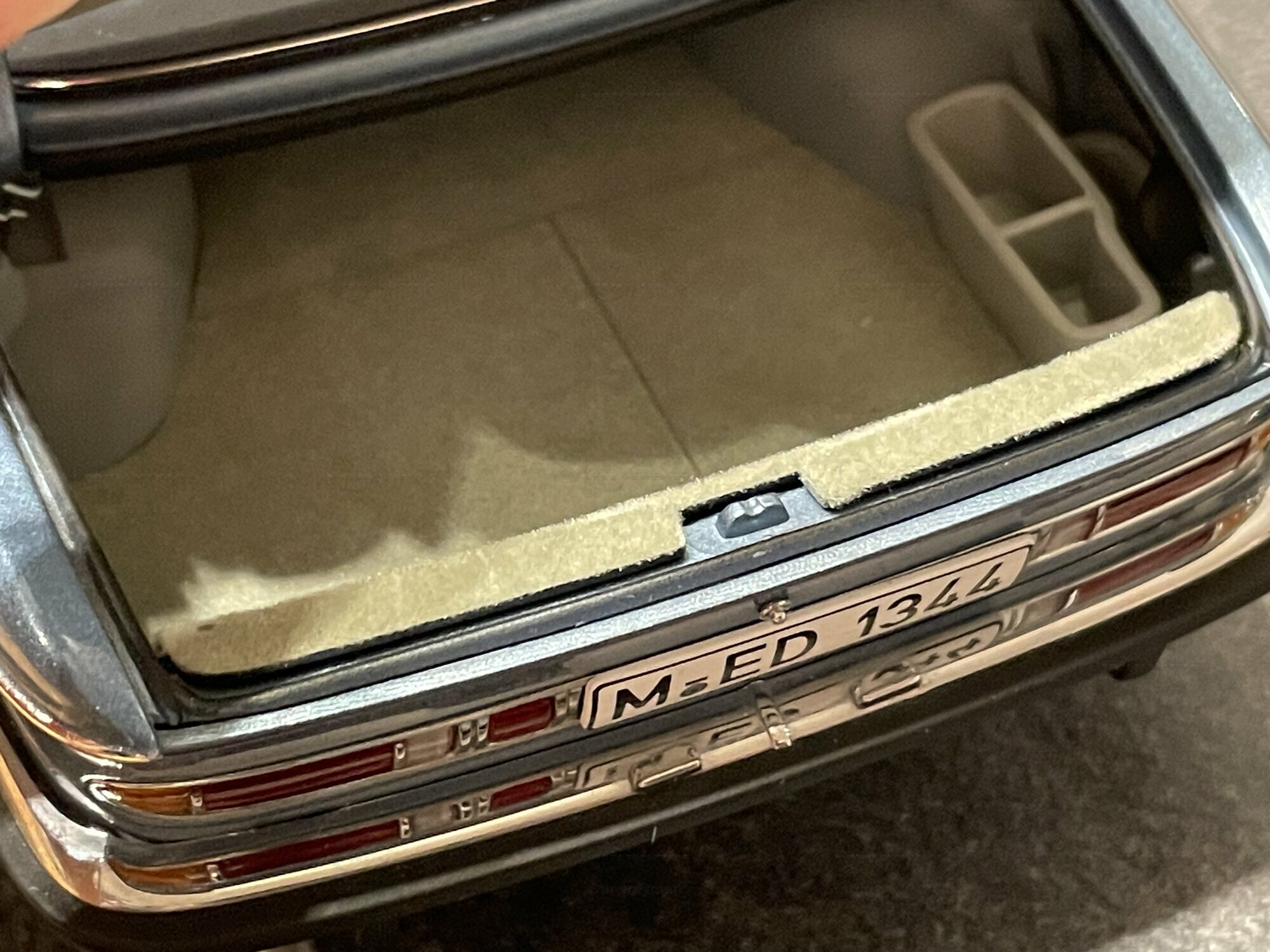
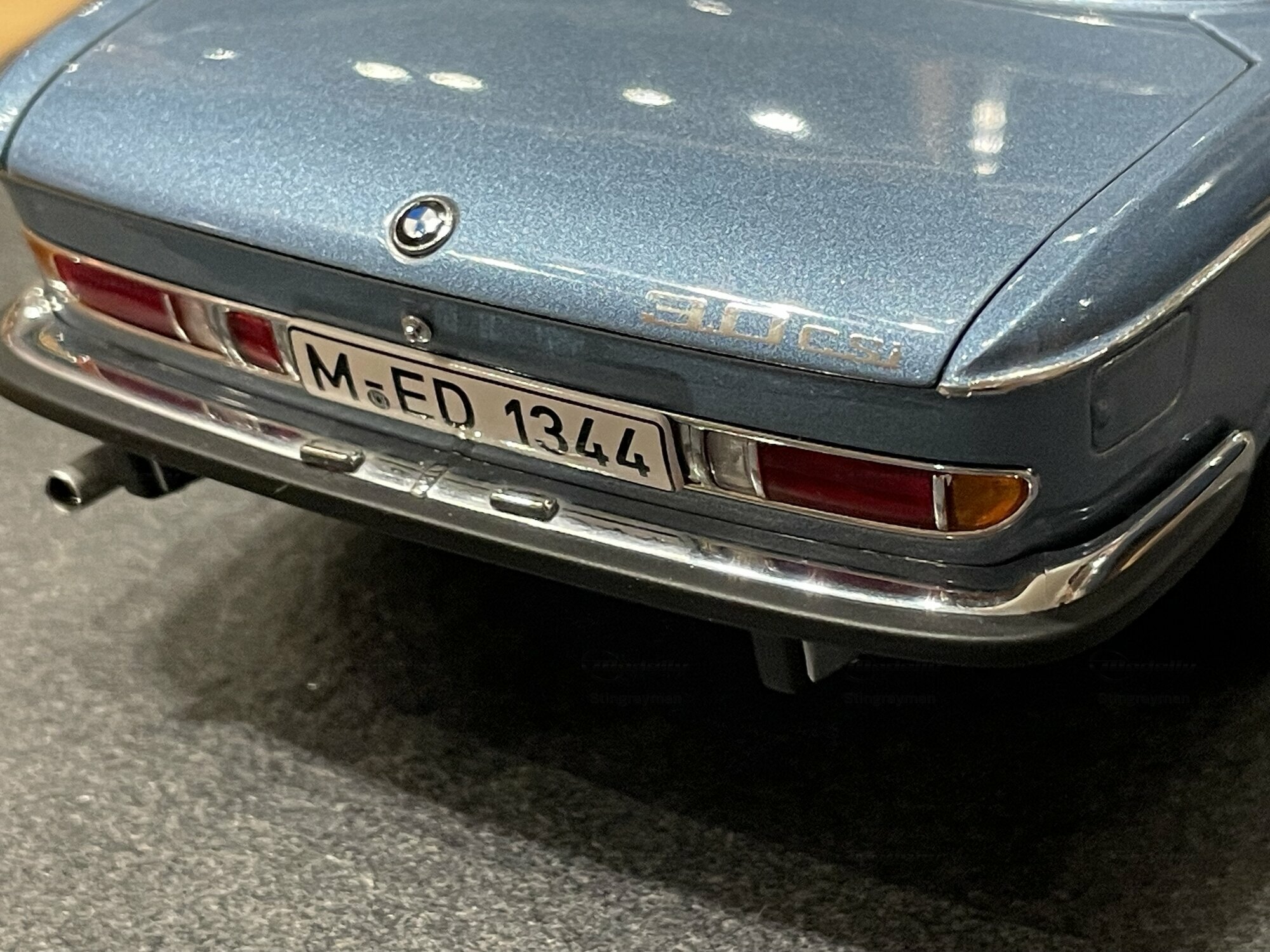
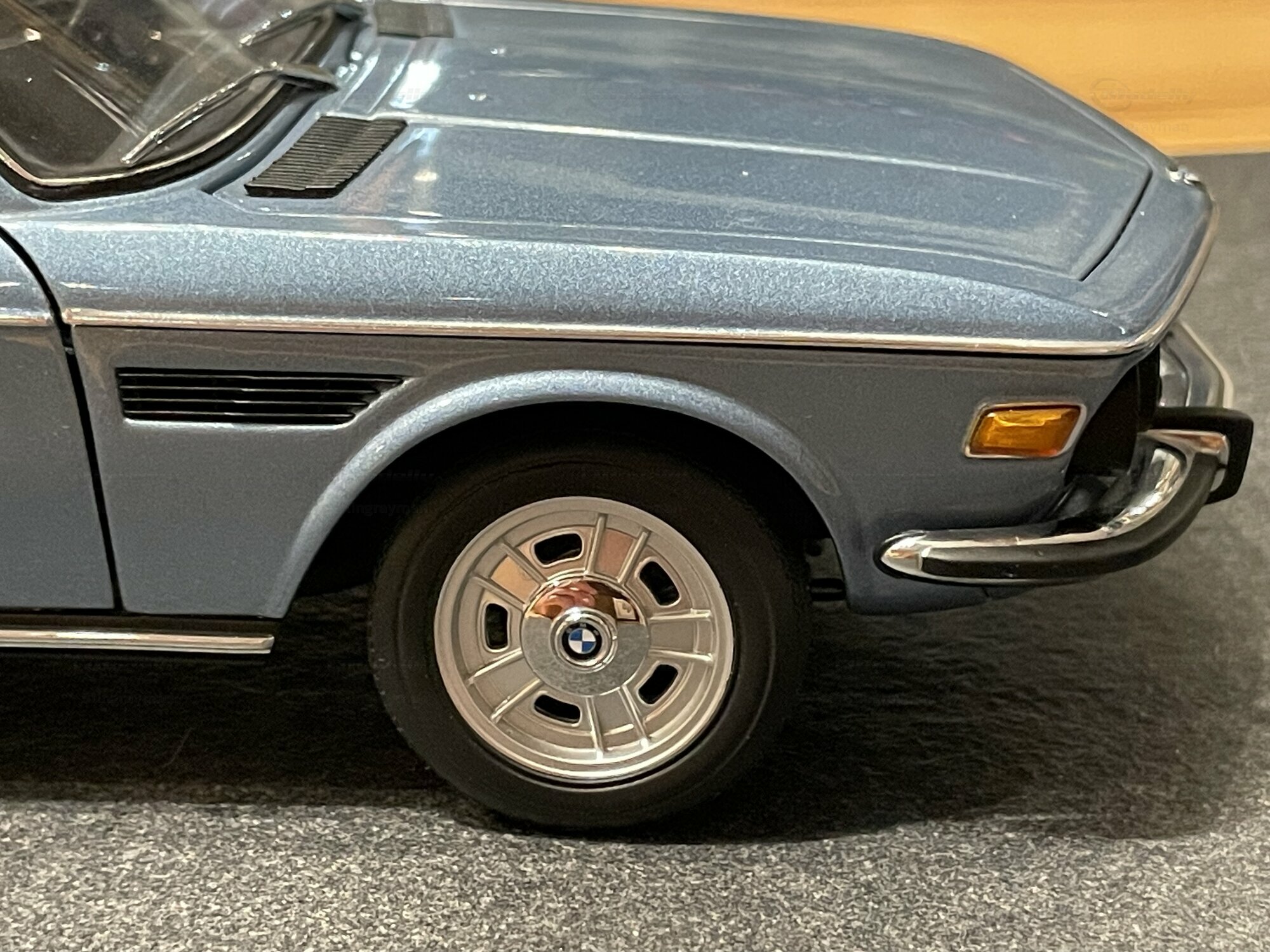
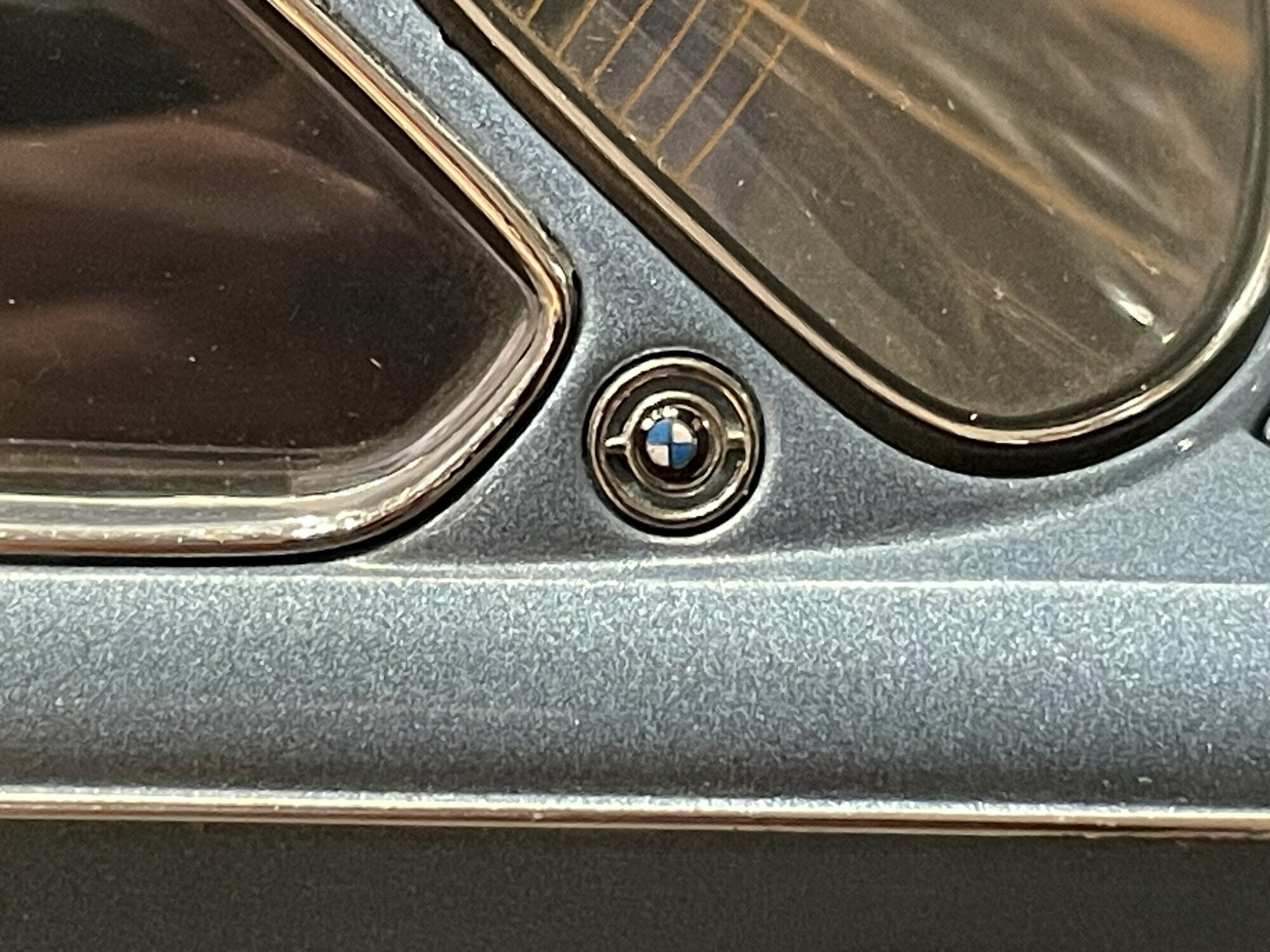
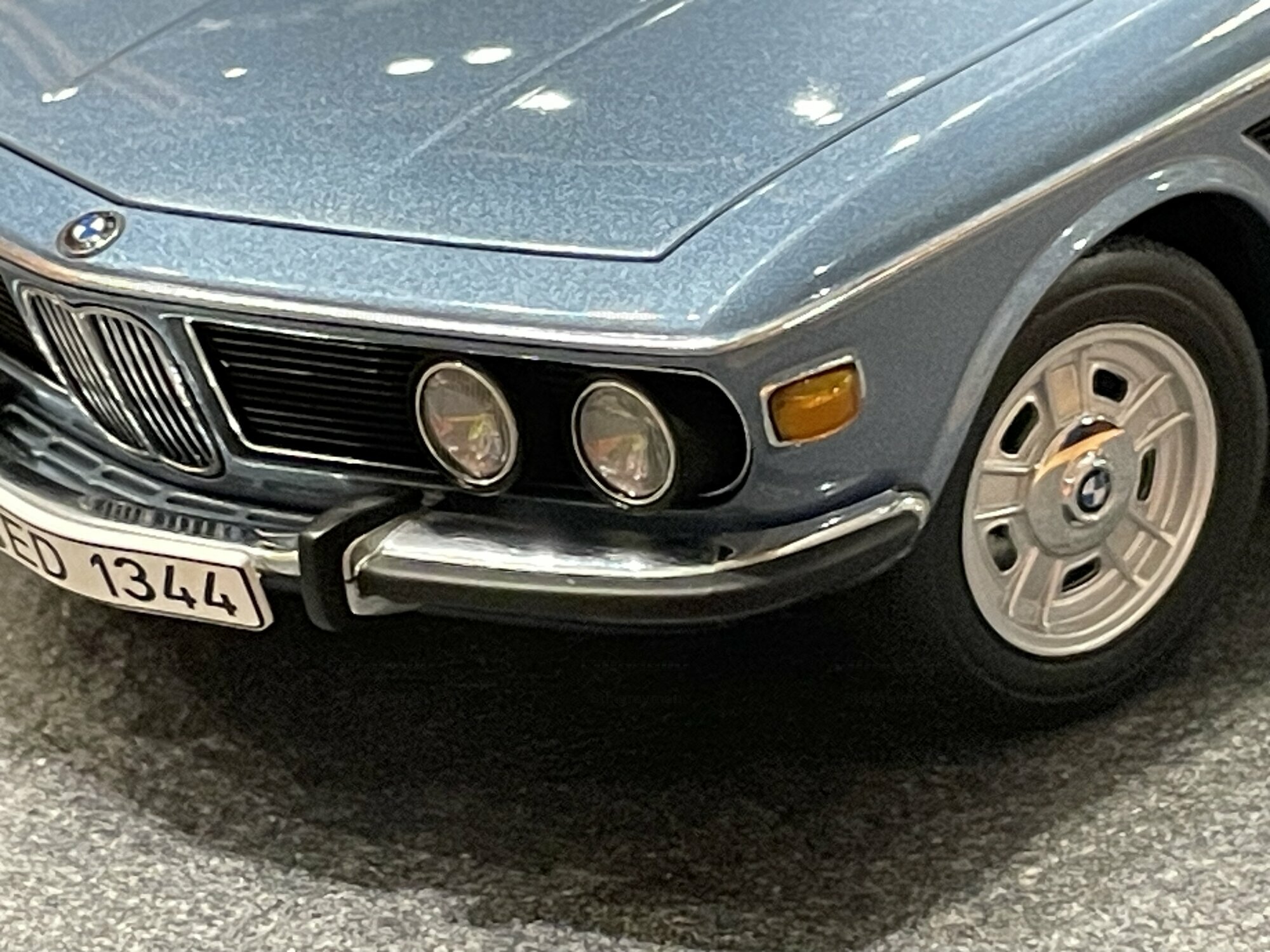
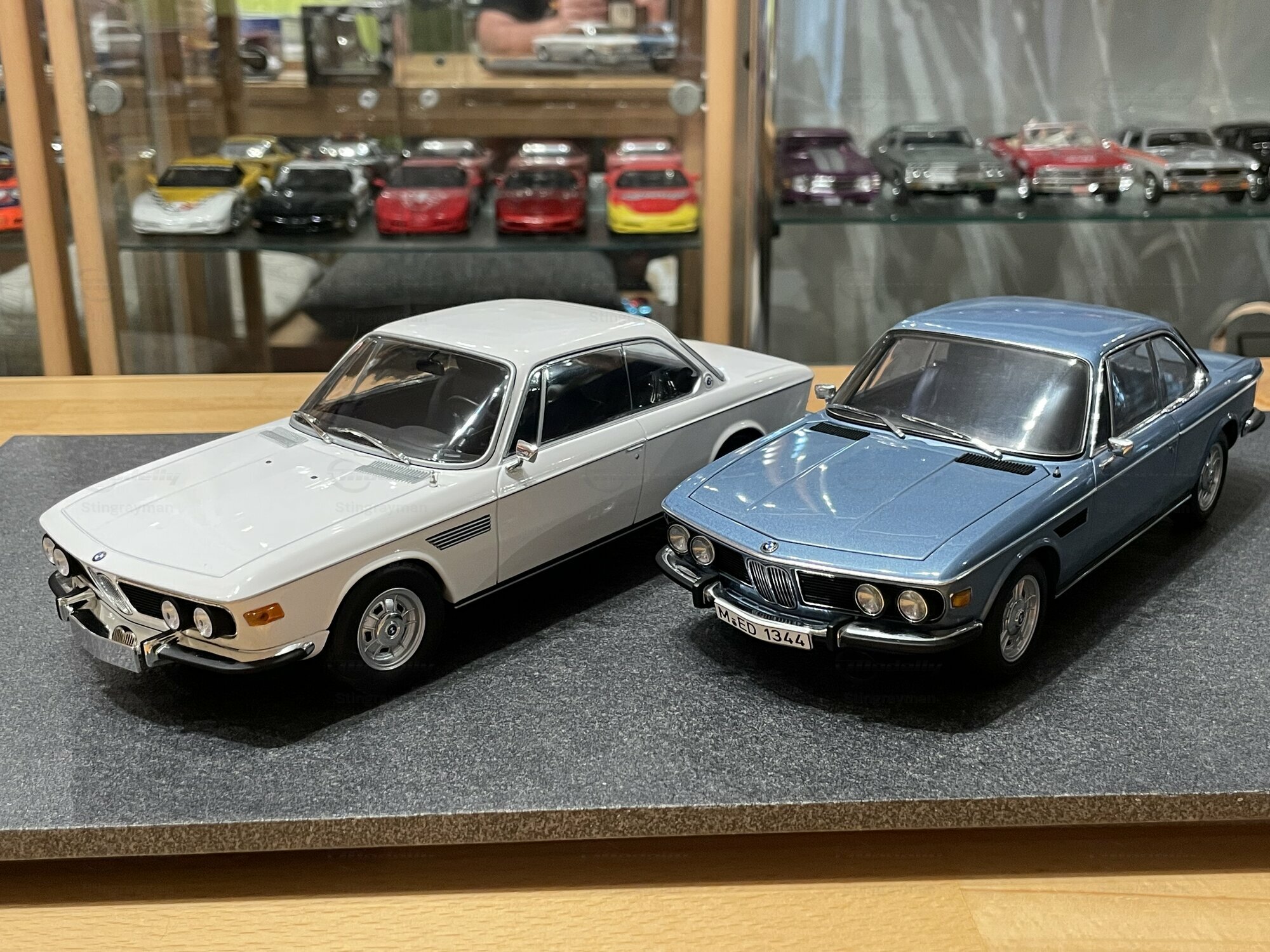
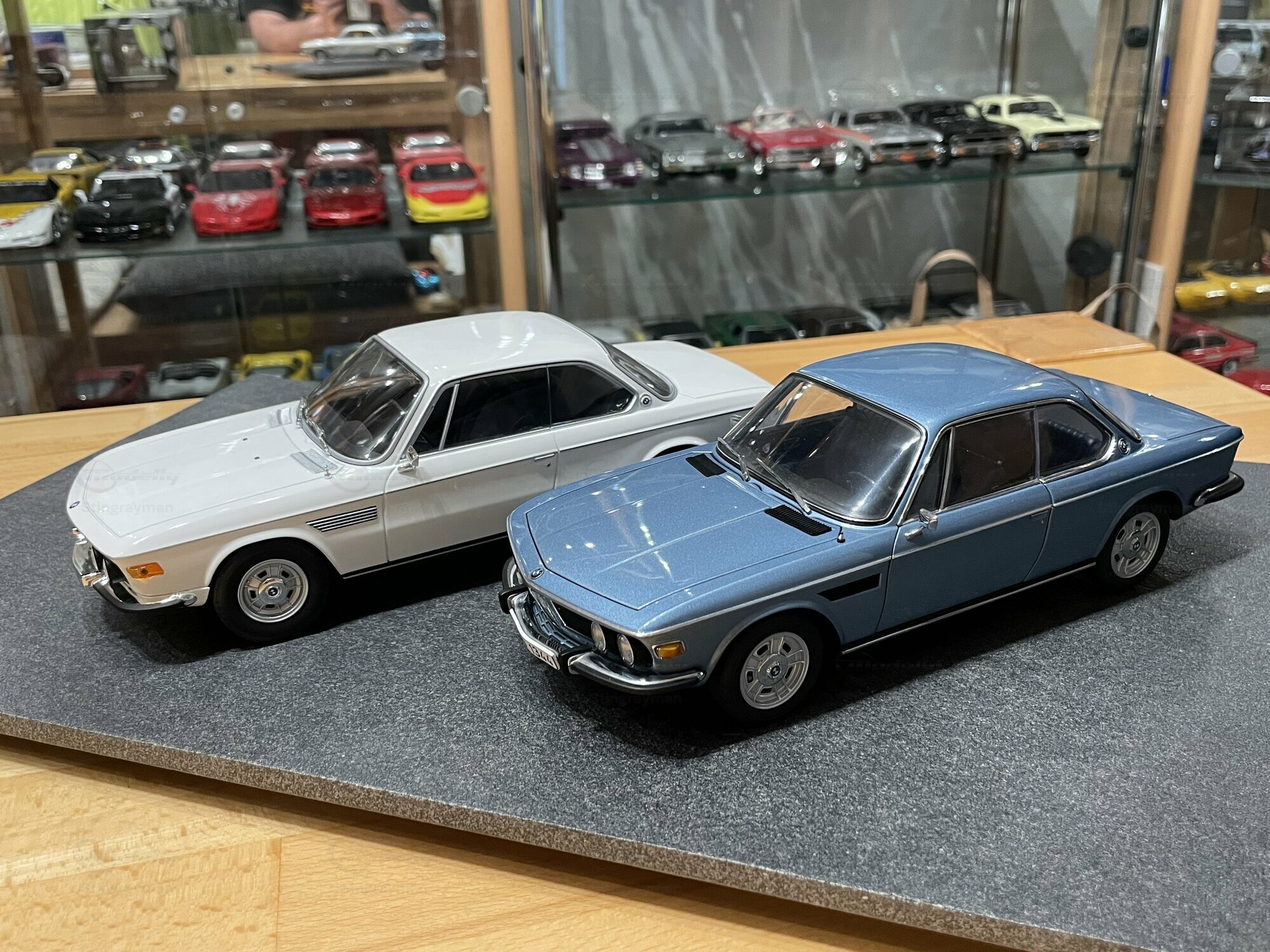
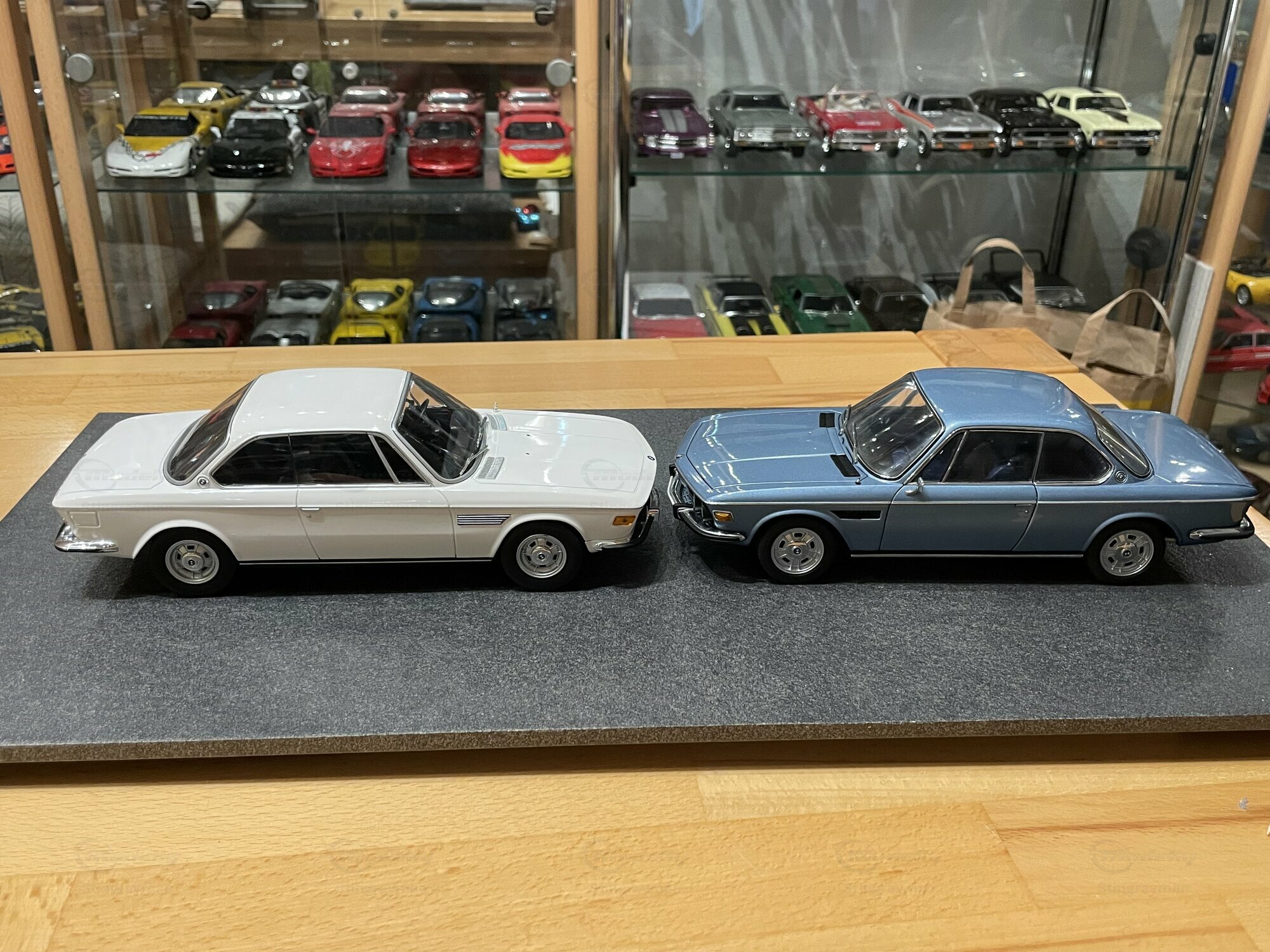
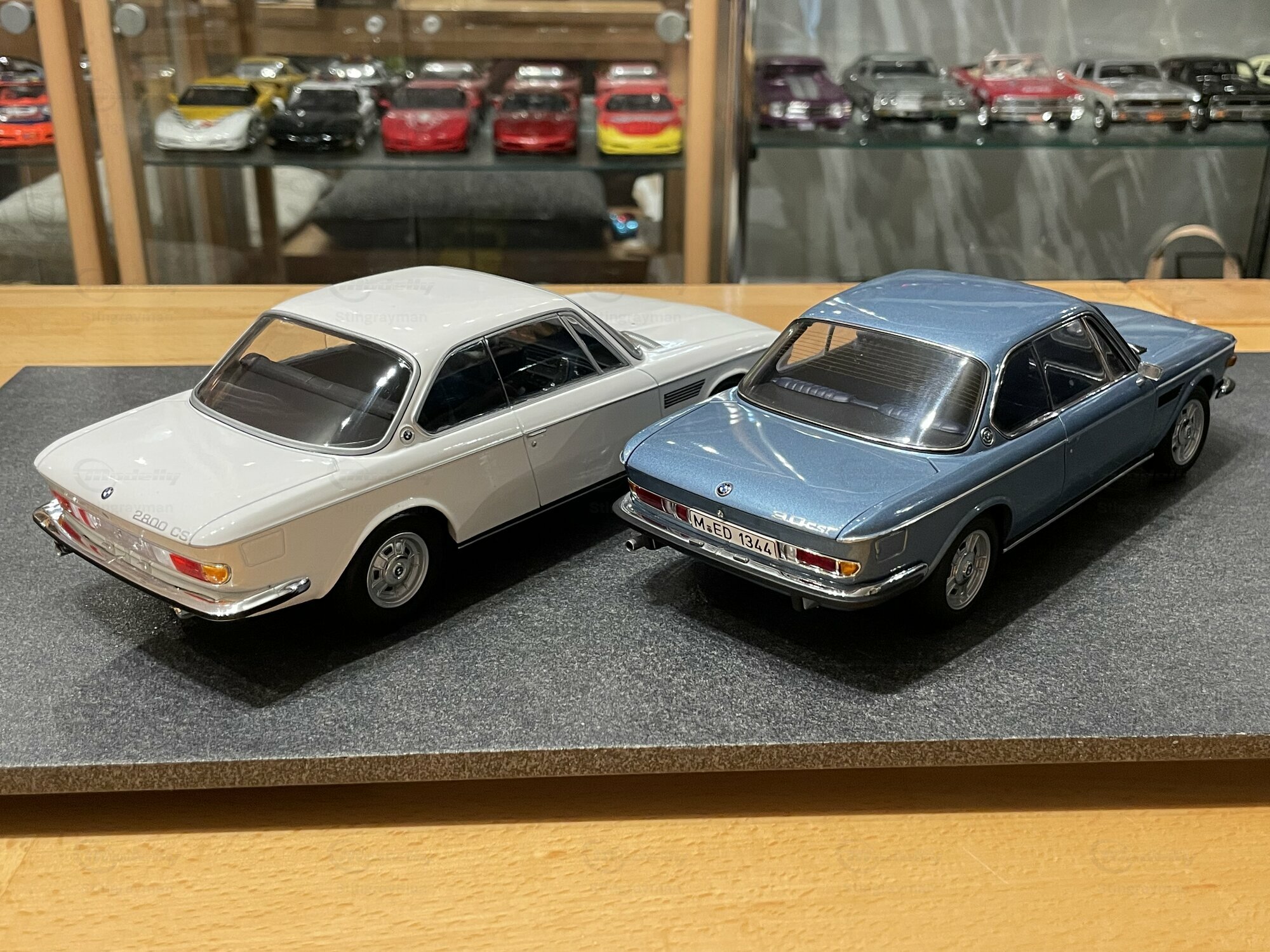
The photos show a model car in 1/18 scale from the AUTOart BMW Dealer Edition, modeled on the BMW 3.0 CSi and part of collector “Stingrayman”’s display. It’s made of diecast (pressed) metal, so it has a satisfying weight and crisp body lines. You can spot many classic E9 features: the long hood, the side trim moulding along the beltline, the little vent slits in the front fender, and the thin, wraparound chrome bumpers with rubber inserts. The paint is a discreet light metallic blue that’s very close to the historic “Fjord blue metallic” — the metallic flake looks even and the light plays nicely over the hood and roof. Front and rear carry the round BMW badges, and there’s a little “3.0” script on the rear. The wheels match the period style with a multi‑piece look and central BMW roundel; the tyres are model‑correctly narrow. The frameless side windows and the slim C‑pillar are well captured; the thin chrome window surrounds are neatly fitted. Inside you can make out dark seats, a dash with round instruments and woodgrain trim. The single exhaust tip peeks out under the chrome bumper as on the real car. If you look closely you’ll even see dealer plates with a Munich code — a nice authenticity touch that shows off well in the cabinet with the other classics visible in the background.
Collector notes, build quality and where it fits
For collectors it’s worth noting this is explicitly a 1/18 model from the AUTOart BMW Dealer Edition, built on a diecast metal body. The panel gaps and chrome parts are finely executed; the long hood, flat trunk lid and slim bumpers in the photos give a convincing take on the E9’s proportions. The paint job is even and the thin trims sit well. Also well done are the clean, almost flush glazing pieces — a feature of the real E9, since the coupe effectively has no B‑pillar. In Stingrayman’s display the piece sits between other late‑60s/early‑70s road sportsters and provides a calm contrast to red or yellow models nearby. If you’re grouping by theme, the BMW 3.0 CSi pairs nicely with contemporaries from other marques. Tech‑minded collectors can also use the model to study the brand’s stylistic cues from the era, shaped by engineers like Alexander von Falkenhausen and design direction under Wilhelm Hofmeister. The production years of the E9 — 1968 to 1975 — mark a time when BMW sharpened its sporty focus in the upper‑middle/upper segments, which is why this piece is a solid pick for anyone concentrating on that period and makes sense as a documented addition to a collection.
- Write a first comment about this model now!Any comment can be discussed by all members. It's like a chat.Mention other Modelly members by using @ in your message. They will then be informed automatically.
- Write a first comment about this model now!Any comment can be discussed by all members. It's like a chat.Mention other Modelly members by using @ in your message. They will then be informed automatically.