
BMW 2800 CS Schnitzer(1:43, SPARK)
- BMW 2800 CS Schnitzer (from 1972)
- SPARK
- 1:43
- Showcase model / No engine
- racing / multicolored
- Not specified
- Not specified
- Not for sale
BMW E9 Coupé als Basis: Technik und Einordnung
This model is based on the racing setup of the BMW 2800 CS, which is part of the E9 series. The E9 generation was built from 1968–1975. Karmann handled the bodywork, and the styling is usually credited to chief designer Wilhelm Hofmeister. The BMW 2800 CS used the M30 straight-six with 2,788 cm³ (170.1 cu in). That engine, developed at BMW with input from people like Paul Rosche, made roughly 170–180 PS (about 168–178 hp) in standard tune and was paired with a 4‑speed gearbox (optional 3‑speed automatic). The suspension combined MacPherson struts up front with semi-trailing arms at the rear, and it ran disc brakes on all wheels. As a predecessor you’ve got the BMW 2000 C/CS coupé, which already hinted at the styling but was lower in power than the later BMW 2800 CS. The racing versions—prepared for example by private teams—focused on weight reduction, roll cages, stiffer springs and dampers, plus bumped-up M30 engines. That made the car a solid base for international touring car entries.
Schnitzer-Umbauten und frühe Einsätze
The Schnitzer race preparation for the BMW 2800 CS is closely tied to Josef and Herbert Schnitzer. Early on in the European Touring Car Championship they campaigned the 2.8‑liter coupé (2.8 L / 170.9 cu in) before moving on to the 3.0‑liter concept. Typical Schnitzer mods included upgraded carburetion or fuel injection, larger cooling, locking differentials, and adapted gear ratios for tracks like the Nürburgring, Spa and Hockenheim. Drivers such as Hans Heyer and Horst Herzog regularly put the BMW 2800 CS on the podium in the early ETCC years, especially in long races with changing weather. The car’s balanced handling and durable brakes were real advantages in crowded touring‑car fields.
Vom 2800 CS zum „Batmobile“ – sportliche Bilanz und bekannte Namen
While the later 3.0‑liter versions—especially the 3.0 CSL—took the big titles, the BMW 2800 CS laid the groundwork. It scored class wins and plenty of top‑five finishes in national championships and selected ETCC rounds. Developments trialed on the BMW 2800 CS—like lightweight components and wider wheels—were quickly used on the next evolution. Drivers who worked across these cars included, besides Hans Heyer, people like Dieter Quester and Toine Hezemans, who later won big endurance races with the 3.0‑liter machines. Technically the cars are clearly related: same basic body structure, the M30 straight-six as the heart, and a step‑by‑step professionalization of aerodynamics. That’s why the BMW 2800 CS is seen as an important stepping stone in BMW’s touring‑car story of the early 1970s.
Das Miniaturmodell von TrolleyJack: Umsetzung im Maßstab 1/43
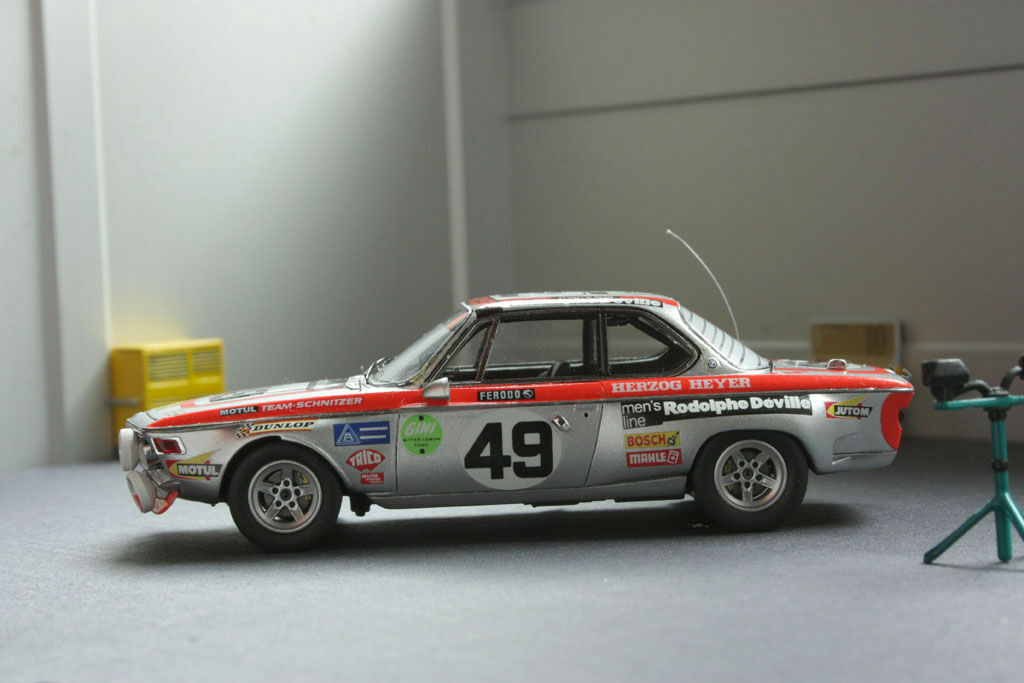
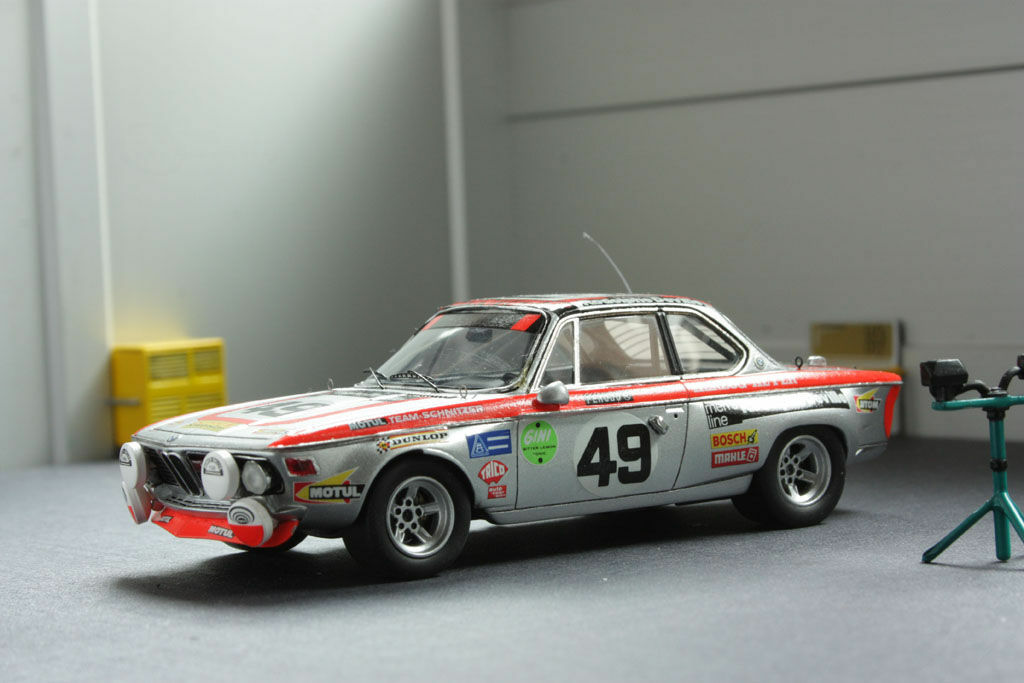
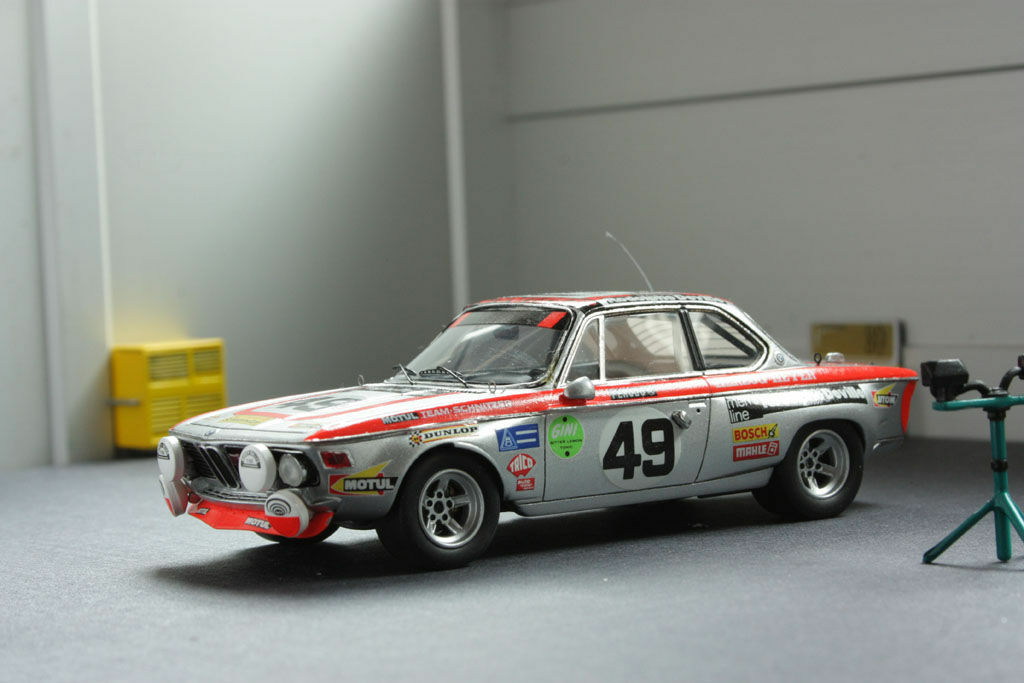
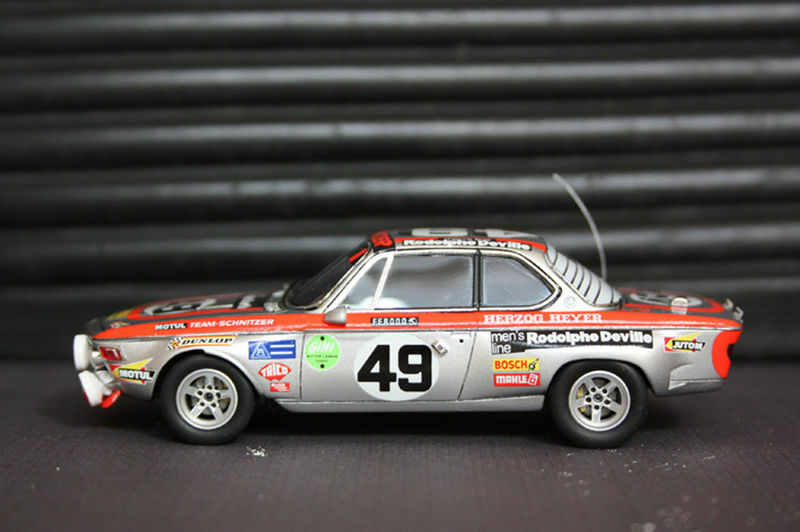
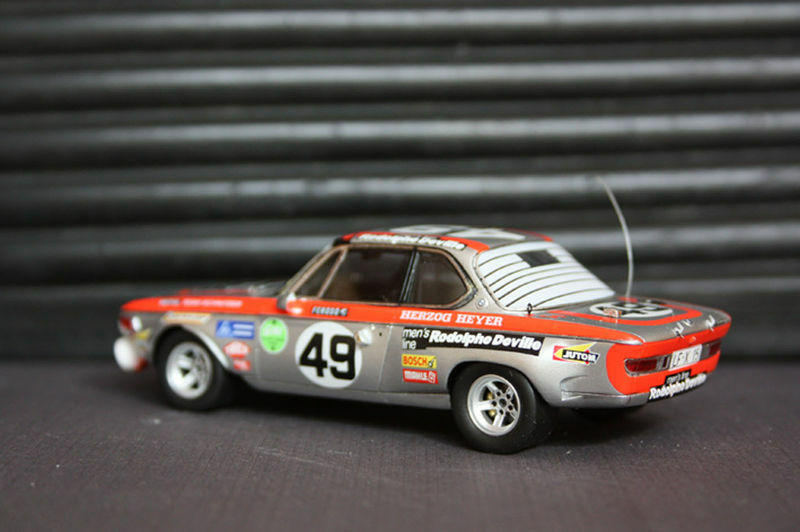
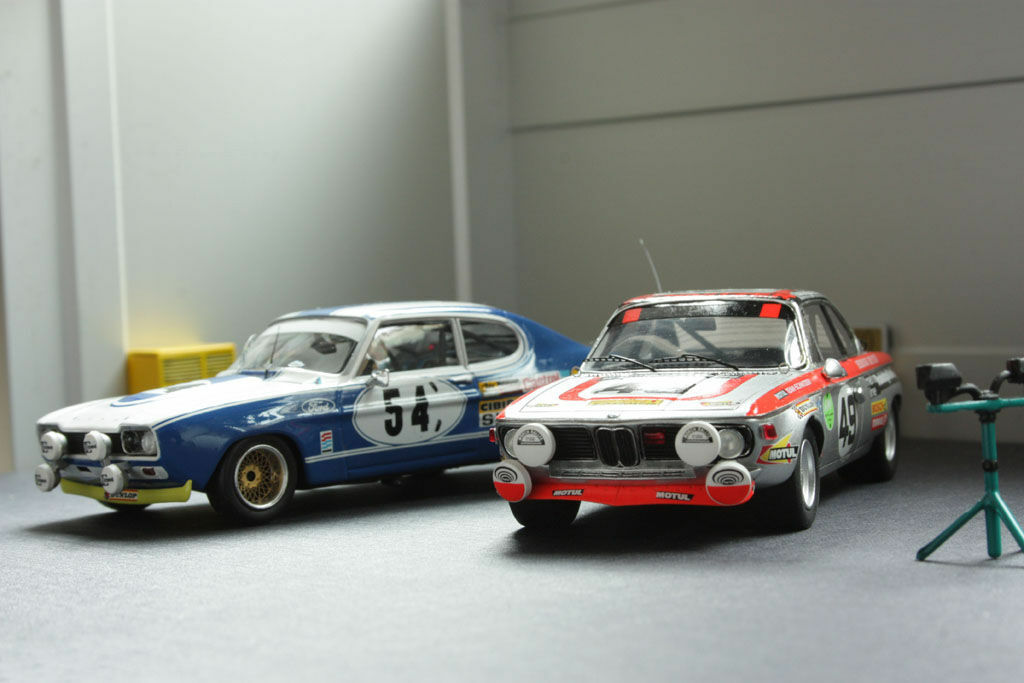
The piece shown from collector TrolleyJack’s stash is a 1/43 scale model of the BMW 2800 CS, made by SPARK. The E9 coupé’s proportions are captured nicely: the long hood, the pronounced C‑pillar with the Hofmeister kink, and the short overhangs. You can see the extra spotlights mounted on the front, etched wipers, delicate mirrors and a thin antenna on the roof. There’s a visible roll cage behind the glass; door frames and seals are finely printed. The five‑spoke wheels match the racing look, with realistically sized tires. Tailpipe openings and taillights follow the production layout. The edges of the hood, doors and fenders show a subtle weathered look that gives the sense of a long‑distance racer. The front has two covered auxiliary lights and a small red front lip—cleanly realized. Overall this 1/43 model from SPARK targets collectors who want an accurate miniature of a historic touring car.
Livery, Sponsoren und Beschriftungen im Detail
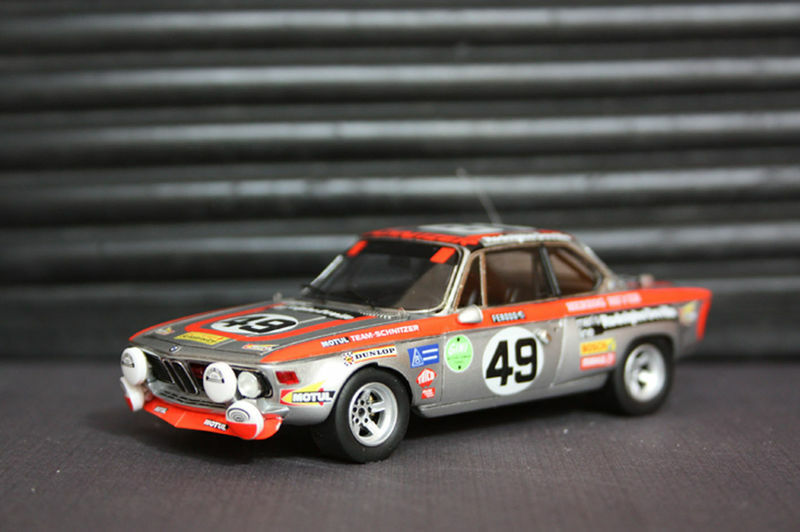
The paint job on the model fits a period‑correct Schnitzer scheme. The base is silver, with a reddish‑orange contrast stripe running from the nose over the fenders along the window line to the rear and also accenting the hood. The racing number 49 is black on round pale backgrounds on the doors and hood. On the flanks you can read several sponsors: clearly visible are Motul with “Motul Team‑Schnitzer”, plus Dunlop, BOSCH, MAHLE, FERODO and TRICO. On or behind the doors there’s also the text “men’s line” and the name Rodolphe Deville, which refers to a men’s fashion brand. The drivers’ names “Herzog” and “Heyer” are written above the trim line, pointing to the team pairing Horst Herzog/Hans Heyer. The front carries two covered extra lights; the lower bumper area is painted red. Logos, door handles, filler cap and seatbelt pass‑throughs are neat decals, the panel lines look right and the glazing is clear. All in all, the miniature gives an authentic picture of the race‑prepared BMW 2800 CS as used by Schnitzer in the early ETCC season, and many fine details are visible in TrolleyJack’s photos.
Chriskitt
Auto-translated
 Beautiful car! 💙🤍👍⚱
Chriskitt
Auto-translated
 Beautiful car! 💙🤍👍⚱