
Opel Manta GT/E(diecast 1:43, IXO)
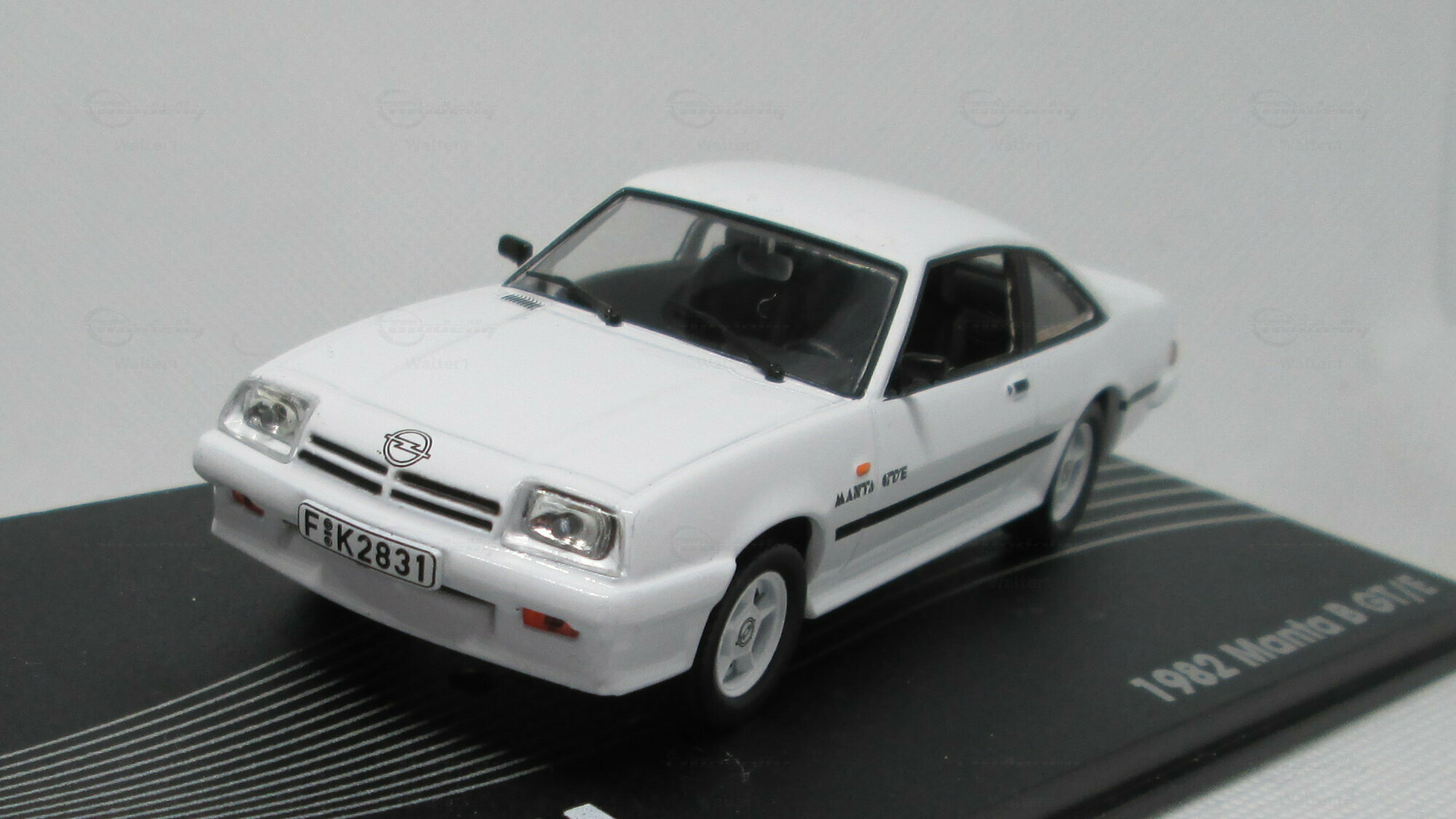
- Opel Manta GT/E (from 1983)
- IXO
- 1:43
- Showcase model / No engine
- diecast
- white
- Opel Collection 11
- Perfect mint condition
- Original packaging exists
- Not for sale
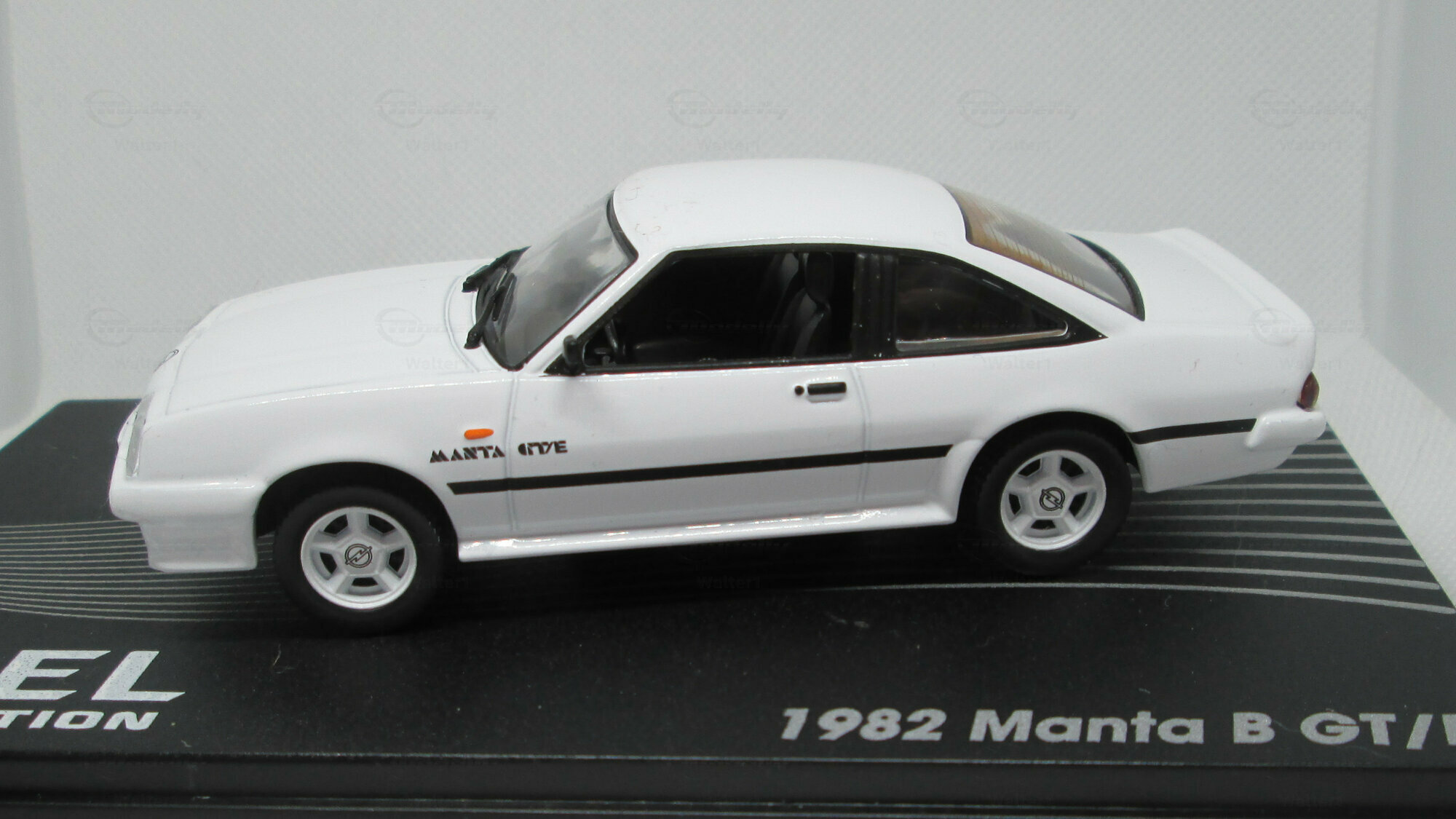
Opel Manta B GT/E of the second generation from 1975
The prototype for this miniature is the Opel Manta B GT/E, a sporty coupe from the second generation, which was built starting in 1975. The Manta B line stayed in production until 1988 and replaced the Opel Manta A, which was built from 1970 to 1975. Compared with its predecessor, the body grew larger, got a more angular design, and offered more space inside. The body was a two-door notchback coupe with a large rear hatch; the long hood, low roofline, and wide C-pillar shaped its look. The GT/E was one of the performance-focused versions. Its inline four-cylinder engine with 1,979 cm³ (121 cubic inches) of displacement used Bosch L-Jetronic fuel injection and produced around 110 hp, depending on the version. Power was sent to the rear wheels through a manual five-speed transmission. Typical figures are about 195 km/h (121 mph) top speed and roughly 9.5 seconds for the 0 to 100 km/h (0 to 62 mph) sprint. Up front it had independent suspension, while the rear used a solid axle with trailing arms, coil springs, and a Panhard rod. The 1975 debut year also lines up with events like the signing of the Helsinki Final Act, the end of the Vietnam War after the fall of Saigon, and the release of Queen’s “Bohemian Rhapsody.” These examples help place the car in its time.
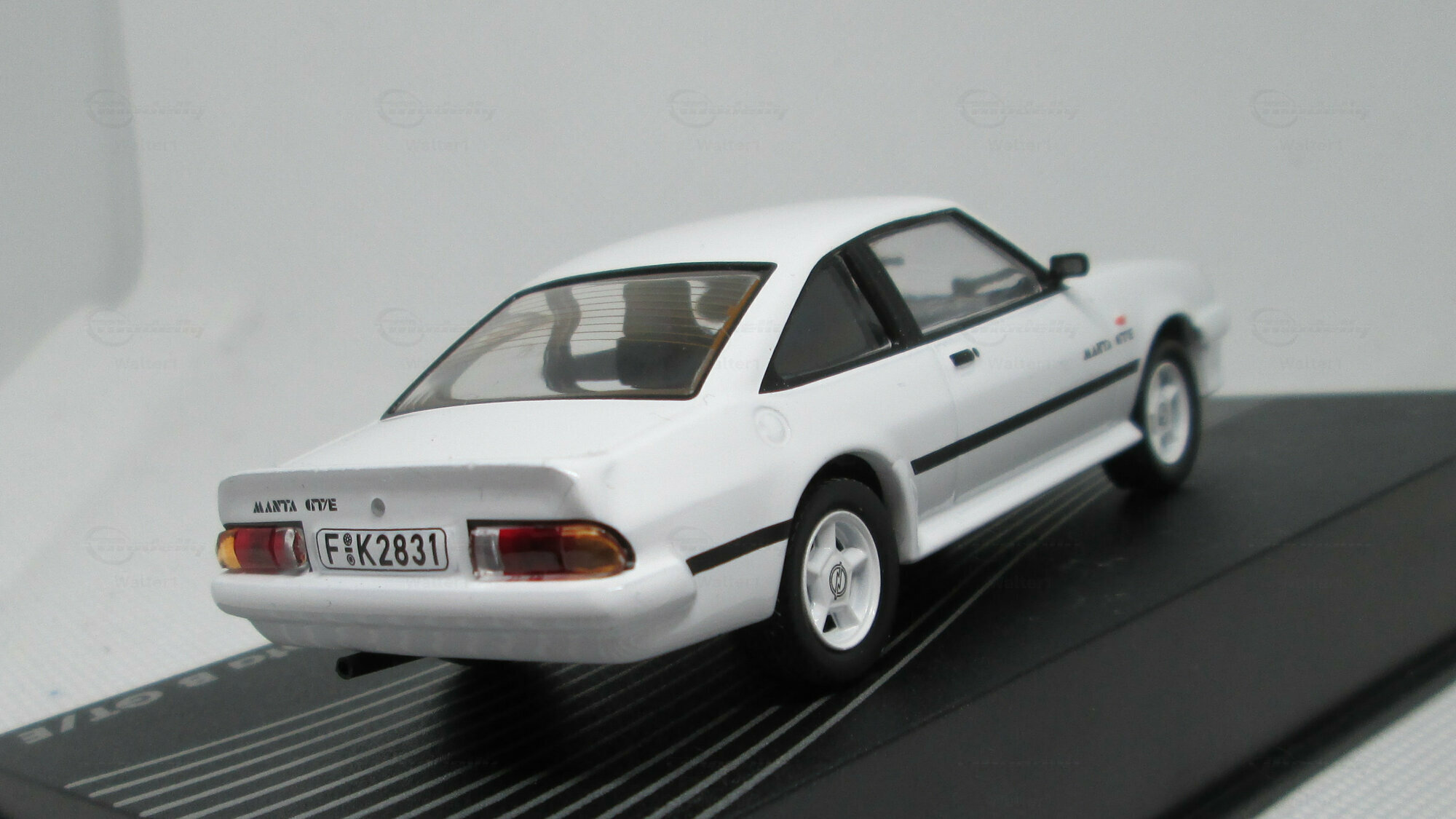
1982 facelift and technical GT/E features
The label on the display base points to a 1982 Opel Manta B GT/E. That year brought the updated version, often called the Manta B2. It stood out from early B models mainly through the redesigned front end with rectangular headlights, a revised grille, and changed bumpers. The GT/E combined fuel injection with a suspension setup aimed at stability and a sporty positioning within the lineup. Typical features included wider plastic bumpers, front and rear spoilers depending on the version, side skirts, and GT/E badges and stripe graphics. In Opel’s range at the time, the coupe was technically close to the Ascona B: both shared a platform, engines, and many suspension parts. The Opel Manta B GT/E was also used in motorsport, especially in rally and touring-car-related classes. The road version, though, was still a regular production car with four seats, access to the trunk through the large rear hatch, and a fairly straightforward analog instrument layout.
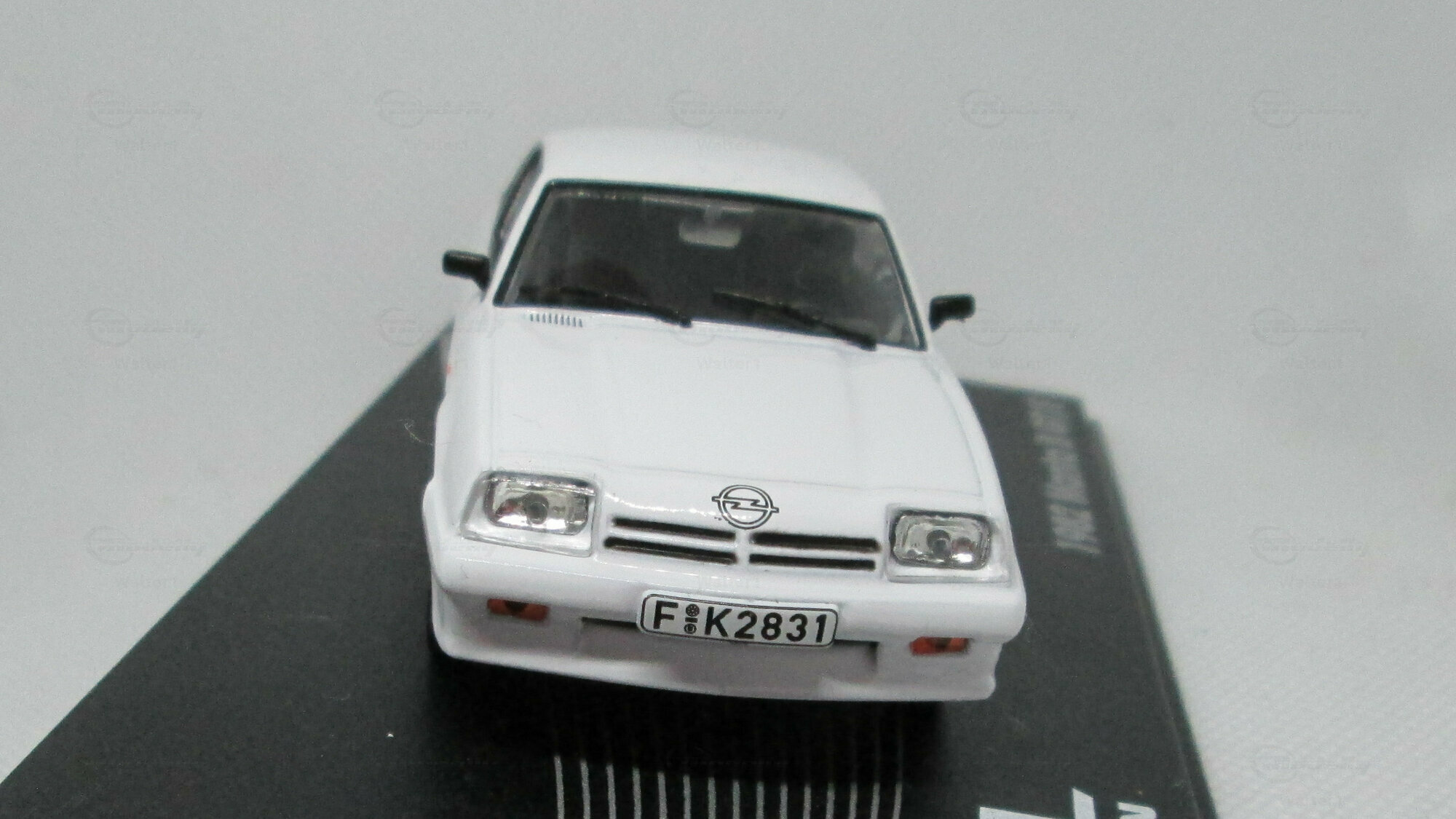
IXO model car in 1/43 diecast from Walter1
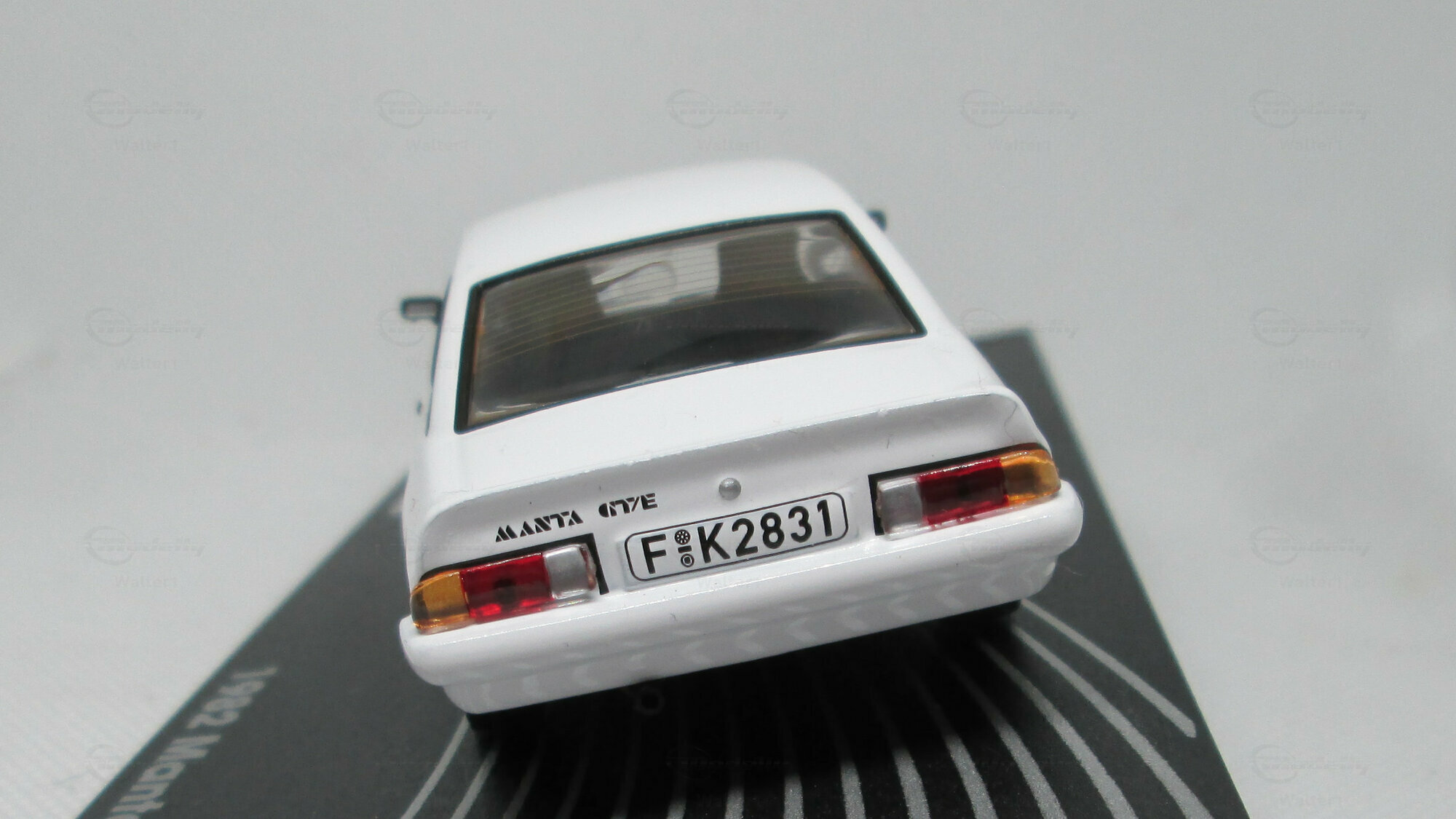
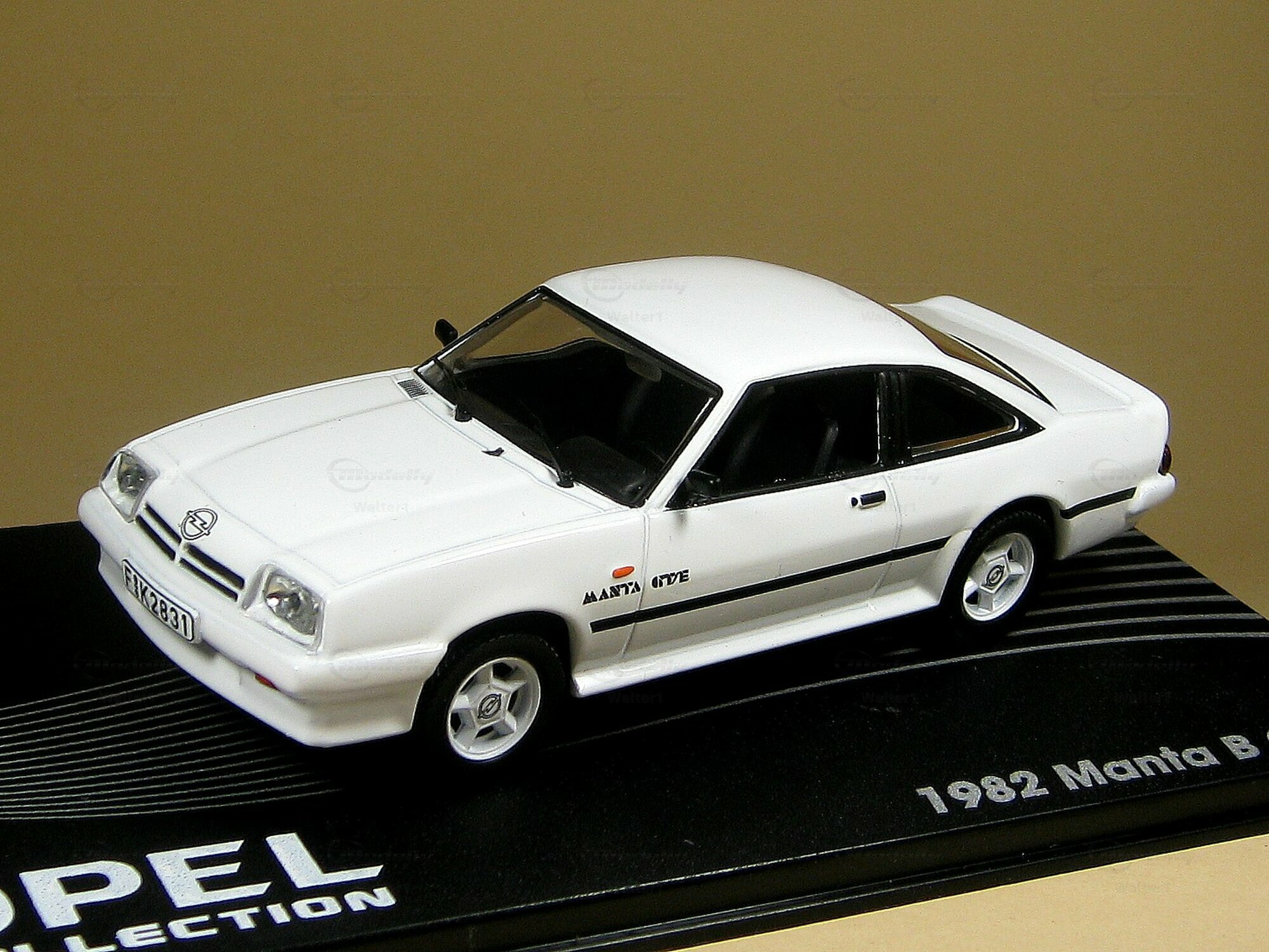
The miniature shown from the collection of Modelly member “Walter1” is a model car in the scale of 1/43 by IXO. The model is made of diecast, meaning the body is cast metal; attached parts like bumpers, mirrors, windshield wipers, light inserts, and the underbody are typically mostly plastic. It sits on a black display base marked “1982 Manta B GT/E.” The 1/43 scale means that, for an original car about 4.45 meters (14.6 feet) long, the model is around 10.3 centimeters (4.1 inches) long. The photos show a white body with a straight black side stripe. On the front fenders, “MANTA GTE” is printed on each side. The combination of white, black trim, and the small orange side markers creates the look visible in the pictures. Up front, you can see the split grille, the Opel badge, rectangular headlights with clear lenses, and red and orange lamps in the bumper. The license plate “F K2831” appears on both the front and the rear.
Body details, glazing, and visible design
You can also clearly see the facelift from the side and rear views. The 1/43 model car by IXO shows the low hood, the long side glazing, and the coupe’s triangular rear quarter window. Black window frames contrast with the white paint, and the clear glass lets you see black seats, the steering wheel, and interior structures. The side mirrors and the finely modeled windshield wipers add to the look. Along the sides, the black trim stripe and the white sill sections follow the body line. The silver-colored wheels have five broad spoke areas and Opel logos in the center; no specific wheel brand or exact wheel type can be clearly identified from the photos. At the rear, the taillights are multicolored with red, amber, and clear sections. They’re joined by the black “MANTA GTE” badge, the license plate, and a subtly modeled rear spoiler. From a purely visual standpoint, the charm of the model lies in the clearly readable mix of angular coupe shape, high-contrast decoration, and the front and rear details that are typical of the Opel Manta B GT/E.
- Write a first comment about this model now!Any comment can be discussed by all members. It's like a chat.Mention other Modelly members by using @ in your message. They will then be informed automatically.
- Write a first comment about this model now!Any comment can be discussed by all members. It's like a chat.Mention other Modelly members by using @ in your message. They will then be informed automatically.