
Lamborghini Huracan LP 610-4 Spyder(1:18, MR Models)
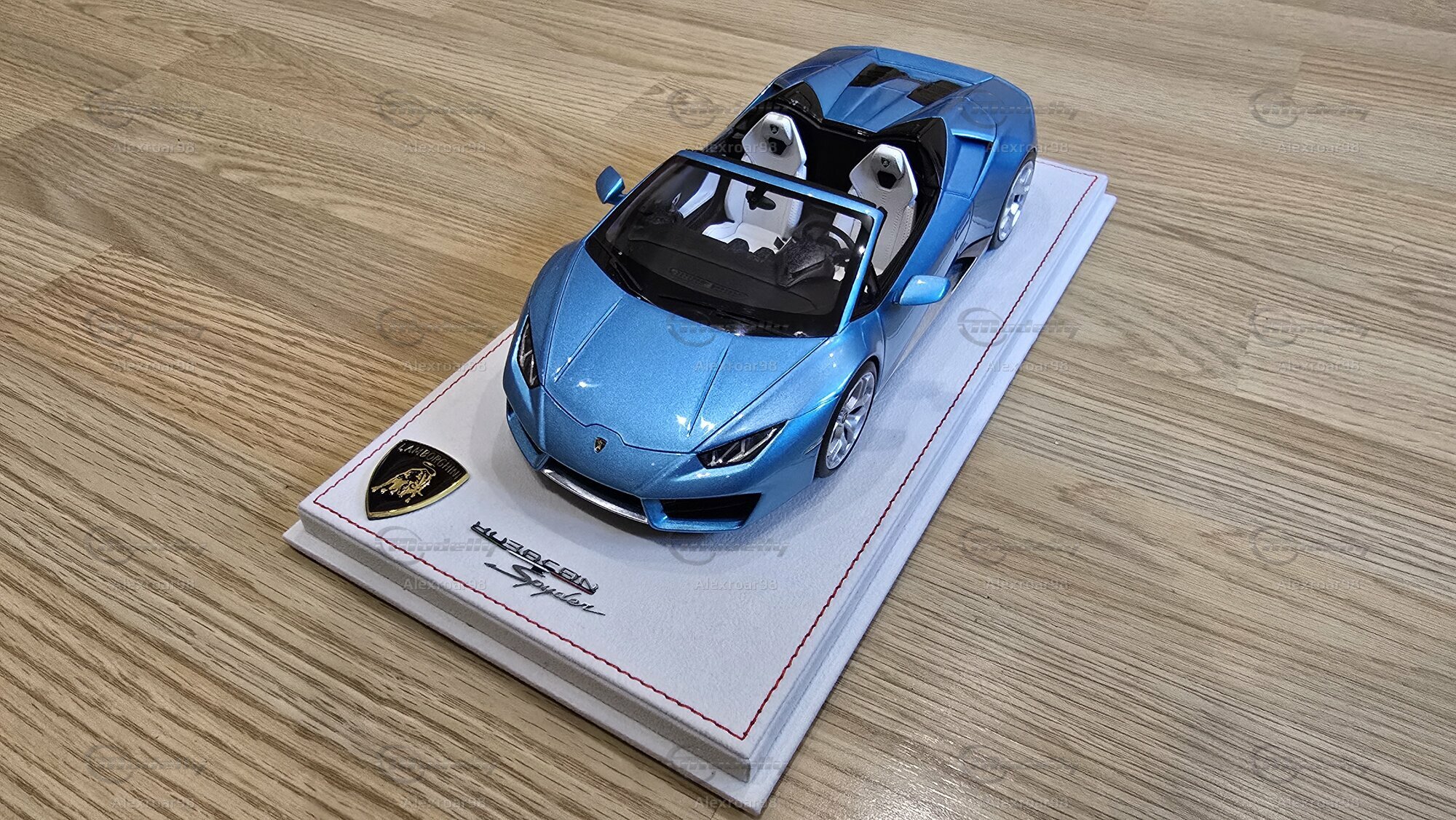
- Lamborghini Huracan LP 610-4 Spyder (from 2014)
- MR Models
- 1:18
- Showcase model / No engine
- resin
- Azzurro Mexico
- online dealer
- Perfect mint condition
- Original packaging exists
- Not for sale
Open V10 from Sant’Agata – model and context
This piece is based on the Lamborghini Huracán LP 610‑4 Spyder, the open version of the V10 sports car from Sant’Agata Bolognese. The Huracán replaced the Gallardo and marks the first generation of the line, produced from 2014 (run ended in 2024). The Spyder version debuted at the IAA in 2015 and deliveries started in 2016. The exterior was designed under Filippo Perini, who was head of the Lamborghini Centro Stile back then. Overall technical responsibility sat with Maurizio Reggiani as head of development. Typical Huracán cues are the hexagonal motifs, the flat LED headlights and the sharp wedge profile. The Spyder got its own rear end with vents and a changed engine cover to make room for the roof mechanism. Its predecessor for the open model was the Gallardo Spyder, but the Huracán brought the new Audi‑Lamborghini hybrid aluminum and carbon‑reinforced chassis into this segment for the first time.
Tech specs and driving feel of the real thing
The Lamborghini Huracán LP 610‑4 Spyder uses a 5.2‑liter V10 naturally aspirated engine with direct injection (IDS). That’s 5.2 liters (about 1.37 US gallons). Rated output is 449 kW (610 PS; ~602 hp) at around 8,250 rpm, and peak torque is about 560 Nm (~413 lb‑ft). Power goes through a 7‑speed dual‑clutch gearbox (Lamborghini Doppia Frizione, LDF) to all four wheels; the multi‑plate AWD clutch varies torque distribution depending on slip and driving mode. Official sprint times are roughly 3.4 seconds 0–100 km/h (0–62 mph) and a top speed of about 324 km/h (about 201 mph). It comes with carbon‑ceramic brakes as standard and optional magneto‑rheological dampers. The drive‑mode system ANIMA (Strada, Sport, Corsa) changes engine mapping, gearbox logic, steering and torque distribution. Structurally the Spyder has extra reinforcements in the sills and A‑pillars and an electrically operated soft top that opens or closes in around 17 seconds and can be used up to 50 km/h (31 mph). Aerodynamically it uses active airflow elements at the front and underbody to help cooling for the mid‑engine layout. Little details like cylinder cut‑out, start‑stop and a variable intake add to economy and emissions without killing the V10’s high‑revving character.
1/18 miniature from MR Models – visible details
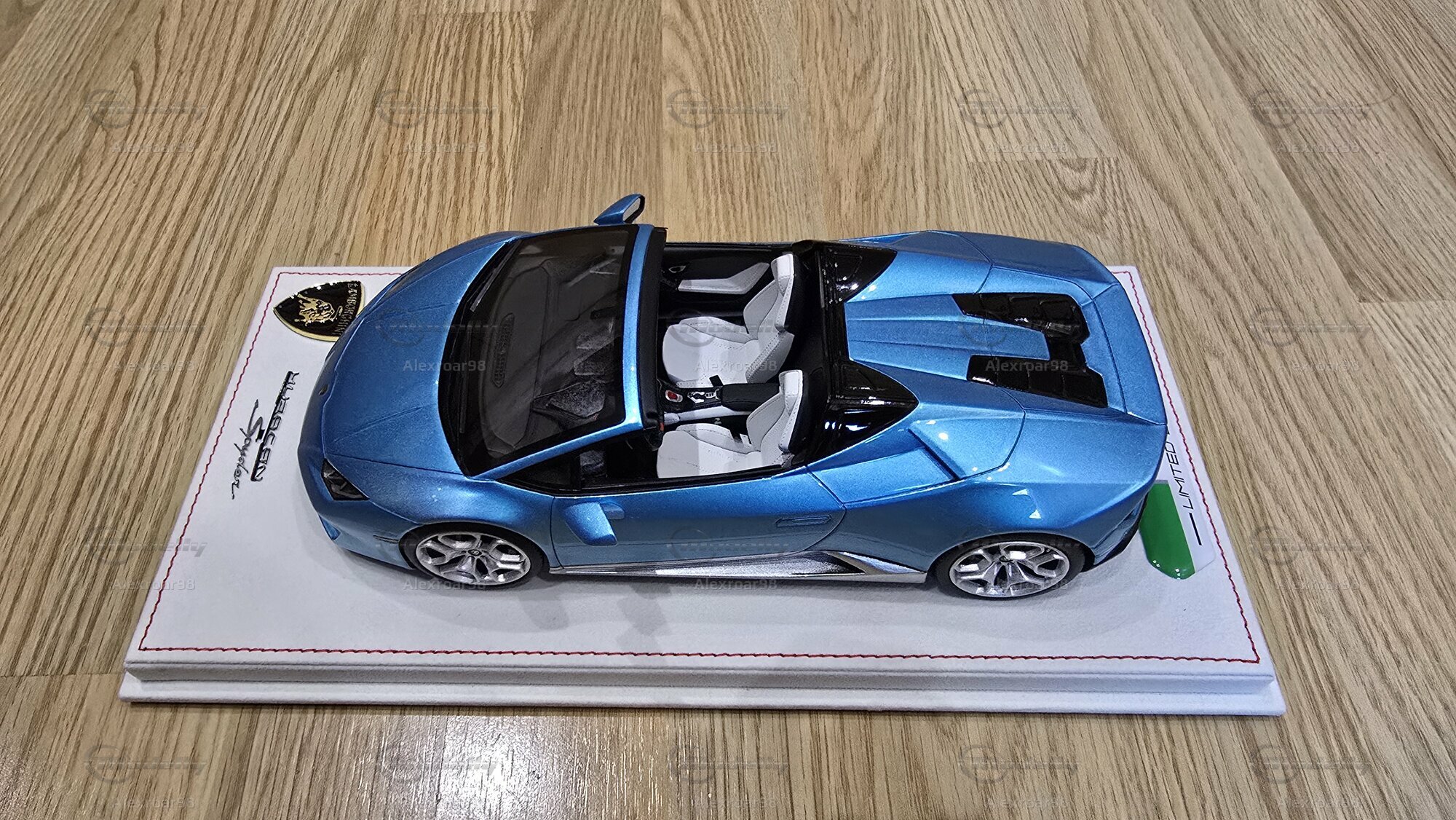
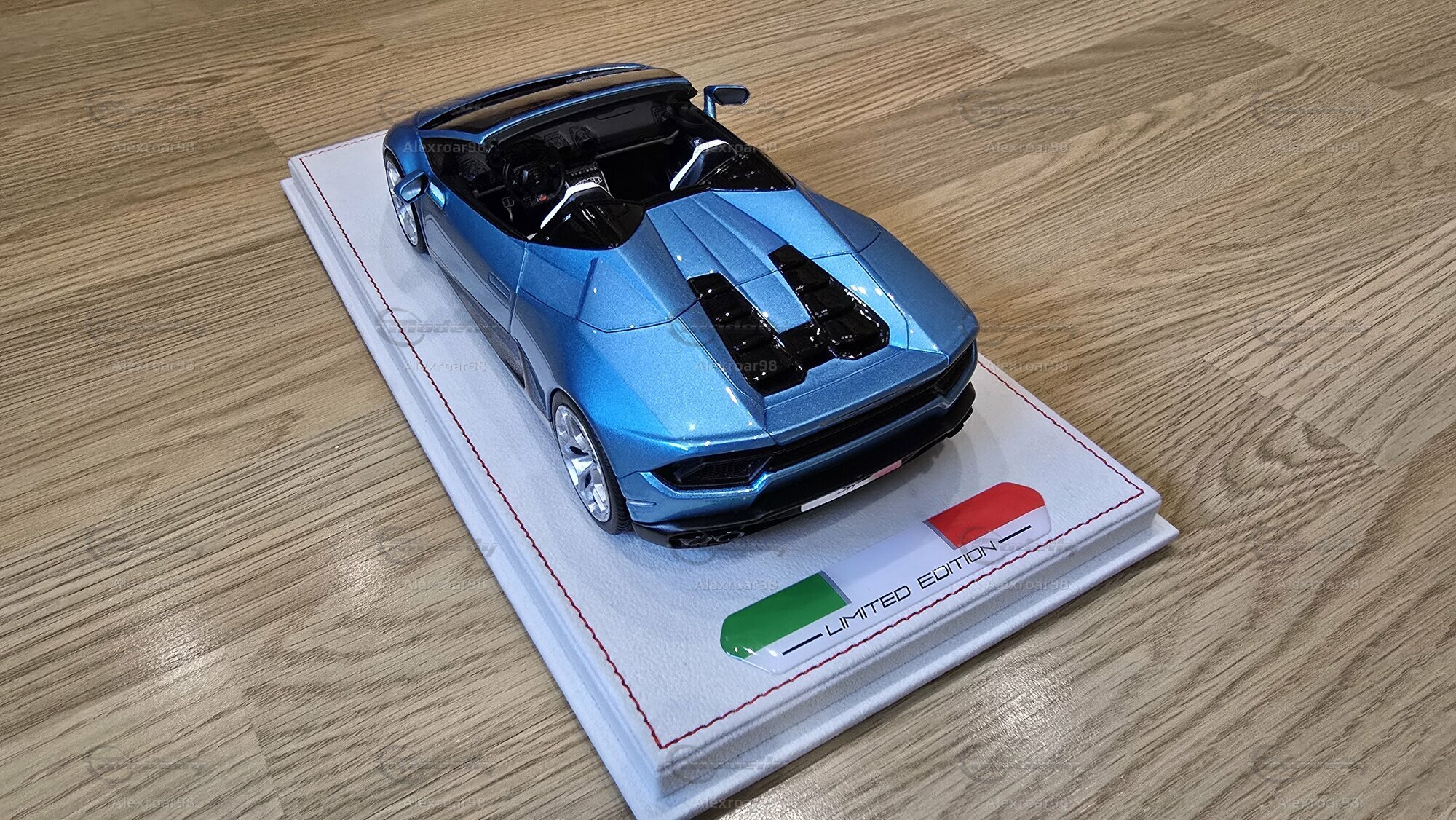
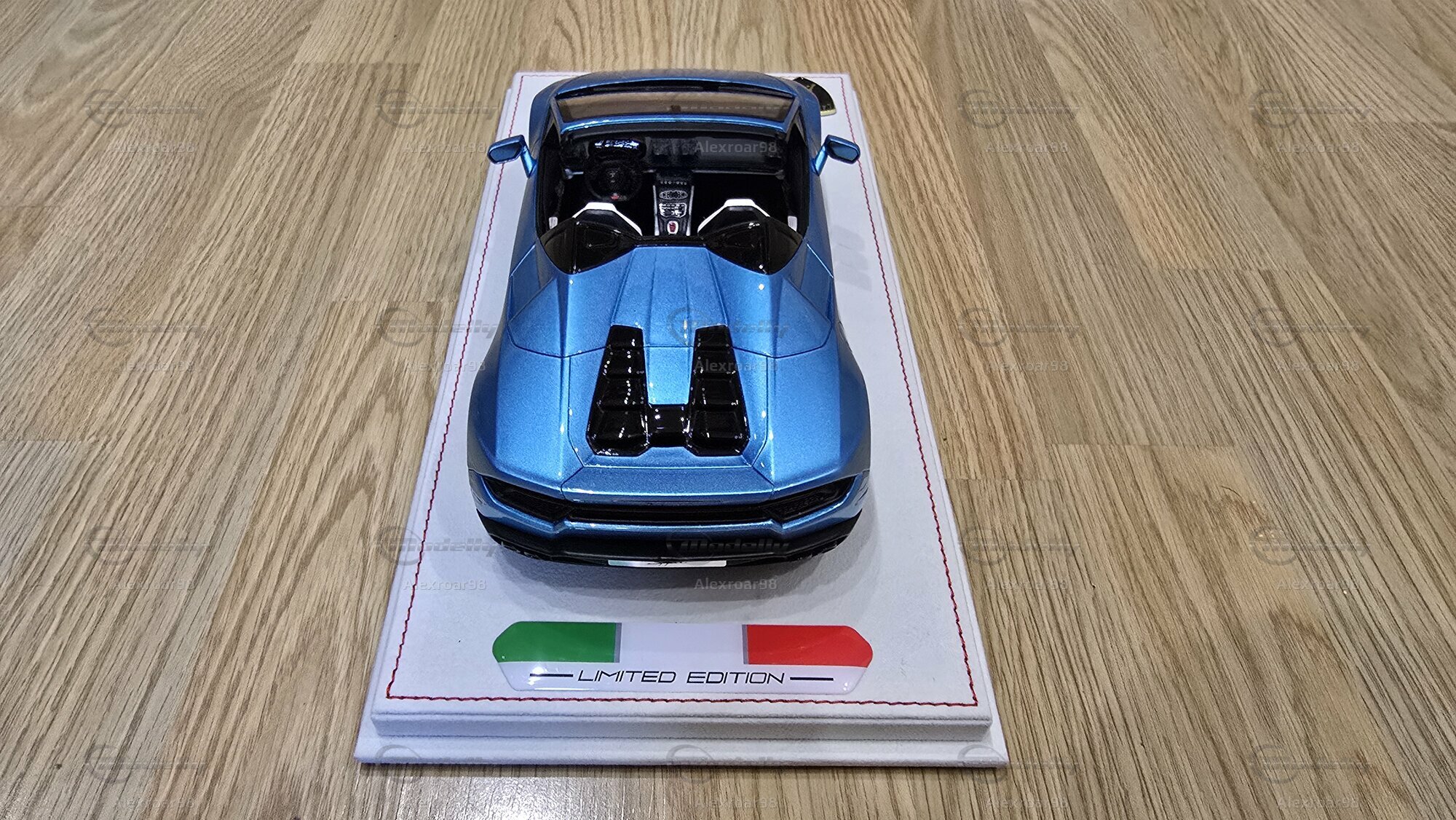
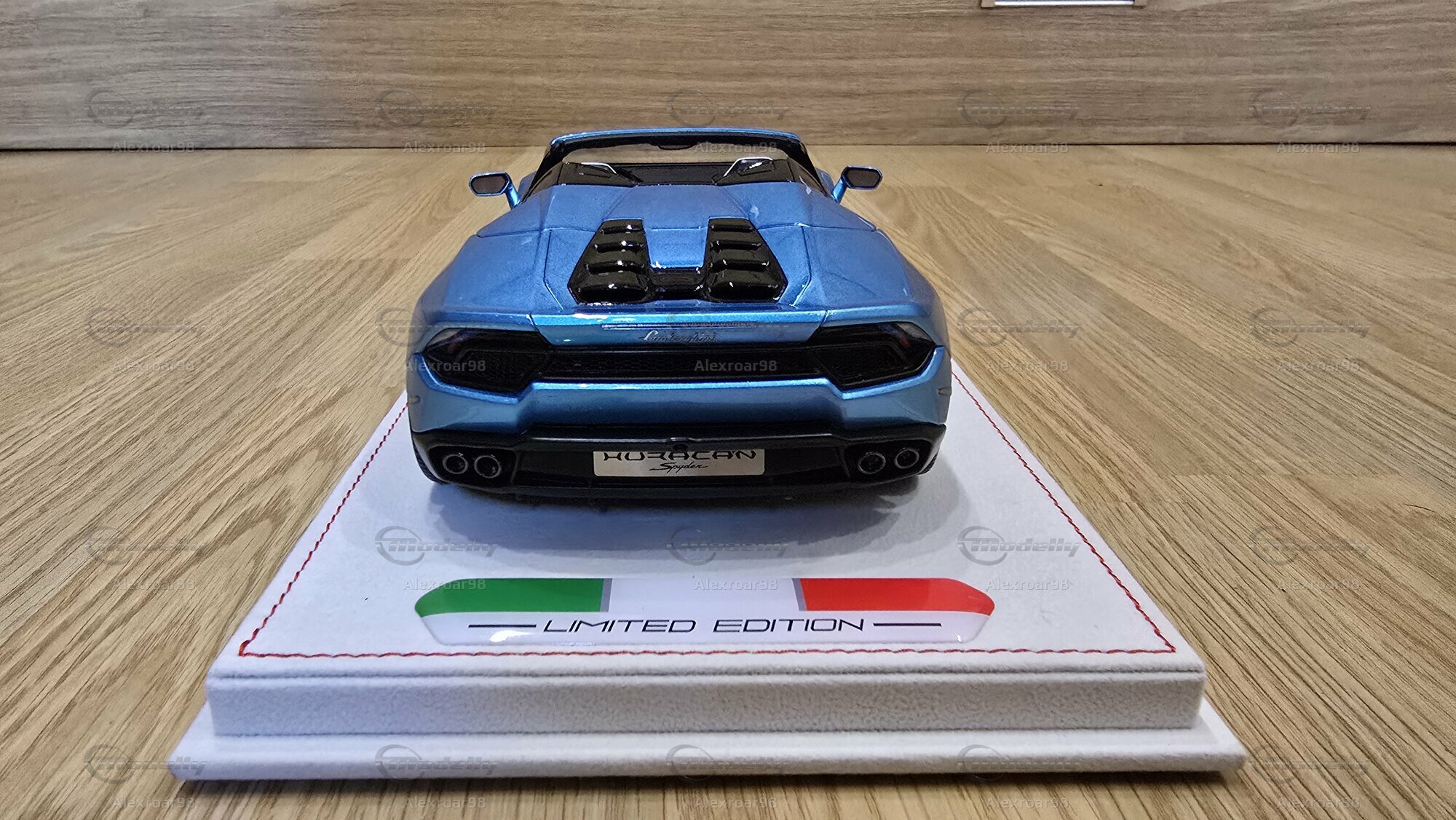
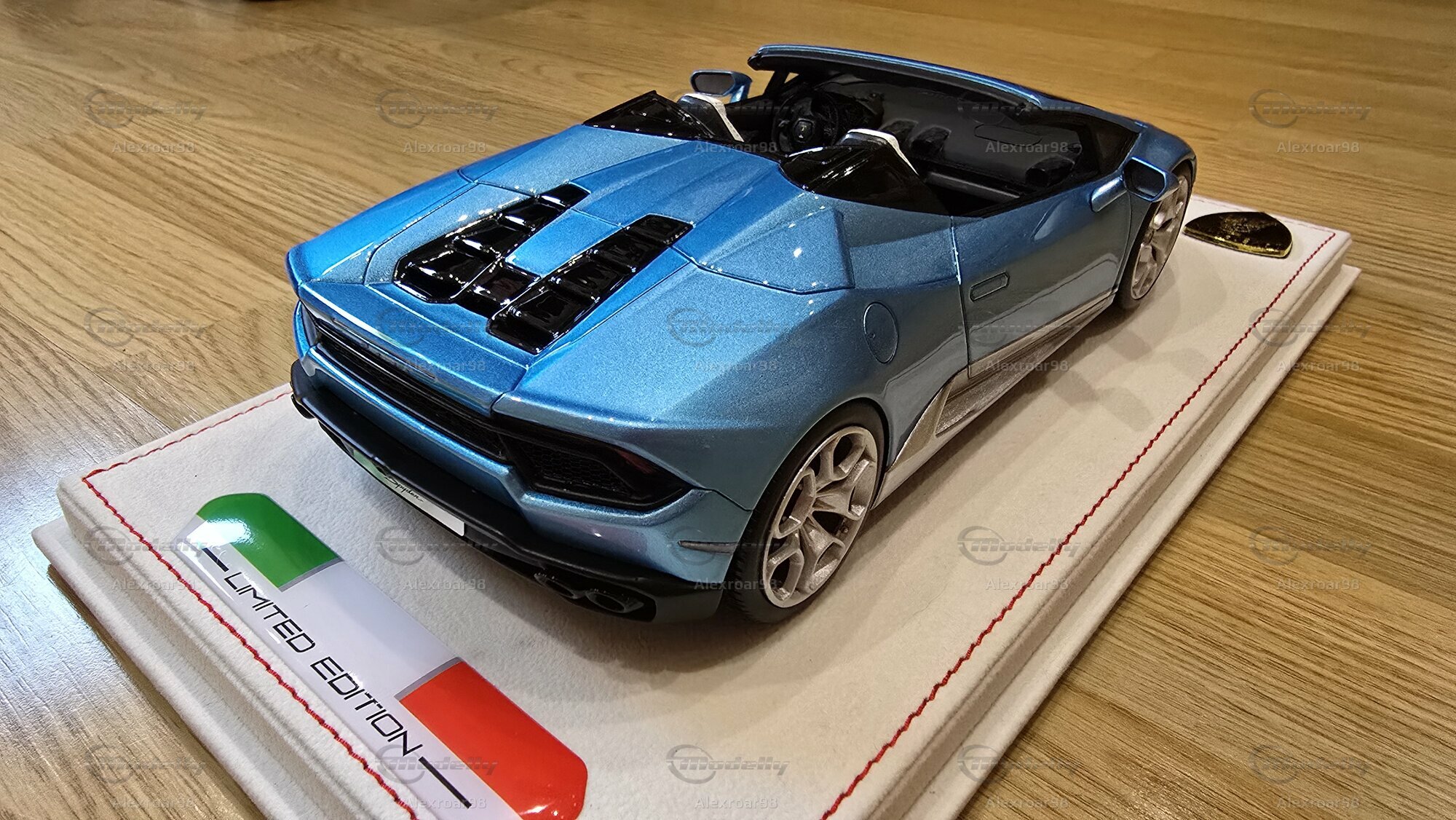
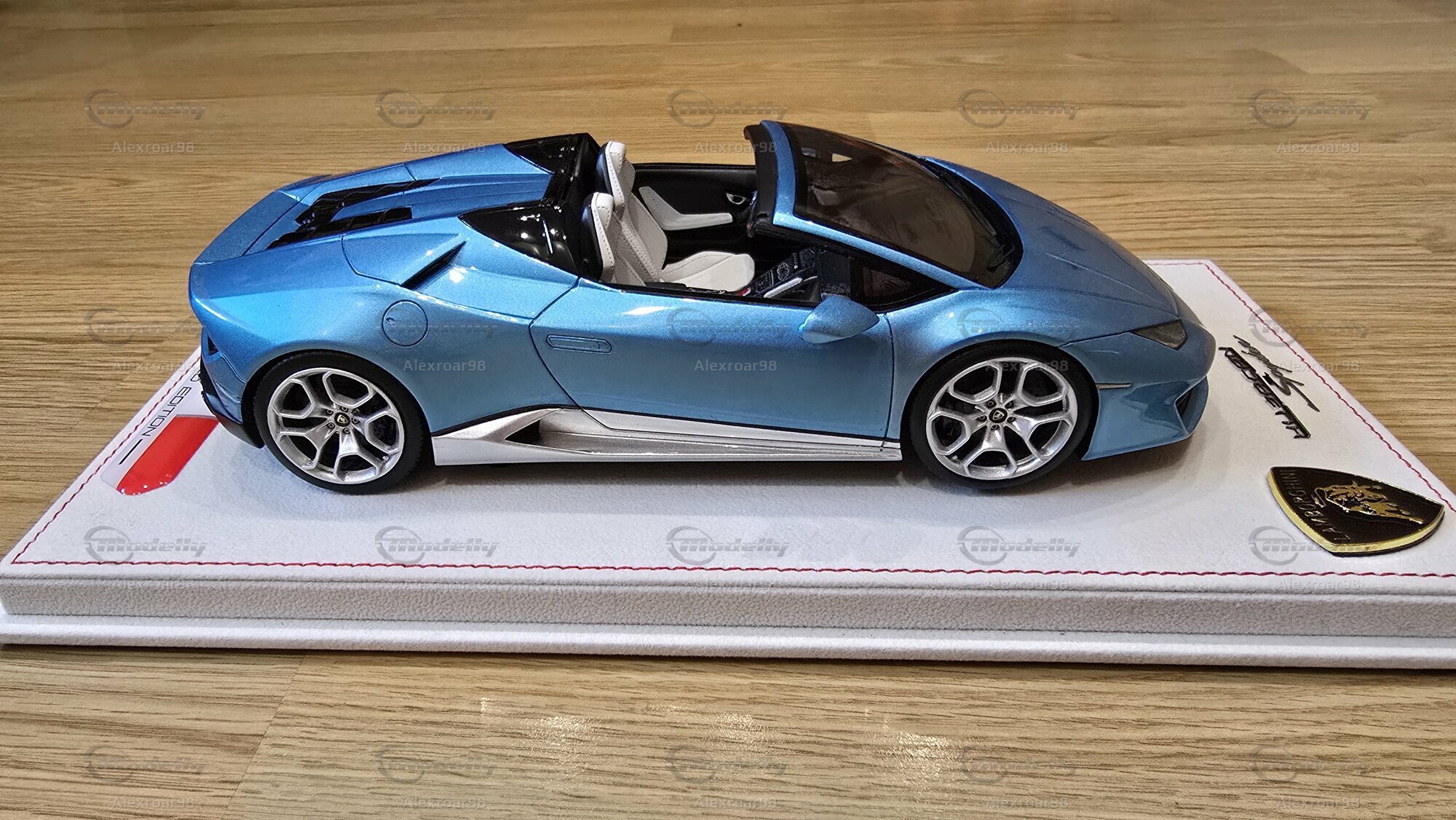
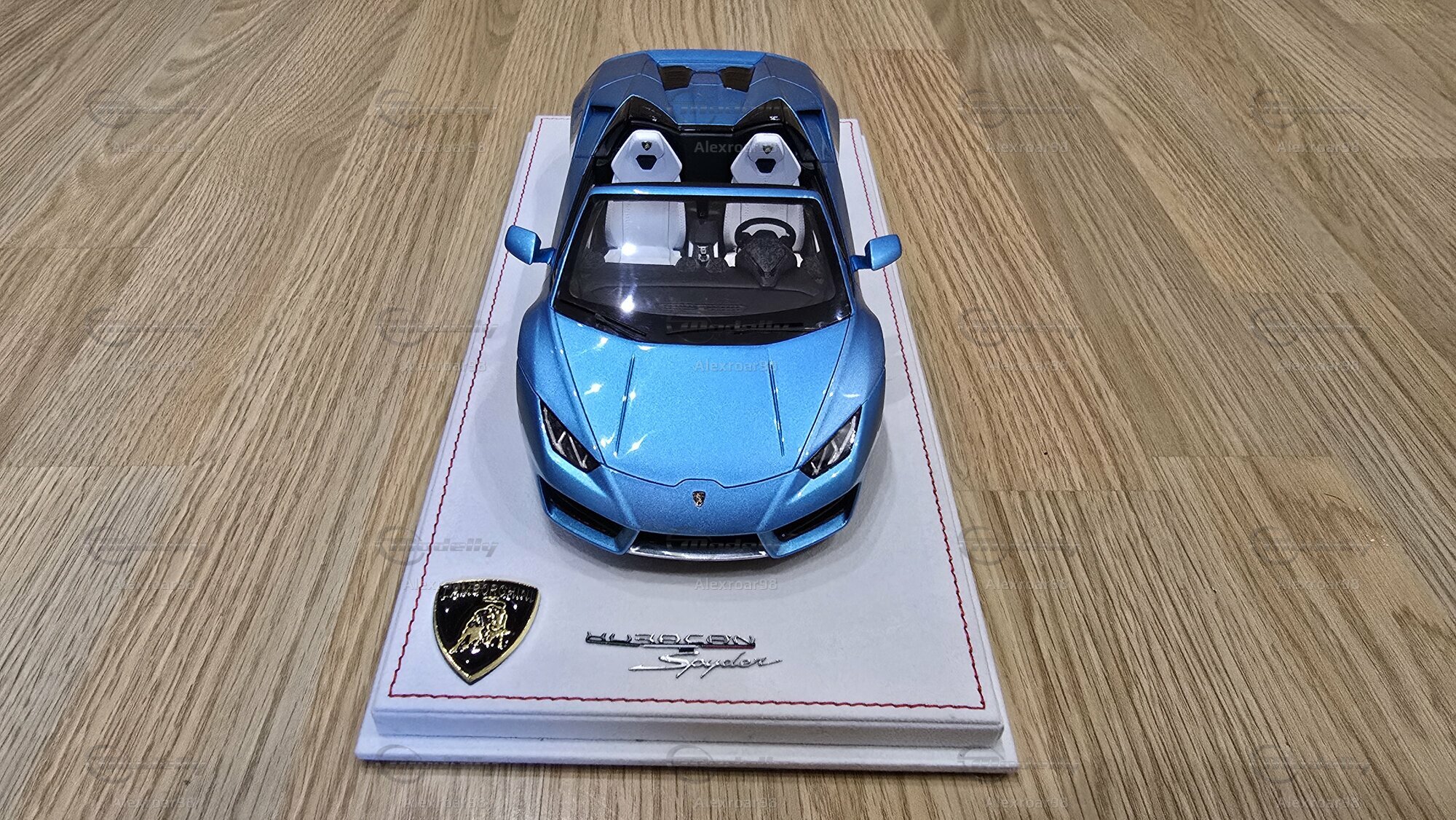
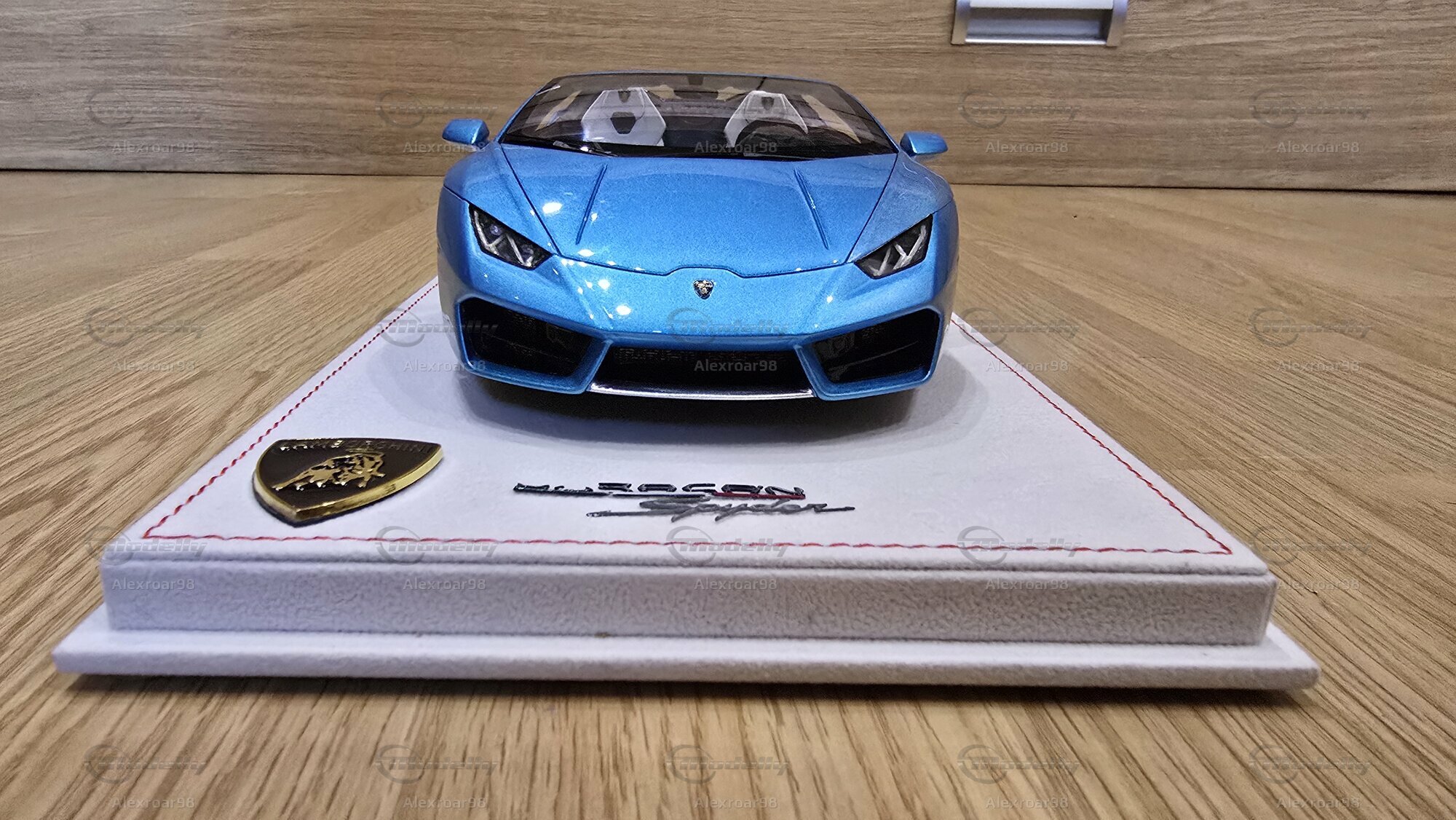
This example is a 1/18‑scale model from MR Models in resin; resin lets them get sharp edges and clean panel lines like on the real Huracán. It’s a LIMITED EDITION, which is clearly shown on the base with the Italian tricolore. The display base is a bright white with a red trim, shows the brand crest and the “Huracán Spyder” badge. In the photos it’s a metallic blue with a fine flake that’s been applied evenly. Black inserts on the front splitter, vents and engine cover give a nice contrast. The interior is open and readable: white bucket seats with hexagonal headrest embossing, a black center console and a three‑spoke wheel are all visible. The side profile captures the door inset, the mirrors are slim and the LED headlights are built up in layered clear elements. The rear shows the two‑part cover over the engine area (where the roof stacks in real life); the quad exhausts and diffuser are well represented. The wheels use a five double‑spoke design that matches the Huracán’s factory look; the brake discs with drilled detail are visible behind the rims. Overall the model feels balanced and faithful thanks to tidy panel gaps, correct proportions and a convincing surface finish.
For collectors: presentation, limited run and care tips
Heads up if you collect: this 1/18 resin model from MR Models is mostly fixed — like many resin pieces the hood and doors don’t open, which helps get precise panel gaps. The smooth resin surface looks great but keep it out of direct sun and high heat. Use a soft brush or low‑pressure canned air to dust it. The LIMITED EDITION status raises collector value; the limitation is stamped on the base, which helps identify it in a display. You can clearly see brand elements: the gold Lamborghini crest on the base, the “Huracán Spyder” script and the tricolore plaque at the back of the base. The metallic blue body with black engine‑cover accents and white interior gives a crisp, contrasting look without extra stripes. For Modelly users: this piece is part of the collection of “Alexroar98”, so you can compare it to other models from the same brand, generation and body type. That makes it handy for size comparisons in a cabinet and for showing the Huracán’s evolution from launch to later variants like the Performante or EVO. If you want an open‑top V10 next to a coupe, this is a neat, accurate little representation — straightforward, functional and focused on the essentials.



- Write a first comment about this model now!Any comment can be discussed by all members. It's like a chat.Mention other Modelly members by using @ in your message. They will then be informed automatically.
- Write a first comment about this model now!Any comment can be discussed by all members. It's like a chat.Mention other Modelly members by using @ in your message. They will then be informed automatically.