
BMW e34 Hartge(diecast 1:18, Ottomobile)
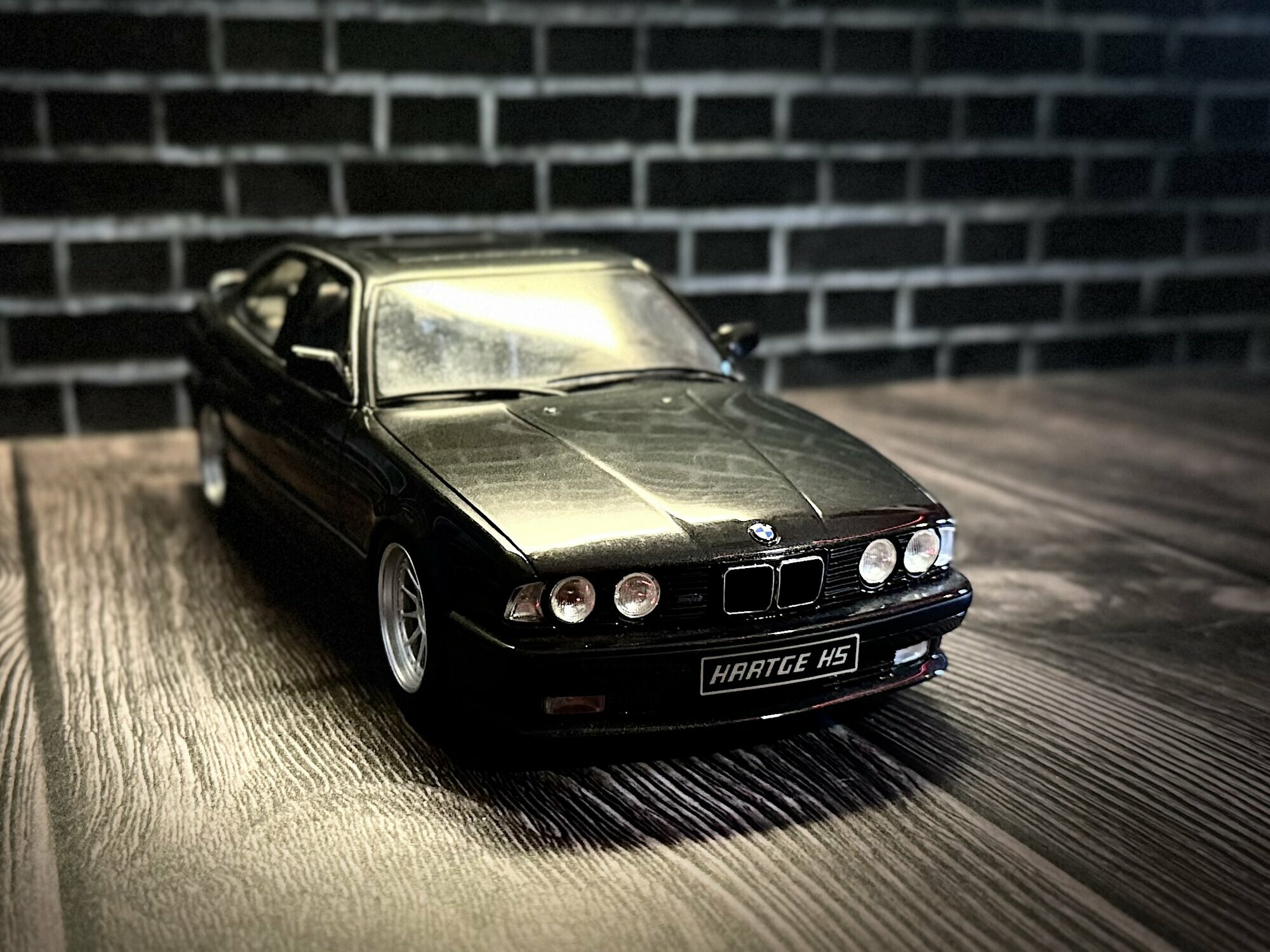
- BMW e34 Hartge (from 1990)
- Ottomobile
- 1:18
- Showcase model / No engine
- diecast
- black
- Perfect mint condition
- Original packaging exists
- Not for sale
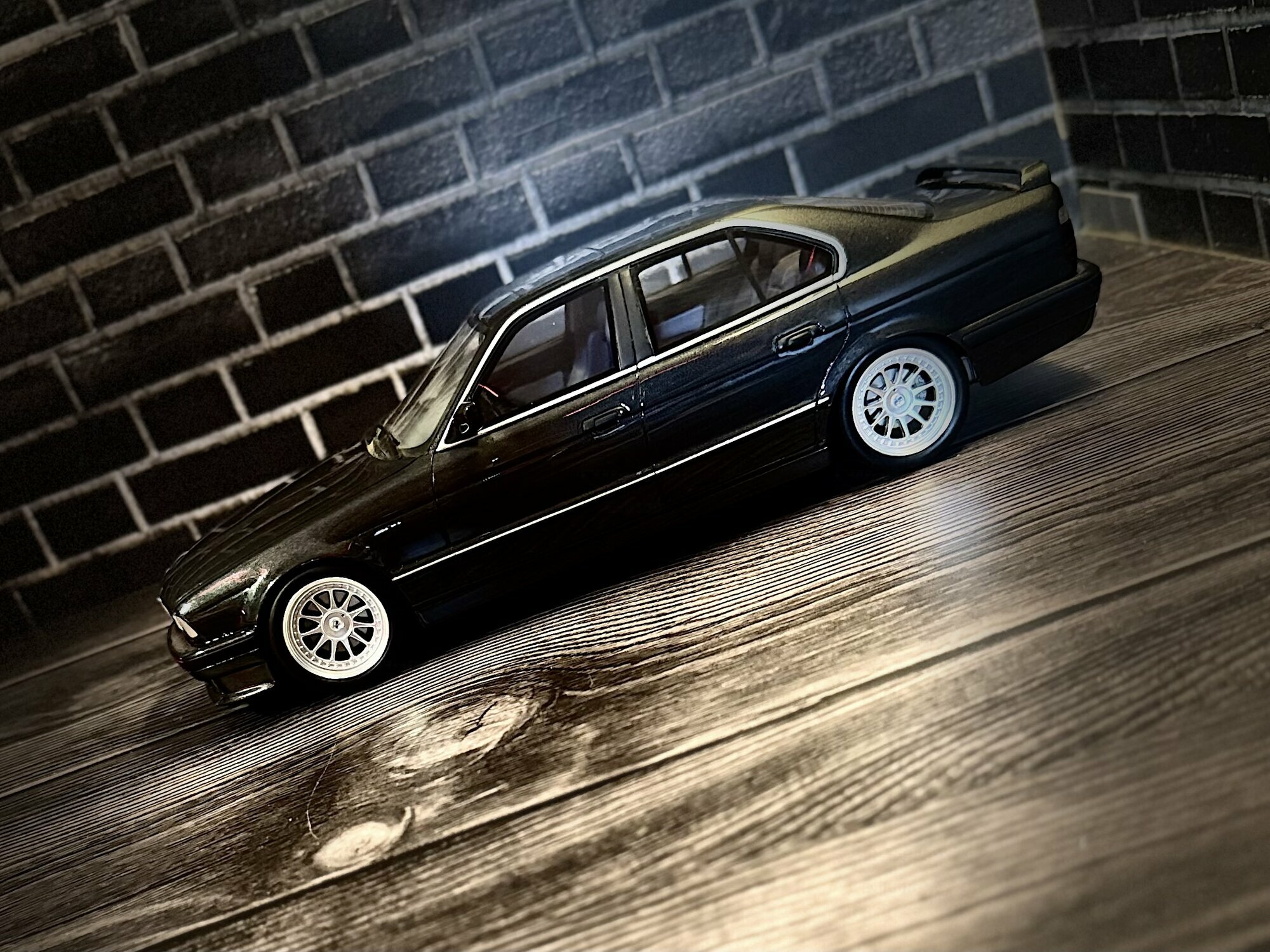
Inspiration: BMW 5er (E34) Hartge H5 conversion
The car shown in the photos refers to the tuned BMW 5er (E34) Hartge H5, i.e. a conversion of the E34 series, which was produced from 1988 to 1996. The generation of the BMW 5er (E34) Hartge H5 was created under the design direction of Claus Luthe; key exterior lines are also credited to designer Ercole Spada. Compared with its predecessor the E28, the BMW 5er (E34) Hartge H5 — or rather the base series — brought a stiffer body, improved aerodynamics (drag coefficients down to around 0.30) and a broader safety package with ABS and, later, airbags. As the tuner here, Hartge appears — a company from Merzig/Saarland. Hartge was founded in 1971 by Herbert Hartge and, from the mid-1980s on, was registered in Germany as its own vehicle manufacturer. With the name H5, Hartge offered various power versions based on the six-cylinder and V8 models of the E34. The BMW 5er (E34) Hartge H5 combined the classic 5 Series concept with sportier tuning and an eye-catching parts program for its time.
Tech and classification of the original
The production series that the BMW 5er (E34) Hartge H5 is based on used MacPherson struts up front with lower control arms and a multi-link (semi-trailing/strut-type) rear axle. Engines ranged from four-cylinders and inline sixes (M20/M50) to later V8s (M60) and, as a top model, the M5 with the S38 inline-six. Hartge typically lowered the BMW 5er (E34) Hartge H5 with sport springs, fitted firmer dampers, their own anti-roll bars and a revised exhaust. Power bumps were done via remapped engine electronics, revised intake and exhaust parts and, depending on the base engine, increased displacements. That put the BMW 5er (E34) Hartge H5 well above the stock models in power, aiming for a balanced mix of long-distance comfort and high cruising speed. Visually, spoilers, side skirts, badges and lightweight wheels with the typical multi-spoke look marked the conversions. The E28 (1981–1988) is the predecessor that set the basic layout — longitudinal engine, rear-wheel drive. To help place the first year 1988 in time: that year saw the Winter Olympics in Calgary, George Herbert Walker Bush won the U.S. presidential election, and songs like “Fast Car” by Tracy Chapman were in the charts — little reference points to get the car’s age into perspective.
The collector's model from Ottomobile in 1/18
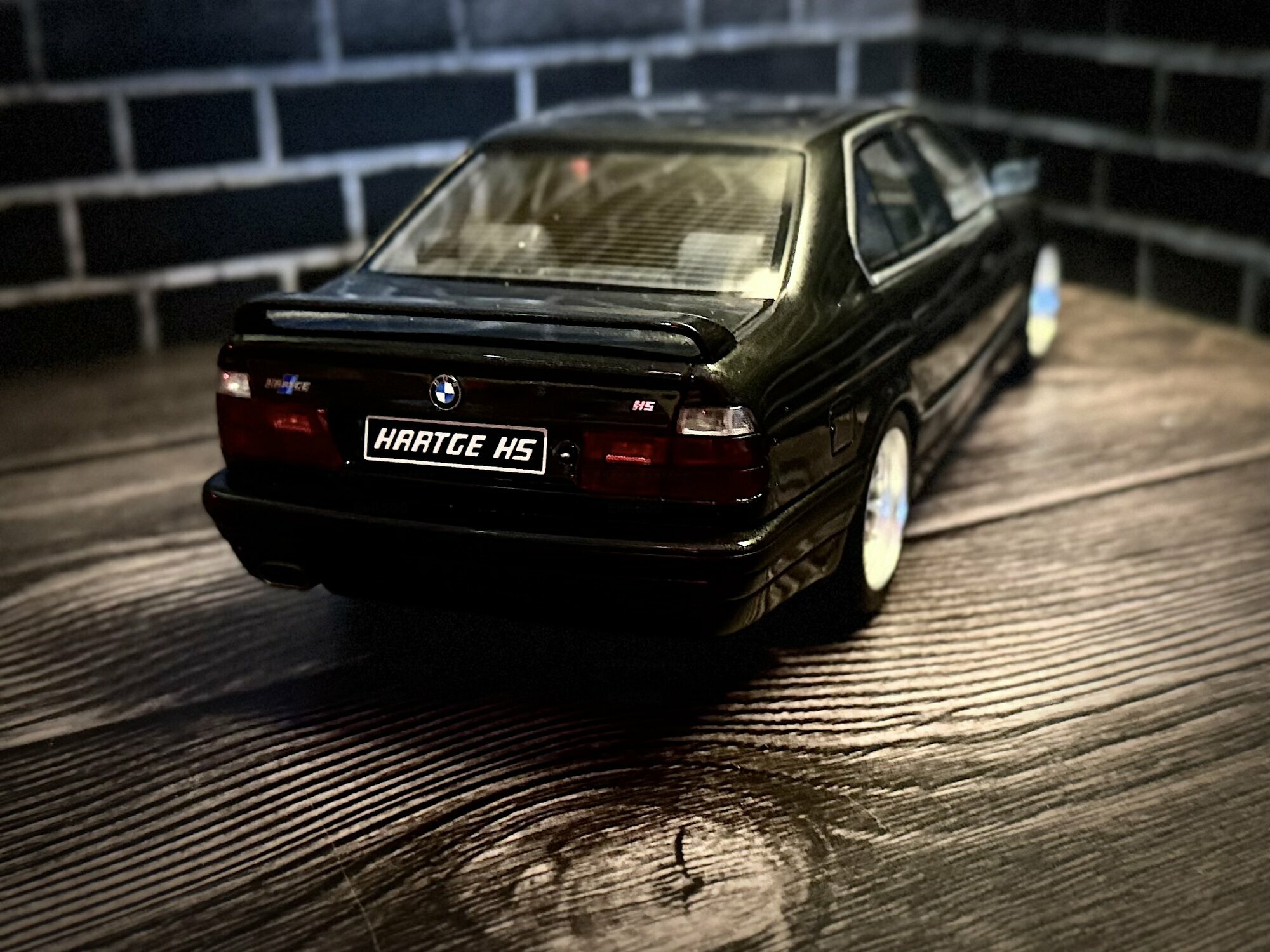
The photos here come from model collector “Evil500” and show a scale model in 1/18 from Ottomobile. It's a BMW 5er (E34) Hartge H5 rendered in black, with fine panel gaps and correctly reproduced E34 proportions. The twin headlights with clear lenses, the BMW kidney grille, the subtle front spoiler and the small rear lip spoiler all pick up the typical cues of the BMW 5er (E34) Hartge H5. License plates reading “HARTGE H5” front and rear clearly point to the tuning reference. The wheel design shows the filigree multi-spoke style typical for Hartge; the slightly lowered stance fits the tuner setup. The taillights with clear turn-signal sections, the fine trim strips and the reproduction of the side indicators are all visible in the photos. This model is a die-cast metal 1/18 from Ottomobile, which gives the body a consistent glossy finish and a noticeable heft. Especially interesting for collectors: it’s a limited edition, 1 of 999 worldwide. The limited number makes it a nice fit for E34 and tuning-themed collections.
Color, details and context for collectors
The paint looks like deep black with a slight metallic sheen; you can see clear highlights on the hood and roof in the pictures, which emphasize the flat surfaces of the BMW 5er (E34) Hartge H5. At the rear you can spot the subtle spoiler lip that Hartge used for both looks and a bit of aero help. The side view and the gap at the wheel arches show the sporty lowering. BMW badges up front and back and the Hartge lettering are neatly applied. You can peek into the interior through the windows: the classic E34 dashboard with a driver-oriented center console, headrests on the front and rear seats and finely molded seatbelt details. For collectors it’s interesting that Hartge was already offering alloy wheels, sport suspensions and exhaust systems under its own name in the early 1990s; many parts carried the Hartge stamp and were available in Germany with approval papers. To place the 1988 starting year in a bit more context — besides the examples above — the Sega Mega Drive was launched in Japan in 1988, and the shuttle Discovery returned to flight with mission STS‑26 after the Challenger disaster. These references are just to time-stamp the BMW 5er (E34) Hartge H5. For displaying it in a cabinet I’d suggest a dust-protected setup; the delicate add-ons and the multi-spoke wheels show the car’s shape nicely and round off Evil500’s piece.
Note: there weren’t any metric measurements in the original text, so I didn’t add any metric-to-imperial conversions.
Chriskitt
Auto-translated
 Very nice BMW 👍 👍 👍 👍
Chriskitt
Auto-translated
 Very nice BMW 👍 👍 👍 👍