
BMW M3 E36 GT(diecast 1:18, Solido)
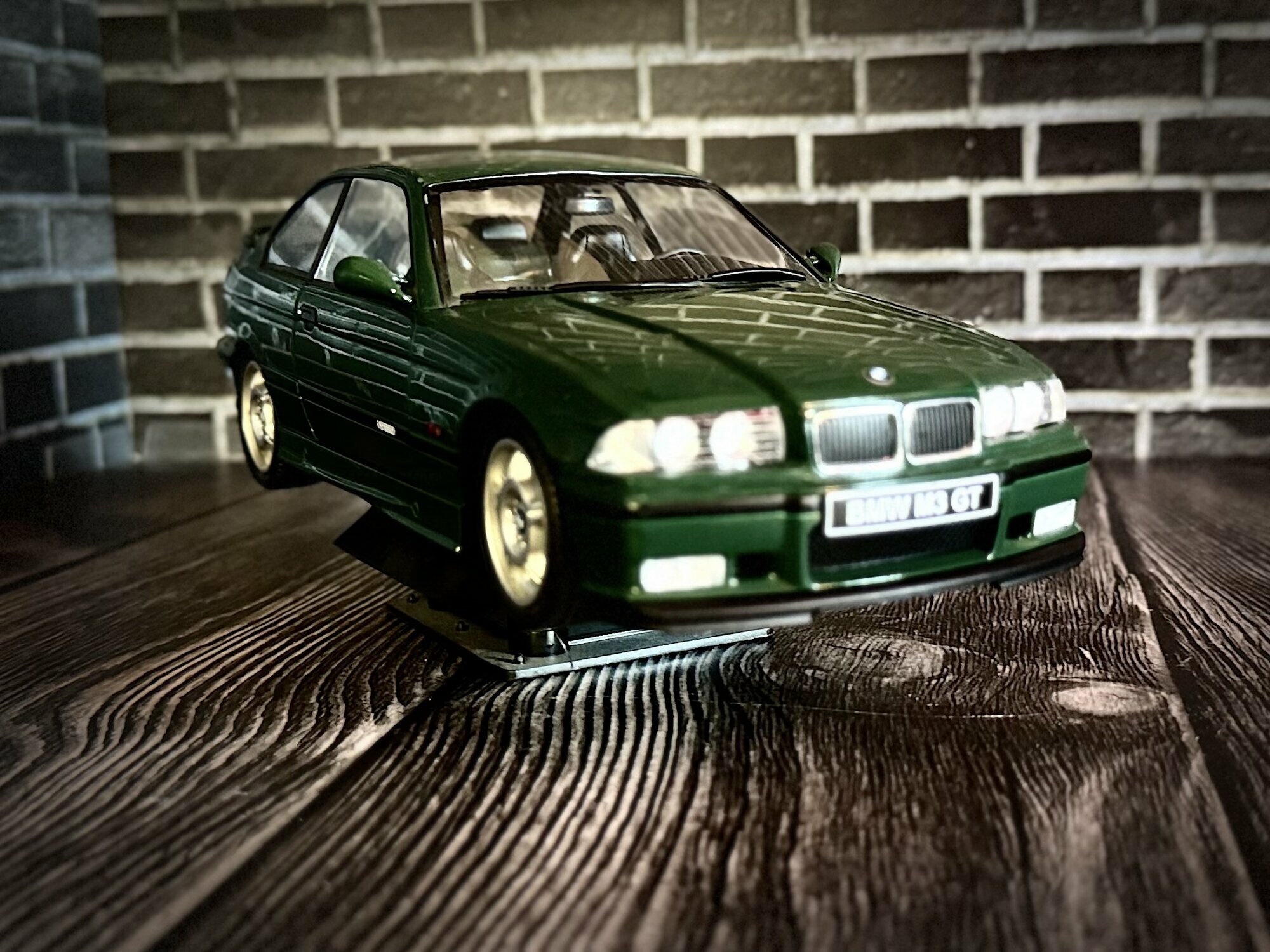
- BMW M3 E36 GT (from 1992)
- Solido
- 1:18
- Showcase model / No engine
- diecast
- British Racing Green
- Perfect mint condition
- Original packaging exists
- Not for sale
Vorbild mit Motorsportbezug: Der BMW M3 der E36-Ära und die GT-Sonderserie
The model you showed is based on the BMW M3 E36 GT, a limited homologation special of the E36 M3. The E36 generation was built from 1992; the BMW M3 E36 GT itself appeared in 1995 in a limited run of about 356 cars. The car was based on the well-known S50B30 inline-six (3.0 liters (183.1 cubic inches / 0.79 US gallons)), but got modified camshafts, a revised intake manifold and updated engine management. Output rose to roughly 295 PS (about 291 hp) and around 323 Nm (about 238 lb-ft) of torque. It was paired with a 5-speed manual and a mechanical limited-slip differential sending power to the rear wheels. The BMW M3 E36 GT could sprint to 100 km/h in about 6.0 seconds (to 62 mph) and had an electronically limited top speed of 250 km/h (about 155 mph). To save weight, the road car used specific aero parts including a trim front splitter and a fixed rear wing. Visually the BMW M3 E36 GT was typically finished in British Racing Green Metallic and carried special badges and interior details. Its direct predecessor was the M3 E30 with a four-cylinder naturally aspirated engine; the E36 GT followed with smoother running and better long-distance manners.
Model in the Modelly collection of member „Evil500“: 1/18 by Solido
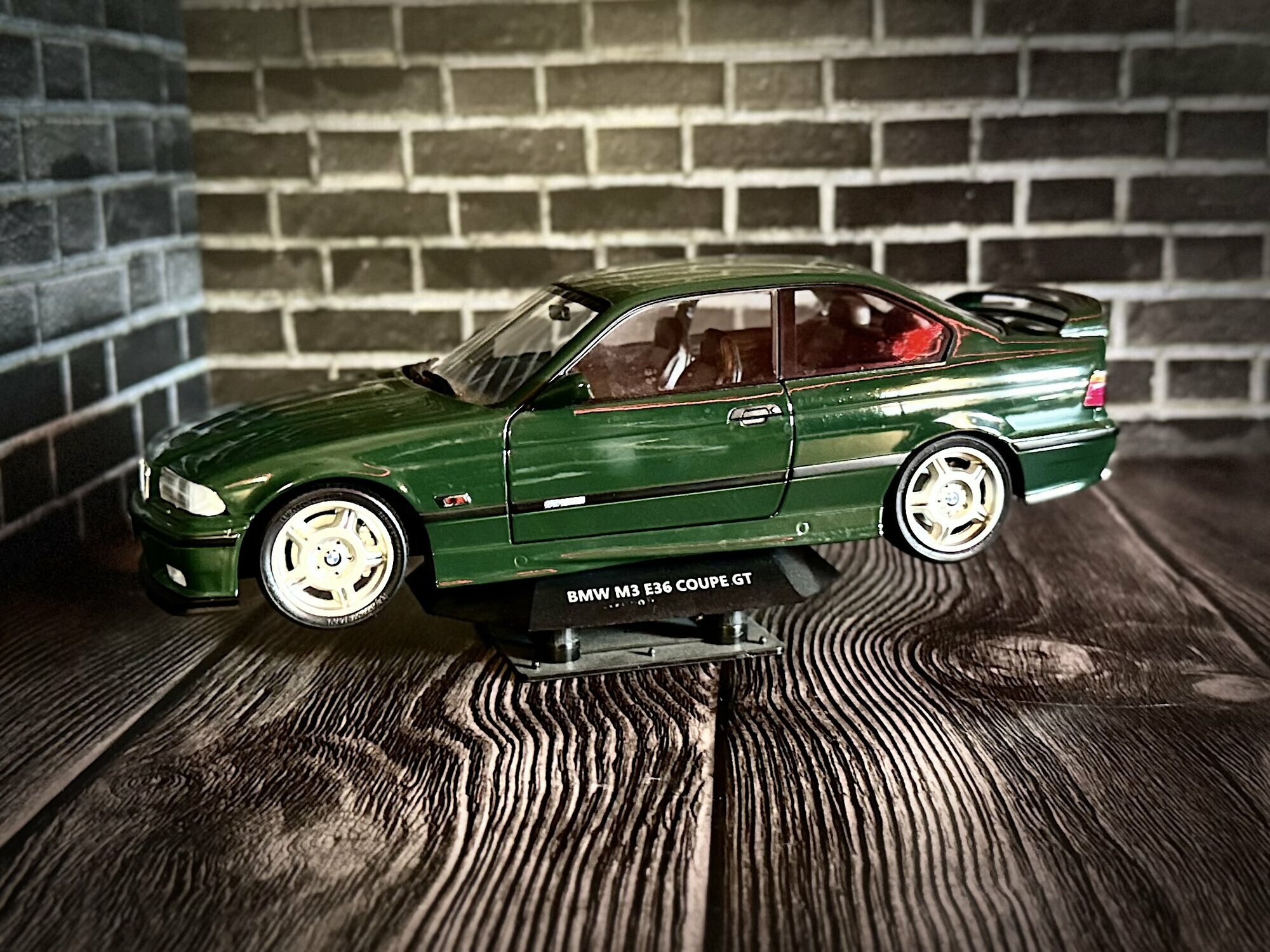
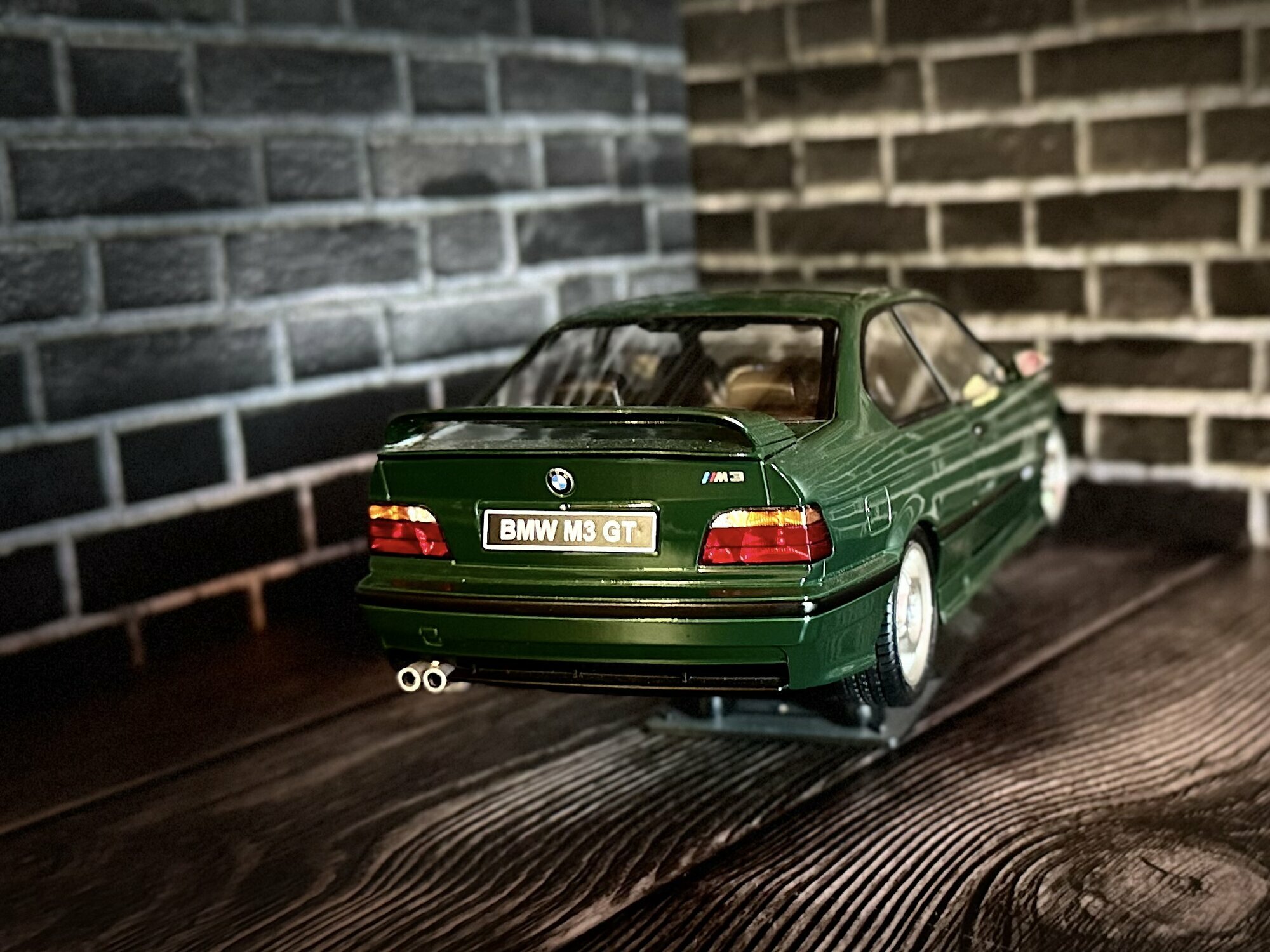
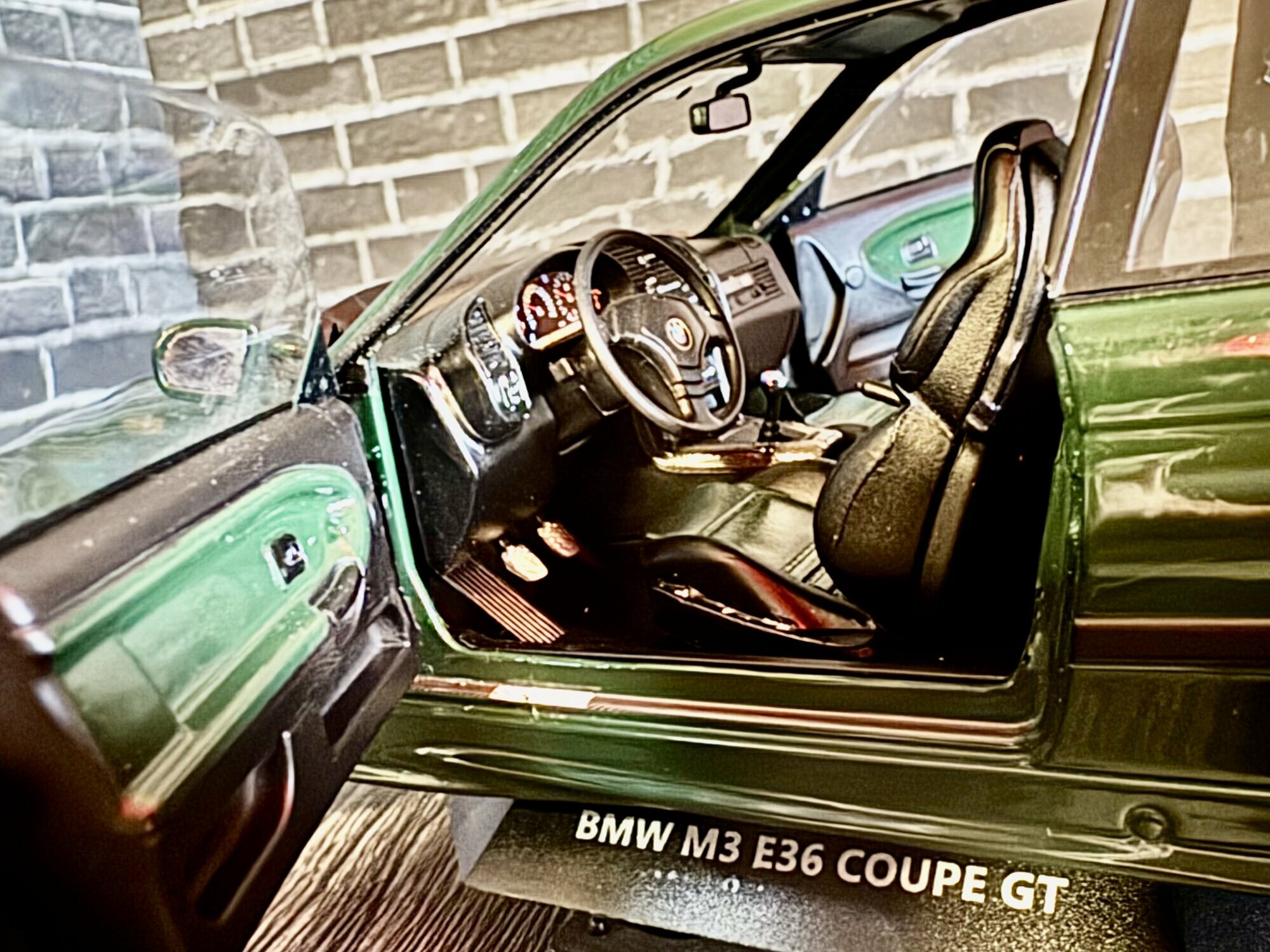
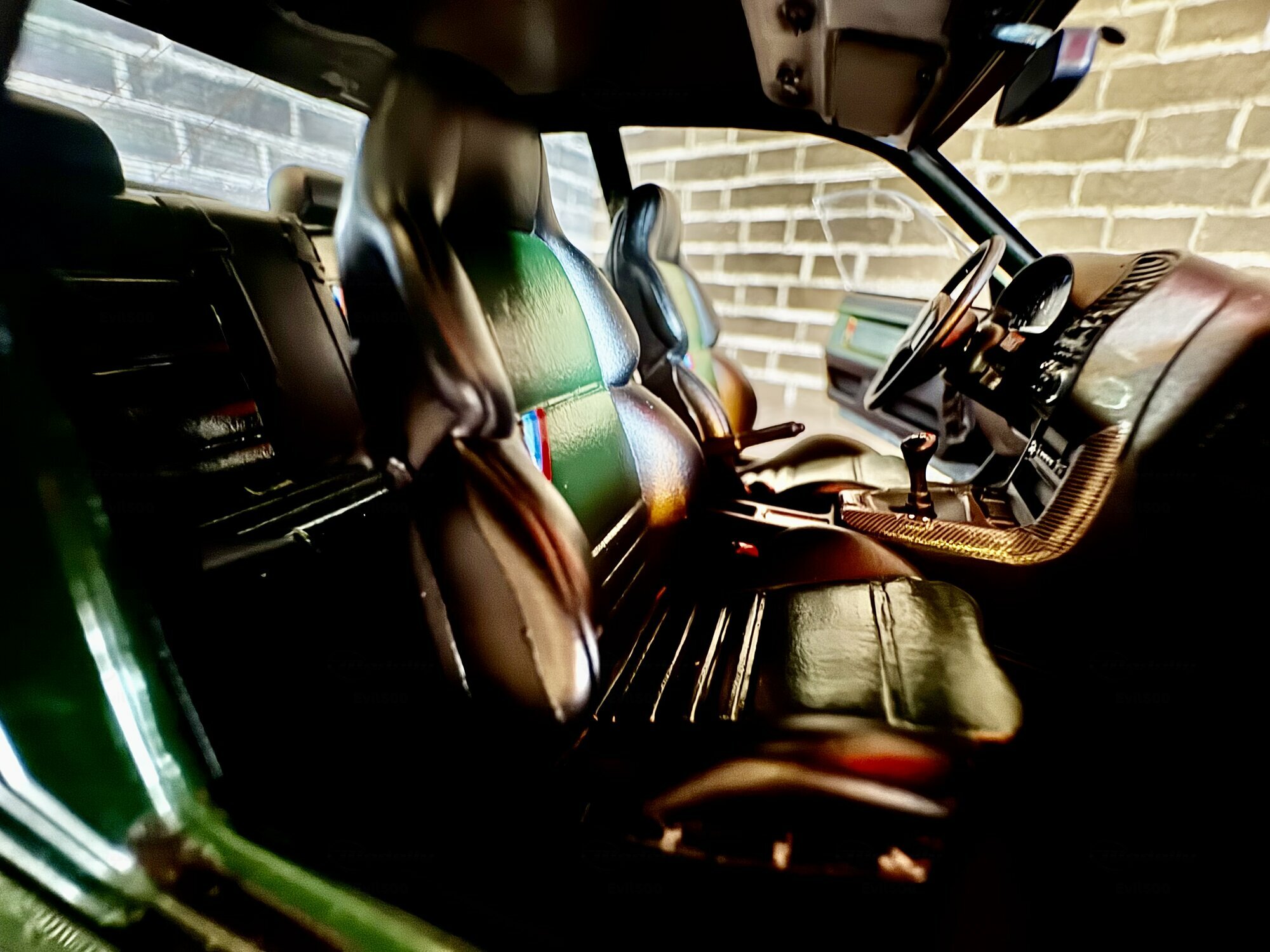
The photos show a 1/18-scale model from Solido in the Modelly collection of “Evil500.” It’s a diecast model — metal body with plastic parts. The body is painted a deep dark green that matches the typical color of the BMW M3 E36 GT. The twin headlights are neatly fitted, the BMW kidney grille is correctly proportioned and highlighted in silver. The front bumper shows the GT-style openings and the hint of a spoiler lip. On the sides you can spot M badges and trim lines; the door handles and mirrors are color-matched. At the rear there’s the prominent wing and a twin-exit exhaust. The taillights are multi-piece with orange indicator inserts. The interior is a brown-beige tone and shows the dash, seats and center console with clear shapes. The display base reads “BMW M3 E36 COUPE GT,” so the link to the BMW M3 E36 GT is unmistakable. As a 1/18 Solido piece it’s big enough to show the coupe’s lines and lots of detail.
Tech, development and the time context of the original
With the BMW M3 E36 GT, aerodynamics and everyday usability were both important. The E36 base used McPherson struts up front and a multi-link rear suspension (the BMW Z-axle) in the back. Combined with nearly 50:50 weight distribution, that delivered precise handling. The braking setup featured vented discs all around; ABS was standard. Curb weight was around 1,460 kilograms (about 3,219 pounds), depending on equipment. The E36’s shape was created in BMW’s design team under Joji Nagashima, who gave the car a flatter front, a clean coupé silhouette and smoother aerodynamic transitions. On the M-engine side the work drew on experience from BMW motorsport engineers like Paul Rosche, whose influence on the high-revving nature of BMW inline-sixes is well documented. The BMW M3 E36 GT served as a homologation base for national and international racing series in the 1990s. For a bit of historical color: the car arrived in 1995 — the same year the WTO started, Microsoft released Windows 95, and Coolio’s “Gangsta’s Paradise” topped the charts — that’s the social and cultural backdrop the GT came into.
Paint, details and tips for collectors
The model’s paint follows the GT’s color scheme. The dark metallic green looks even and the panel lines and creases are clearly visible. Up front there’s a hinted two-part splitter and at the back a defined rear wing. The wheels on the model are painted a light gold and have BMW center caps. Since the exact wheel maker isn’t obvious from the photos, I won’t try to force a match to a specific wheel variant. The interior in the model has textured seat surfaces, a contrasting center console and rear side trims; the color choice differs from some documented GT interiors but gives a nice contrast to the exterior. The “BMW M3 GT” badging on front and back is crisp. The diecast body shows even panel gaps, clear glazing, and tires that sit flush in the arches. These features make the model look great on a display base or shelf. For collectors: this is a 1/18 Solido diecast, so it’s sturdy and good for handling during photo sessions or when rearranging a collection. In “Evil500”’s lineup it’s a neat piece that represents the aero- and homologation-focused chapter of the BMW M3 E36 GT.

- Write a first comment about this model now!Any comment can be discussed by all members. It's like a chat.Mention other Modelly members by using @ in your message. They will then be informed automatically.
- Write a first comment about this model now!Any comment can be discussed by all members. It's like a chat.Mention other Modelly members by using @ in your message. They will then be informed automatically.