
BMW M3 (E30)(diecast 1:64, Customized)
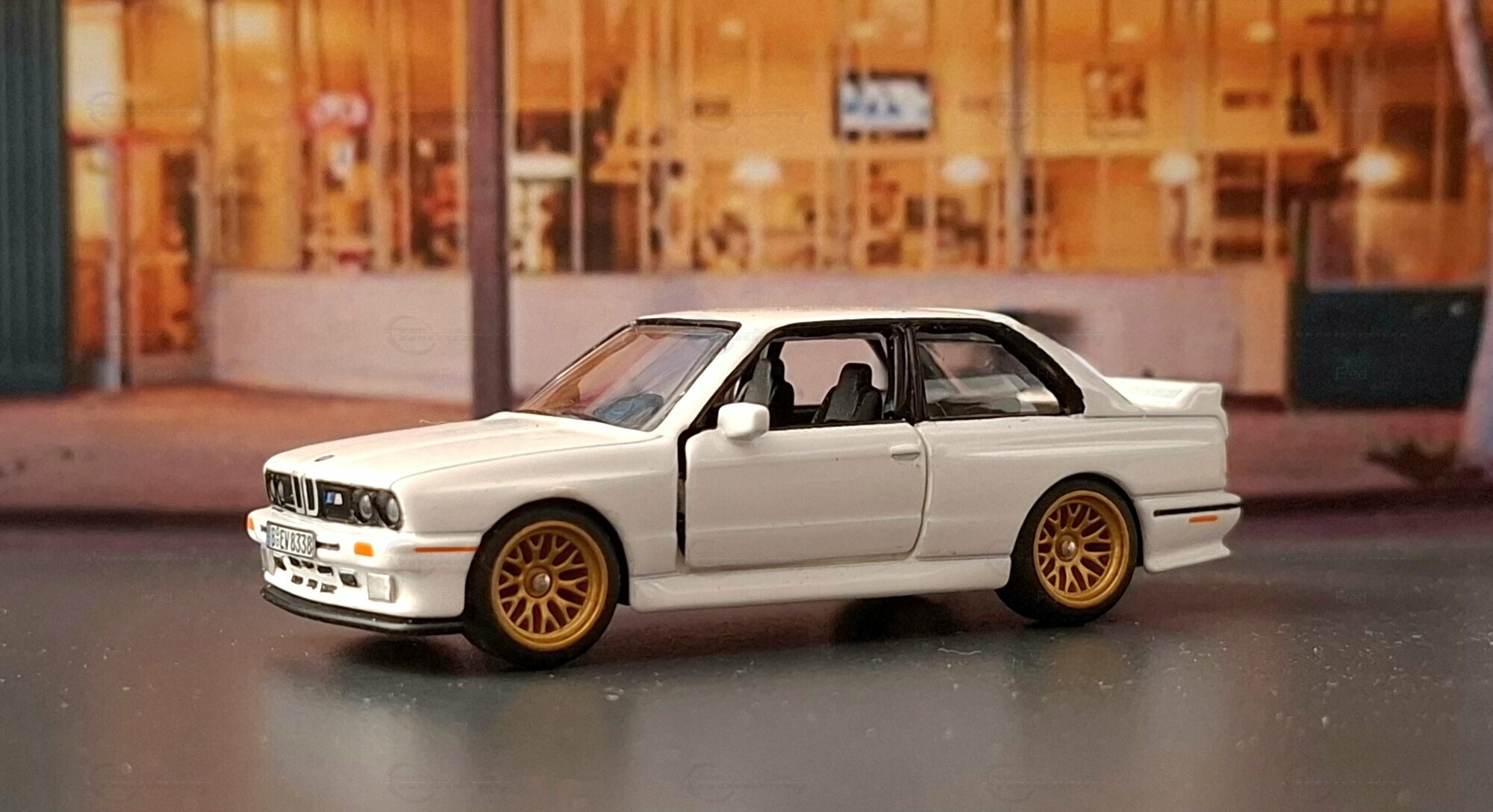
- BMW M3 (E30) (from 1987)
MajoretteUmgebautes Modell- 1:64
- Showcase model / No engine
- diecast
- white
- locale dealer
- In near mint condition
- Original packaging does not exist
- Not for sale
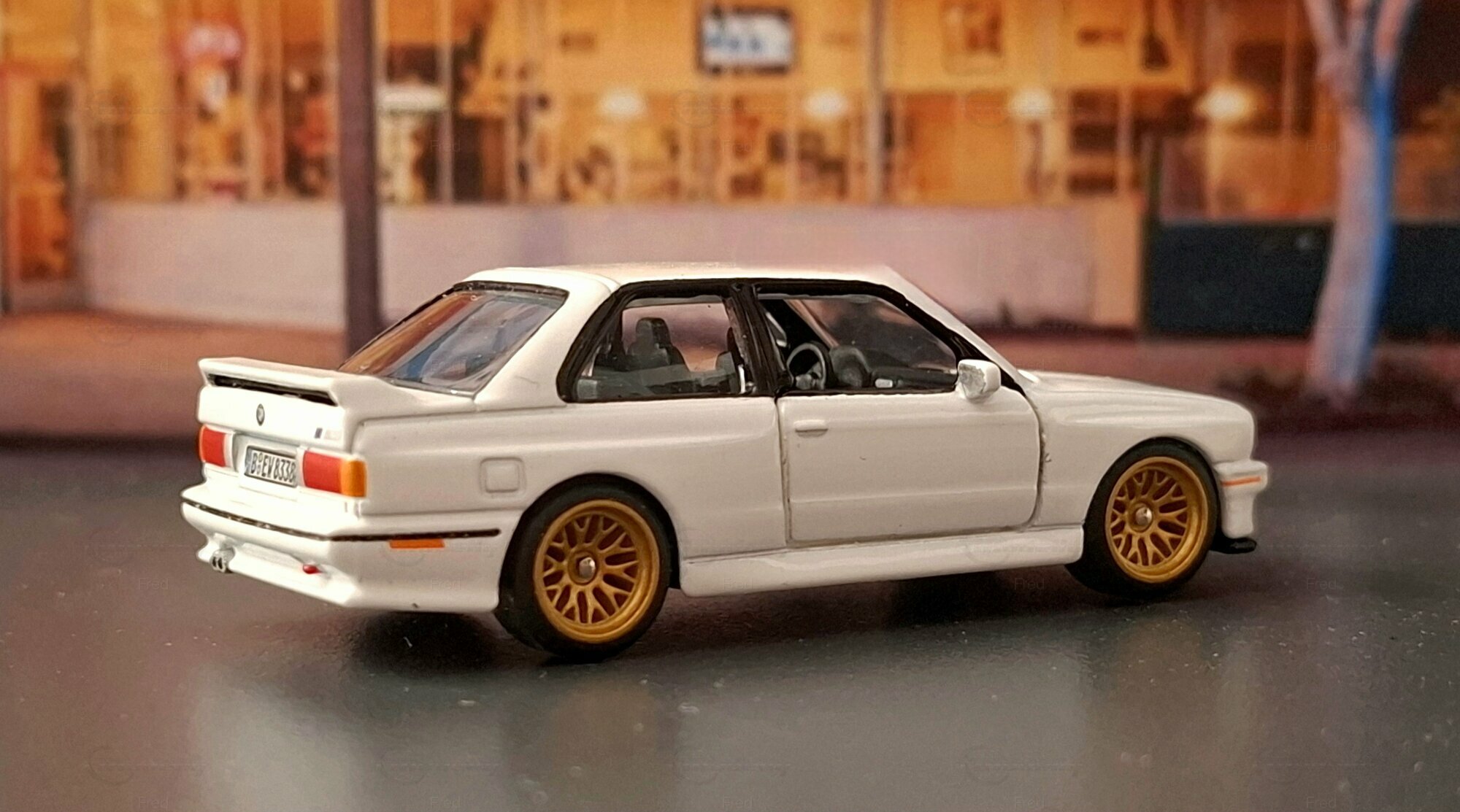
BMW M3 E30 as a model: generation, technology, and historical context
The collectible shown here from Modelly member “Fred” is clearly based on the BMW M3 (E30). This car belongs to the E30 generation, built from 1982 to 1994; the actual BMW M3 (E30) was introduced in 1986 and was developed as a homologation model for motorsport. The predecessor of the E30 series was the BMW 3 Series E21. The M3 was based structurally on the two-door E30, but it got a bunch of unique body parts. These include flared fenders, revised front and rear bumpers, a steeper rear window plus an adapted C-pillar area, and a special rear spoiler to improve aerodynamics. The basic design of the E30 series was done by Claus Luthe; designers such as Boyke Boyer also worked on the exterior of the series. Technically, the M3 was developed in the environment of BMW M GmbH to meet the demands of international motorsport.
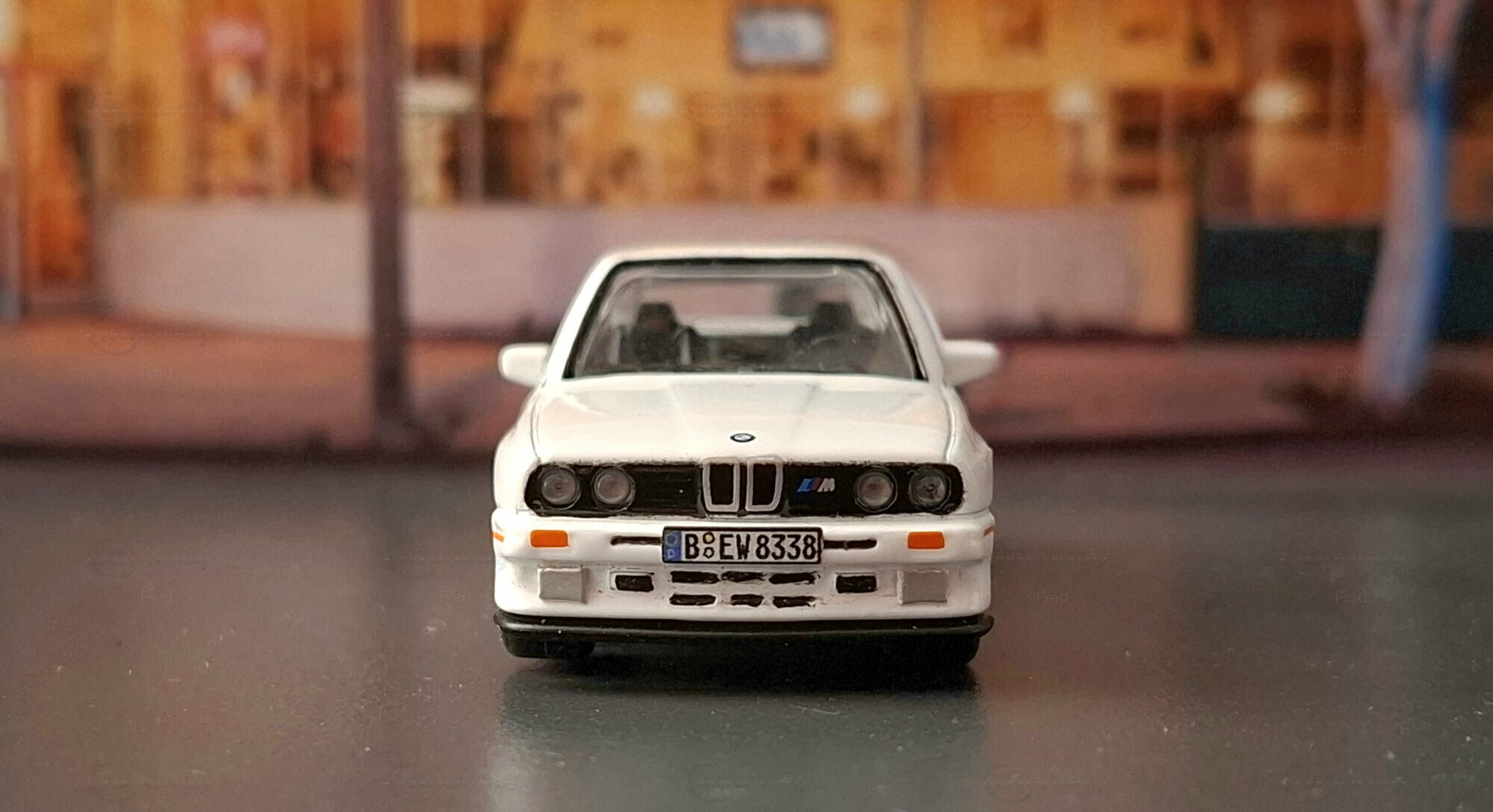
Original BMW M3 E30: S14 engine, chassis, and motorsport link
In the original, the BMW M3 (E30) used the S14 four-cylinder engine, which combined elements of the M10 block with 16-valve technology. Depending on the version, displacement was initially 2.3 liters, later 2.5 liters in the Sport Evolution. Early European production versions usually made 200 hp, later evolution stages up to 220 hp, and the Sport Evolution 238 hp. Typical features were the closely spaced five-speed gearbox, rear-wheel drive, disc brakes all around, a sporty suspension setup with McPherson front suspension and semi-trailing-arm rear suspension, and a limited-slip differential depending on the version. The BMW M3 (E30) was not just a road car, but mainly a base for use in DTM, touring car championships, and other racing series. Well-known technical traits include the high-revving nature of the S14, the direct steering, and the aerodynamic package designed for stability at higher speeds. The first production period of the M3 dates back to 1986; to help place that age in context, a few events from the same year are worth mentioning: the Chernobyl nuclear disaster happened in 1986, the Mir space station entered service, and Bon Jovi’s album “Slippery When Wet” was released. These examples are only meant to give a better sense of the car’s age and its time period.
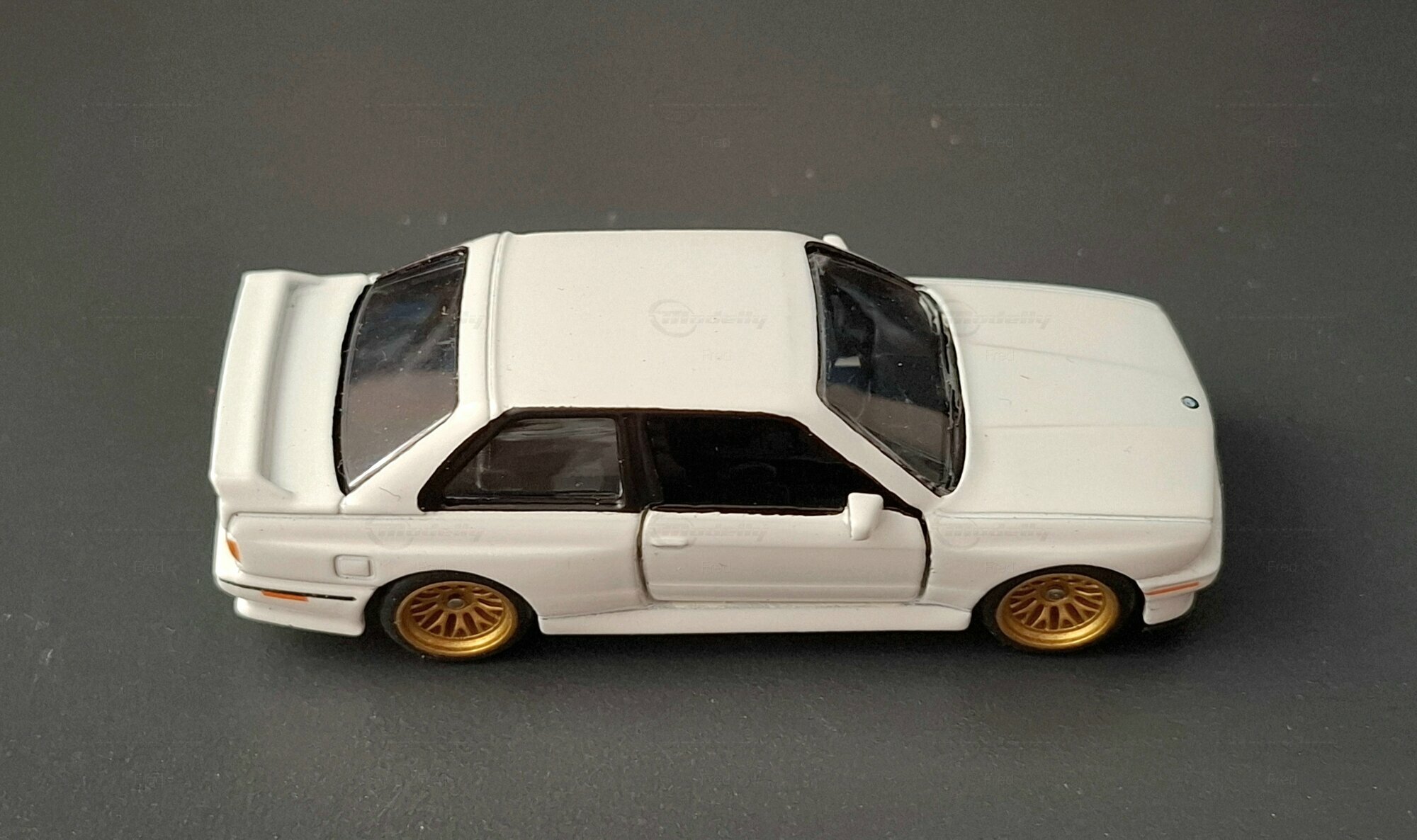
1/64 model car by Majorette: visible features, die-cast basis, and modifications
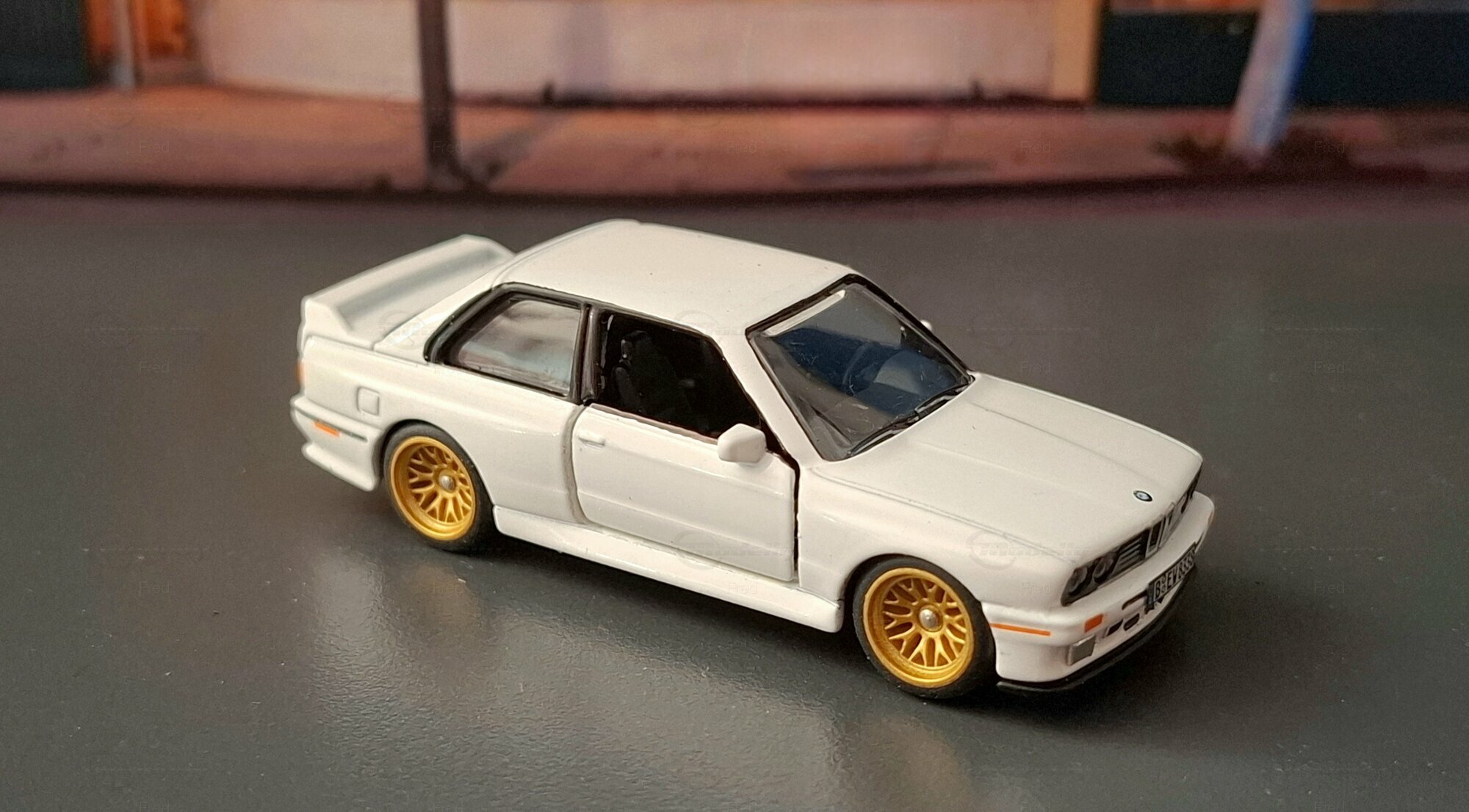
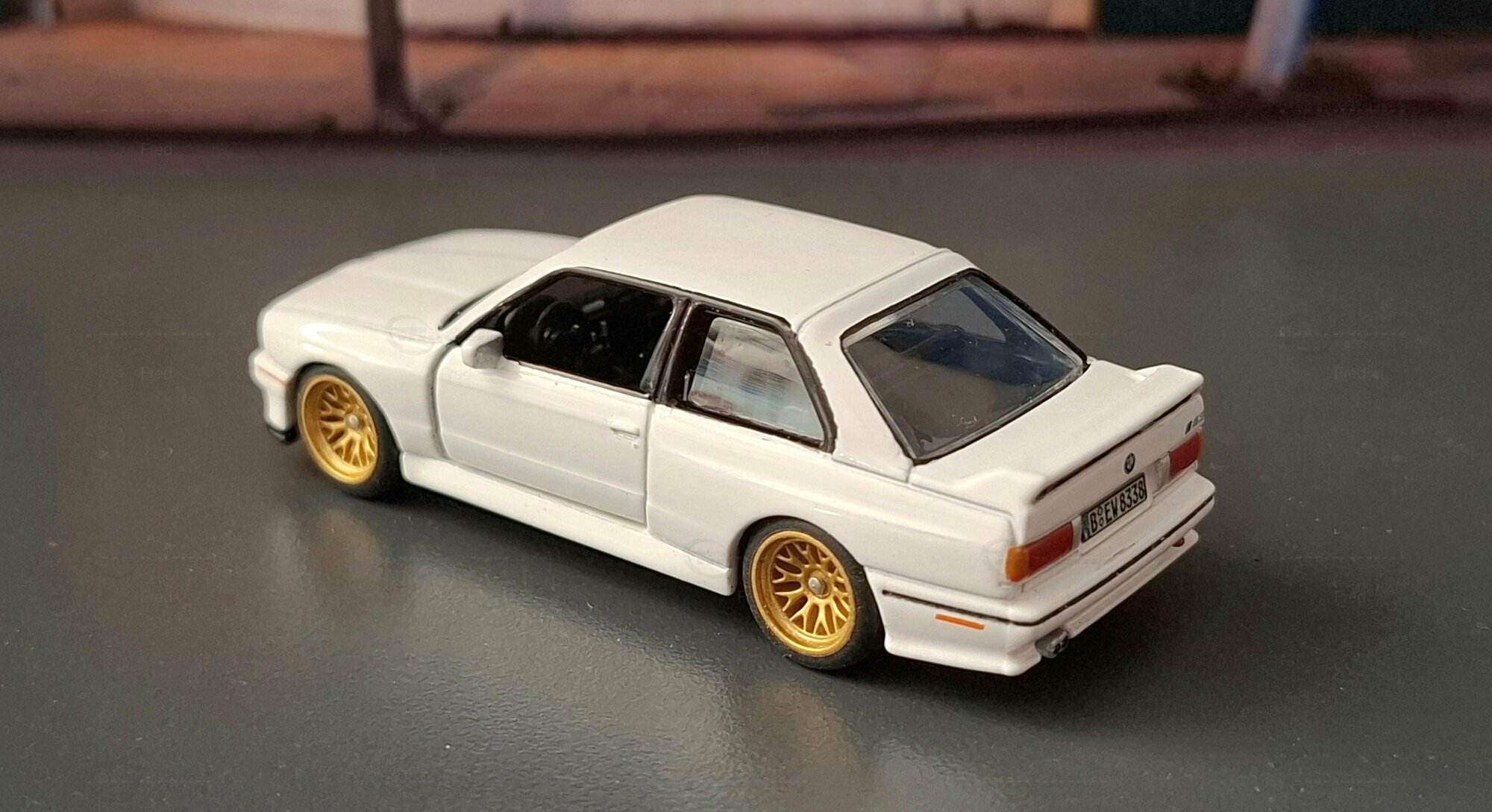
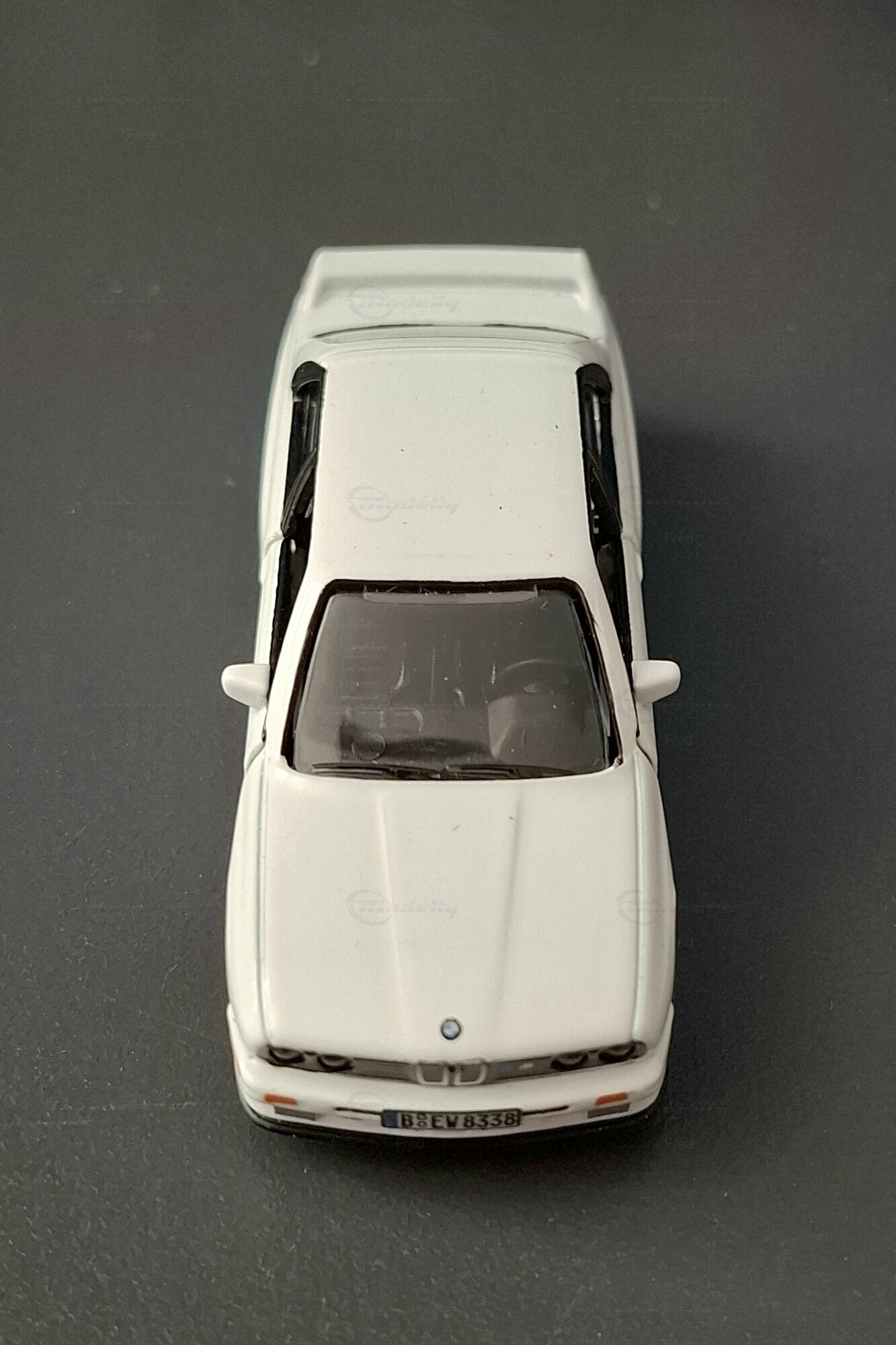
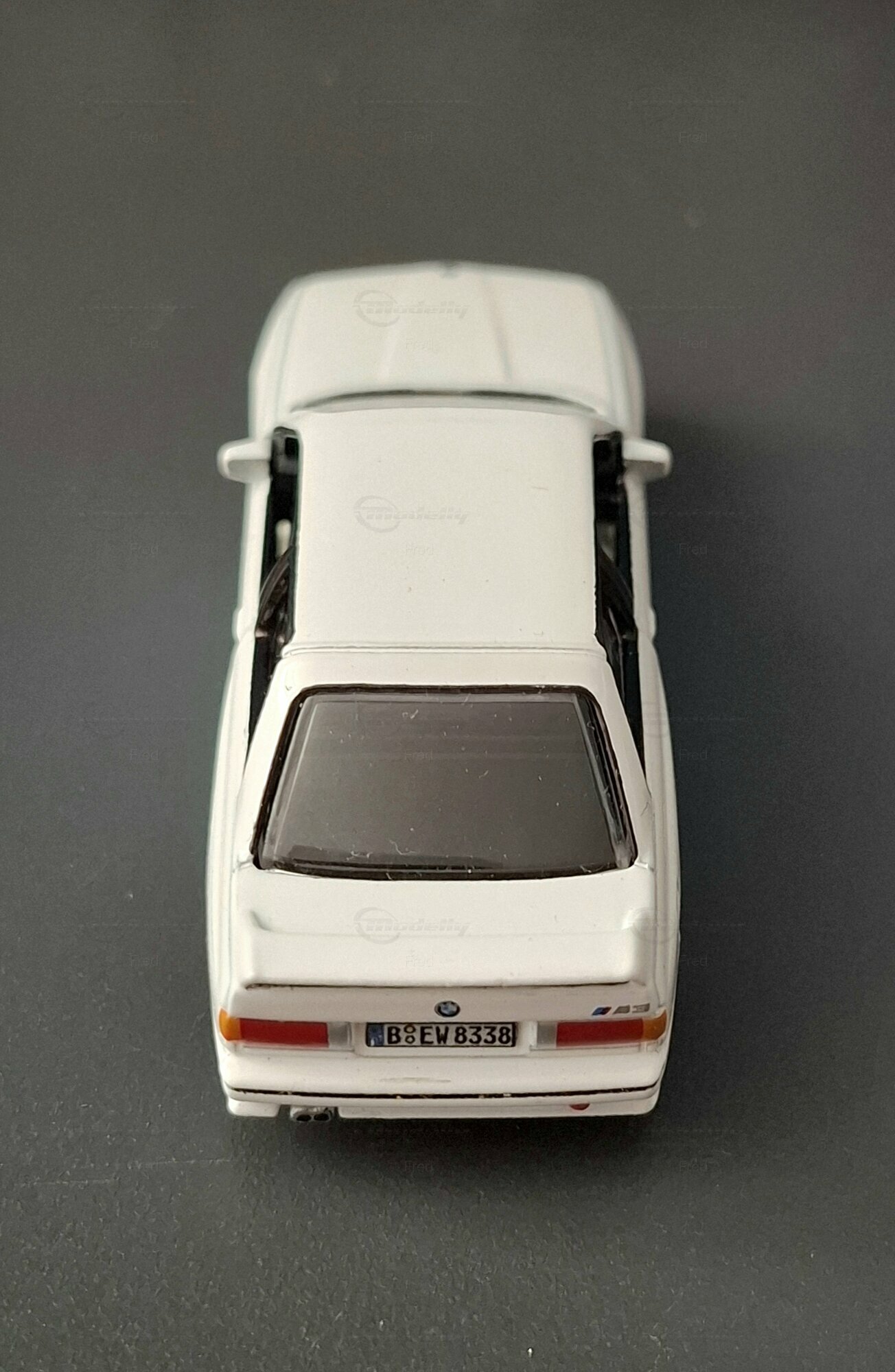
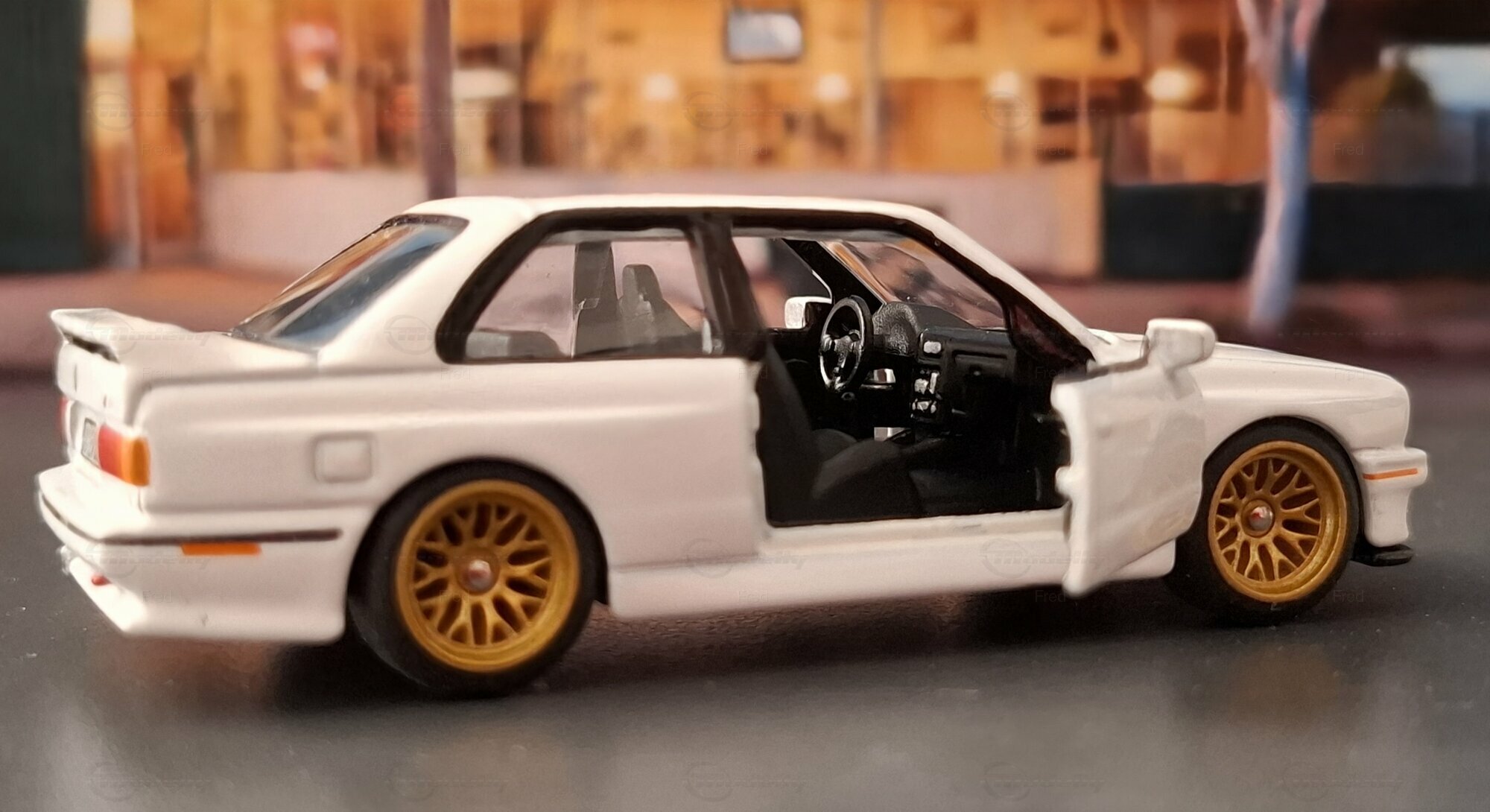
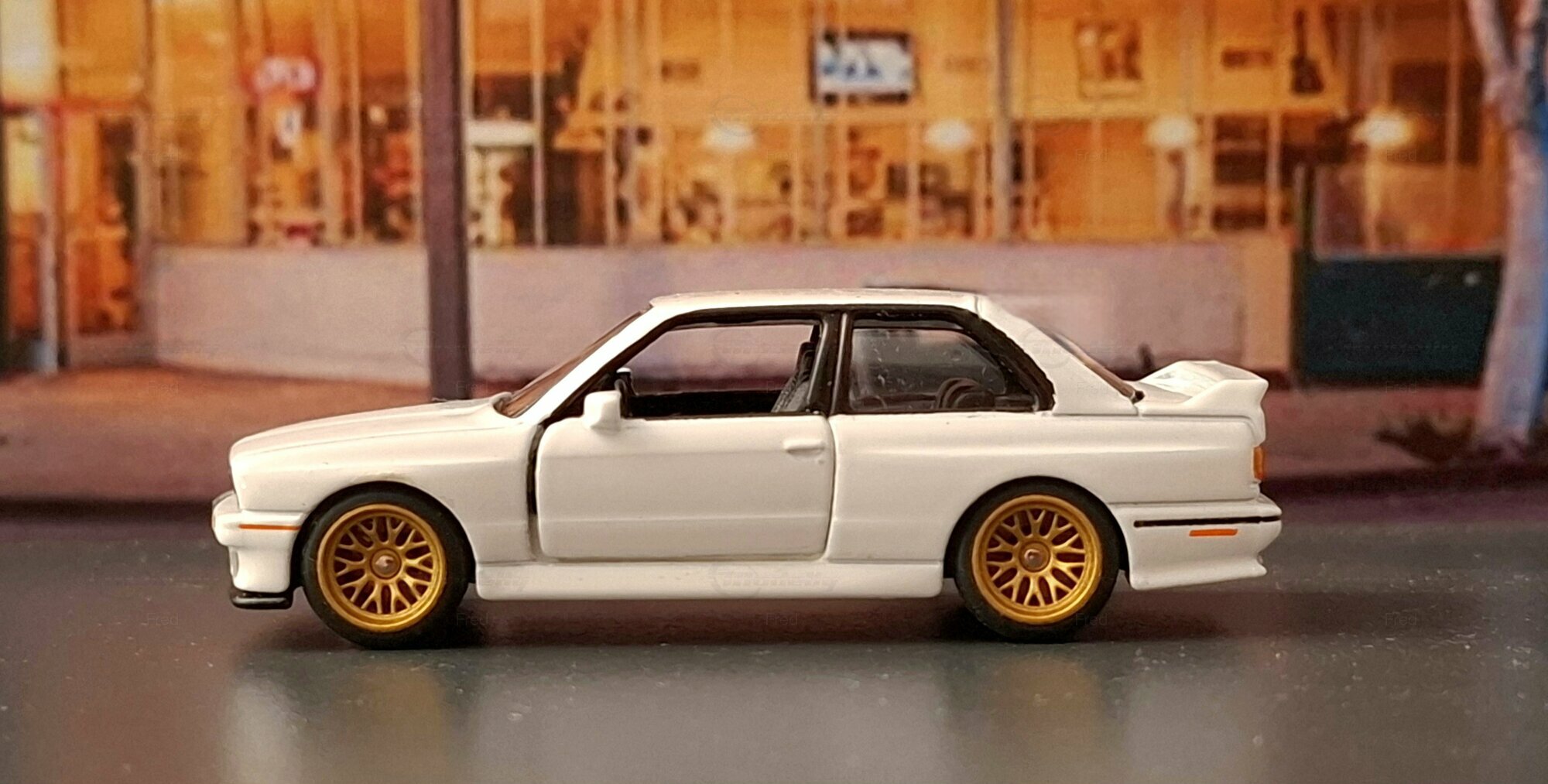
The item shown here is a model car in 1/64 scale, made by Majorette. The miniature body can be identified in the photos as a die-cast version, meaning it is made on a metal base with plastic add-on parts. You can see a two-door coupe in white with black window trim, a black front grille, and a small M logo in the grille area. The front shows the E30’s typical four round headlights and a deep front bumper with openings. At the rear, the spoiler, rectangular taillights, and twin exhaust setup stand out. The license plate on the front and rear reads “B EW 8338,” which is based on historic BMW M3 plates. Inside, the steering wheel, seats, and the basic cabin structure are visible. The gold-colored multi-spoke wheels are especially striking. It is not possible to reliably identify a specific wheel manufacturer or exact wheel model from the photos alone; visually they resemble classic motorsport multi-spoke wheels, but any more exact identification would be speculation. The paint appears to be plain white without motorsport livery, which makes the flared fenders, side skirts, and bumpers stand out clearly. That combo of white body, black details, and gold wheels gives this model a very recognizable E30 M3 vibe.
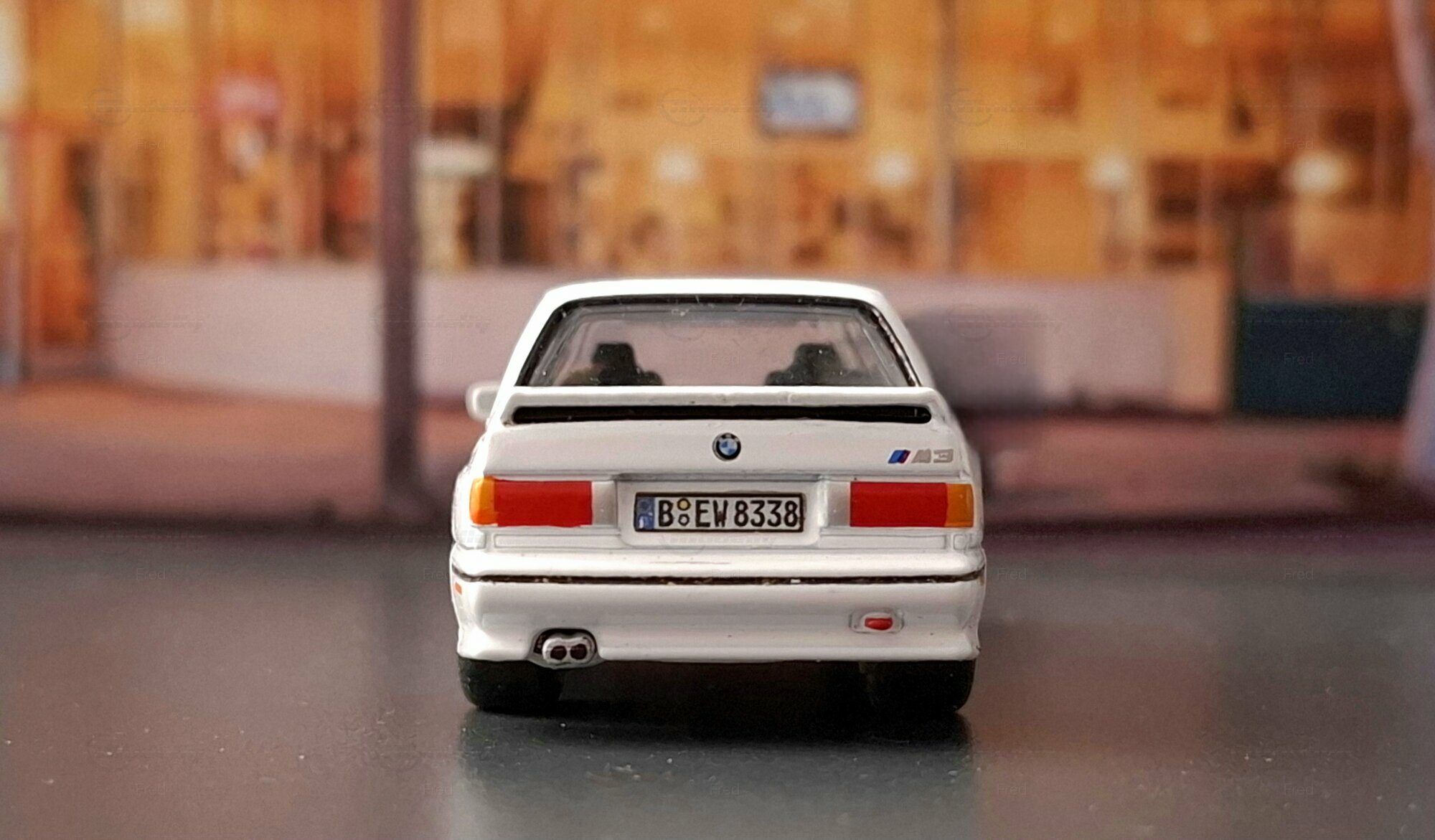
Important note for collectors: modified Majorette BMW M3 E30 from Fred’s collection
Important for collectors: this example is a modified miniature model and does not match the product condition in which it was originally released by Majorette. That’s pretty clear from the photos, especially because of the wheels, the lower stance, and some detailed changes. So this piece should be treated as a customized collector model, not as an untouched factory version. For collectors, that distinction matters when cataloging, comparing it with stock variants, and judging value. So once again, this is a model car in 1/64 scale, made by Majorette, but in a modified condition. A specific tuning company for the real car cannot be identified with certainty from the photos; even though the gold multi-spoke wheels and low stance are reminiscent of familiar tuning or motorsport styles, naming a concrete company would not be supported by the evidence. From a documentation point of view, the model is interesting because of its visible proportions, the clearly recognizable E30 M3 shape, the rear spoiler, the front with twin headlights, and the contrast of the wheel color. The appeal of this little car comes less from extra decals and more from the shape, the stance-like look, and the clean color scheme. For international model car collectors who document custom builds and variants, this piece from Fred’s collection is a good example of how a production model can be transformed with targeted changes into a personalized BMW M3 (E30) look.
Chriskitt
Auto-translated
 I really like the beautiful renovation. 😎👏👍💙🤍
Chriskitt
Auto-translated
 I really like the beautiful renovation. 😎👏👍💙🤍