
Alfa Romeo Duetto(diecast 1:64, Customized)
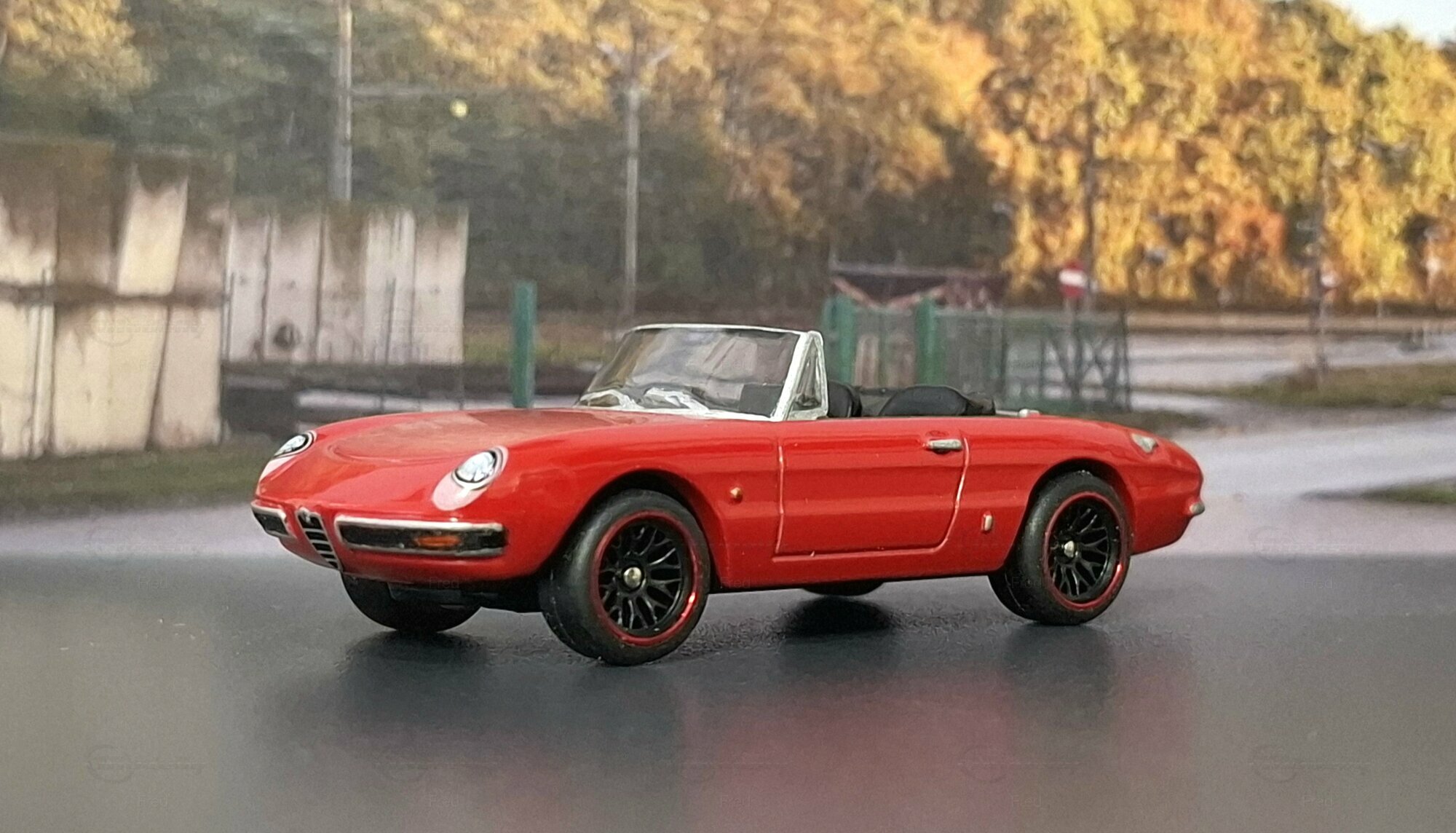
- Alfa Romeo Duetto (from 1967)
MatchboxUmgebautes Modell- 1:64
- Showcase model / No engine
- diecast
- red
- locale dealer
- In near mint condition
- Original packaging does not exist
- Not for sale
First-generation Alfa Romeo Spider “Duetto”
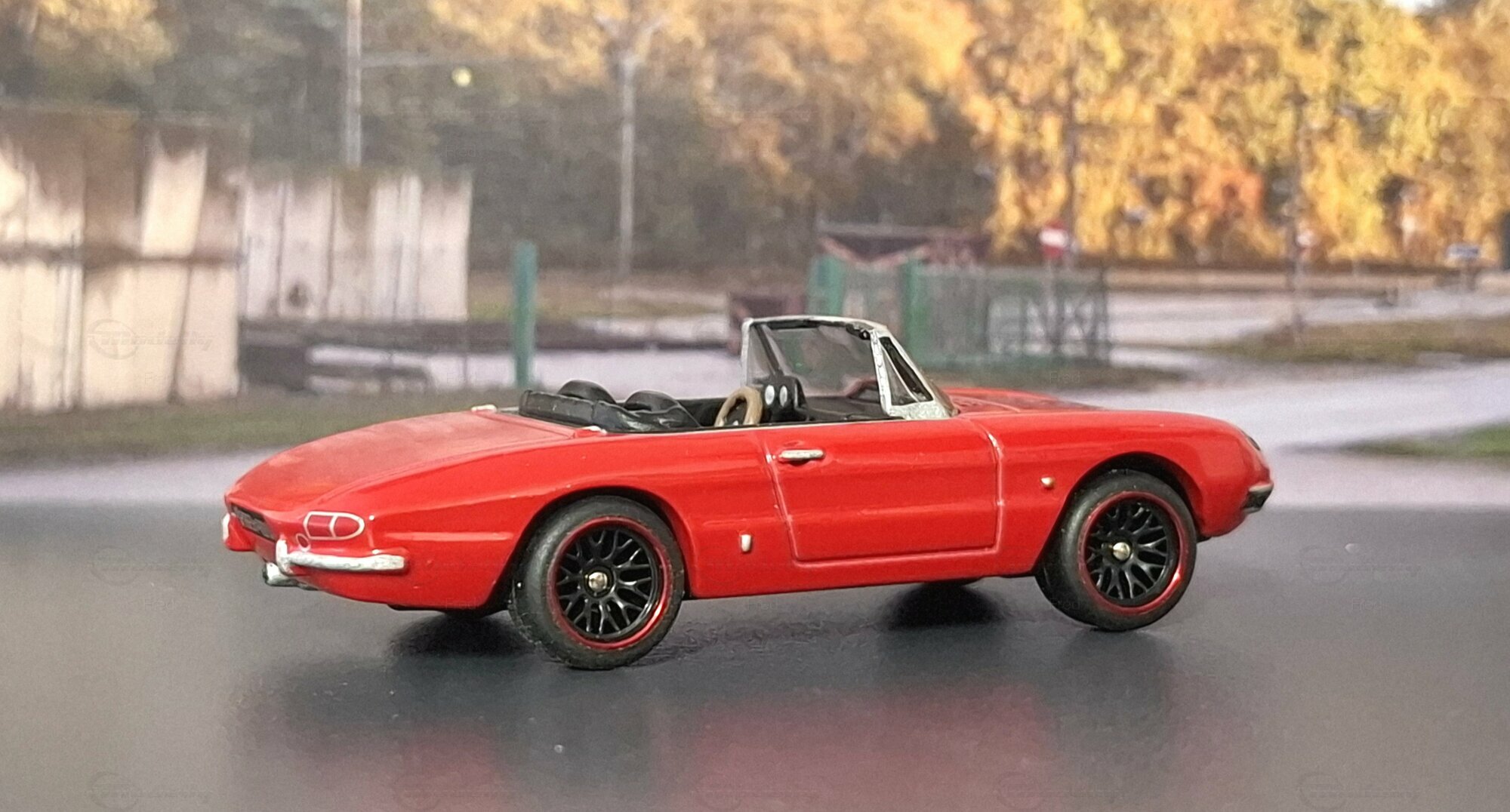
The prototype for this miniature vehicle is the Alfa Romeo Spider 1600 Duetto, an open two-seater from the 105/115 series. It belongs to the 1st generation, which was built from 1966 and stayed in the original “boat-tail” form until 1969. It was officially unveiled on March 10, 1966 at the Geneva Motor Show. As a predecessor in Alfa Romeo’s lineup, you could point to the Alfa Romeo Giulia Spider; technically, though, the Alfa Romeo Spider 1600 Duetto used many components from the Giulia sedan. Its long hood, short passenger compartment, round headlights, and sharply sloping rear end gave it its signature look. The rear got the nickname “Osso di Seppia,” Italian for cuttlefish bone, because of its shape. The styling at Pininfarina was handled by Franco Martinengo, while Alfa Romeo’s technical development followed in the tradition of engineer Giuseppe Busso. The Alfa Romeo Spider 1600 Duetto fits into a time when Italian manufacturers closely matched body design, suspension, and engine tech.
Technical details of the Alfa Romeo Spider 1600 Duetto
The Alfa Romeo Spider 1600 Duetto had a front-mounted inline four-cylinder engine with 1,570 cubic centimeters (95.8 cubic inches) of displacement, two overhead camshafts, and two Weber twin carburetors. Depending on the market and the measurement standard, the engine made about 109 horsepower DIN or 118 horsepower SAE. Power went through a manual five-speed transmission, and drive was sent to the rear wheels. Up front it used independent suspension with double wishbones and coil springs; in the rear it had a live axle with trailing arms and a reaction triangle. Disc brakes on all four wheels were part of the package. With a curb weight of about 1,000 kilograms (2,200 pounds) and a top speed in the range of 180 kilometers per hour (111.8 miles per hour), the Alfa Romeo Spider 1600 Duetto was well suited to its class. For a bit of historical context: in 1966, England won the FIFA World Cup in Britain, the Soviet Luna 9 probe sent back the first images from the Moon’s surface, and The Beatles released the album Revolver. Those examples help place the car in time.
Matchbox model car in 1/64 from Fred’s collection
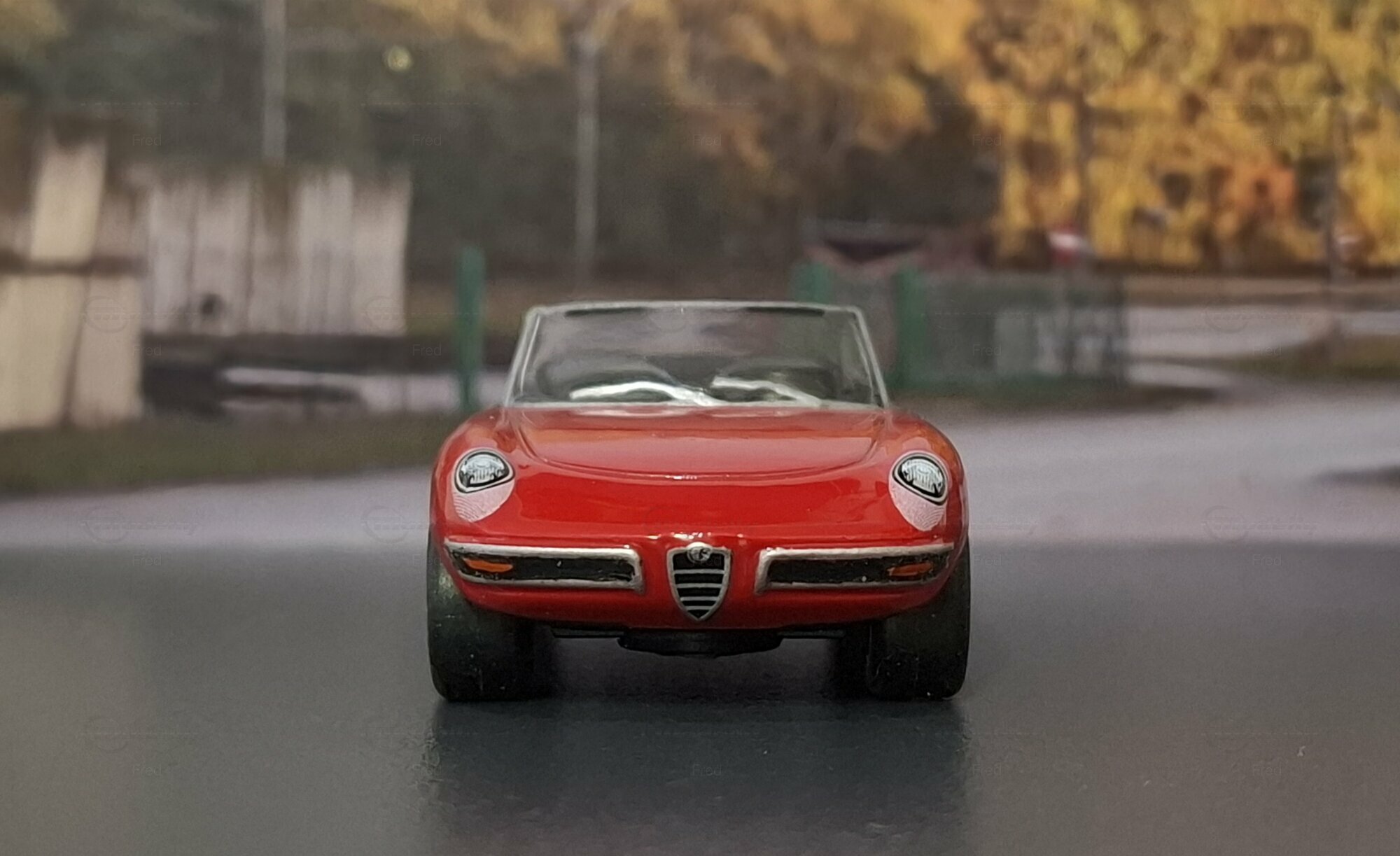
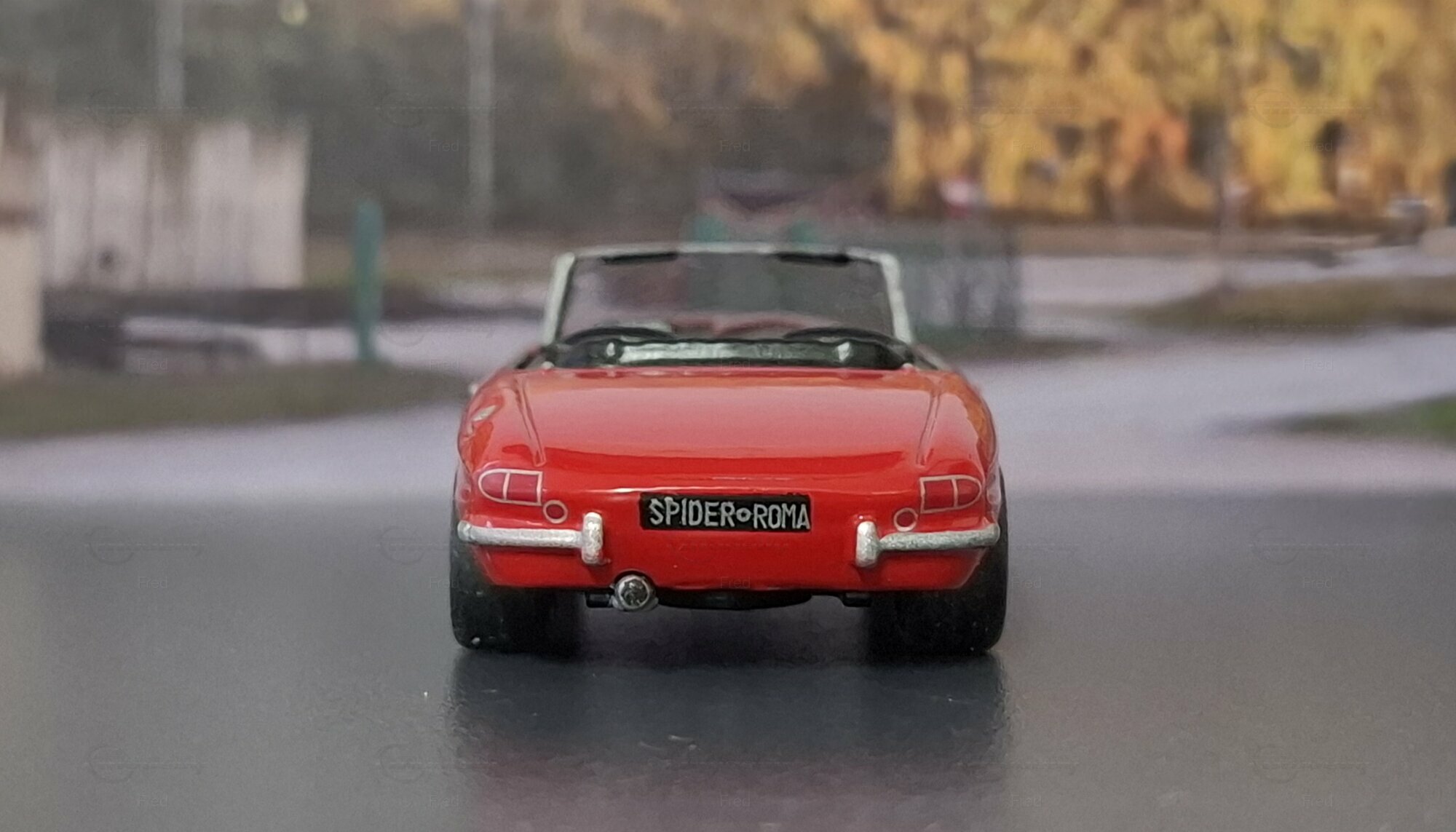
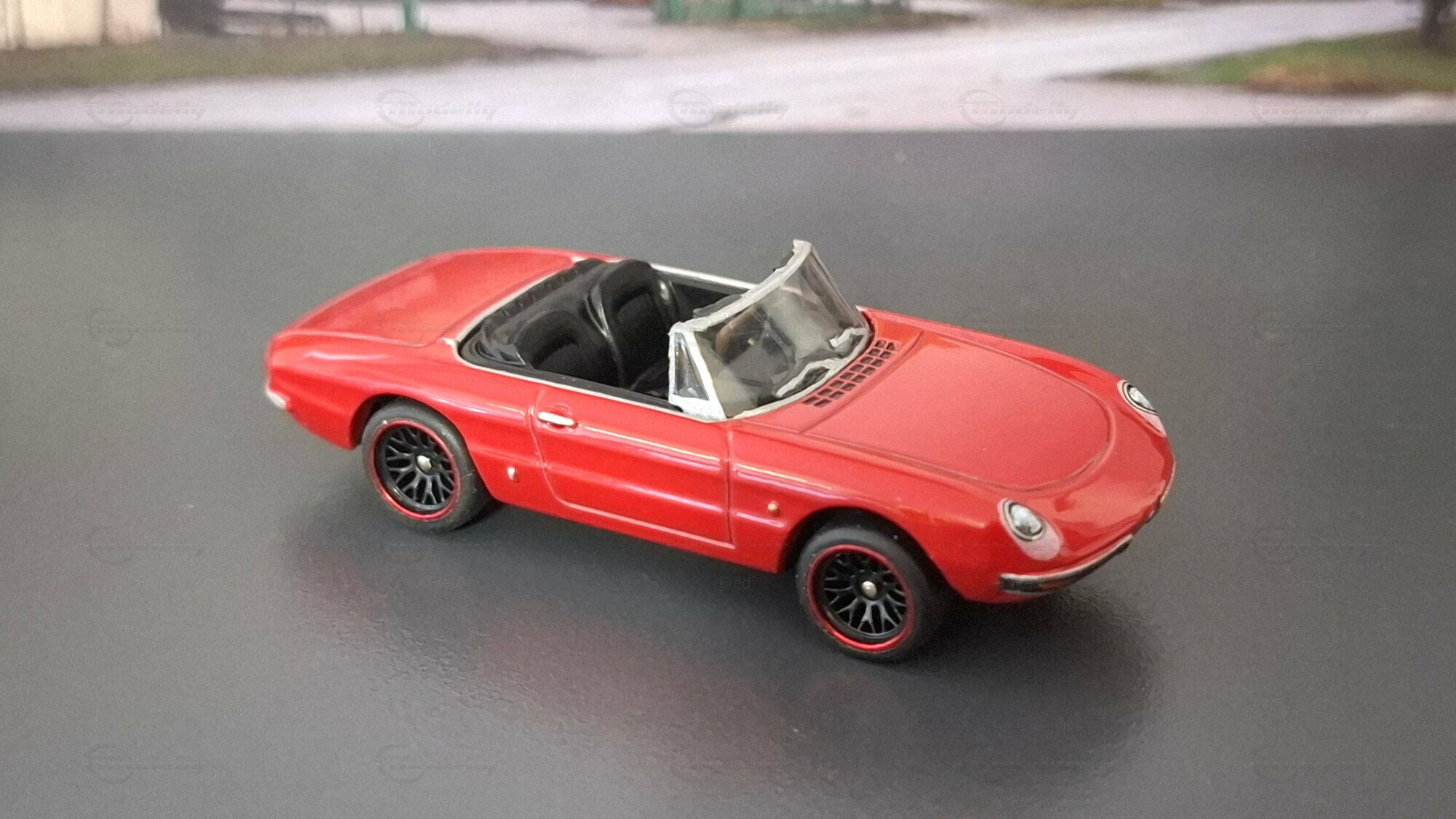
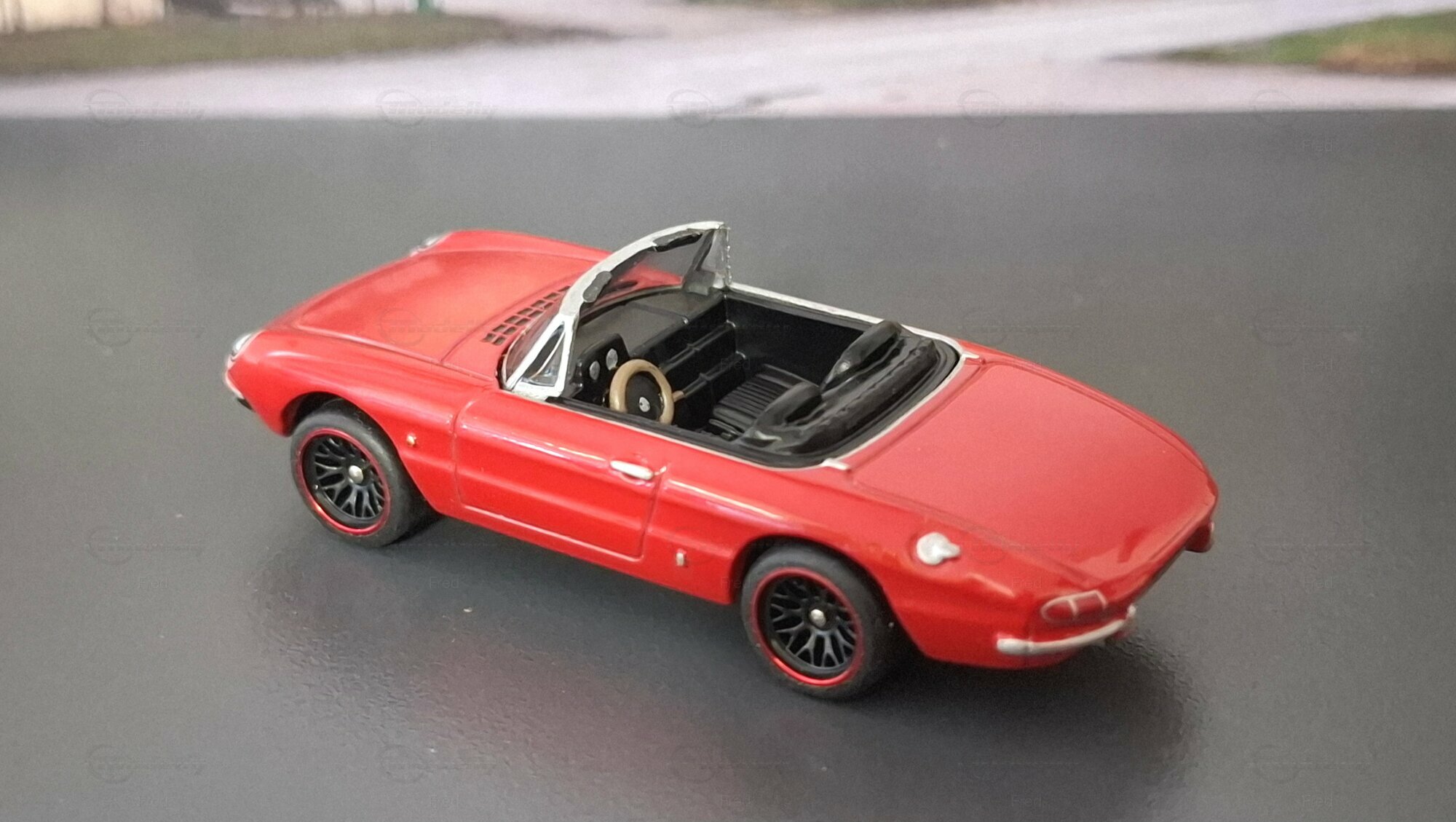
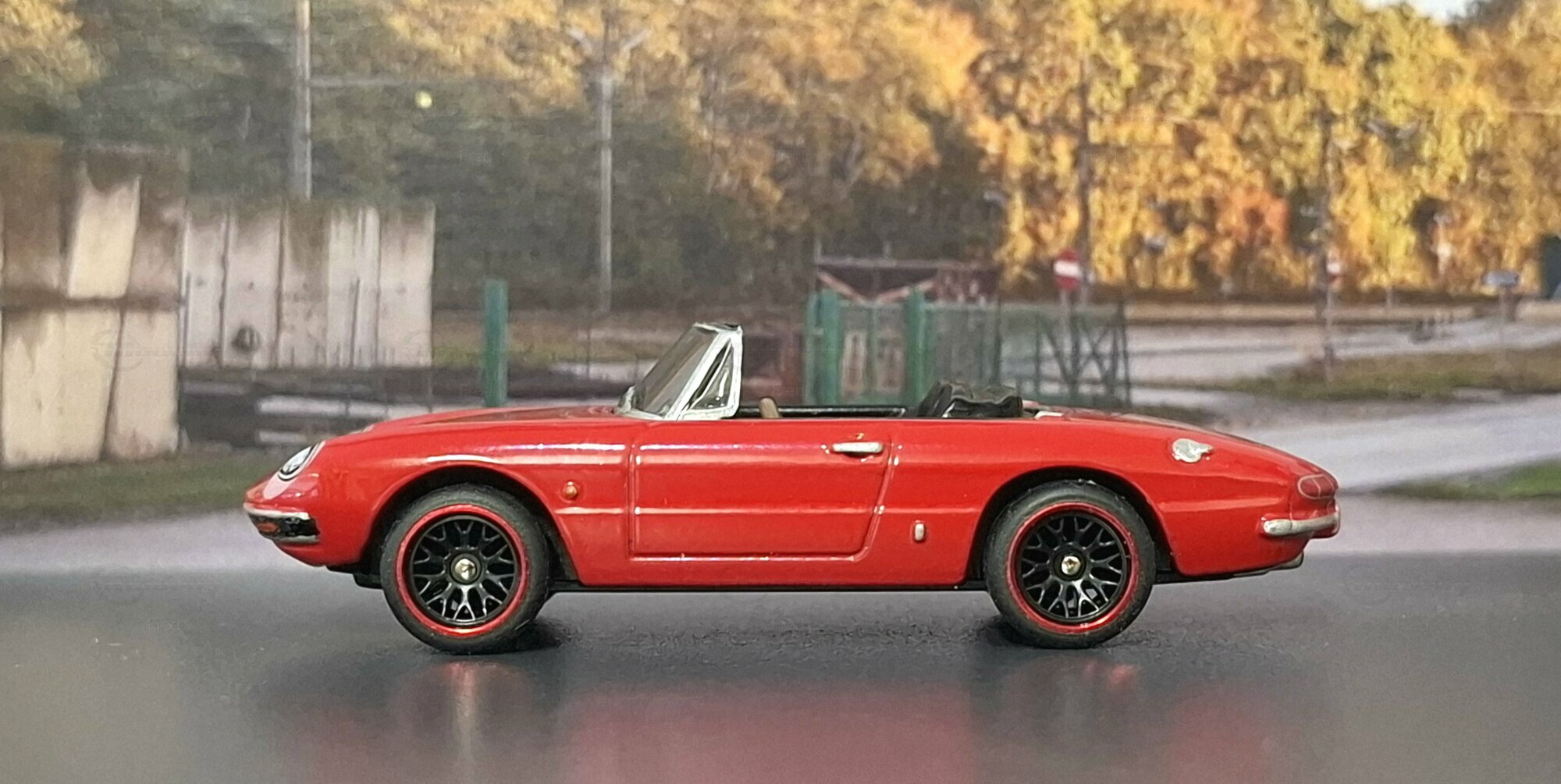
The vehicle shown here from Modelly member “Fred” is a model car in the 1/64 scale, made by Matchbox. The miniature is a die-cast model: the body is mainly made of zinc die-cast metal, while the windows, interior parts, wheels, and other details are made of plastic. You can clearly see the open roadster body, a transparent windshield frame, two black seats, and a beige-colored steering wheel. At the front, the characteristic oval headlights set into the fenders, the long air intakes, and the triangular Alfa Romeo grille are all reproduced. The small shield shape in the center of the front points to Alfa Romeo’s badge. Along the side, you can make out the door lines, exterior handles, small side indicators, and the fuel-filler area. The proportions focus on the defining features of the Alfa Romeo Spider 1600 Duetto, without trying to reproduce every technical dimension of the full-size car exactly.
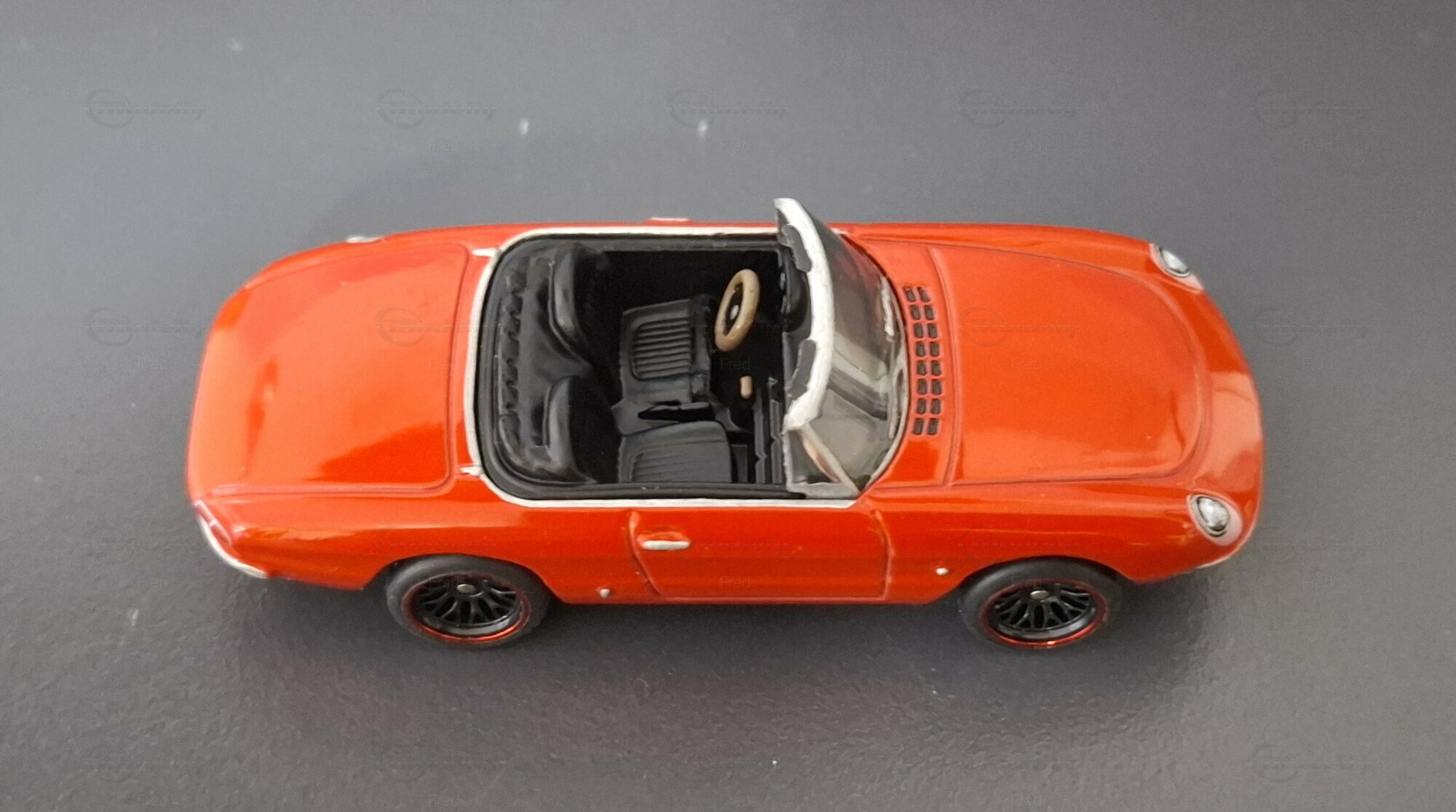
Modified red die-cast miniature with multi-spoke wheels
Important for collectors: this example is a modified miniature and does not match the original Matchbox production model. The most obvious change is the set of black multi-spoke wheels with red wheel barrels, plus the wider-looking tires and the altered stance of the car. A specific wheel brand or exact wheel model can’t be identified clearly from the photos. The body is painted in solid red; the paint makes the flat hood line, the bulging front fenders, and the side crease stand out nicely. Chrome or silver-colored parts show up on the bumpers, windshield frame, door handles, and grille. Black areas in the interior, on the tires, and in the air inlets create a strong contrast. From what’s visible in the photos, the charm of this model car lies in the nice mix of the compact boat-tail shape of the Alfa Romeo Spider 1600 Duetto, the red paint, and the clearly custom wheel details. And again: this is a model car in the 1/64 scale, made by Matchbox, and it has been deliberately modified for this collection.
- Write a first comment about this model now!Any comment can be discussed by all members. It's like a chat.Mention other Modelly members by using @ in your message. They will then be informed automatically.
- Write a first comment about this model now!Any comment can be discussed by all members. It's like a chat.Mention other Modelly members by using @ in your message. They will then be informed automatically.