
Porsche 356 B(diecast 1:18, Ricko)
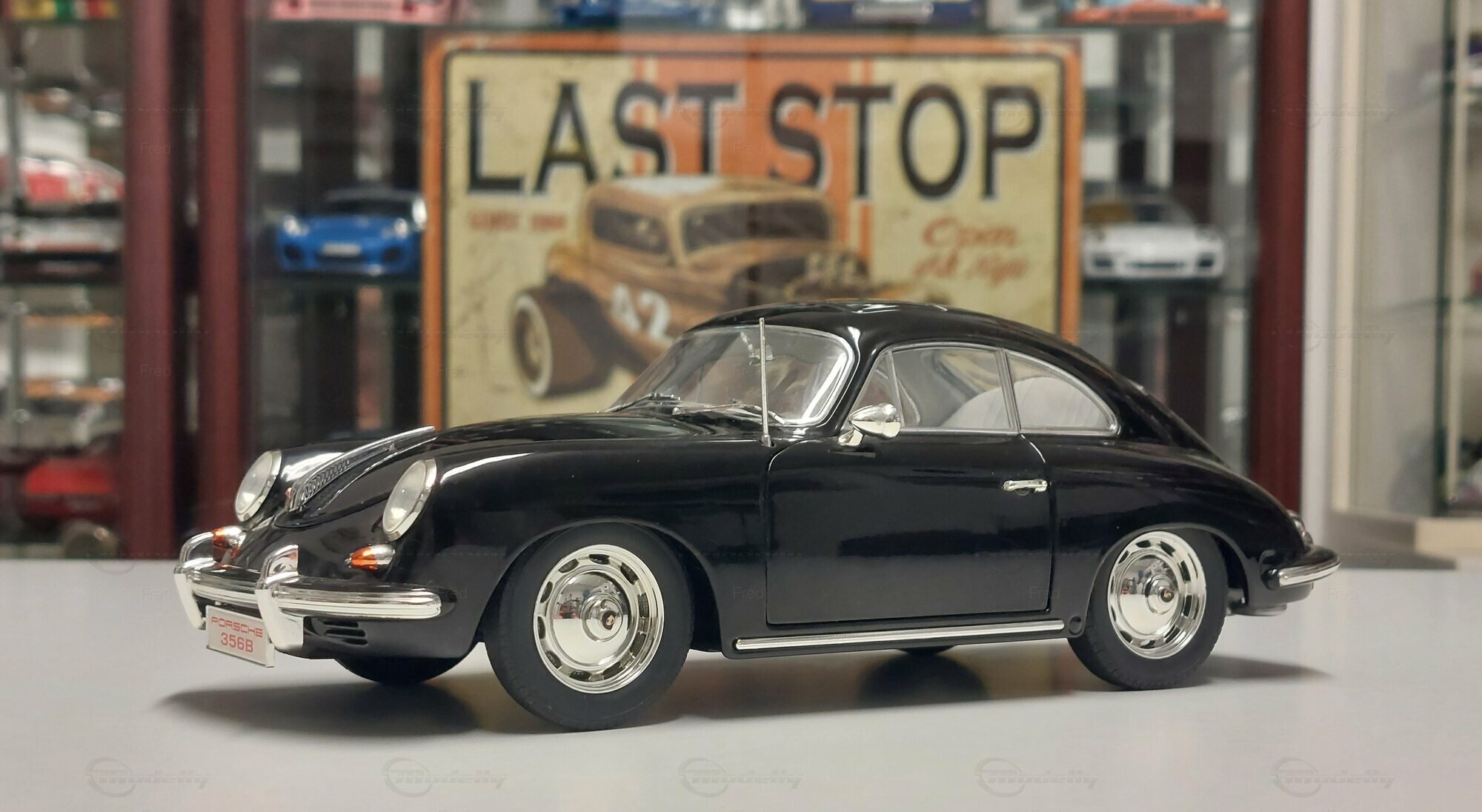
- Porsche 356 B (from 1961)
- Ricko
- 1:18
- Showcase model / No engine
- diecast
- black
- locale dealer
- In near mint condition
- Original packaging exists
- Not for sale
Klassiker der frühen Porsche-Ära: Historie und Kontext des Porsche 356 B
The Porsche 356 B marks a key step in Porsche’s model history. The 356B generation was produced from 1959 to 1963 and followed the 356 A, before being replaced by the 356 C in 1963. The basic idea goes back to work by Erwin Komenda (body design) and Ferry Porsche; the high-performance Carrera engines were based on developments by Ernst Fuhrmann. Compared with its predecessor, the Porsche 356 B got bumpers mounted a bit higher, a new arrangement for lights, and detail changes to the hoods, ventilation grilles and trim. To place it in time: the Porsche 356 B started in 1959 — the same year Alaska and Hawaii became U.S. states, Fidel Castro took power in Cuba, and the Luna 3 probe sent back the first images of the Moon’s far side. Those bits help date the car. The car shown here is a closed coupé version; the real car was also available as a cabriolet, roadster and notchback.
Tech, variants and specs of the Porsche 356 B
Technically the Porsche 356 B stuck with the rear-engine, rear-wheel-drive layout. The four-cylinder aluminum boxer engines ran on carburetors; the common 1.6‑liter engines produced roughly 44 kW/60 PS (~59 hp) for the 1600, 55 kW/75 PS (~74 hp) for the 1600 Super and up to 66 kW/90 PS (~89 hp) for the Super 90. Later Carrera special models with dual overhead camshafts climbed to about 97 kW/130 PS (~130 hp). The four-speed gearbox was manual, and the curb weight was about 900 kg (1,984 lb) depending on spec. With the stronger engines coupés routinely reached speeds around 175–185 km/h (109–115 mph). The suspension used torsion bars and wishbones up front and a swing axle at the rear; the brakes were large drums, sometimes with aluminum cooling fins. Two body-era identifiers matter: T5 (1959–1961) with a single engine-lid grille and no external fuel flap, and T6 (1962–1963) with double grilles, a larger rear window and an external fuel filler cap on the right rear wing. Dimensions were roughly 3.95 m (12 ft 11.5 in) long, 1.67 m (5 ft 5.7 in) wide and a 2.10 m (6 ft 10.7 in) wheelbase. The Porsche 356 B is seen as a link between the early 356s and later 911 ideas, especially in build quality and improved everyday usability.
The model in Fred’s collection: 1/18 miniature by Ricko
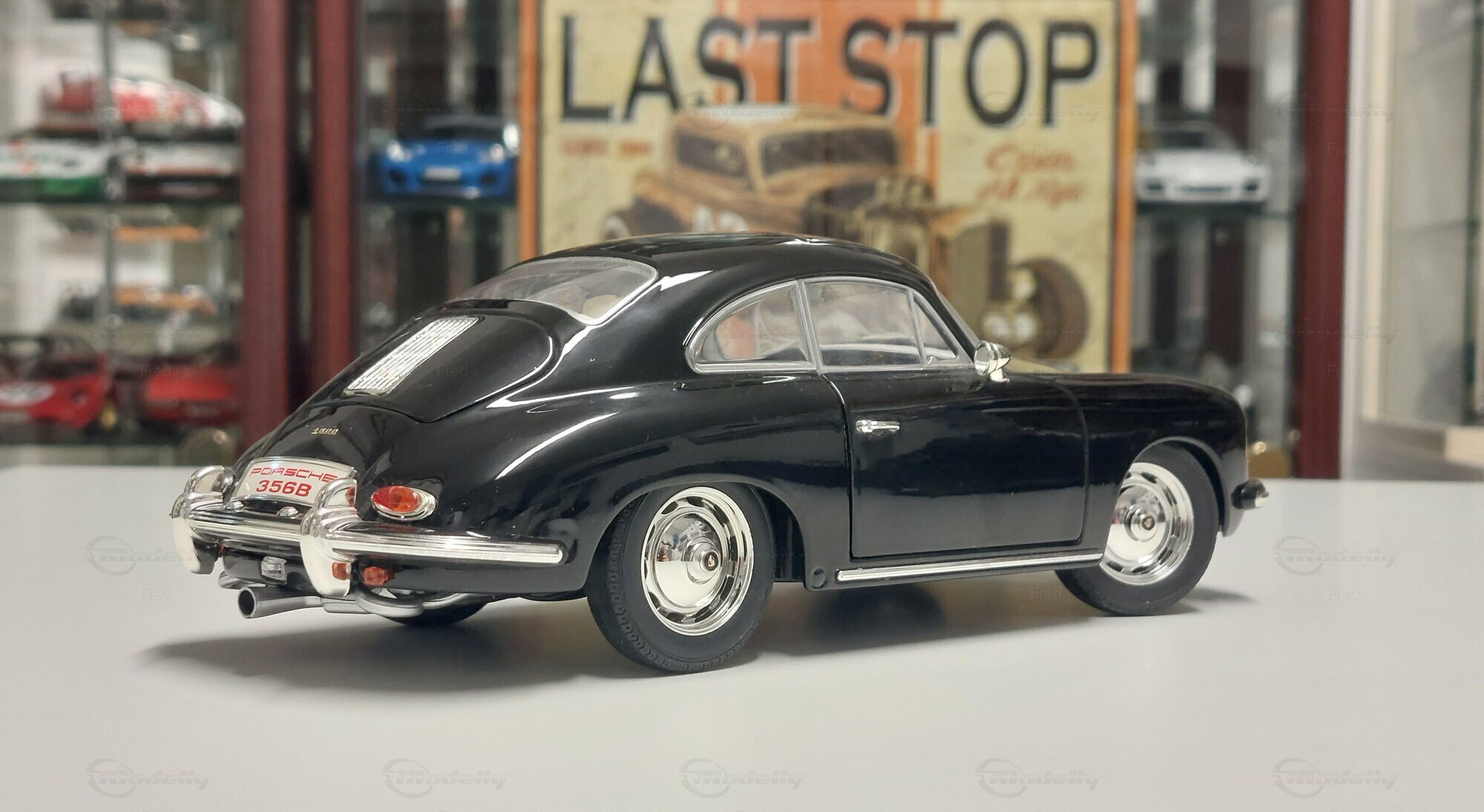
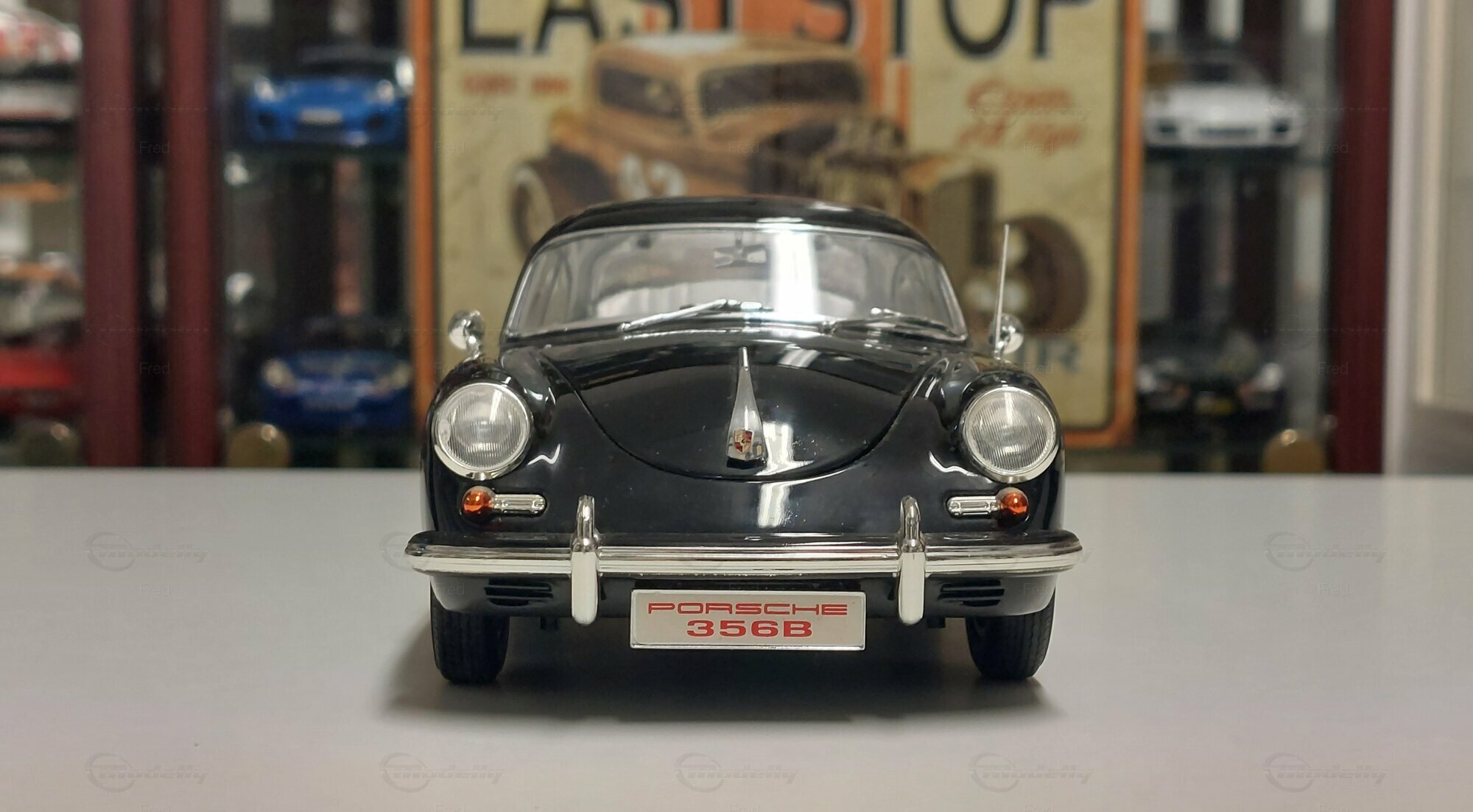
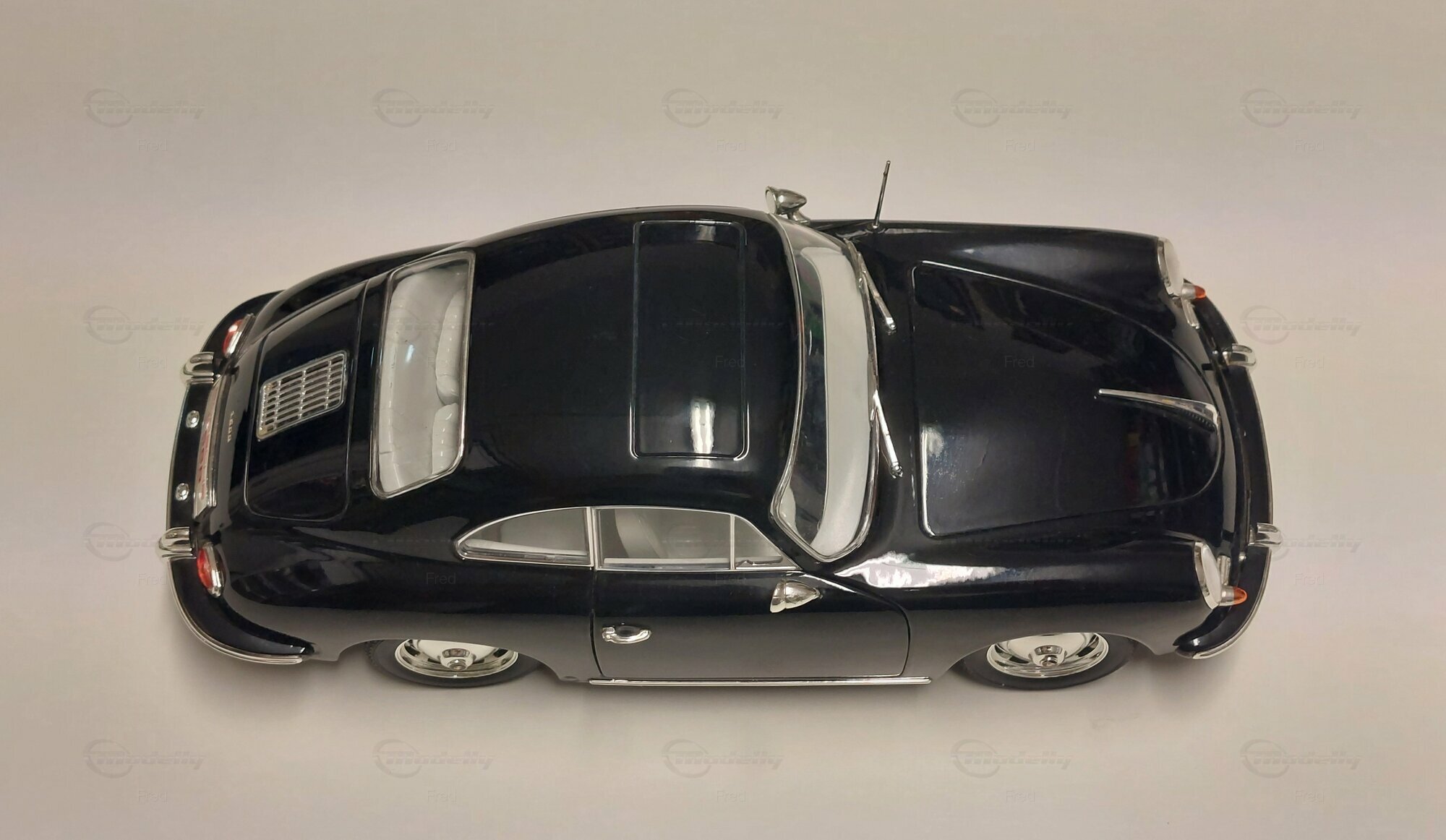
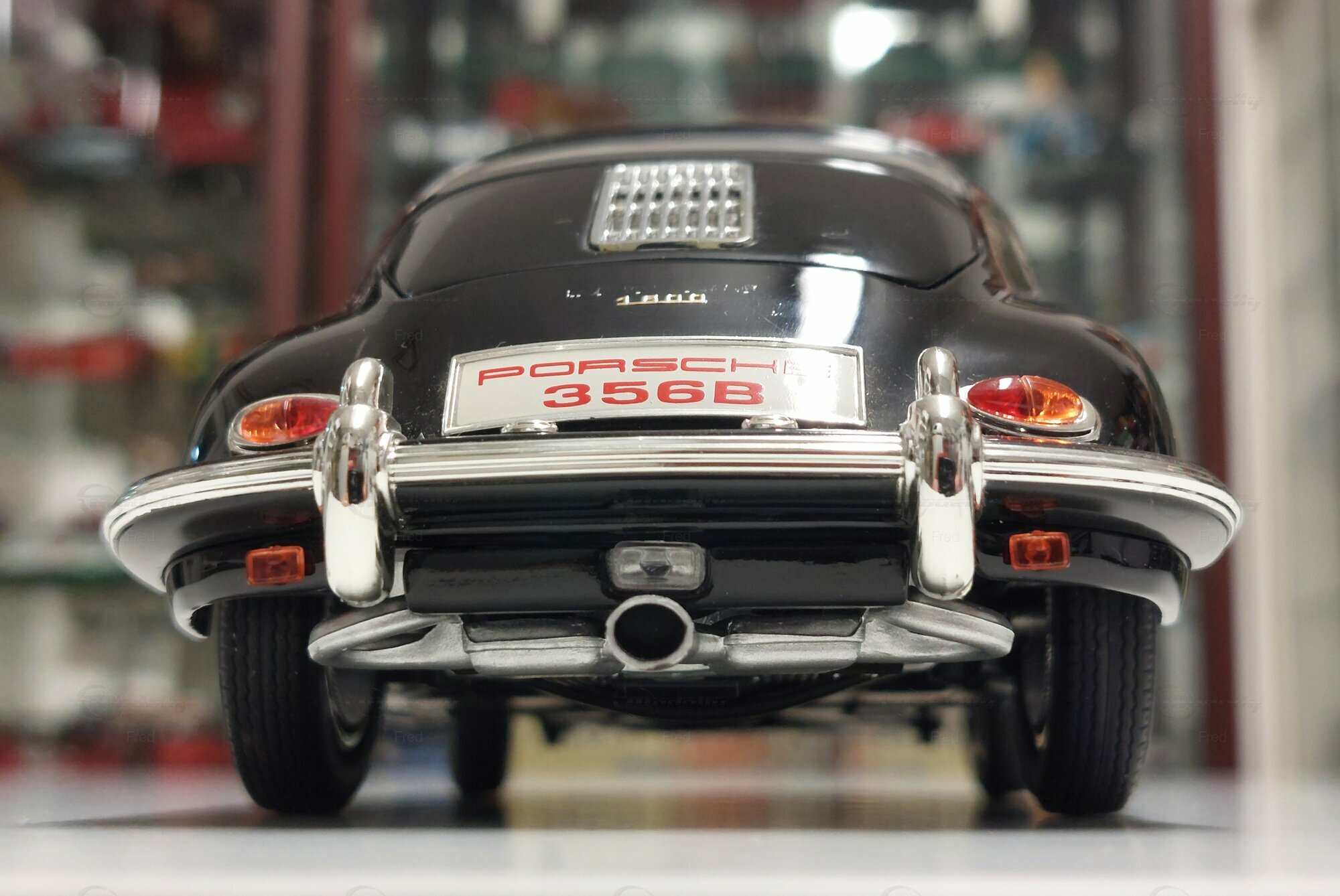
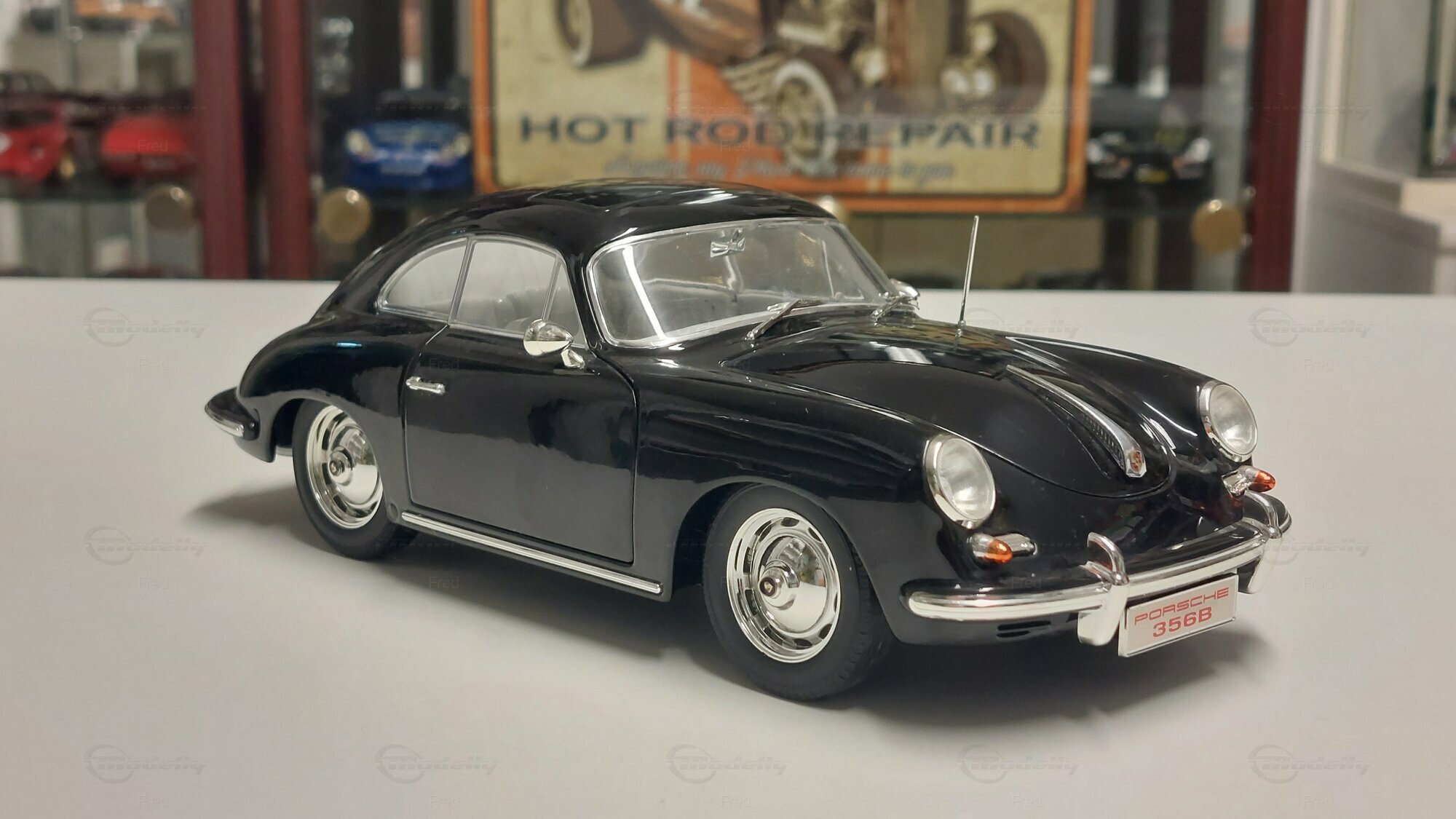
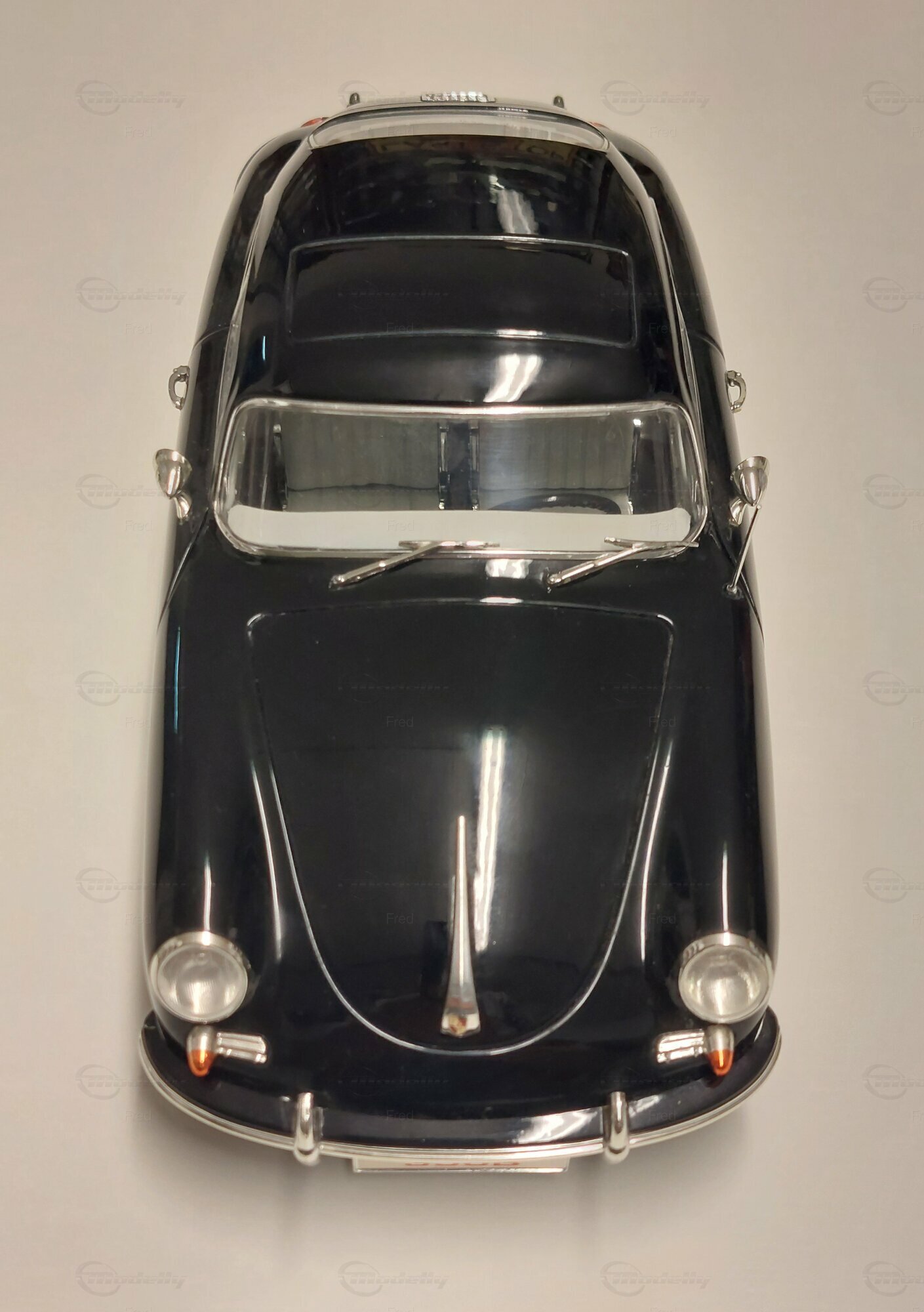
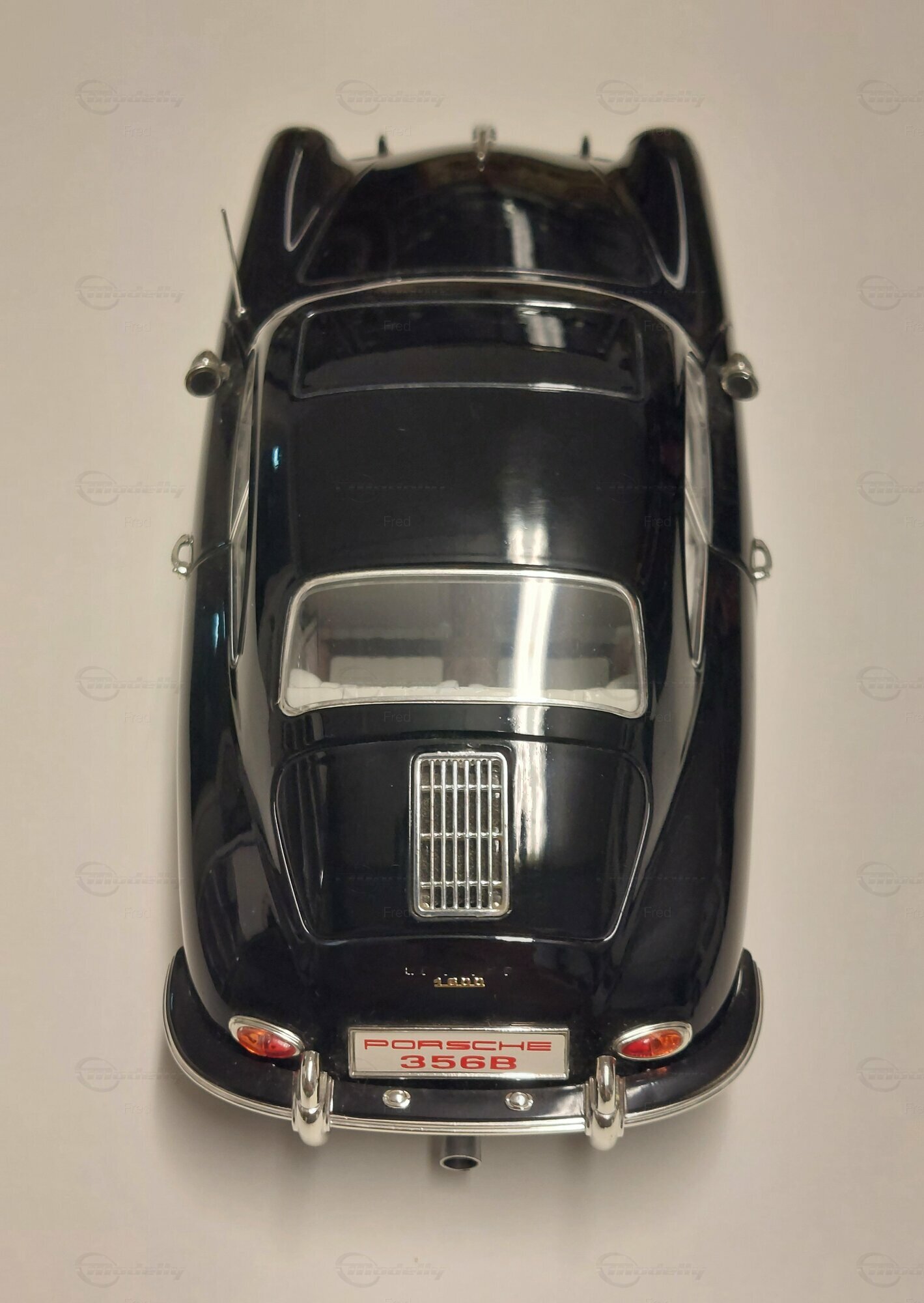
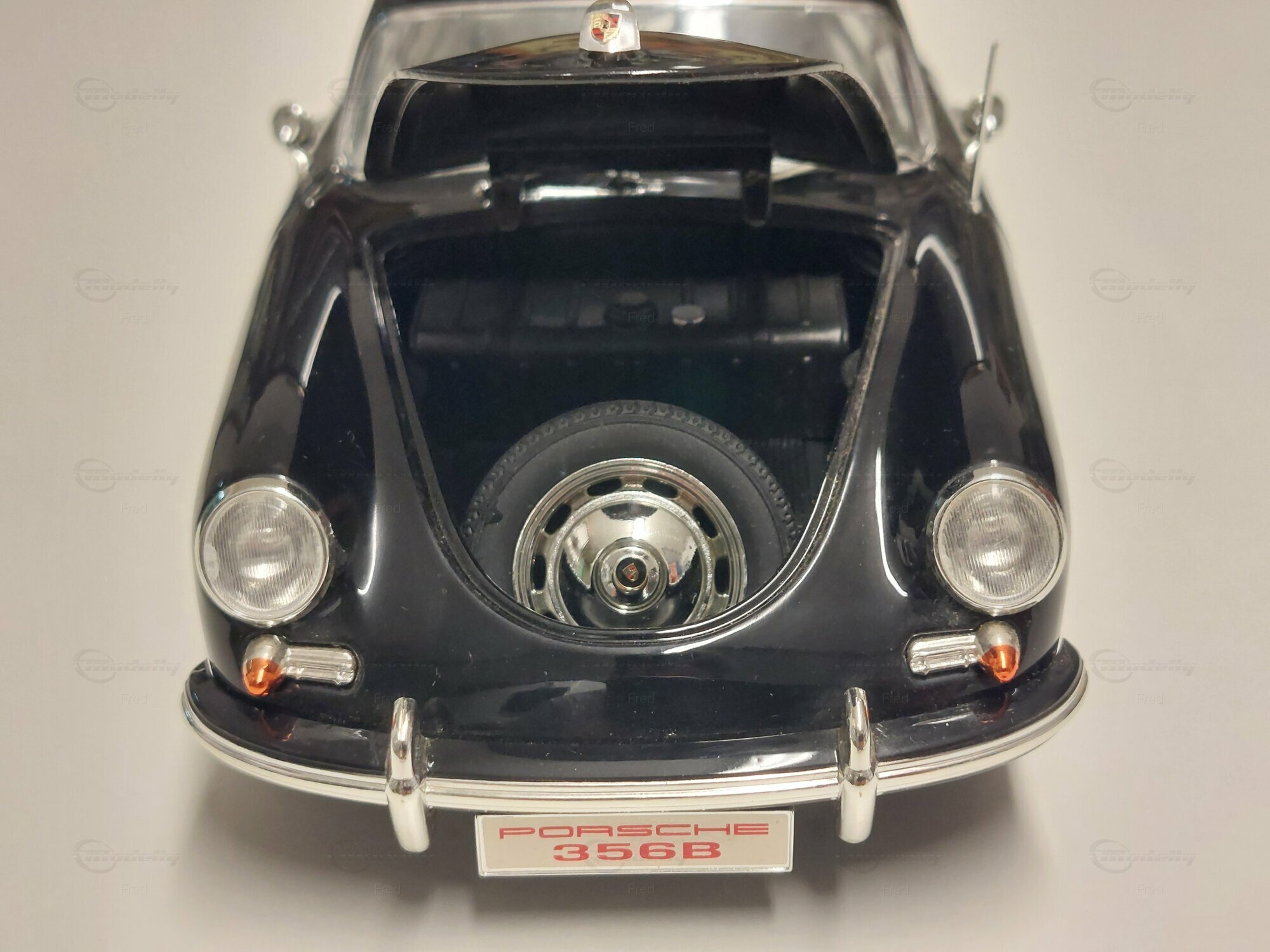
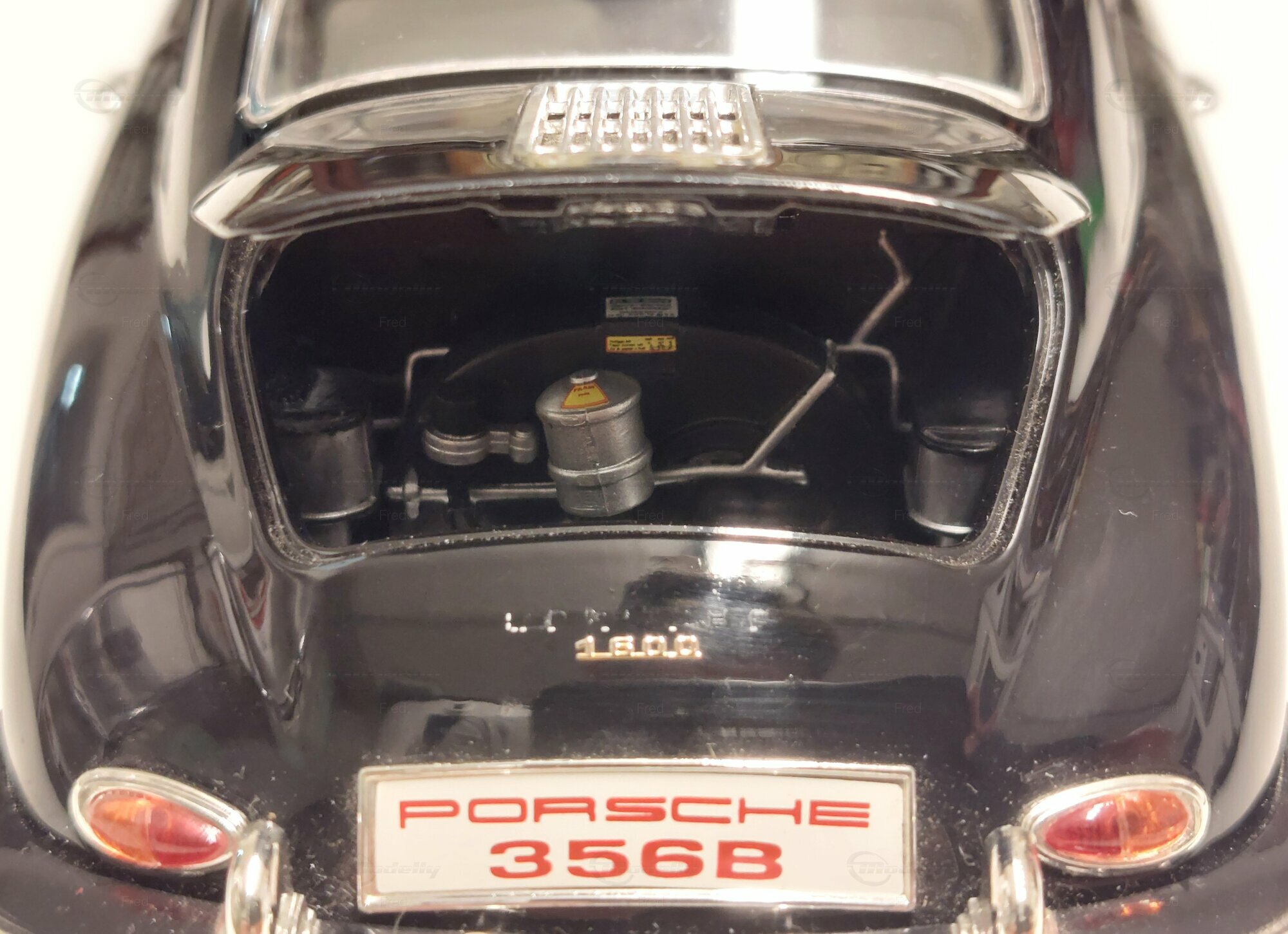
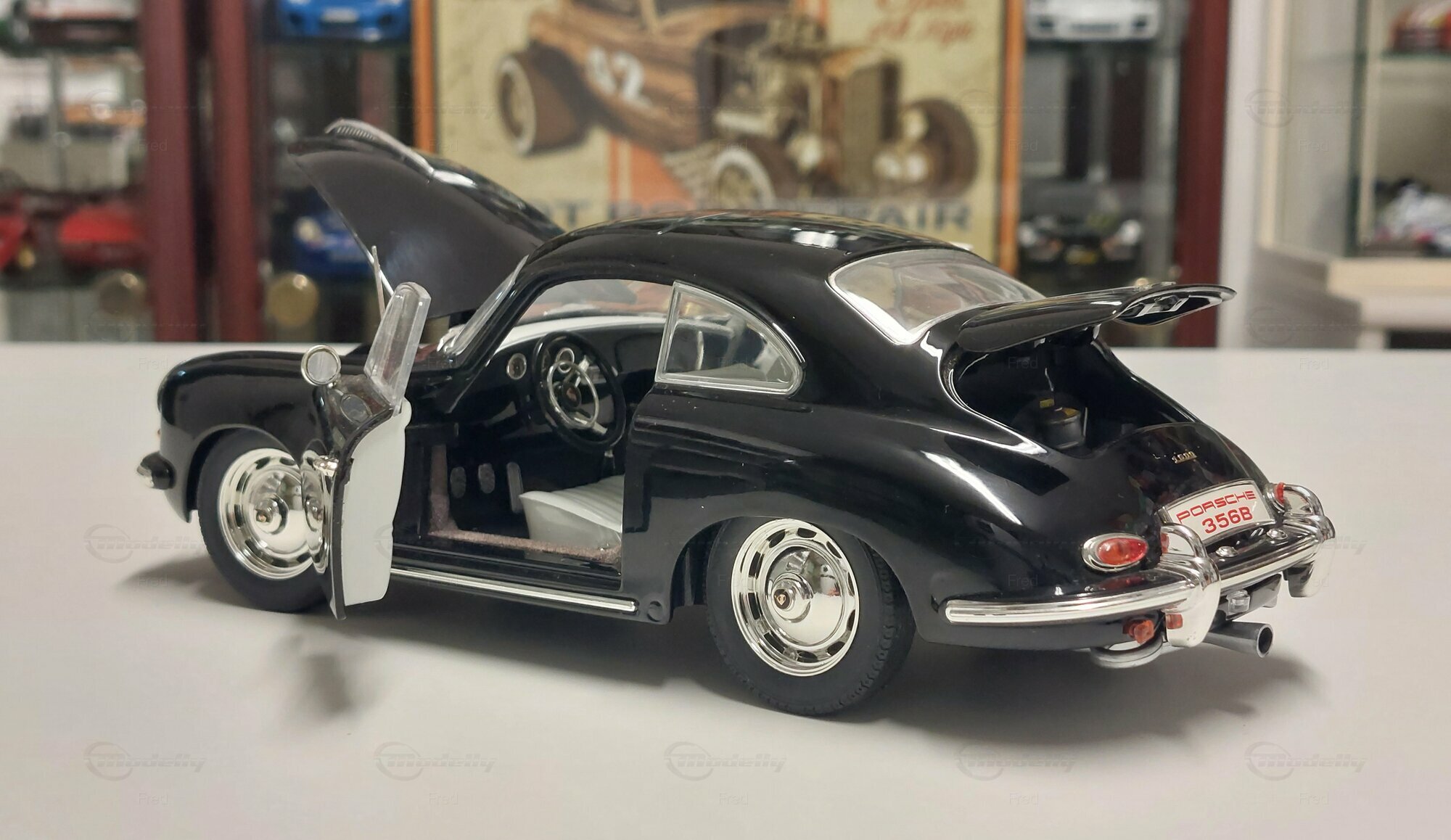
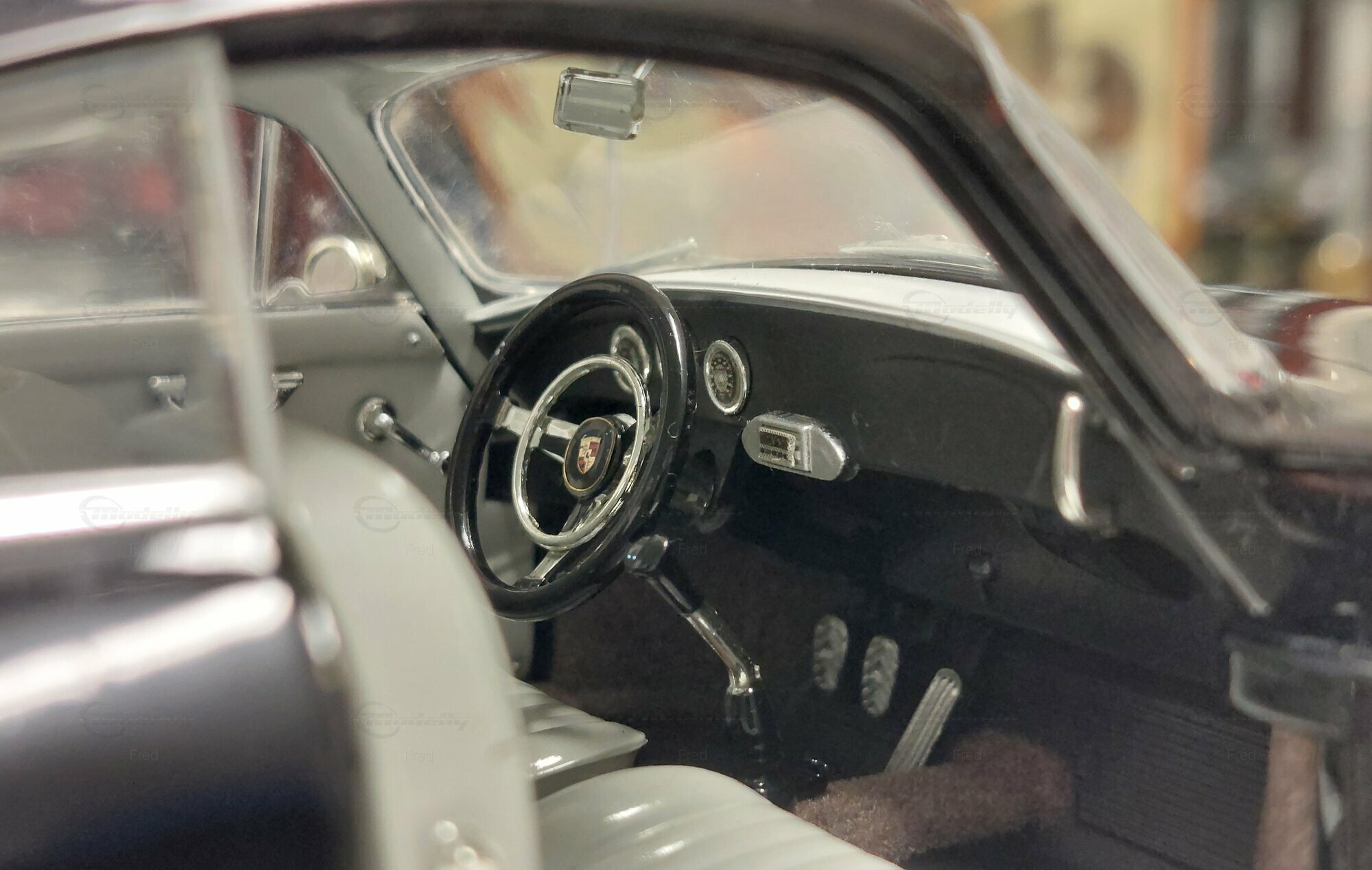
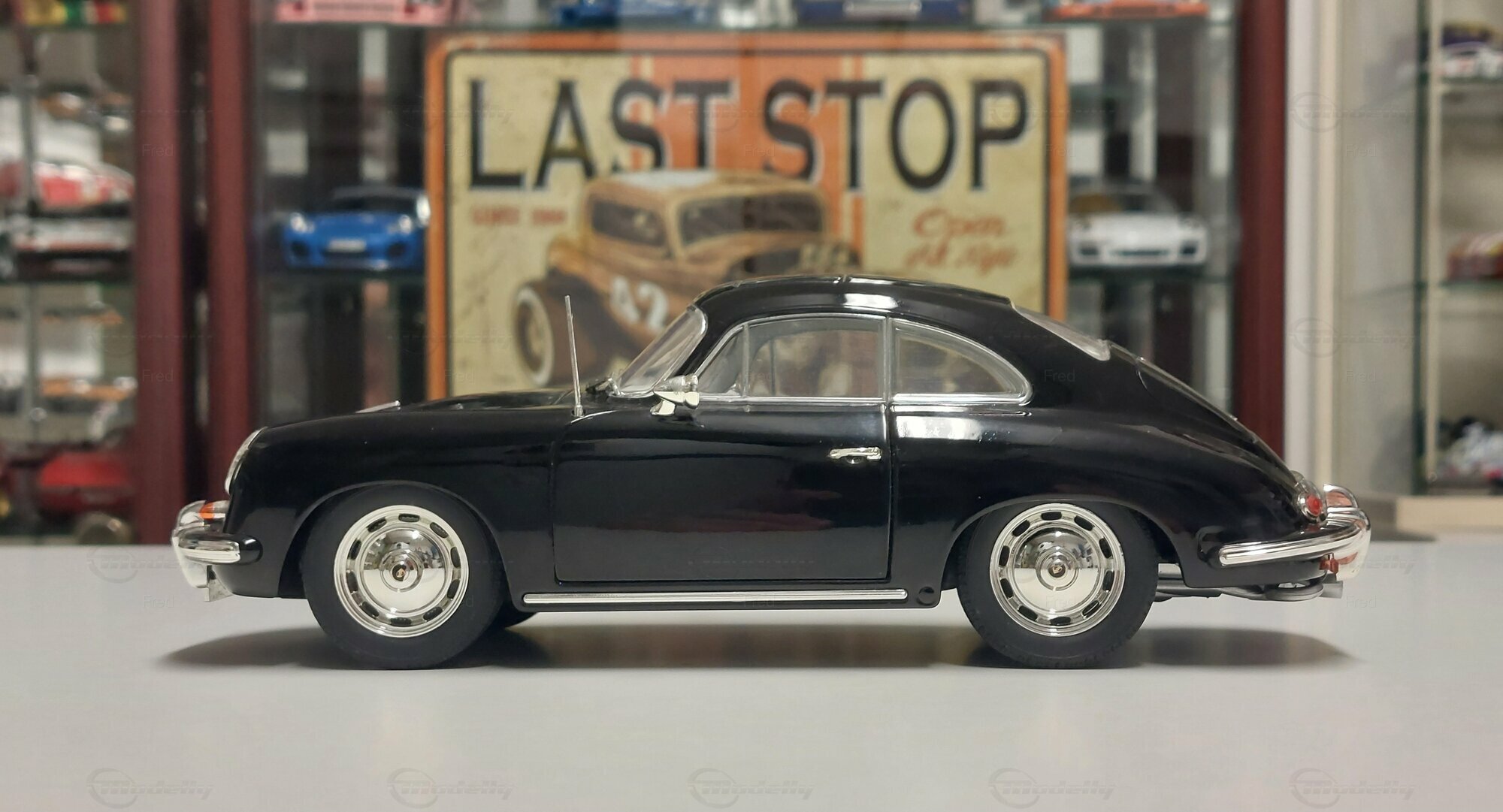
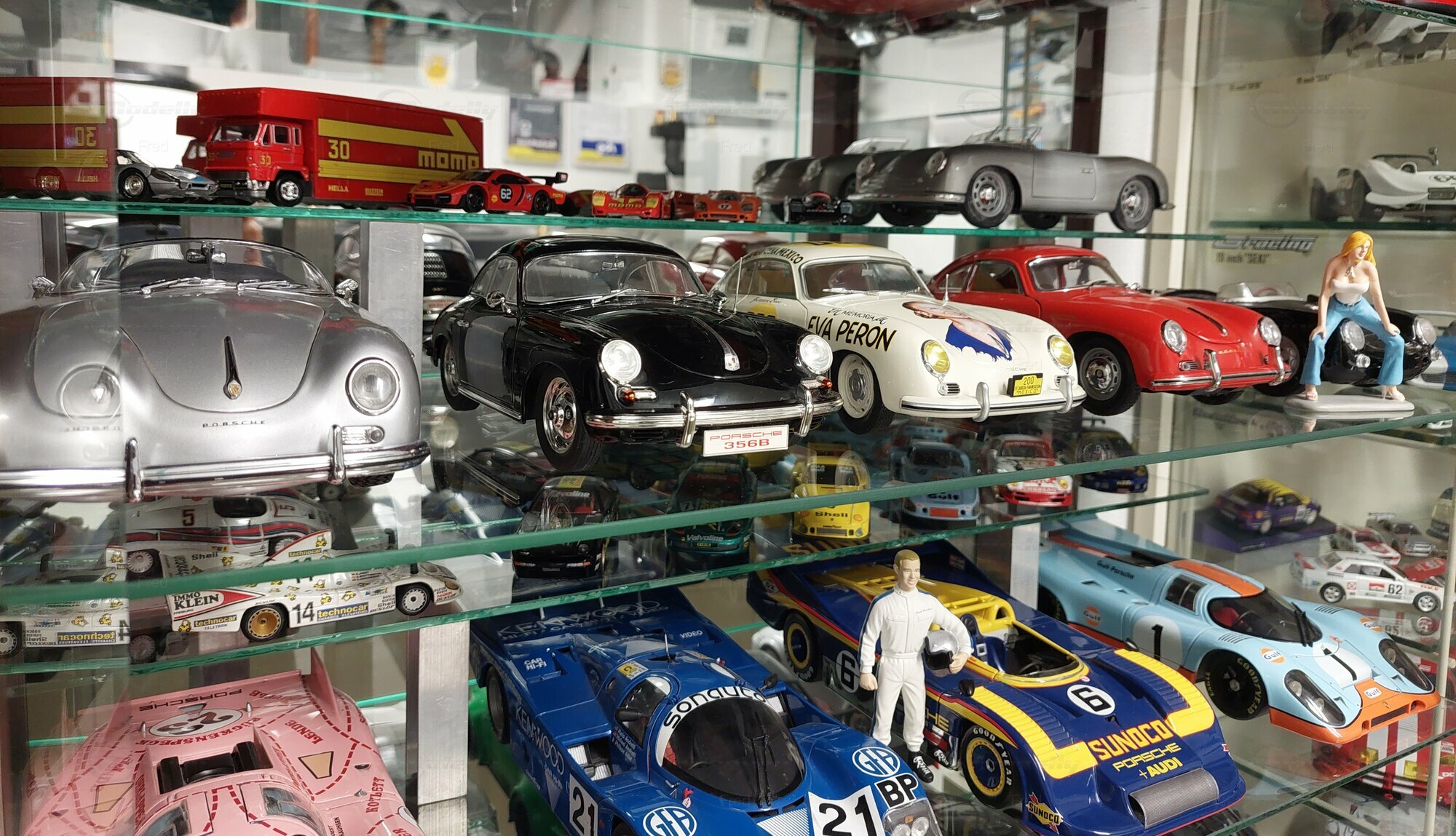
The miniature shown in member Fred’s collection is a 1/18 scale model of the Porsche 356 B, made by Ricko. It’s diecast metal, so it has a nice weight and solid panel gaps. From the photos it looks like a T5 interpretation: a single rear engine-lid grille and no external fuel flap point to that. The body is painted black; the finish has clear reflections, so the roundness and the characteristic teardrop fenders read well. Up front the model has a small Porsche crest on the hood, chrome bumpers with overriders and round headlights with chromed rings — all neatly done. The indicators sit, like on the real car, low beneath the headlights. Along the side you’ve got a fine trim strip, chrome door handles and a side mirror; there’s an antenna on the right roof area. The wheels follow the factory look with smooth rims and polished hub caps; no specific aftermarket maker is obvious. At the rear are the small, almost oval taillights and the bumper with continuous chrome trim, and a single exhaust pipe sticking down below. The interior looks light-colored, probably gray or ivory, with a thin-rim steering wheel and visible seat contours. The license plate holder reads “PORSCHE 356B,” so identification is instant. All in all, it’s a Ricko 1/18 diecast that represents the coupé’s lines faithfully without going overboard.
Collector notes, paint and details
For collectors, black is a common, sensible color for the Porsche 356 B. On the model the paint highlights the rounded front and the quick-dropping rear. Chrome parts are separate pieces, which makes the transitions between body, bumpers and trim look clean. The front Porsche crest and the rear badges (on the real cars often reading “1600” or “Super”) are finely done; on the photos a simple gold-type badge is visible. The proportions match the real coupé well: short overhangs, relatively high headlamps and the characteristic roof with slim pillars. There’s nothing obvious on the model that screams aftermarket tuning, so I wouldn’t call it modified based on these pictures. A few historical touchpoints help place the 356 B’s era: 1959 saw the first Grammy Awards, the Mini’s debut in the U.K., and Ray Charles releasing “What’d I Say” — useful little anchors for the car’s timeframe. The diecast model makes a solid, display-friendly piece. In Fred’s setup it sits against a matching background so the car’s lines pop and details like wiper arms, window seals and tire sidewalls are easy to spot. If you want to place the Porsche 356 B in the model lineup, this miniature is a clear, well-executed T5-era coupé from the years 1959 to 1963, with the typical T5 traits, presented plainly and collector-ready.

Buschinger
Auto-translated
 A very nice model, I have one too and was very surprised by the quality of this model, one of my most beautiful Porsches!
Buschinger
Auto-translated
 A very nice model, I have one too and was very surprised by the quality of this model, one of my most beautiful Porsches!