
Nissan Concept 2020 Vision GranTurismo(1:43, Kyosho)
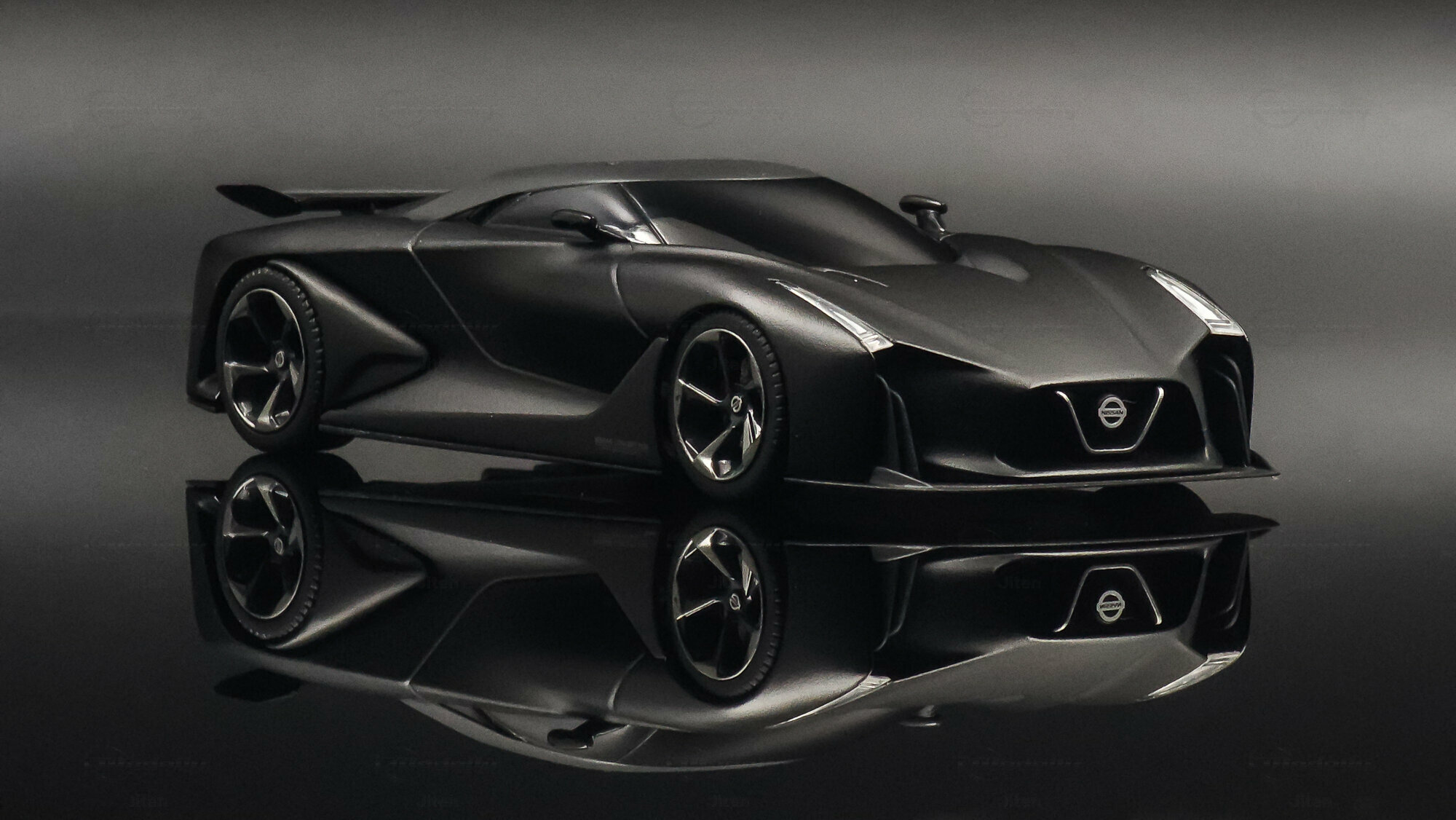
- Nissan Concept 2020 Vision GranTurismo (from 2020)
- Kyosho
- 1:43
- Showcase model / No engine
- resin
- black
- Perfect mint condition
- Original packaging exists
- Not for sale
Background and origin of the Vision‑Gran‑Turismo project
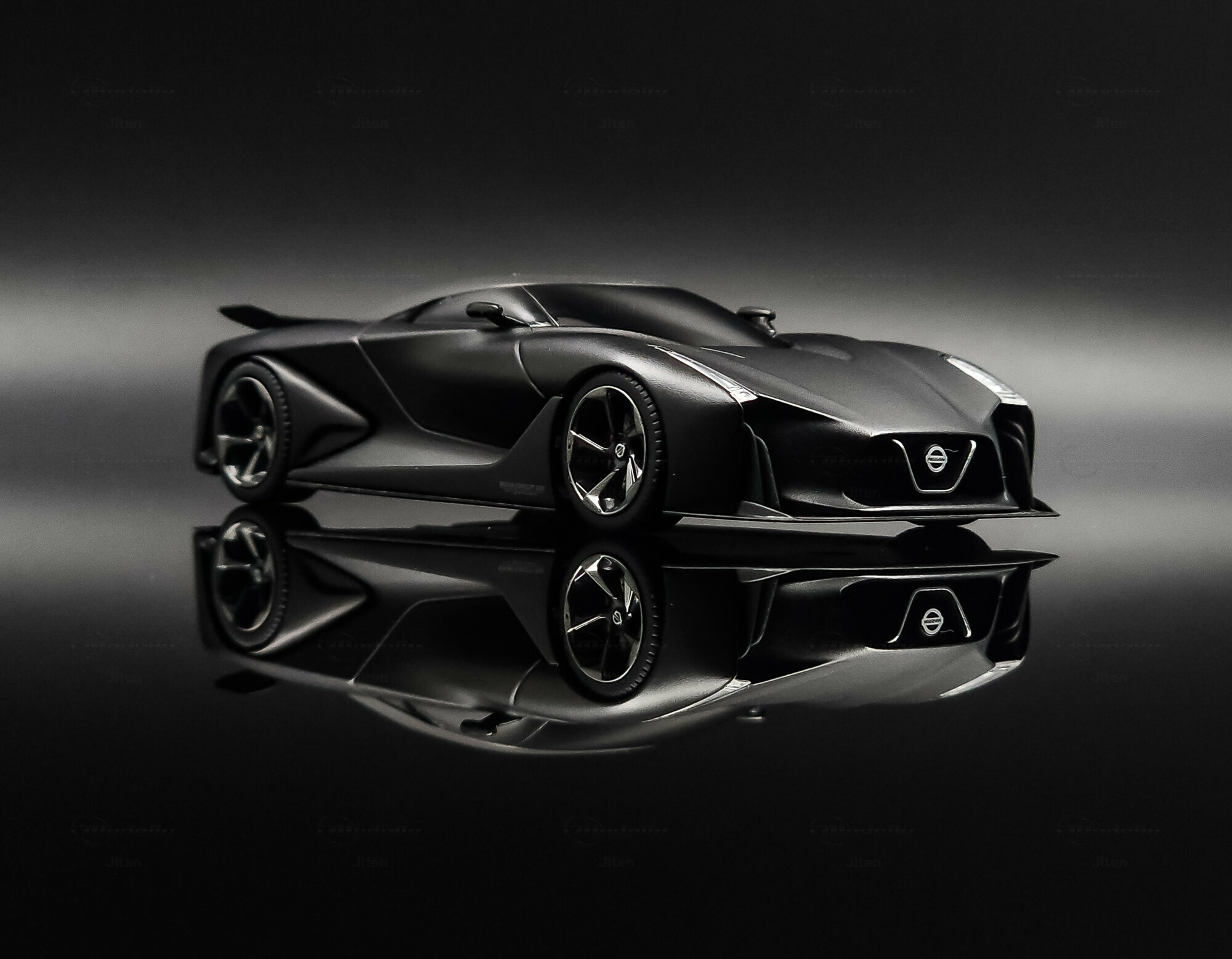
The model this miniature is based on is the supercar concept Nissan Concept 2020 Vision GranTurismo, which was first shown in 2014 as part of Polyphony Digital’s Vision‑Gran‑Turismo program. The study was developed virtually for the Gran Turismo game and later turned into a real show car, shown for example at the Goodwood Festival of Speed. The design work came from Nissan Design Europe in London; the design was led by Shiro Nakamura and Koji Nagano, supported by engineering teams at the Nissan Technical Centre in Atsugi. The concept is meant as a glimpse at future Nissan sports cars and was often read as an ideological bridge to the GT‑R, without being a direct production announcement. It’s effectively a one‑off study: First and only generation, built or shown from 2014 onward.
Technical idea, layout and aerodynamics of the original
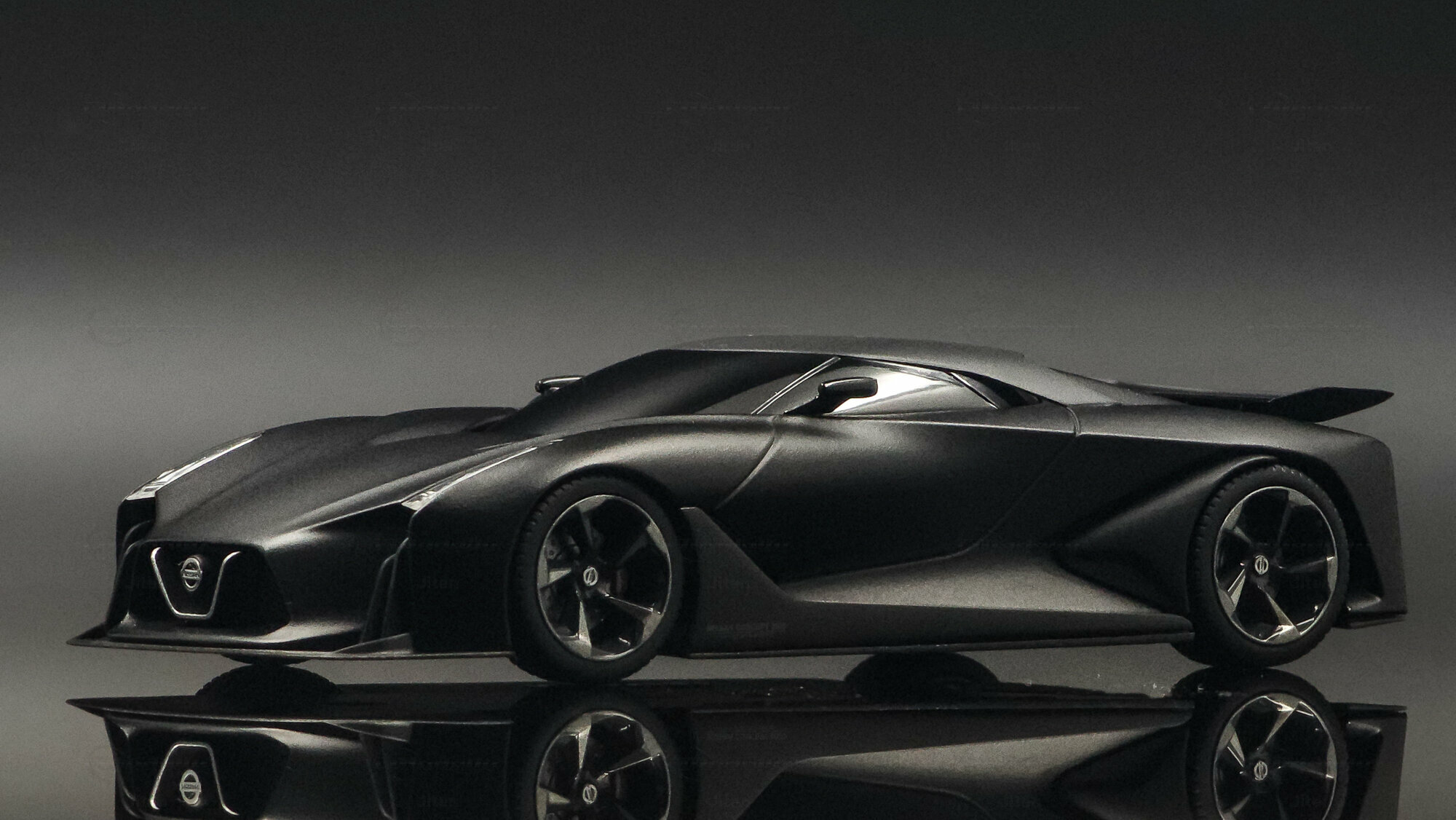
The Nissan Concept 2020 Vision GranTurismo uses a front‑mid engine layout with all‑wheel drive. In the game specs it’s described with a boosted V6 and hybrid assist; the technical approach aimed for high power delivery and immediate response thanks to electric torque support. The bodywork focuses heavily on airflow: notable are the channels integrated into the flanks that guide air from the front along the doors toward the rear. A large diffuser plus a separate rear wing generate rear downforce. The nose shows a deep “V‑Motion” grille with pronounced intakes and very slim lights. Many components were conceived as carbon‑fiber‑reinforced structures, which in the concept promises low mass and high torsional rigidity. For driving dynamics they worked with active torque‑vectoring, adjustable aero and a multi‑link suspension as implemented in the virtual model. With that setup the Nissan Concept 2020 Vision GranTurismo differs quite a bit from usual production cars and sits in the row of CGI‑driven high‑performance studies focused purely on handling targets and brand‑typical styling.
The miniature in the collection – Kyosho in scale 1/43
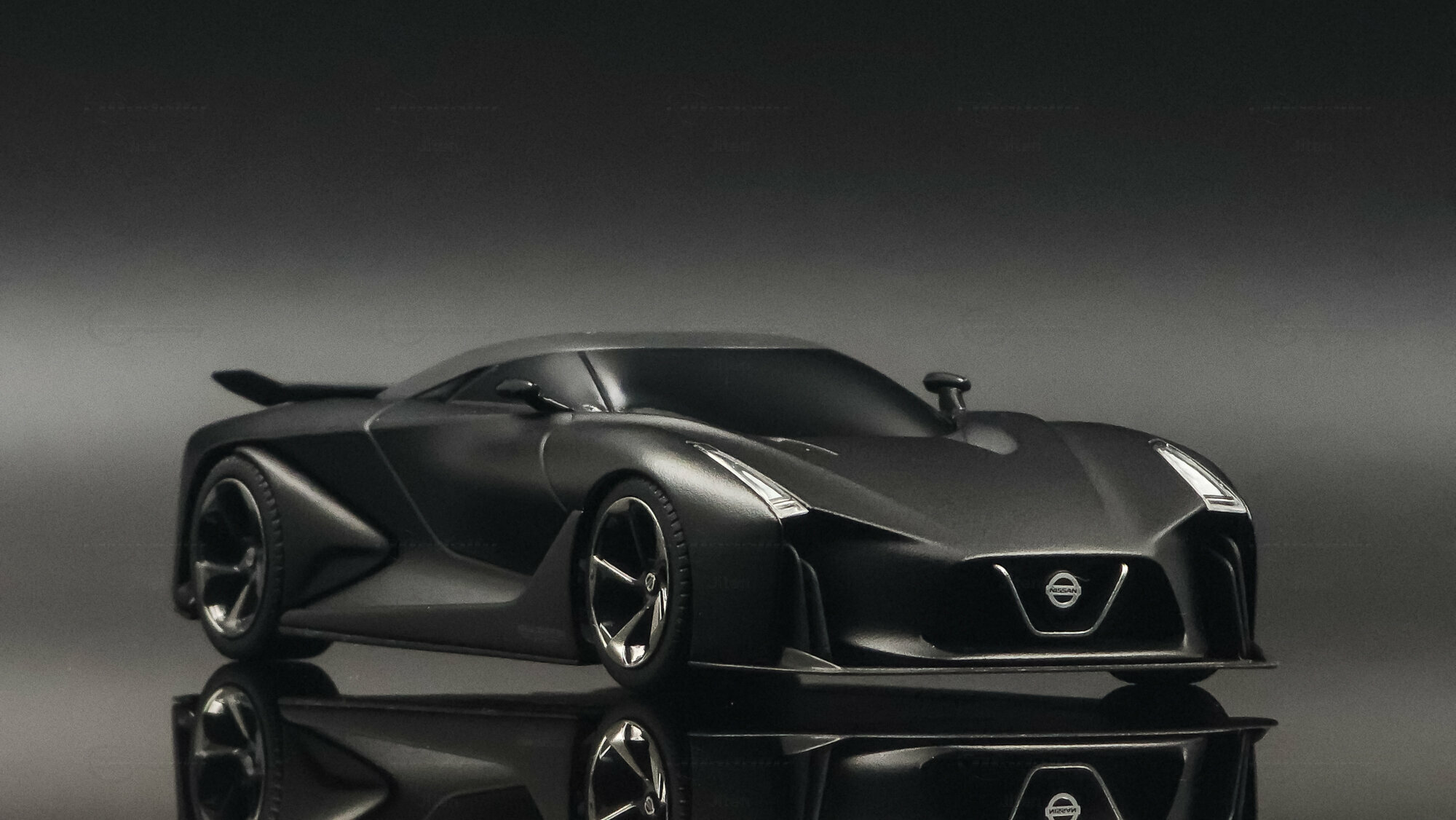
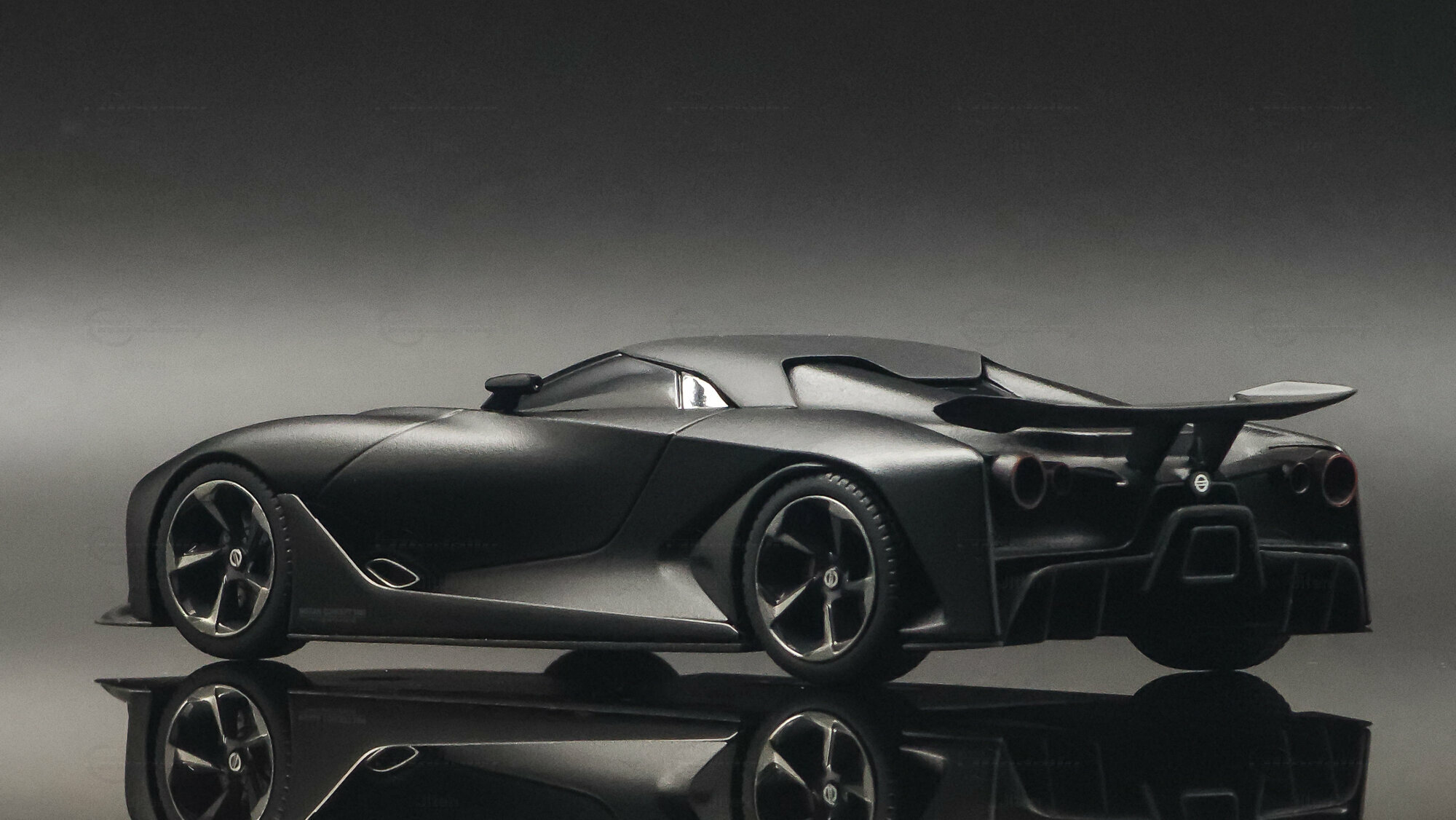
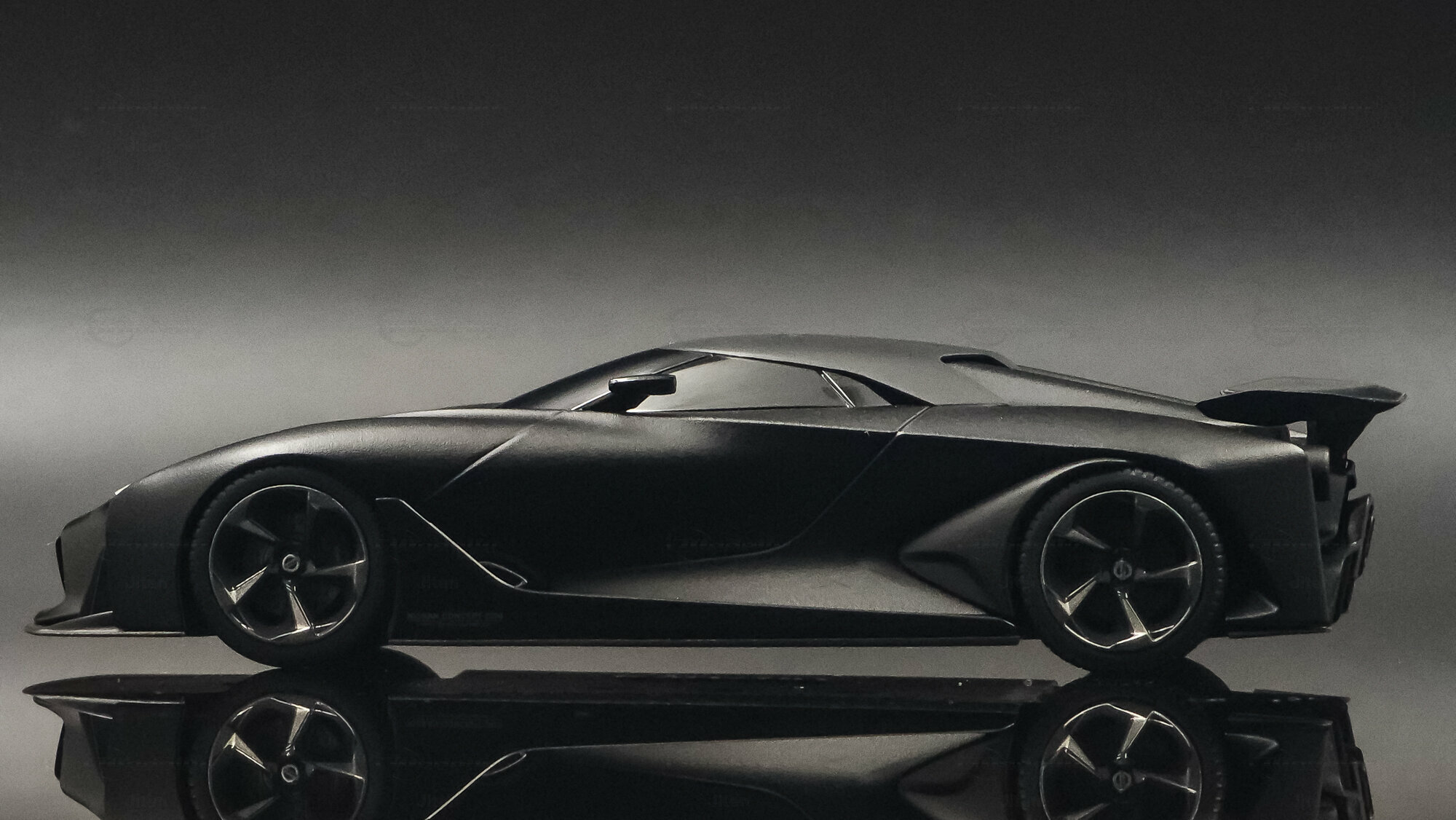
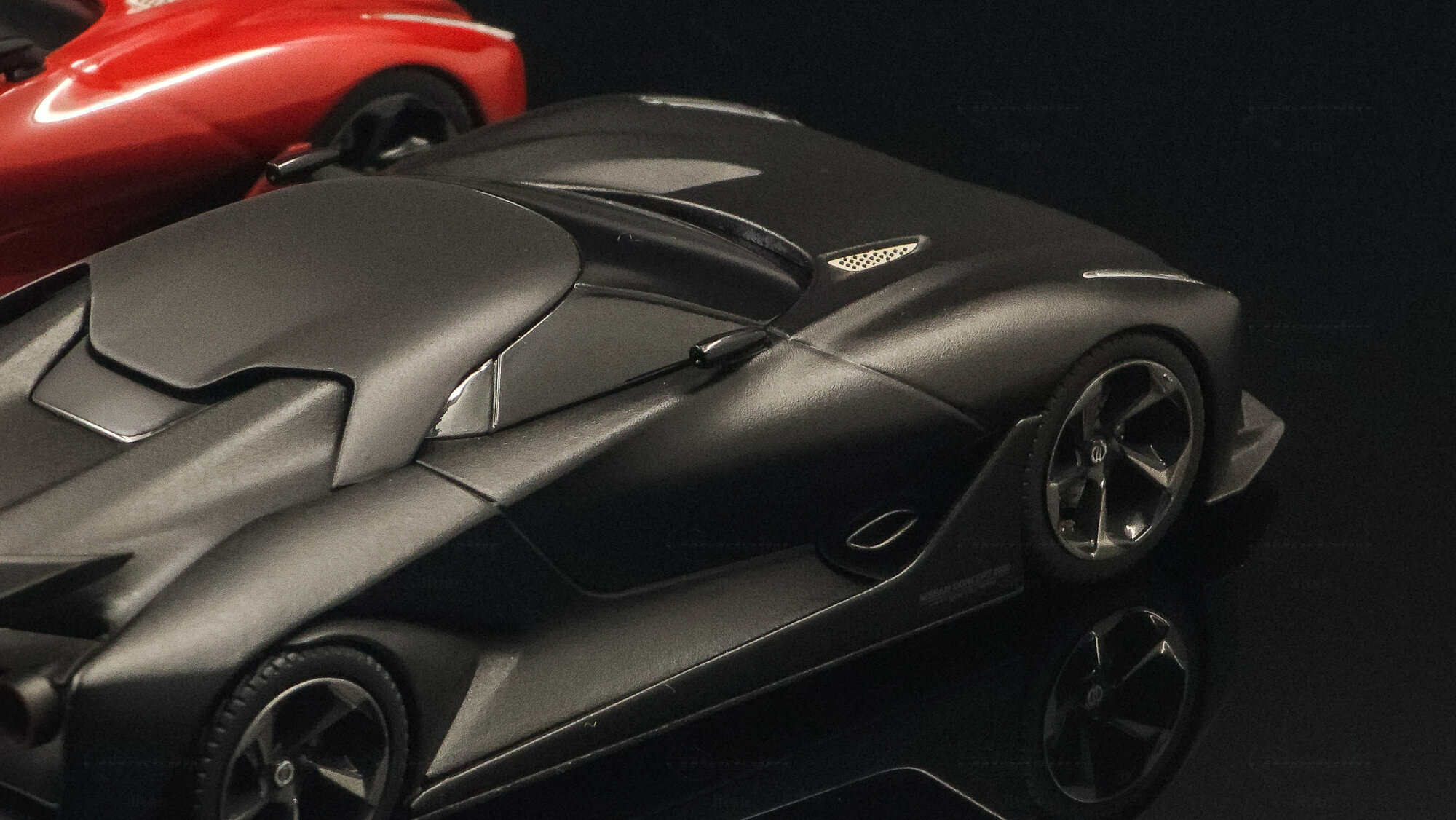
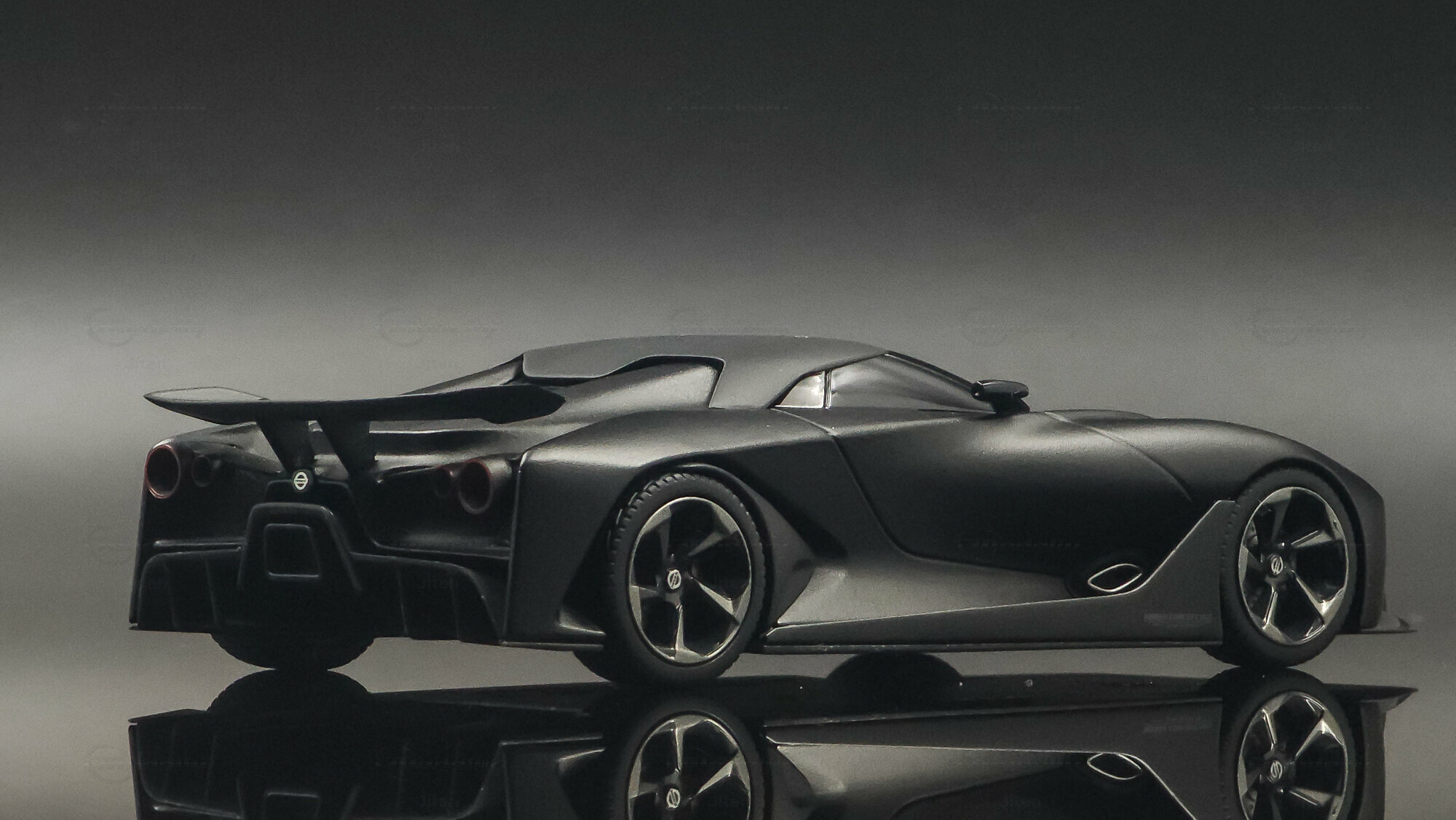
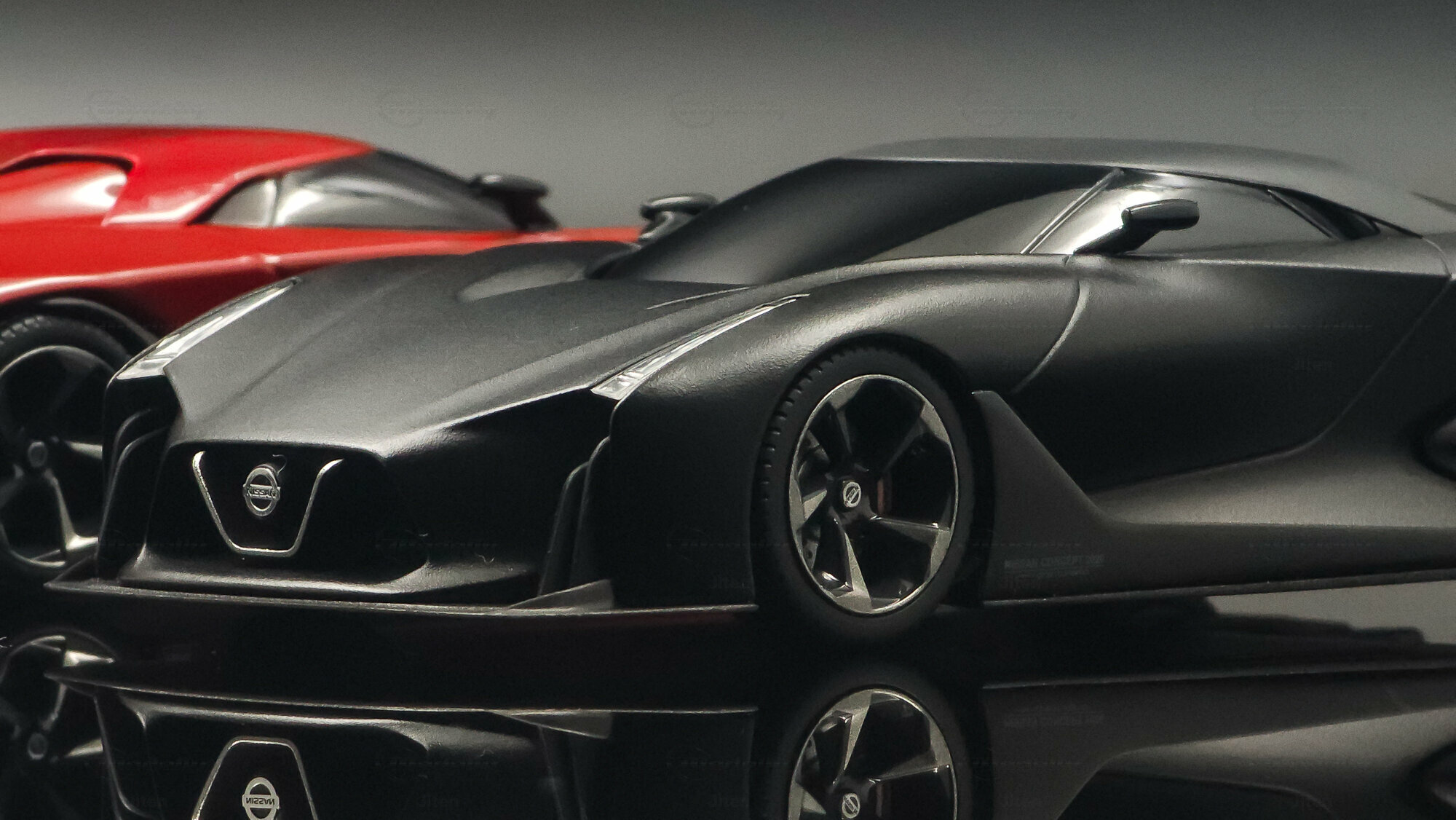
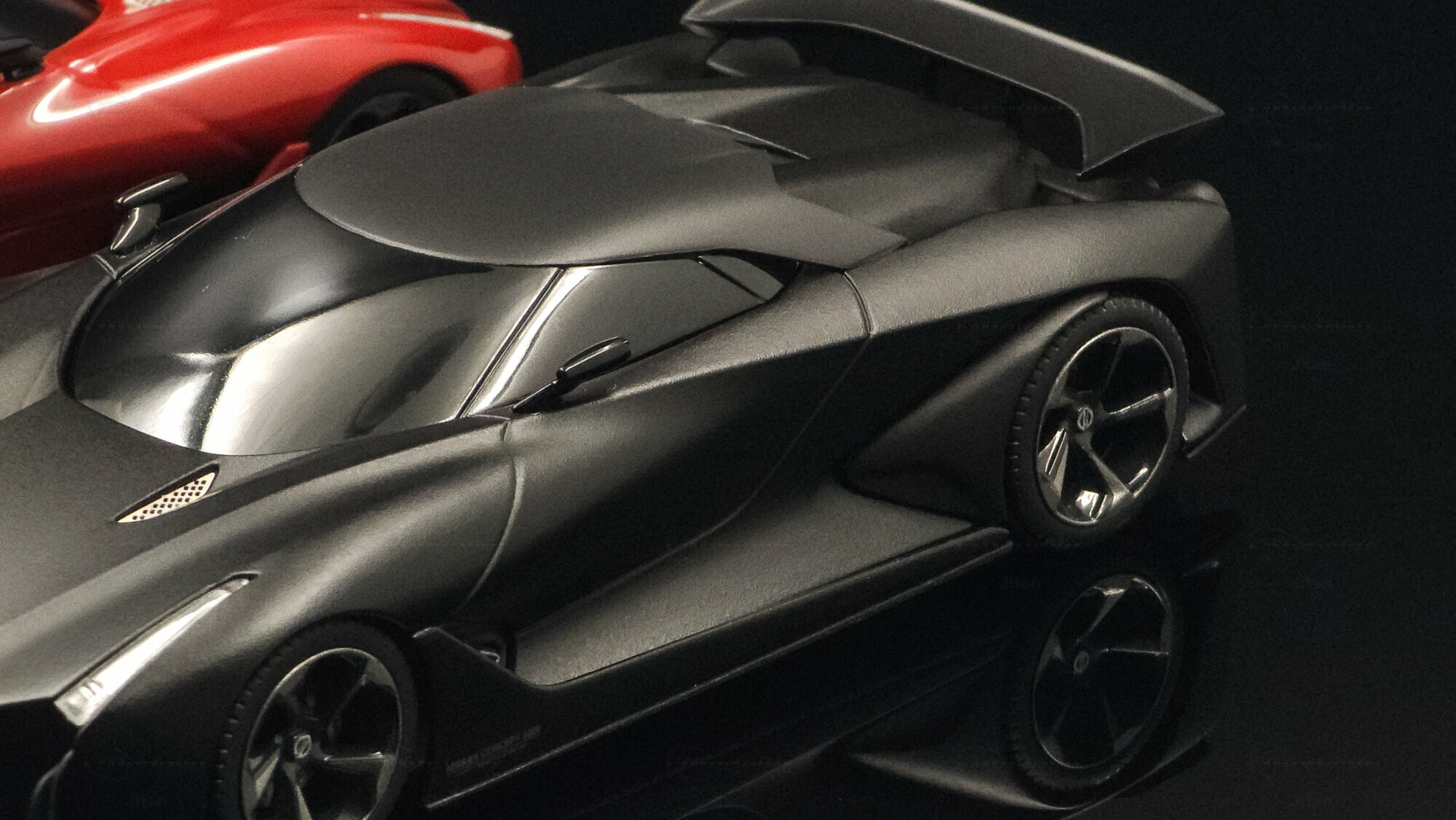
The model shown here is from Kyosho and depicts the Nissan Concept 2020 Vision GranTurismo in scale 1/43. It’s a resin model; that material allows very sharp edges, clean gap lines and crisp transitions in the bold aerodynamic channels. The finish is a Limited edition. This specimen is from the collection of the modeler “Jiten”. The photos show a matte black paint that highlights the shape and the light edges running over the fenders. The front reproduces the deep hood, the angular intakes and the small Nissan round badge in the lower grille area. Thin, triangular headlight inserts and a front splitter are neatly replicated. On the side you can see the rearward air channels and the mirror stalks integrated into the flow. The wheels have five double spokes with a dark metallic finish; the inner area is slightly concave, emphasizing the wide stance. At the rear there’s a separate spoiler wing; the diffuser geometry is suggested on the model. The windows are darkly tinted, giving it that closed show‑car look. On a reflective base the model looks very coherent given the compact scale. Resin construction yields precise wheelarches, smooth surfaces and minimal molding lines without visible top screws.
Collector‑relevant details, finishing and presentation
For collectors it’s important that this model is a 1/43 scale piece by Kyosho and was released as a Limited edition. The combo of a resin body and clear plastic inserts for the lights gives a convincing take on the futuristic design. The matte black shows even texture; edges on the hood, roofline and side skirts are crisply defined. The photos highlight the very narrow cockpit and the low front end, which makes the proportions transfer from show car to model very well. Logos and badges are inserted details; the front badge is centered in the grille and the wheels have tiny hints of a central lock. Because it’s resin, handle it carefully — it’s dimensionally stable but more impact‑sensitive than zinc die‑cast. Typically these come mounted on a screwed base in a display case, which protects the front splitter. In Jiten’s photos you can clearly see the light edge along the fenders and the wedge shape running from the sill to the rear axle. So this Kyosho miniature captures the key ideas of the Nissan Concept 2020 Vision GranTurismo: airflow from the front over the flanks, wide wheel arches and the separate rear wing. It’s a display model rather than a functional toy; the wheels roll and the clear parts are present, but the interior details stay subtle because of the tinted glazing. Overall, Kyosho delivers a neat, scale‑accurate version that reads clearly as a concept car both in photos and in a cabinet.
- Write a first comment about this model now!Any comment can be discussed by all members. It's like a chat.Mention other Modelly members by using @ in your message. They will then be informed automatically.
- Write a first comment about this model now!Any comment can be discussed by all members. It's like a chat.Mention other Modelly members by using @ in your message. They will then be informed automatically.