
Chevrolet Corvette C3 - Indy 500 Pace Car(diecast 1:18, UT Models)
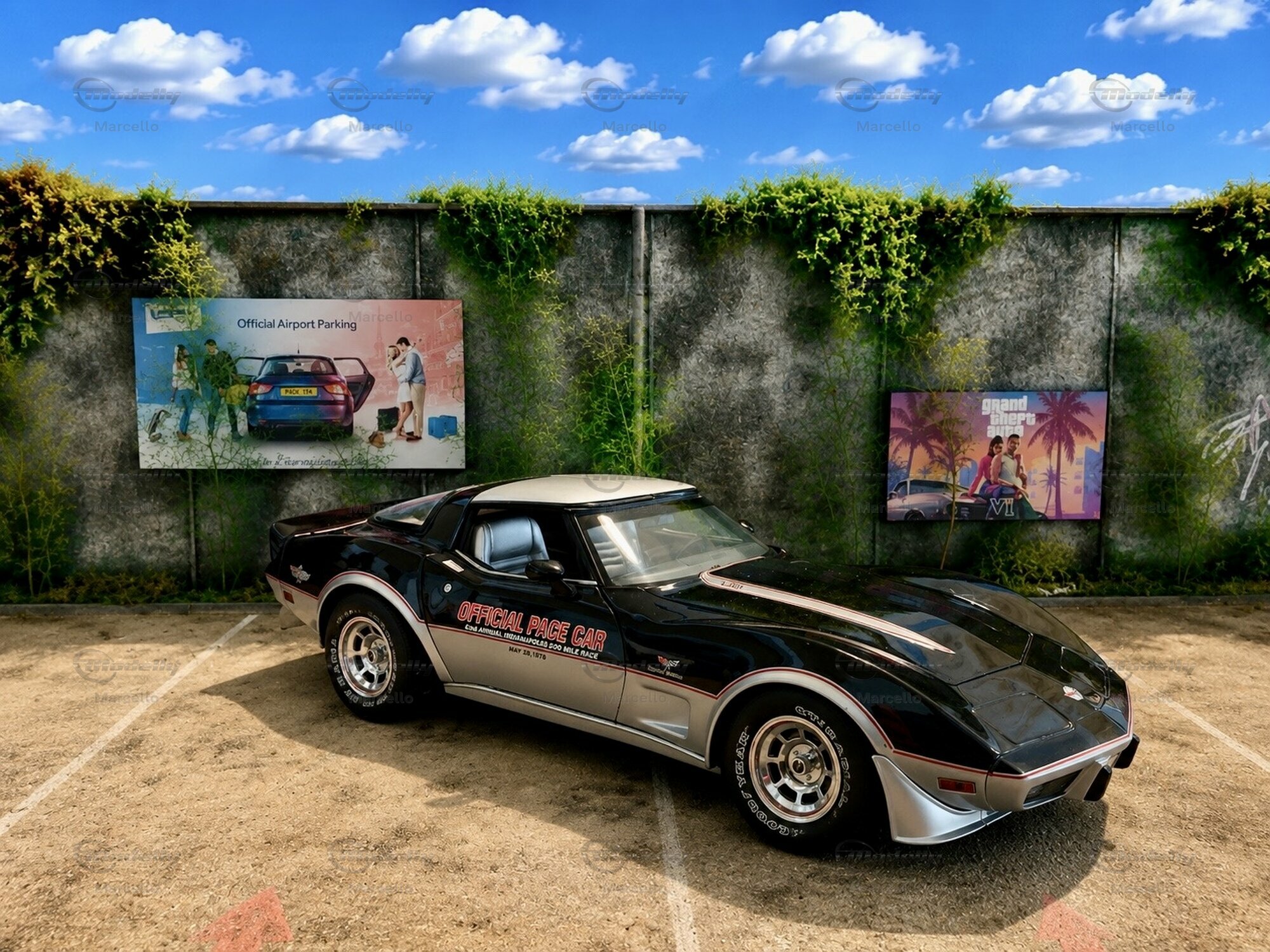
- Chevrolet Corvette C3 - Indy 500 Pace Car (from 1978)
- UT Models
- 1:18
- Showcase model / No engine
- diecast
- black
- private sale
- In near mint condition
- Original packaging does not exist
- Not for sale
Chevrolet Corvette C3 Indy 500 Pace Car: Model, Generation, and Classification
The collectible shown here from Modelly member Marcello is based on the Chevrolet Corvette C3 Indy 500 Pace Car, which is a special version of the third Corvette generation. That generation was the C3, built from 1968 to 1982. Its predecessor was the Chevrolet Corvette C2, which, with its Sting Ray design, laid a lot of the technical and visual groundwork for later Corvette themes. The C3 kept the idea of a two-door sports car with front-engine, rear-wheel drive layout, but pushed the styling much further. The early C3 design was heavily shaped by Larry Shinoda; behind the scenes, GM figurehead Bill Mitchell also played a major role. The Corvette C3 used a steel frame with a fiberglass body, independent suspension, and V8 engines in different output levels. For the Pace Car theme, the link to the Indianapolis 500 is especially important, because the Corvette served several times as the official pace car there. The car recreated here points to the Indy 500 Pace Car theme from the late C3 period, with the very noticeable door graphics and the classic contrast between the dark upper body and the silver lower section.
Technical Specs and Construction of the Corvette C3 Original
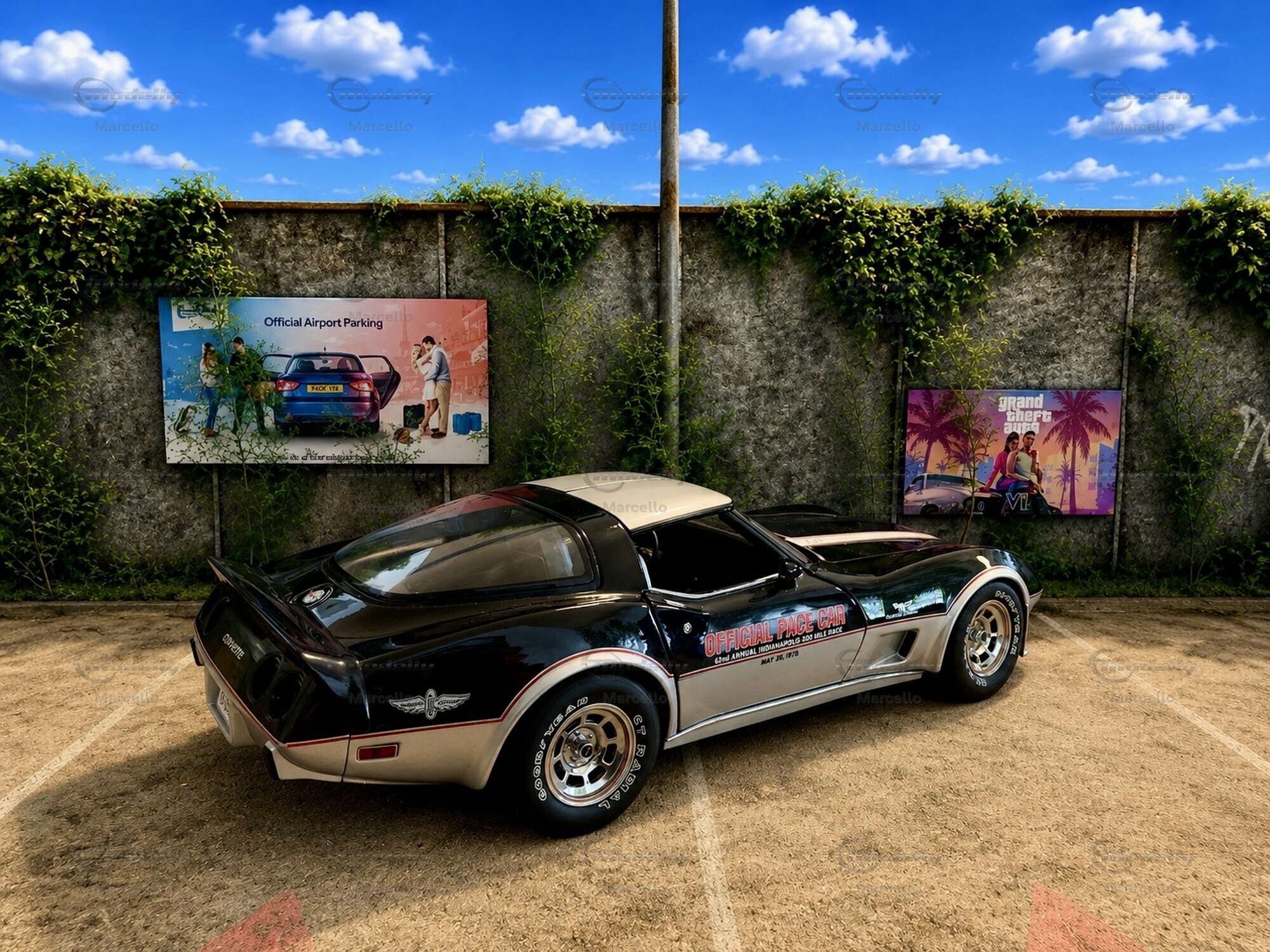
In the original, the Chevrolet Corvette C3 stood for a long development period with several engine generations, different emissions setups, and changing horsepower ratings. Depending on the model year, the lineup ranged from small-block to big-block V8 engines; later years were mostly back to small-block versions because of fuel economy and emissions rules. Typical was the 5.7-liter (346 cubic inch) 350-cid V8, paired with manual transmissions or an automatic. The C3 had independent suspension at both ends, disc brakes front and rear, and a relatively low seating position under a long hood. The T-top roof was one of the best-known features of many C3 models and is also easy to spot on the miniature. Pace Car editions came with special graphics, different color combinations, and edition-specific badges. Aerodynamically, the C3 stood out with long fenders, pronounced wheel arches, a flat nose, and a short rear with integrated trailing edges. This shape was less about maximizing cabin space and more about proportions, wheelbase presence, and high-speed stability. The use of fiberglass body panels also remained a key Corvette trait, affecting both weight and design freedom.
Motorsport, Indianapolis 500, and Well-Known Drivers with Corvette Ties
In motorsport, the Chevrolet Corvette C3 was not just a road car with racing links, but also actively used in various series. Especially in IMSA, SCCA racing, and national GT classes, C3 race versions showed up regularly. The base layout with V8 power, a long front end, and a wide track made it ideal for high-performance builds. Cars from this generation were often modified in the 1970s for endurance and GT racing, sometimes with widened bodywork, altered suspension, and race brakes. Drivers like John Greenwood are closely tied to the Corvette C3’s motorsport image, especially because of heavily modified race Corvettes in IMSA and Le Mans-style events. Tony DeLorenzo and Jerry Thompson are also well-known names in U.S. Corvette racing from that era.
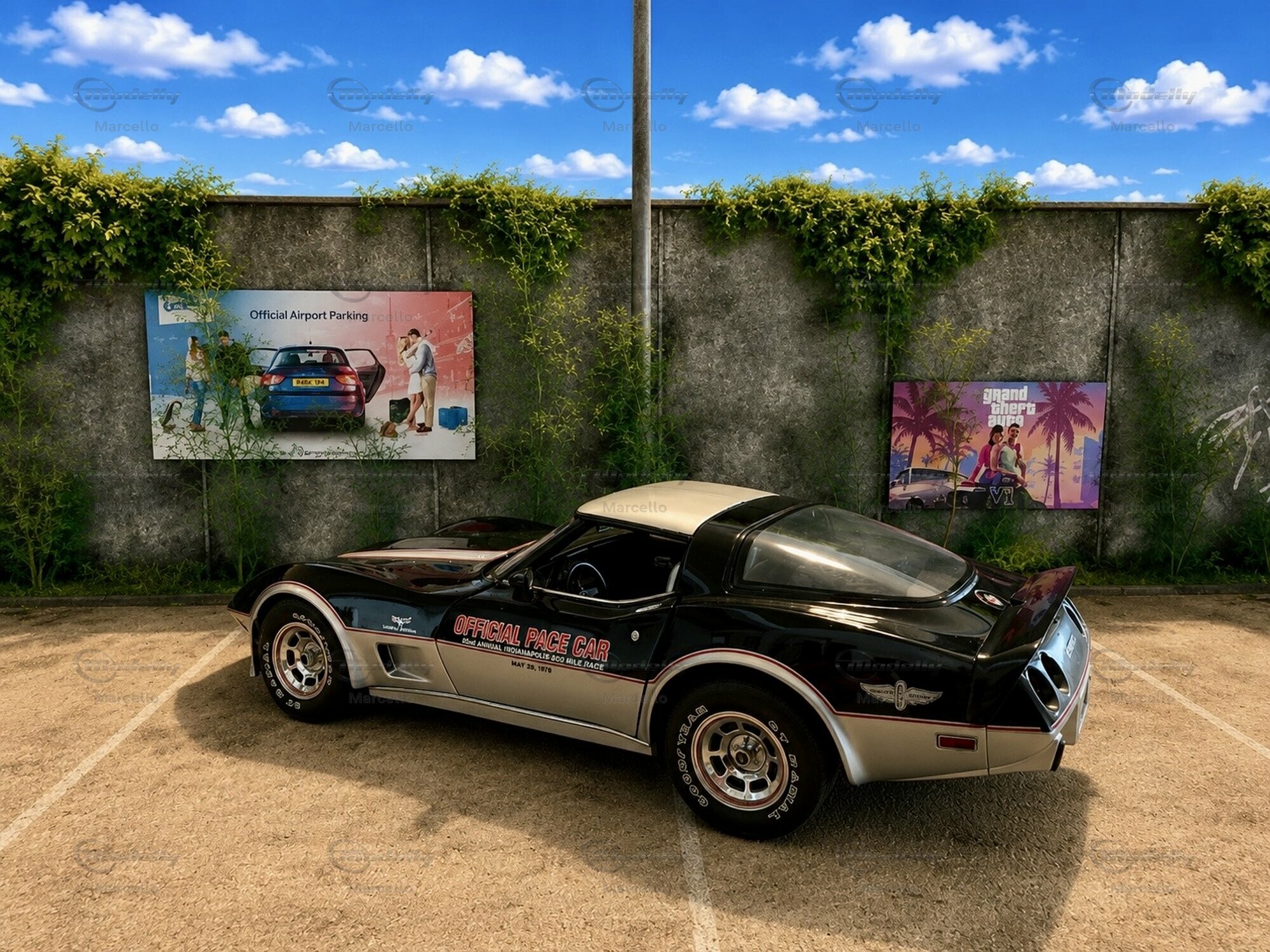
Indy Pace Car Livery, Graphics, and Visible Details of the 1/18 Model
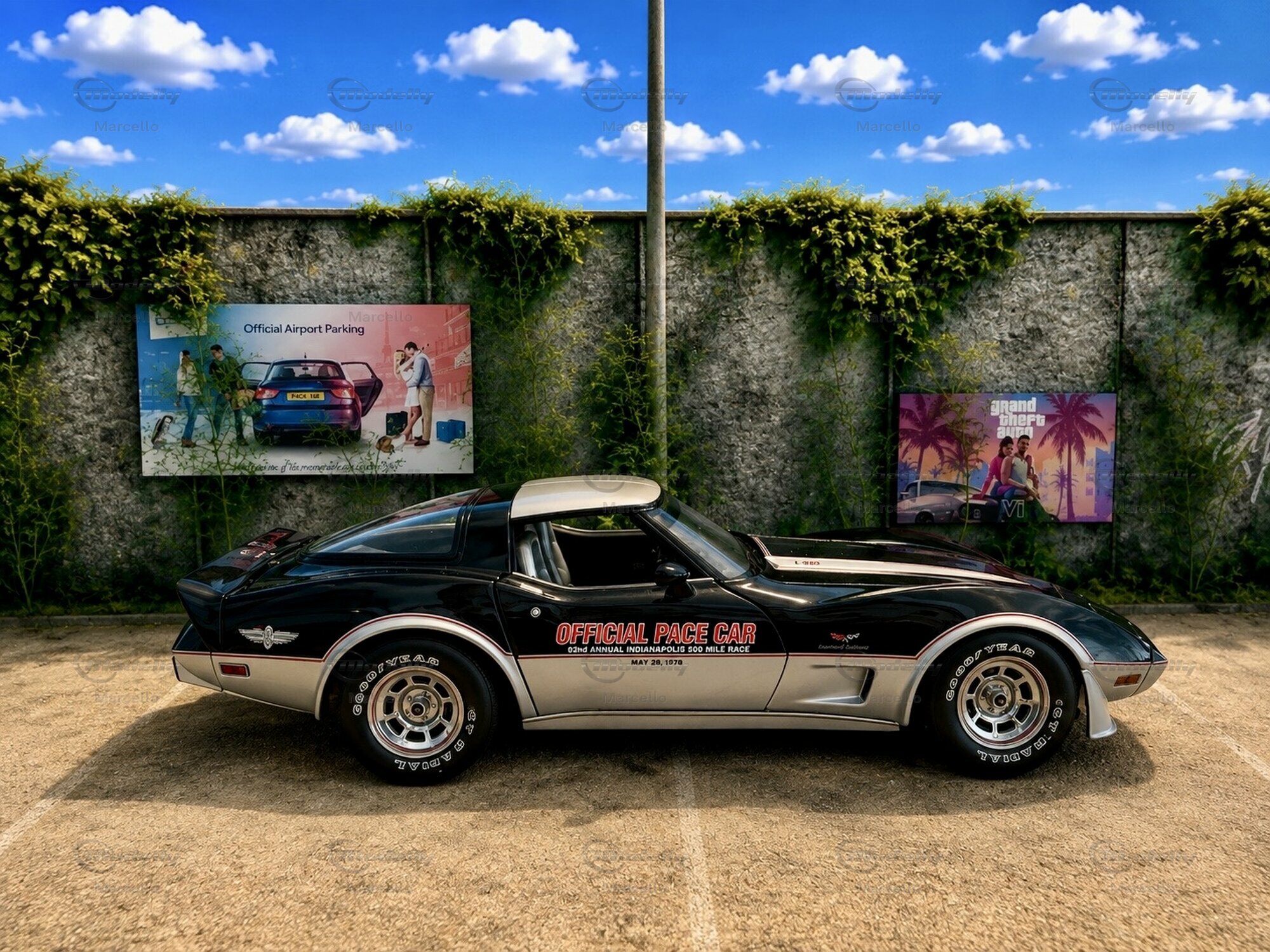
The link to the Indianapolis 500 gave the Chevrolet Corvette C3 extra attention, even though a pace car is not the same thing as an actual race car technically or competitively. Still, that role made certain versions especially recognizable within Corvette history. The Indy 500 theme was closely tied to the event’s public image, which is why lettering, race details, and official badges mattered more than on normal production cars. On the model, you can clearly see the door text “Official Pace Car,” the note about the “62nd Annual Indianapolis 500 Mile Race,” and the date “May 28, 1978.” That makes the special edition connection obvious. As for sponsor or event references, the main visible tie here is to Indianapolis 500 and the official race branding; no other classic racing sponsors are clearly shown as separate decals in the photos. Names historically linked to the real pace car or the event include Jim Rathmann, who was present in Indy 500 history as a driver and later in official roles, even though the exact driver assignment can vary depending on the pace car year.
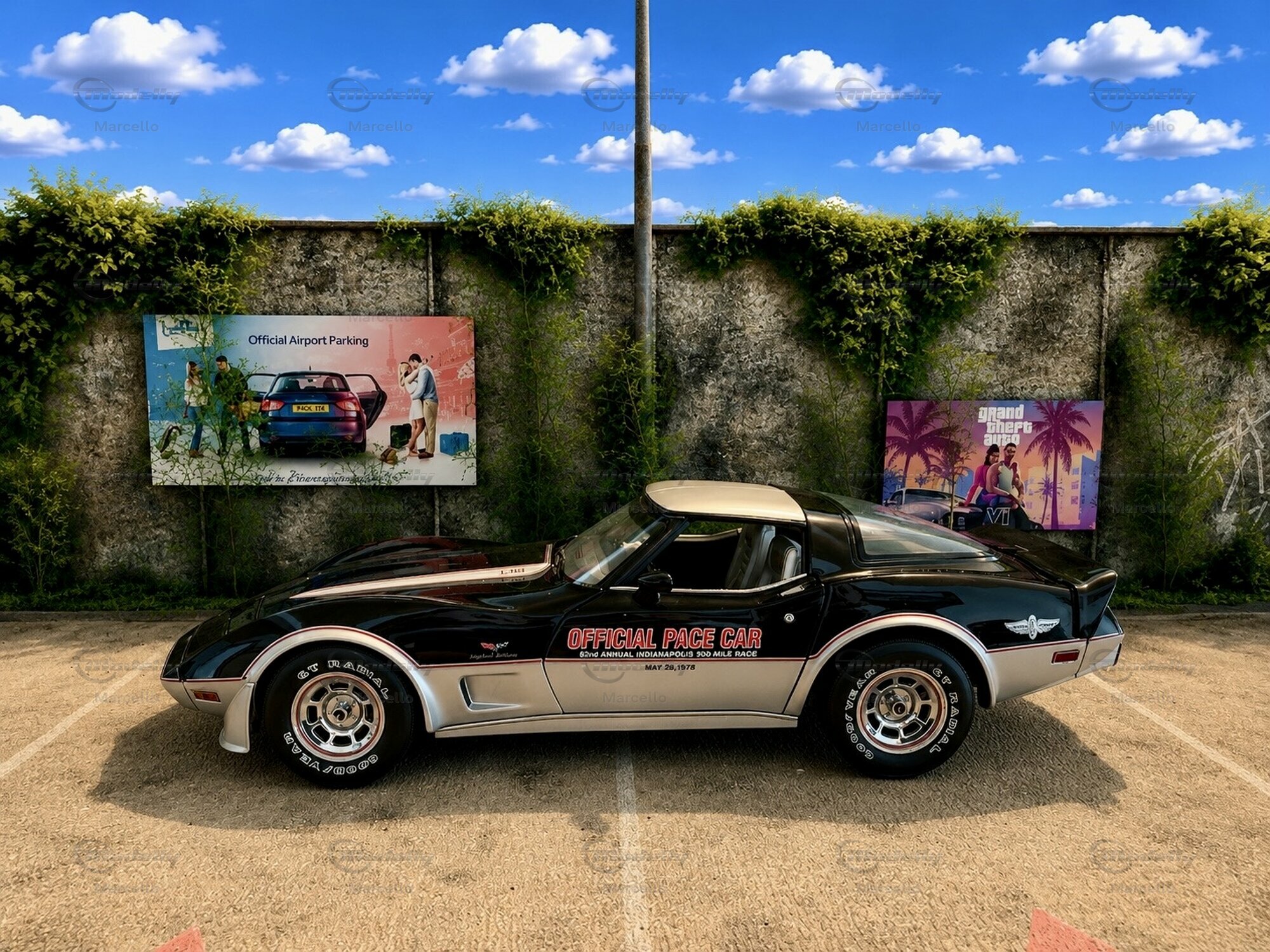
UT Models 1/18 Diecast Miniature: Execution, Shape, and Collector’s View
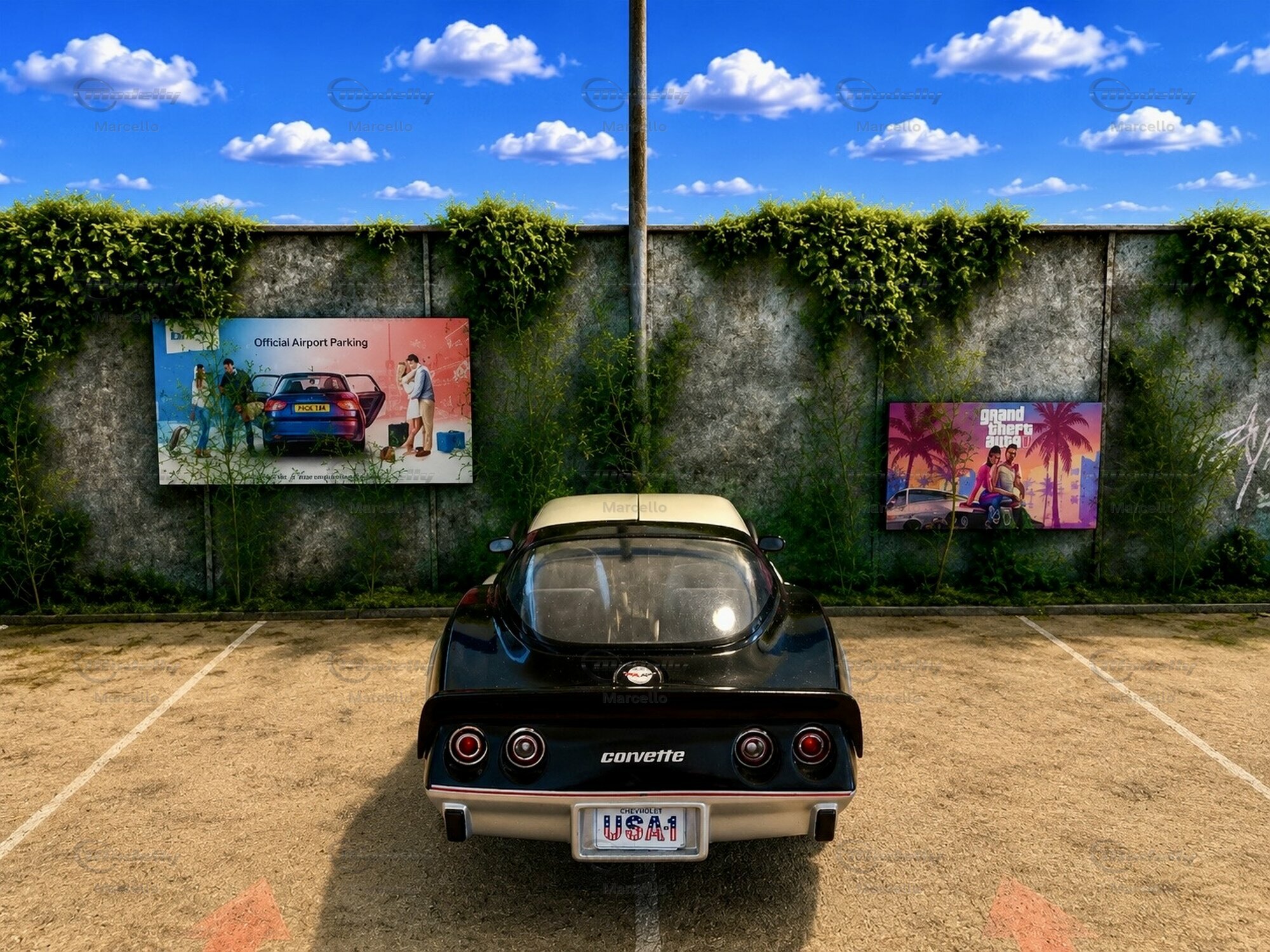
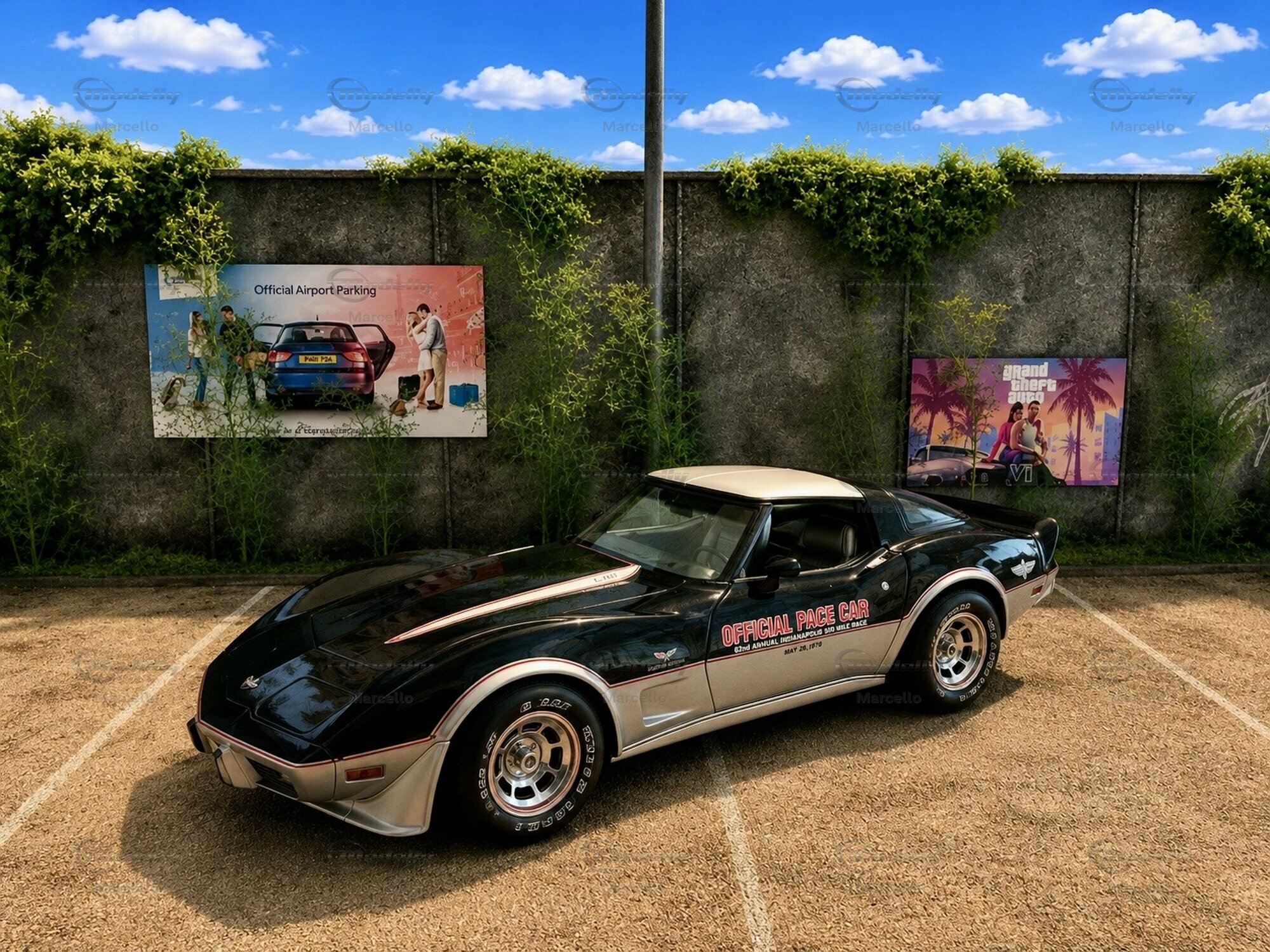
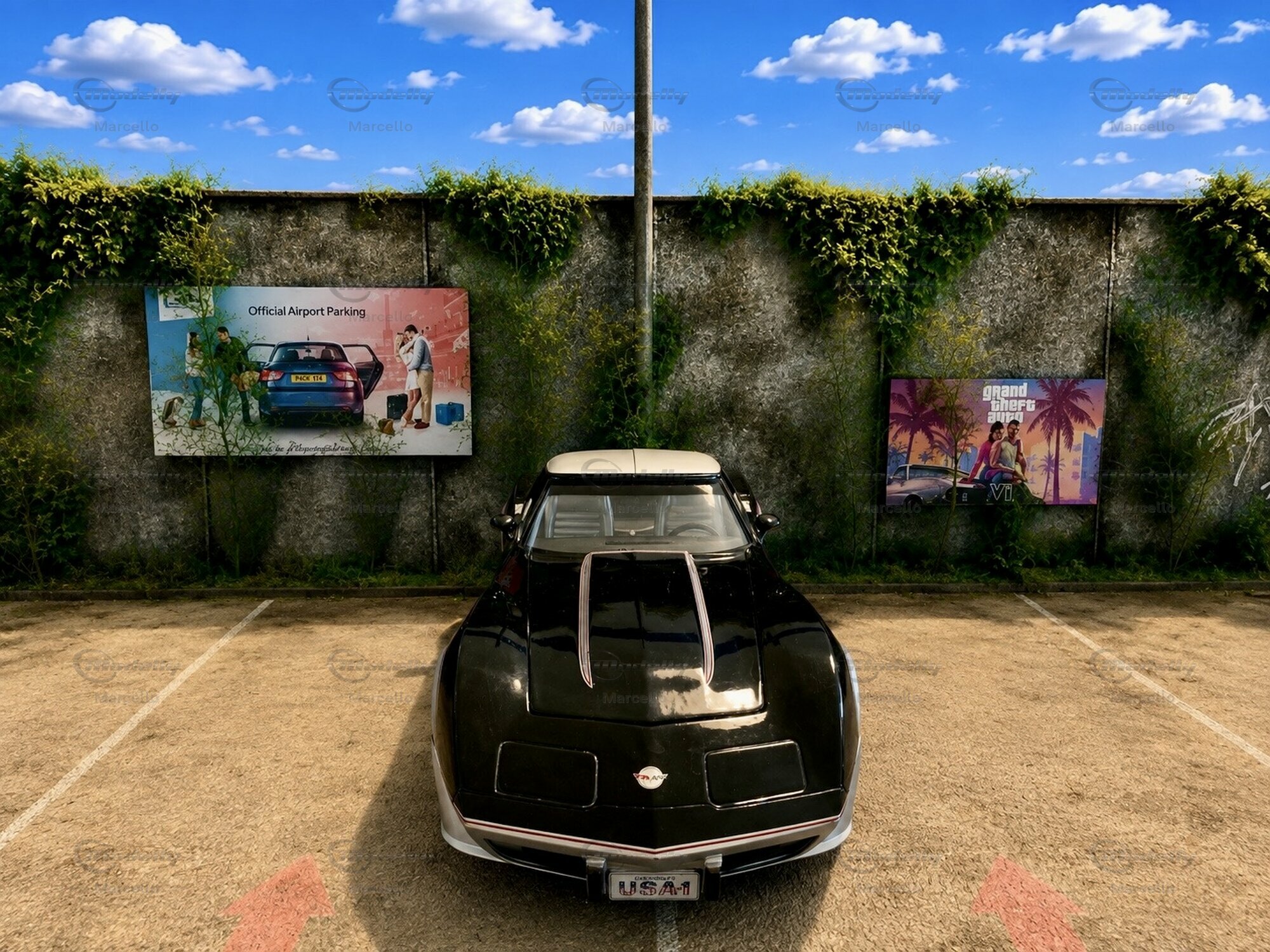
For collectors, it’s pretty clear that this is a 1/18 scale model car from UT Models. The miniature is made as a diecast piece and shows the typical long C3 silhouette with strongly sculpted wheel arches, a low nose, a rear spoiler, and a removable or visually separated T-top section. The paint scheme follows the well-known Pace Car look with a black upper body and silver lower section. Between them runs a fine red-and-white stripe that highlights the body line along the sides, over the fenders, and around the front. You can also spot Corvette badges on the front and side, an “L-82” marking on the hood or hood-stripe area, and the white-letter Goodyear tires. The wheels match the period-correct late-1970s sports car style. Inside, the light-colored seats stand out nicely against the exterior colors. The rear glass area, the proportions of the tail, and the side mirrors also help make it instantly recognizable. The 1/18 model car from UT Models gives a solid, faithful take on the original’s lines and, in Marcello’s photos, shows a convincing version of the special Pace Car lettering, two-tone paint, and the shape details that define the late C3. From a collector’s point of view, the printing stands out as large and easy to read, while the badges, tire lettering, and roof section all help tie the whole Corvette theme together nicely.
- Write a first comment about this model now!Any comment can be discussed by all members. It's like a chat.Mention other Modelly members by using @ in your message. They will then be informed automatically.
- Write a first comment about this model now!Any comment can be discussed by all members. It's like a chat.Mention other Modelly members by using @ in your message. They will then be informed automatically.