
BMW Motorsport E26 M1 Procar(diecast 1:18, Minichamps)
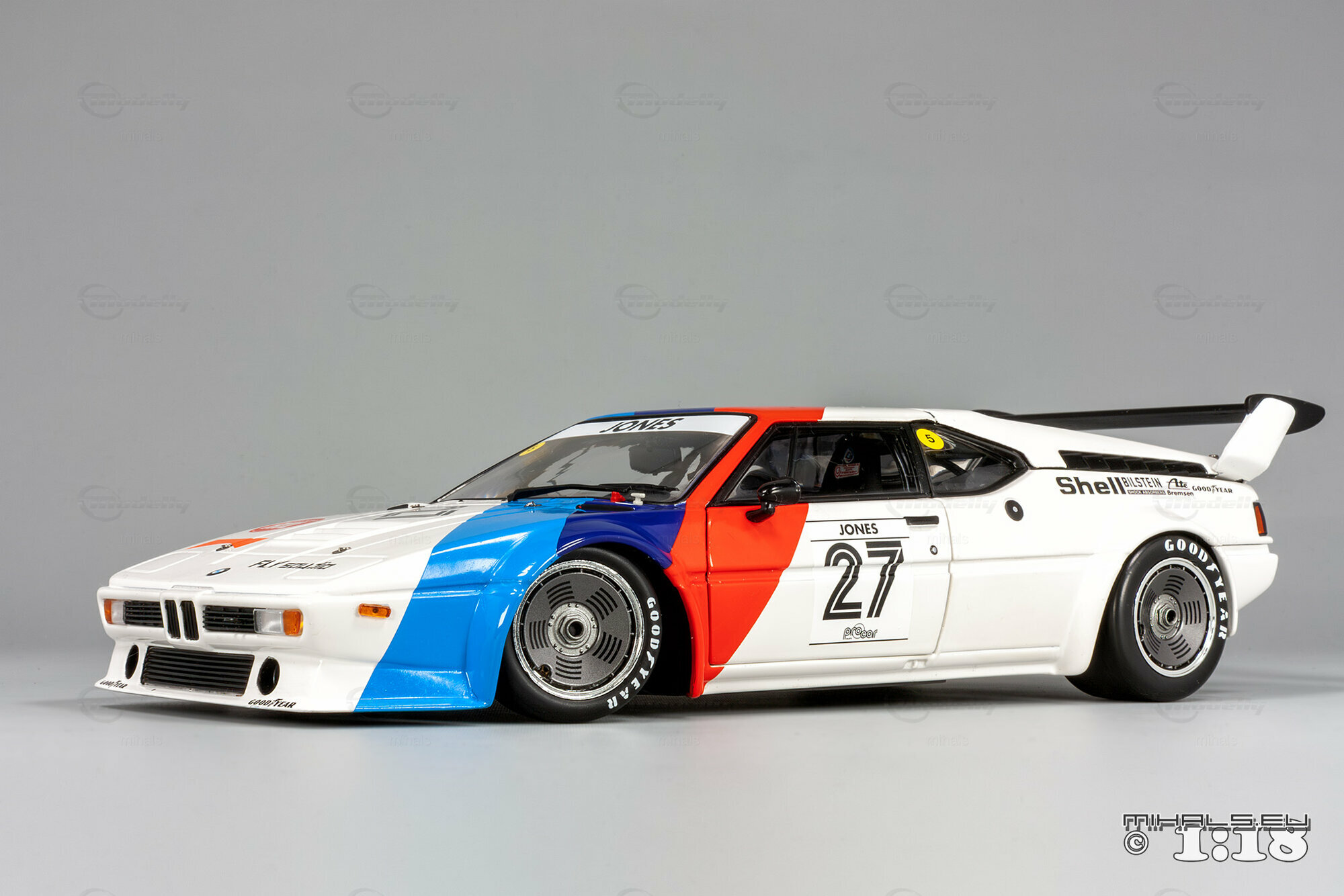
- BMW Motorsport E26 M1 Procar (from 1979)
- Minichamps
- 1:18
- Showcase model / No engine
- diecast
- BMW Motorsport
- locale dealer
- Perfect mint condition
- Original packaging exists
- Not for sale
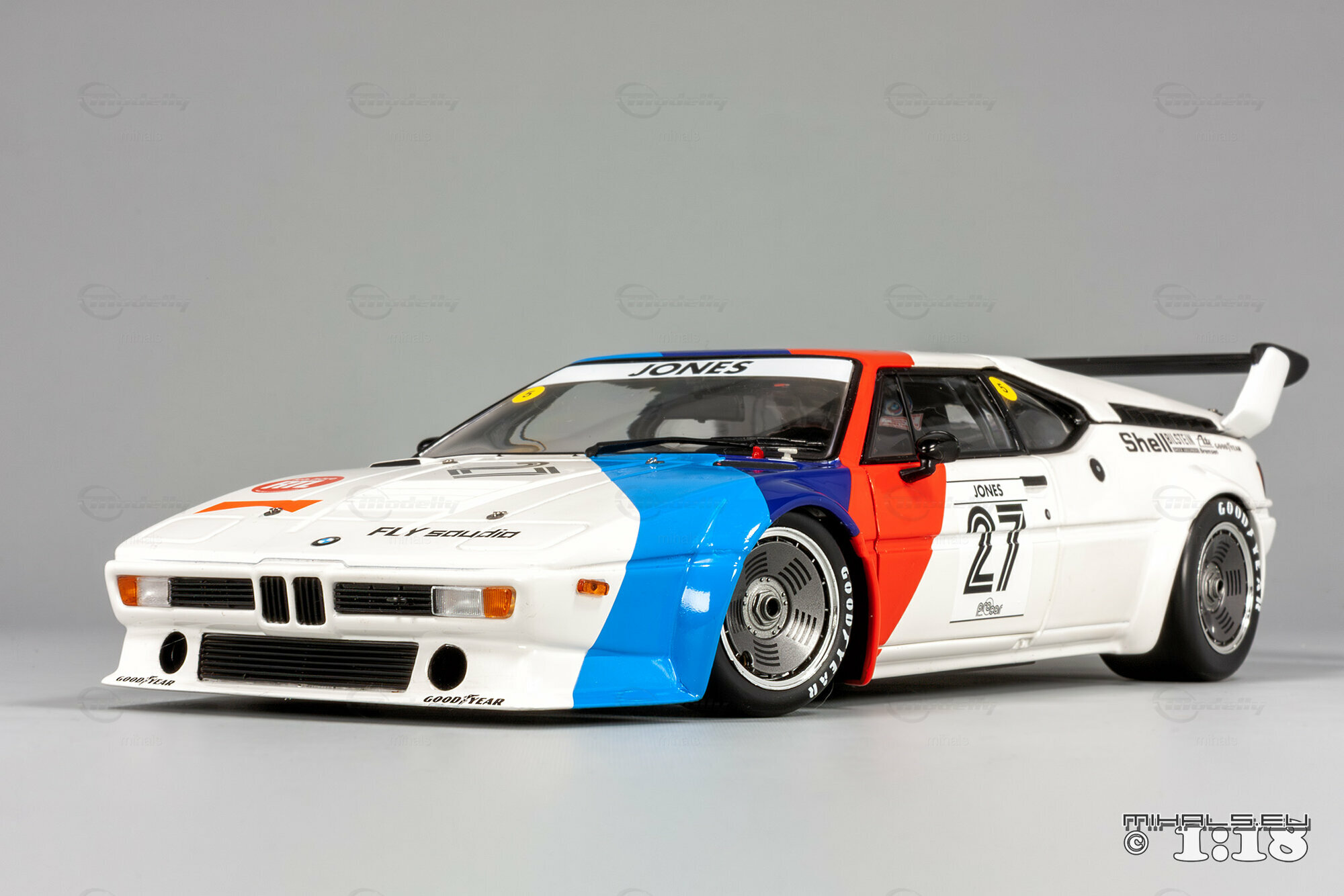
Icons of BMW motorsport history: E26 and the Procar project
The model this is based on is the BMW M1 Procar, derived from the street‑legal BMW M1 (E26). The E26 generation was built from 1978–1981 and served BMW as a tech showcase and as the basis for homologation for Group‑4/5 racing. The striking design comes from Giorgetto Giugiaro (Italdesign), while the development of the M88 inline six was led by Paul Rosche. Early on, Lamborghini with Gian Paolo Dallara was involved in the chassis layout; the final race development was coordinated by BMW Motorsport under Jochen Neerpasch. The direct motorsport link goes back to BMW’s 3.0 CSL, which unofficially paved the way and helped focus efforts on the BMW M1 Procar. The goal was a mid‑engine sports car with a ZF transaxle and a tubular spaceframe, usable both on the road and on the track.
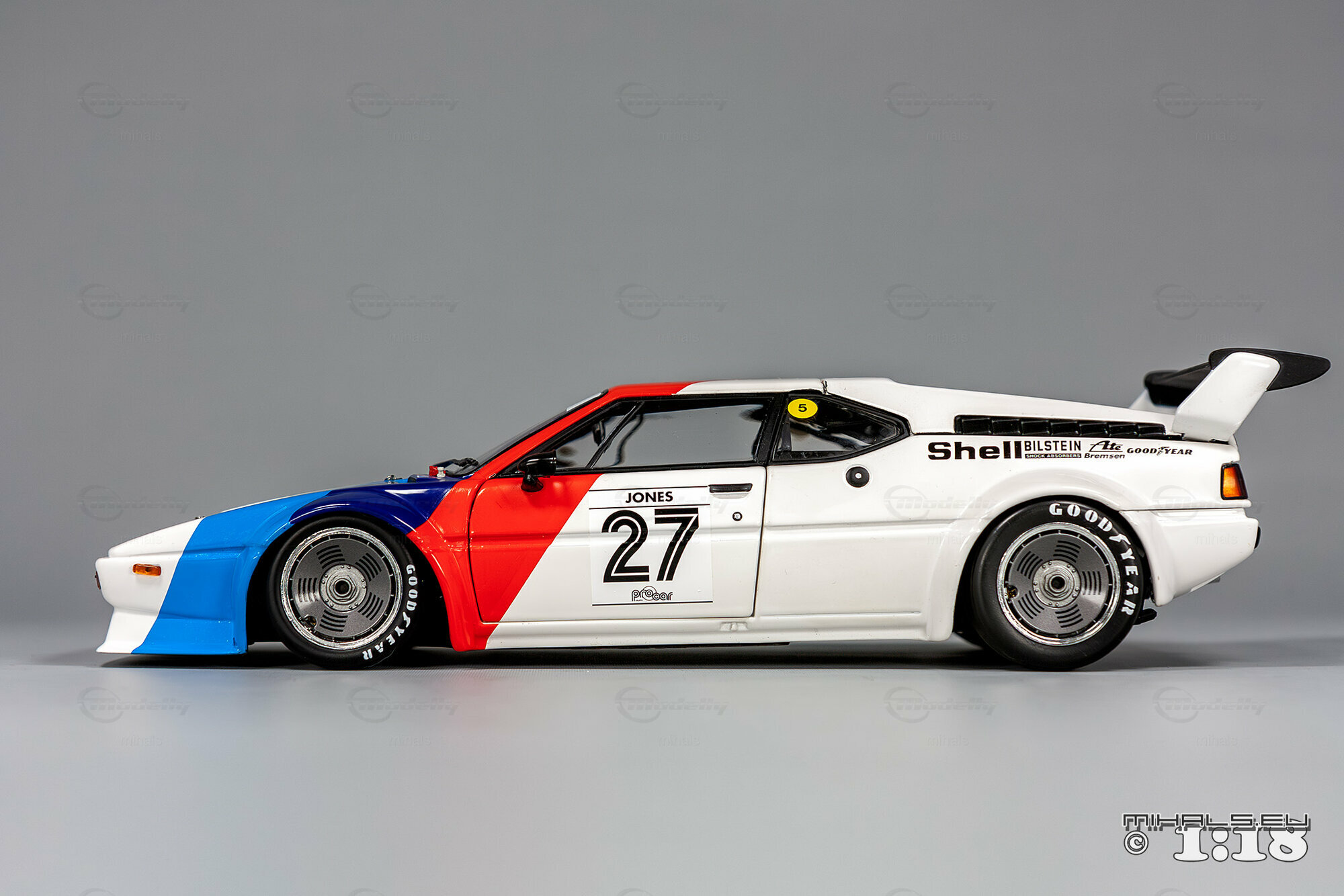
Tech and specs of the original
In the BMW M1 Procar sat the M88/1, a 3.5‑liter inline‑six with four valves per cylinder, individual throttle bodies and dry‑sump lubrication (3.5 liters ≈ 0.92 US gallons). The Procar spec made roughly 470–490 PS at about 9,000 rpm; the Group‑5 turbo versions exceeded 800 PS. The road engine was around 277 PS but was closely related in architecture. Power went through a manual ZF five‑speed transaxle. The suspension used double wishbones front and rear with uniball joints, anti‑roll bars and adjustable dampers. The wheelbase was about 2,560 mm (100.8 inches). Procar curb weight was around 1,020 kg (2,249 pounds), depending on the series. Brakes were vented discs with four‑piston calipers. Aerodynamically the BMW M1 Procar differed from the road car with widened fenders, a front splitter, side air intakes and a prominent rear wing. Those tweaks were for cooling the mid‑mounted engine and for generating the downforce needed for stable performance in long and short races.
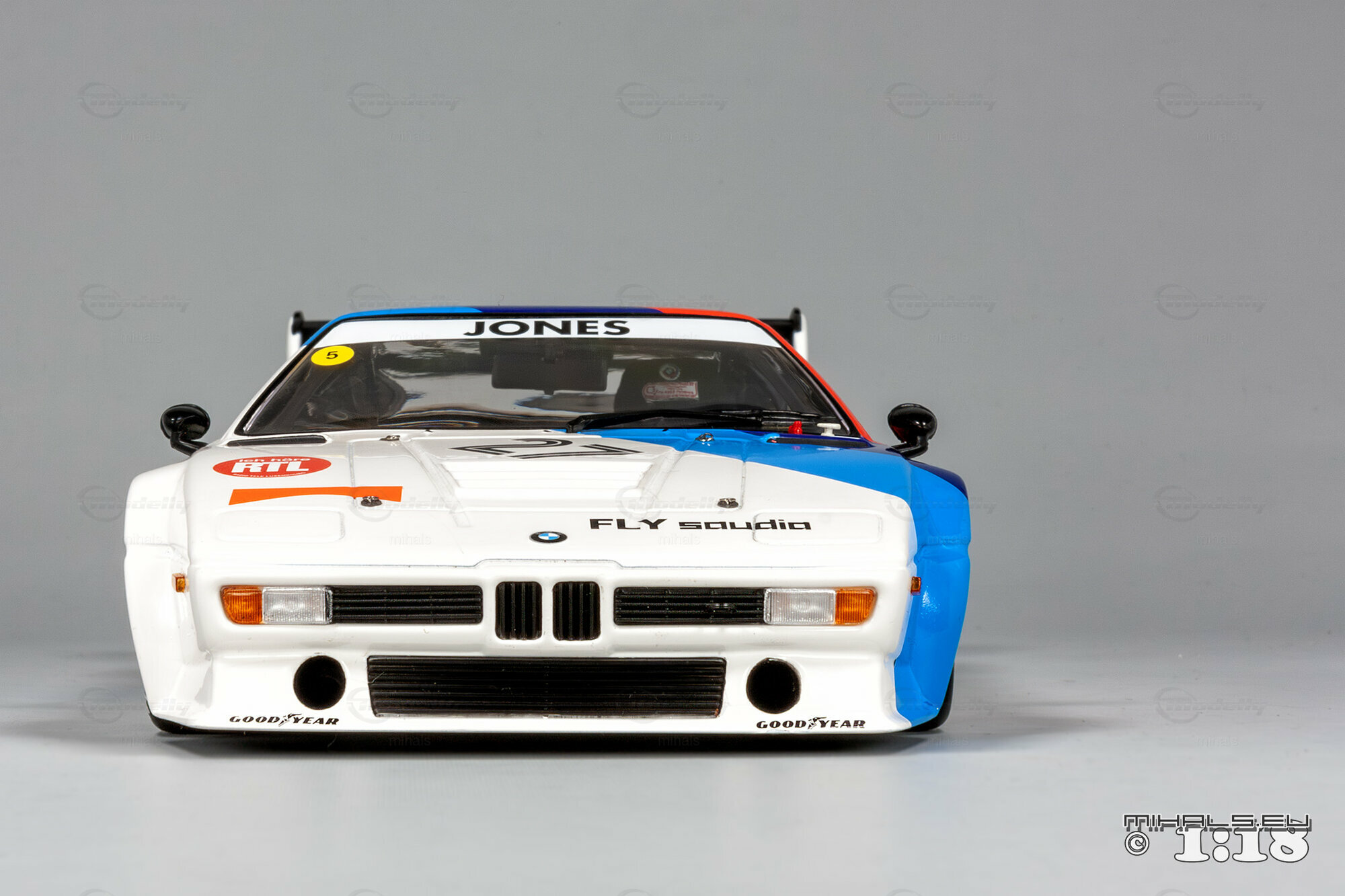
Procar series and international entries – Part 1
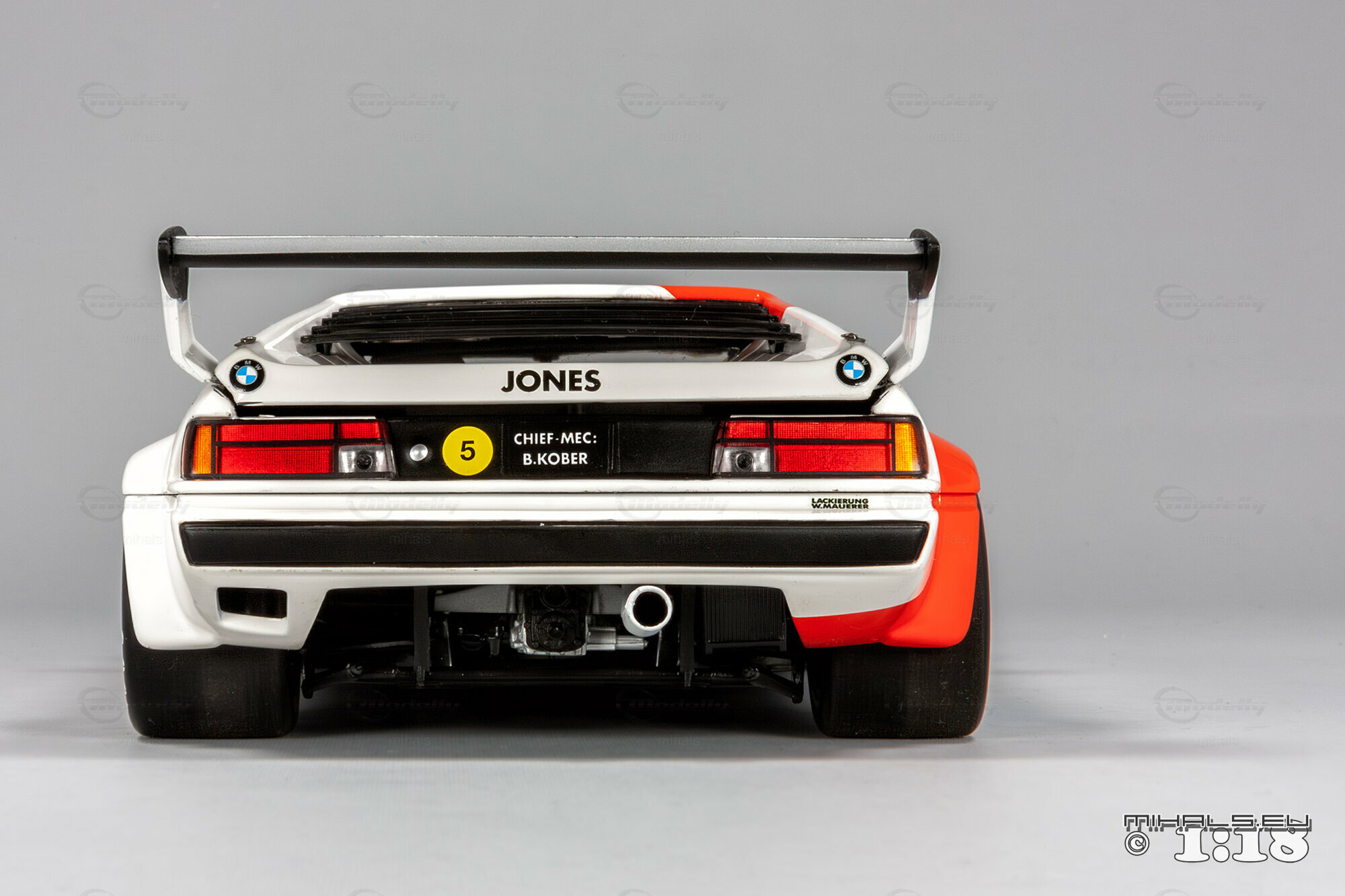
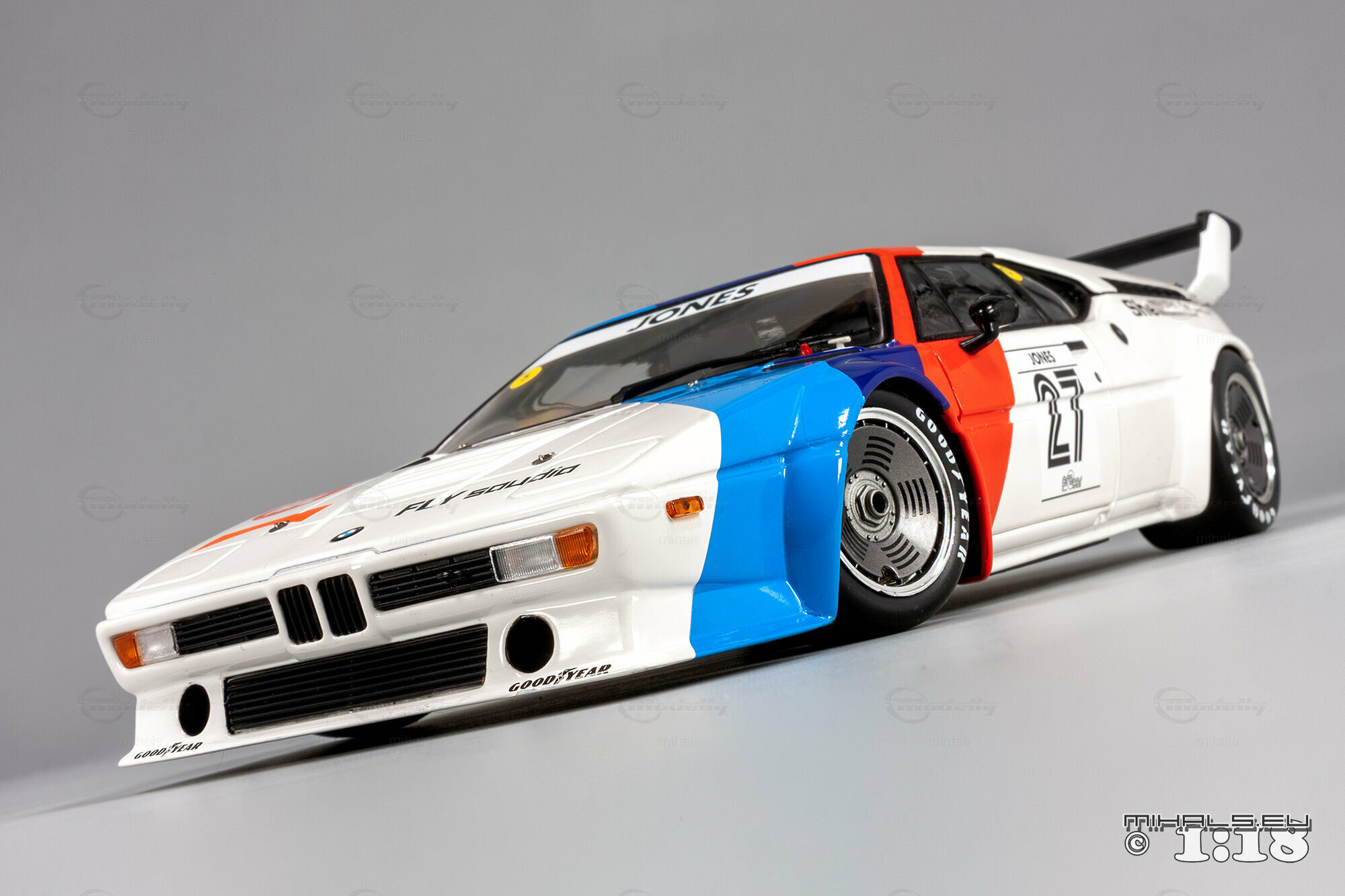
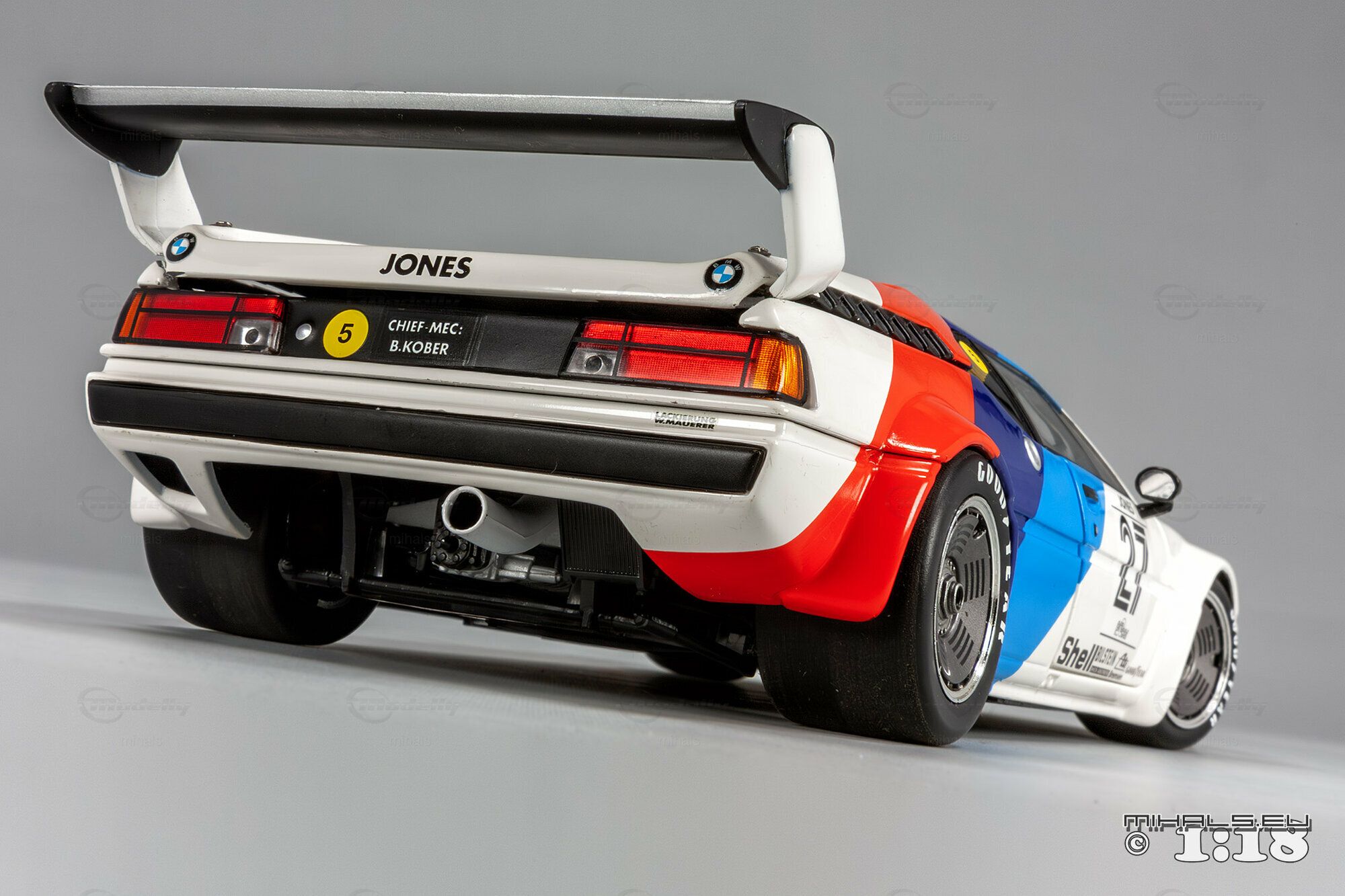
For the Formula‑1‑linked Procar races in 1979 and 1980, identical BMW M1 Procar cars made up the grid. The idea: the five fastest F1 drivers from qualifying raced against invited touring‑car and sportscar drivers. Niki Lauda won the 1979 title, and Nelson Piquet took it in 1980. Famous participants included Hans‑Joachim Stuck, Emerson Fittipaldi, Mario Andretti, Jacques Laffite and Alan Jones. The pictured number 27 with “Jones” refers to F1 world champion Alan Jones, who raced in the series. Outside Procar, the BMW M1 Procar also ran in the DRM, European sports car events and IMSA races. The mix of a robust M88 engine, balanced weight distribution and strong brakes proved reliable and relatively easy to handle.
Procar series and international entries – Part 2
In endurance racing the BMW M1 Procar appeared in both Group‑4 and Group‑5 specs, including 24‑hour races and 1,000‑km events. Teams like Project Four (under Ron Dennis) and privateers scored podiums and class wins at Nürburgring, Monza and Silverstone. In the German Racing Championship drivers such as Hans‑Joachim Stuck, Helmut Kelleners and Walter Brun scored regularly. Even though the turbo era soon changed power benchmarks, the BMW M1 Procar stayed an important reference point because of its standardized tech — perfect for comparing drivers and for engineers doing setup work. The close link between road and race tech — from the M88 base to aero bits — also made the car attractive to engineers trying to optimize pit stops and tire wear.
The Minichamps 1/18 model in “mihals” collection
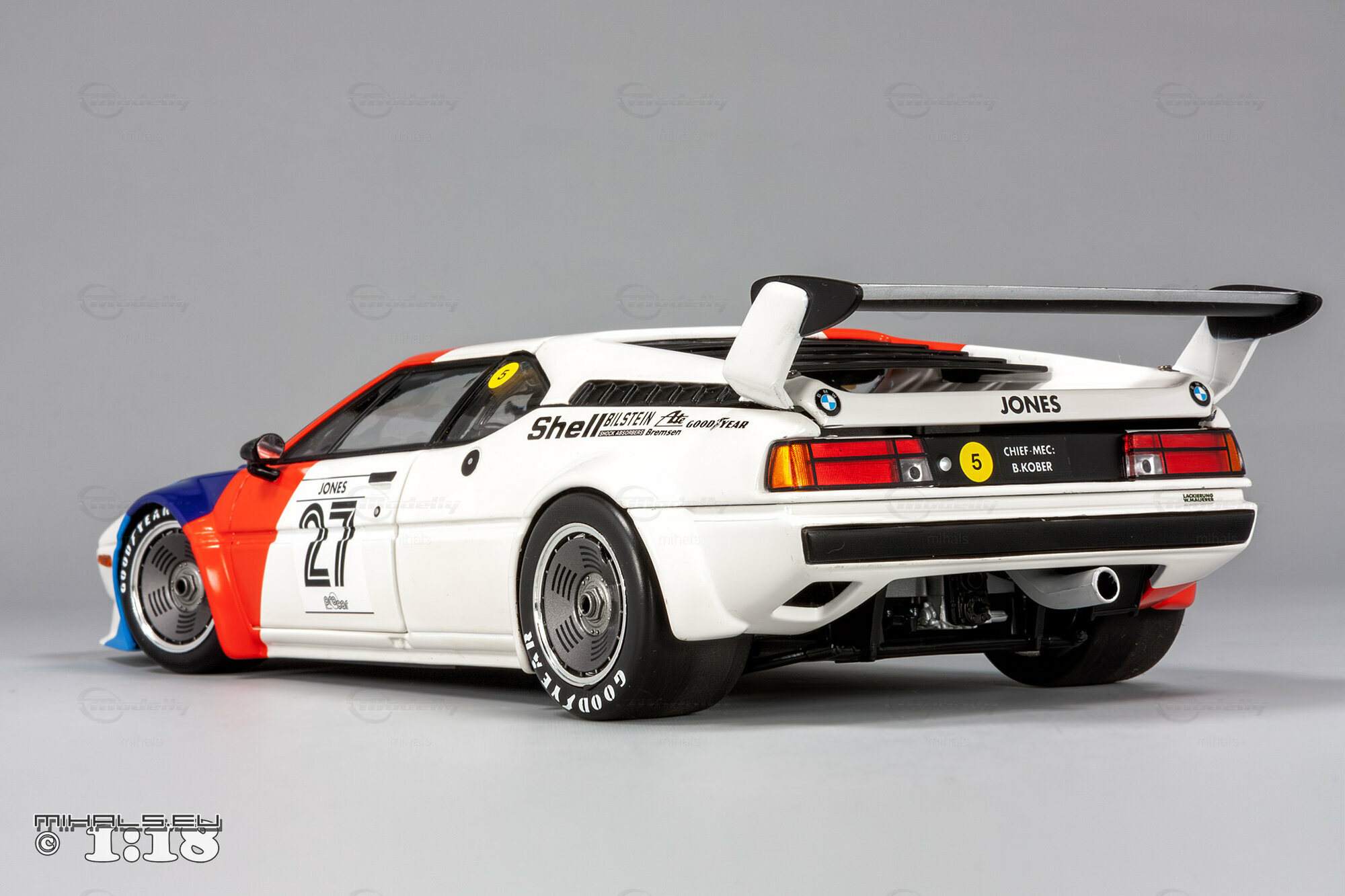
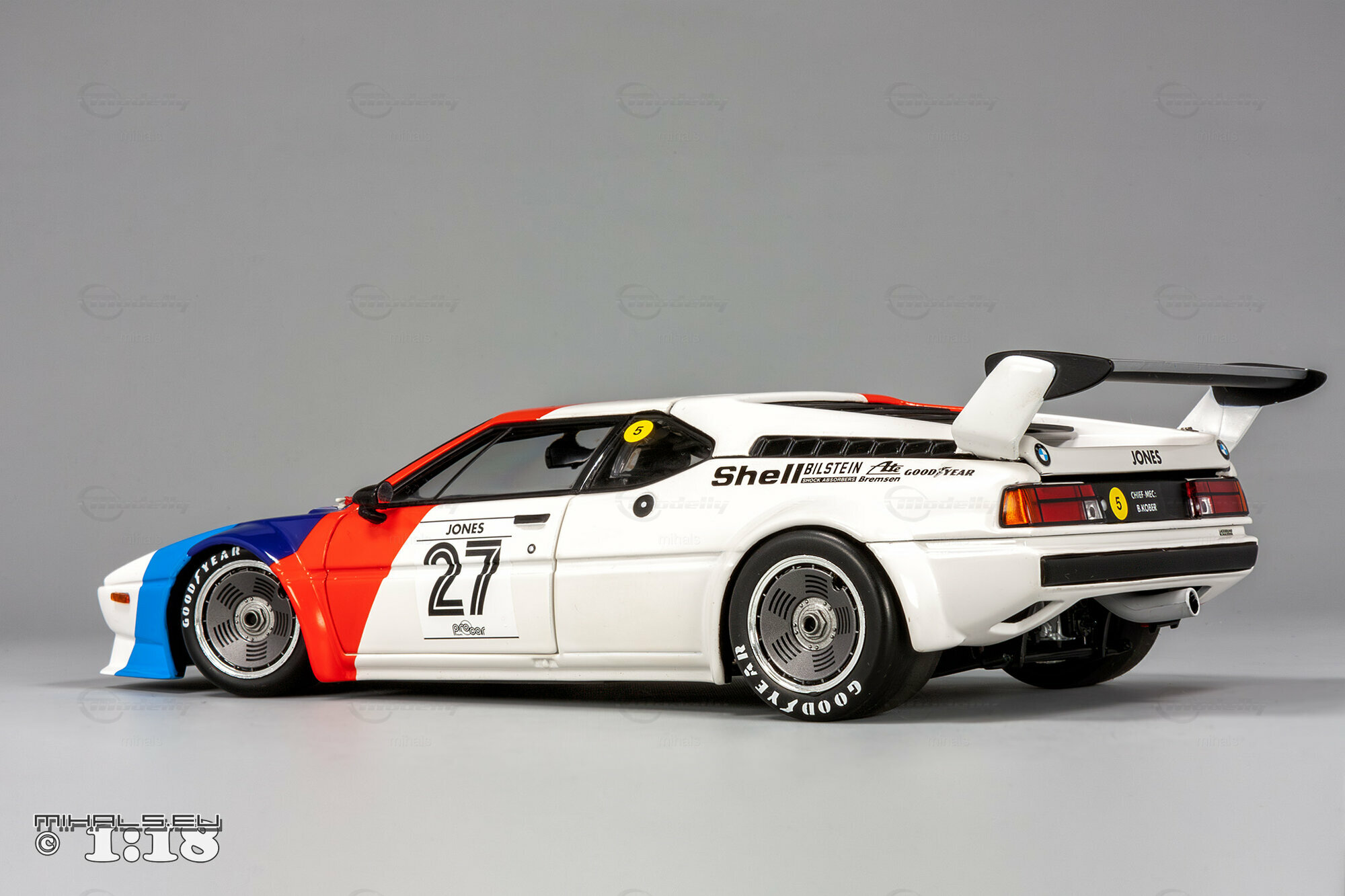
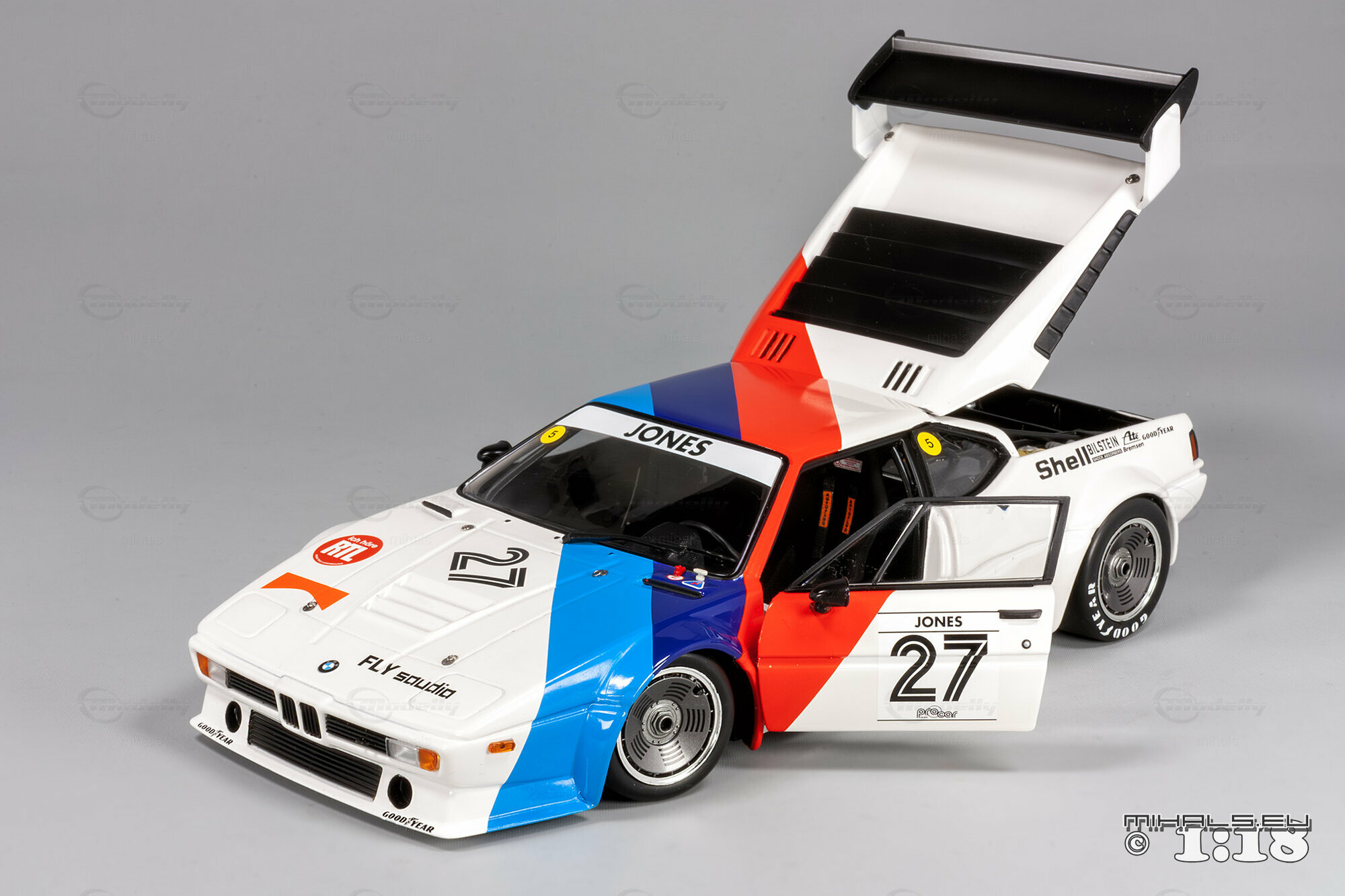
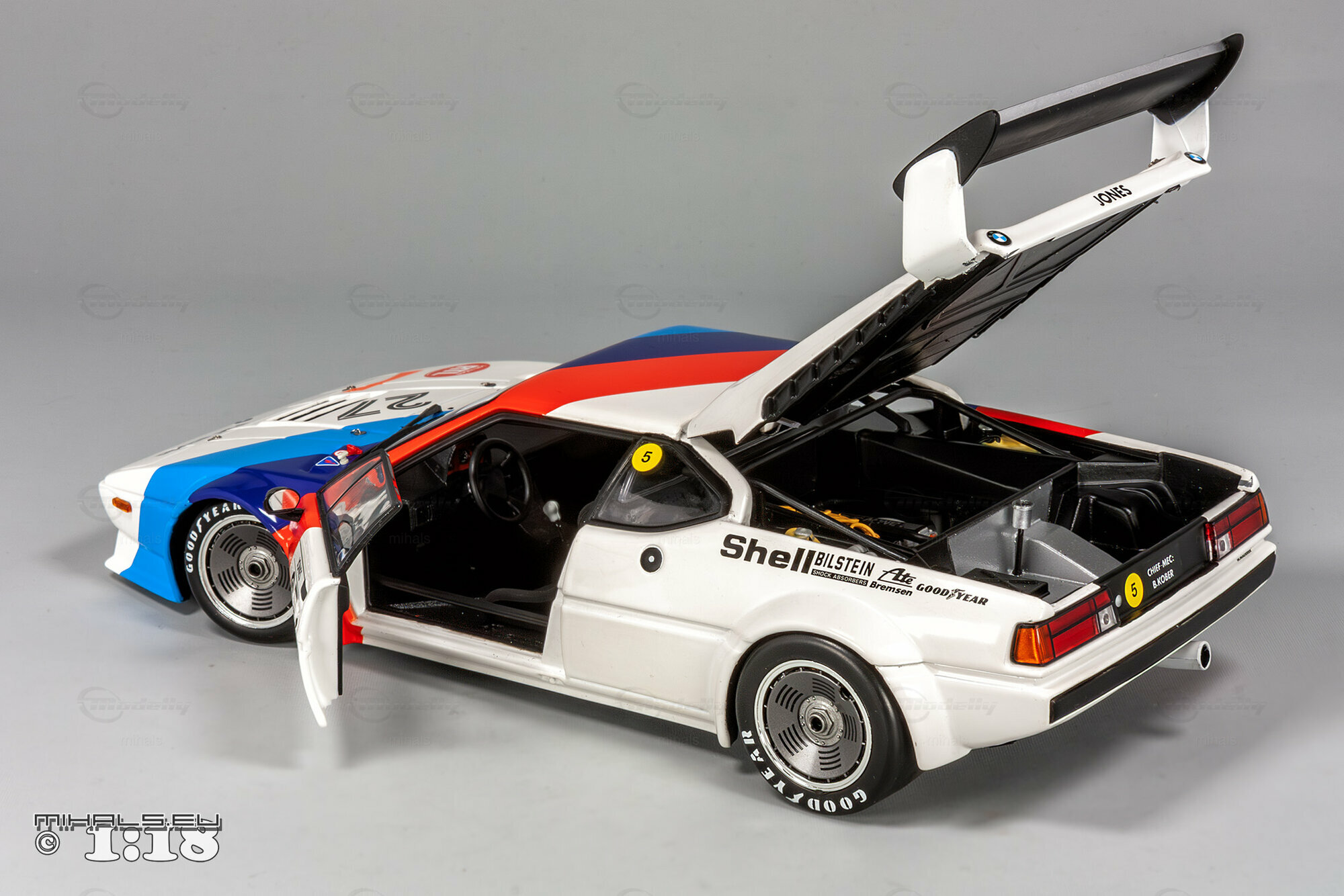
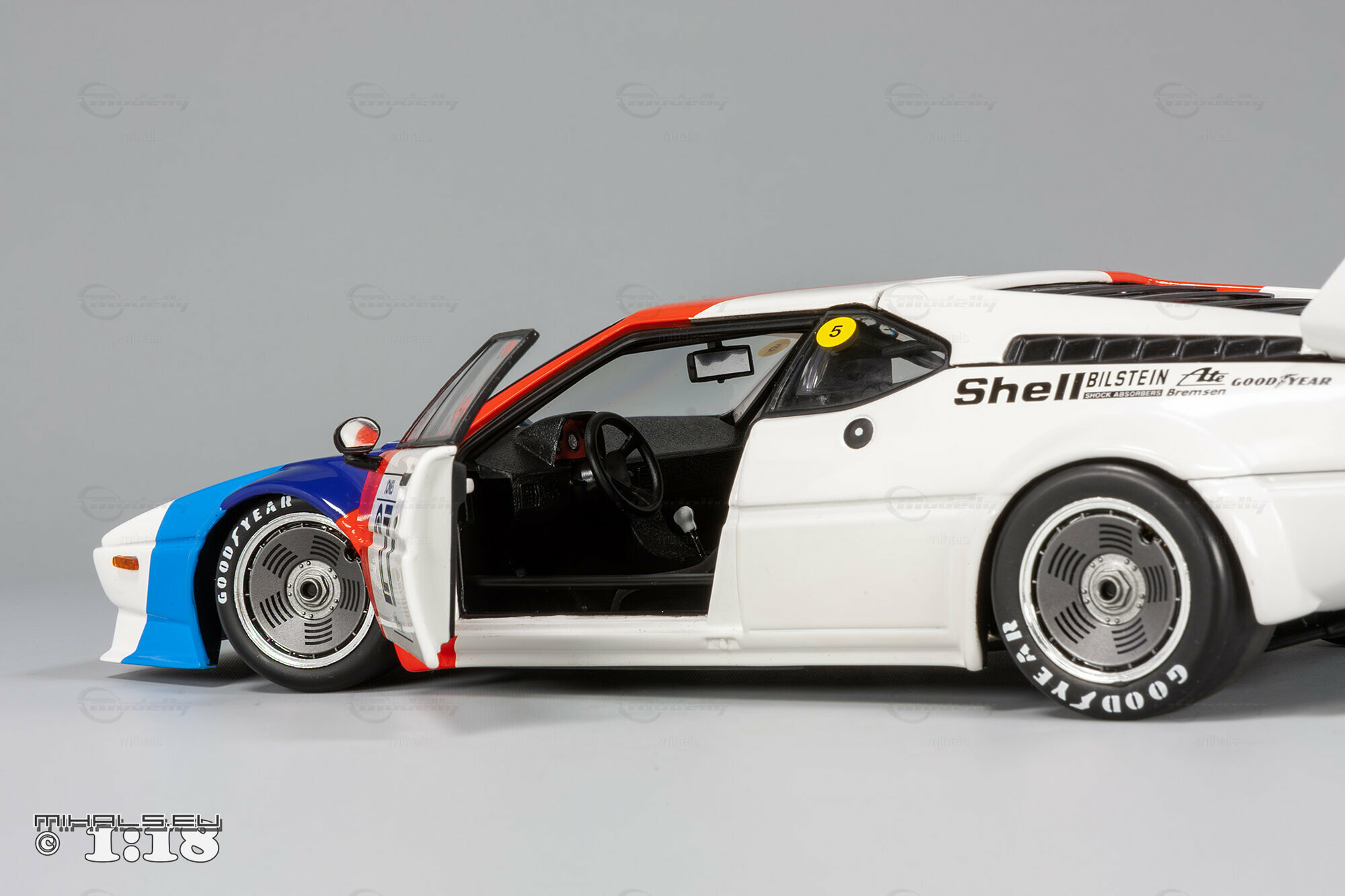
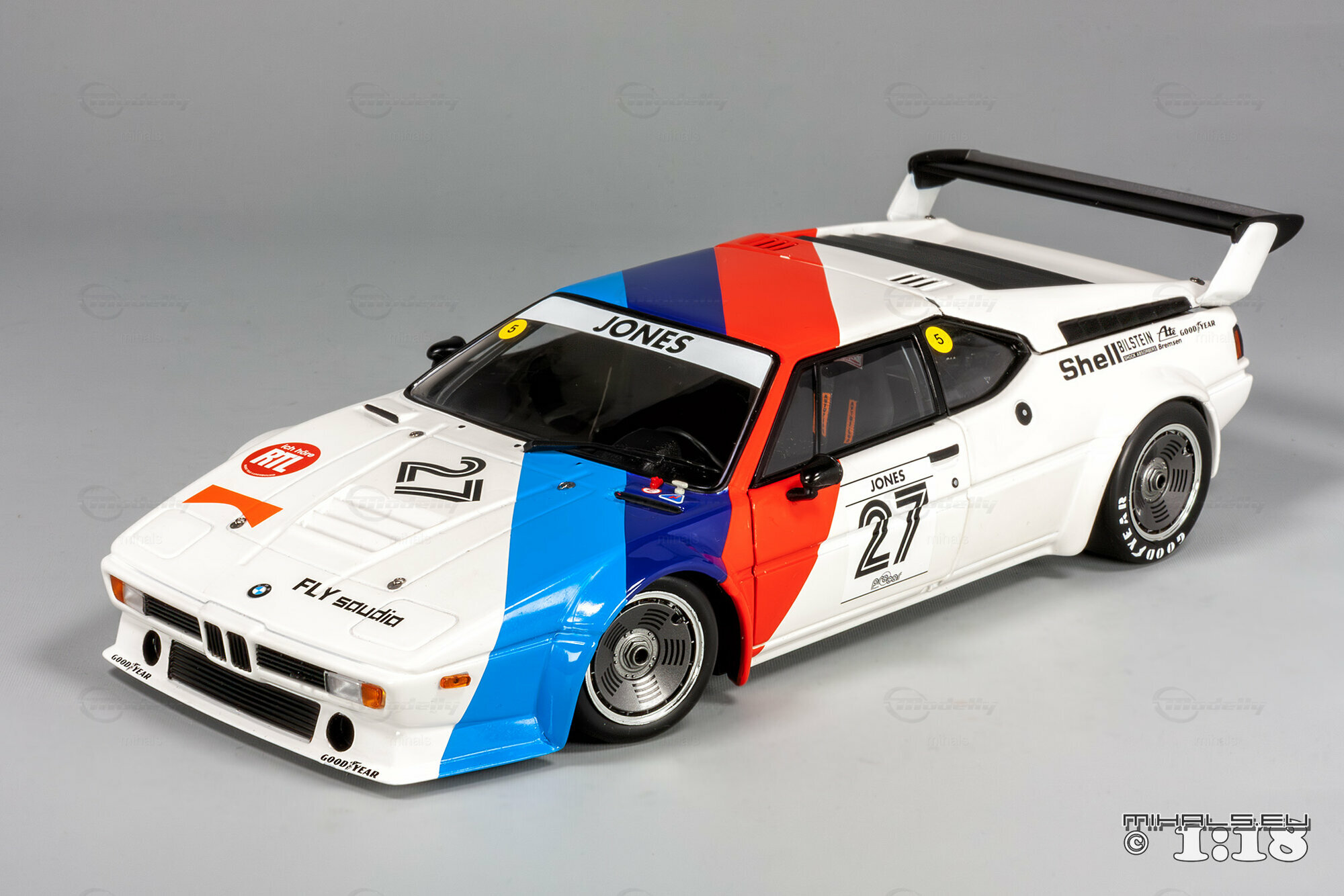
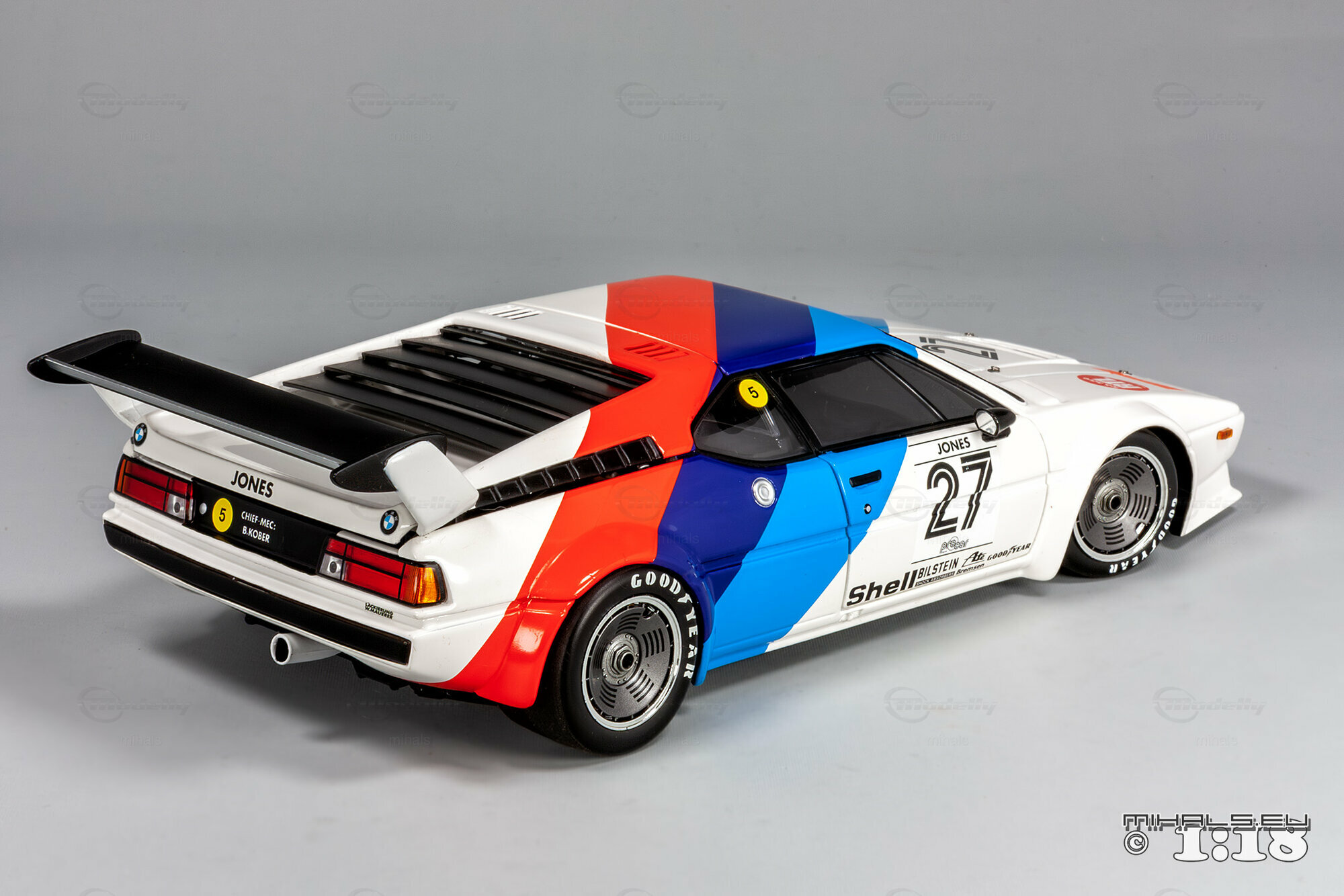
This model is a 1/18 diecast from Minichamps and is part of collector “mihals”’s collection. It’s a 1/18 scale diecast by Minichamps, made from metal, so it has a solid feel. The limited edition is clearly stated: one of 756 pieces worldwide. The photos show a Procar‑style livery with a white base and big light‑blue, dark‑blue and red panels, referencing BMW Motorsport colors. The red‑painted A‑pillar runs over the front roof edge, while a strong blue block on the left front fender blends into the lower valance. The hood has fine hood pins; the front retains the narrow headlight openings and the small vertical kidney grille of the BMW M1 Procar. The number 27 is neatly printed on the doors, and “JONES” sits above the windshield. Visible sponsor decals are well‑applied: Shell, Bilstein and Ate on the flanks, and the tires show Goodyear markings. The BBS‑style turbo wheels have detailed engraving and give the car a period‑correct look; the low ride height and large rear wing match the Procar stance. Inside you can see the roll‑cage, bucket seat, harness details and a stripped‑down cockpit with extra gauges. Paint edges are crisp and the small service stickers on hood and fenders are legible. The model captures the lines and technical character of the BMW M1 Procar without going over the top, offering collectors a precise, limited reproduction. Also useful for detail‑oriented collectors: material Diecast, scale 1/18, maker Minichamps and the limited run number 756 units worldwide, which makes it easy to catalog.
Chriskitt
Auto-translated
 A beautiful, very beautiful classic. I like it very much. And have a nice weekend. 💙🤍👍😎👏
Chriskitt
Auto-translated
 A beautiful, very beautiful classic. I like it very much. And have a nice weekend. 💙🤍👍😎👏