
Porsche 911 (993) Carrera RS 3.8 Club Sport(1:87, Herpa)
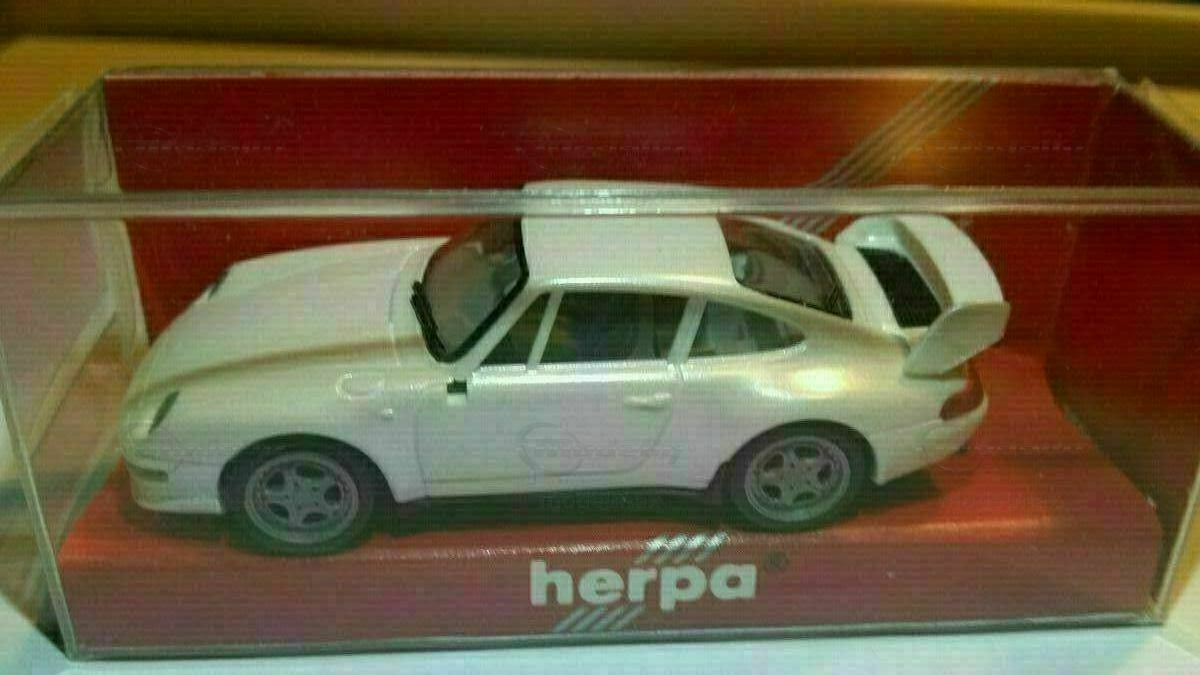
- Porsche 911 (993) Carrera RS 3.8 Club Sport (from 1995)
- Herpa
- 1:87
- Showcase model / No engine
- plastic
- Perlmutt-met.
- locale dealer (B H)
- 7,00 EUR
- Not specified
- Not specified
- Not for sale
Prototype and placement: the air‑cooled RS in the 993 era
The model shown here is based on the Porsche 911 (993) Carrera RS 3.8 Clubsport, one of the last air‑cooled RS versions of the 911. The 911 generation is called the 993 and was built from 1993 to 1998. In the RS program the Porsche 911 (993) Carrera RS 3.8 Clubsport appeared in 1995 as a focused, high‑performance version based on the Carrera body with a fixed rear wing. The concept followed on from the 964 RS and with its weight‑and‑stiffness focused package it sat squarely in the tradition of homologation‑close Elfers. The Porsche 911 (993) Carrera RS 3.8 Clubsport was aimed mainly at European markets; it wasn’t officially sold in the US. The 993’s design came from Porsche’s design studio under Tony Hatter and then‑design chief Harm Lagaay. The RS‑specific parts were developed closely with Porsche Motorsport in Weissach, with engineers like Roland Kussmaul bringing practical race know‑how. Its predecessor is the 964 Carrera RS, whose lightweight and suspension ideas were carried forward and updated for the Porsche 911 (993) Carrera RS 3.8 Clubsport.
Technical specs and notable features of the real car
The Porsche 911 (993) Carrera RS 3.8 Clubsport uses the air‑cooled flat‑six M64/20 with 3,746 cm³ (228.6 cu in) displacement. It produces about 300 PS (221 kW; 296 hp) at roughly 6,500 rpm and puts out about 355 Nm (262 lb‑ft) at 5,400 rpm. Power goes to the rear wheels through a 6‑speed manual gearbox. The Clubsport package included a fixed rollcage, fixed shell seats, six‑point harnesses, a battery master‑switch prep and reduced creature comforts. Weight savings came from sound deadening, the rear seat and parts of the interior; the target wet weight was around 1,270 kg (2,800 lb). The suspension got different springs, dampers and anti‑roll bars plus modified strut mounts and geometry. Bigger brakes with drilled discs and an aero kit with a fixed rear wing and front lip improved stability at speed. The body of the RS is lower than the standard Carrera; the rear uses the revised multi‑link layout that made the 993 feel different from its predecessors. The engine is tuned for quick throttle response; single‑throttle‑body ideas from the racing department influenced details while keeping the car street‑legal. The RS also served as a homologation base for the RSR race car.
The 1/87 scale model by Herpa
The miniature shown belongs to the collection of model enthusiast “modelmax” and depicts the Porsche 911 (993) Carrera RS 3.8 Clubsport at scale 1/87. It’s a Herpa plastic model; so it’s made from molded plastic parts. You can see the typical 993 cues: clearly shaped bumpers with integrated indicators, the oval headlights behind clear lenses, and the RS rear wing formed as part of the engine lid. The wheels echo a five‑spoke look of the real rims, without brand markings. The body is painted white; side lines, panel gaps and door outlines are finely engraved. The glazing includes front, side and rear windows in clear plastic and the wipers are suggested. The presentation photos show the model in a clear display case with a red insert and a visible Herpa logo underneath; that protects the mini and keeps it dust‑free. Doors and hatches don’t open, but the engraved seams convincingly suggest the openings of the real Porsche 911 (993) Carrera RS 3.8 Clubsport. For collectors it’s nicely proportioned: the fixed RS wing and the wide rear hips clearly convey the car’s sporty intent. It’s a straightforward representative of that RS theme in the common H0 collector size.
Historical context, paint and collecting tips
The Porsche 911 (993) Carrera RS 3.8 Clubsport was launched in 1995. To put that year in context: the World Trade Organization started work, Microsoft released Windows 95, and “Gangsta’s Paradise” was filling the charts — just some cultural anchors to give you an idea of the car’s era. The model in the photos shows a plain white paint job with no stripes or RS decals, so the eye is drawn to the 993 shape: wide rear shoulders and the fixed wing. The finish looks even, the bumpers are uniformly colored and the lights are separately colored. There are no license plates or specific motorsport badges; that fits a generic street version of the Porsche 911 (993) Carrera RS 3.8 Clubsport. In display cases or on H0 dioramas the size works well with train or street scenes. For collectors who like consistency, the plastic construction is handy because it keeps weight down while still delivering fine detail. If you want to build a coherent collection, add standard Carreras, Turbos and RSRs of the 993 generation to show the technical range. This specific piece isn’t tied to any movie — it’s just a general street representation of the real car. If you’re comparing models, pairing it with a 964 will clearly show the evolution in front and rear design. Scales like 1/43 or 1/18 are good alternatives if you want larger, opening‑part models, but 1/87 is great when space is tight.
- Write a first comment about this model now!Any comment can be discussed by all members. It's like a chat.Mention other Modelly members by using @ in your message. They will then be informed automatically.
- Write a first comment about this model now!Any comment can be discussed by all members. It's like a chat.Mention other Modelly members by using @ in your message. They will then be informed automatically.