
Porsche 911 (930) Turbo 3.3 Targa(diecast 1:18, Norev)
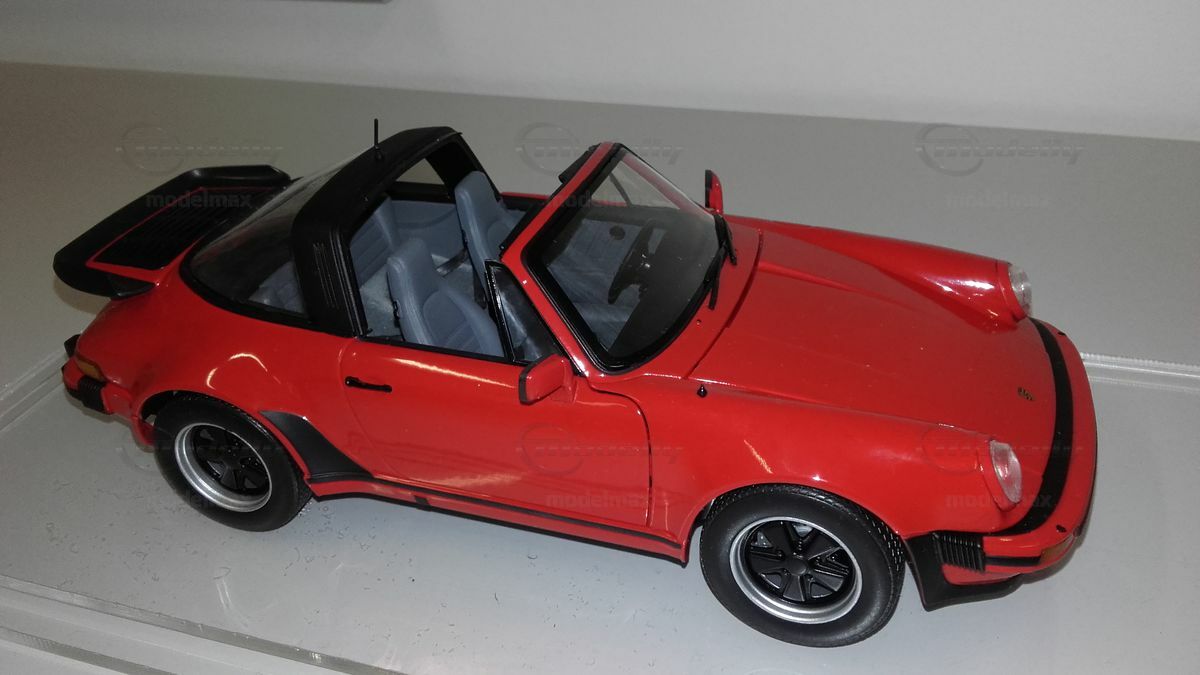
- Porsche 911 (930) Turbo 3.3 Targa (from 1989)
- Norev
- 1:18
- Showcase model / No engine
- diecast
- red
- ebay Buy It Now
- 54,00 EUR
- Not specified
- Not specified
- Not for sale

History and where this car fits in
The model this mini is based on is the Porsche 911 (930) Turbo 3.3 Targa, a variant from the Generation 930 that was built between 1975 and 1989. While the Turbo idea kicked off in 1975 with the 3.0‑liter version, the Targa with the 3.3‑liter engine only showed up from 1987 until the end of production. The overall look comes from the classic 911 design by Ferdinand Alexander Porsche, and the Turbo version was heavily influenced by people like Ernst Fuhrmann and race engineer Norbert Singer. To give you a time frame: 1975—the start of the 930 era—saw the end of the Vietnam War with the fall of Saigon, the founding of Microsoft, and Queen releasing “Bohemian Rhapsody.” Those are just cultural markers to place the car’s era. The Turbo evolved from the G‑series 911 Carreras and basically took that platform and turned up the performance and aggression.
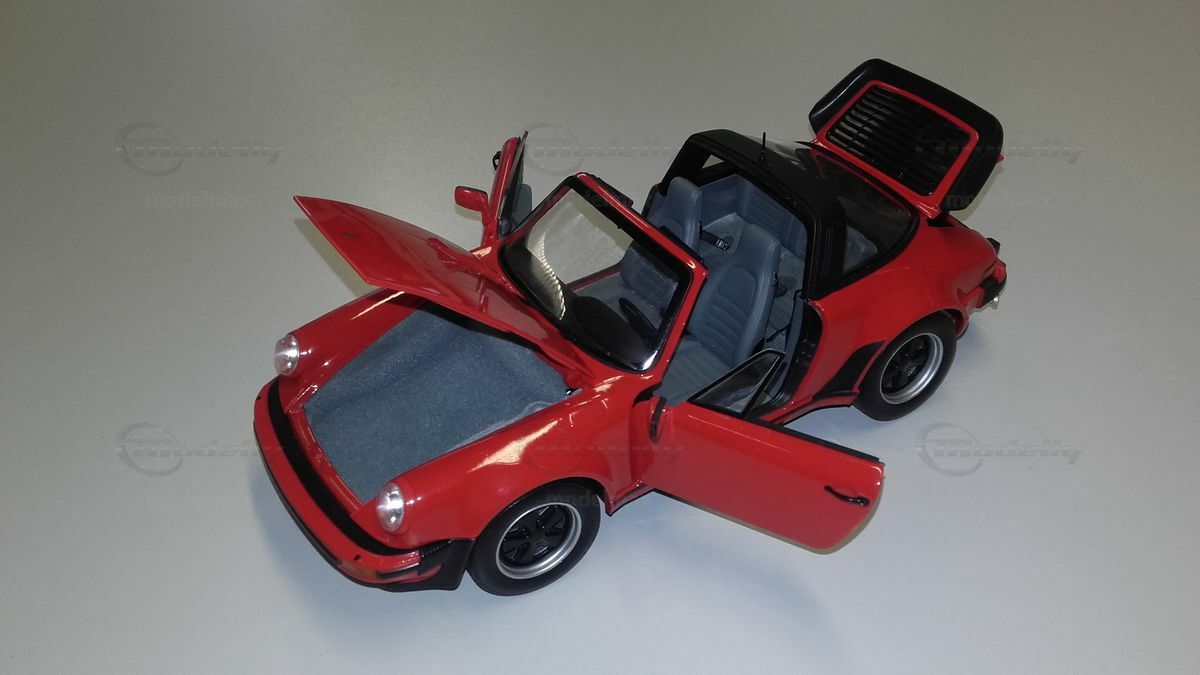
3.3‑liter Turbo tech and what’s special about the Targa
The Porsche 911 (930) Turbo 3.3 Targa uses an air‑cooled, rear‑mounted flat‑six with turbocharging. Displacement is 3.3 liters (3,299 cm³; 201.3 in³). The intercooler sits over the engine and explains the big “tea‑tray” rear spoiler. In European spec it made 221 kW (296.4 hp; 300 PS) and about 412 Nm (304.2 lb‑ft) of torque. Power usually went through a 4‑speed gearbox; only in 1989 did the 5‑speed (G50) show up. Brakes are big ventilated discs, sized from Porsche’s racing experience. The suspension kept the G‑model’s torsion bars, paired with gas‑pressured dampers. The Targa has a removable roof panel over the front seats and a fixed rollover bar—handy if you want some open‑top vibes without the coupe’s full structure changes. You’ll also notice the widened fenders, the large rear wing, rubber bumper inserts and side protection strips that give the 930 Turbo its look.
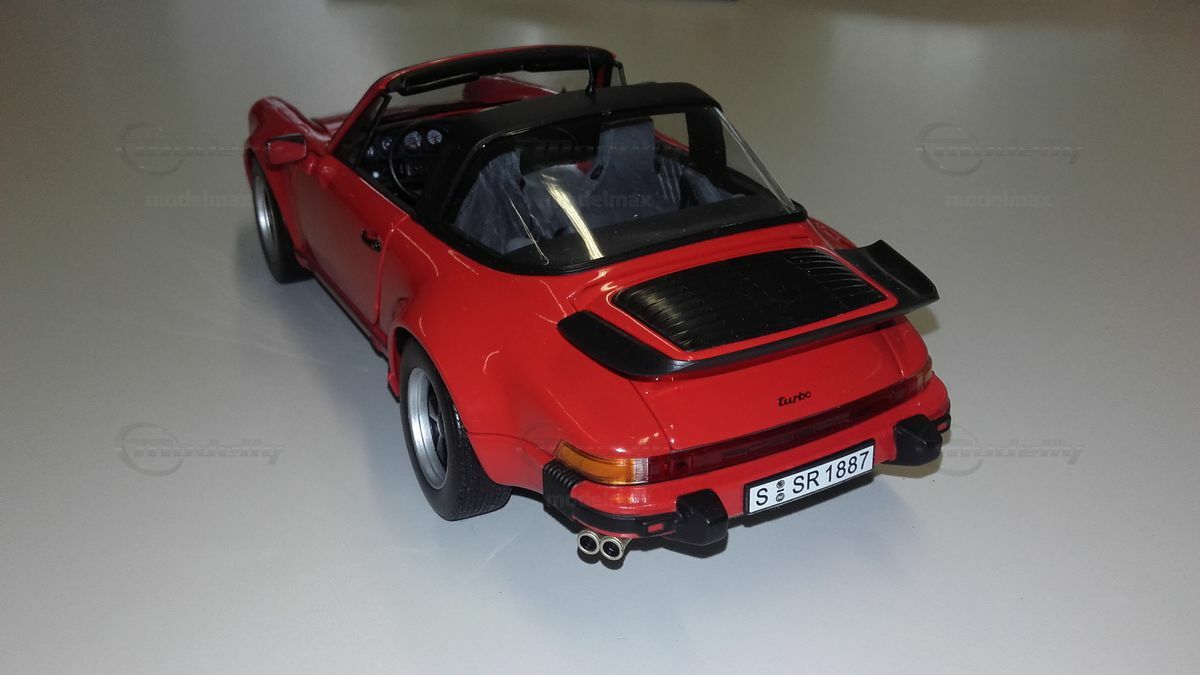
The Norev model in Modelly member “modelmax”’s collection
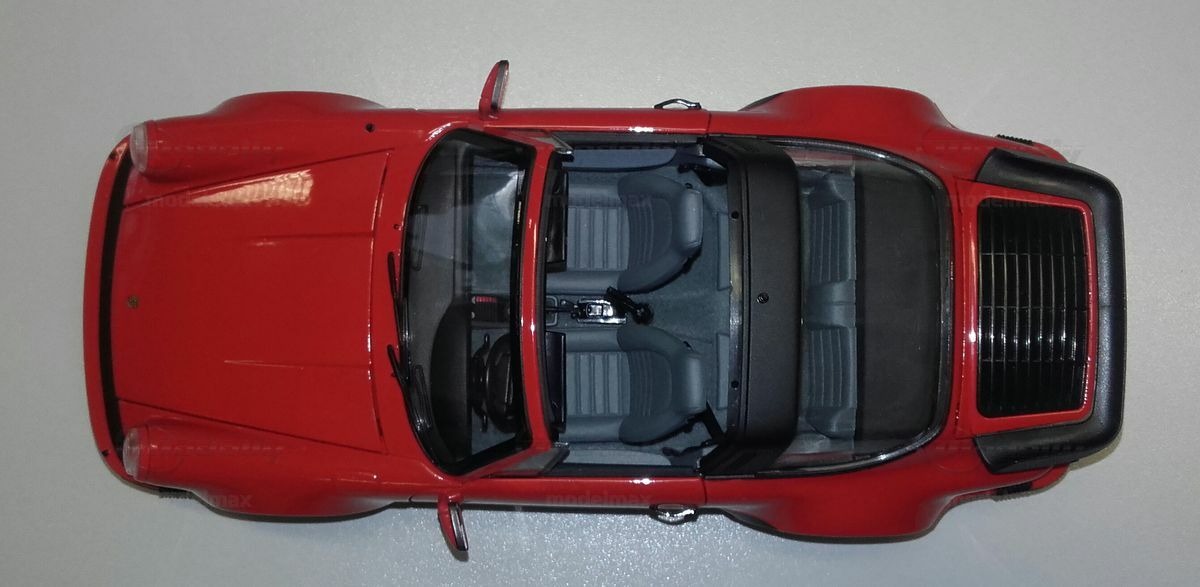
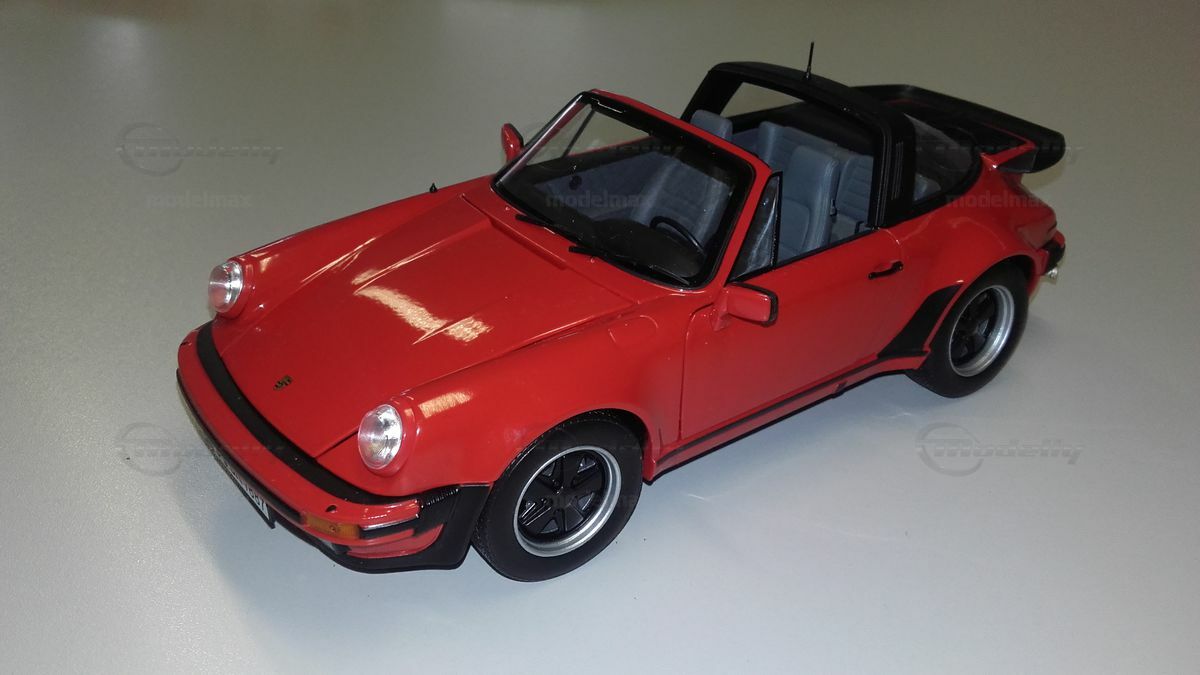
The piece shown is a Norev 1/18 scale model owned by Modelly member “modelmax.” It represents the Porsche 911 (930) Turbo 3.3 Targa in red with a black rollover bar and the big raised rear wing. The doors, front trunk and engine cover open; the photos show a grey‑lined front luggage area. Inside there’s a grey seat setup with a split rear bench, a three‑spoke wheel and the classic horizontal 911 gauges. Headlight lenses, indicator inserts and the black rubber lips on the bumpers are separate parts. The wheels copy the Fuchs look with black centers and polished rims. Antenna, mirrors, side protection strips and the engine deck vents are all modeled. It’s diecast (pressure‑cast) style construction, so it feels solid and the opening panels work. Proportions of the wide Turbo body—front spoilers, rear intakes—are nicely captured.
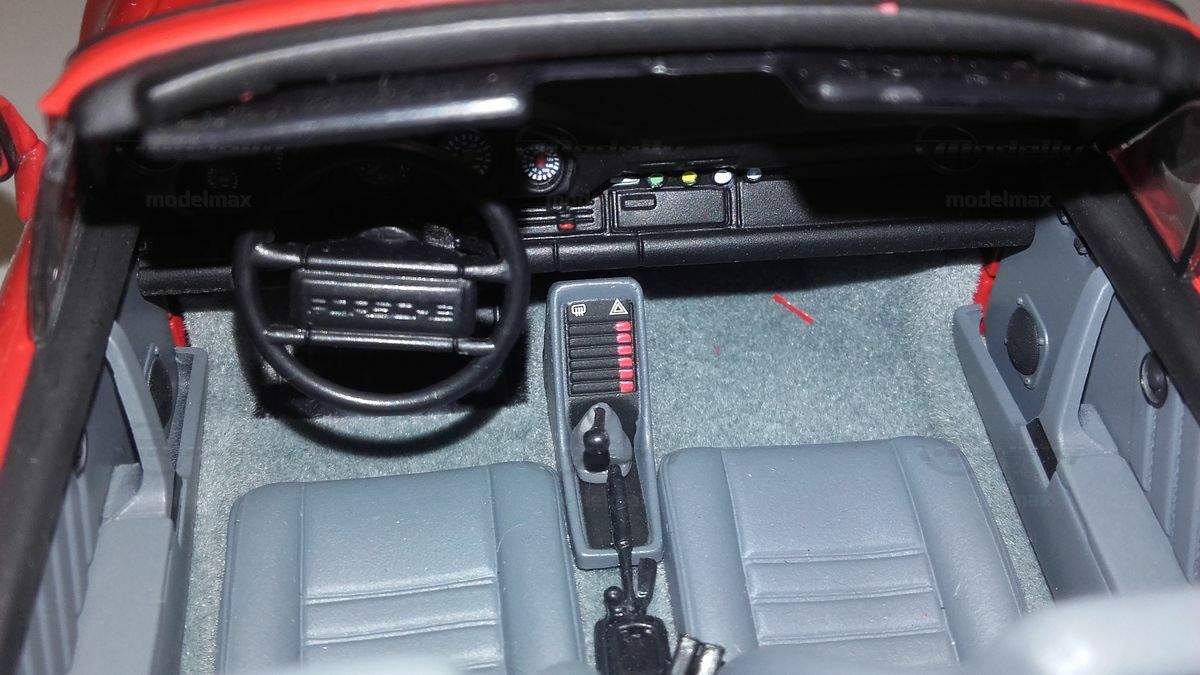
Color, details and collector value
On the detail side, this Norev 1/18 does a good job of representing the real thing. The paint is an even red; contrast comes from black bits like the rollover bar, rear wing, window surrounds, side stone guards and bumper strips. The round front lamps have clear lenses; the bumpers have the folded‑rubber look typical for the G‑series. Doors sit flush with thin handles and slim trim. The grey interior has ribbed seat surfaces molded in; the seatbelts are formed pieces. The front trunk carpet is a grey insert, imitating the real car’s luggage finish. The Fuchs‑style wheels reinforce the wide‑tire look; brake discs are hinted as drilled rotors. From the photos by “modelmax” the Targa roof opening looks well‑proportioned and the windscreen frame is finely blacked out. Historically, keep in mind the Porsche 911 (930) Turbo 3.3 Targa was only offered 1987–1989, so this is a late 930. The diecast build gives the model a solid feel and crisp panel gaps on the opening parts. For collectors: this is explicitly a 1/18 scale model made by Norev, recognizable by its fit, finish and part execution. It’s a nice addition to “modelmax”’s collection, showing off the late 930 Turbo Targa look—tea‑tray wing and all.
- Write a first comment about this model now!Any comment can be discussed by all members. It's like a chat.Mention other Modelly members by using @ in your message. They will then be informed automatically.
- Write a first comment about this model now!Any comment can be discussed by all members. It's like a chat.Mention other Modelly members by using @ in your message. They will then be informed automatically.