
BMW M1(diecast 1:18, Werk83)
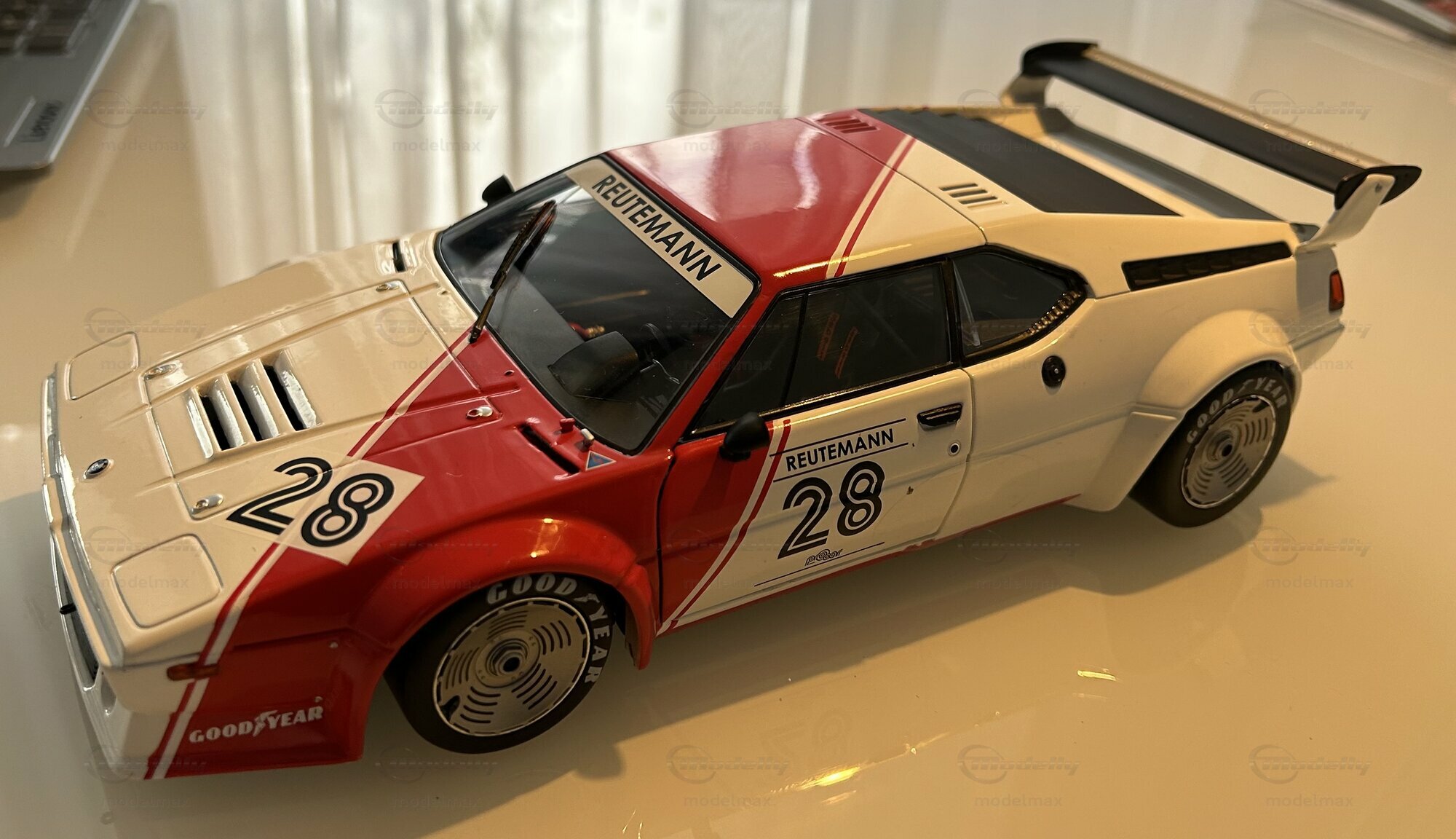
- BMW M1 (from 1980)
- Werk83
- 1:18
- Showcase model / No engine
- diecast
- racing / multicolored
- Perfect mint condition
- Original packaging exists
- Not for sale
Prototype and context: The BMW M1 as a mid‑engine sports car
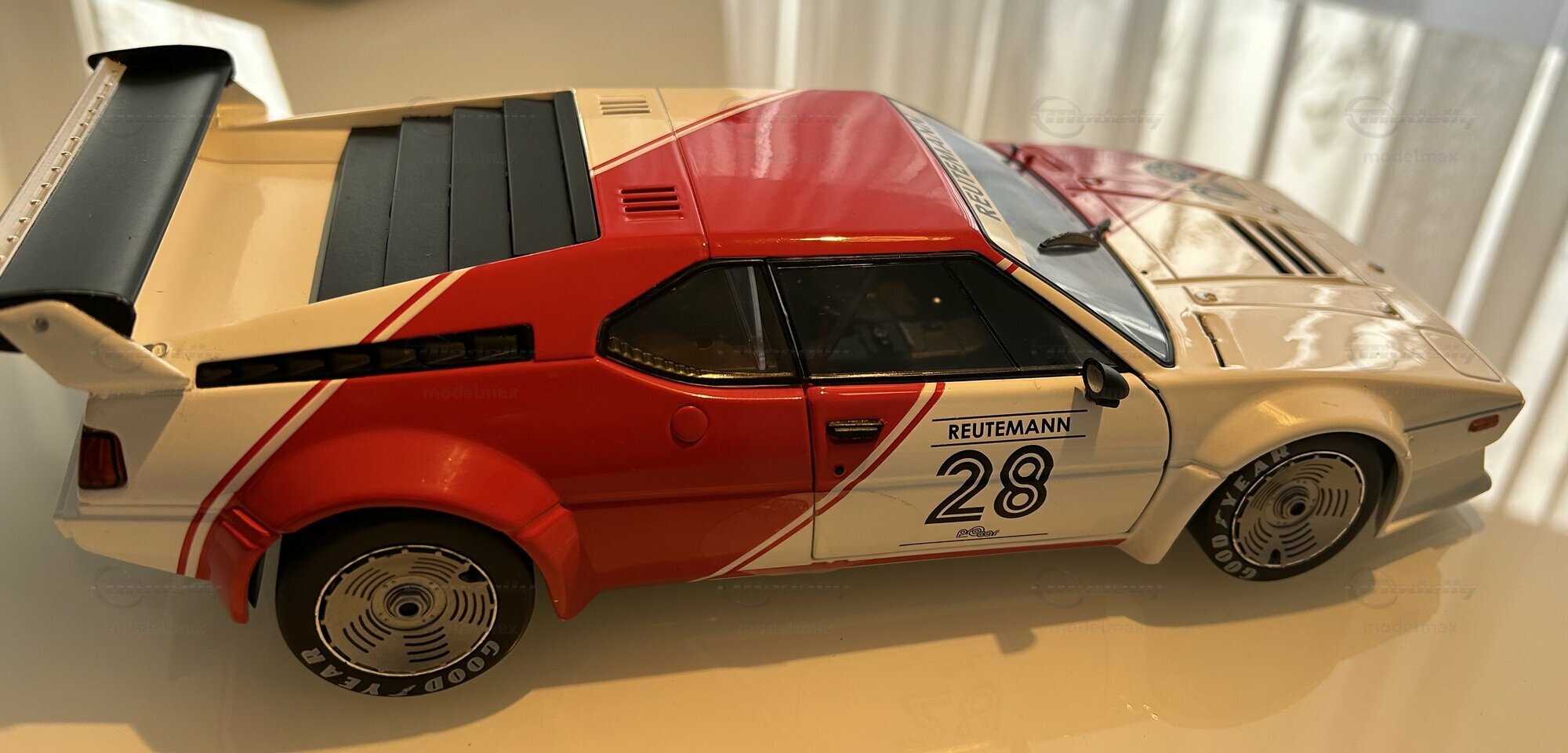
The model shown refers to the BMW M1, the brand’s only road‑legal mid‑engine sports car. The production version was built as a homologation basis for racing and was developed in a single generation, internally called E26. It was built from 1978 and stayed in the lineup until 1981. The body shape of the BMW M1 was penned by Giorgetto Giugiaro at Italdesign; the idea goes back to the show car BMW Turbo by Paul Bracq. Technically, BMW Motorsport under Jochen Neerpasch went with a spaceframe and fiberglass panels. The heart was the inline six M88 with four valves per cylinder, engineered by Paul Rosche. In the road version it produced around 204 kW (277 PS; about 274 hp), while the Group‑4 and Procar versions made a lot more. The pictured car shows the racing flavor of the BMW M1 with wide fenders, racing wheels and a big rear wing — a look inspired by the Procar and Group‑5 entries.
Tech of the original and development details
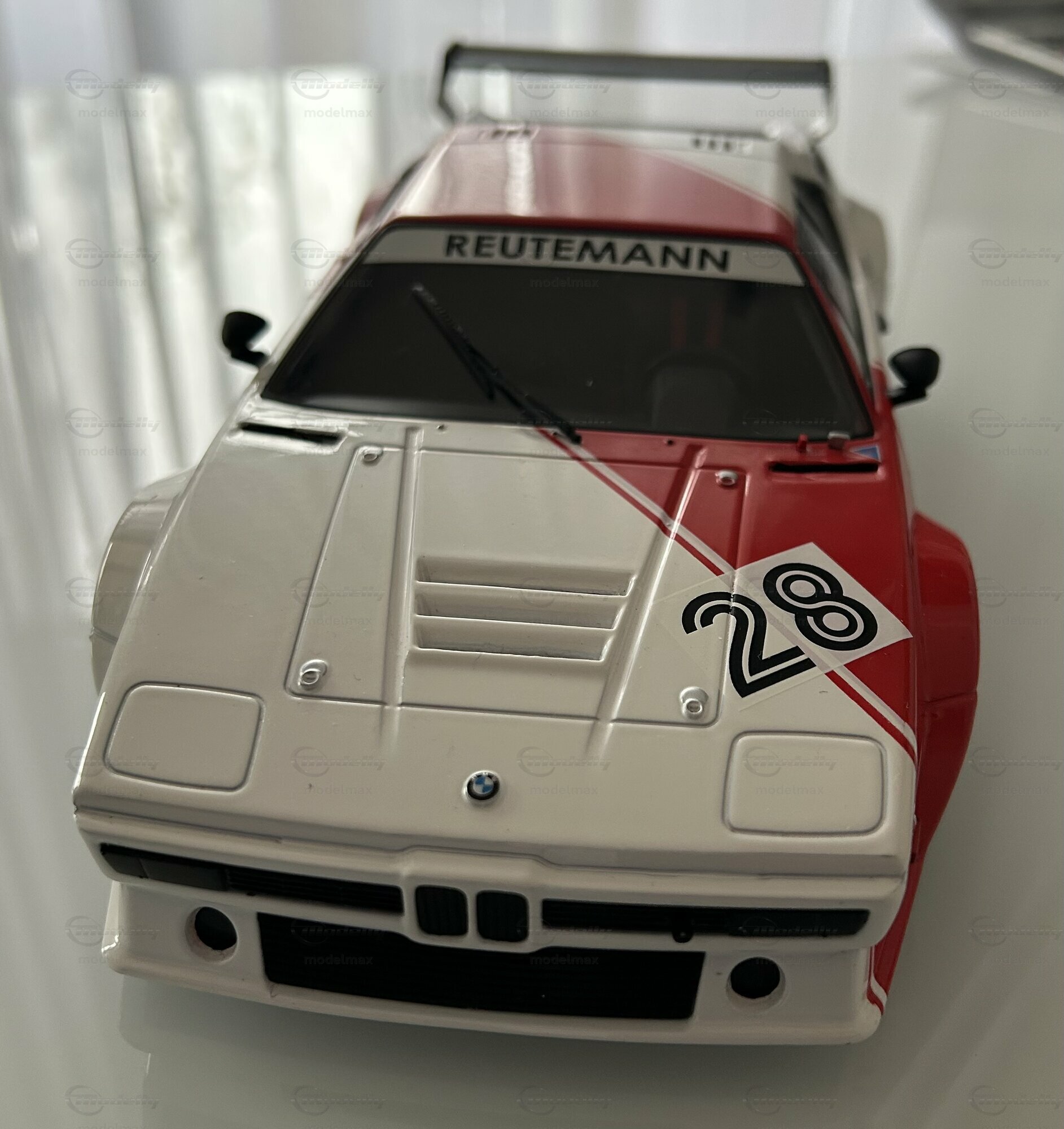
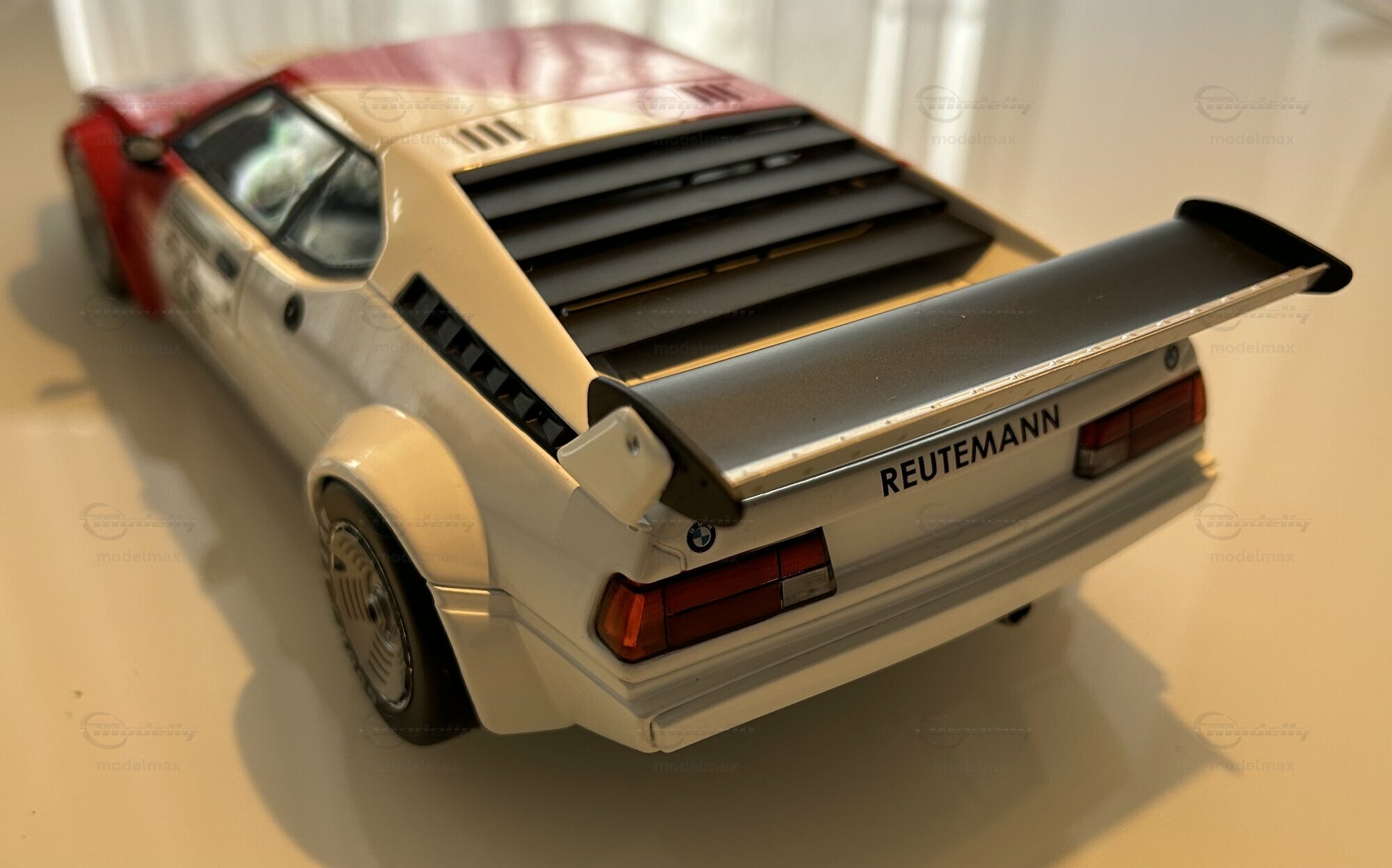
The BMW M1 paired a longitudinally mounted 3.5‑liter engine (3.5 liters (0.92 US gallons)) with dry‑sump lubrication, Kugelfischer fuel injection and a 9.0:1 compression ratio in the road car. Power was sent to the rear wheels via a manual ZF five‑speed gearbox. The spaceframe was originally developed together with Lamborghini; after production issues, Baur in Stuttgart took over finishing. Thanks to fiberglass body panels the curb weight stayed low, which gave the BMW M1 a very neutral handling balance. For Procar and Group‑4 use the car got wider tracks, roll cages, big brake cooling and revised aero. Later, Group‑5 specs with turbocharging pushed output into the range of well over 600 kW (over about 805 hp). That turned the BMW M1 into a versatile race weapon next to BMW’s earlier touring‑car star, the 3.0 CSL. In the photos of the model you can spot typical M1 race bits: wide vents on the front hood, the louvered engine cover and the huge rear wing — all parts of the M1’s racing tech look.
Motorsport appearances, series and famous drivers
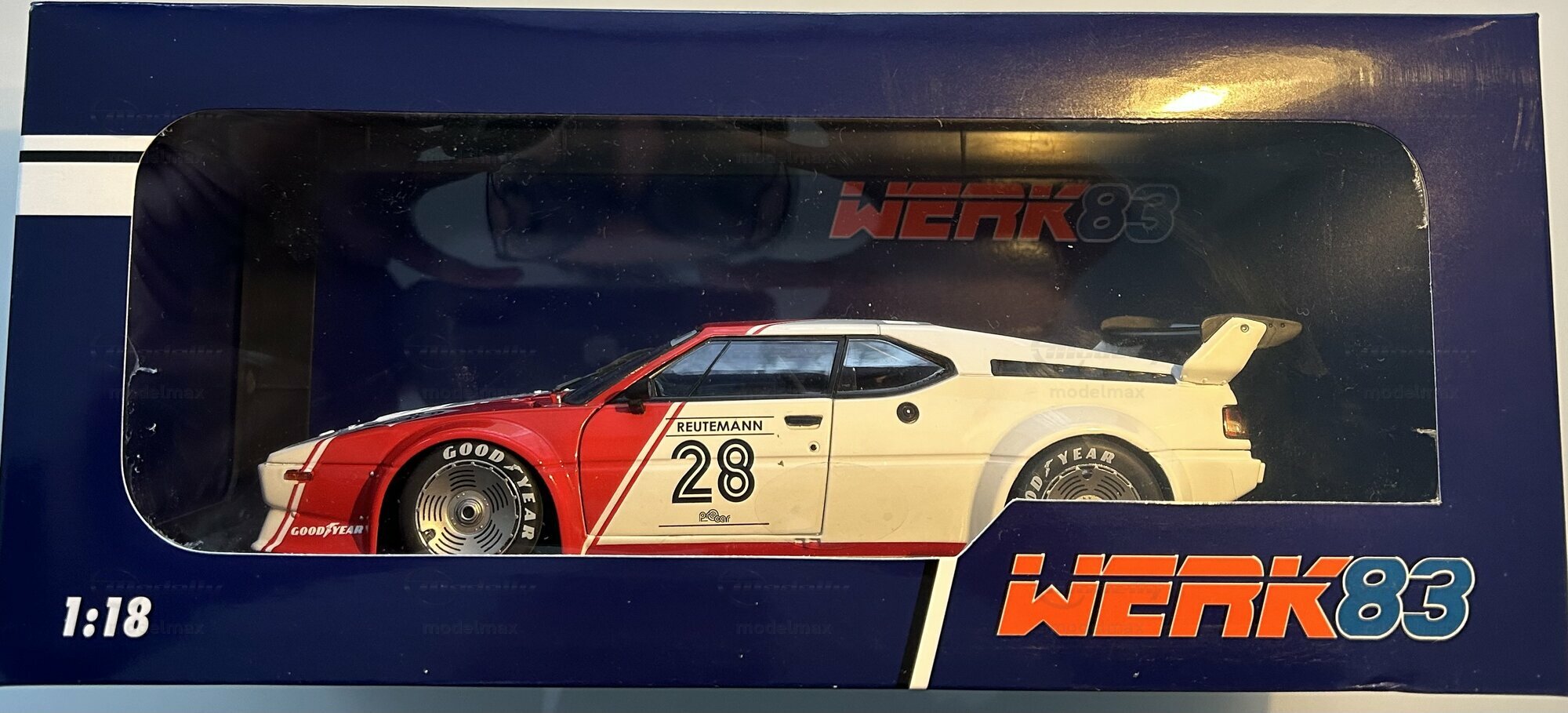
The most famous stage for the BMW M1 was the Procar series in 1979 and 1980, held as support races during European Grand Prix weekends. The race version, usually called the BMW M1 Procar, ran as a one‑make series: F1 drivers went up against GT and sports‑car pros. Champions included Niki Lauda (1979) and Nelson Piquet (1980). Other drivers who regularly raced the M1 were Hans‑Joachim Stuck, Carlos Reutemann, Alan Jones, Emerson Fittipaldi, Clay Regazzoni and Jacques Laffite. The Procar M1s put out roughly 350–470 kW (about 469–630 hp) depending on the rules and were built for short, intense races. The pictured car carries race number 28 and the name “REUTEMANN” — a clear nod to one of the F1 drivers who raced in Procar.
Results outside Procar and livery details
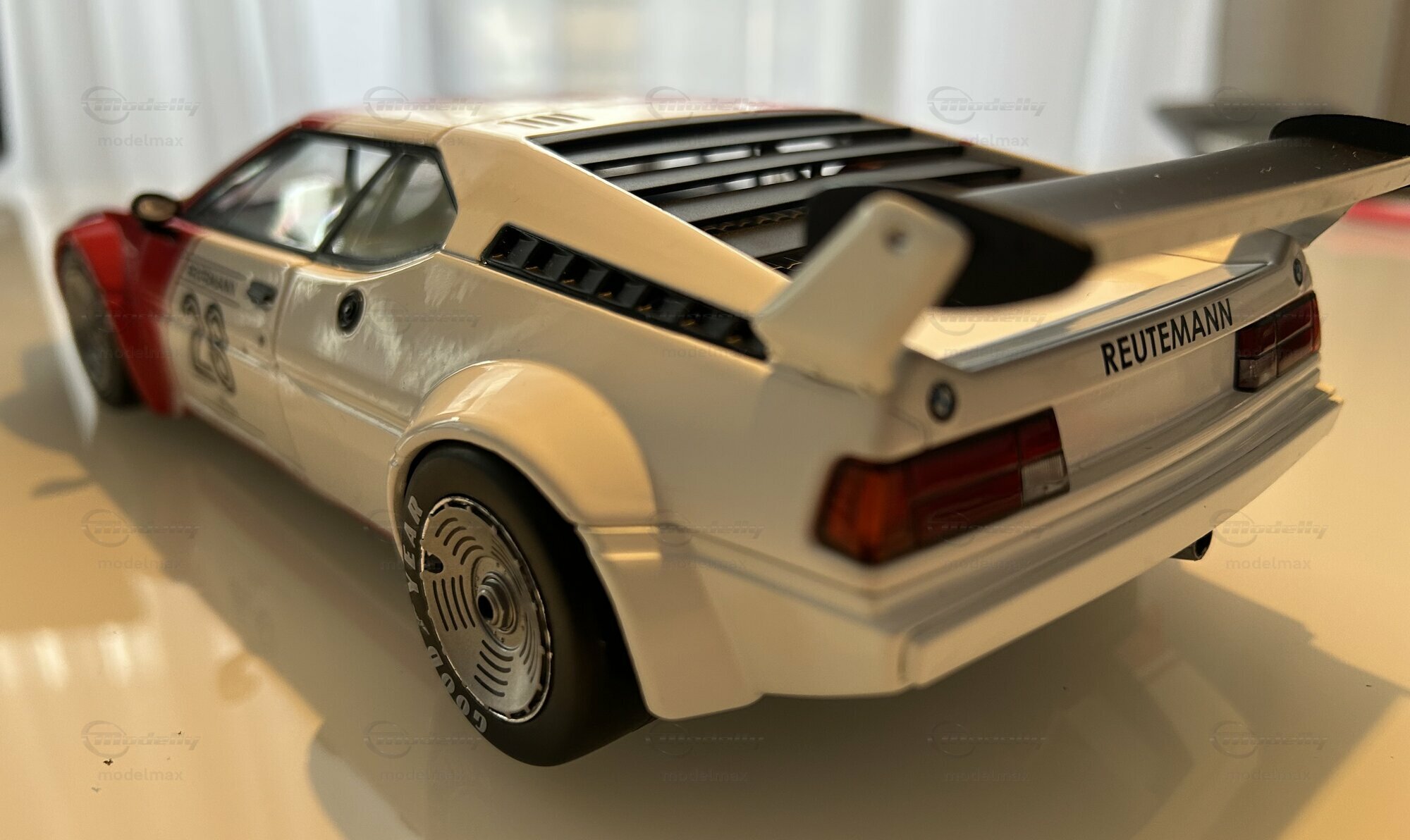
Outside the one‑make series the BMW M1 was campaigned in the Deutsche Rennsport‑Meisterschaft (DRM), IMSA classes, and endurance events like the 24‑hour race at the Nürburgring. Private teams ran both Group‑4 and Group‑5 versions and scored many class wins, podiums and overall successes in national races. Names such as Manfred Winkelhock, Marc Surer and Toine Hezemans show up often in the results. The model’s red‑and‑white graphic with a slanted stripe mirrors a popular period livery. On the doors and hood is race number “28”, and the driver’s name is on the windshield banner. The big black rear wing and the wide fender flares define the silhouette. Notice the turbine‑style wheel covers used to help brake cooling — the M1 ran different wheel designs in period. The visible Goodyear logos on the tires are period‑correct; other sponsor logos are kept minimal on the model so the driver link stays prominent. The white/red combo with fine striping makes it read as a race car without overdoing the decals.
The 1/18 model from Werk83 in modelmax’s collection
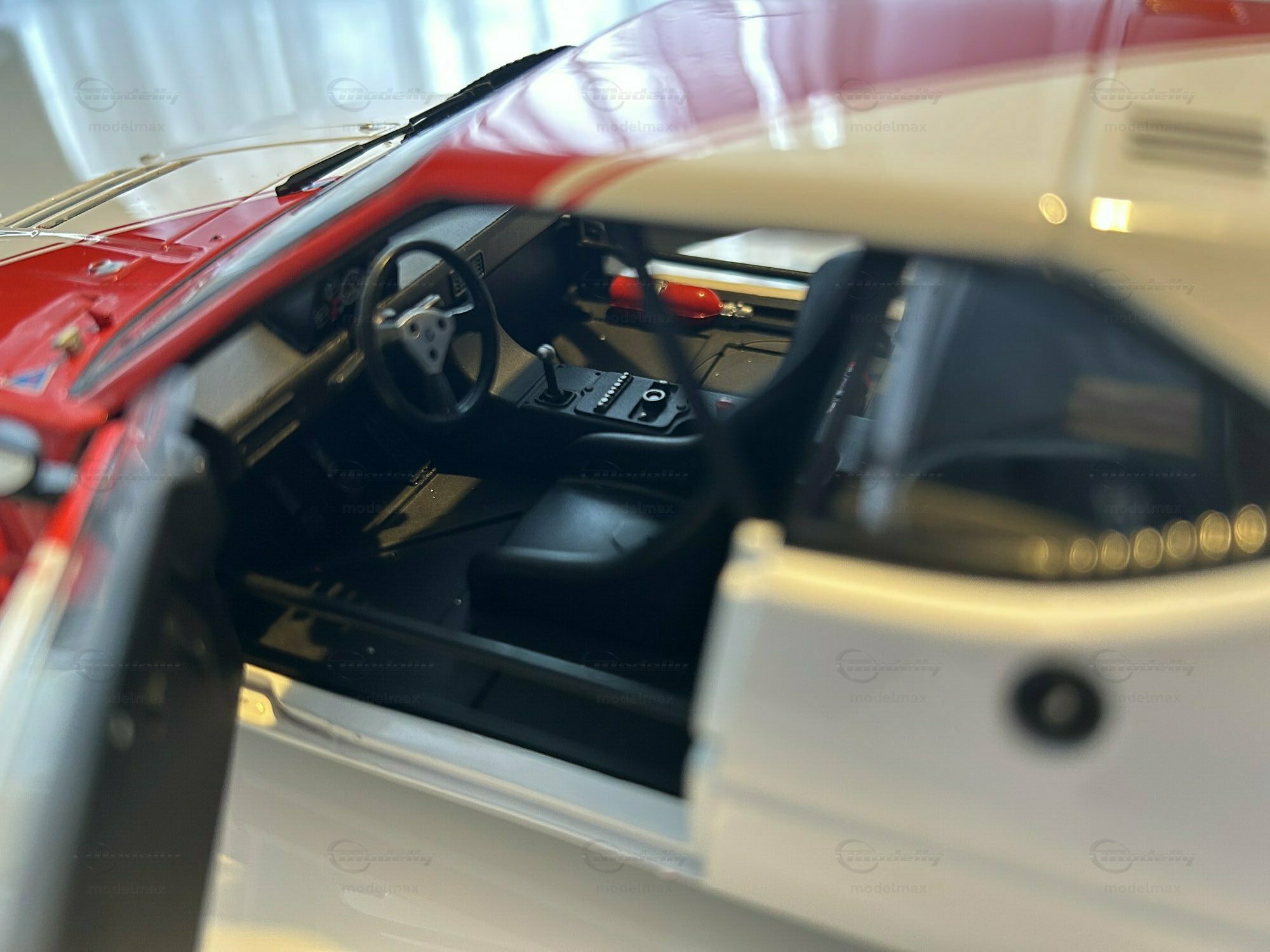
The pictured collectible is a 1/18 scale model from Werk83 and is part of collector “modelmax”’s stash. It’s diecast, so the body is metal and the panel details come out nicely and crisply. The front shows the M1’s flat hood with rivet and latch detailing, the signature kidney grille and the small opening above the splitter. A single windshield wiper sits centered; the side mirrors are blocky and black. The side windows have simulated sliding sections, and inside you can spot the bucket seat, harnesses and roll cage. The rear has louvers over the engine cover and the big wing that finish the race look. The printed tire sidewalls with Goodyear lettering and the lens‑style wheel inserts fit the racing vibe. The paint split with the slanted two‑tone scheme is clean; race numbers and the driver name “REUTEMANN” are clearly legible. To recap: it’s a 1/18 diecast model by Werk83, making a nice nod to the Procar/Group‑5 era BMW M1, with the wide fenders, big wing and vents translated into tidy scale detail.
Chriskitt
Auto-translated
 Stylish BMW 💙🤍👍👍
Chriskitt
Auto-translated
 Stylish BMW 💙🤍👍👍