
Porsche 928 S4 Cabrio Jurinek/Strosek(1:43, MOG Modèles)
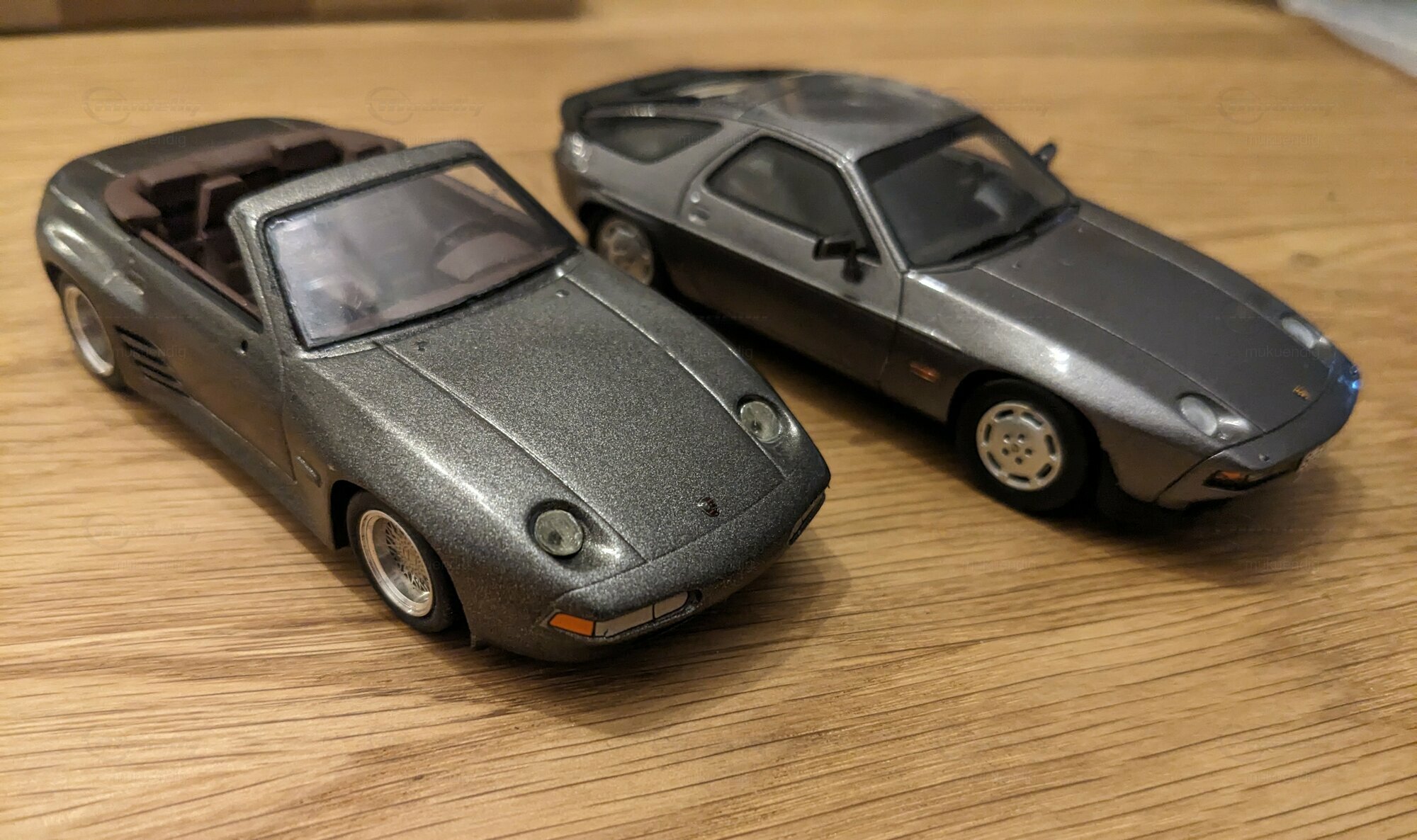
- Porsche 928 S4 Cabrio Jurinek/Strosek (from 1986)
- MOG Modèles
- 1:43
- Showcase model / No engine
- resin
- gray
- 8B
- Perfect mint condition
- Original packaging exists
- Not for sale
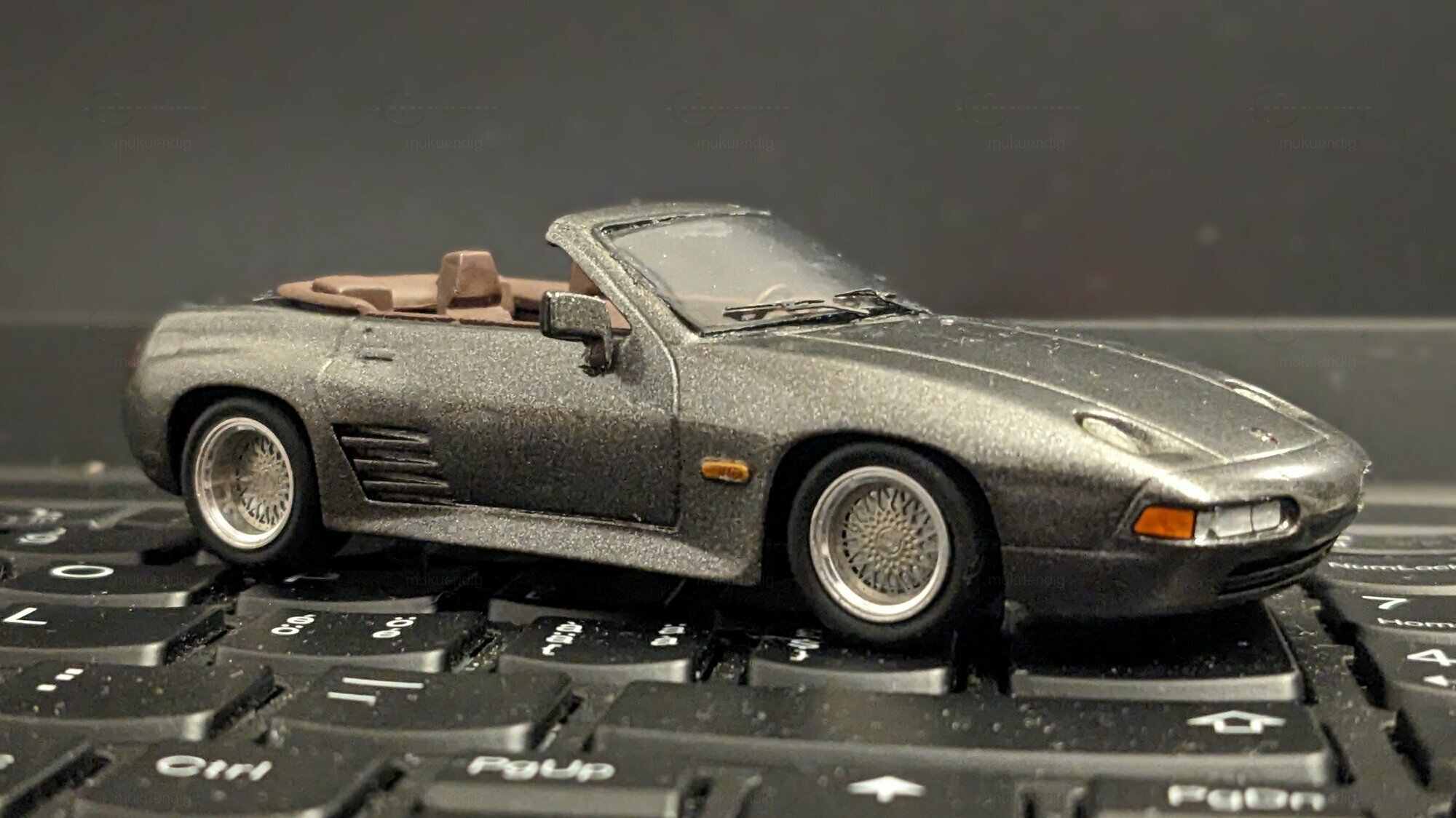
Porsche 928 S4 as a rare convertible conversion – context and tech
The model in the pictures is based on an open conversion of the Porsche 928 S4, done by independent coachbuilders in the late 1980s and early 1990s. Porsche itself never offered the 928 as a convertible; the scene commonly uses parts from Strosek Auto Design, and you’ll often see these conversions called Jurinek/Strosek cabrios. The Porsche 928 S4 is the S4 version, built from 1987 to 1991. It used the transaxle layout with the V8 up front and the gearbox at the rear axle, which helped get a near‑balanced weight distribution. The 5.0‑liter (about 1.32 US gallons) four‑valve V8 produced roughly 320 PS (235 kW; ~315 hp) and about 430 N·m (317 lb‑ft) of torque. You could get a five‑speed manual or a four‑speed automatic. Technical highlights include the Weissach rear suspension with passive rear‑axle steering, ABS brakes, and aerodynamic tweaks compared with earlier 928s. The basic shape was designed by Anatole Lapine together with Wolfgang Möbius; overall development was led at Porsche’s R&D under Helmuth Bott. For placing it in time: 1987, the S4’s launch year, saw events like the Black Monday stock crash, the signing of the INF Treaty between Ronald Reagan and Mikhail Gorbachev, and the release of U2’s album "The Joshua Tree." Just giving those as context to help date the car.
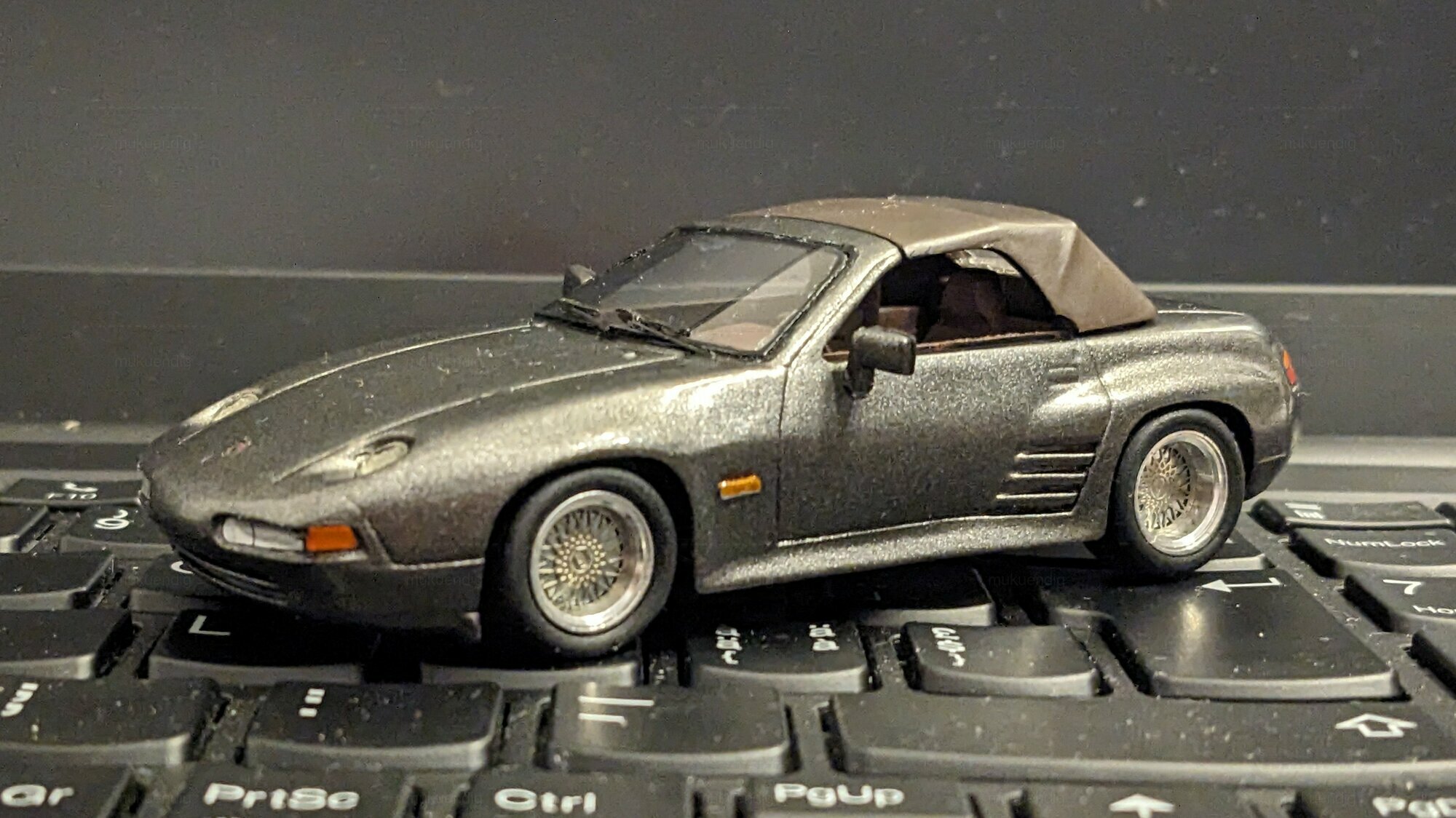
Strosek parts conversions and where the Jurinek/Strosek cabrios fit in
Tuner and coachbuilding shops often used Strosek Auto Design parts for an open 928. Strosek Auto Design was founded in 1982 by designer Vittorio Strosek in Utting (Bavaria) and specialized in Porsche conversions. Typical 928 kits had reshaped bumpers with integrated indicators, side air inlets ahead of the rear wheels, and a smoothed rear end with adapted lighting. The actual convertibles were built by independent coachbuilders; the name Jurinek shows up in some reports as a maker that combined open‑top bodywork with Strosek add‑ons. Those cars were one‑offs or very small series, so exact production numbers aren’t well documented. Performance usually stayed close to stock, since the Porsche 928 S4 design — aluminium V8, transaxle, near 50:50 weight distribution — was already tuned for long‑distance comfort and high stability. Compared with the previous 928 S, the S4 offered a tweaked engine management, improved cooling and an increased top speed of around 270 km/h (about 168 mph).
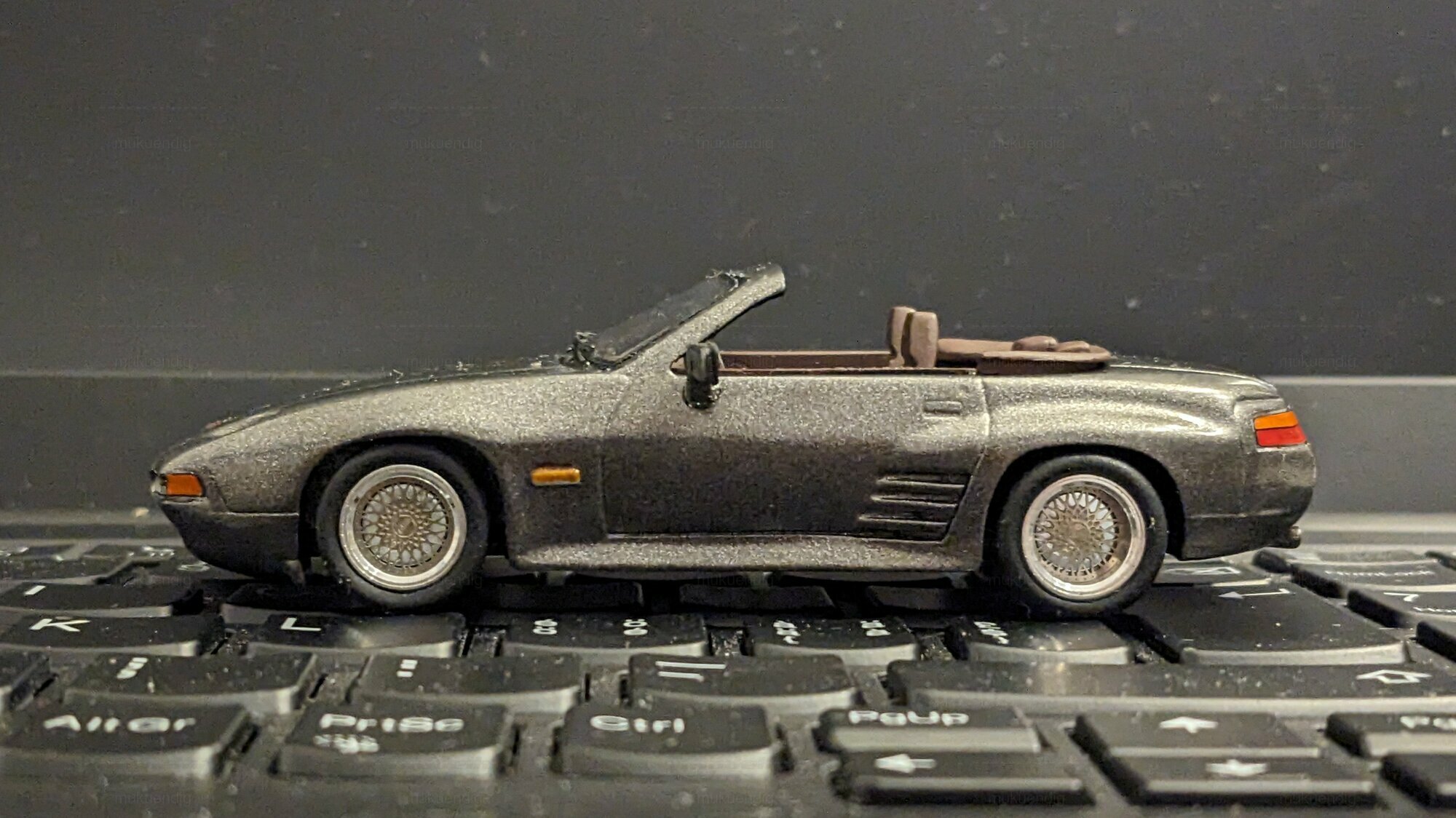
The 1/43 scale model by MOG Modèles
The photos show a 1/43 scale model from MOG Modèles inspired by one of those 928 S4 convertible conversions. The piece is in the collection of model member “mukuendig.” It’s made of resin, a casting resin that lets you get fine surface detail and is common for small production runs. The front borrows the Strosek‑style smooth bumper with a wide intake; you can see the horizontal slits ahead of the rear wheels typical of those kits. The original Porsche 928 S4 had pop‑up headlights; the model shows the covers in the closed position. Orange indicators and a small printed Porsche crest on the hood give visual cues. The interior is brown and clearly shows the 2+2 seat layout. The wheels look like delicate multi‑spoke rims with polished lips; I can’t identify a specific maker from the photos. The model is shown in two setups: open with a low tonneau behind the seats and with a separate brown soft top fitted, which follows the conversion’s lines. The paint is a dark metallic gray with even gloss and clean panel gaps. Doors, mirrors and lights are nicely defined; the side marker lights are separately colored. The MOG Modèles 1/43 resin model captures the main details of the real conversion clearly, without unnecessary extras.
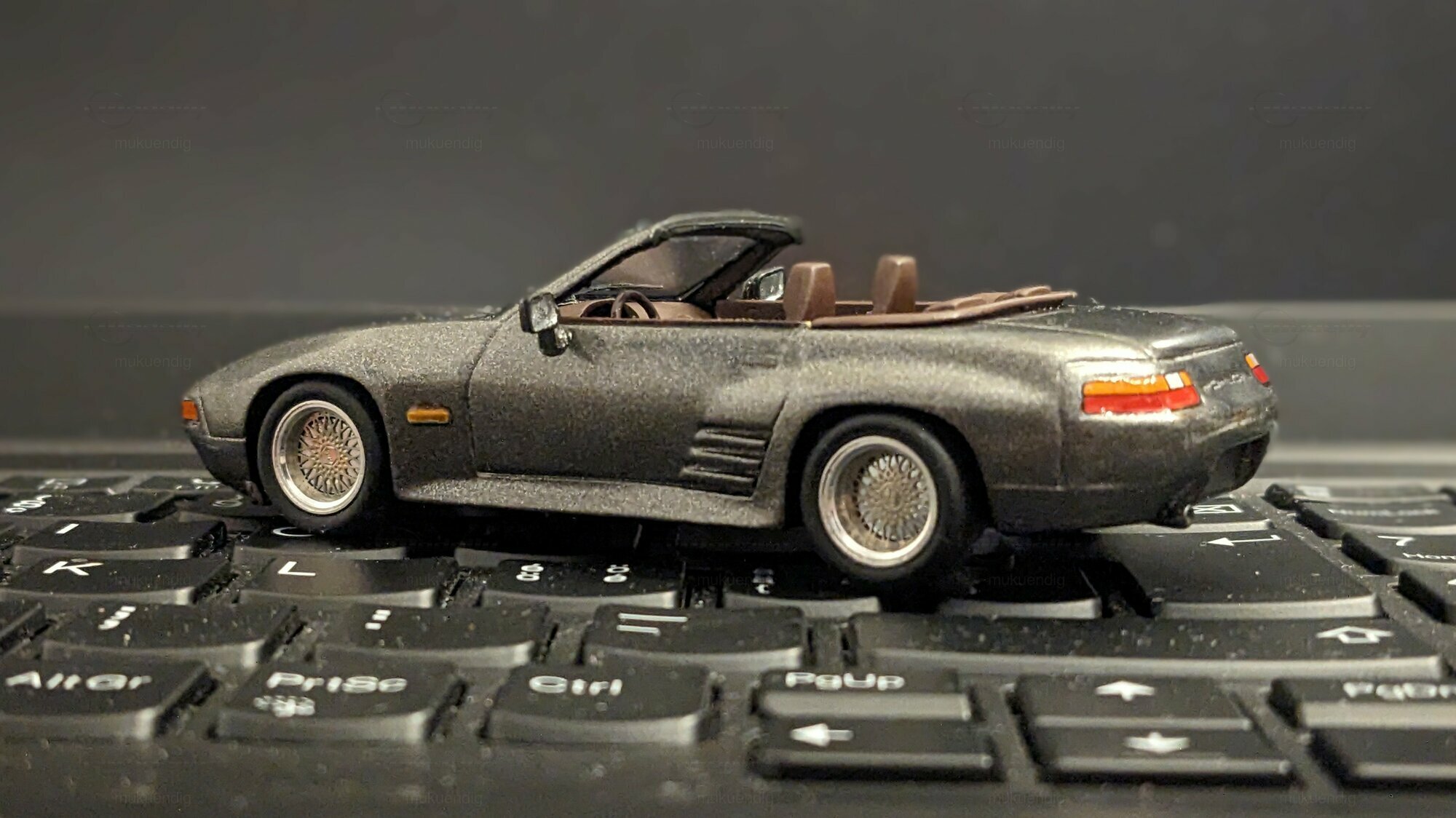
More details, collector tips and visual impressions
Collectors should know resin models like this give very crisp reproductions of seams, vents and inlet edges, but they’re often made without opening parts. This example shows clear window material, fine wiper etching and separately attached mirrors, which all bring out the Porsche 928 S4 lines. The front shows the long hood with the flat light covers; the side profile reads low because of the slim beltline and small side markers. The rear — only hinted at in the photos — ends short, as many Strosek kit solutions did. Again, the S4 was built from 1987 to 1991 — a period of big changes in the car world, happening alongside events like the INF Treaty and the 1987 stock market crash, which helps place the model’s era. The miniature is a calm, tasteful piece that captures the era’s styling and fills the niche for rare 928 convertibles with Strosek parts in “mukuendig”’s collection. Manufacturer: MOG Modèles, small‑series resin, scale 1/43; the photos show even metallic paint, brown interior and a removable soft top. No specific movie or TV tie‑ins are known for this particular subject. For display themes like transaxle Porsches, tuning history, or late‑’80s convertible conversions, this model is a neat reference for the Porsche 928 S4 and its rare open variants with Strosek add‑ons.
- Write a first comment about this model now!Any comment can be discussed by all members. It's like a chat.Mention other Modelly members by using @ in your message. They will then be informed automatically.
- Write a first comment about this model now!Any comment can be discussed by all members. It's like a chat.Mention other Modelly members by using @ in your message. They will then be informed automatically.