
Chevrolet Corvette C7 Stingray Convertible(1:18, BBR Models)
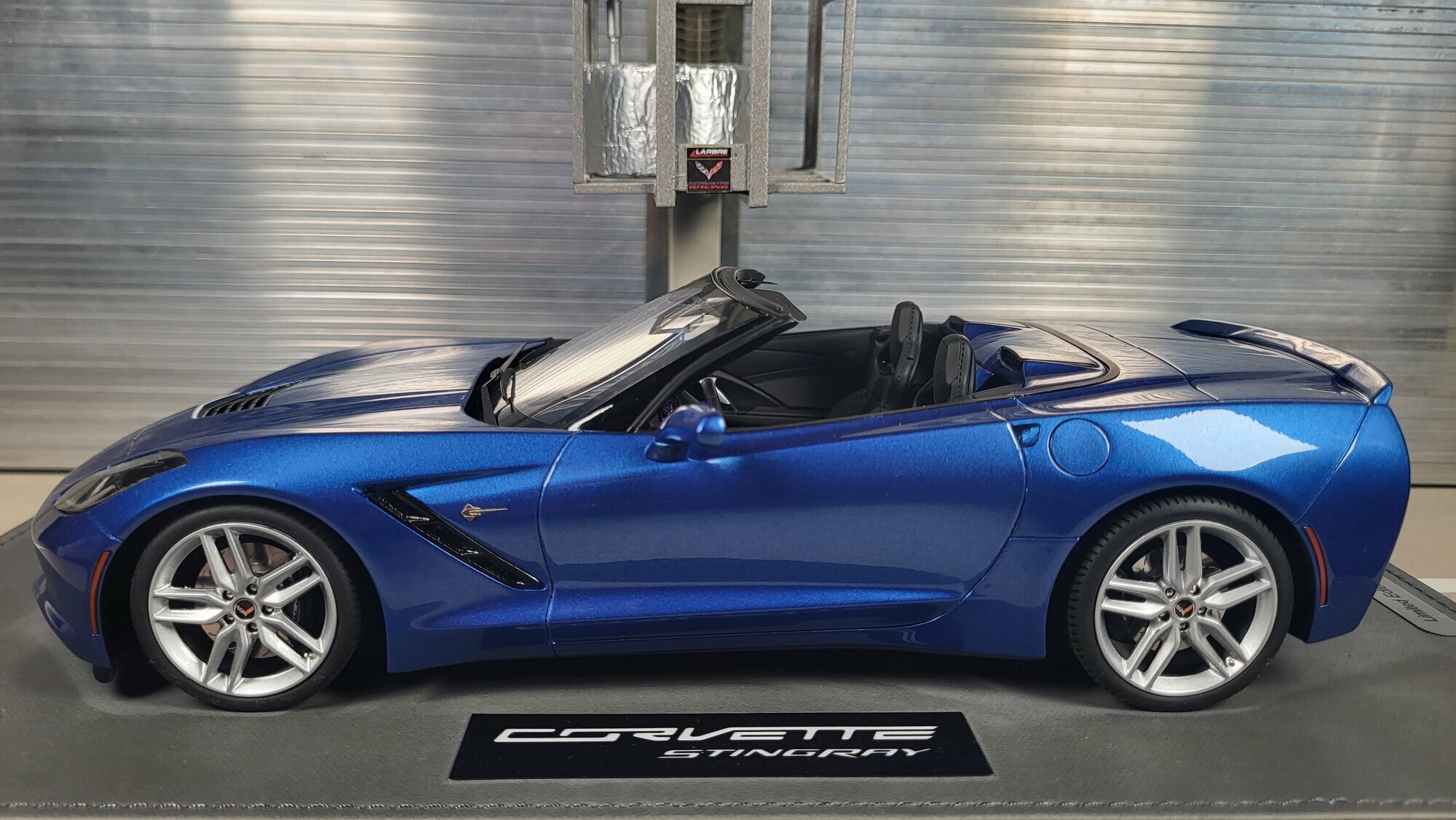
- Chevrolet Corvette C7 Stingray Convertible (from 2014)
- BBR Models
- 1:18
- Showcase model / No engine
- resin
- Laguna Blue
- P1872B
- Not specified
- Not specified
- Not for sale
Prototype info: tech and history of the C7 Stingray
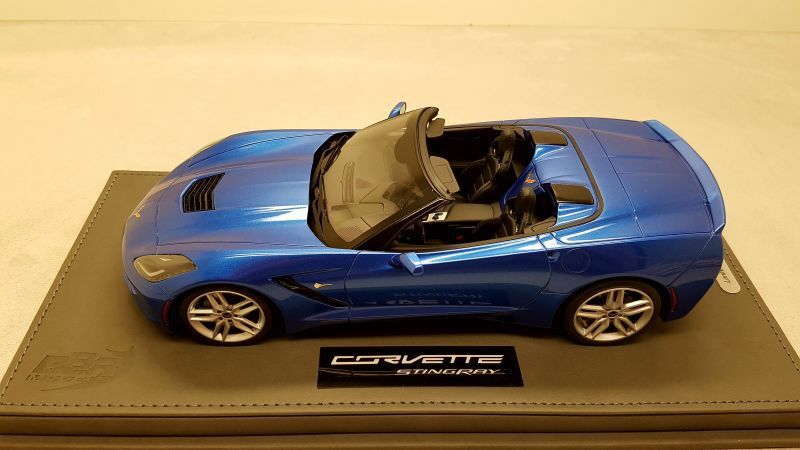
The model shown is based on the Chevrolet Corvette C7 Stingray Convertible, the open version of the seventh‑generation US sports car. The C7 was made from 2014–2019 and replaced the C6. Chief engineer Tadge Juechter led the overall technical development, and the exterior was largely by Tom Peters. For power the Chevrolet Corvette C7 Stingray Convertible used the 6.2‑liter (378 cu in) Small‑Block LT1 with direct injection, variable valve timing and cylinder deactivation. In base trim the V8 made 455 hp (around 339 kW) and with the sport exhaust 460 hp (about 343 kW); peak torque was up to 624 Nm (≈460 lb‑ft). You could get a 7‑speed manual with rev‑matching or, initially, a 6‑speed and later the 8‑speed automatic 8L90. The aluminum lightweight chassis, the transaxle layout and optional systems like magnetic ride control and the electronic limited‑slip diff made the Chevrolet Corvette C7 Stingray Convertible very capable on the road. With the Z51 performance package you got bigger brakes, shorter gearing, extra cooling and, in some markets, dry‑sump lubrication. Depending on specs it could hit 0–100 km/h in under four seconds (0–62 mph) and top out at over 290 km/h (≈180 mph). Compared to the C6 the C7 had a stiffer chassis, revised aerodynamics and a redesigned interior with modern infotainment, a head‑up display and the Performance Data Recorder.
Styling, dimensions and paint of the real car
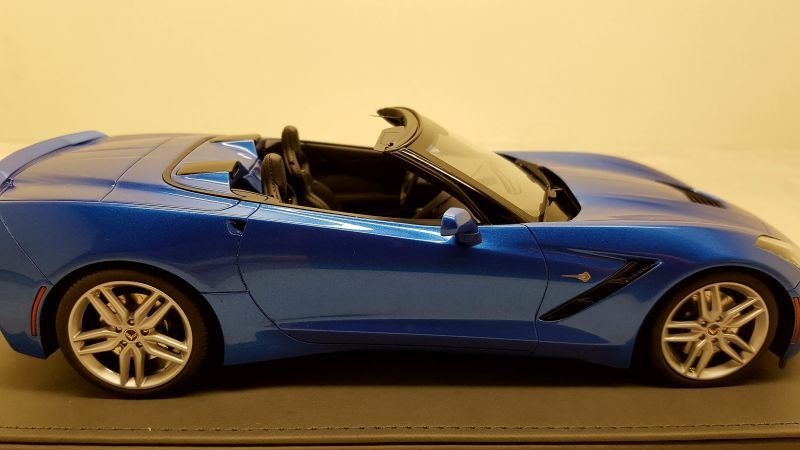
The Chevrolet Corvette C7 Stingray Convertible shows sharp edges, big air intakes in the flanks and a central hood vent. Typical features are the side “Stingray” badges, the four center exhaust tips in the diffuser and the distinct fender lines. The convertible uses a multilayer fabric top with electric operation that could be deployed at low speeds; the trunk layout is adjusted compared to the coupe. Overall length is about 4.5 meters (14.8 feet) with a wheelbase of roughly 2.71 meters (8.9 feet). The blue on the photos closely matches the factory “Laguna Blue Tintcoat” metallic. The silver alloy wheels, ventilated brake discs and the small color “Crossed Flags” center caps are clearly visible on the real car. Inside the Chevrolet Corvette C7 Stingray Convertible you’ll find redesigned seats, a driver‑focused center console and a digital instrument cluster for a purposeful cockpit. Options like the Z51 package, head‑up display, navigation and the exhaust valve system change function and appearance in measurable but straightforward ways.
The collector model in detail: BBR resin 1/18
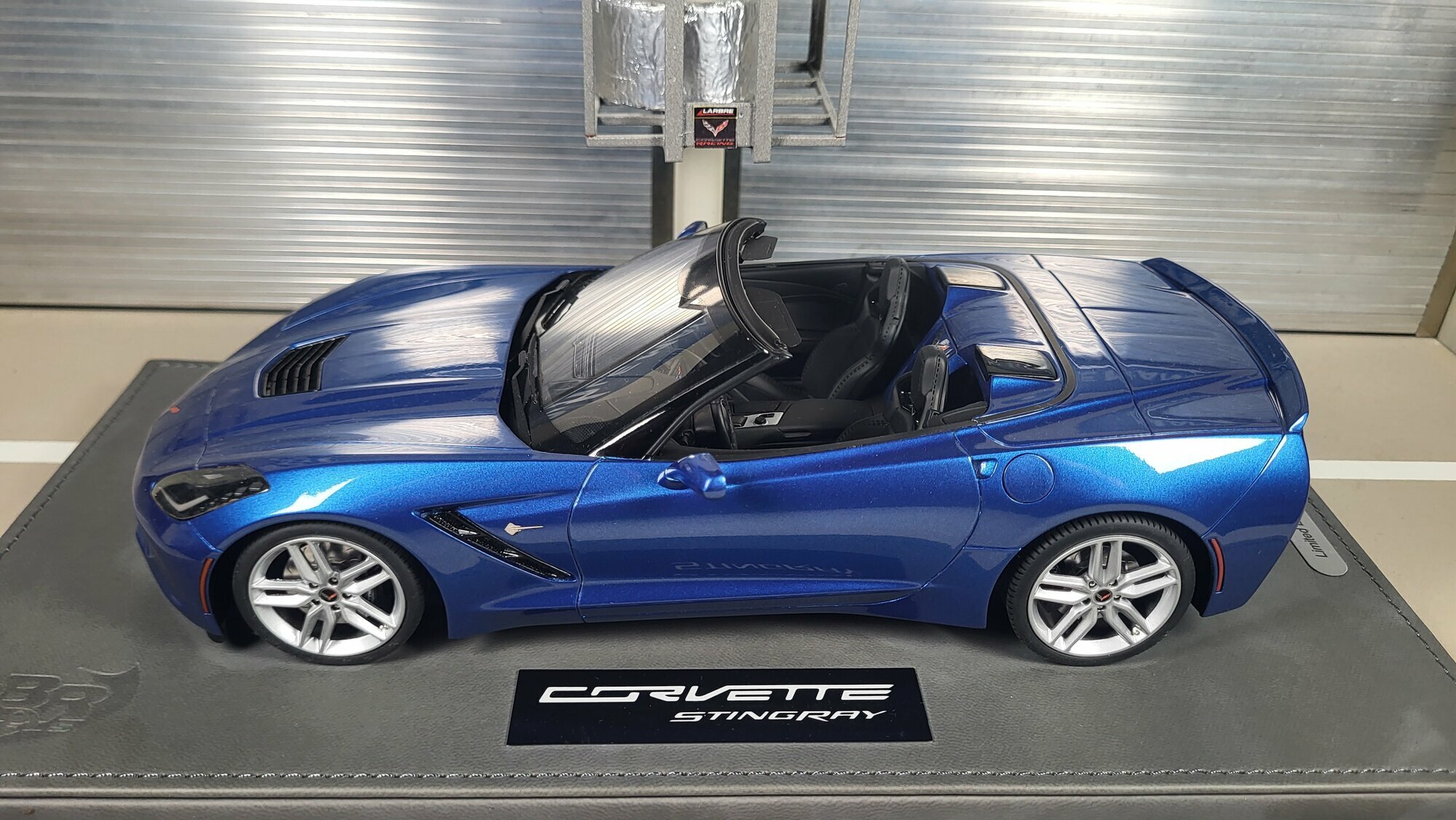
The piece in Phat‑T’s collection is a 1/18 scale model from BBR Models. It’s made of resin, which lets them capture proportions and sharp panel lines really accurately. Resin models are usually fixed‑body; this one’s no different — doors, hatches and the top don’t open, which keeps the exterior lines clean. The photos show the hood vent, the side gills and the Stingray badge reproduced nicely. The deep metallic blue paint is even and shows clear reflections while keeping crisp panel definition. The five‑spoke wheels, drilled brake discs and printed Corvette center caps are faithful to the stock wheel look. Inside you can spot the two‑part sport seats, a three‑spoke wheel and the raised center console with a clear divide to the passenger side. The display base with a stitched edge and the plaque “Corvette Stingray” makes it obvious what the model is and keeps it dust‑free in a cabinet. So: it’s a 1/18 scale model from BBR Models, made of resin, and it captures the main details of the Chevrolet Corvette C7 Stingray Convertible in a collector‑friendly way.
Collector’s note and visible quirks
For collectors it’s worth knowing that BBR Models resin pieces often run in limited batches and focus on exterior accuracy. This Corvette shows that with fine engraved panel lines, correctly placed indicators and tail light outlines, plus the four central tailpipes. The metallic blue is great for display lighting because the pigment highlights the C‑shaped shoulder lines. The model is mounted on a fixed base, so ride height stays constant and the wheels are neatly aligned. You can also spot the mirror housings, the fuel filler on the right and the slightly rising shoulder line — all real‑car ID points. One practical note: because it’s resin the model is lighter than comparable die‑cast pieces but stays dimensionally stable; it’s not intended to be disassembled. For themed collections like “US sports cars,” “naturally aspirated V8s” or “convertibles” this version fits well. If you want to compare it to Z51 wheels, different colors or interior trims, it gives a solid reference to the real car’s options. Bottom line: it’s a 1/18 scale model from BBR Models, part of Phat‑T’s collection, and a nicely made resin display piece for a neat cabinet setup.
- Write a first comment about this model now!Any comment can be discussed by all members. It's like a chat.Mention other Modelly members by using @ in your message. They will then be informed automatically.
- Write a first comment about this model now!Any comment can be discussed by all members. It's like a chat.Mention other Modelly members by using @ in your message. They will then be informed automatically.