
Chevrolet Corvette C3 L88(diecast 1:18, Carousel1)
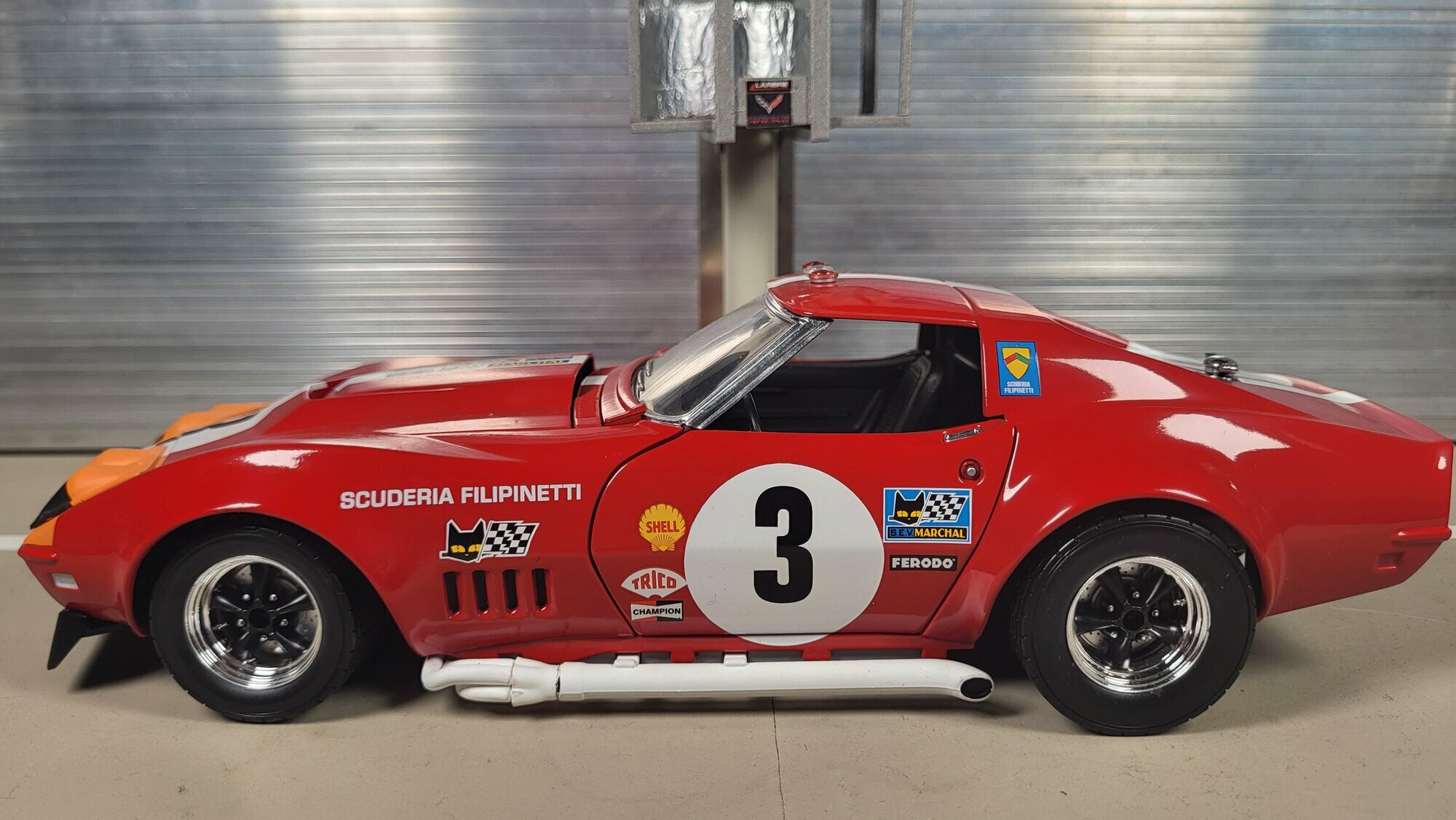
- Chevrolet Corvette C3 L88 (from 1968)
- Carousel1
- 1:18
- Showcase model / No engine
- diecast
- red
- 4606
- Not specified
- Not specified
- Not for sale
Prototype and place in Corvette history
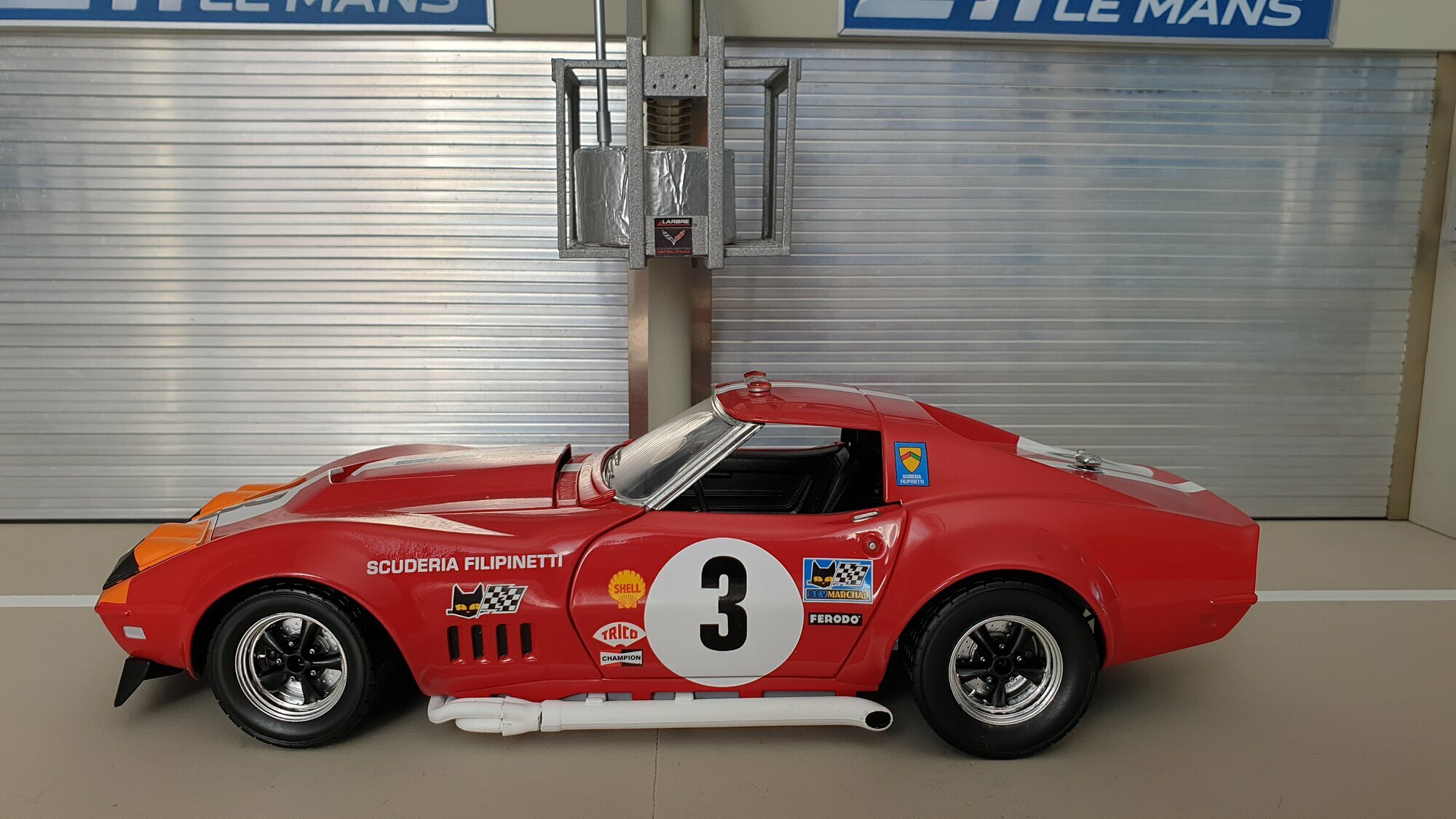
The photos show a model that clearly copies the long‑distance racing look of the Chevrolet Corvette C3 L88. The real car belongs to the third generation (C3) of Corvettes, built from 1968 to 1982. Compared with the predecessor C2 (“Sting Ray”), the Chevrolet Corvette C3 L88 got a body that was heavily inspired by the show car “Mako Shark II.” The styling was done in part by Larry Shinoda and Bill Mitchell, while Zora Arkus‑Duntov played a central role in development and on the racetrack. The L88 name was Chevrolet’s factory high‑performance package with a big‑block 427‑cubic‑inch V8 (7.0 L (427 cu in)), aimed at customer racing teams. The model shown here is a 1/18 scale die‑cast from Carousel1; the paint and race number suggest a Swiss privateer team’s long‑distance race livery for the Chevrolet Corvette C3 L88.
Technical data and L88 highlights
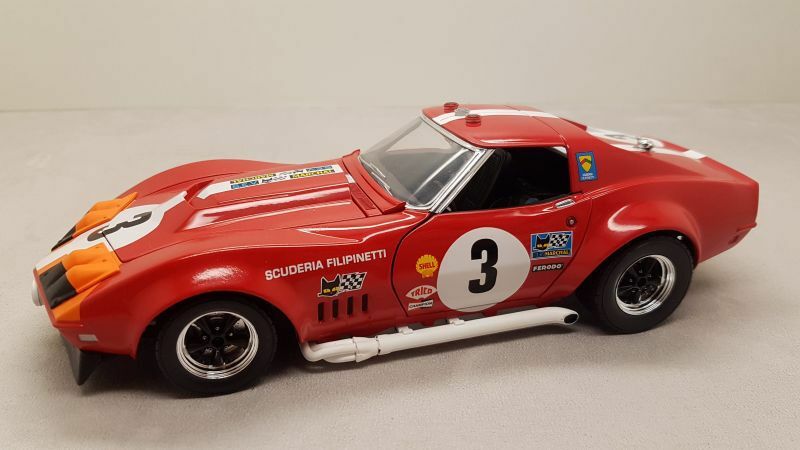
The Chevrolet Corvette C3 L88 could be ordered as a street‑legal car but was clearly aimed at racing. The 427‑cui big block was set up from the factory with a high compression ratio for high‑octane fuel. Officially Chevrolet quoted about 430 SAE‑hp, but contemporaneous dyno runs show outputs of over 500 to well into 550 PS. The package also included an M22 four‑speed gearbox (“Rock Crusher”), an upgraded cooling system, heavy leaf springs, a Positraction rear end and a stripped interior (no heater or radio) to save weight and electrical load. The C3 body still used the C2-style central frame but got wider fenders, a long low hood and the 1968‑era Kamm tail. Racing versions often ran sidepipes, extra hood fasteners, quick‑fill fuel caps and fiberglass body bits, which you can also spot in parts on the model.
Racing in North America
The Chevrolet Corvette C3 L88 saw heavy use in late‑60s/early‑70s US customer racing. It was a regular in SCCA A‑Production events where teams like Owens‑Corning made a name for themselves. Drivers such as Tony DeLorenzo, Jerry Thompson and later John Greenwood ran L88 cars with big, durable engines, large brakes and custom aero. The car was often entered in endurance classics at Daytona and Sebring, scoring class and group results when the gear held up. Driveability came from huge torque and that rugged M22 gearbox, but managing tyre wear and brake temps was critical. The Corvette proved competitive in IMSA too, although later rule changes tended to favor more specialized prototypes.
European endurance and Le Mans appearances
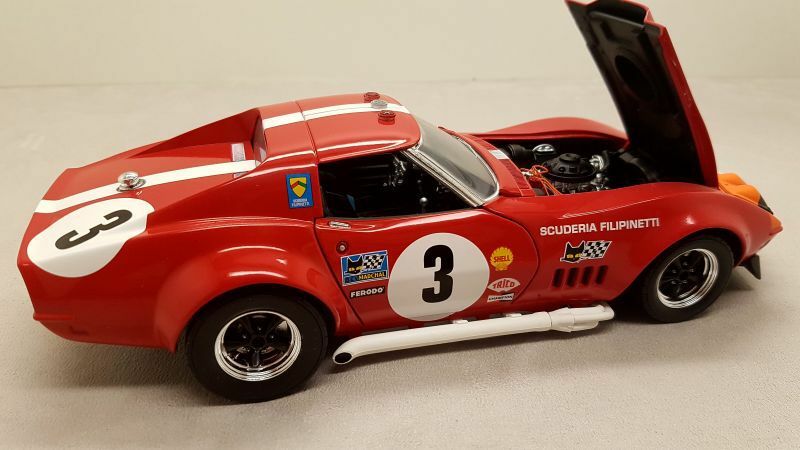
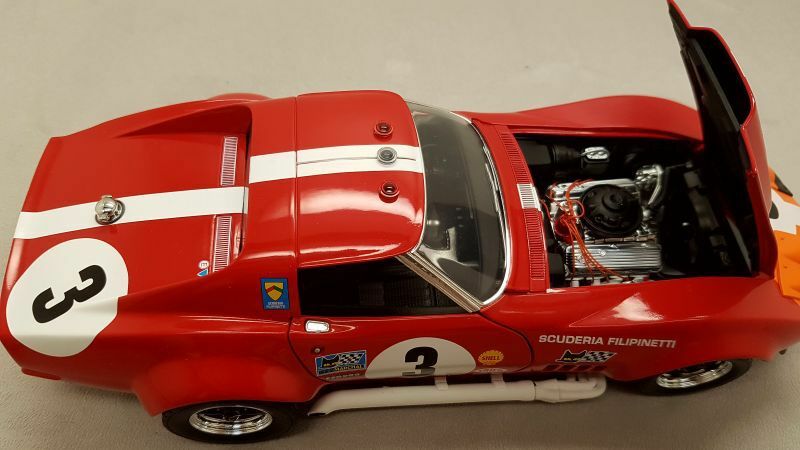
In Europe the Chevrolet Corvette C3 L88 mainly turned up at endurance events. Privateer teams ran them regularly in 12‑ and 24‑hour races. The Scuderia Filipinetti is one of the better‑known European outfits and ran a red‑and‑white Corvette with number 3 — the same look the model here mimics. Drivers for those cars included people like Henri Greder, Marie‑Claude Beaumont, Sylvain Garant and Guy Chasseuil. Results ranged from solid distance runs to DNFs from drivetrain or brake troubles. The Corvette’s high top speed and straight‑line stability usually showed in very good top‑speed numbers, while pit strategy and component durability decided class finishes. The painted contrast panels on the headlights were also used to help ID the car at night, a common endurance trick.
The 1/18 model from Carousel1 in Phat‑T’s collection
The piece shown from collector “Phat‑T” is a 1/18 scale model by Carousel1 in classic die‑cast construction. The photos show a red base paint with clean white twin stripes over the hood, roof and tail, plus white roundels with the number 3. The orange covers on the pop‑up headlights, the sidepipes, the ribbed vent slots behind the front wheel and a quick‑fill cap on the right‑hand rear are all faithfully reproduced. Door markings read “SCUDERIA FILIPINETTI,” and you can see sponsor decals like Shell, FERODO, TRICO, Champion and SEV Marchal. Deep‑dish wheels with black centers, wide tyres and a slightly open hood underline the track intent. Proportions capture the shape of the Chevrolet Corvette C3 L88 nicely; details like hood fasteners, window trims and chrome strips are well placed. For collectors it’s nice that mirrors, hood bulges and flared fenders convey the race C3 look. The model is zinc die‑cast and therefore has a noticeable weight to it. You can also spot hints about where it raced from the pit graphics in the background, which helps tie it to the car’s endurance racing role. Put this variant in your display and you’ve got a convincing little slice of L88 history, thanks to the bold paintwork and authentic team/supplier decals.
- Write a first comment about this model now!Any comment can be discussed by all members. It's like a chat.Mention other Modelly members by using @ in your message. They will then be informed automatically.
- Write a first comment about this model now!Any comment can be discussed by all members. It's like a chat.Mention other Modelly members by using @ in your message. They will then be informed automatically.