
Chevrolet Corvette C3 L88(diecast 1:18, Carousel1)
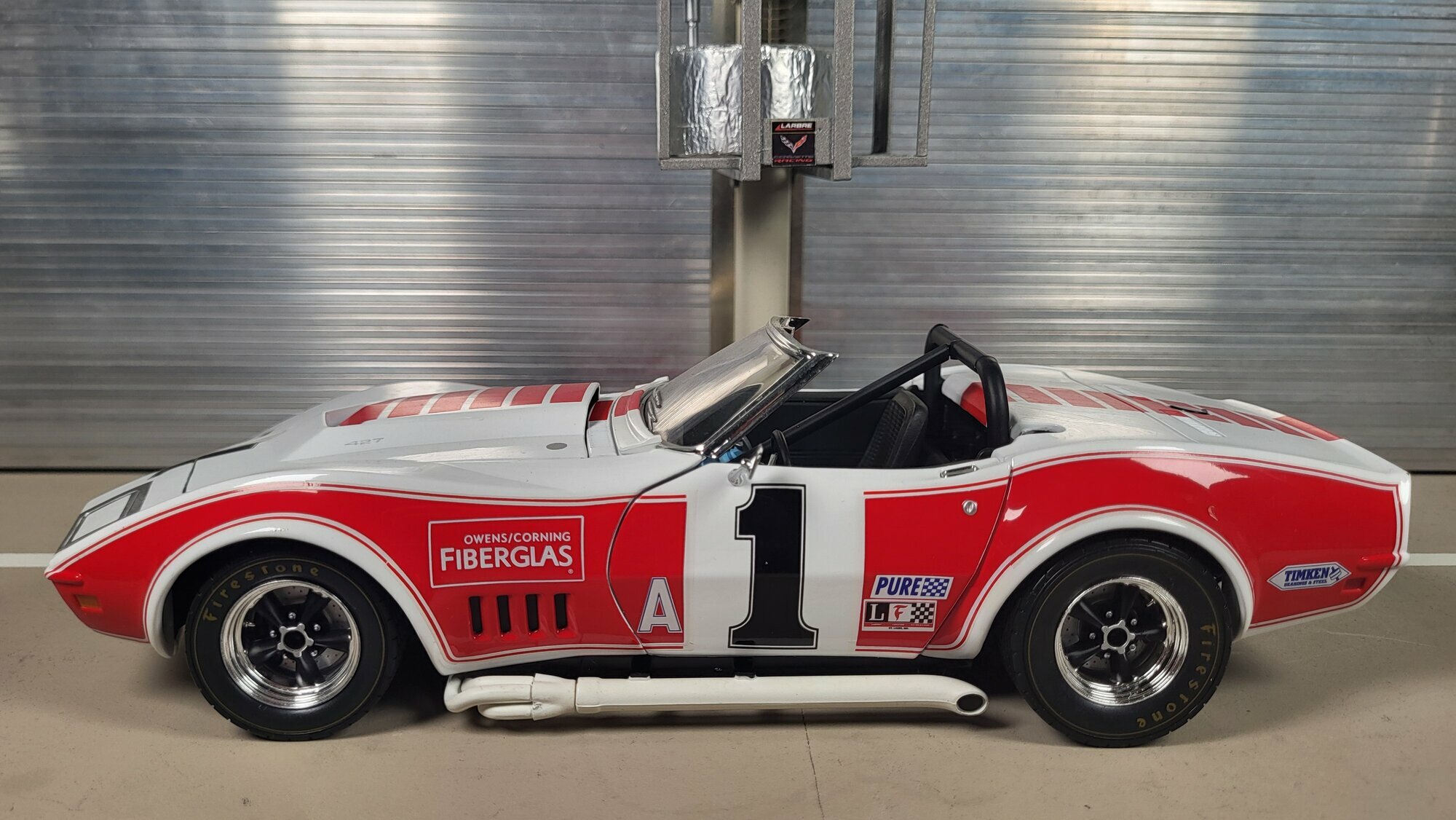
- Chevrolet Corvette C3 L88 (from 1968)
- Carousel1
- 1:18
- Showcase model / No engine
- diecast
- Weiss & Rot
- 4604
- Not specified
- Not specified
- Not for sale
The real car: The L88 as the top version of the Corvette C3
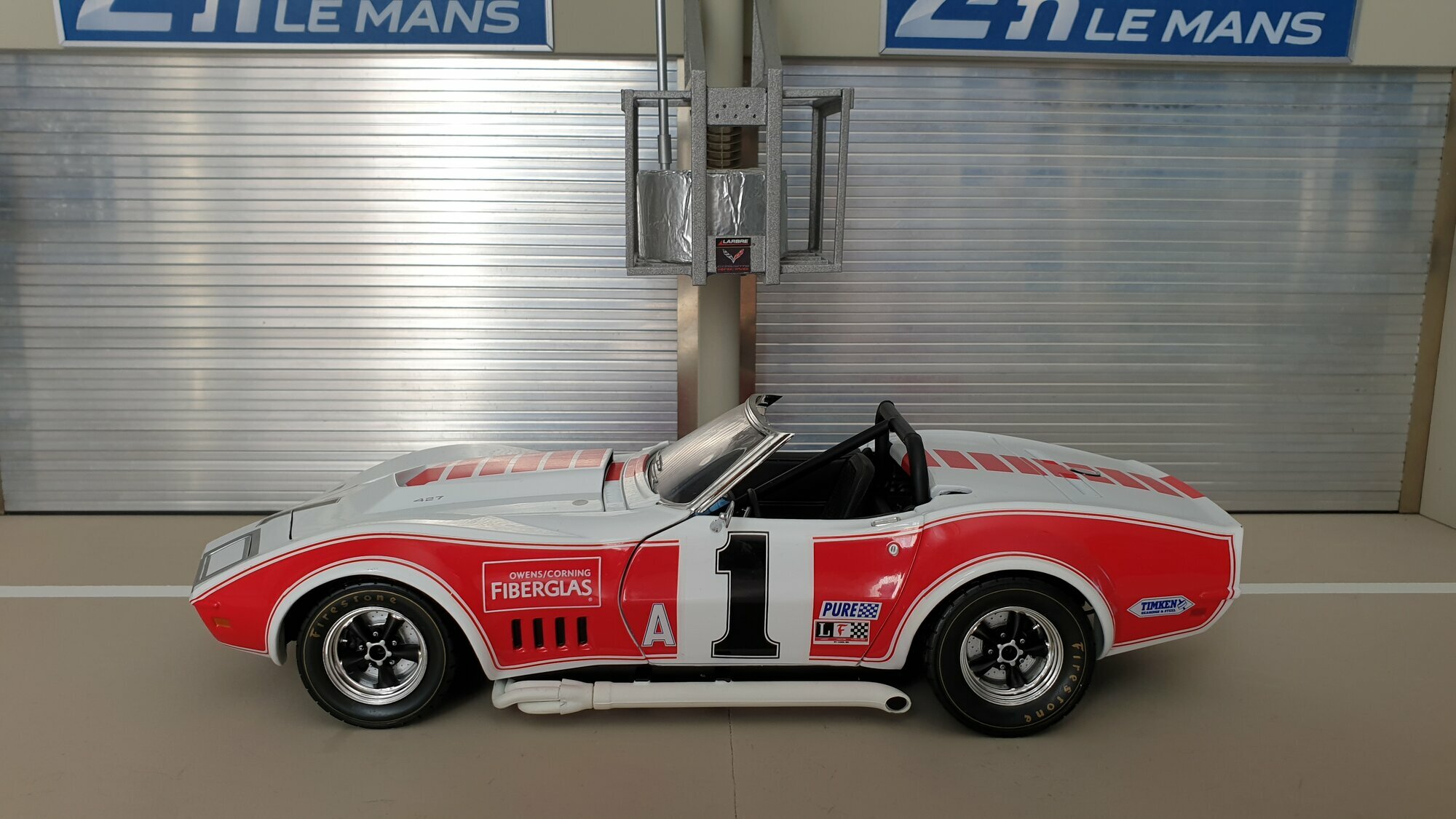
The photos show a race car based on the Chevrolet Corvette C3 L88. The C3 generation was built from 1968 to 1982 and thus followed the C2 “Sting Ray.” The styling of the Chevrolet Corvette C3 L88 goes back to the “Mako Shark II” studies led by Bill Mitchell and Larry Shinoda; the driving engineering force was Zora Arkus-Duntov. The L88 was a factory high‑performance package centered on the 7.0 liters (427 cubic inches) Big‑Block. Officially rated at 430 SAE hp, the real output was significantly higher with a 12.5:1 compression ratio, a large Holley carburetor setup and aluminum heads. The road version left out comfort items like heater or radio; the package was aimed at customers who raced the Chevrolet Corvette C3 L88. Heavy‑duty brakes, the close‑ratio M22 four‑speed, upgraded cooling and chassis parts formed the technical basis.
Tech and how the L88 fits in
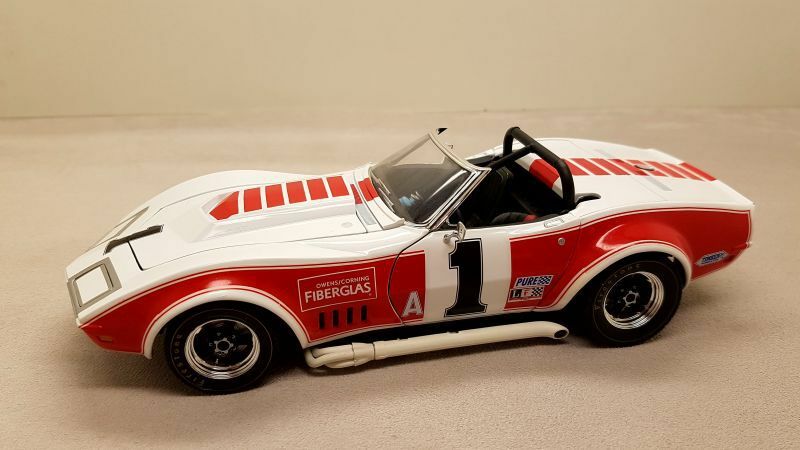
The Chevrolet Corvette C3 L88 used transverse leaf springs, double A‑arm front suspension and an adjustable rear‑axle setup. The brake system with ventilated discs and multi‑piston calipers was tuned for racing. Aluminum radiator, oil cooler, transistor ignition and an open air cleaner completed the package. The rear axle was usually fitted with a limited‑slip differential. Compared with the C2, the Chevrolet Corvette C3 L88 got a wider track and a body with pronounced fender flares, which on the race car in the photos are widened even further. The long‑hood, short‑deck and side‑pipe silhouette of this version ties directly back to that racing lineage.
Racing entries and results in the USA
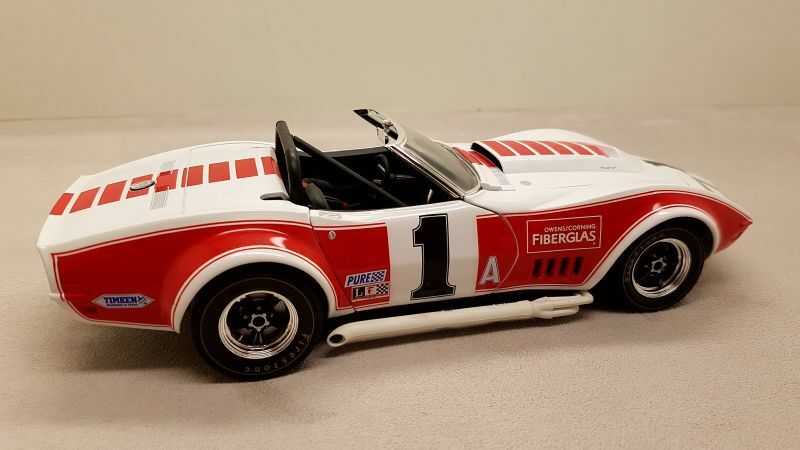
The Chevrolet Corvette C3 L88 was a big player in the late 1960s and early 1970s North American scene. It was a regular winner in SCCA A‑Production and claimed many races and championships. The privately run but professionally managed Owens Corning Fiberglas Racing Team ran several L88 Corvettes that often sat at the front. Drivers like Tony DeLorenzo and Jerry Thompson racked up class wins and titles. Pilots such as Bob Johnson and Dave Heinz also became known for driving the Chevrolet Corvette C3 L88. In IMSA and Trans‑Am support races the car was one of the common big‑block entries — its durability and top‑end power helped on high‑speed tracks, while teams worked on the weight disadvantage for tighter circuits.
Endurance and international appearances
On endurance tracks the Chevrolet Corvette C3 L88 scored class results at events like the 12 Hours of Sebring and the 24 Hours of Daytona. There were also attempts at international races where the high engine output and cooling were key development points. Teams added extra air intakes, quick‑fill refueling gear and large oil coolers. Well‑known names around the L88 racing programs include John Greenwood, who developed his own wide‑body cars, and the already mentioned Tony DeLorenzo and Jerry Thompson. That history explains the typical look of the car in the photos — wide fenders, side pipes, a rollbar and big race numbers. The white and red livery is closely linked to the Owens‑Corning entries and is one of the recognisable paint schemes for the Chevrolet Corvette C3 L88.
The model in Phat‑T's collection
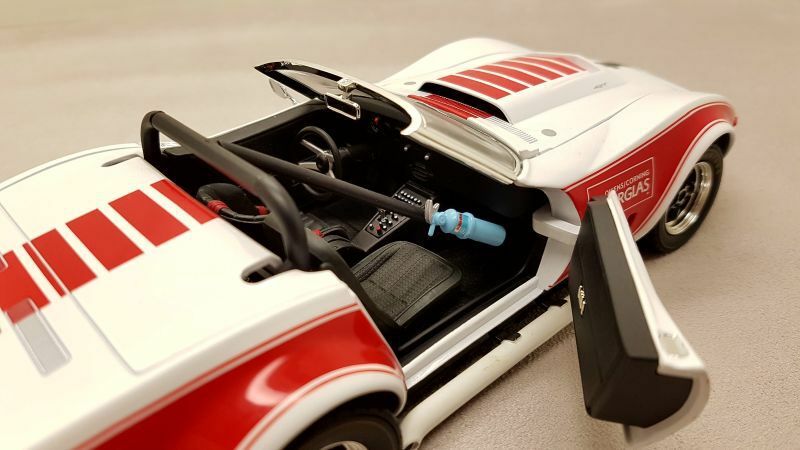
The pictured miniature is a diecast model in scale 1/18 by Carousel1 and is in the collection of the Modelly member “Phat‑T.” The model reproduces the roadster body with rollbar, widened fenders and side pipes. Visible are five‑piece wheels with a polished outer rim and a black star, fitted with tires carrying yellow Firestone lettering. The doors show the race number “1” on a red field; in front of it is the letter “A,” which refers to the SCCA class. On the sides are sponsor stickers like Owens Corning Fiberglas, PURE and Timken. The hood has vents and the “427” marking. The white‑and‑red layout with the stripes over the hood and decklid matches the period race look and fits the “Le Mans” signs in the background of the photos. The fit of the windshield, the raised hood contours and the correctly reproduced exhaust add to an authentic overall impression. This 1/18 diecast model by Carousel1 is aimed at collectors who want a classic Chevrolet Corvette C3 L88 in period sponsor livery with era‑correct details.
- Write a first comment about this model now!Any comment can be discussed by all members. It's like a chat.Mention other Modelly members by using @ in your message. They will then be informed automatically.
- Write a first comment about this model now!Any comment can be discussed by all members. It's like a chat.Mention other Modelly members by using @ in your message. They will then be informed automatically.