
Chevrolet Corvette C3 L88(diecast 1:18, Carousel1)
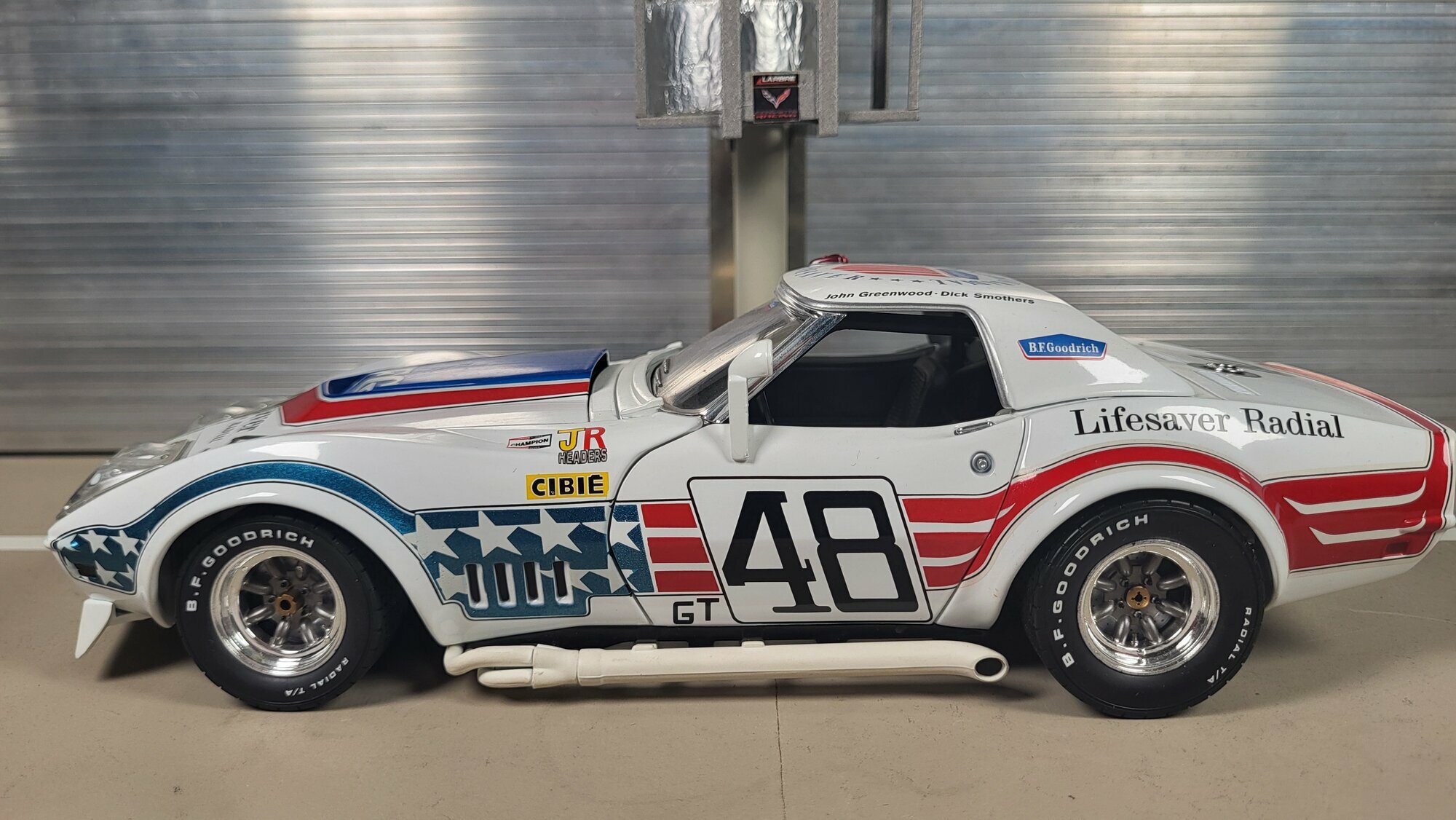
- Chevrolet Corvette C3 L88 (from 1968)
- Carousel1
- 1:18
- Showcase model / No engine
- diecast
- white
- 4602
- Not specified
- Not specified
- Not for sale
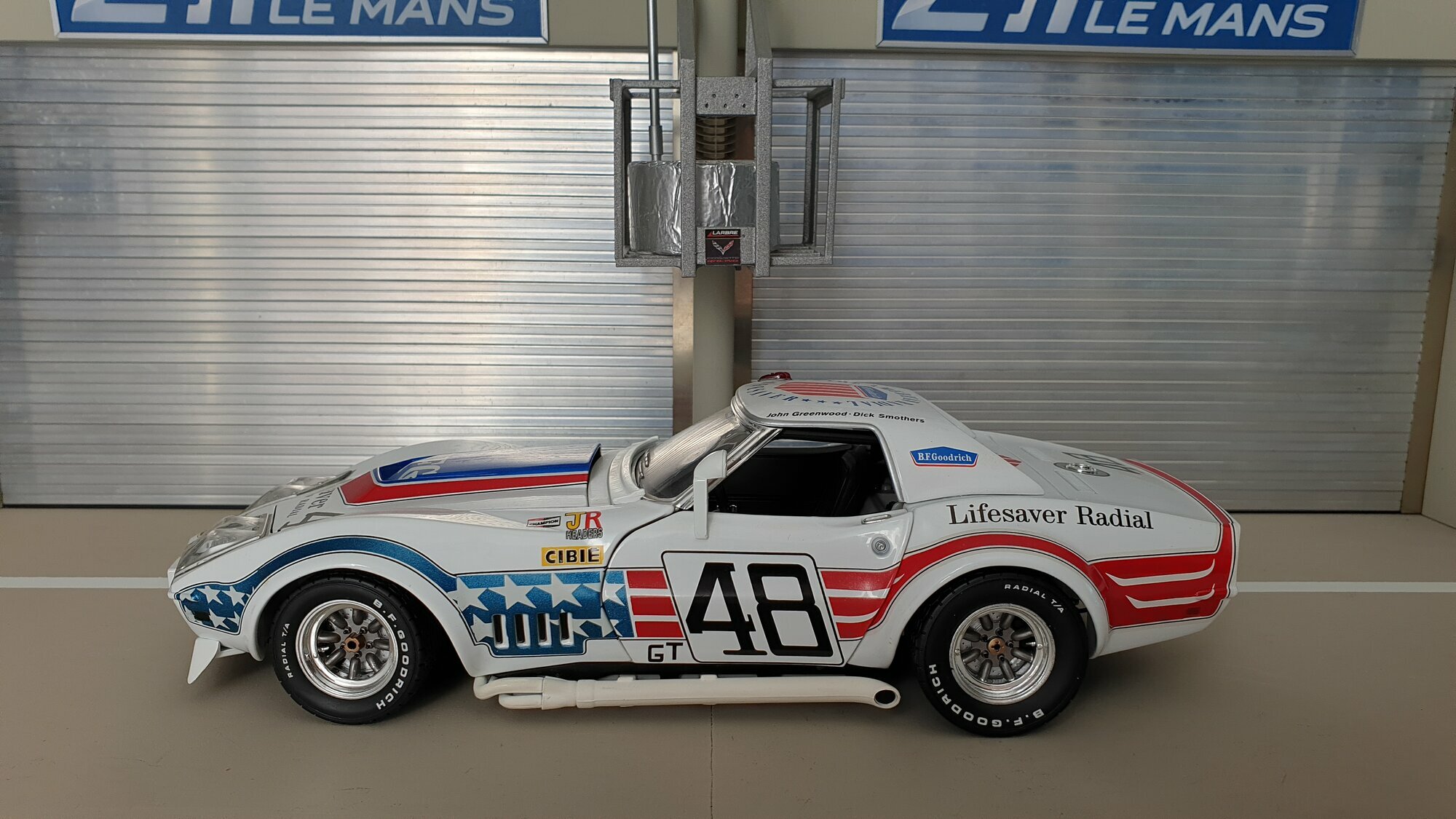
American GT icon as inspiration: Greenwood race car based on the C3
This model shown here is modeled after a race version of the Chevrolet Corvette C3 built by John Greenwood. The third‑generation Corvette, the C3, was produced from 1968 to 1982 and succeeded the Chevrolet Corvette C2. Its look goes back to the design team around Bill Mitchell and Larry Shinoda, who were inspired by the Mako‑Shark‑II show car; David Holls was also involved in the production development. Greenwood’s race cars used the production tech of the Chevrolet Corvette C3 as a starting point and were heavily modified for IMSA, Trans‑Am and endurance racing. The model’s real‑life inspiration carries the race number 48 and the striking “Stars & Stripes” paintjob with the tire slogan “Lifesaver Radial,” which points directly to the tire partner back then. This is a 1/18 scale model made by Carousel1 and reproduces that exact setup as it ran in the early 1970s in the US.
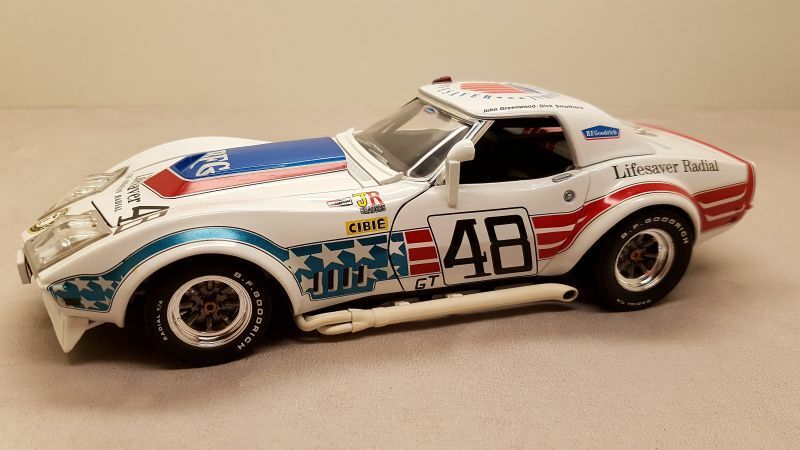
Technical base and modifications of the original
The Chevrolet Corvette C3 came from the factory with a ladder‑frame chassis, independent rear suspension, disc brakes all around and V8 engines. For racing Greenwood often used large big‑block engines: the L88 motor with 427 cui (7.0 liters (427 cubic inches)) and later also 454 cui (7.4 liters (454 cubic inches)). While the factory rating for the L88 was a conservative 430 SAE‑hp, actual race tuning bumped real output much higher; contemporary IMSA cars could put out anywhere from about 500 to over 600 hp depending on displacement, compression and cam choice. Typical race gear included Muncie four‑speed transmissions, limited‑slip differentials, beefed‑up cooling, and a stiff race suspension. Greenwood developed his own body parts for the Chevrolet Corvette C3: heavily flared fenders, a lowered front end with an add‑on spoiler, vents and side‑exit exhausts to reduce backpressure. Together with wide slicks or radials from BFGoodrich, that gave high corner speeds and serious top ends; on fast tracks reported top speeds topped out above 320 km/h (199 mph). Lighting suppliers like Cibie provided the gear for night races, while parts vendors such as JR Headers supplied the exhaust systems.
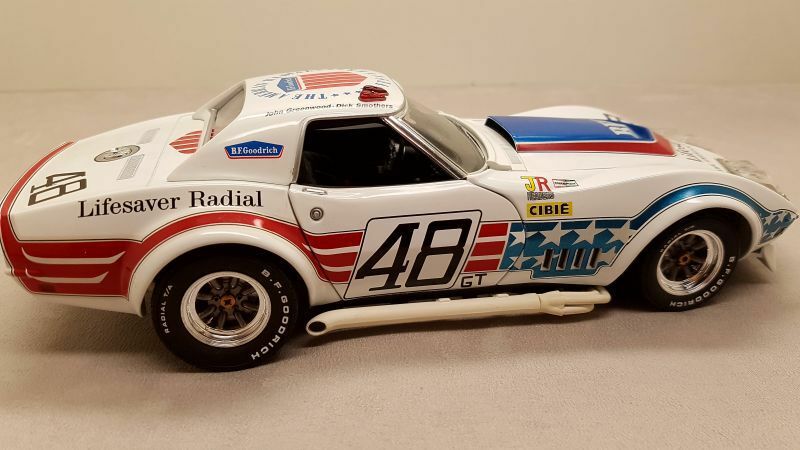
Race entries, results and known drivers
Greenwood Corvettes based on the Chevrolet Corvette C3 ran regularly in IMSA‑GT from the early 1970s and also showed up at 24‑hour and 12‑hour races at Daytona and Sebring. Several cars in the US‑flag scheme led races, grabbed podiums and class wins; they also turned heads with high top speeds and that iconic V8 soundtrack. The car with number 48 is associated with drivers John Greenwood and Dick Smothers; both drove IMSA‑GT entries in the US. Greenwood also ran cars in European endurance events, where his aero mods paid off on long straights.
Besides John Greenwood and Dick Smothers, other US drivers sat in various C3 race Corvettes at different events, including Milt Minter, Dave Heinz and Bob Johnson. The Chevrolet Corvette C3 was a solid platform for the US GT scene for years—private teams liked the strong drivetrains and easy parts availability. Worth noting: several cars ran in different specs, from 427‑ to 454‑cui engines. The eye‑catching US paint job became a trademark that’s still used in historic racing today.
The model from Phat‑T’s collection: details and looks
The piece in the photos is from the model‑collector Phat‑T’s stash and is a 1/18 scale model by Carousel1. The body is diecast metal (zinc die‑cast), giving it that solid weight and feel collectors like. You can see the wide fender flares, the deep front splitter and the side exhausts—hallmarks of Greenwood’s C3 mods. The race number 48 is big on the doors, and the class badge “GT” is below it. The wheels are period‑correct multi‑spoke rims shod with tires showing the bold “RADIAL T/A” lettering from BFGoodrich. Other sponsor decals are precisely applied: Lifesaver Radial on the rear quarters and Cibie plus JR Headers toward the front. On the roof you can read the driver line “John Greenwood – Dick Smothers” in fine script, a nice touch that ties the model to the real race car.
Paint, finish and how it stacks up for collectors
The paint follows the well‑known Stars‑and‑Stripes scheme: a white base, blue fields with white stars on the front flanks and red stripes along the sides, hood and tail. The color separations are sharp, transitions look scale‑correct and the logos are legible. Notable details are the multi‑part side windows, the detailed mirror and the tiny hood and trunk fasteners—things that sell the racer look of the Chevrolet Corvette C3. From the display‑case angle, the side view with the big side pipes and chunky fenders is especially iconic. Since it’s a 1/18 model by Carousel1, it fits in with common collector themes; the length is typically around 25 to 27 centimeters (9.8 to 10.6 inches). The diecast construction makes it easy to handle and durable, so Phat‑T’s example is a sturdy representative of American GT history. If you want a tangible bit of early‑1970s US racing, this Greenwood‑bodied Chevrolet Corvette C3 with clear sponsor ties to BFGoodrich, Lifesaver Radial, Cibie and JR Headers is a neat, accurate reference piece.
- Write a first comment about this model now!Any comment can be discussed by all members. It's like a chat.Mention other Modelly members by using @ in your message. They will then be informed automatically.
- Write a first comment about this model now!Any comment can be discussed by all members. It's like a chat.Mention other Modelly members by using @ in your message. They will then be informed automatically.