
Chevrolet Corvette C3 L88(diecast 1:18, Carousel1)
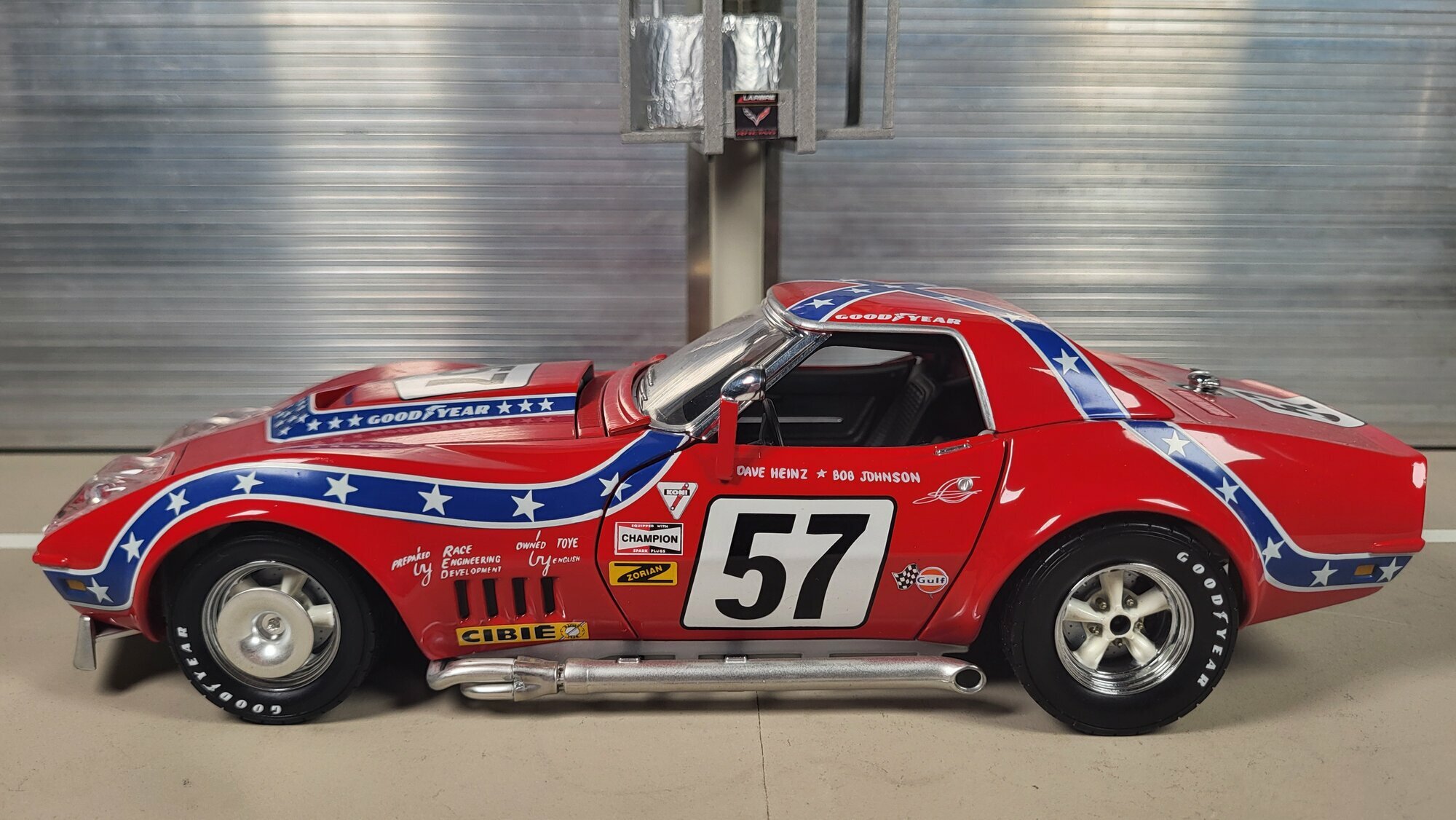
- Chevrolet Corvette C3 L88 (from 1968)
- Carousel1
- 1:18
- Showcase model / No engine
- diecast
- red
- 4601
- Not specified
- Not specified
- Not for sale
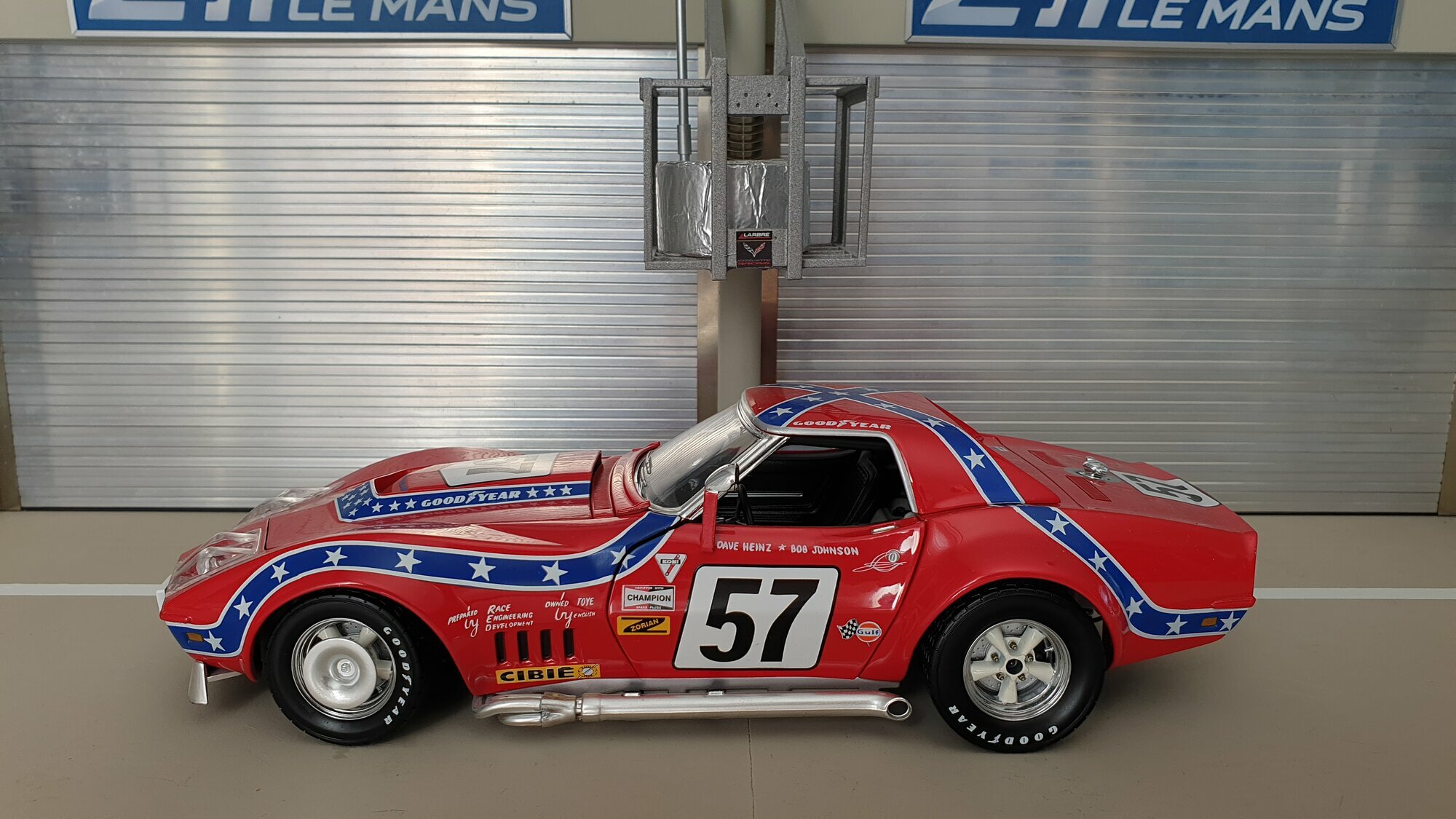
American GT icon as the model: Corvette C3 with L88 tech
This miniature is based on the race version of the Chevrolet Corvette C3 with the L88 package. The C3 is the 3rd generation of the lineup and was built from 1968–1982. The exterior follows the “Coke‑bottle” theme developed under Bill Mitchell and mainly penned by Larry Shinoda and David Holls. For the high‑performance variants, engineer Zora Arkus‑Duntov was a major influence. The L88 package, first introduced in 1967, included the 427‑cui Big‑Block (7.0 liters (427 cu in)) with high compression, aluminum heads, solid valve train and a conservatively rated factory output of 430 SAE hp. In independent tests these race‑oriented engines often made well over 500 hp. Power usually went through the M22 Rock Crusher four‑speed gearbox, along with a beefed‑up cooling system, a Trac‑Lok rear end and racing‑grade brakes. Privateer race cars were often fitted with widened fenders, altered front and rear ends and outside side‑pipes — exactly the features you see on this model.
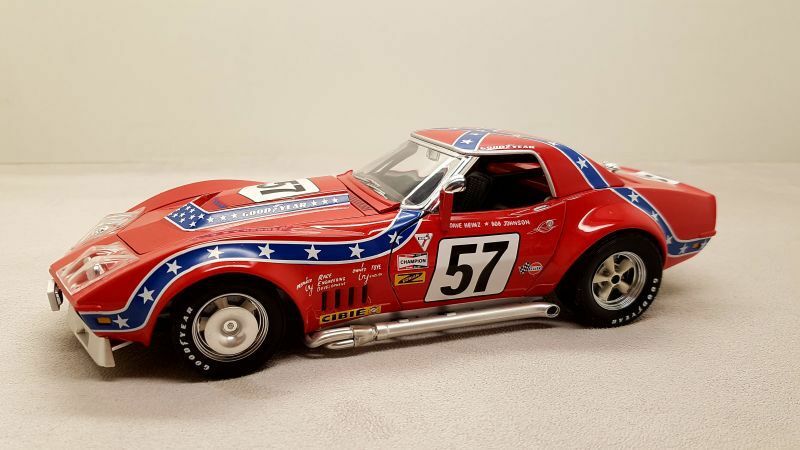
Racing use and competition tech
The Chevrolet Corvette C3 with L88 hardware was a common sight in North American circuit racing. It ran a lot in SCCA A‑Production and later in IMSA‑GT, scoring plenty of class wins and podiums. Teams like those of Tony DeLorenzo and Jerry Thompson showed in the late ’60s how durable the L88 engine could be in endurance work. The cars had upgraded suspension with stiffer springs, reinforced control arms and big anti‑roll bars. Wide tires on 5‑spoke wheels and ventilated discs cut down on fade, while fiberglass bodywork saved weight. The big dry‑sump oil systems helped keep lubrication steady under high lateral loads. On ovals and long straights top speeds above 280 km/h (174 mph) were realistic, which made the C3 a popular choice for GT classes in the US.
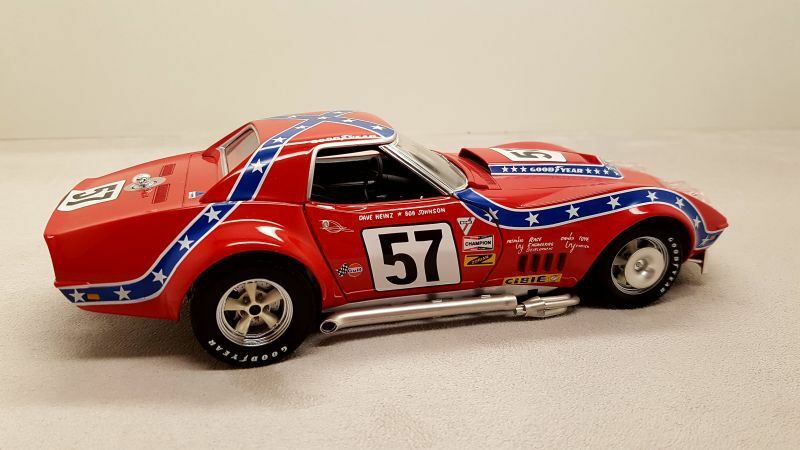
Le Mans appearances and notable drivers
The Chevrolet Corvette C3 also turned up internationally. At early‑’70s Le Mans privateer L88 cars hit impressive top speeds on the Hunaudières. The livery on this model — start number 57 — borrows the kind of “Rebel” look you’d see on US privateer teams. Drivers who piloted C3 race cars included John Greenwood, Dave Heinz and Bob Johnson; they paired the sturdy production base with race‑specific aero like wide fender flares, deeper spoilers and hood vents. Depending on the rules, displacements ranged between 7.0 and 7.4 liters (427 cu in and 452 cu in), sometimes with reworked intake systems and big four‑barrel carbs. The C3 repeatedly scored class results at major international events and racked up wins and distance records in national endurance races. The combo of torque, a stable suspension setup and a rugged drivetrain was key to its success.
The model from Phat‑T’s collection: details, paint and sponsors
The pictured piece belongs to collector Phat‑T and is a Carousel1 1/18 scale diecast. Made from diecast metal, it shows the race‑specific bodywork: flared wheel arches, a long front with integrated intakes, hood vents and outside sidepipes. The 5‑spoke wheels wear slicks with Goodyear markings on the sidewalls. Behind the glass you can spot a pretty stripped‑out interior, with a roll cage and a racing bucket seat. The paint is a solid bright red, with blue stripes lined with white stars running from the nose over the A‑pillars and roof to the rear, also framing the front and rear wheel arches. The big black “57” on white circles appears on the doors, hood and rear. You’ll also see period‑correct sponsor decals like Champion, Gulf and Cibié. The Goodyear hood band matches the side star bands; there are small tech labels and team logos on the front fenders. The chunky side pipes and low front splitter show off the aero‑functional look of the race C3.
Build quality and collector appeal of the 1/18 diecast
The model in the photos is a 1/18 diecast from Carousel1 with a solid metal body. Doors, hood and panels sit flush; the external exhausts are separate parts and finished in metal. The five‑bolt centerlock‑style wheels look in scale and the tires have fine sidewall lettering. The wide fenders and deep front lip are well done and give the race C3 that characteristic wedge from the side. The decals are sharply printed and wrap nicely around curves and seams — you can see that in the star bands over the A‑pillar and roof. Chrome trim like the mirror, hood pins and fuel caps are modeled as separate pieces. If you display models, the bright red plus blue star bands make this one really pop without feeling overdone. If you’re into period US endurance styling, this is a solid pick to add to other GT cars from the era. As part of Phat‑T’s collection it nicely illustrates how early‑’70s racing Corvettes looked and how graphic elements — including sponsors like Goodyear, Champion, Gulf and Cibié — defined their appearance. The car’s roots, the Chevrolet Corvette C3 with L88 tech, fit neatly between the Chevrolet Corvette C2 that came before it and later GT concepts that chased more aero.
- Write a first comment about this model now!Any comment can be discussed by all members. It's like a chat.Mention other Modelly members by using @ in your message. They will then be informed automatically.
- Write a first comment about this model now!Any comment can be discussed by all members. It's like a chat.Mention other Modelly members by using @ in your message. They will then be informed automatically.