
Chevrolet Corvette C2 Grand Sport(diecast 1:18, Customized)
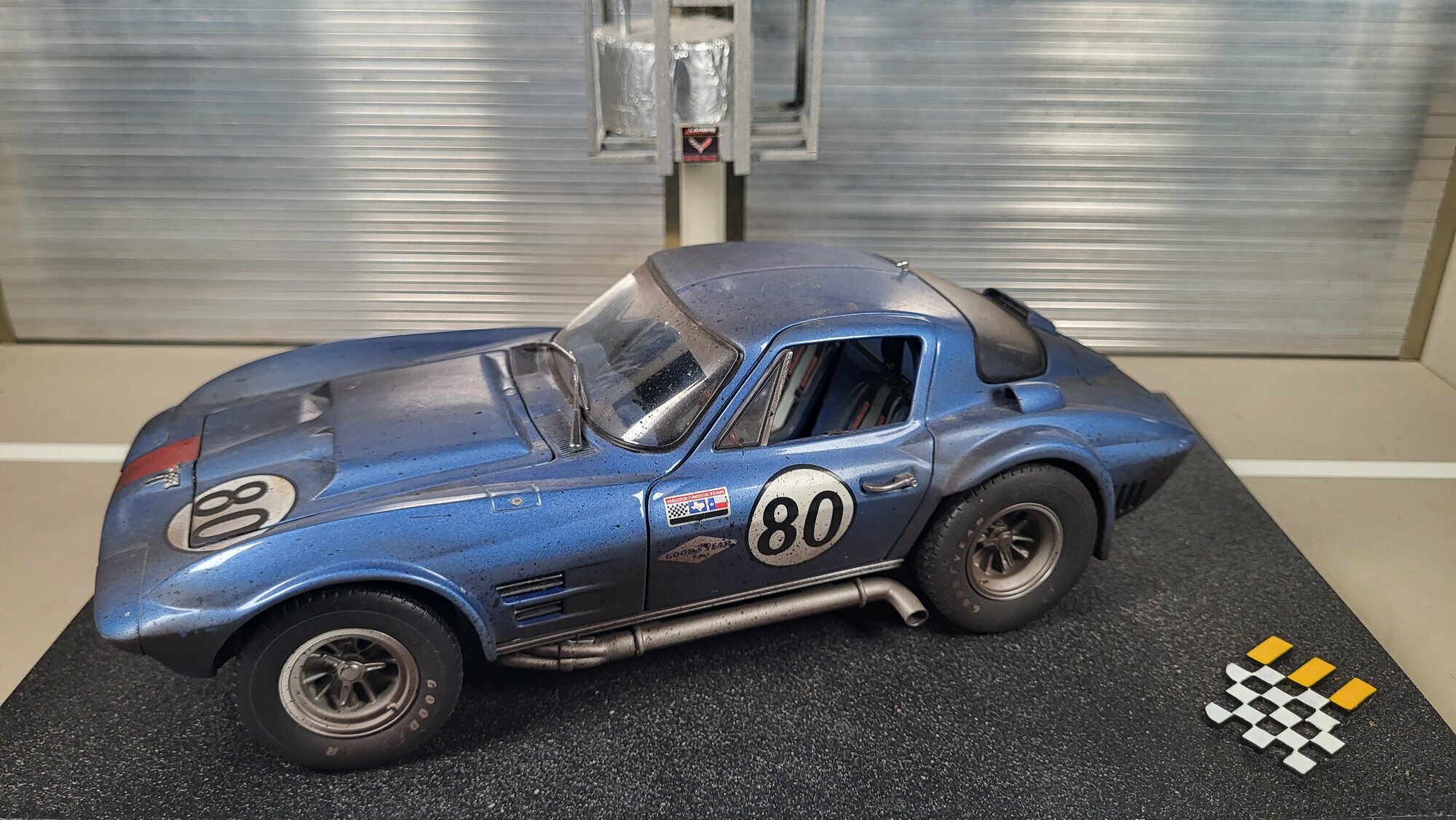
- Chevrolet Corvette C2 Grand Sport (from 1963)
Exoto Racing LegendsUmgebautes Modell- 1:18
- Showcase model / No engine
- diecast
- Finish Line Plus by Koleber
- RLG18022FLP
- In near mint condition
- Original packaging exists
- Not for sale
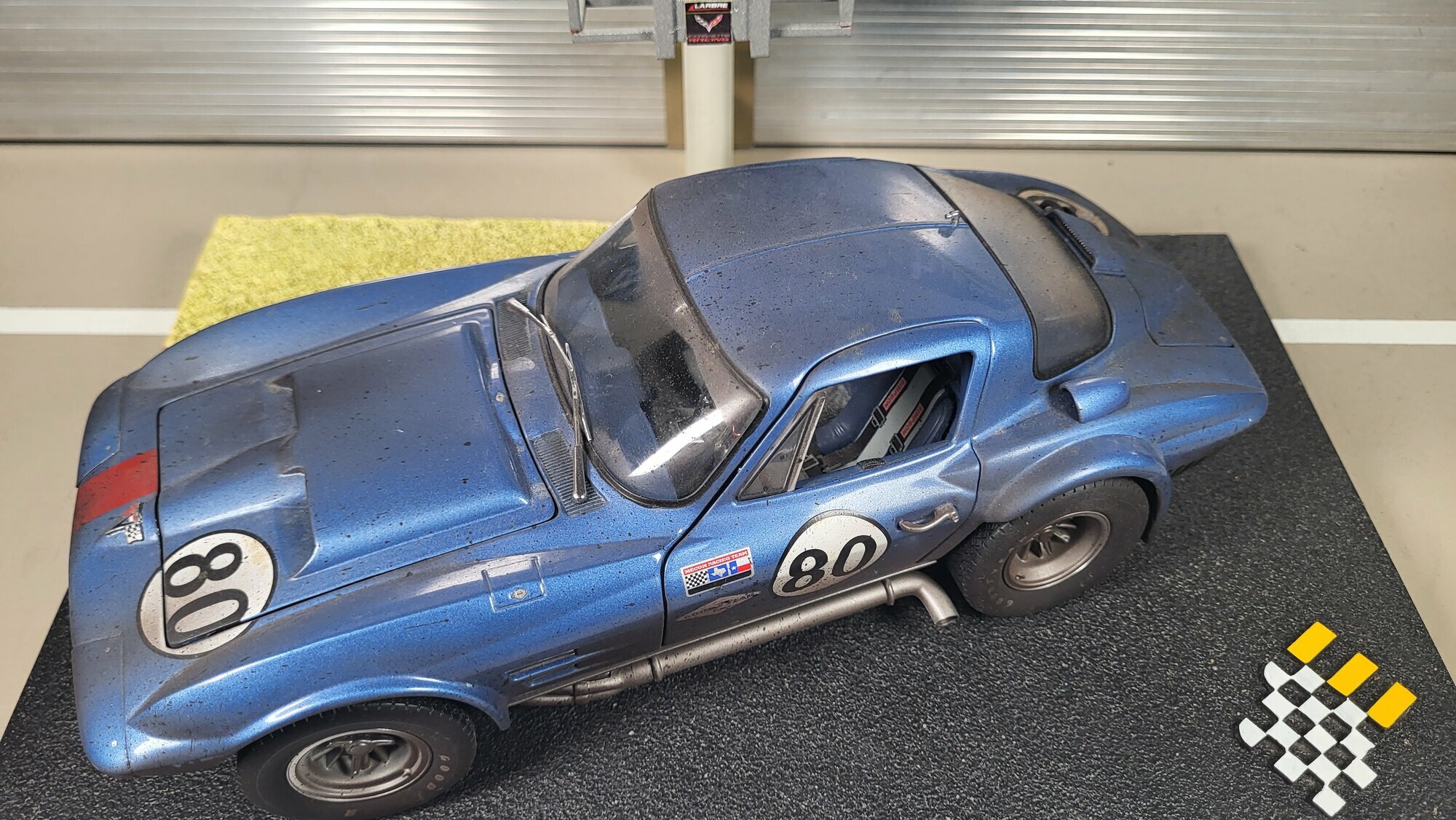
Exoto Corvette Grand Sport 1/18 – model, generation, and technical basis
The collectible shown here from Modelly member “Phat-T” is a racing miniature model that clearly takes its cue from the Chevrolet Corvette C2 Grand Sport. The Corvette it’s based on belongs to the C2 generation, also known as the Sting Ray, and this generation was built from 1963 to 1967. Its predecessor was the Chevrolet Corvette C1, which established the model line in the 1950s. The C2 brought a completely new chassis with independent rear suspension, a shorter wheelbase, and a construction much more focused on driving dynamics. The Grand Sport racing version was developed under the direction of Zora Arkus-Duntov, while the basic Sting Ray design is closely tied to Larry Shinoda and ideas from Bill Mitchell. The Chevrolet Corvette C2 Grand Sport was planned as an especially lightweight competition version. That included thinner body panels, weight reduction, a chassis designed for racing, disc brakes, and powerful small-block V8 engines, depending on the setup and tune, with around 377 horsepower (281.4 kilowatts) to well over 500 horsepower (373.0 kilowatts). The goal was to make the car competitive against established GT racing cars on the international stage.
Motorsport history of the Corvette Grand Sport – entries, drivers, and results
In motorsport, the Chevrolet Corvette C2 Grand Sport holds a very special place, even though the program was only carried out in a very small number. The plan was for a homologation series, but in the end only five original Grand Sport cars were built. The background to this was General Motors’ official distance from factory racing at the time. Even so, the cars were built and then used through private teams and Corvette-related racing structures. The Chevrolet Corvette C2 Grand Sport competed in races in Nassau and in North American sports car events, among others. Well-known drivers associated with Grand Sport Corvettes include Roger Penske, A. J. Foyt, Jim Hall, Dick Thompson, and John Cannon. The cars impressed mainly with strong straight-line performance, a short wheelbase, and chassis design that was advanced for American GT racing cars of that era.
Racing success and the significance of the Corvette C2 Grand Sport
The success of the Chevrolet Corvette C2 Grand Sport came less from a long official factory racing career and more from its technical impact and a few strong individual appearances. In Nassau in particular, the Grand Sport cars showed that the concept could compete with Ferrari and Cobra. The cars benefited from their low weight, their aerodynamically tuned bodywork, and their torque-rich V8 engines. In the American racing scene, the Grand Sport became a reference point for what was possible with the C2 platform. Drivers like Jim Hall or Dick Thompson helped make sure the Grand Sport is still seen today as one of the best-known competition versions of the Corvette. For collectors and model-car fans, the link to historic racing is therefore a major part of how this subject is understood.
1/18 model car by Exoto Racing Legends – visible details, paint, and decals
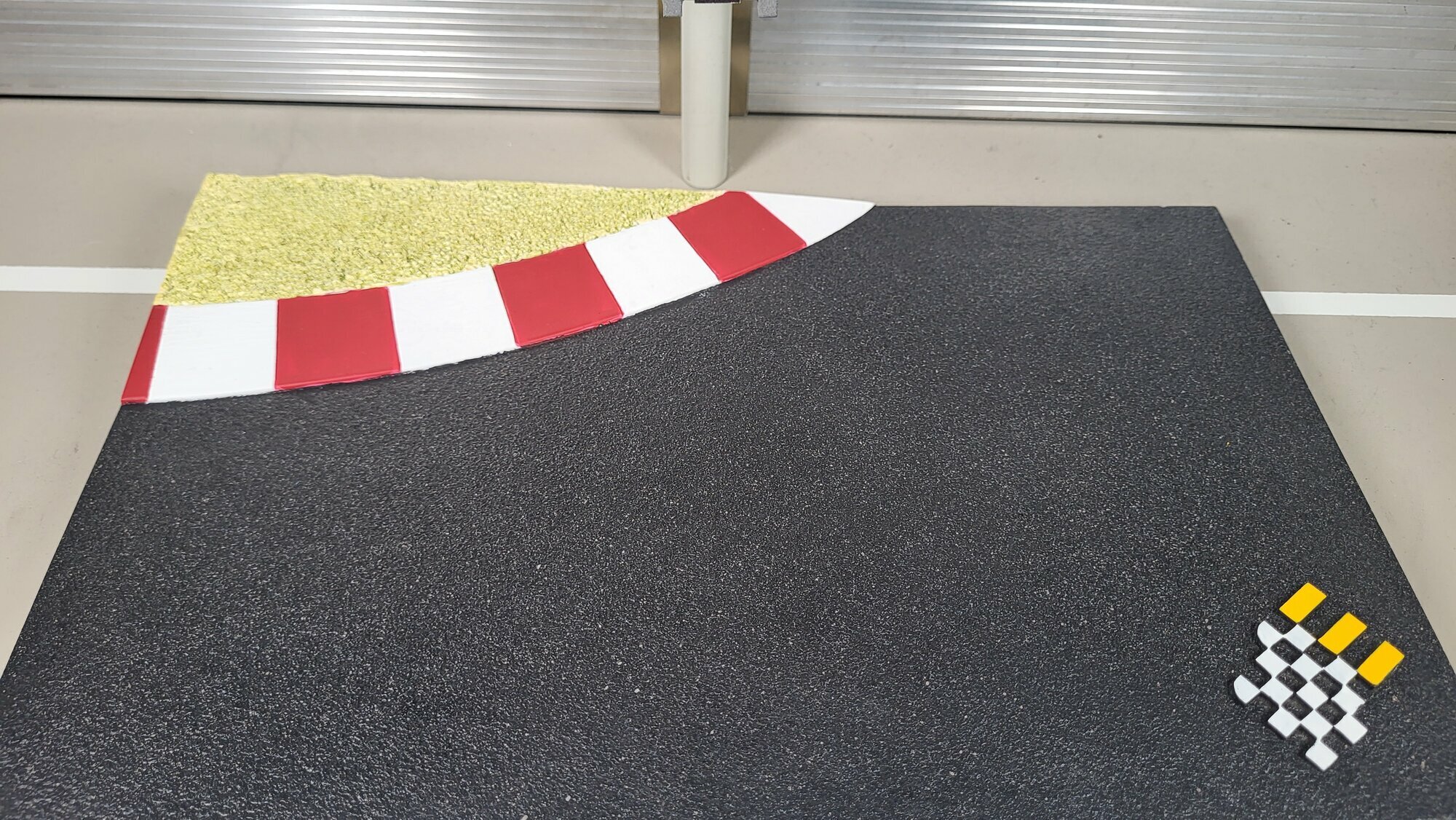
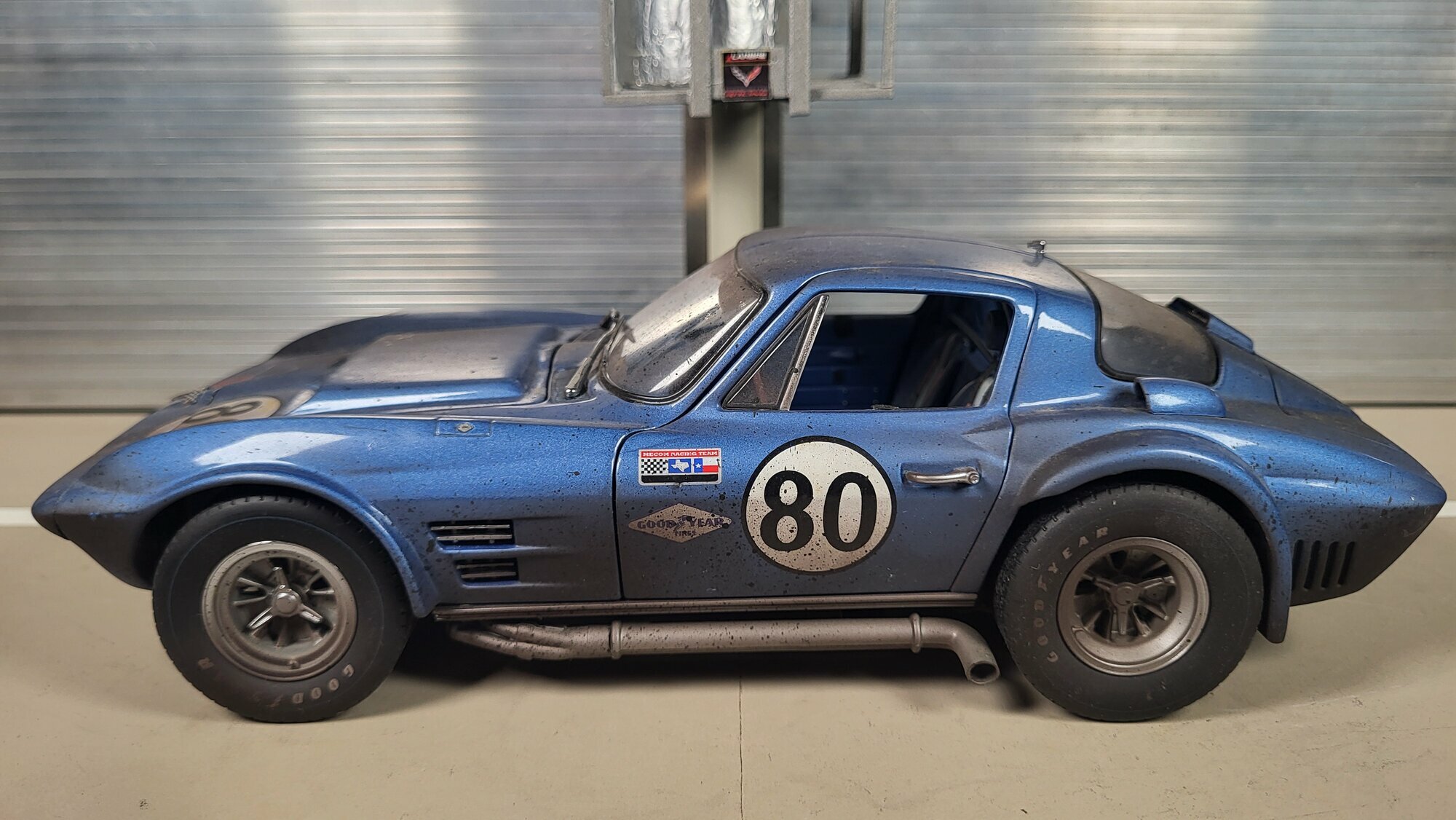
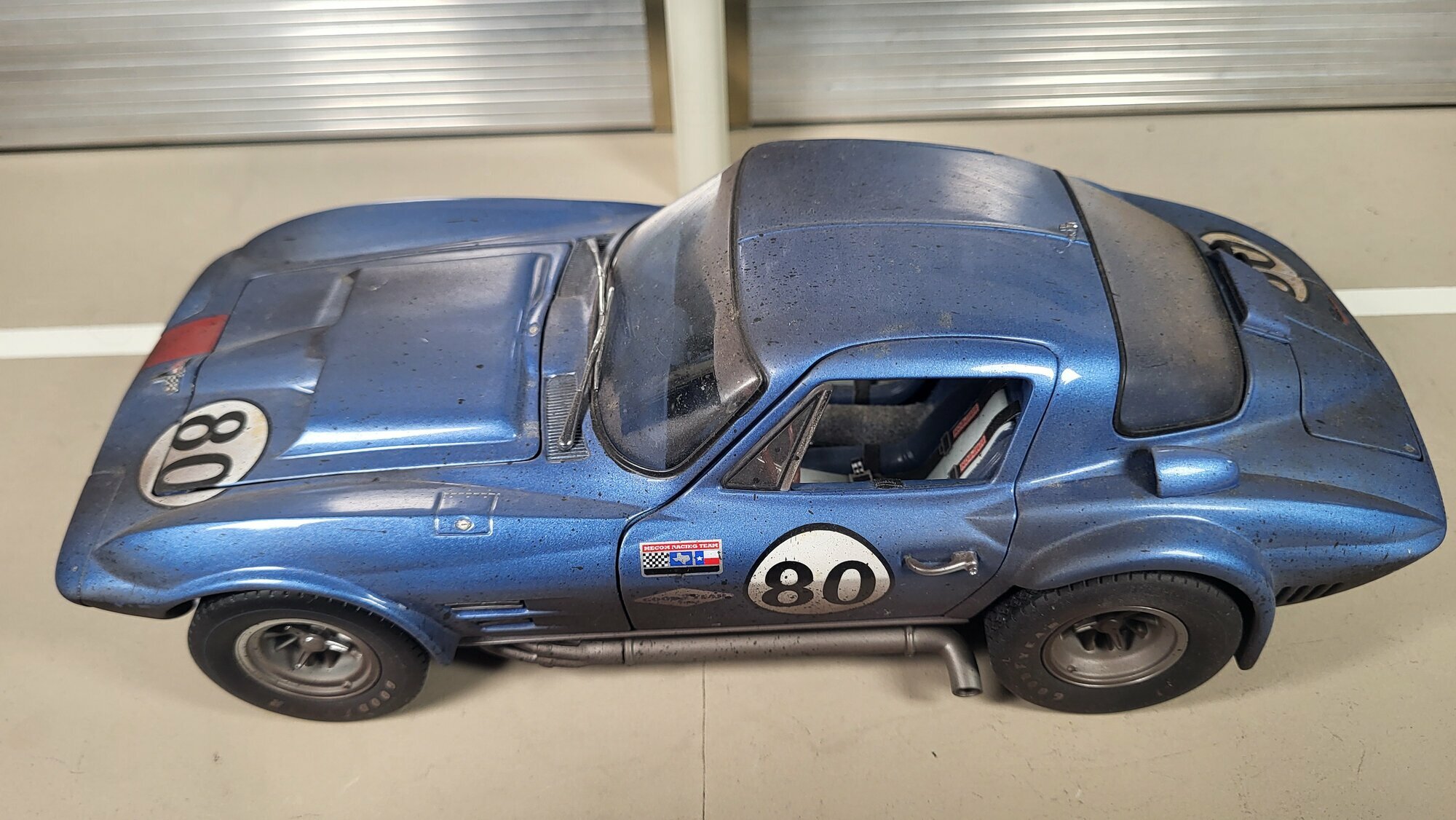
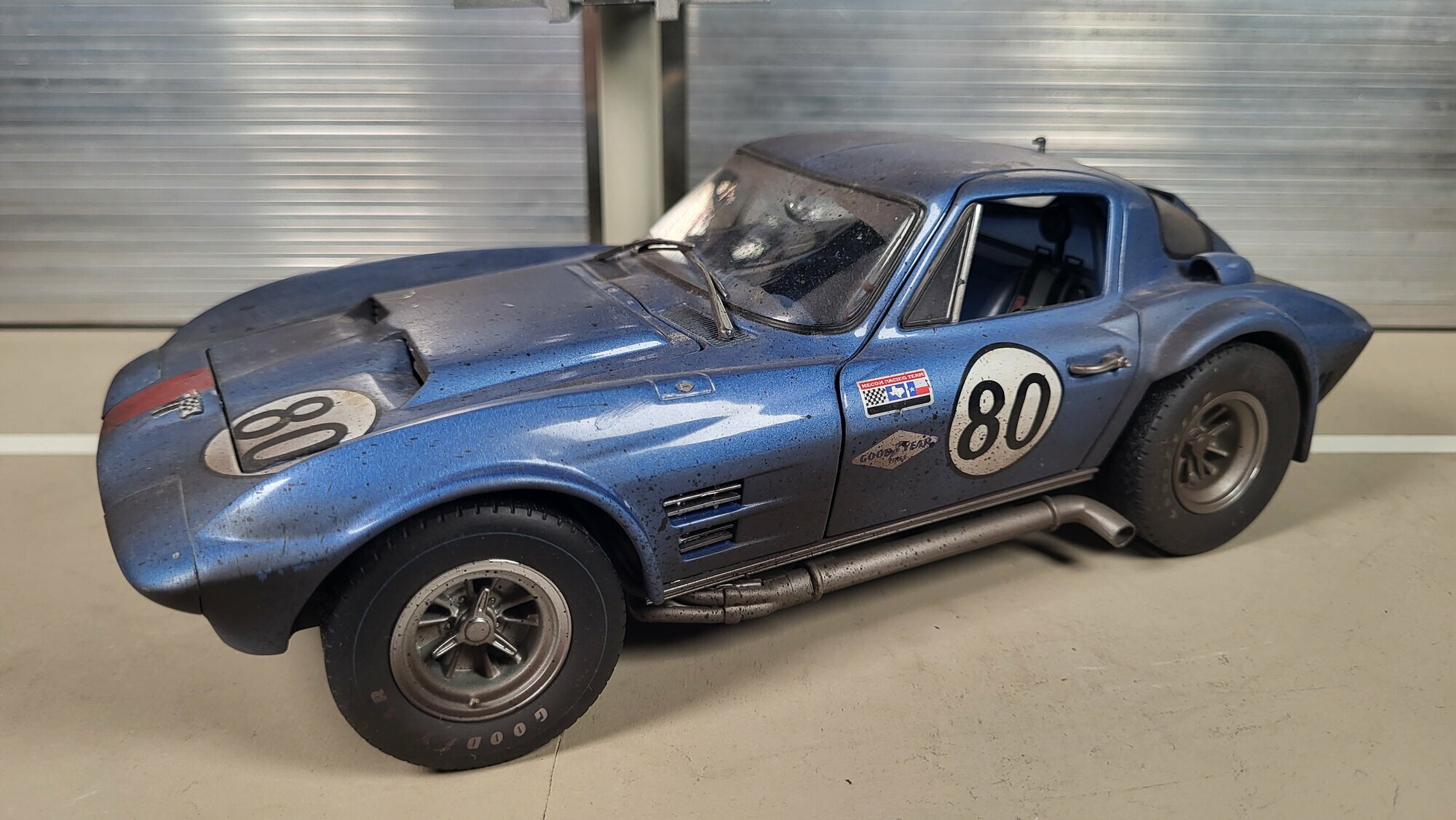
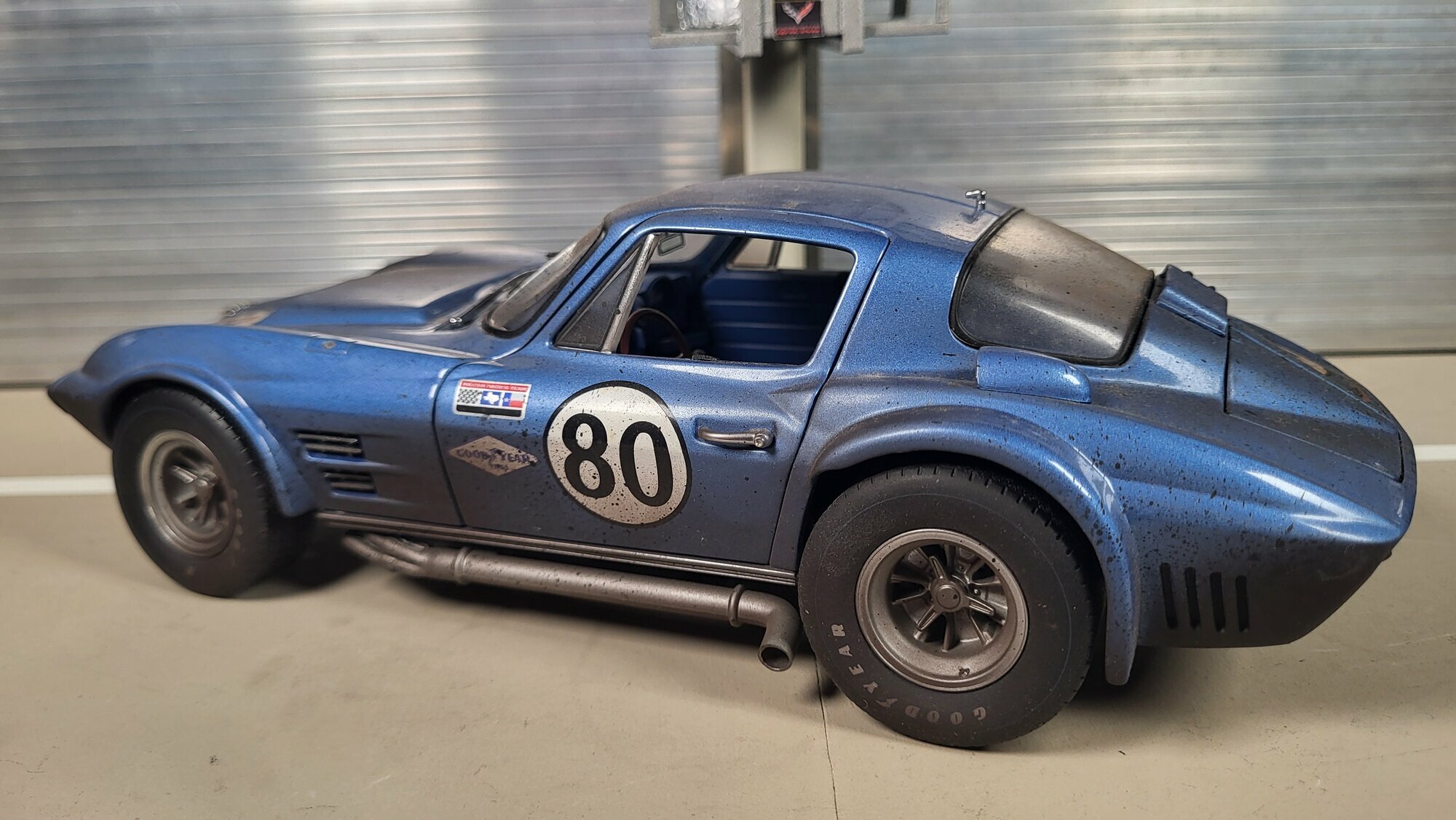
This piece is a model car in the 1/18 scale by Exoto Racing Legends. The diecast miniature shows the typical long hood, compact greenhouse, and pronounced fender shapes you’d expect from the Chevrolet Corvette C2 Grand Sport. You can see a metallic blue paint finish, a red stripe across the front section, white roundels with black number 80 on the hood and door, plus side-exit exhaust pipes. It also has multi-piece racing-style wheels, a dark interior with bucket seats and harness details, and small emblems and racing stickers along the sides. Visible among them is a Goodyear logo and a team decal; the tire brand Goodyear is therefore clearly present as a sponsor or equipment supplier. The model’s look feels very convincing thanks to the low front end, wide rear fenders, and body sitting close to the ground. The diorama base is also clearly visible in the photos: black asphalt, a red-and-white curb, and a black, white, and yellow checkered-flag motif in the corner. Also, this is a model car in the 1/18 scale by Exoto Racing Legends that is clearly based on a historic racing theme. For collectors, the edition note is also important: Limited Edition.
Important collector note: modified Exoto miniature and not in original condition
IMPORTANT: The miniature shown here is modified and does not represent the original delivery condition in which Exoto Racing Legends first produced the item. This is important for collectors because changes to the paint look, finish, weathering, lettering, or presentation can affect both collectible value and how the piece is classified within an Exoto collection. The photos clearly show artificial signs of use and dirt: fine dark speckles on the body, roof, windows, tires, and side exhausts, plus an overall look designed to feel race-worn and patinated. This treatment highlights the shape of the car in a very direct way, especially on the curved hood surfaces, rear fenders, and roof areas. The number 80, the small logos, and the metallic blue base color remain clearly visible. For international model-car collectors, the key point is this: you’re not looking at a standard Exoto product, but at an individually altered collectible from the “Phat-T” collection, based on an Exoto model and to be understood as a limited edition with the Limited Edition label.
- Write a first comment about this model now!Any comment can be discussed by all members. It's like a chat.Mention other Modelly members by using @ in your message. They will then be informed automatically.
- Write a first comment about this model now!Any comment can be discussed by all members. It's like a chat.Mention other Modelly members by using @ in your message. They will then be informed automatically.