
Ford Mustang GTD(1:18, GT Spirit)
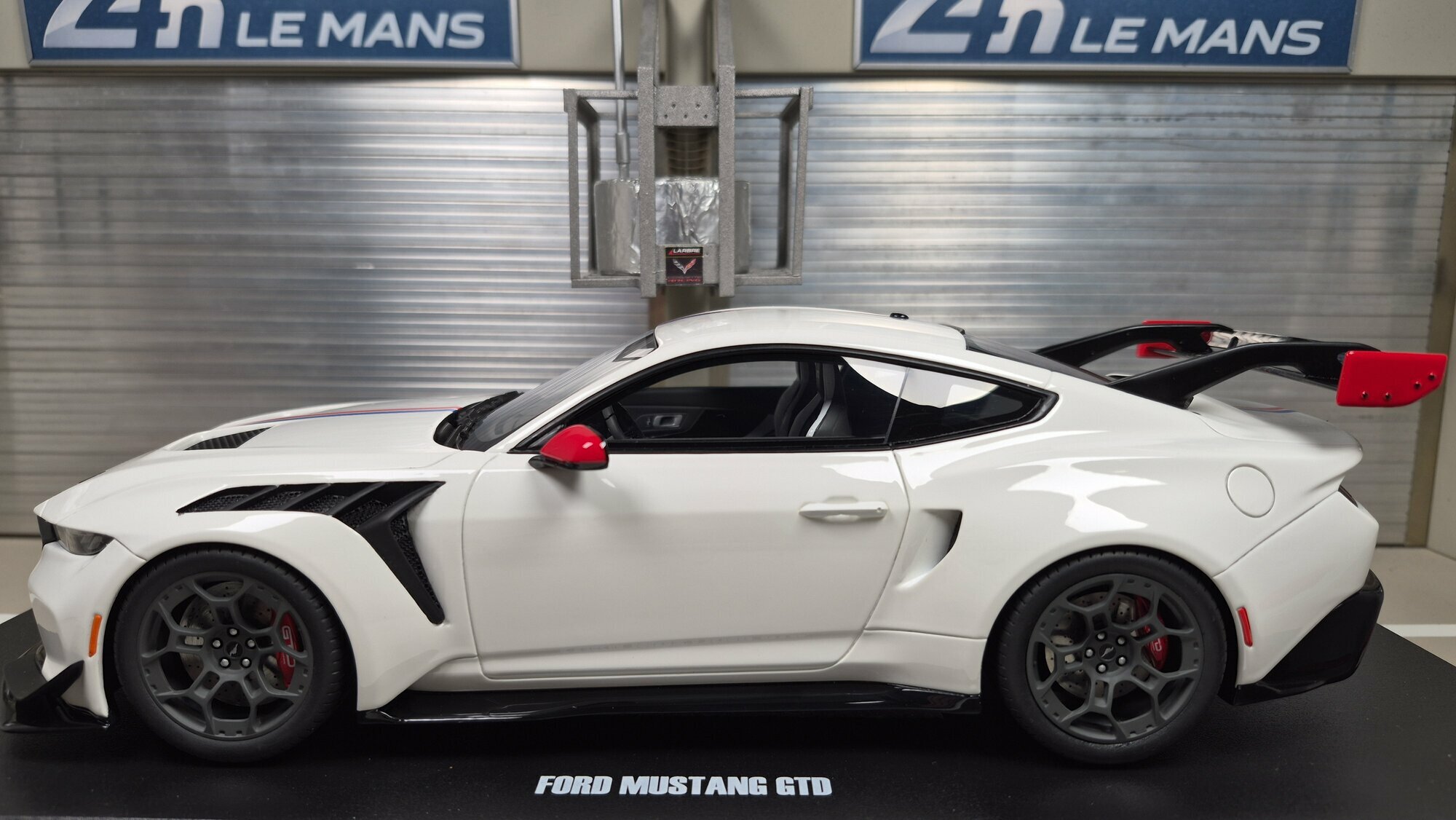
- Ford Mustang GTD (from 2024)
- GT Spirit
- 1:18
- Showcase model / No engine
- resin
- Spirit of America
- GT956
- In near mint condition
- Original packaging exists
- Not for sale
Ford Mustang GTD: Inspiration, Generation, and Technical Classification
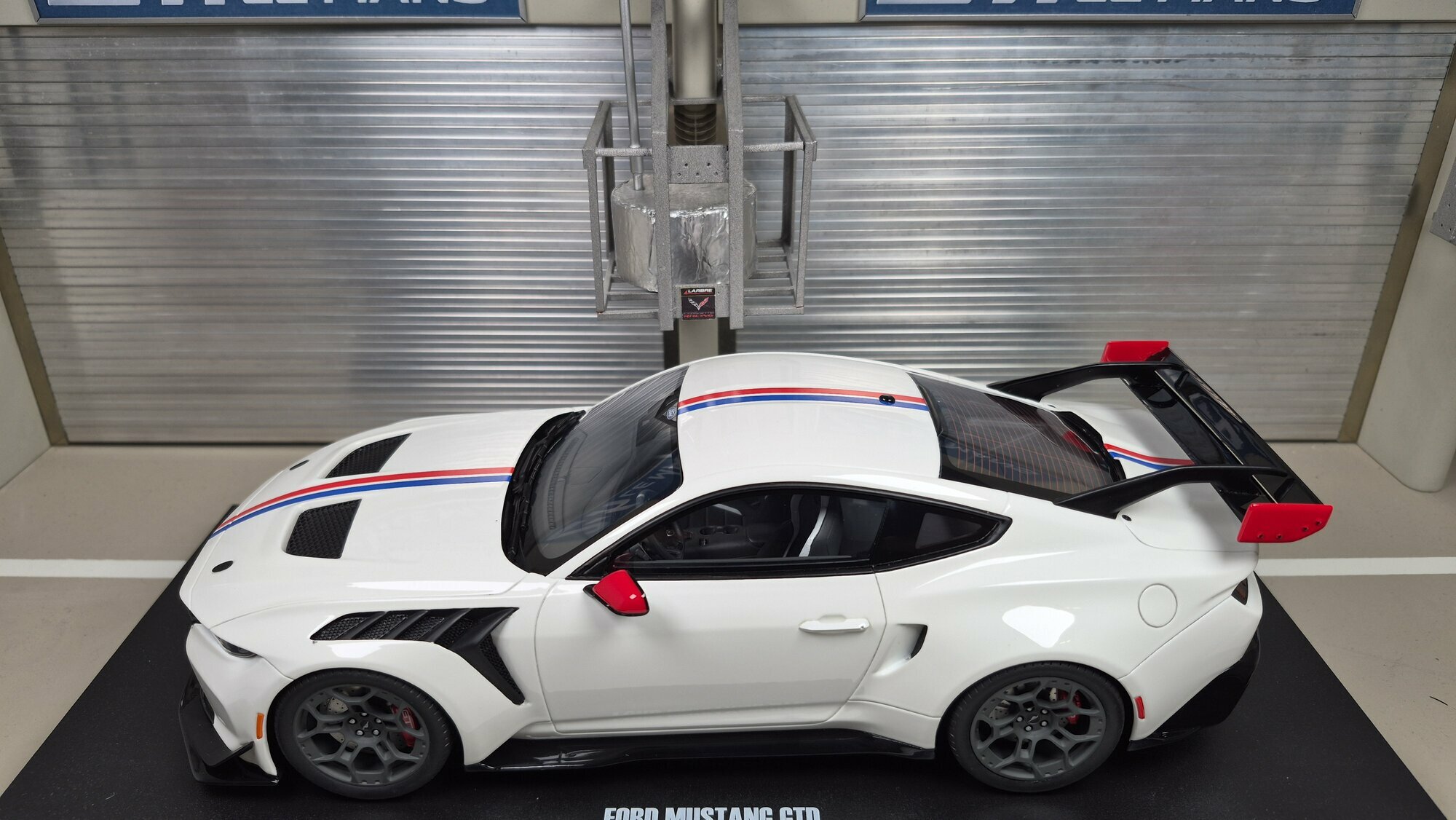
The collectible shown here is based on the Ford Mustang GTD, a particularly performance-focused road version built on the current Mustang lineup. The underlying generation is the 7th generation (S650), produced since 2023. The predecessor to this lineup was the S550 Mustang generation, built from 2014 to 2023. Ford introduced the Ford Mustang GTD as a car closely tied to racing technology, with a connection to the Mustang GT3 program. One of the people publicly associated with the project at Ford is Jim Owens, while the current Mustang generation’s design is often linked to Christopher Stevens. The Ford Mustang GTD uses a supercharged 5.2-liter V8, which Ford has stated is targeted at more than 800 horsepower. Other notable features include a rear transaxle gearbox for better weight distribution, semi-active suspension, a widebody design, carbon body parts, and a strong aero package with a front splitter, air guides, a diffuser, and a large rear wing. That makes the Ford Mustang GTD very different from regular Mustang versions like the GT or Dark Horse. There’s no clear sign in the photos of a separate tuner being involved; this is mainly a Ford performance-oriented production project with motorsport roots, not an obvious conversion by a clearly identified tuning company.
1/18 Model Car by GT Spirit: Proportions and Body Details
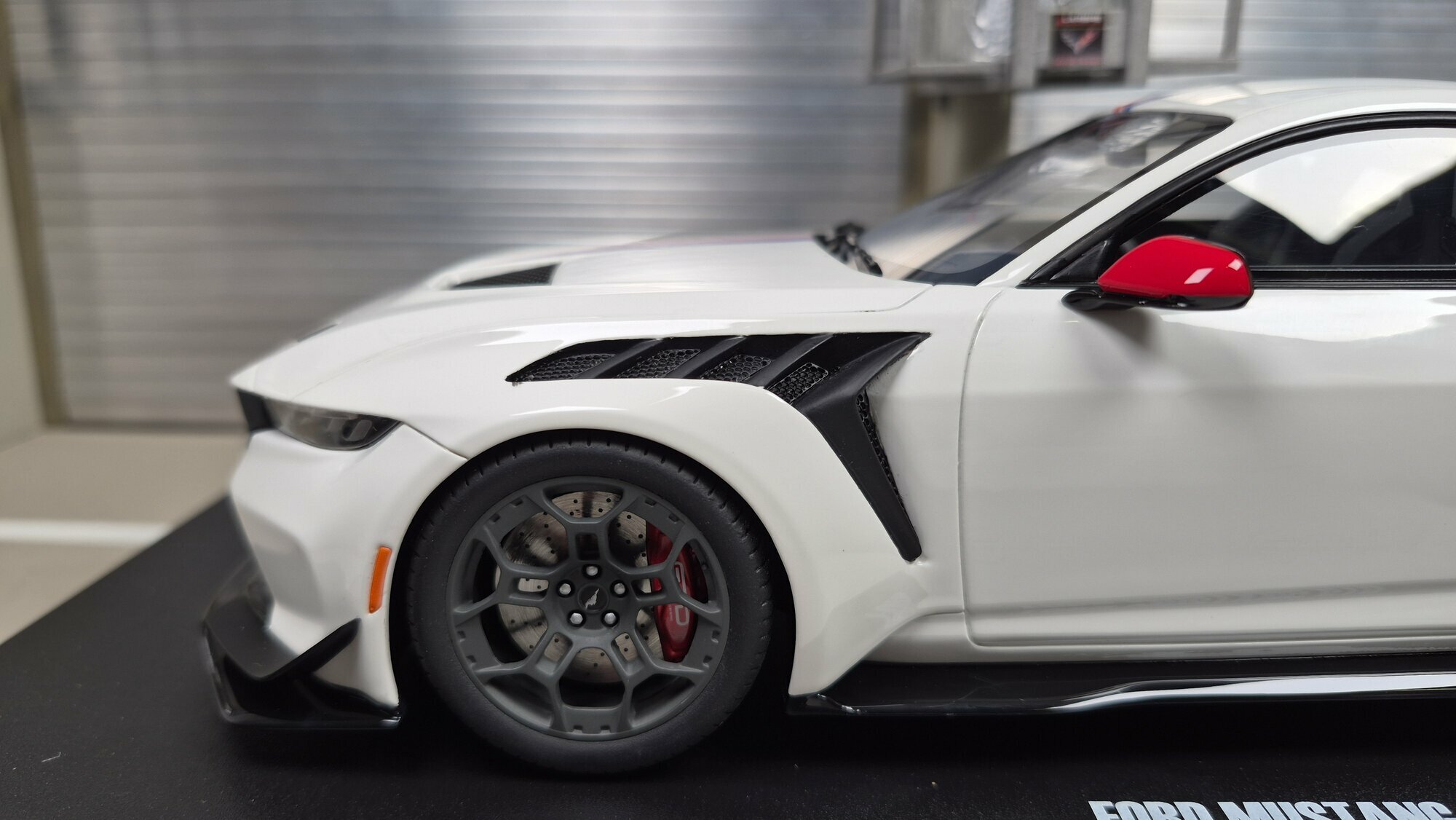
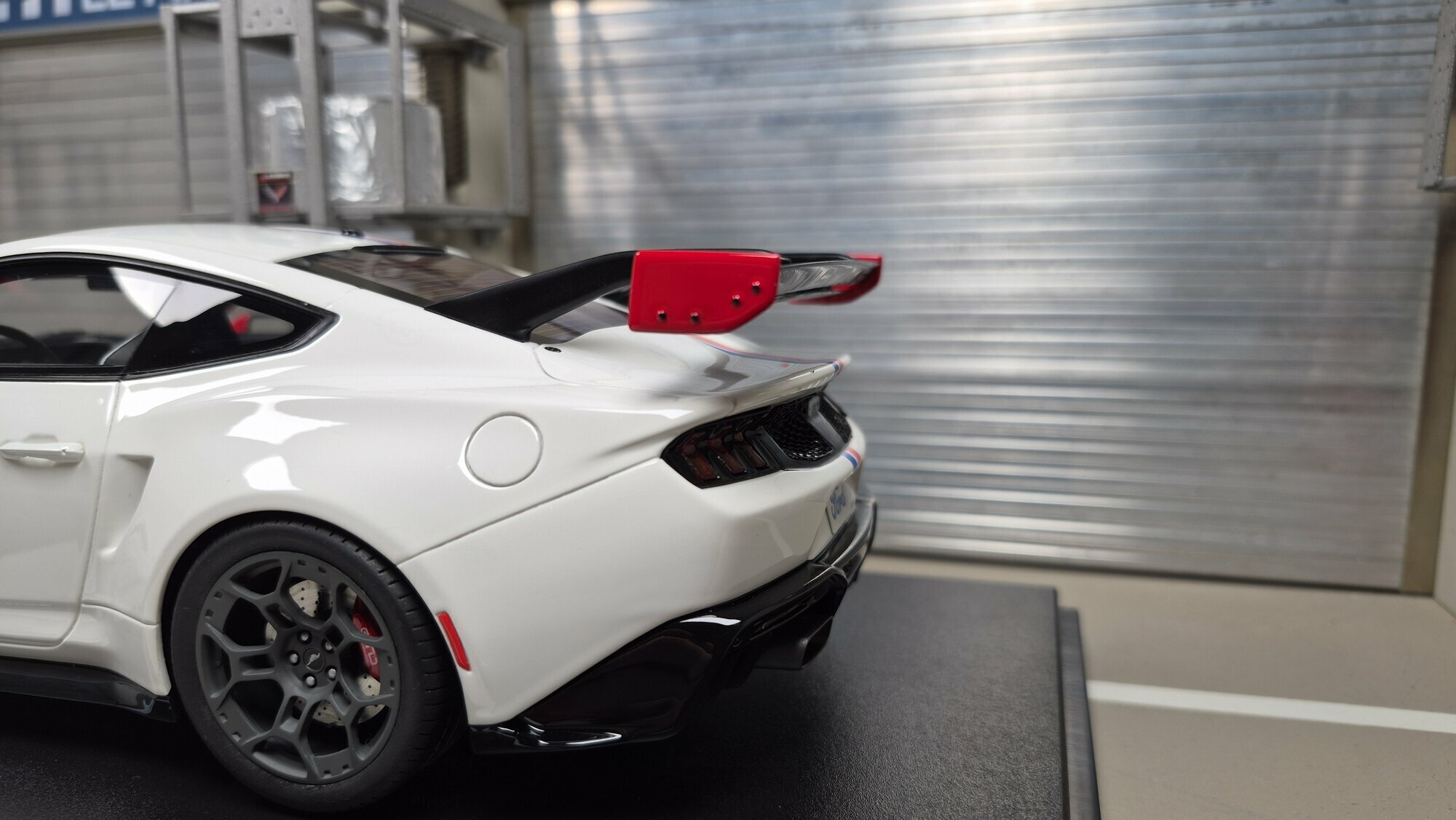
This piece from Modelly member “Phat-T” is a model car in 1/18 scale, made by GT Spirit. According to the info provided, the model is made from resin, which is often used for collector cars with closed bodywork and crisp shape accuracy. In the photos, the flared fenders are easy to spot, along with the side vents behind the front wheel arch and the extra vents on the front fenders. These elements clearly reflect the technical look of the Ford Mustang GTD. The front end has a low black splitter, slim headlights, and a sharply stretched hood line. In side profile, you can see the long doors, compact cabin, and the strongly shaped side skirts. The rear is dominated by the tall, wide rear wing with red endplates. The model reads very clearly from the side: low front, tall wheel arches, cut-in side openings, and a flowing roofline. For collectors, it’s especially interesting that this 1/18 scale model by GT Spirit captures the main aero parts of the real Ford Mustang GTD in a way that’s easy to recognize.
Paint Finish, Stripes, and Visible Features of the Miniature
The miniature is painted mainly in white. On top of that, there are two slim longitudinal stripes in red and blue running across the front, roof, and rear section. That color scheme gives off a classic motorsport vibe and fits the technical character of the Ford Mustang GTD. Contrast parts like the front splitter, side skirts, air intakes, and rear wing are finished in black. The mirror caps add another red accent. On the base, the label “Ford Mustang GTD” is visible, which makes the model’s identity clear. You can also see gray multi-spoke wheels with drilled brake discs and red brake calipers. The caliper appears to carry a GTD logo, as far as the close-up photos allow. A specific wheel manufacturer or exact wheel model can’t be identified with confidence from the photos alone, so it wouldn’t make sense to guess here. The side windows reveal a dark interior with sports seats and an implied cockpit layout. The fuel filler door is also modeled on the rear quarter panel. From above, the wide body shape stands out clearly, along with how strongly the rear wing shapes the overall look. The model’s visual appeal comes mainly from these clear proportions, the contrast between white, black, and red, and the neatly defined air channels at the front and sides.
Collectible Ford Mustang GTD Model in Detail
For collectors of modern American sports cars, this version is interesting because it shows the technical uniqueness of the Ford Mustang GTD really well. The real car was developed with track performance in mind, which means the high engine output is only part of the story; aerodynamics, brake hardware, suspension geometry, and weight distribution all matter too. Official and published information about the Ford Mustang GTD also mentions a carbon driveshaft, rear-mounted transaxle unit, adaptive dampers, and adjustable ride height. That puts the real car closer to a road-legal homologation-style machine than to a classic special-edition Mustang from earlier years. The miniature shown here from “Phat-T” reflects that direction very clearly through its shape language: wide stance, functional-looking openings, strong aero elements, and a tightly drawn greenhouse. The bodywork appears evenly finished in the photos, especially around the roof, doors, and rear quarters. The transitions between the black aero parts and the white paint are also clean and easy to read. Since there’s no strong sign that this is tied to a specific movie or TV car, the focus here is squarely on the real vehicle tech. For a display of modern high-performance cars, this resin model fits in as a contemporary interpretation of an American performance coupe, whose real-world inspiration stands out in Mustang history thanks to motorsport tech, the transaxle layout, and the supercharged V8.
- Write a first comment about this model now!Any comment can be discussed by all members. It's like a chat.Mention other Modelly members by using @ in your message. They will then be informed automatically.
- Write a first comment about this model now!Any comment can be discussed by all members. It's like a chat.Mention other Modelly members by using @ in your message. They will then be informed automatically.